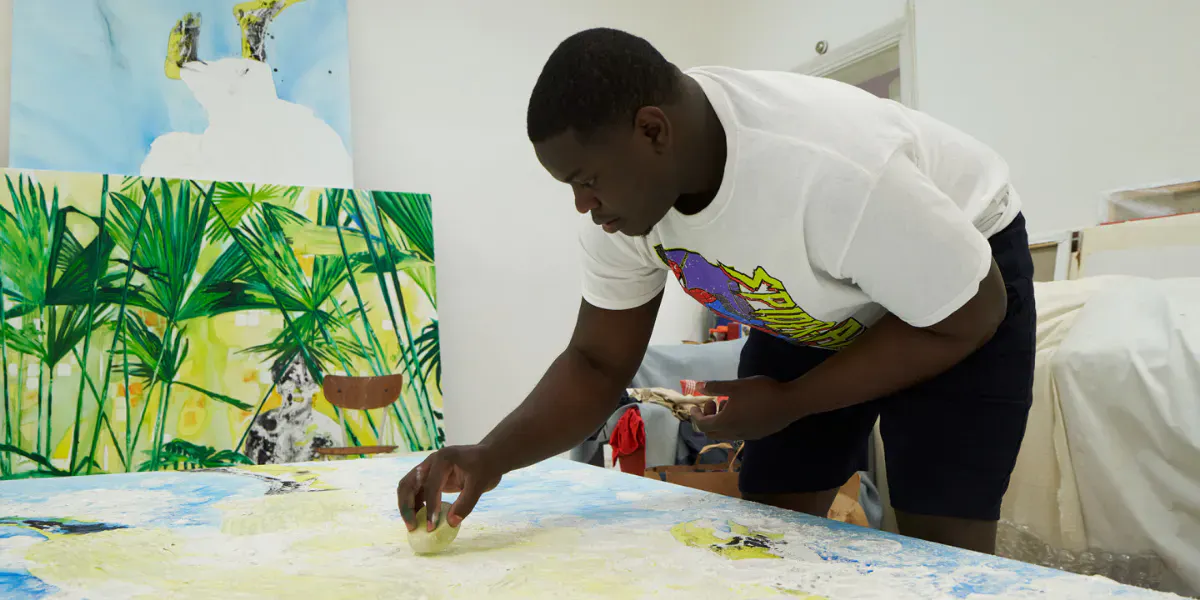
You have lived in Stockholm for the past month. How is it going? I have just had two large exhibitions, first in Venice at the Biennale and then my first museum exhibition in my hometown of Milwaukee so I have worked with this exhibition in a studio in Stockholm to have time to complete the works for the exhibition.
Some artists need a fairly long time after having an exhibition to find inspiration, but I guess that's not the case with you? No. There is always a work in my exhibitions that I do first, as an experiment of pure desire, and that sets the tone for the other paintings. It gives me energy.
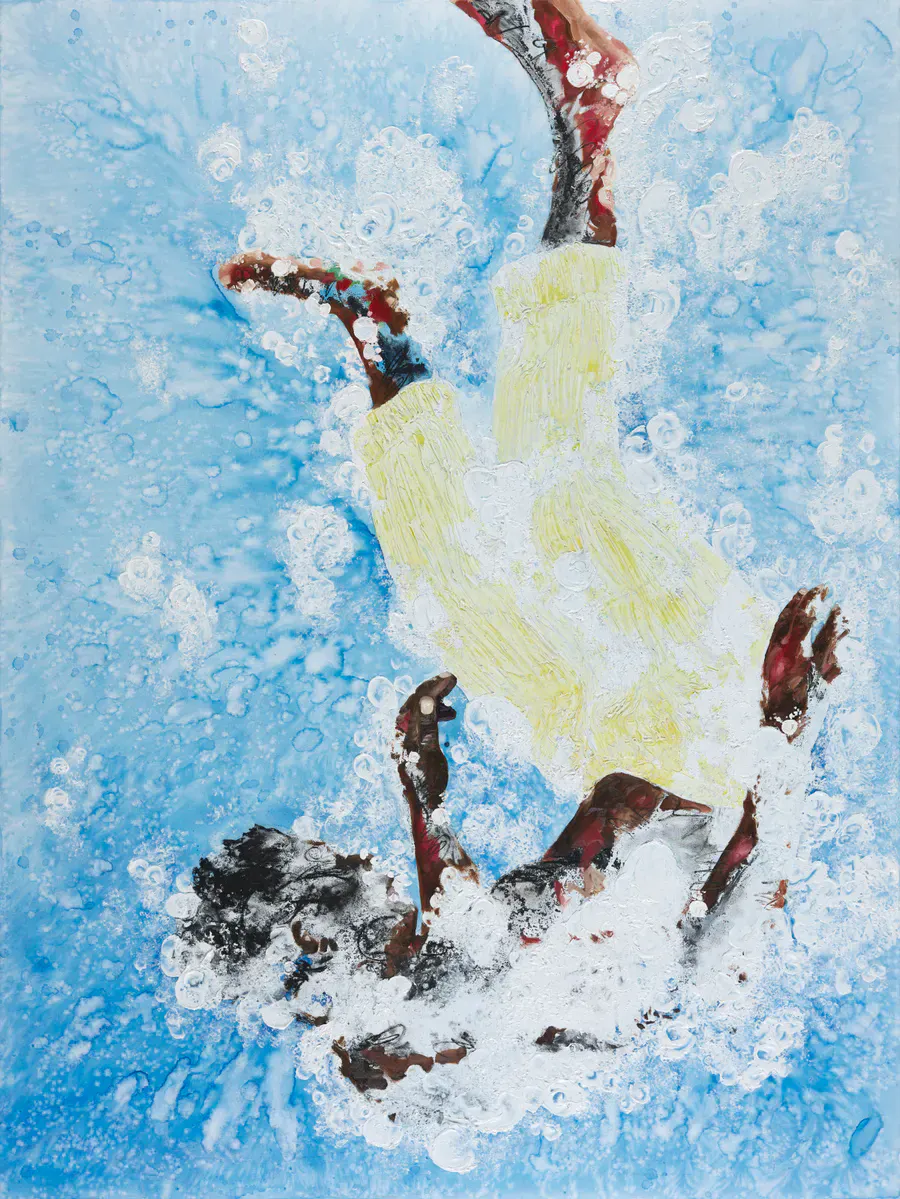
What is that work in this exhibition? This Breaking the Surface, which depicts a person below the surface of the water, who has just fallen in and is surrounded by bubbles. It is the combination of the motif and how I use the material to create the bubbles that is new to me, ahead of this exhibition.
You came to Stockholm almost directly from Venice where you had your international debut. What was it like to come from the opening of the Venice Biennale with lots of impressions, art and people? Was it inspiring or overwhelming? Both, but most inspiring. Had I not been there, this exhibition would not have looked like this. Normally I usually show many more and larger works, but what I discovered in Venice was that art was given space to breathe, and was allowed to have a different type of relationship with the viewer. Which places much higher demands on the artist. The art must be strong enough to conquer space.
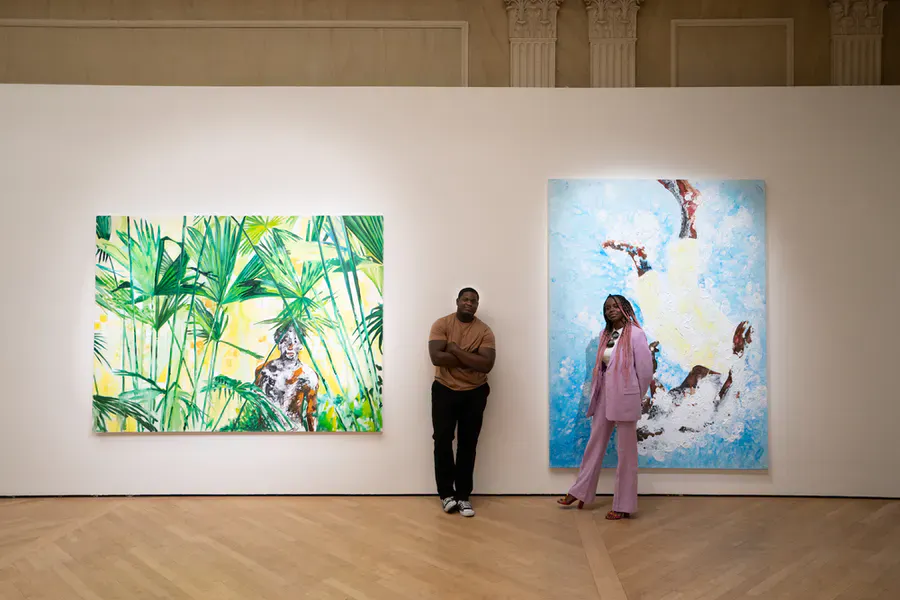
Stockholm, like Venice, is a city on the water. What has it meant for your artistic process? I use water in all my works.
How do you mean? Me and the water work together. I use seawater, lake water and river water from places that mean a lot to me. In the paintings I show at CFHILL, I have used both water from a lake in the USA and water from Stockholm.
Why? The water unites our history, and we are all drops from the same sea. Water has always brought us together. The colors of the canvas behave in a similar way. Jackson Pollock splashed paint on the canvases and it became art, in the same way the water behaves on my canvases.
When did you realize you wanted to be an artist? When I was growing up, I knew I wanted to do art in some way. My grandfather designed water pumps for a company. I guess it was his way of expressing his artistry and was set on something similar, but the first time I exhibited at school, people wanted to buy my art and I enjoyed creating and felt like I wanted to do it forever.
When I say I come from New York, everyone thinks "everything is possible", but I do not come from New York City but from the state of New York. You do not have the same attitude at all. I come from a simple upbringing environment, where you learned early on that you have two options: prison or not prison. For those who choose the "right" path, it is more about surviving and trying to avoid poverty than doing what you really want or believe in. It gives you perspective on what you want to do, versus what you accept.
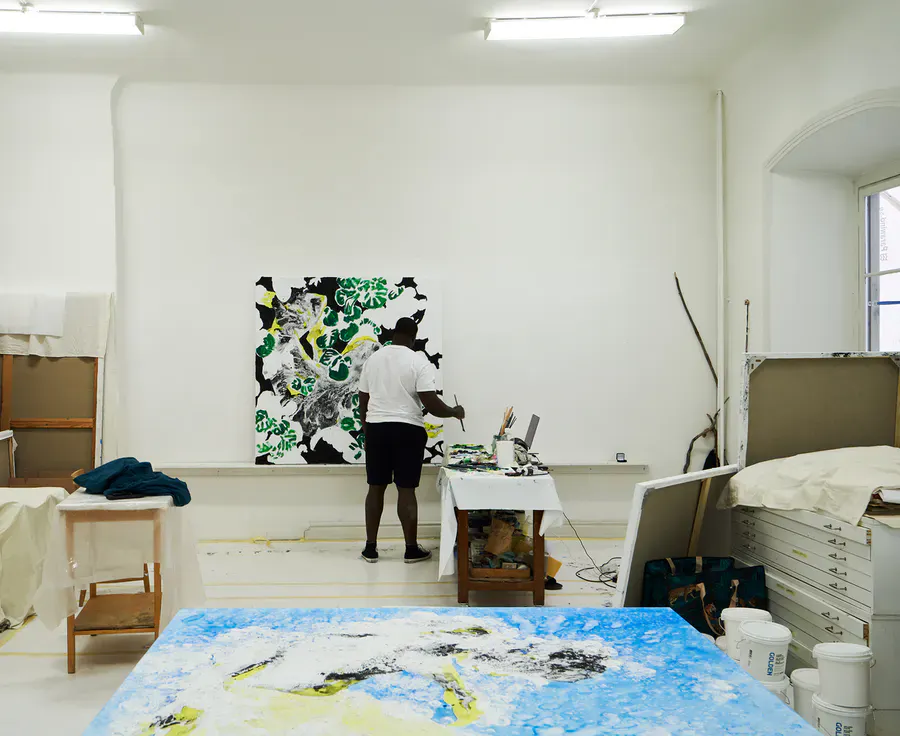
Is it important that your art has the ability to influence? At school you learn to paint from objects, animals and people, but when I got so far that my own drawings looked like other people's paintings in the books, I felt that it did not give me anything. There must be something more. I started thinking about what I wanted to give the viewer. What can I as an artist give back to society. I want to know what is important enough for me to reason with others. Art has that strength, like when someone stands abstract painting and starts crying. I want to find that kind of energy and at the same time communicate with a larger audience.
Your art moves between figurative and abstract. Do you agree? Some hate abstract art, others love it. I wanted to combine the two and experimented by removing parts of the face but kept my nose and mouth on the figures that move in my works. It was a conversation that formed a new conversation.
You do not show eyes? When you remove the eyes, you see the whole painting. Otherwise, many see the rest of the painting as a background to the figure in the picture. Now you end up in a dialogue with the whole motif.
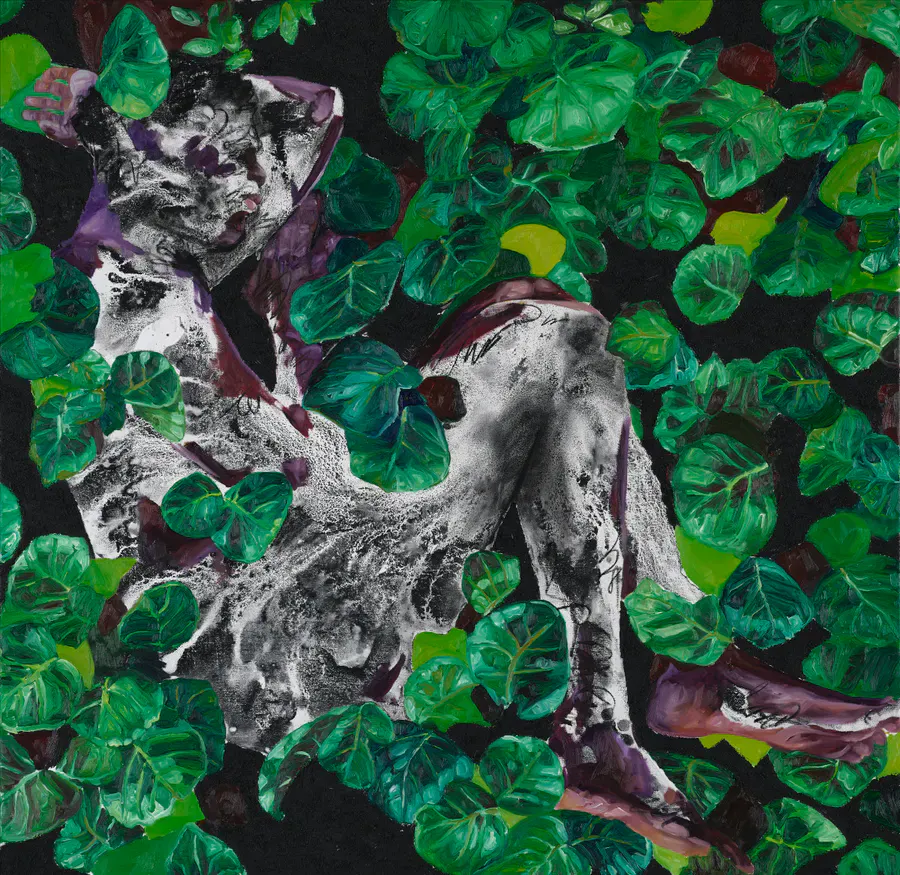
Water is central to your art. Why? For several reasons. When the pandemic came, nature became incredibly important, but above all, the water symbolizes the history of black America. During the slave trade, large numbers of people were thrown into the sea. In time, they became part of the water. Patterns are repeated in today's migration flows.
You also use seawater as a material in your paintings. When you mix ink with tap water, it stretches out a little, but when you mix ink with seawater, it gets a completely different property. The salts and density separate, flow out and control the color in a completely different way. When I first did it, it changed everything. Only now did I feel that I could really reconcile the places I was in with history and use it in my art.
When you left Venice, you said that you got an understanding that art is vulnerable. What does that mean? If you want art to touch people, you cannot close it, or allow yourself to close yourself. If I cannot initiate a conversation with you through my art, we cannot communicate on a deeper level. The most vulnerable works are the powerful ones. That is the greatness of abstract art. There is no obvious conversation, you have to create your own and let go of your feelings to feel. If I allow myself to be vulnerable, so can others. Where I come from, people often hide their feelings and instead let them turn into anger and destructive actions.
What does art mean to you? Art is the beginning of contemplation. You have to stop and think. It's edifying for anyone.
When did you decide to invest wholeheartedly in art? In 2019, I decided, but still struggled with what I should do to be able to support myself. When the pandemic came, I decided. I went up and created every day from morning to night. It was a rescue.
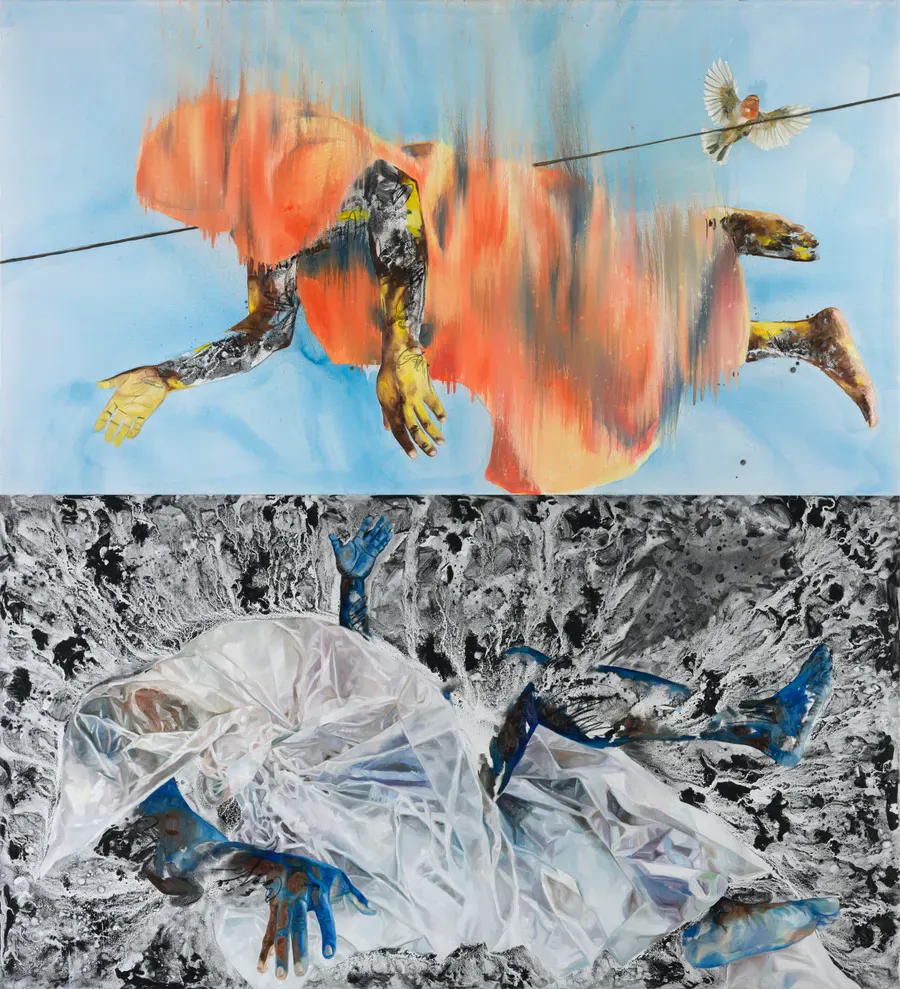
You have a diptych in the exhibition that is very much in the spotlight. Tell us about the motif! It disguises Icarus, from Greek mythology, who flew too close to the sun and the wings of feathers and wax caught fire. It may symbolize the vulnerability of being a so-called "rising artist." What happens if my professional career dies? What happens if I get too close to the sun? Today, prices go up fast for many artists and there is a danger with that. There is a risk that you as an artist can destroy yourself. I do not want to be ignorant. The other canvas symbolizes a sea turtle that lives its quiet life but suddenly gets stuck in plastic. You have to find the golden mean. How do I not burn myself in the sun but continue to survive without the plastic pulling me down. I have to remind myself to be humble about what I get to be a part of, and not get cocky. Who knows how long it will last?
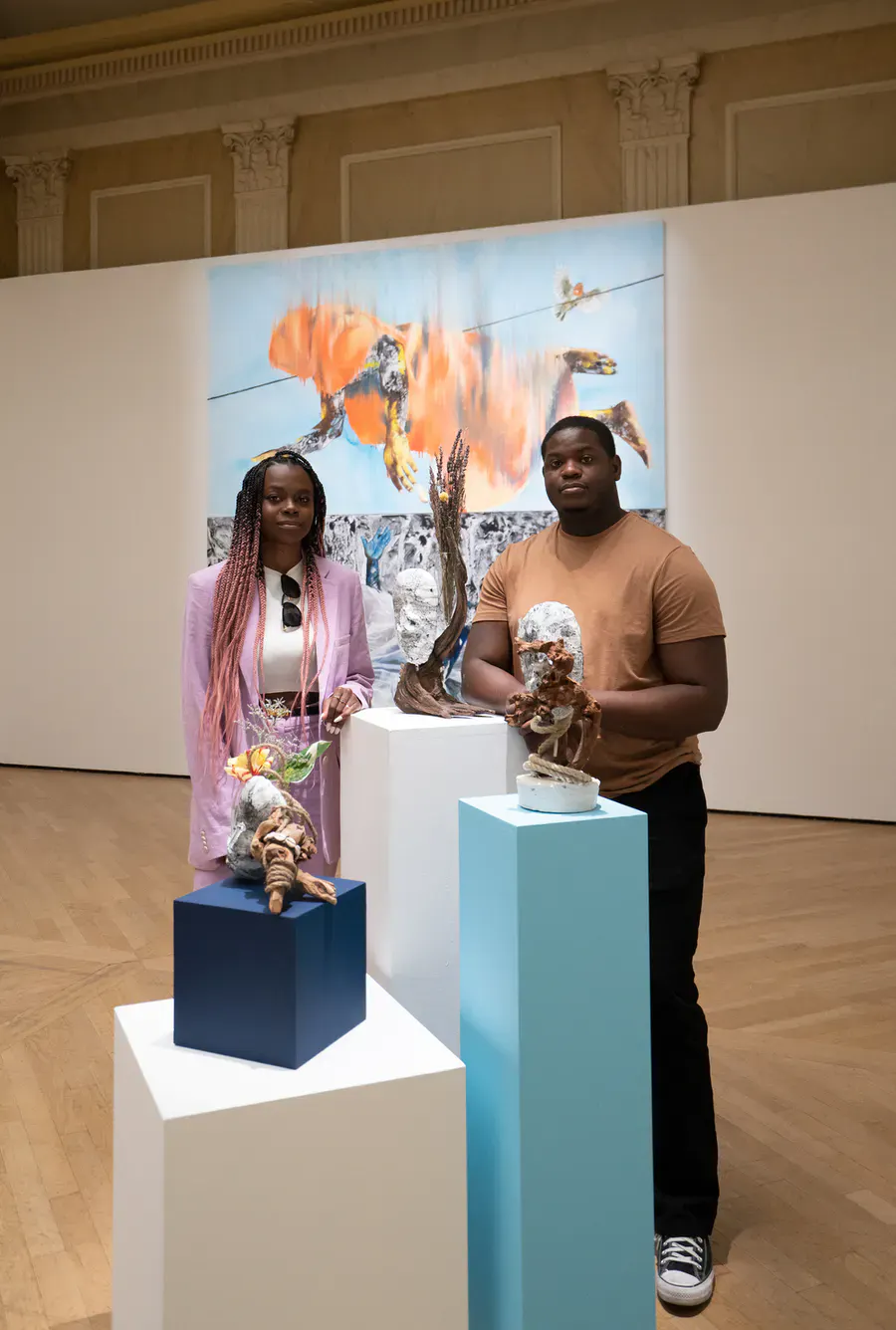
"We are so happy that Khari Turner accepted our invitation to come to Stockholm and create an exhibition for the Scandinavian art scene," says Michael Elmenbeck, co-founder of CFHILL. "It is an impressive and unique series of works connected to the water that surrounds our hometown. Our first collaboration with curator Destinee Ross-Sutton was the internationally acclaimed exhibition Black Voices / Black Microcosm that opened in April 2020."
The exhibition As Below & Above at CFHILL, Västra Trädgårdsgatan 9, takes place between June 3 - July 8. Here you can read more!