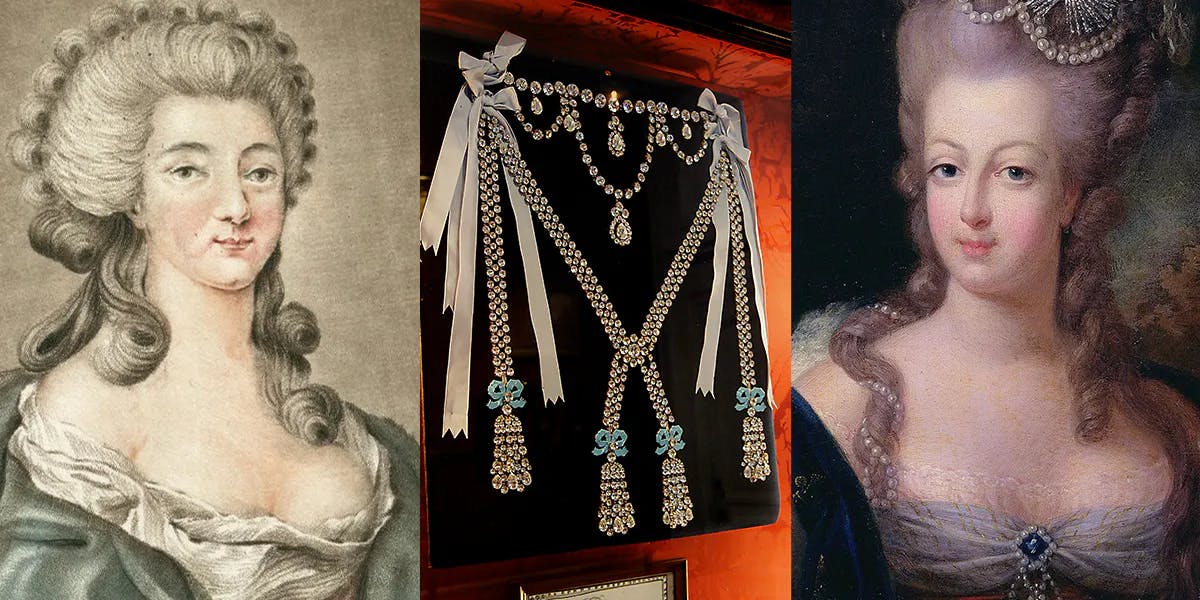
A queen, a cardinal, two jewelers and a gang of swindlers: what sounds like the perfect cast for a feature film describes the actual true crime comedy that no screenwriter could have dreamt up. In Marie Antoinette: The Portrait of an Average Woman (1932), author Stefan Zweig even calls it “the greatest monkey comedy in world history." The famous diamond necklace affair truly happened and had consequences to which extent nobody could have foreseen.
Although the Queen's Necklace scandal took place in 1785-86, it all began in the early 1770s. At the time, Marie Antoinette was still the Dauphine of France, and not yet Queen, and so it was the "duty" of the reigning King Louis XV's official mistress, Madame du Barry, to order expensive and extravagant gifts.
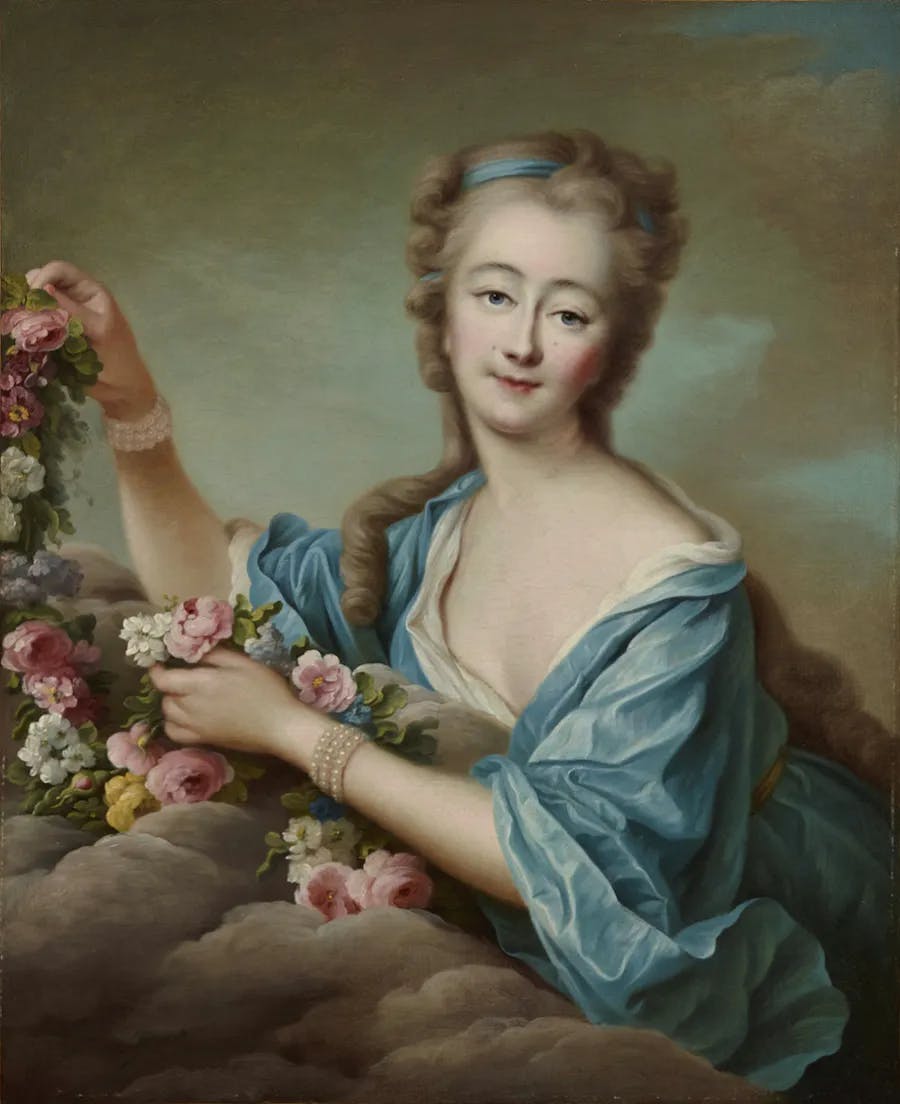
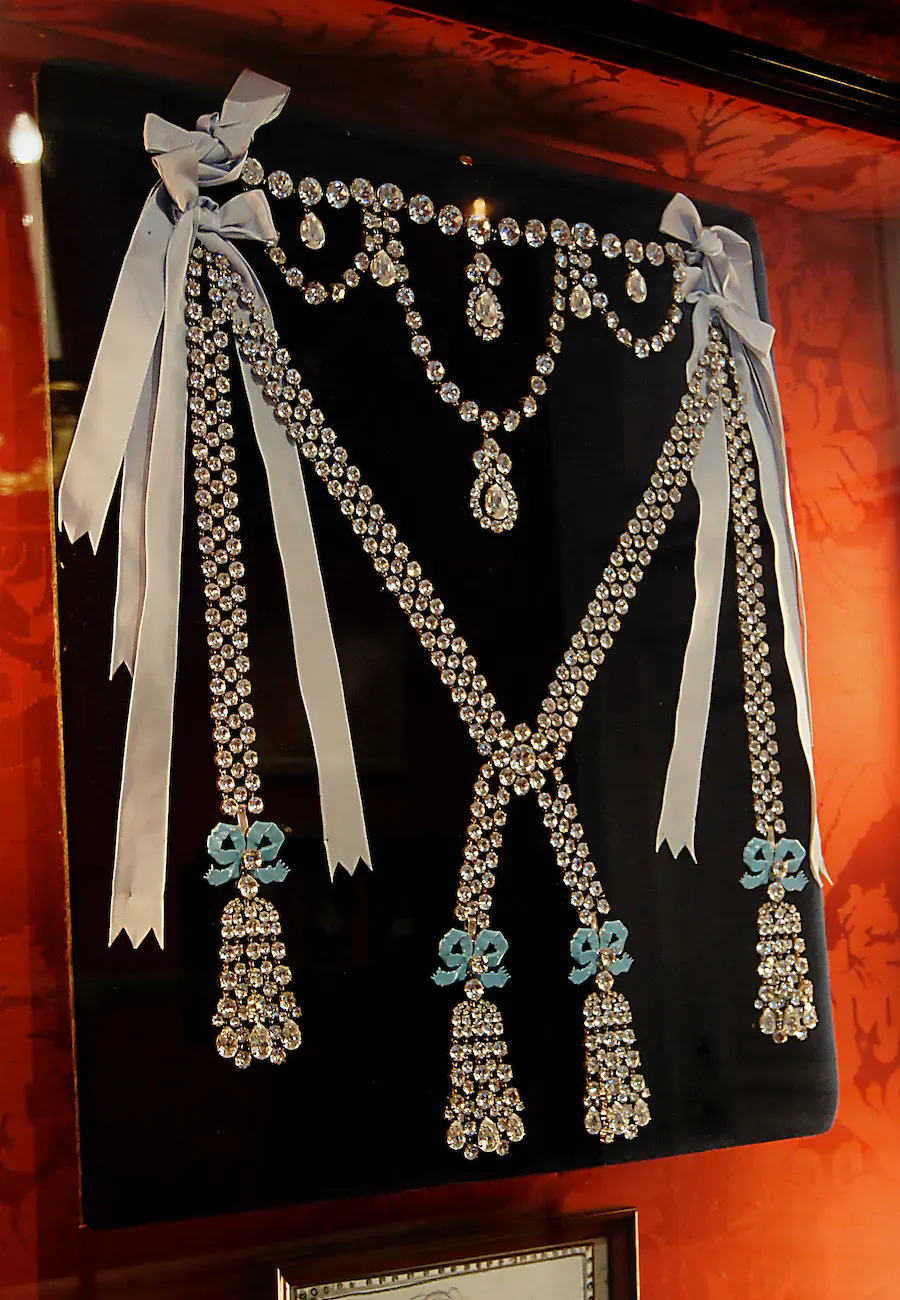
Known for her love of art, fashion and jewelry, Madame du Barry was a good client of the purveyors to the court in Paris. These included Paul Bassenge (1742-1812) and Carl August Böhmer (1735-1794), who jointly ran a luxury jewelry shop on Place Louis le Grand (today Place Vendôme). The German-born Böhmer had come to Paris as a diamond agent for the Elector of Saxony, so he was an absolute expert of sparkling gemstones, and together with Bassenge he started to collect the largest and most flawless diamonds available in Europe. From these 674 stones totaling 2,842 carats, they created what is certainly not the most beautiful piece of jewelry in history, but definitely the richest in diamonds. The buyer would have to shell out 1.8 million livres for this diamond necklace.
Related: Royal Mistress Madame du Barry: 5 Facts to Know
And this buyer was expected to be France's King Louis XV as a gift for his beloved mistress, but things turned out differently. The king died of smallpox in May 1774, and Madame du Barry was temporarily banished to a convent. The grandson of the late sovereign ascended when Louis XVI took France's throne. At his side was Marie Antoinette, who now as queen wanted to shake off all the constraints of the strict Versailles court protocol in order to live a life of pleasure. She enjoyed herself at the masked balls at the Paris Opera, lost huge sums at the gambling table and spent even larger sums on jewelry and clothing. In short, she began to behave in ways that the French people had until then only known from their kings' mistresses, not from their wives.
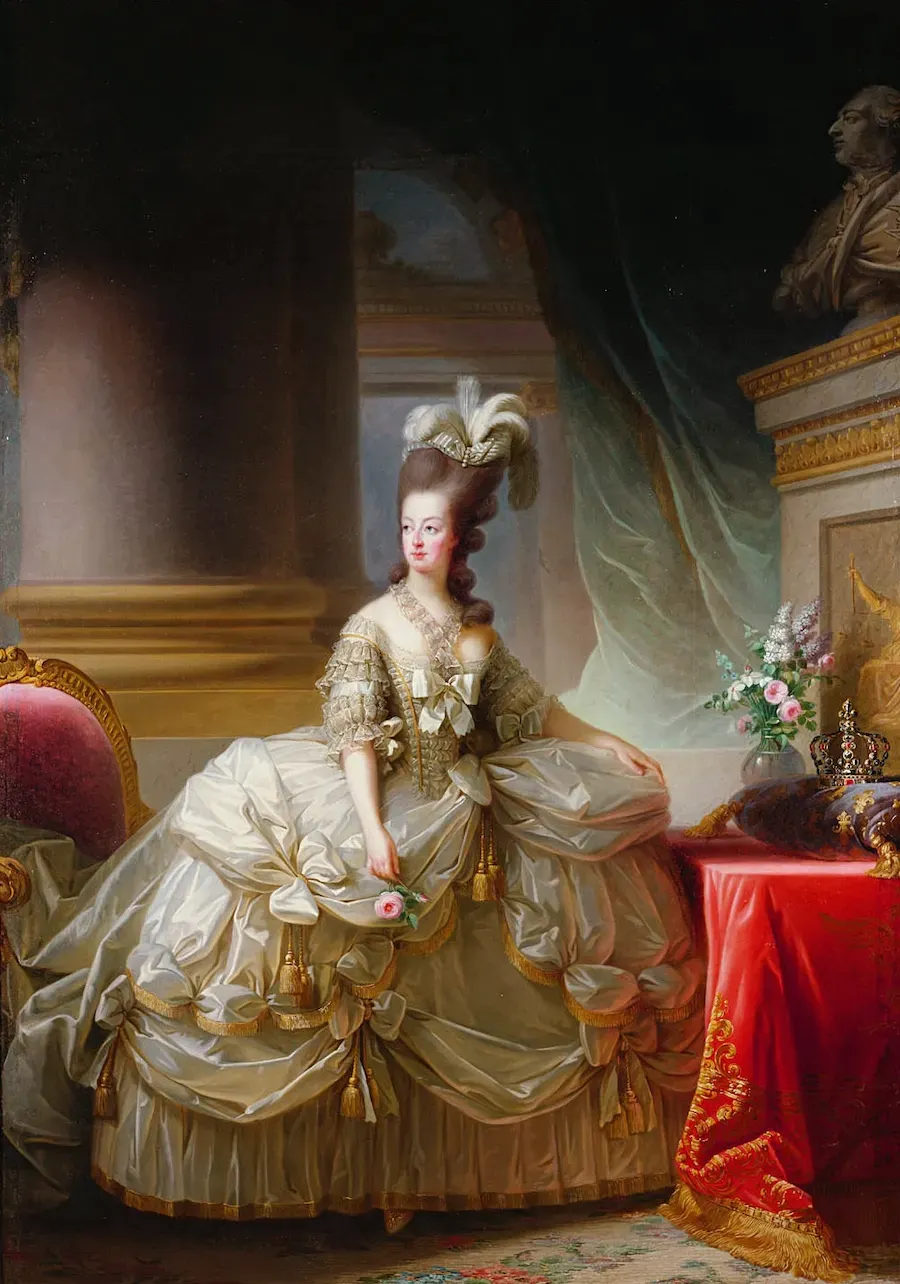
In order to escape the strict and boring court life, Marie Antoinette often withdrew to her pleasure palace Trianon in the park of Versailles, which her husband had given her shortly after ascending the throne. There she only surrounded herself with entertaining people she liked, and rumors swirled that the young queen was enjoying herself with lovers at her private home instead of raising an heir to the throne. Only the visit of Marie Antoinette's big brother Emperor Joseph II in 1777 brought about a change in royal married life and the following year the queen became a mother for the first time.
Related: Is The Hope Diamond Really Cursed?
For the jewelers Böhmer and Bassenge, the birth of the crown prince presented an opportunity. Since the death of Louis XV they had tried all over Europe to sell their magnificent diamond necklace. But it was too expensive for everyone, even the Russian Tsarina Catherine II. To make matters worse, the piece of jewelry was not particularly beautiful. But in 1781 there was hope, because Louis XVI was extremely proud to have an heir to the throne. In fact, he considered buying the necklace for his wife out of sheer gratitude, but even to them, who had already spent so much money on jewelry, the price was too high. Böhmer and Bassenge left in despair.
Enter Jeanne de Saint-Rémy de Valois, Countess de La Motte. Her family tree included King Henry II of France, who fathered Henri de Saint-Rémy with one of his mistresses. However, his descendants were now impoverished and Jeanne became an orphan at an early age. She found a patron and, in 1780, a husband in Nicolas de La Motte. However, since he was just as poor as she was, one had to come up with something in order to lead a lavish lifestyle.
Related: Crown Jewels: 5 Times Royal Jewelry Made Auction Headlines
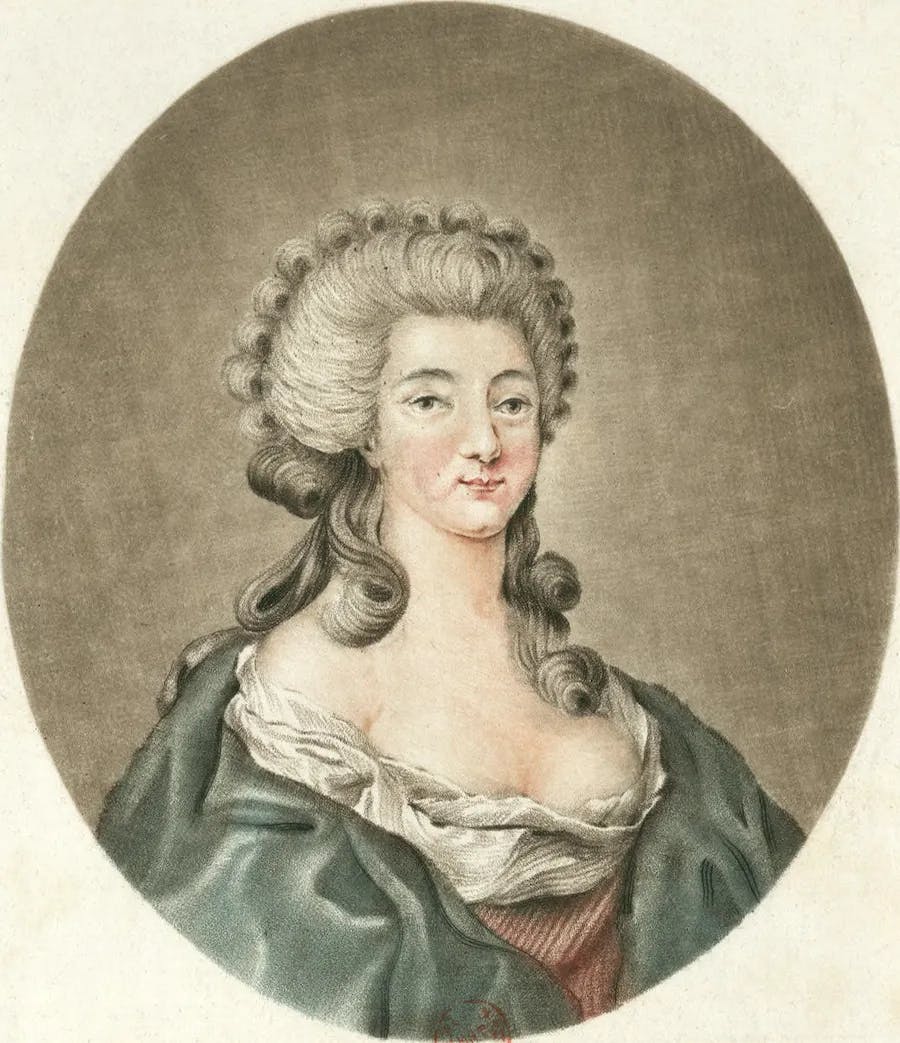
The couple settled in Paris and Jeanne repeatedly tried to get Marie Antoinette's attention in Versailles, but it didn't work. Nevertheless, Jeanne managed to spread the rumor in Paris that she was in the favor of the queen. This was also heard by the two desperate jewelers, who turned to "Her Majesty's good friend" for help. Soon Jeanne hatched a plan to ingratiate herself with someone more powerful than she who also wanted to get close to the Queen.
Related: Marie Antoinette Memorabilia Fetch Insane Sums
That someone was Cardinal Louis de Rohan, who not only came from one of the most prominent families in France, but also held an immensely important clerical position as the great almoner of the kingdom, which he owed less to his reputation than to his lineage. In 1772 he made a detour into diplomatic circles and became ambassador in Vienna, where he made himself very unpopular with the mother of Marie Antoinette, Empress Maria Theresa, through his inappropriate display of splendor and pompous appearance. Cardinal Rohan would have loved to have access to Marie Antoinette's exclusive circle, but she just gave him the cold shoulder.
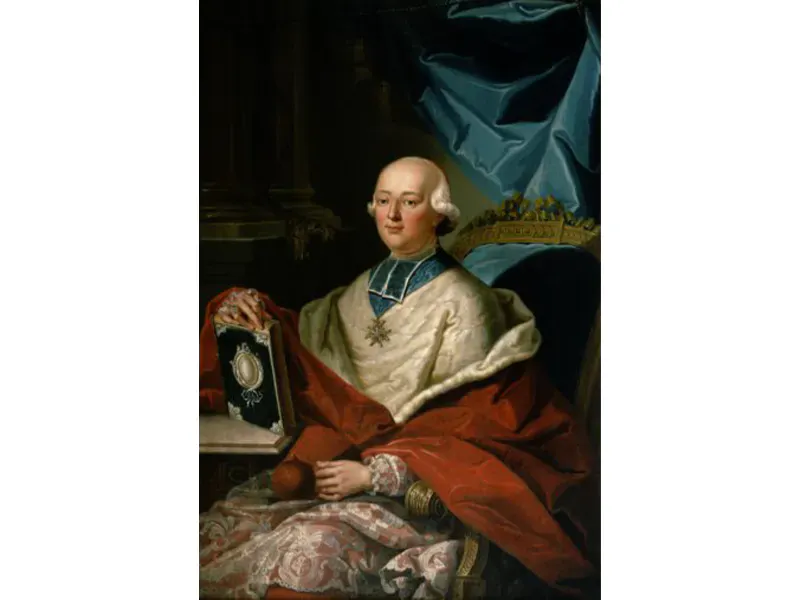
And now his acquaintance (and possibly lover) Jeanne de La Motte presented him with a way to endear himself to the Queen. She started showing the naïve cardinal her "Letters from the Queen" (actually written by her talented secretary) to convince him of their close friendship. And Cardinal Rohan was only too happy to be persuaded. He didn't even notice that the letters were mistakenly signed "Marie Antoinette de France" instead of the usual "Marie Antoinette." In fact, it wasn't the first time he'd fallen for a scam. He had previously met the famous imposter Giuseppe Balsamo, the self-proclaimed Count of Cagliostro, who traveled Europe as an occultist and alchemist to sell his elixirs to a wealthy clientele, which were supposed to bring love, lust and wealth. In fact, they mostly just brought him money.
Want to discover articles like this straight to your inbox? Then register today for our free newsletter!
As promising as the alleged letters from the queen were, in which she seemed to have forgiven the cardinal for all his past offenses, Cardinal Rohan was still not entirely convinced. Jeanne de La Motte had someone on hand for this, too: a young woman named Mademoiselle d'Oliva, whom she had noticed in Paris because of her close resemblance to Marie Antoinette, and who, for a fee, was only too willing to take part in a nocturnal scene in the Park of Versailles playing the Queen. Clothed in a white dress with a straw hat, which resembled the outfit Marie Antoinette had worn in a recent painting shown at the Paris Salon, Mademoiselle d'Oliva approached the cardinal saying that she forgave him.
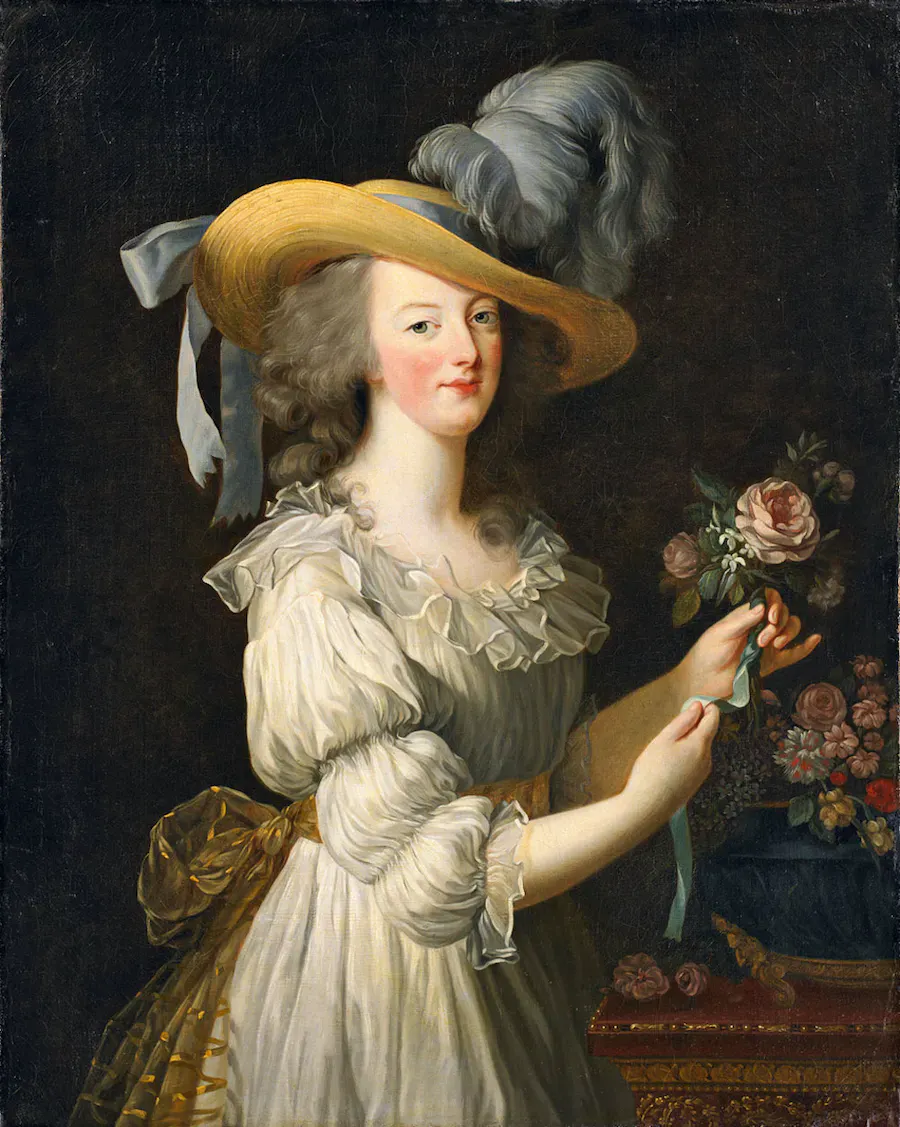
The meeting was of course quickly disrupted and the alleged queen withdrew. In any case, Cardinal Rohan had taken the bait. When Jeanne de La Motte came to him and told him that the Queen wanted his help in buying a diamond necklace worth 1.8 million livres, he had no doubts about the veracity of the matter for which he was to act as guarantor. Böhmer and Bassenge, who were happy to finally be able to sell the expensive piece, negotiated the price down to 1.6 million livres and agreed to receive 400,000 livres in installments. At the beginning of 1785, Jeanne de La Motte finally had the necklace in her hands. She gave it to her husband Nicolas, who took it to London to sell the individual stones.
Related: A History of Élisabeth Vigée Le Brun's Portraits of Marie Antoinette
As the day of the first installment approached, the cardinal grew increasingly restless. As before, Marie Antoinette treated him with disdain. In the meantime, she had received a letter from the jeweler Böhmer, in which he thanked her for buying the necklace. The queen, believing that the jeweler had lost his mind, threw the letter into the fire and paid no attention to it. When Böhmer finally approached Marie Antoinette's chambermaid Madame Campan at the beginning of August 1785 because the first payment was already overdue, the whole story was exposed. Marie Antoinette angrily demanded the arrest of Cardinal Rohan, and Louis XVI, more than horrified as a husband, king and devout Christian, had him taken to the Bastille to await trial before the Paris Parliament.
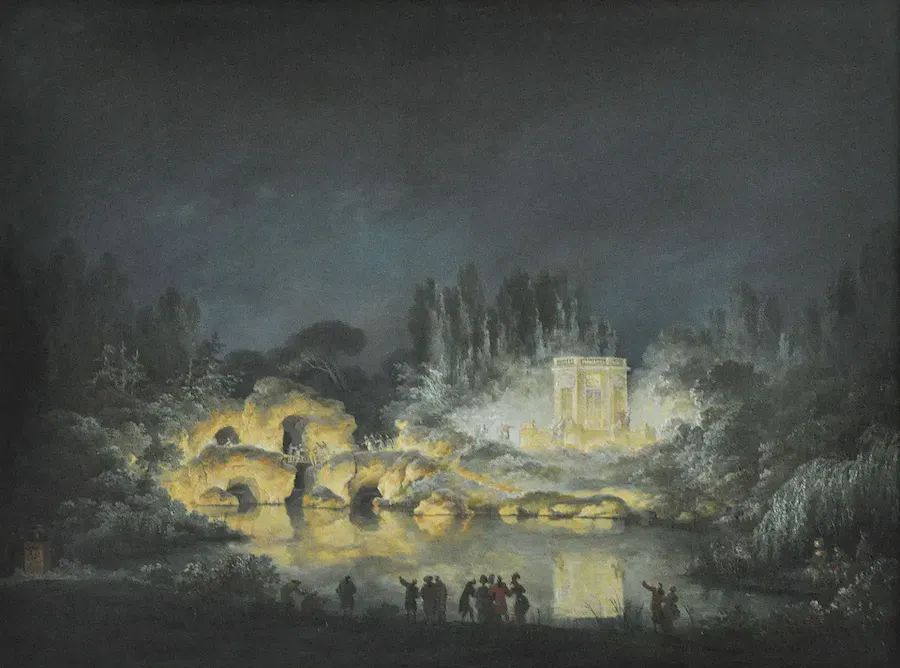
Not for a moment did Marie Antoinette believe that Cardinal Rohan, who claimed to have been deceived by a gang of fraudsters, would be acquitted. But that is exactly what happened at the end of May 1786. While Jeanne de La Motte, who also had been arrested before the trial began, was flogged, branded and sentenced to life in prison, Cardinal Louis Rohan was a free man. Since his arrest he had public opinion on his side, and few believed that Marie Antoinette had known nothing of all this. It was now evident that the smear campaign to which Marie Antoinette had been subjected since the day she arrived in France was bearing fruit. It would certainly have been beneficial had Marie Antoinette lived more prudently, but the fact that she neglected her royal duties and eschewed public life made her appear as someone who would not shy away from a questionable purchase of jewelry.
Related: La Peregrina and Le Pelegrina: The World's Most Famous Pearls
And Jeanne de La Motte? She added fuel to the fire after she mysteriously managed to escape after a year in prison. She settled in London, where she wrote her purported memoirs, which portrayed Marie Antoinette as the insatiable "queen of lust"—yes, not only Cardinal Rohan, but herself was included in the queen's extensive circle of lovers.
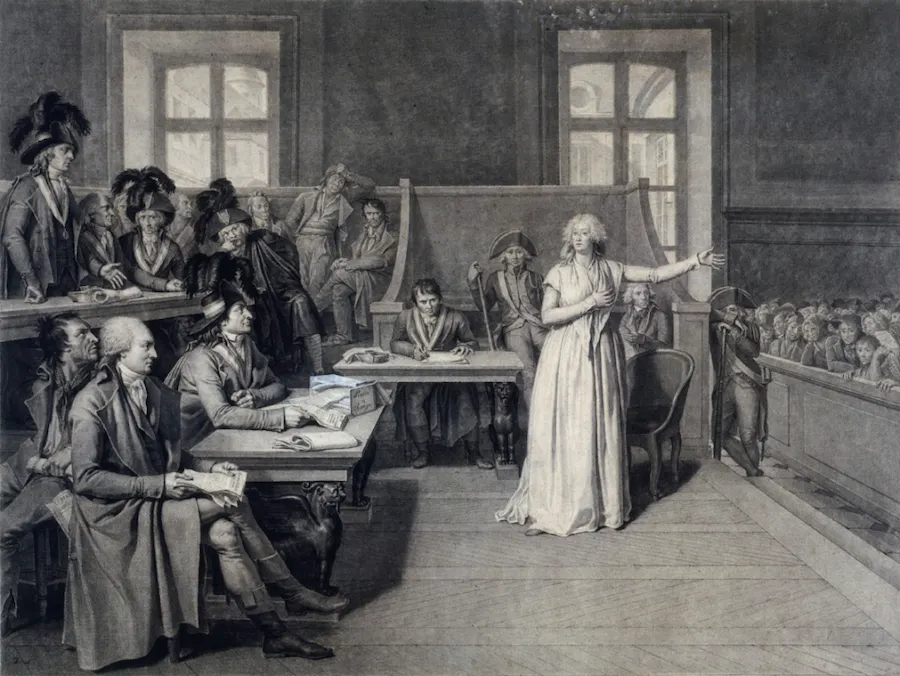
But neither Jeanne de La Motte nor Marie Antoinette had have much time left. Jeanne died in August 1791 after jumping or falling out of a window. Did Marie Antoinette ever find out about it? She had other worries during the revolution. Two months before Jeanne's death, the royal family's attempt to flee abroad failed. Marie Antoinette's bad reputation and the many rumors about her supposedly lavish private life, which the Necklace Affair had only added to, followed her to the revolutionary tribunal. On October 16, 1793, the ax of the guillotine severed Marie Antoinette's neck, possibly at the point where she would have worn the famous necklace - if only she had really wanted it.