
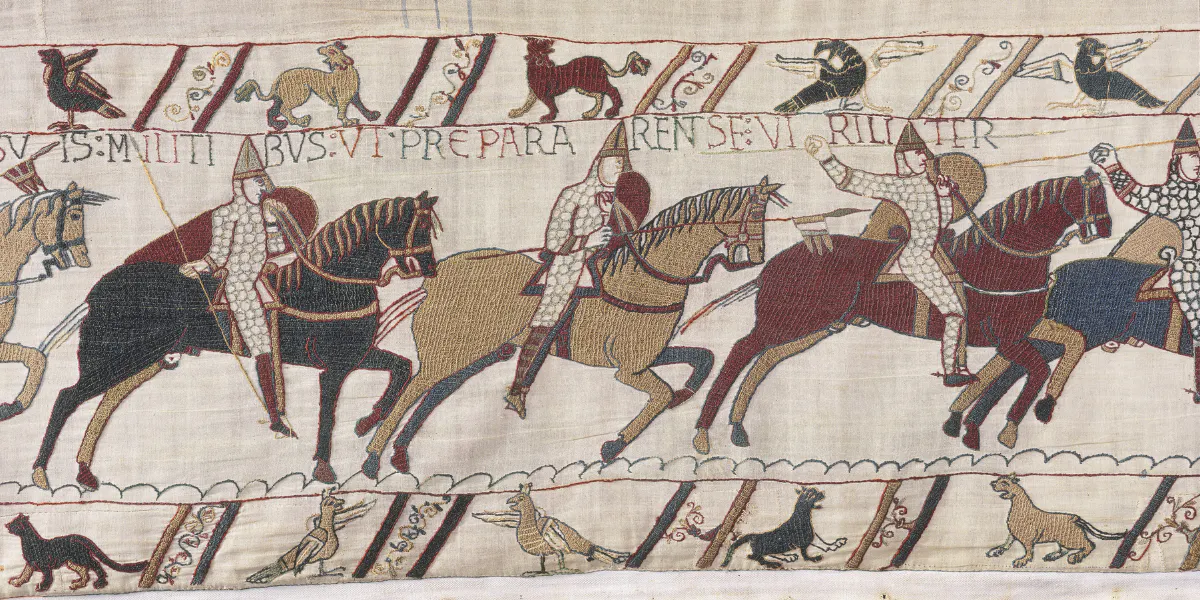
Nearly a thousand years after it was made, the Bayeux Tapestry remains one of Europe’s most distinctive works of medieval art. Stretching roughly 70 metres long and just half a metre high, it presents a continuous visual narrative charting the events leading up to, and culminating in, the Norman Conquest of England in 1066.
Despite its name, the Bayeux Tapestry is not technically a tapestry at all, but an embroidery, worked in wool yarn on a linen ground, with imagery rendered in a limited palette of earthy reds, blues, greens, and ochres.
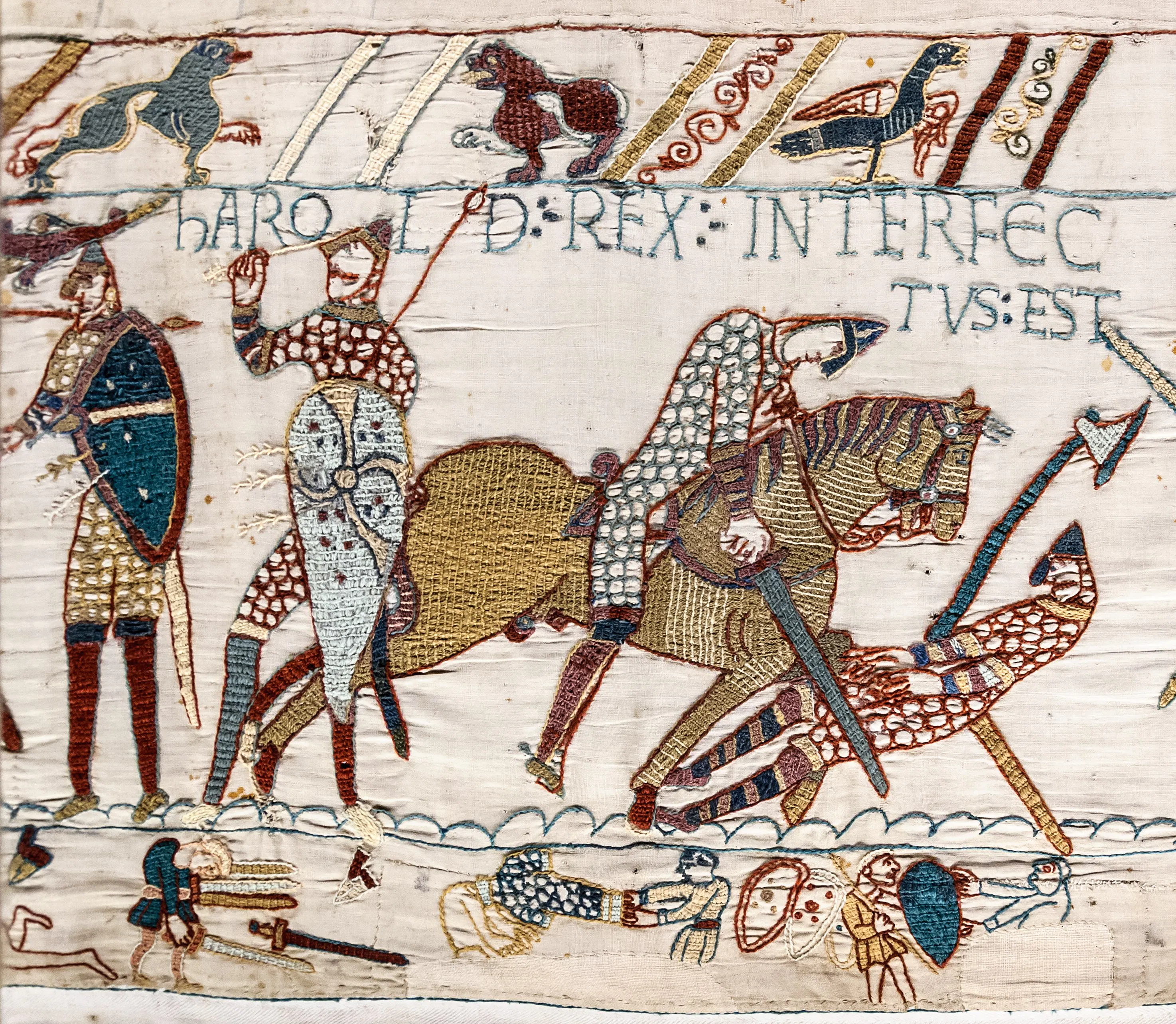
A rare surviving example of secular Romanesque art, the work tells the story of the conquest from a Norman perspective, unfolding across 58 scenes with remarkable economy and precision.
Scholars generally date the embroidery to the late 11th century and believe it was commissioned as a gift for William, Duke of Normandy, following his victory. Though long associated with Normandy, it is widely thought to have been made in England, possibly in Canterbury, before being preserved and displayed for centuries in Bayeux, France. In modern times, it has been housed in the Bayeux Tapestry Museum, established specifically for its display and preservation.
See also: Travel the World Through Art
In a cultural exchange agreed by the French and British governments, the Bayeux Tapestry is scheduled to travel to London’s British Museum from September 2026 to July 2027, marking its first display in the UK in nearly 900 years. In return, British treasures including the Sutton Hoo artefacts and the Lewis Chessmen will be loaned to museums in Normandy.

According to a British Museum press release, the exhibition, planned for the Sainsbury Exhibitions Gallery, is intended to place the tapestry at the centre of a broader presentation on the Norman Conquest, drawing on the museum’s own collection alongside additional loans.
See also: 10 Must-See Exhibitions in London: Autumn 2025
The proposal has proved controversial. Critics warn that transporting the nearly 1,000-year-old embroidery, already marked by almost 10,000 holes and dozens of tears, could place it at risk of irreversible damage.
In France, opposition to the loan has been vocal. More than 77,000 people have signed a petition accusing political leaders of ignoring expert warnings that “any transport, even minimal, represents a danger,” with fears that tensile stresses, vibration, repacking and unpacking, and even minor environmental fluctuations could exacerbate existing weaknesses.
In response, organisers have committed to an unprecedented “dry run” of the transport process, using a full-scale facsimile fitted with vibration sensors. The trial is intended to test whether the rolling, layering, and handling systems required to move the tapestry can remain within safe thresholds.
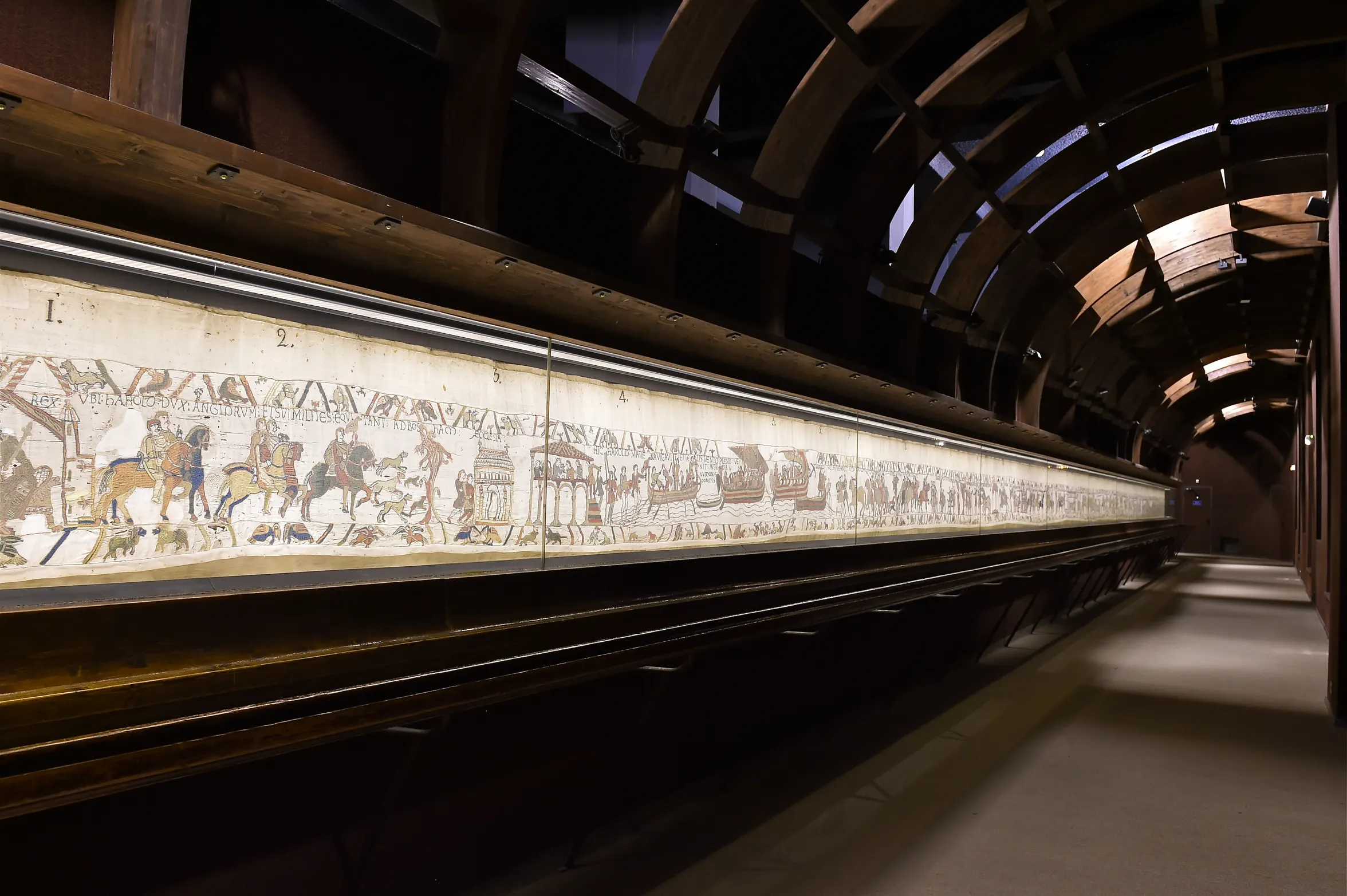
In the UK, the government has agreed to insure the work under the Government Indemnity Scheme for an estimated £800 million, covering potential loss or damage during transit and display.
The figure, however, has been widely questioned. At more than twice the price paid for the Salvator Mundi, the most expensive artwork ever sold, the valuation has been described as largely symbolic. French art historian Didier Rykner, who initiated the petition, has pointed out that “insurance must allow for the replacement of the insured object if it were destroyed” —something impossible in the case of the Bayeux Tapestry.
Want news like this delivered straight to your inbox? Subscribe to our free newsletter!
The debate recently gained a prominent public voice in David Hockney, who lives in Normandy and has described the work as “something that has defined my life for more than eight decades.” Writing in The Independent, the celebrated British artist condemned the proposed loan as “madness”, describing it as a project driven by “the vanity of a museum which wants to boast of the number of visitors,” and warning that it risks “irreversible damage” to a “beautiful as well as historically important” work.
See also: David Hockney: Star of Contemporary Art
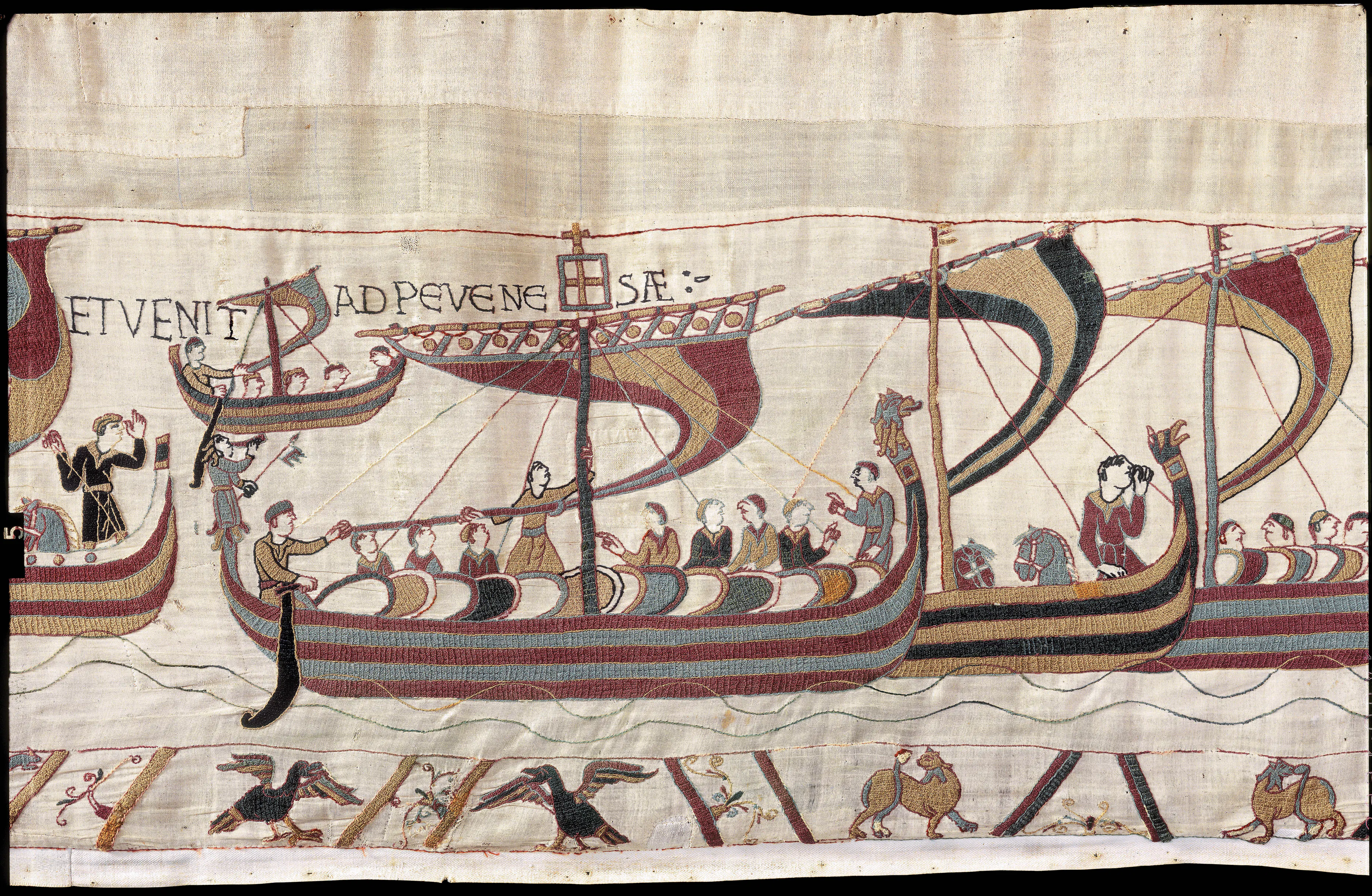
The British Museum, for its part, has defended the decision, emphasising its conservation expertise and long experience handling fragile objects. Its director, Nicholas Cullinan, has pointed to the institution’s track record with complex international loans, including medieval textiles and ancient works of comparable age, and stressed that the project is being carried out in close collaboration with French specialists.
Hockney has suggested that a high-quality replica could offer public access without endangering the original. The tapestry itself, however, has already been removed from display and placed in secure storage as preparations for its transport to London continue.


![Andy Warhol (1928-1987), American, REBEL WITHOUT A CAUSE (JAMES DEAN), FROM "ADS," 1985 [F&S II. 355], screenprint in colors on Lenox museum board, the full sheet. Image © Waddington's (detail)](https://images.prismic.io/barnebys/eac0e6a7-09a4-4fc6-be84-f6ce6be52684_Andy+Warhol+edition.jpg?auto=format,compress)
![A copy of Bartolomé Esteban Murillo's ‘Immaculate Conception’ and the final result of the restoration, images © Europa Press News / Europa Press via Getty Images [detail]](https://images.prismic.io/barnebys/01f63abe-6916-422a-9aa0-c40c3199e8fa_Cover.jpg?auto=compress,format)