What is Khon?
Thailand has a rich history of dance with various different styles based on region, ethnicity, gender, class, and function. Perhaps the best known is the extravagant practice of Khon, where performers reenact scenes from the Ramakien, a Thai national epic that is an interpretation of the Ramayana, a Sanskrit epic. Although initially only performed for the royal court, it has become much more accessible to the general public and is a key element of the Thai tourism industry.
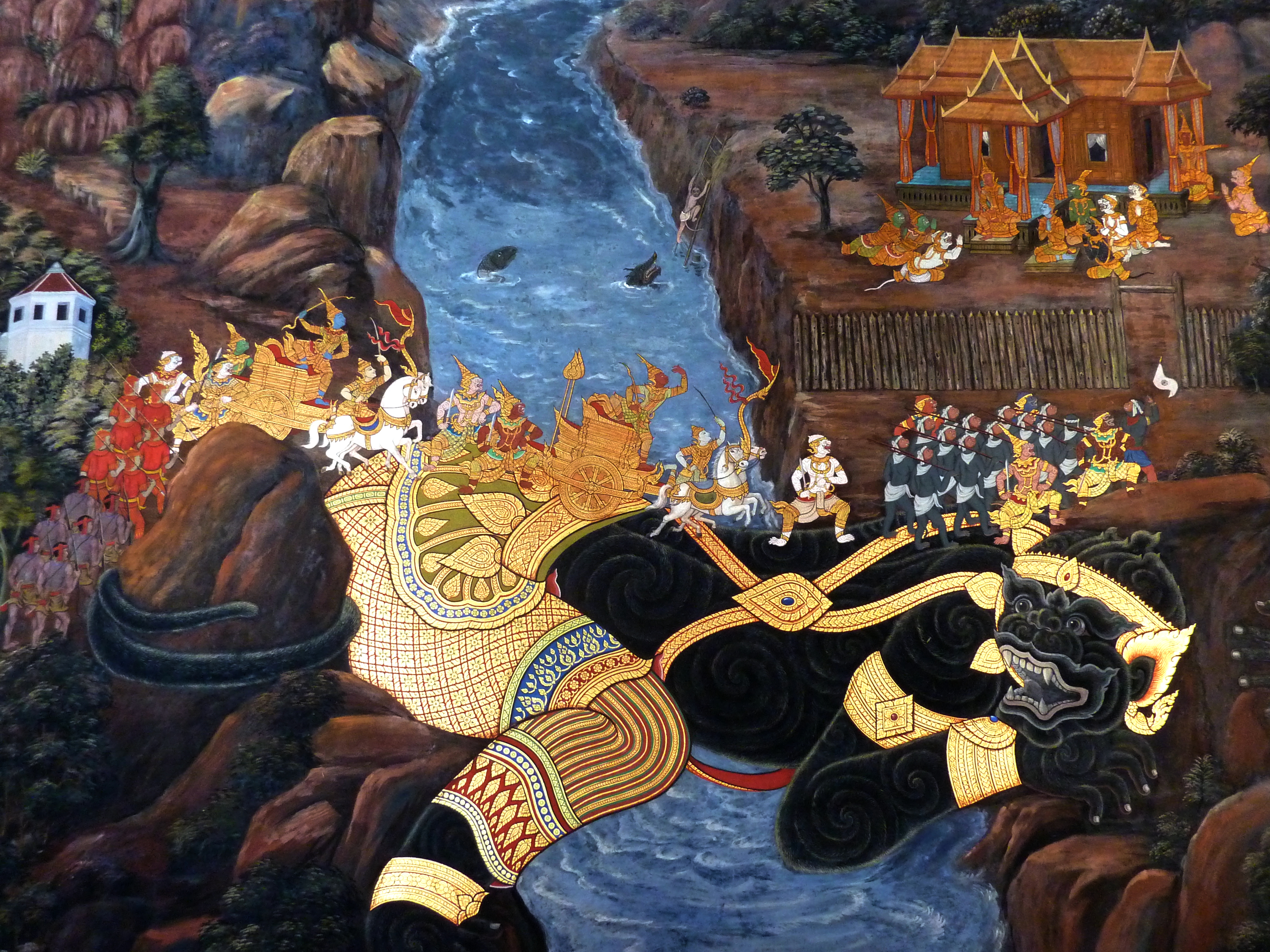
While the specific origins of Khon are murky, Thai sources indicate that it has existed since at least the 16th century, while the first Western reference to the practice comes from French diplomat Simon de la Loubère. He was sent to observe and record the culture of the kingdom then known as Siam on behalf of King Louis XIV in 1687, who had a diplomatic relationship with Narai the Great, the Thai King at the time. De la Loubère’s descriptions of “masked and armed dancers” whose movements “represent rather a combat than a dance” capture the most striking elements of Khon, but fail to express the rich history and artistry that goes into each performance.
Related: Collecting Opera and Ballet in Art
Khon originated as a form of royal entertainment, with narratives that reinforce the divinity and power of the King through the story of Rama, an incarnation of the Hindu god Vishnu. Although Khon has since become more available to the public, it retains its role in royal traditions. For example, Khon performances are still staged during cremations of significant royal and holy individuals, including the 2017 funeral ceremony for King Rama IX.
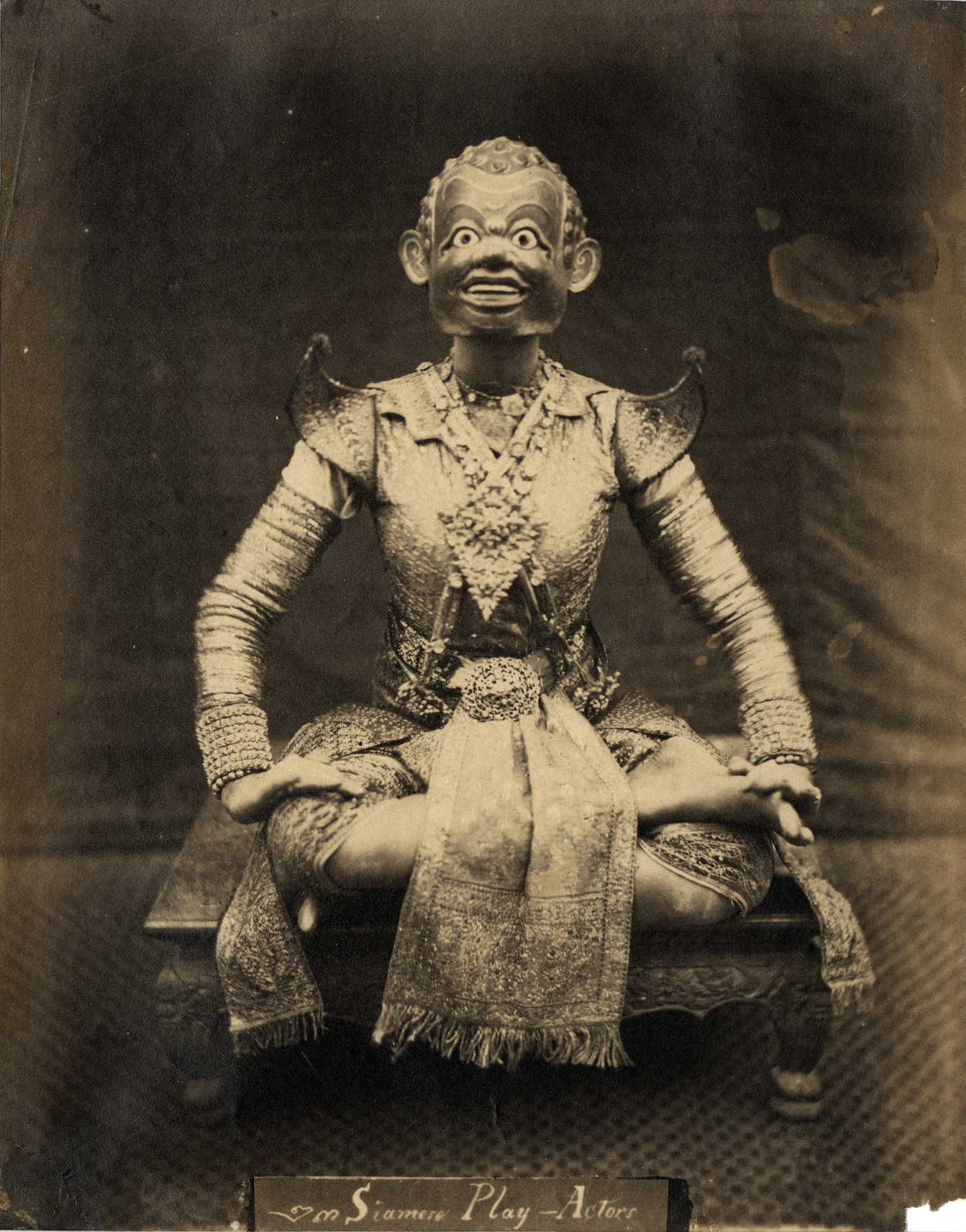
The performers consist of three main groups: the dancers, the orchestra, and the chorus. Most visible are the on-stage dancers, who communicate with the audience entirely through movement and body language – they do not speak. Their voices are provided by the chorus of singers, who generally remain unseen off-stage. The piphat musical ensemble, made up of xylophones, oboes, gongs, and drums, brings the entire performance together.
Khon dance moves are both graceful and expressive, with a focus on controlled movement of the legs and arms, precise footwork, and intricate hand movements and positions. Each of the four main character types use different variations on Khon dance style to complement their identities: human and divine men, meant to be regal; human and divine women, meant to be graceful; demons, meant to be powerful; and monkeys, meant to be energetic.
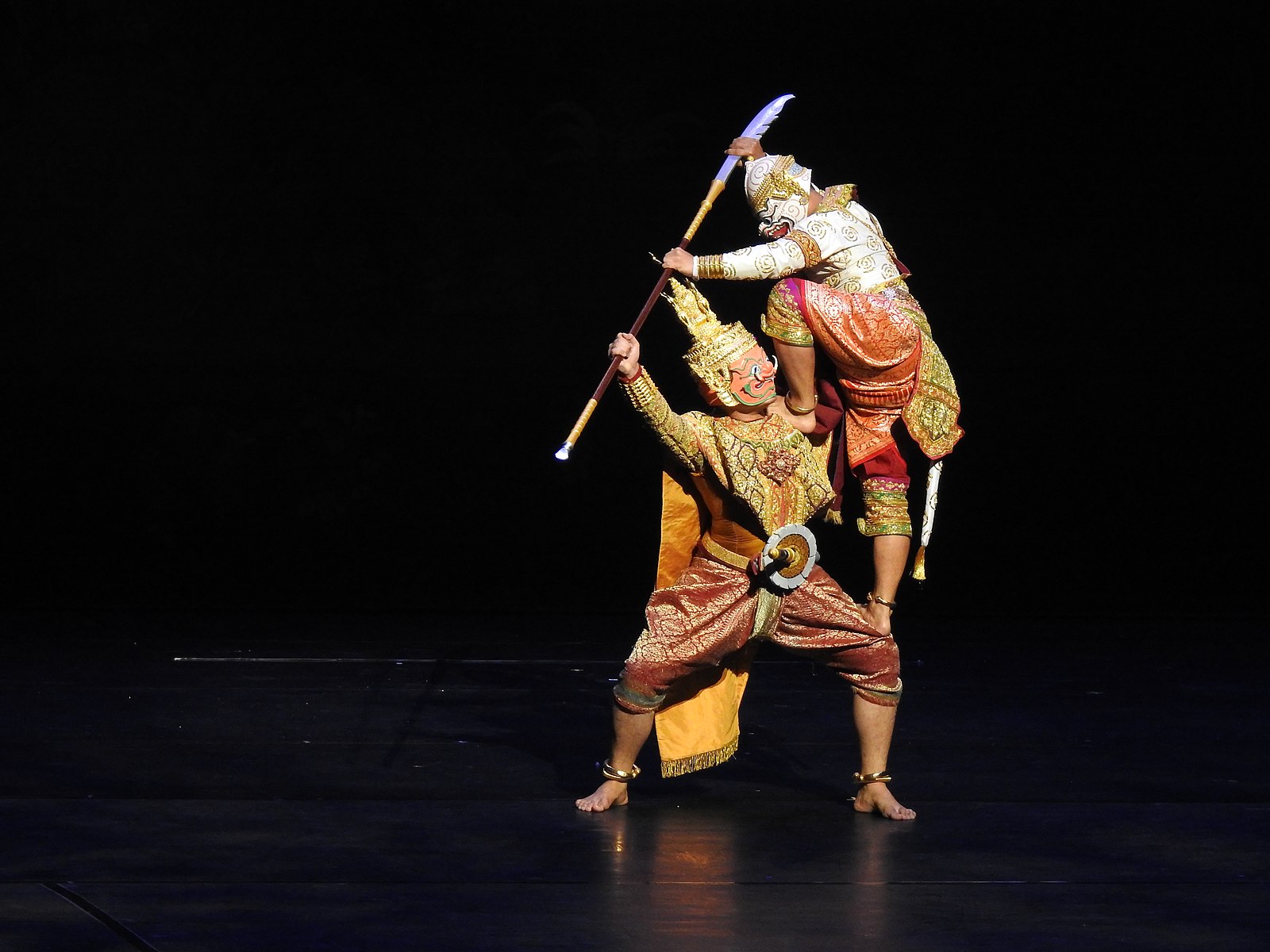
All roles require years of practice, skill, and flexibility – most Khon performers begin training around 8-13 years old. Perhaps the most demanding roles are those of the monkey characters, particularly the popular Hanuman, the white-monkey warrior. For these roles performers must do frequent backflips and other gymnast-level moves while wearing helmet-like masks.
Related: Mystic or Real: A Guide to Animals in Chinese Art
While many Khon traditions remain the same after centuries, major changes have occurred, mainly beginning in the early 20th century. Most of these modifications are due to the influence of Lakhon Nai, another traditional royal dance form.
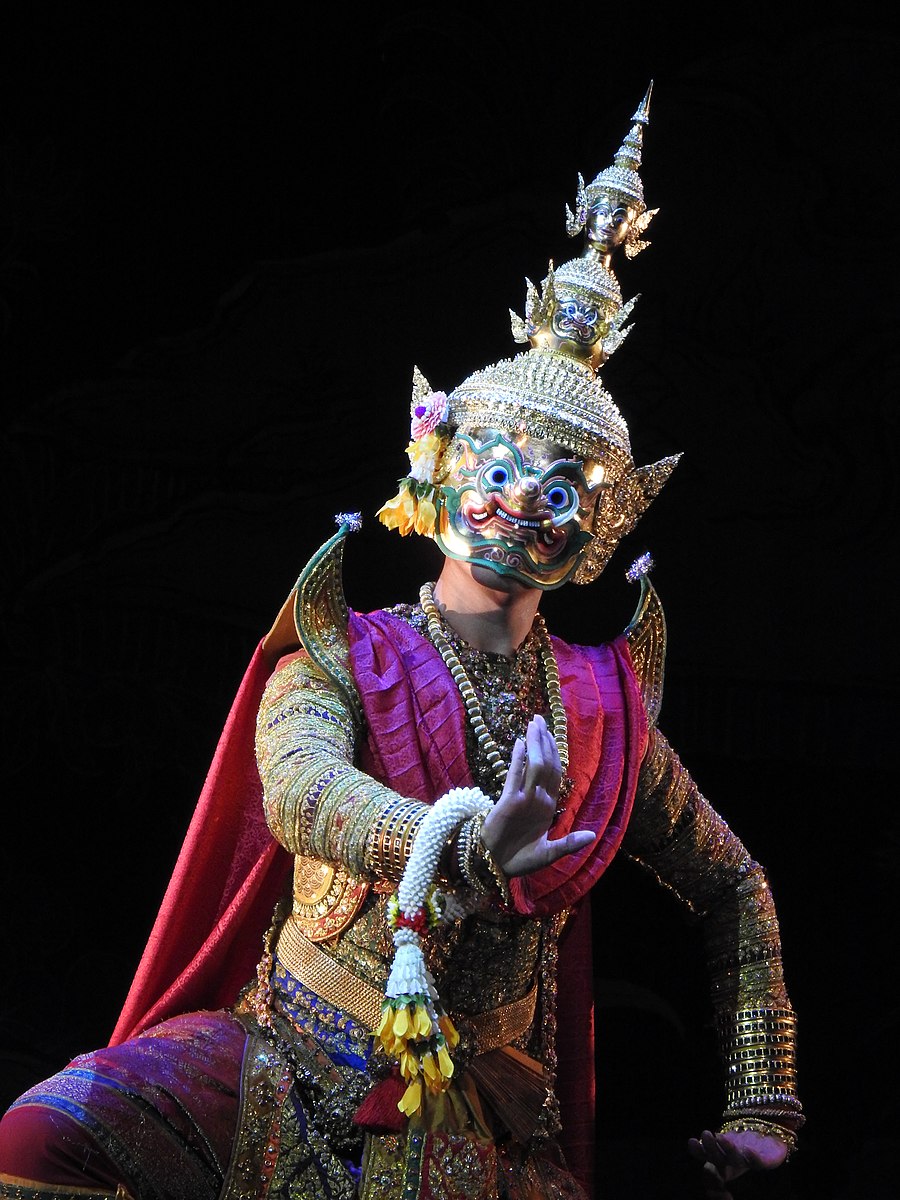
The two practices, while similar, were divided primarily by gender - traditionally, only men were permitted to be Khon dancers, while only women performed Lakhon Nai, but the easing of these restrictions led to the mixing of the two styles. Now, it is rare to see Khon performed in its original, unaltered form.
Khon Costumes
Just as the style of performance is tuned to enhance the personality of each role, Khon costume designs also help the actors 'speak', in a sense. Traditionally, the Ikkat weaving style, hailing from the Northeast of Thailand, is used to make the material for Khon performance costumes. It is a special cloth made of silk with gold and silver brocade, which is then elaborately embroidered with metallic thread and ornaments.
Khon costume making requires the work of many different craftspeople with a variety of skills and expertise, and creating one piece can take anywhere from a few months to a year or more based on size and detail. Actors are also hand sewn into their costumes before every performance to ensure a perfect fit.
Related: Romantic Ballet and the Tutus of Marie Taglioni
Designs and application differ based on the status and type of character the costume is meant for, which are influenced by traditional royal garb. Characters are also differentiated by the color of the cloth, with costumes designed with various combinations of mainly white, red, green, and yellow.
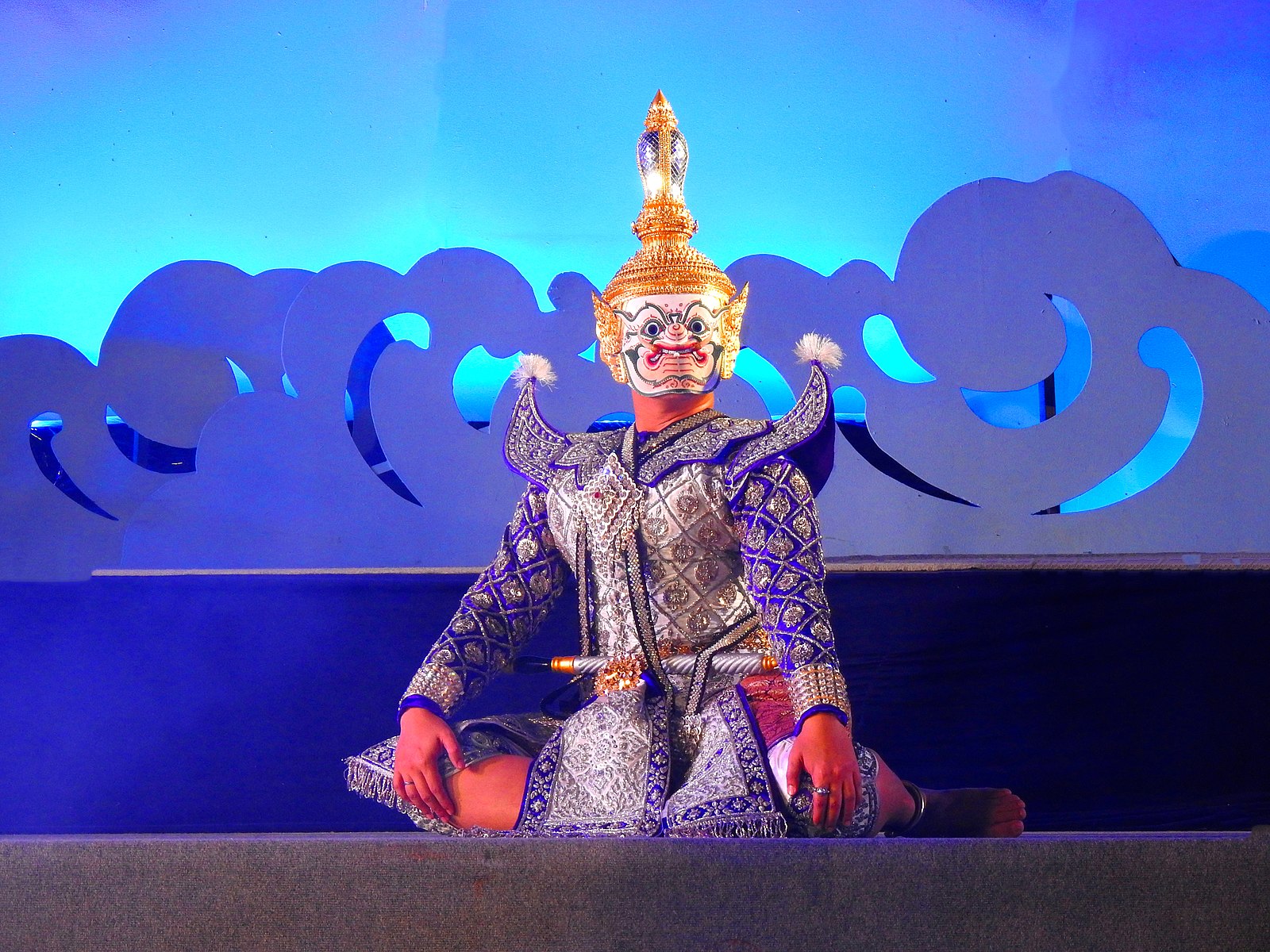
For instance, the most important roles of Rama and his wife Sida have clothes embroidered with a Thai script design, which was historically used to make clothing for the King. Less significant characters often have vine embroidery on their costumes, and the monkey characters have minimal embroidered motifs, instead using patterns meant to reference the body hair patterns of actual monkeys.
While the details of each costume vary, the basic structure of the clothes are generally the same, merely differing according to gender. Male characters wear form-fitting, long sleeve shirts with capri-length pants and a loincloth-like garment hanging from the waist, while female performers wear long capes, short-sleeved blouses, and long wrap skirts. All actors perform barefoot.
Khon Accessories
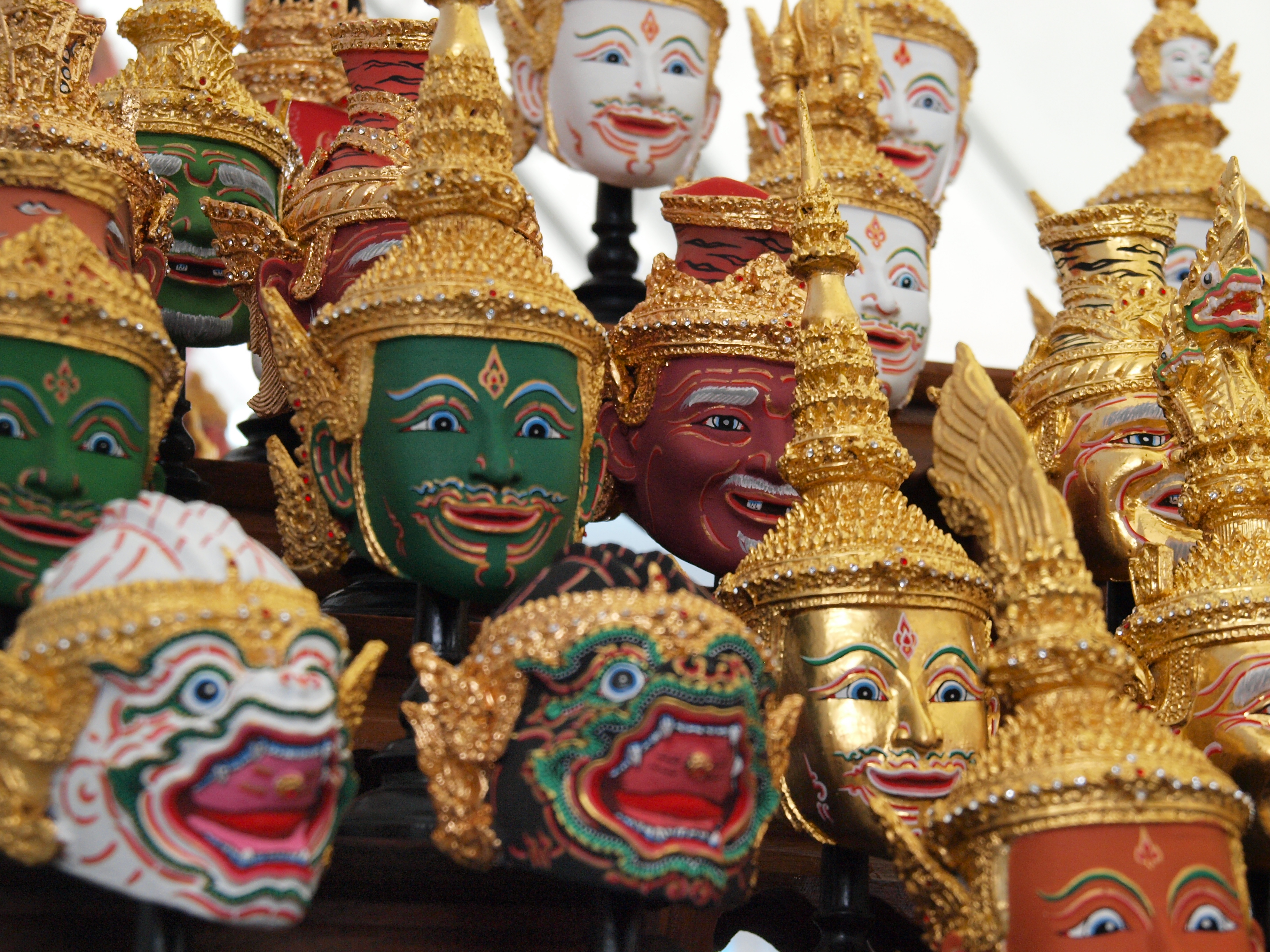
Costuming does not stop with the clothes, as all roles are adorned with a variety of jewelry, headdresses, weapons, and other ornaments. The royal and divine characters typically wear tall golden headdresses in the style of the crown of the Thai king, while demons and monkeys wear the iconic Khon masks, which completely cover their heads in a helmet-like fashion.
Related: Designer Costume Jewelry: The Favorite Accessory
Initially all performers wore masks, but the influence of Lakhon Nai, in which no dancers wore them, eventually led to only the non-human characters wearing them. Other performers are done up with thick, dramatic makeup meant to reflect traditional Thai art styles. These masks are some of the most visible elements of publicity and marketing, not just for Khon but Thai culture a whole.
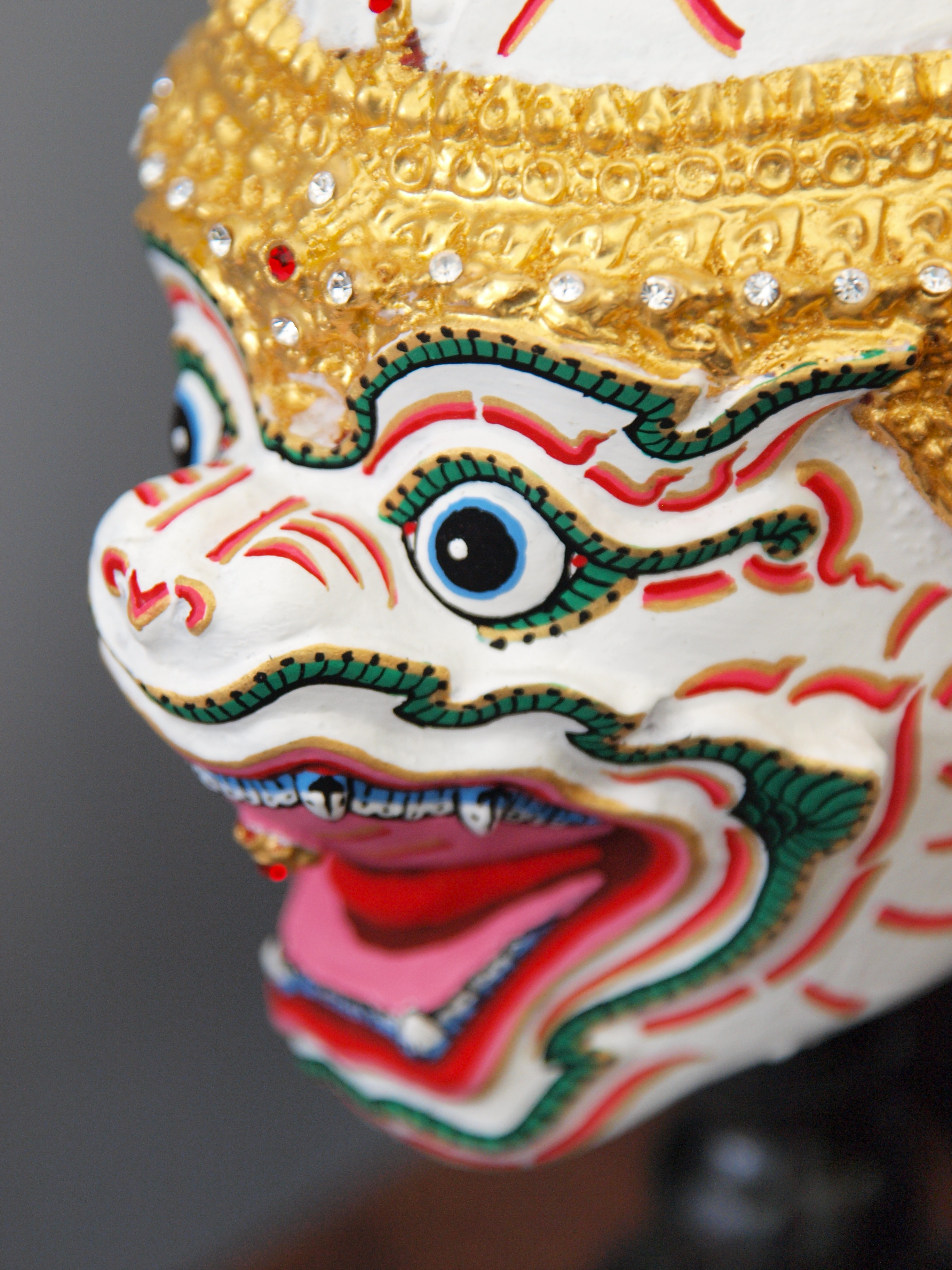
Khon mask making is just as labor and skill-intensive as costuming. Making them the traditional way means one mask can take three months to finish, though modern techniques allow them to be completed in a month or less. They are similarly unique, with over hundred mask designs in existence, varying in color, facial expression, shape, and markings.
Molded out of strips of mulberry paper layered over a clay base using papier-mâché techniques, the base is allowed to dry, and then carefully removed and sewn together with wire, before being encased with a layer of aluminium and a mix of powdered charcoal and dried banana leaf. Small details are individually formed out of clay using specially made moulds and added to the mask before the whole thing is painted. Details and gold accents are added by hand, meaning no two masks are completely identical.
Khon in Modern Times
While the talent, effort, and funding that goes into every element of a Khon performance helps to create a spectacular experience, the somewhat antiquated and often inaccessible nature of the practice has contributed to its decline in popularity among general Thai society. A major blow was dealt by the popularization of film and TV in the 1950s, as well as a reduction in quality of Khon costuming due to scarcity of materials and lack of funds stemming from World War II.
Related: China’s 7 Most Influential Contemporary Artists
This reduction in interest has led to fewer and fewer people becoming experts in the various fields and skills necessary to put on a Khon show. Nonetheless, conservation and promotion efforts have been put in place. Most notably, the Queen Mother Sirikit has, since the 1990s, led a major campaign to increase funding, access, and interest in the traditional Khon practices among newer generations. Khon was also added to UNESCO’s Representative List of the Intangible Cultural Heritage of Humanity in 2018.
New interpretations of Khon have also been staged by some Thai artists, modernizing it and questioning the way the dance has often been used to prop up monarchical and authoritarian interests in the country.
Want more articles like this delivered straight to your inbox? Subscribe to our free newsletter!
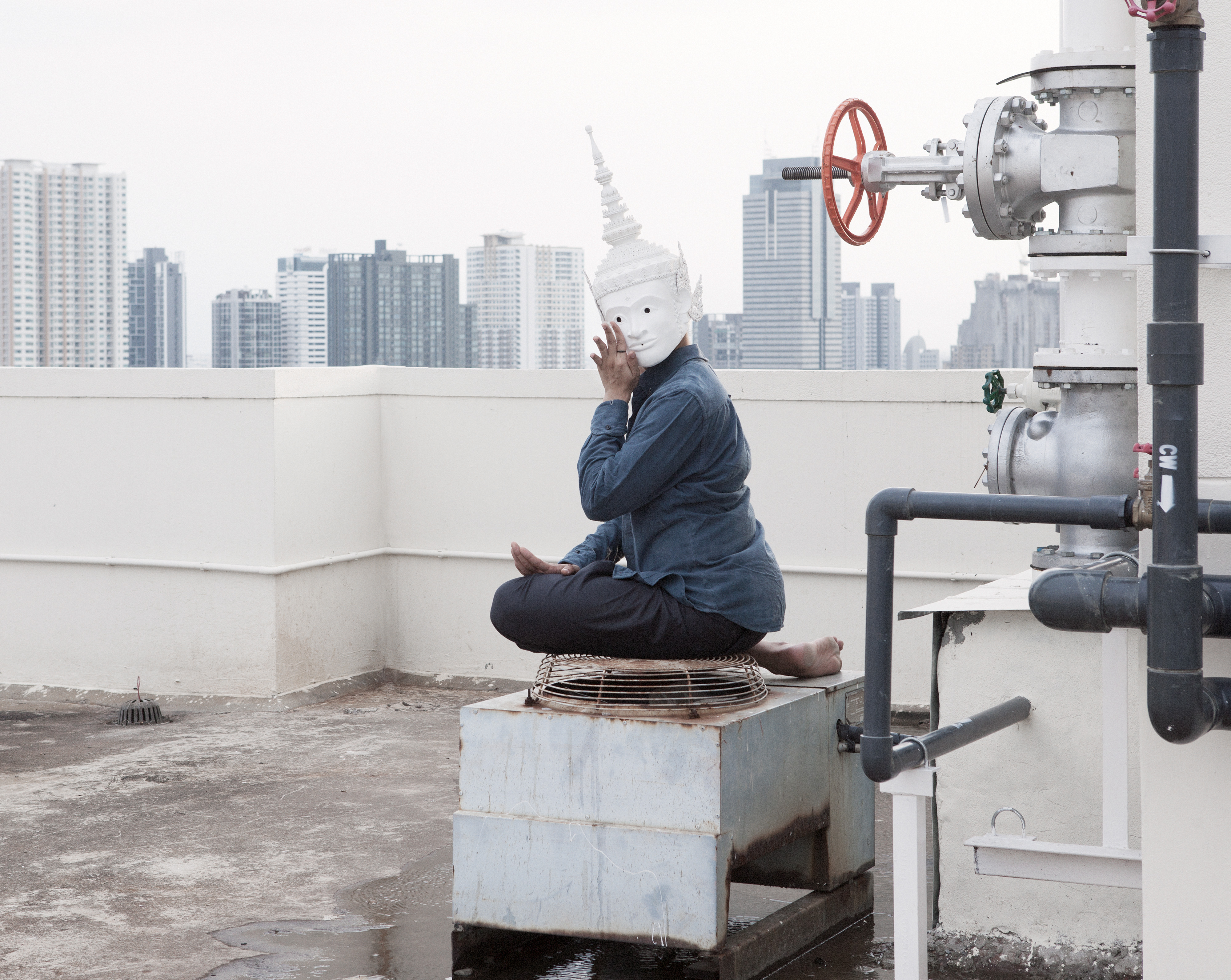
Artists including Pichet Klunchun, Patravadi Mejudhon, and Jitti Chompee have staged performances that adapt, analyze, and modernize traditional Khon practices. These interpretations examine the cultural, gendered, and classed elements of Khon, reflecting similar issues in overall Thai society and allowing the classical art form to persevere in and adapt to the modern world.