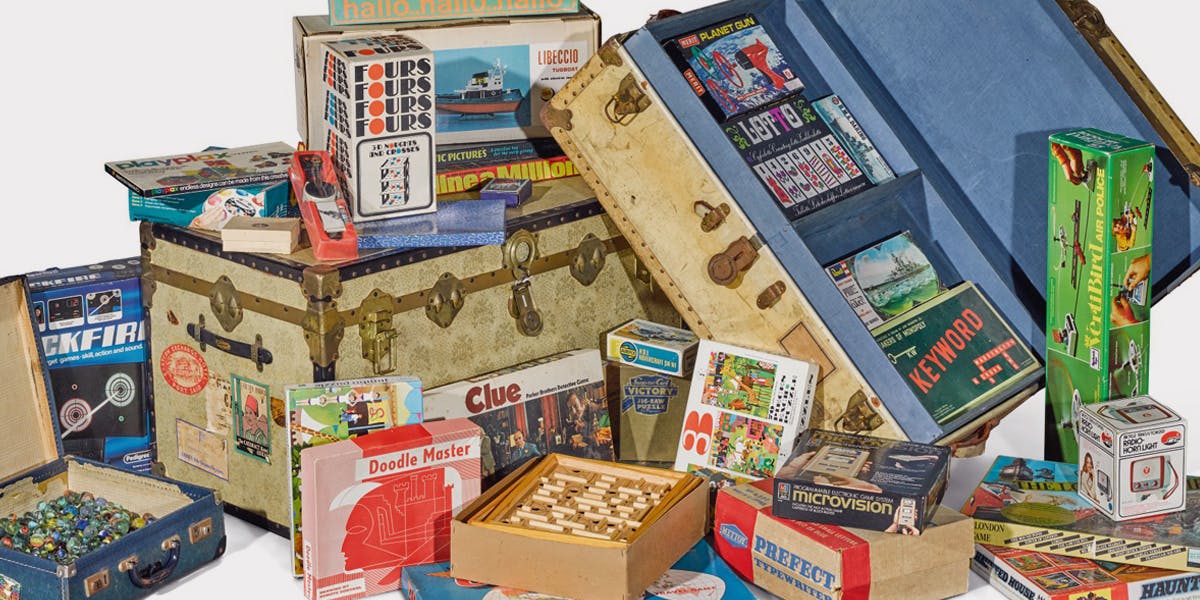
Board games are enjoying a revival in the early 21st century. Perhaps this is a reaction to the digital age, to the soulless world of computer games – often played solo – for traditional board games are very human. They’re all about face-to-face interaction. And people have been playing board games since the Ancient World.
Related: Vintage Luggage & Trunks: Where to Begin
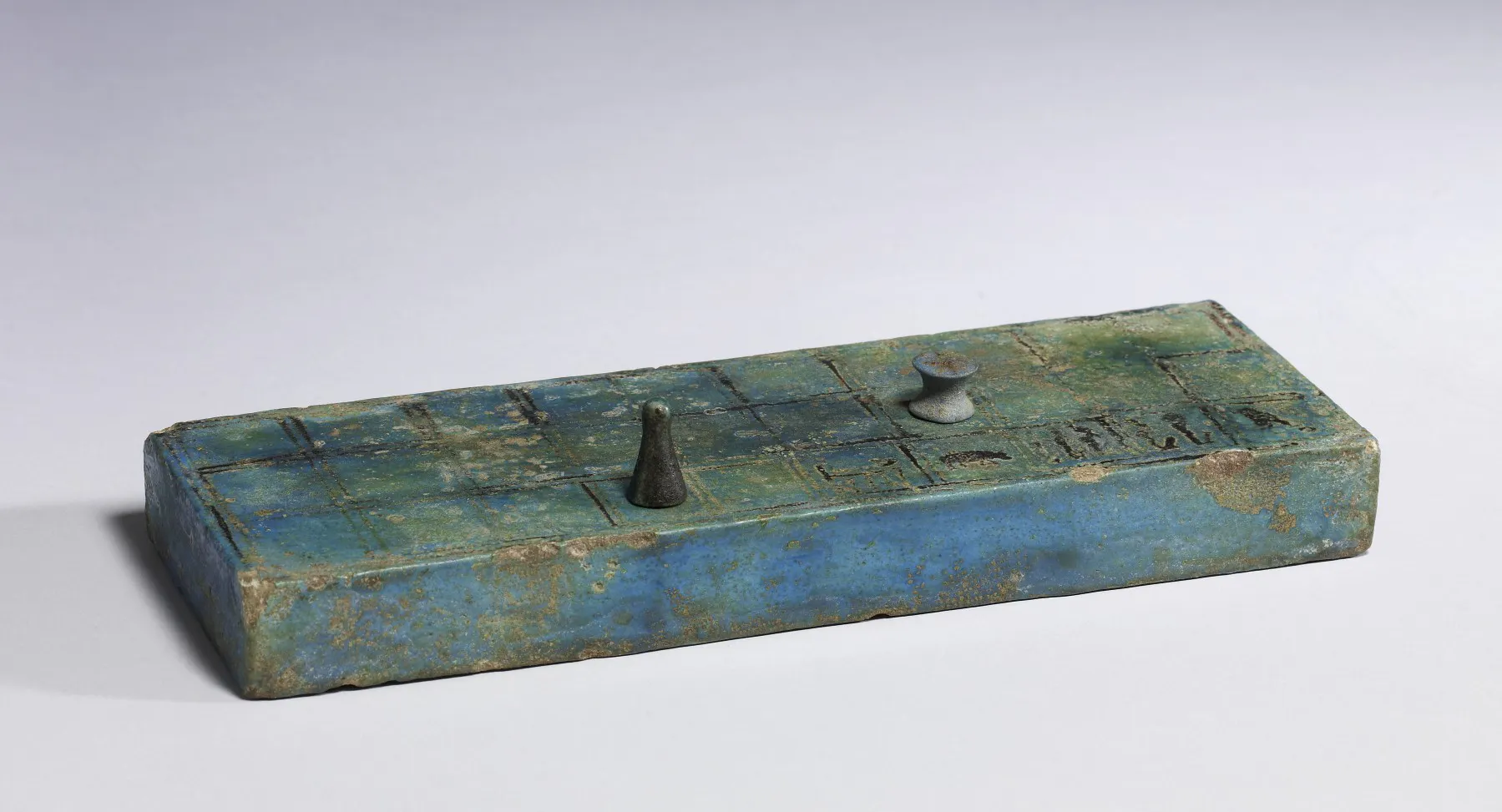
Senet – an early blocking game – is found in First Dynasty (c. 3100 BC to c. 2900 BC) Egyptian burial tombs and is, currently, the oldest board game known to have existed. The exact rules have been lost for posterity, however clever game historians and Egyptologists have reconstructed gameplay based on snippets of text spanning over a thousand years.
Want more articles on collecting straight to your inbox? Sign up to our free newsletter here
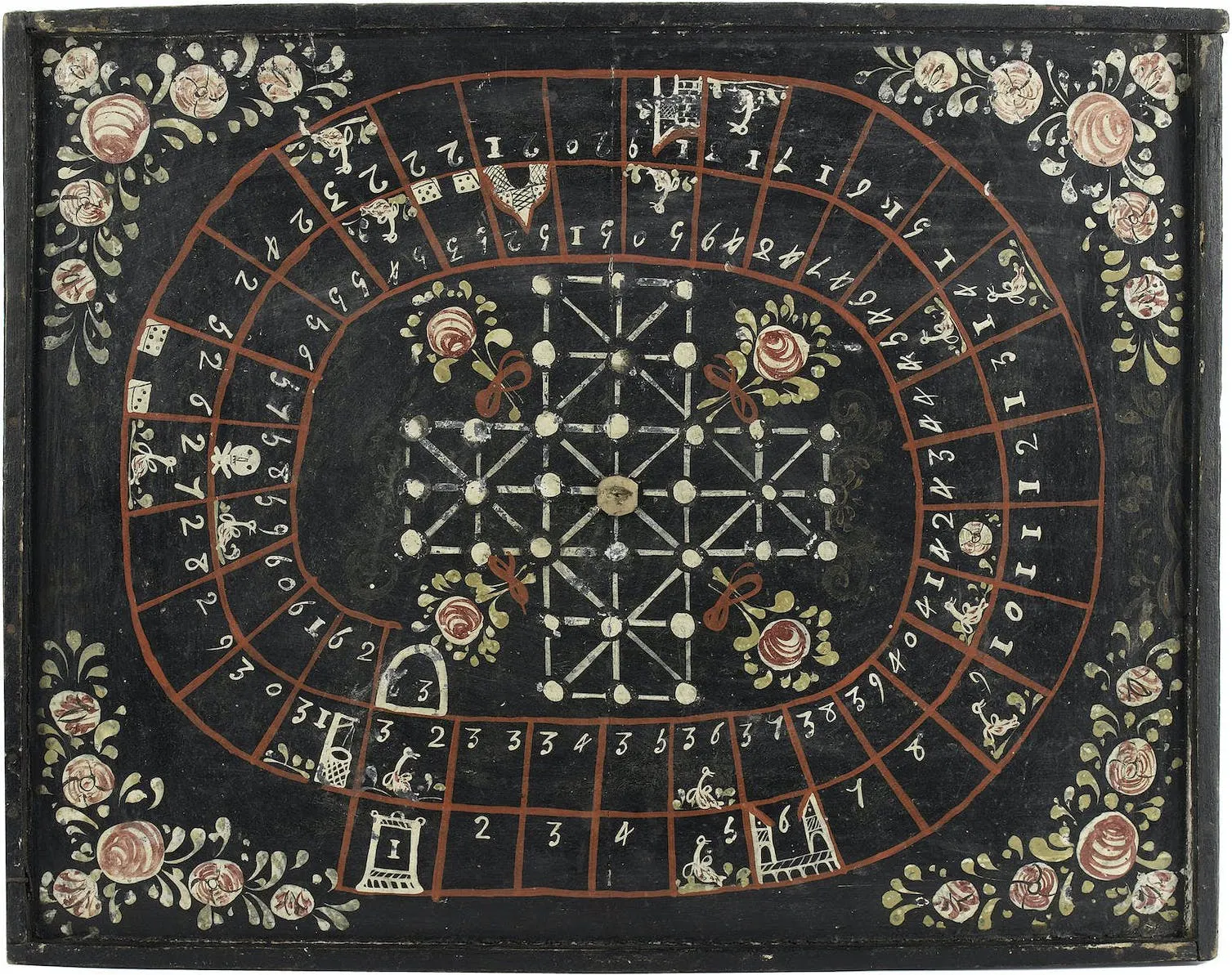
Many board games (including games designed in the 20th century) are based on the simple ‘Game of Goose’ concept, first recorded in the 15th century and the first commercially-produced board game. This is when two or more players move around a track and decide their moves by the throw of a dice. The object of the game is relatively simple: to be the first to get to the end, avoiding various obstacles along the way. These early games were prized assets: Francesco I de' Medici, Grand Duke of Tuscany, presented a version of the game to King Phillip II of Spain as a gift, sometime between 1574 and 1587.
Related: Porcelain Dolls: Toys Turned Collectables
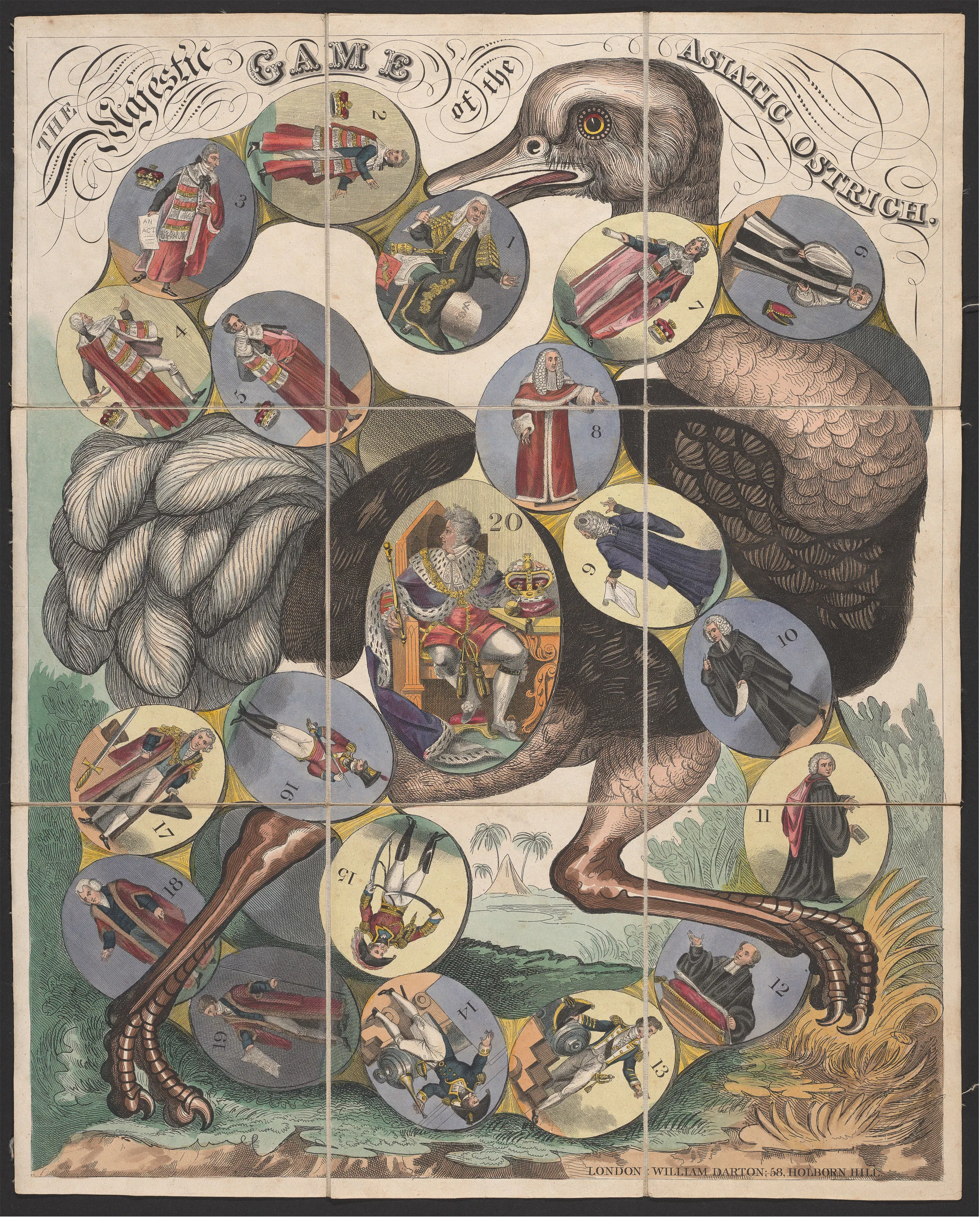
In the late 18th and 19th centuries, board games were popular as educational tools in the nursery or schoolroom. Printers and stationers produced numerous games on various themes, published on hand-colored lithographic sheets, then glued directly onto folded linen. These games are now eminently collectable and marvelously visual. The Majestic Game of the Asiatic Ostrich taught young players a lesson in the ranks and 'dignities' of the British peerage, clergy and the military. Figures are depicted in their wigs and ermine-lined robes against a vast ostrich, with the aim of the game, presumably, to reach King George IV, placed directly in the middle square. One edition from c. 1825 can be found in the collection of the Yale Center for British Art, and another from c. 1822 sold for £3,100 at C & T Auctioneers in 2018.
Related: Inside the World of Star Wars Collecting
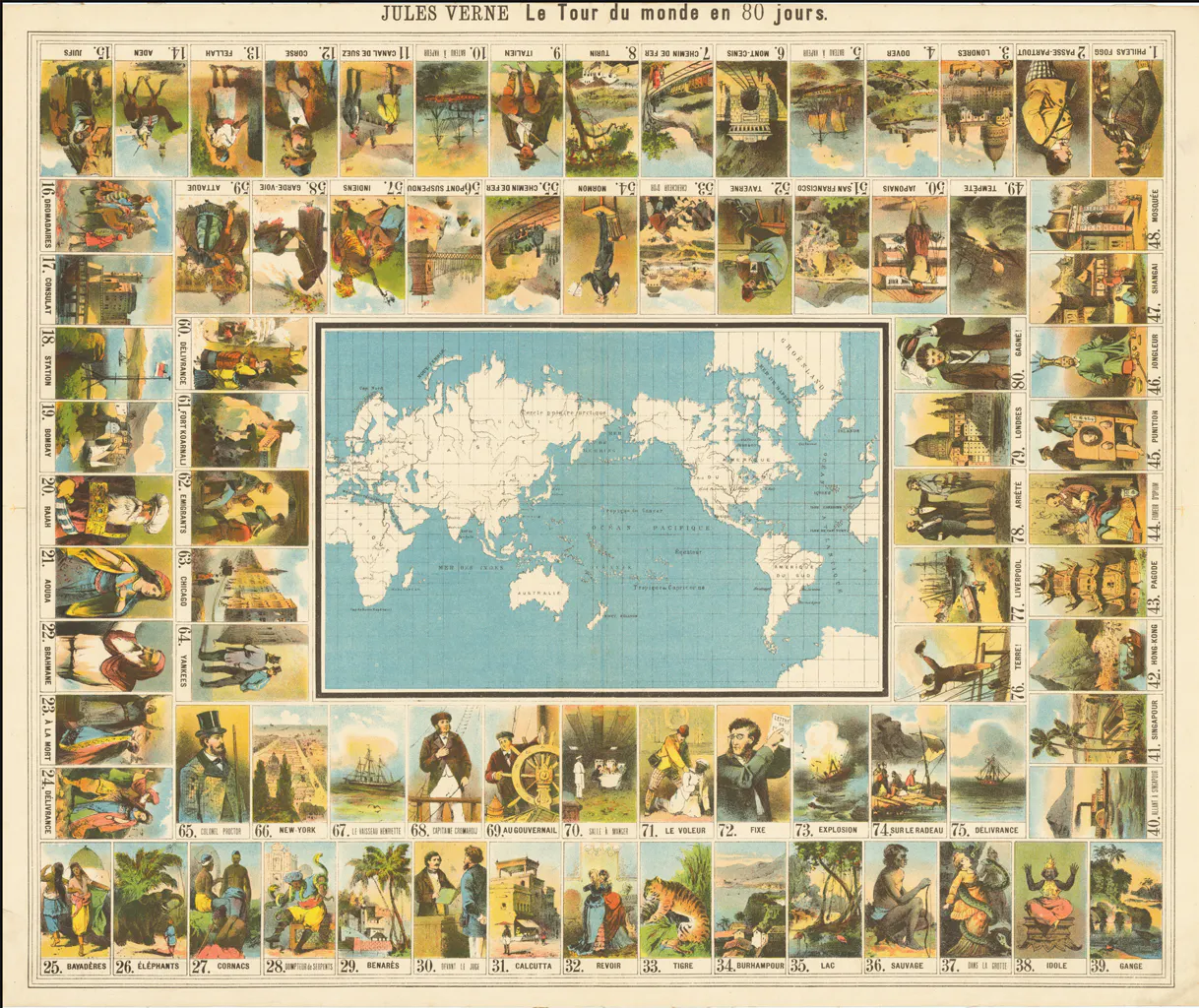
Other games championed geography and travel. Jules Verne's novel Around the World in Eighty Days (1872), inspired numerous games. A French version from the 1880s (Le Tour du Monde en 80 Jours) has a folding board beautifully illustrated with colorful lithographic printing. Players choose from miniature lead tokens, representing characters from the book, including Phileas Fogg and his valet, Passepartout, progressing from space to space in a race around the world. Winding the clock forward, Waddington's Go: The International Travel Game (1961) had a similar objective but with a stylish take on the mid-century travel business, worthy of 007 himself. Players traveled the world in search of souvenirs by sea (RMS Queen Mary), road (E-Type Jaguar) or air (Pan Am or BOAC). The game included facsimile Thomas Cook tickets, traveler's cheques, international fare charts, and imitation currency in Yen, Dollars, Sterling, Rupees and German Marks.
Are you a Chess, Playing Card & Board Game collector? Find out what your items are worth with Value My Stuff
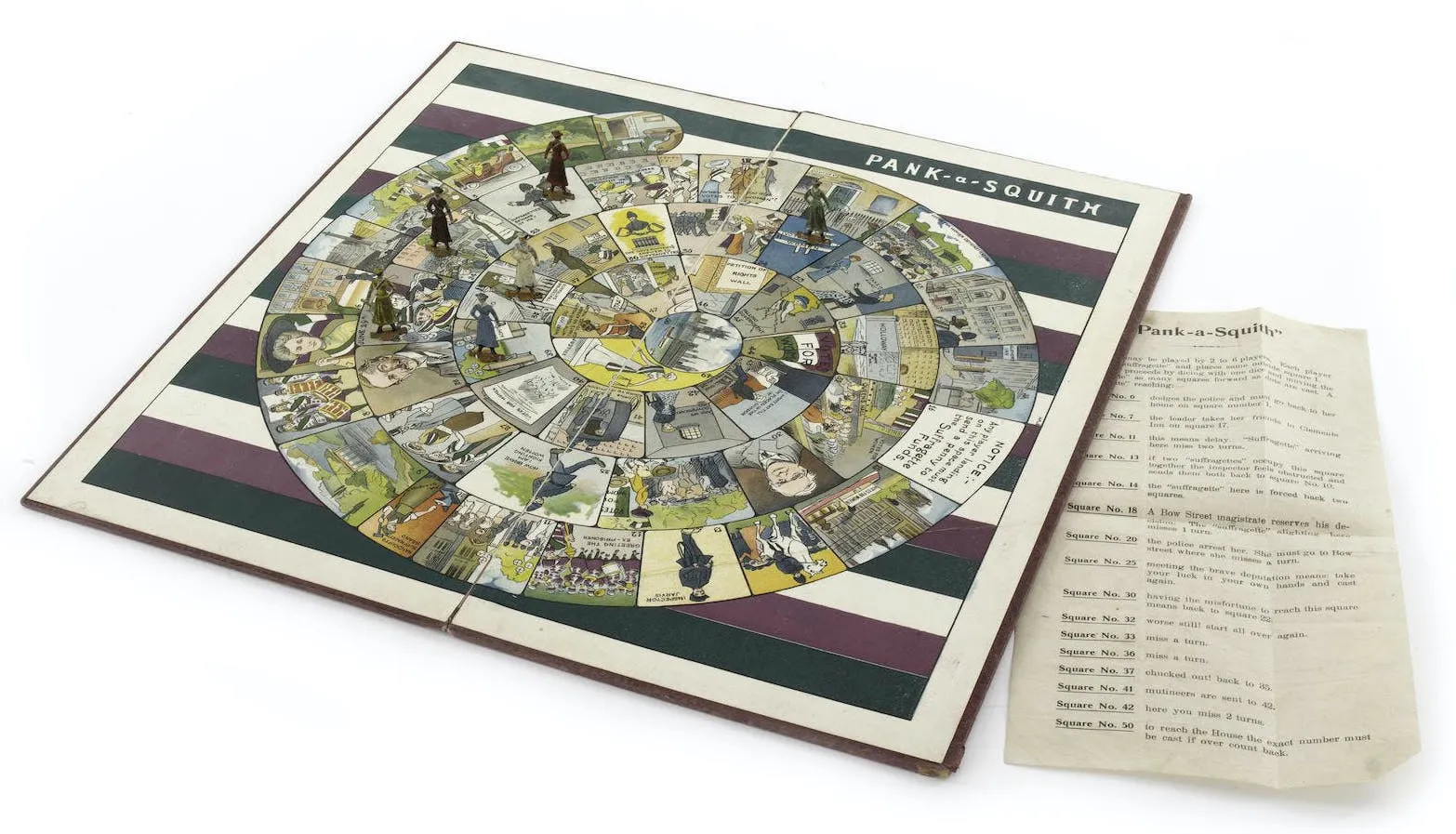
Slightly more unusual are the worthy games reflecting social issues and the political concerns of the day. In 2009, a rare Pank-A-Squith game from 1909 sold for over £4,000 at Bonhams. Although intended for British distribution, the game was manufactured in Germany to promote the Suffragette cause. The board is decorated in the colors of the 'Votes for Women' movement – green, white and violet – and miniature cast-lead figures represent famous suffragettes, including Emmeline Pankhurst. Players try to reach the central square representing 'Universal Suffrage'. Square 16 required that 'any player landing on this space must send a penny to Suffragette funds', while Square 32 depicted Holloway Prison. It's thought that this game had a relatively small print run, and examples surviving in good condition are, understandably, genuinely scarce.
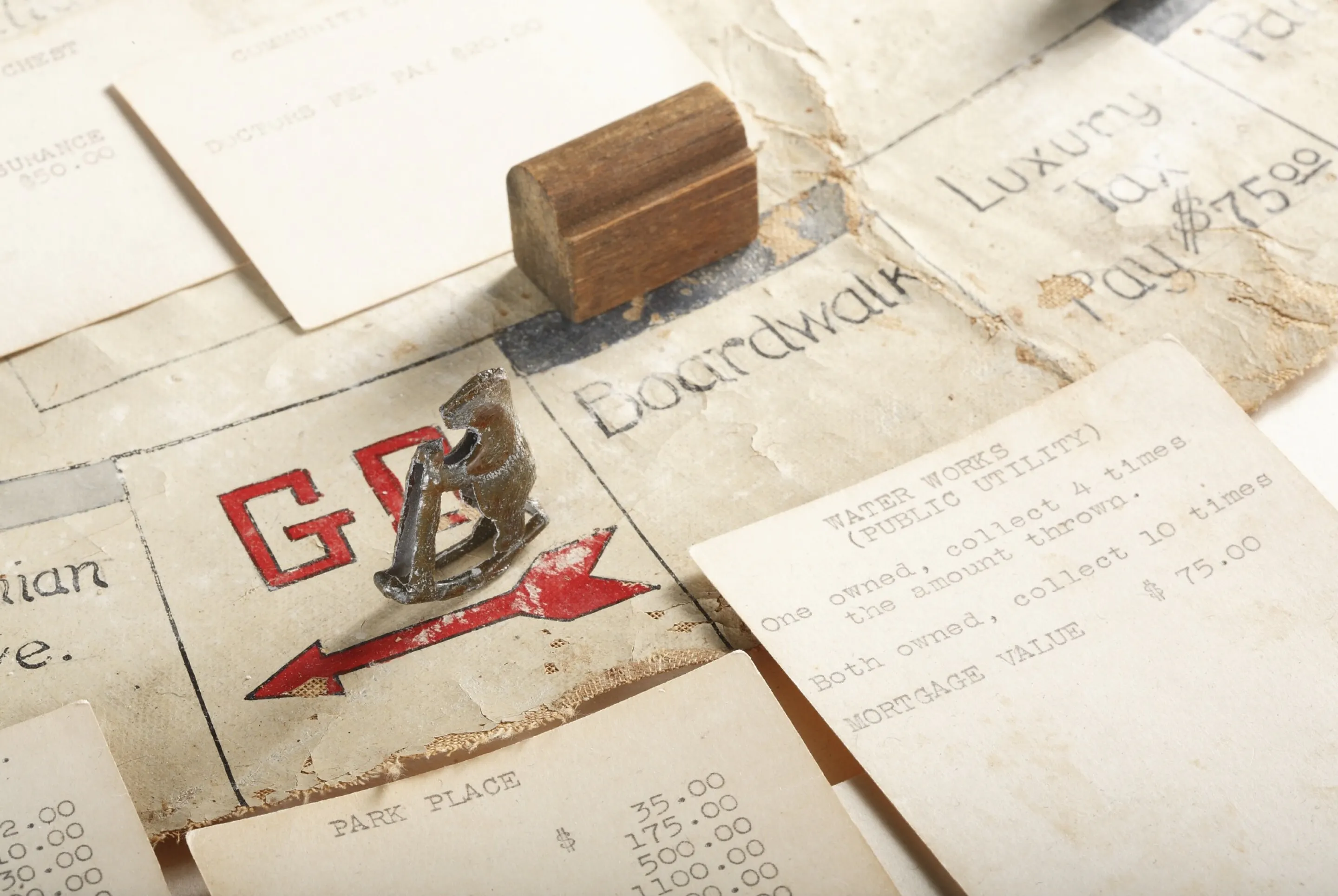
In America, the Great Depression of the 1930s fueled a spate of home-invented board games based on finance, capitalism and property speculation. One of the earliest Monopoly sets, from the collection of the magazine publisher Malcolm Forbes, sold for a final price of $146,500 at Sotheby's New York in 2011. The game was hand-made by Charles Darrow, an unemployed heating engineer. Darrow based his version on a similar hand-made game, then popular among game enthusiasts in Indianapolis. Darrow patented the game in 1933 and sold the rights to Parker Bros the following year.
Related: The 7 Most Expensive Harry Potter Collectors’ Items
Monopoly is now, without doubt, one of the most famous board games in the world and has a cult following amongst enthusiasts from all walks of life. In 1963, the Great Train robbers played endless games of Monopoly, holed up in their North Buckinghamshire farm hideout. Two of the Great Train Robber's original Monopoly banknotes from this infamous game sold at East Bristol Auction Rooms for £460 hammer price in 2019.
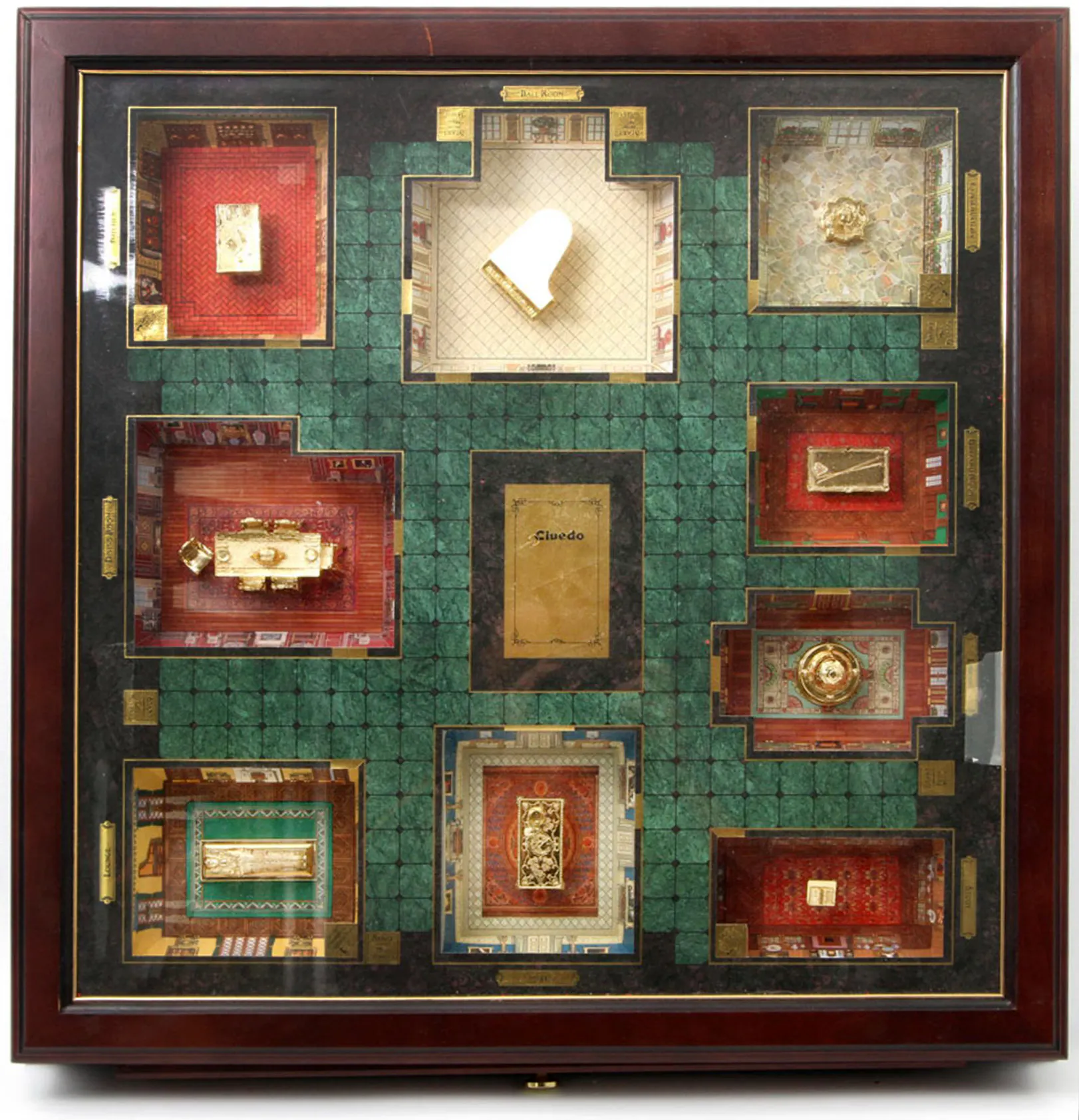
Cluedo (Clue in the United States) was the invention of Anthony Pratt, a Birmingham musician turned wartime factory worker. In 1943, with the help of his wife Elva, he began work on a 'murder mystery' board game and filed the original patent the following year. 'Murder Weekends' were popular in country hotels, inspired by the best-selling crime novels of Agatha Christie and Dorothy L. Sayers. Waddington's bought the rights to Cluedo and began production in 1949. The game's stylish film-noir design gives the original, classic edition a graphic appeal. Early editions now sell online for $200.
Related: 6 Sensational Attic Finds
Post-War games often mirrored the grown-up world. The highly amusing Chartbuster (1970) gave ambitious children the chance to 'Spin into the Pop Record Scene' and make it 'Big in the Hit Parade'. Players start with a 'Mini Cooper' and work their way up to a 'Rolls-Royce', attending auditions, signing contracts and booking groovy venues along the way. Get your song in The Top Twenty, and you're onto a winner. Chartbuster is now scarce: one can expect to pay in the region of $200 for a complete, boxed example in good condition.
Less successful, commercially, was American toy manufacturer Milton Bradley's Seance (1972). Children sat around a 3-D reconstruction of a creepy Victorian mansion, complete with longcase clock, plastic 'antique' dining table and a cardboard suit of armor. The object of the game is to get your hands on the inheritance, including a valuable coin collection, diamond bracelet and keys to the Rolls Royce. ‘Listen to My Voice’ the slogan read: dead Uncle Everett's voice from the grave floated out of a battery-operated record-player (hidden in the table). The game finished with a ghostly apparition appearing in a luminous family portrait. Unsurprisingly, the game met with parental disapproval, and complete editions are rare. Expect to pay upwards of $275.
Related: Celebrating 35 Years of Garbage Pail Kids
Milton Bradley's Voice of the Mummy, published the previous year, was on safer ground. The game took place in an ancient pharaoh's tomb. Budding Egyptologists moved their figures around the beautifully-designed board, collecting precious 'gems'. As with Seance, the mummy's voice gave directions from a miniature record player hidden within the sarcophagus.
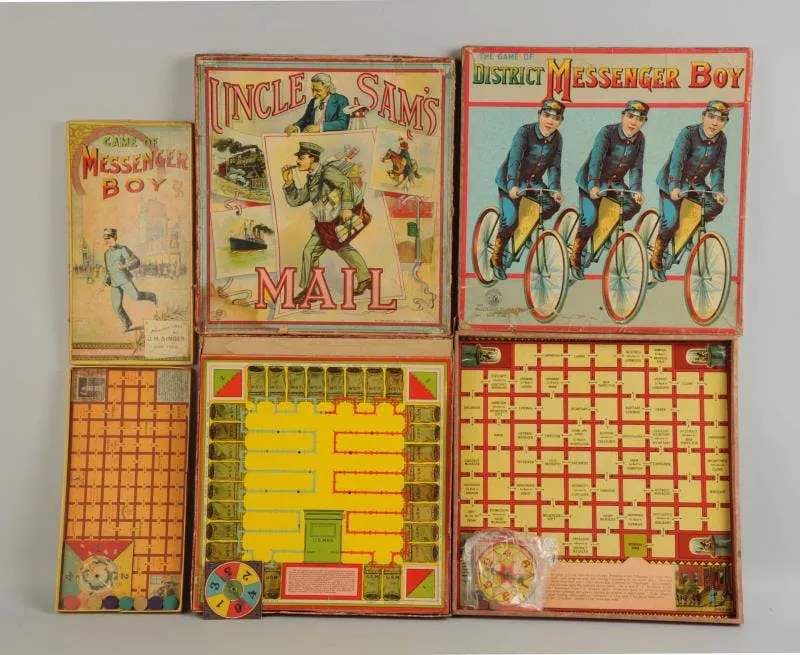
Milton Bradley was an American board game manufacturer, established in Springfield, Massachusetts in 1860 and responsible for Twister, which became a phenomenon during the 1960s. In 1984, the giant American toy conglomerate Hasbro took over Milton Bradley. Hasbro now owns the rights to Cluedo, Diplomacy, Monopoly, Operation, Risk, Trivial Pursuits and Scrabble.
The imagination of vintage games designers knew no bounds, and there is, of course, endless variety. The eighteenth and nineteenth-century board game market is already well-established, but there are rich pickings to be had in board games from the 1920s, ‘30s and mid-century modern period. As with any other antique, the earliest – and rarest – games tend to be the most valuable, and condition is crucial. Missing cards or tokens will devalue a game.
Explore more articles on collecting with Barnebys Magazine
Article by Luke Honey.
Luke Honey is a former auction specialist (Phillips, Bloomsbury Auctions and Bonhams), turned writer, columnist and antiques dealer. He lives in London with his wife and book-munching whippet.