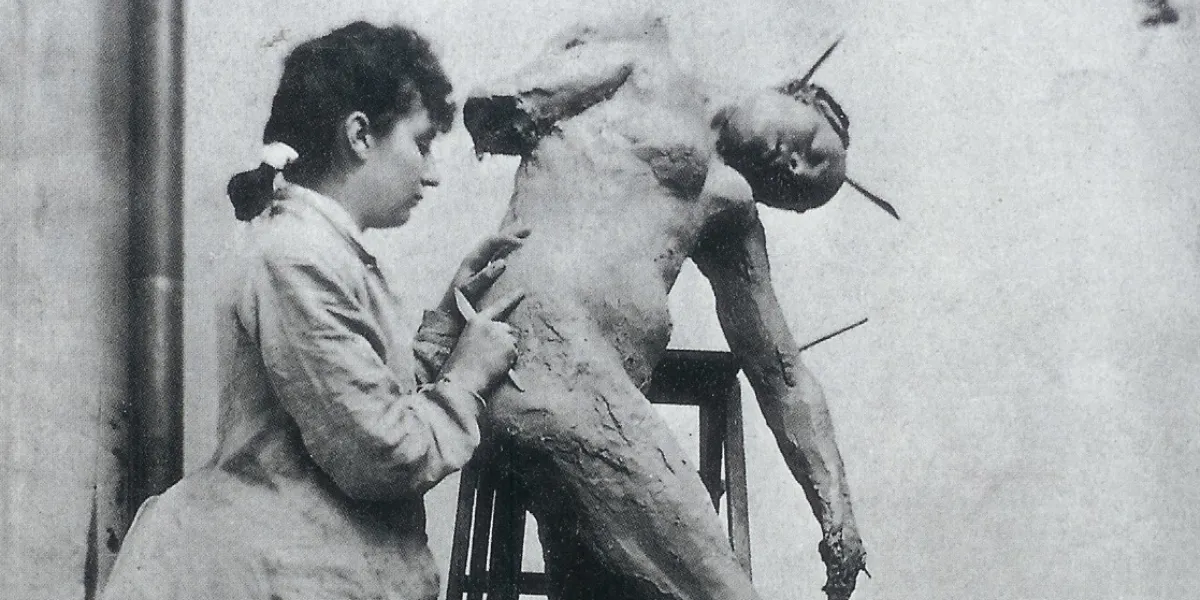
In September last year, auctioneer Matthieu Semont arrived at a Parisian apartment near the Eiffel Tower. The property had remained unoccupied for fifteen years, and now the family who had inherited it had commissioned him to assess the inventory. A routine task for an auctioneer—yet what Semont discovered was anything but ordinary.
See also: Beyond the Muse: Rediscovering Camille Claudel
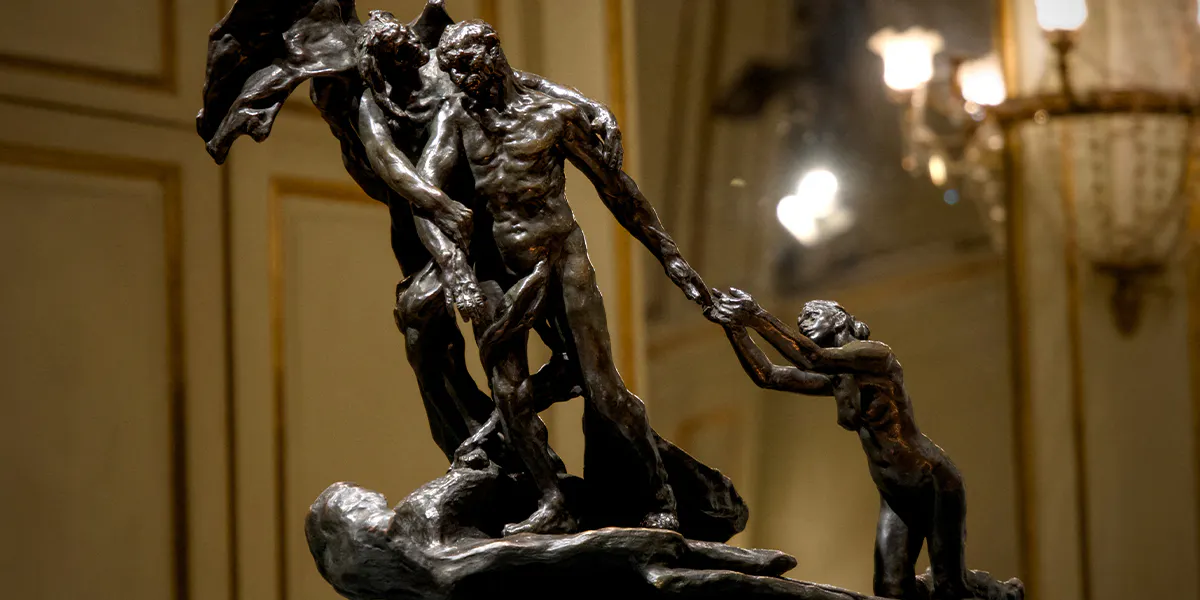
Hidden beneath a sheet, a bronze version of Camille Claudel’s significant work L’Âge mûr (The Mature Age) was brought to light once more. Expert Alexandre Lacroix, who was consulted, confirmed its authenticity, allowing Semont to present the bronze at his Philocale auction house in Orléans last Sunday with an estimated value of 1.5–2 million euros. Interest was high, and after a 20-minute bidding war, the hammer fell at €3.1 million (€3.66 million including buyer’s premium, about $3.8 million). This was the second-highest price ever achieved for a work by Claudel. The current record was set at Sotheby’s in London in 2013, when the first version of La Valse found a new owner for £5,122,500.
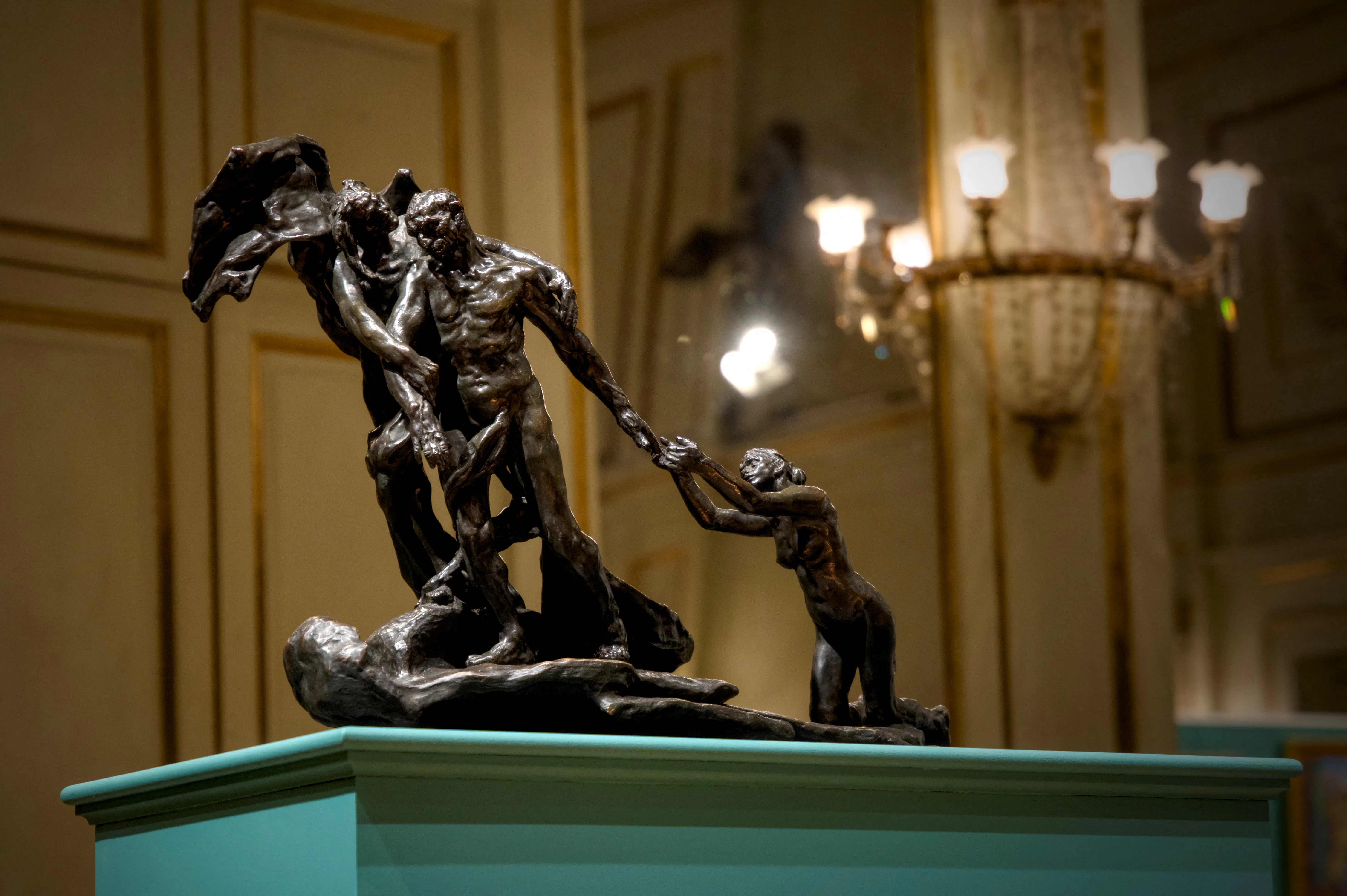
Three factors contributed to the large sum achieved on February 16: the importance of the work within the renowned artist’s oeuvre, the extraordinary history of its rediscovery, and, of course, the fact that only a few examples exist, all of which are held exclusively in museum collections.
Camille Claudel began working on L’Âge mûr by 1893 at the latest. An early plaster version, which still depicts all three figures in the group—a man between an old woman and a young woman, all linked together—forms part of the collection at the Musée Rodin in Paris.
See also: Auguste Rodin: 7 Facts to Know
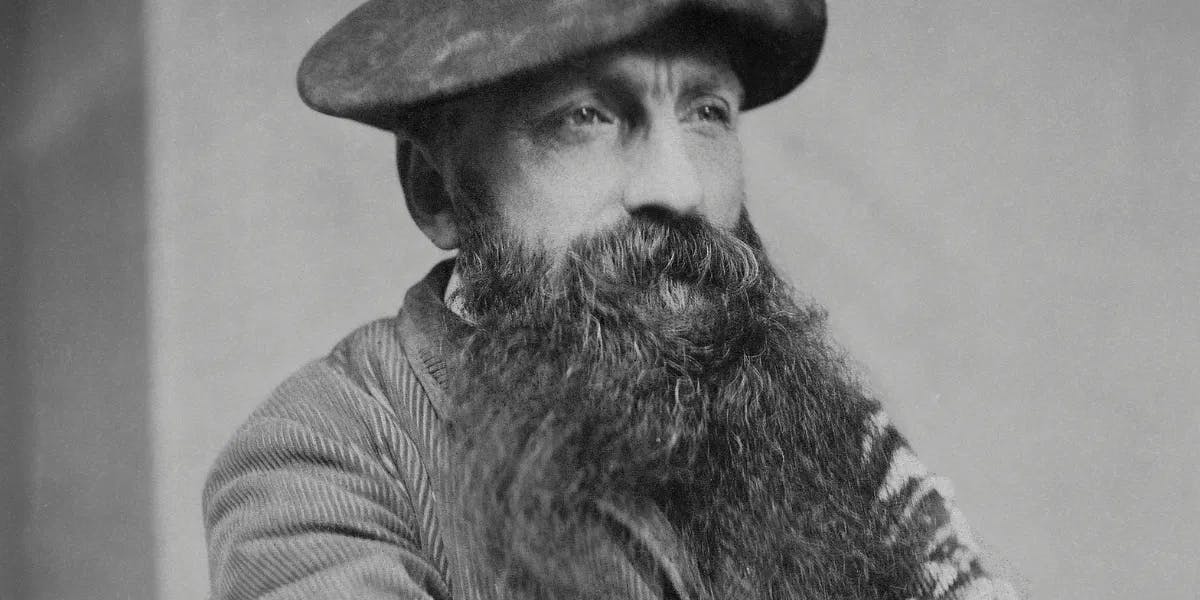
1892/93 was also the year when Claudel left Auguste Rodin, having been his pupil and lover for ten years. Despite their separation, Rodin continued to support Claudel and secured a state commission for her in 1895. In return, Camille Claudel resumed her work on L’Âge mûr, completing the plaster version in 1899. It was exhibited at the Salon of the Société nationale des beaux-arts, where it received positive reviews. By this time, however, the composition had changed, now depicting the moment in which the man releases the raised hands of the kneeling young woman, as the old woman leads him away. This shift in the sculpture’s narrative was likely a reflection of Claudel’s recently ended relationship with Rodin, who, despite a written promise of marriage, had probably never intended to marry her or leave his long-term partner, Rose Beuret. This personal experience added a second layer of meaning to the sculpture, beyond its portrayal of the transient nature of life.
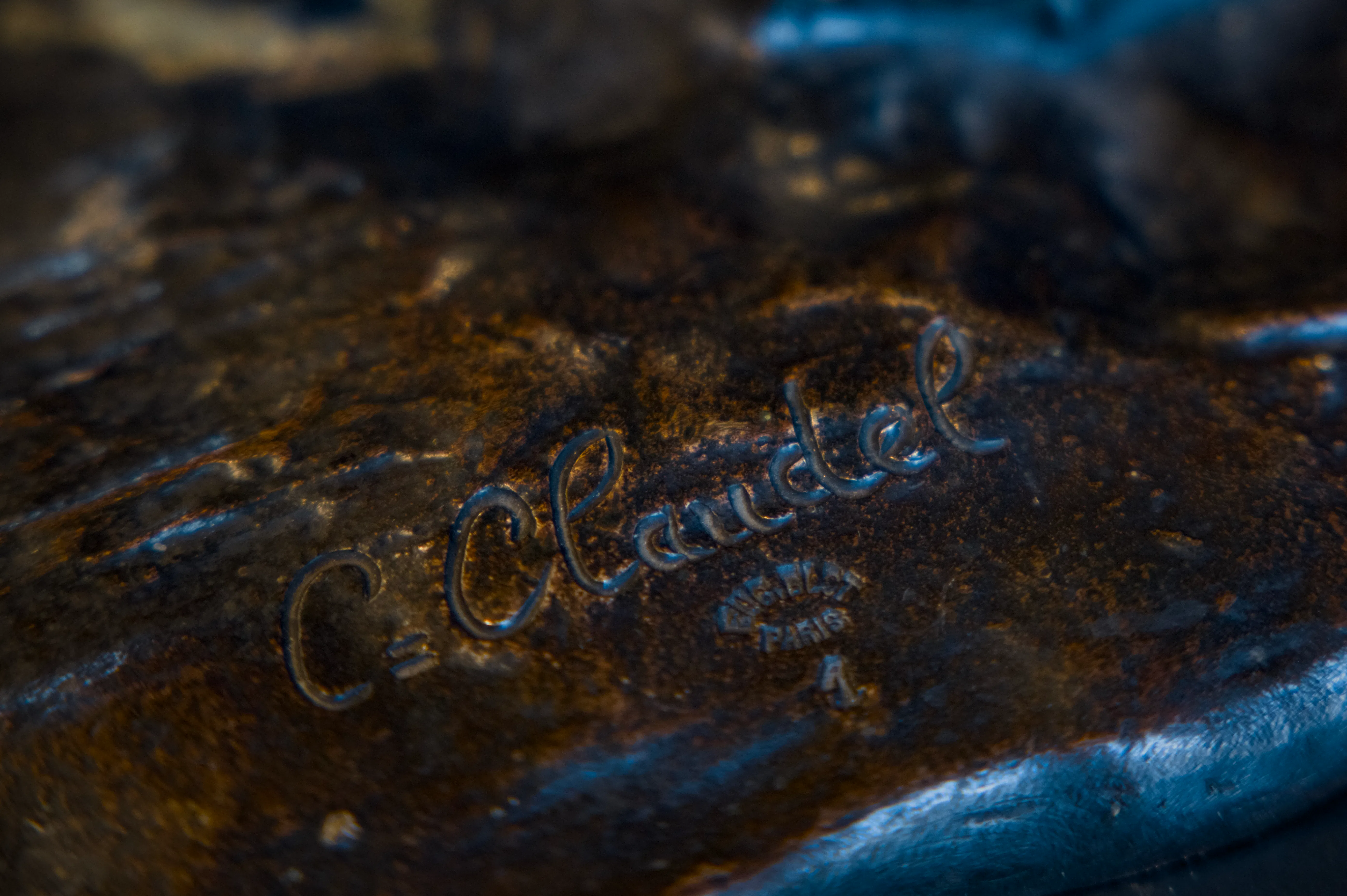
However, the work was never cast in bronze; the commission was cancelled in June 1899. It remains unclear whether Rodin, who was likely not at all enthusiastic about the new version of L'Âge mûr, played any role in this. It wasn’t until 1902 that the bronze version now housed in the Musée d'Orsay was commissioned by a private collector, Capitaine Tissier. The Musée Rodin’s collection also includes another bronze version, cast in 1913 by the sculptor Frédéric Carvillani. Additionally, there is a bronze version from an edition of six, created in 1907 by the artist, publisher, and dealer Eugène Blot, which can be found at the Musée Camille Claudel in Nogent-sur-Seine. As indicated by the corresponding stamp on the base of the bronze rediscovered in 2024 and now being auctioned, this version also belongs to Eugène Blot’s edition.
Want more articles like this straight to your inbox? Subscribe to our free newsletter!
L'Âge mûr was Camille Claudel’s last significant work, created at a time when her mental health was rapidly deteriorating. She repeatedly destroyed her works in her studio. After the death of her father, who had supported her throughout her life, in 1913, her family had her committed to a psychiatric institution, marking the end of her career. Claudel, who lived for another thirty years, never regained her freedom.