Apollo Art Auctions is set to unveil one of the most significant antiquities sales of the decade: Fine Ancient Art – Shipwrecked Phoenician Treasures, taking place on June 7 2025 at 15:00 GMT. Featuring a group of rare terracotta artifacts recovered from an ancient Mediterranean shipwreck, the sale offers insight into the devotional practices and artistic traditions of one of the ancient world’s most influential cultures.
The Phoenicians, master seafarers, established a far-reaching network of trade and cultural exchange from the Levant to North Africa, Sicily, and the Iberian Peninsula. This collection — dating from the 6th to 4th centuries BC — includes a group votive figures and models once placed in temples and coastal sanctuaries as offerings to the gods, now resurfaced from the depths with their history preserved in clay.
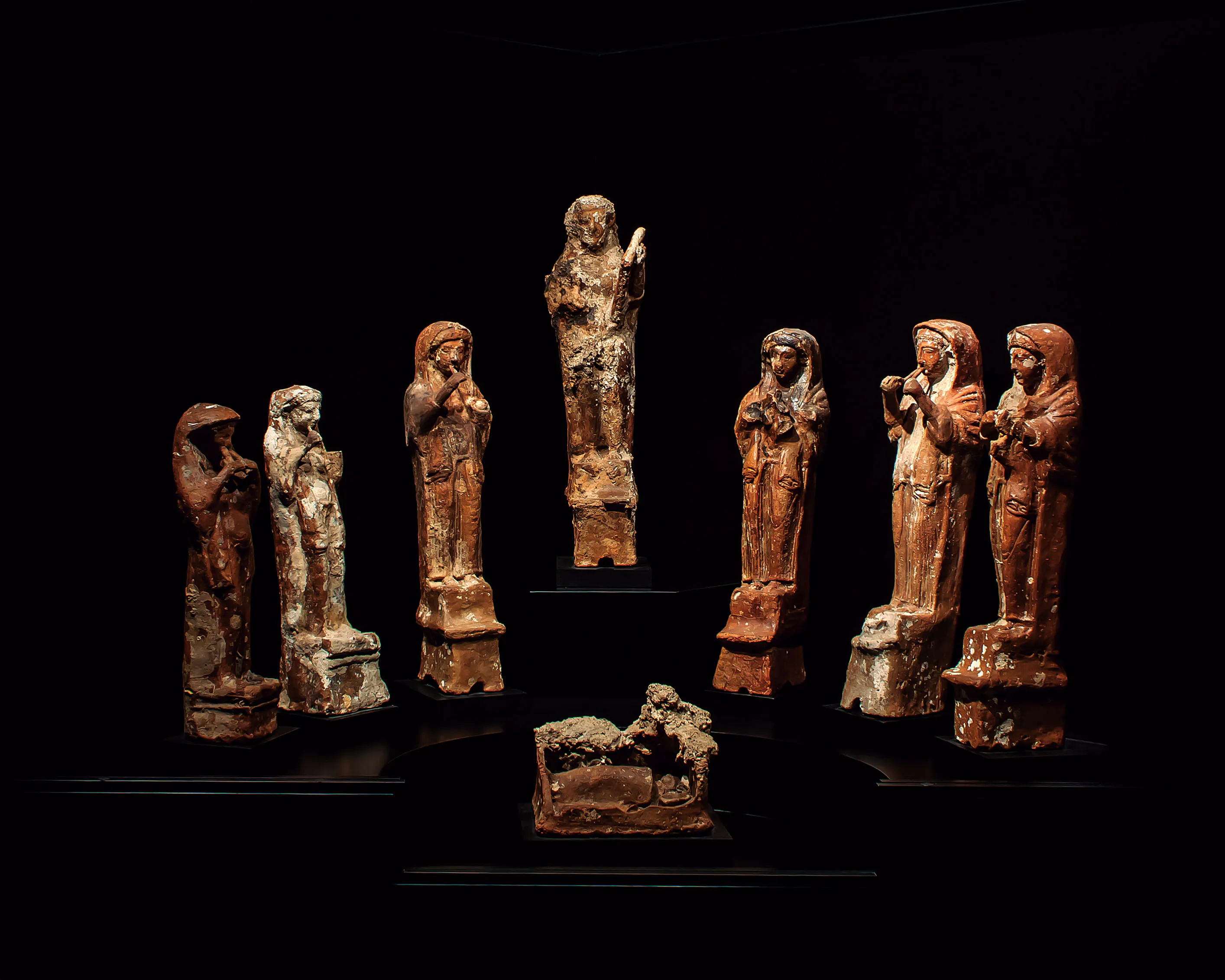
Recovered in the 1950s from a now-submerged site, the collection features votive offerings commissioned by worshippers and presented to priests for placement within temples. The ritual act of offering these figures was seen as a lasting gesture of piety — a physical presence before the divine. How these figures ended up beneath the sea remains uncertain, but several possibilities have emerged. They may have been en route to another Phoenician colony, carried across the Mediterranean during the time of Alexander the Great; they could have been part of a shipment intended for trade in distant markets like Egypt, Syria, or southern Italy; or perhaps they were placed deliberately near a coastal sanctuary, left by the people of Tyre in honor of the gods of the sea.
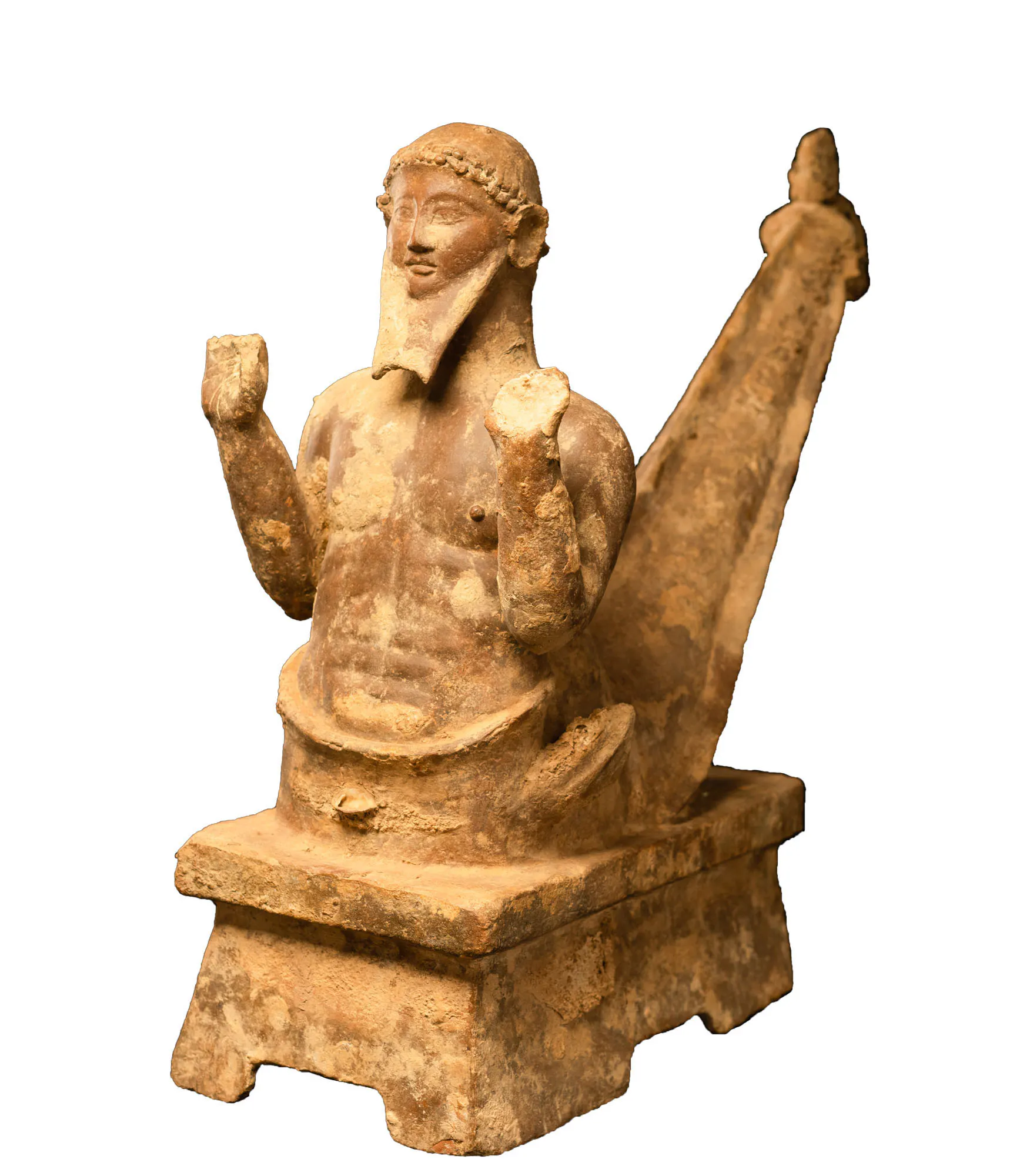
Each item reflects the technical and stylistic evolution of Phoenician art. Many were made using an intricate two-part process: first, casting the torso in a mould, then hand-shaping the limbs and facial features before firing. This method enabled artists to combine standardised forms with individual detailing. The figures reveal an interplay of artistic influences — from the rigid symmetry of Egyptian prototypes to the more naturalistic features introduced through Greek contact in later periods.
The collection also provides insight into the broader context of Phoenician religious life. Temples, often located near ports or coastal trade hubs, functioned as both spiritual and commercial centres. These sites would have welcomed not only local worshippers but also merchants and travellers, making them ideal places for cross-cultural expression in art and ritual.
Among the highlights is a Phoenician terracotta triton figure (6th–4th century BC), standing 62 cm tall. The hybrid creature — part human, part fish — likely served as a maritime votive figure, evoking the sea’s symbolic and economic importance in Phoenician life.
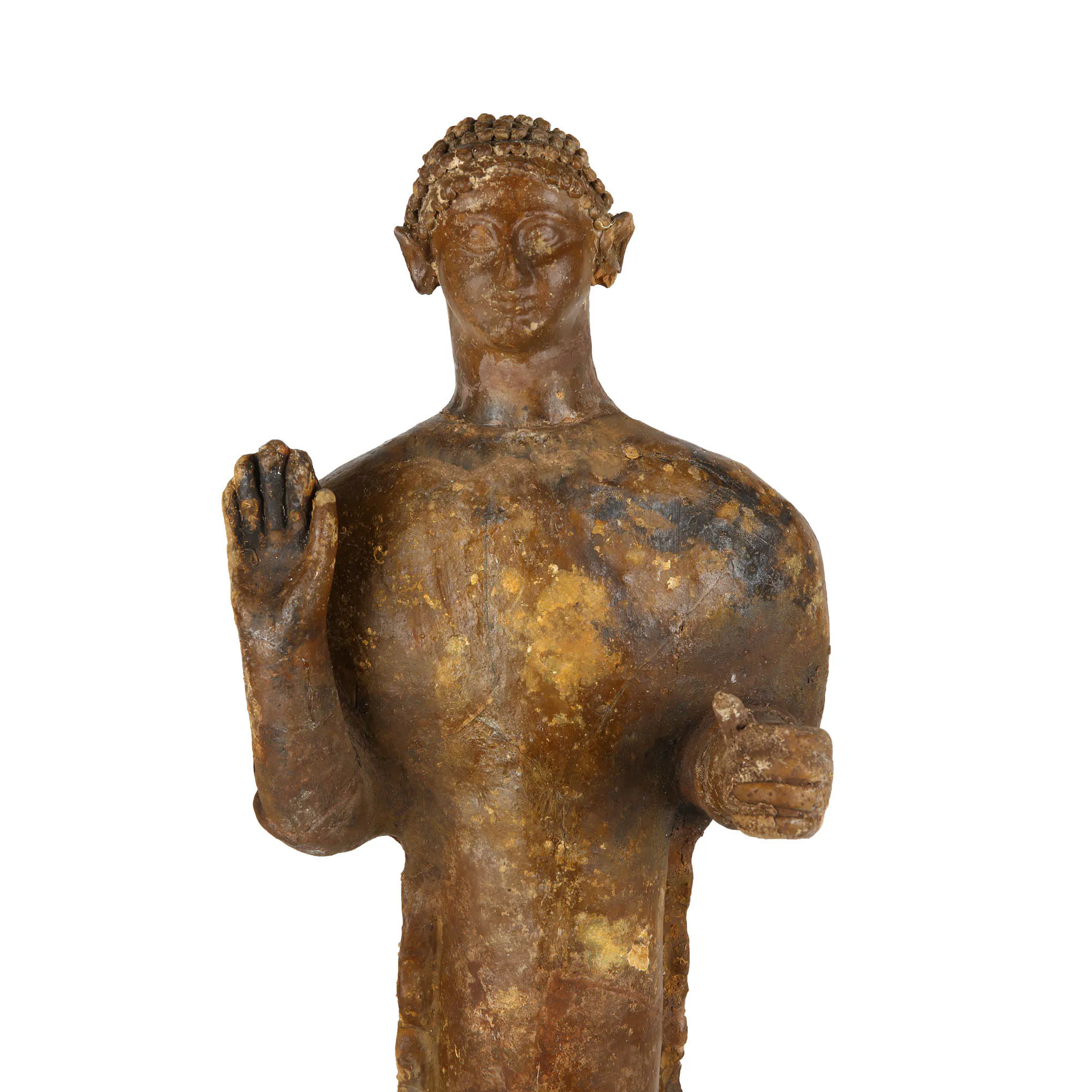
A Standing male figure measuring 95 cm also stands out. Shown in a posture of reverence and clad in a classical-style tunic, it reflects a transitional moment in Phoenician art, when influences from the Greco-Roman world began to permeate more localised traditions.
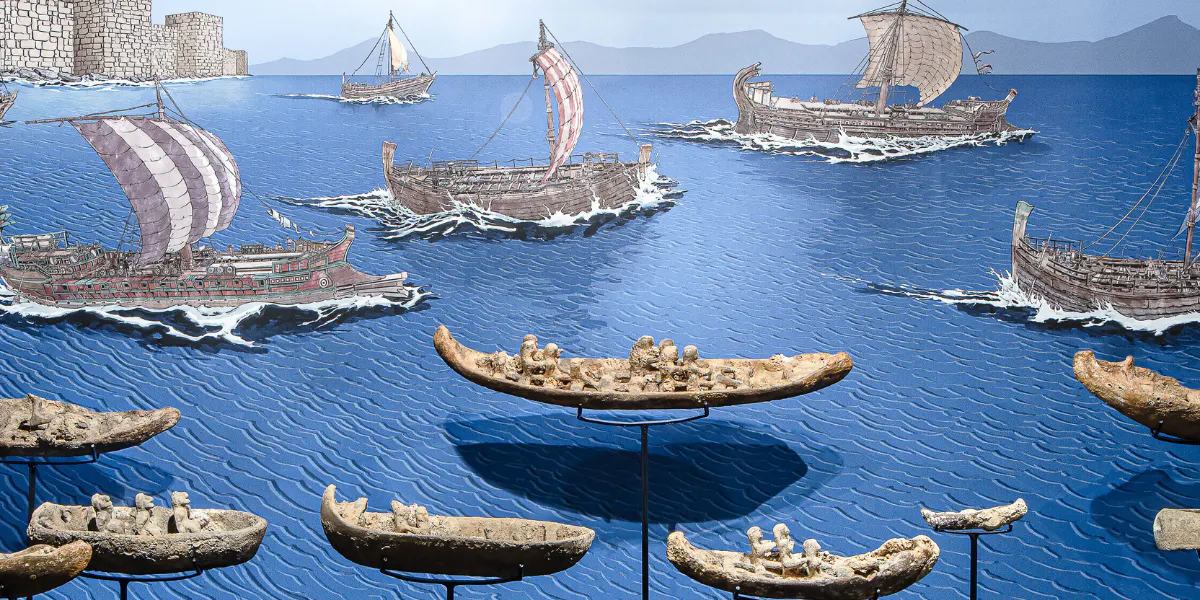
Equally striking is a Terracotta model of a Phoenician boat, complete with crew. At 67 cm in length, it is a rare representation of ancient ship design, possibly linked to rituals for safe passage or as an offering tied to naval identity.

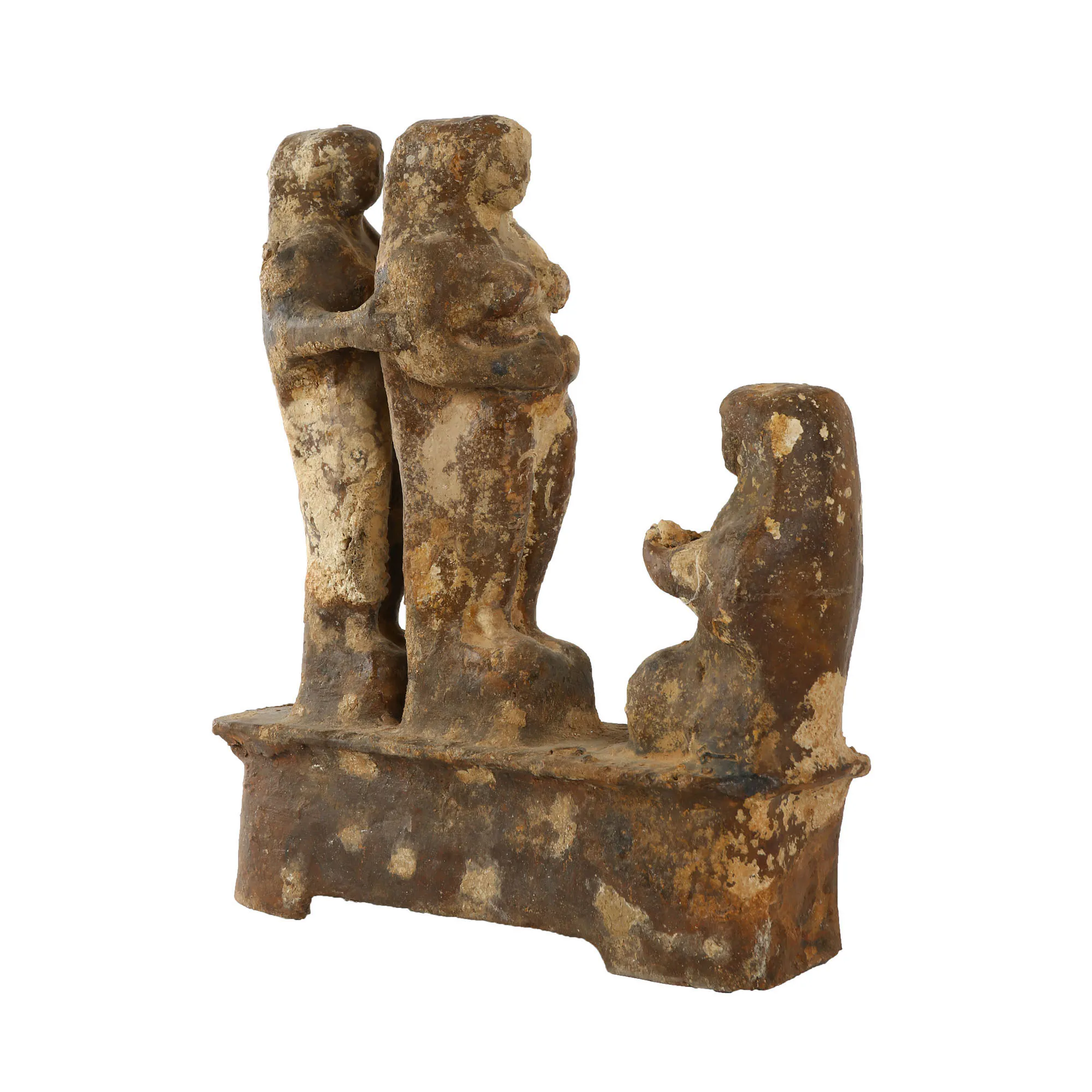
One of the most unusual pieces is a Group depicting a childbirth scene. Measuring 41 cm in height, it shows a woman giving birth on a ceremonial chair, assisted by two midwives. The figures are thought to be associated with Astarte, goddess of fertility, highlighting the protective role of divine forces in everyday life. Such narrative votives are seldom seen and provide a rare window into personal aspects of Phoenician belief.
Preserved in European private collections for decades, the group has been thoroughly studied, published, and exhibited. Provenances include the New York Antiquities Gallery and the Marwan Shehab collection, with acquisitions dating as far back as 1960s Beirut. Each piece is registered with the Art Loss Register and accompanied by a European export license and a full illustrated catalogue.
For scholars, collectors, and institutions, the sale offers a rare opportunity to acquire works that bridge continents, cultures, and centuries — remnants of a civilisation whose artistic and spiritual legacy continues to surface from the depths.
Fine Ancient Art – Shipwrecked Phoenician Treasures will take place on Saturday, June 7, 2025 at 15:00 GMT at Apollo Art Auctions in London, with live bidding available in the gallery and online.
Find more information about the sale on Apollo Art Auctions!