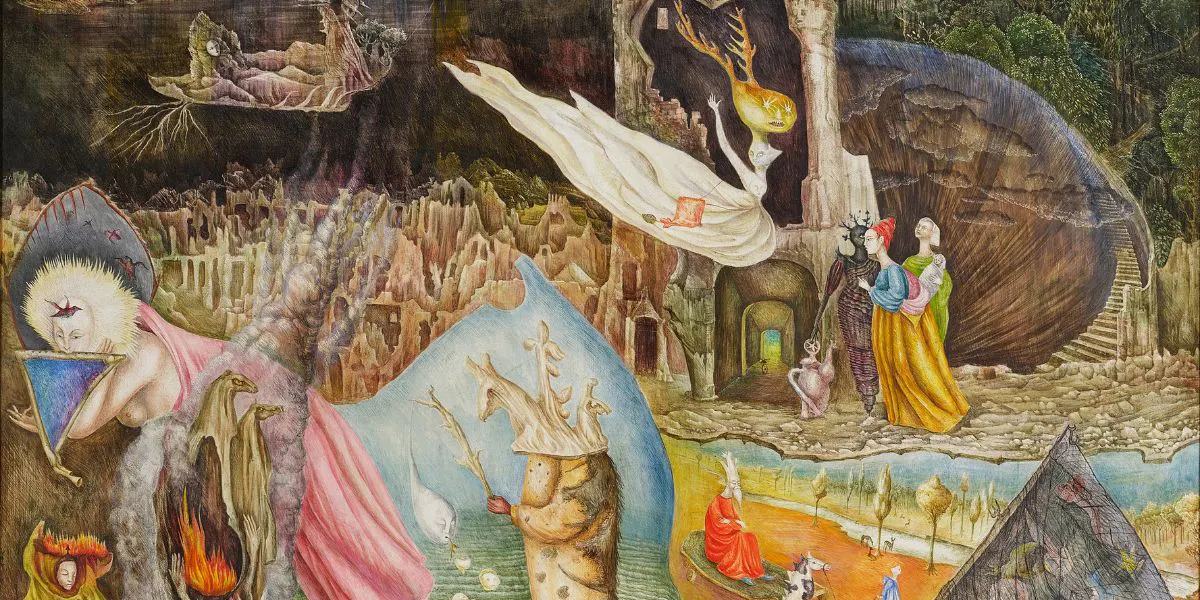
Arguably the most anticipated painting in Sotheby's May New York sales was Les Distractions de Dagobert, the magnus opus of surrealist Leonora Carrington. With the painting estimated at $12-18 million, a record was practically guaranteed: her most expensive painting previously sold for $3.3 million in 2022. On the evening of May 15, six bidders competed for 10 minutes as the price quickly surpassed the estimate until the hammer came down at $24.5 million ($28.5 million with fees) to rousing applause. The buyer was Argentine billionaire Eduardo F. Costantini, who is the founder of Malba (Museo de Arte Latinoamericano de Buenos Aires).
For Costantini, ownership of this masterpiece was a decades-long quest, beginning when this work last came up for auction at Sotheby's in 1995 where it sold for $475,000. "I was the underbidder when she reached the artist's record 30 years ago and tonight once again, we made a new auction record," said Costantini. "This masterpiece will be part of a collection where amongst other two important works by Remedios Varo and another record breaking Frida Kahlo are also found."
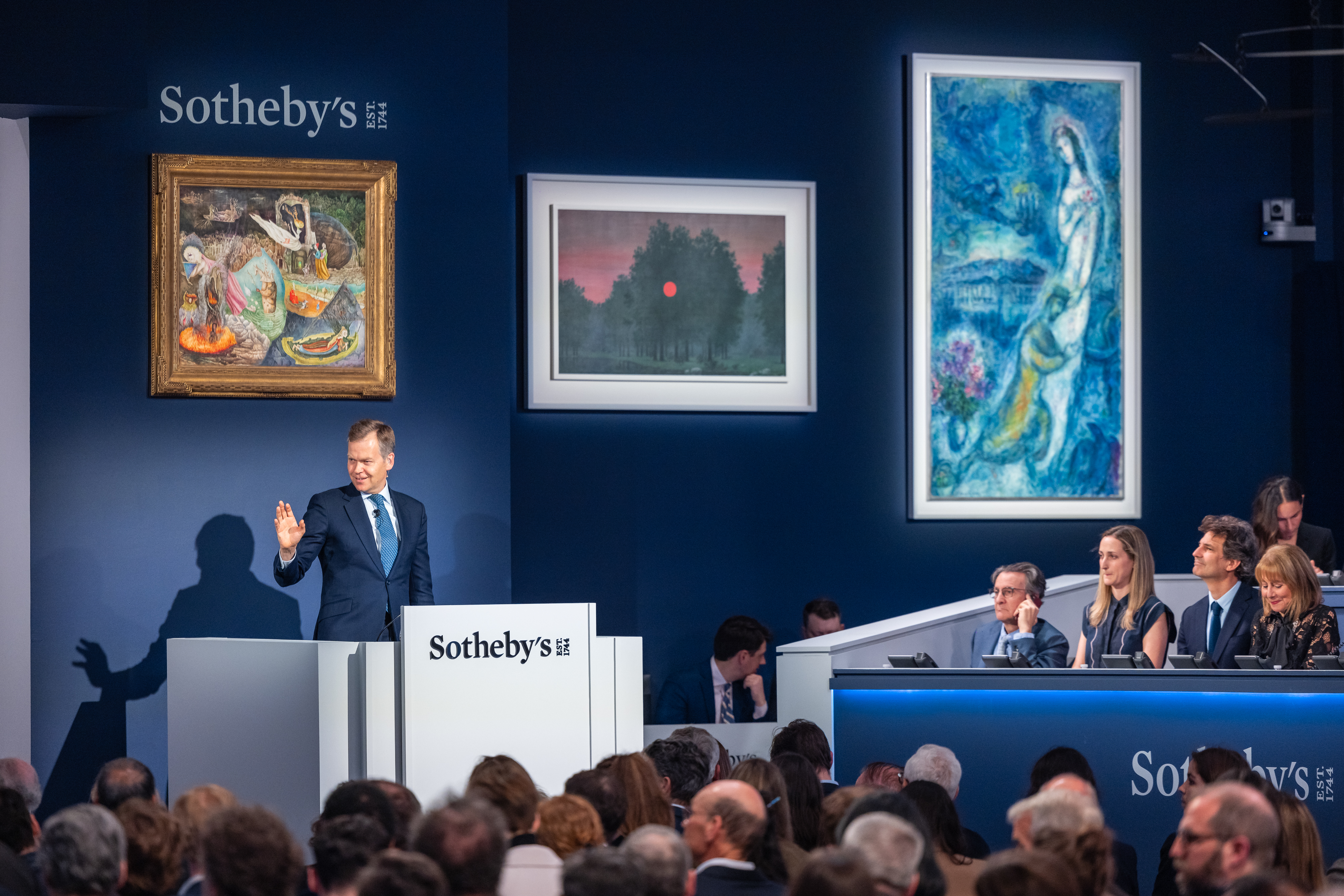
This sale now establishes Leonora Carrington as the fifth best-selling female artist, joining the ranks behind Georgia O'Keeffe, Frida Kahlo, Joan Mitchell, and Louise Bourgeois. However, while these names are universally known, Carrington's magnificent oeuvre is just recently getting the attention it deserves. Here, we explore the life and career of the British-born surrealist, who found freedom and inspiration in Mexico City.
Leonora Carrington was born on April 6, 1917 to a wealthy textile manufacturer father and an Irish mother. Growing up, she spent time in Ireland with her family, where she heard recounted tales about Celtic mythology. She attended art school in London, with surrealism as her earliest inspiration. When she was 20 years old, she met surrealist Max Ernst, whose work she was already familiar with. Though Ernst was married, the two began a relationship and collaborated artistically, painting portraits of each other and creating surrealist sculptures. However, with the rise of World War II, Ernst was targeted and arrested by the Nazis for his "degenerate" art. He later escaped to New York with the help of Peggy Guggenheim, whom he married in 1941.
Related: 6 Female Artists and the Male Muses Who Inspired Them
Upon the end of the relationship, Carrington spiraled into psychosis and entered an asylum. Her parents decided to send her to a sanatorium in South Africa, but en route she was able to escape in Portugal and married the Mexican ambassador Renato Leduc. Their union allowed her diplomatic immunity, and the couple moved to New York. After a few years, she relocated to Mexico City with Leduc in 1942, before divorcing him a year later.
Related: Max Ernst: 5 Facts to Know
In Mexico City, Carrington mixed in surrealist circles and brought a profoundly female perspective to the male-dominated movement. She was close friends with Remedios Varo, a fellow European transplant to Mexico City and surrealist. Though they never worked in studio together, their work exhibits the common themes of emigration, feminism, spirituality, and biomorphic shapes. Carrington also became dedicated to the Women's Liberation movement in Mexico and the autonomy of women, who often were relegated to the role of 'muse' in the art world instead of artist. "I didn't have time to be anyone's muse," Carrington once said, "I was too busy rebelling against my family and learning to be an artist."
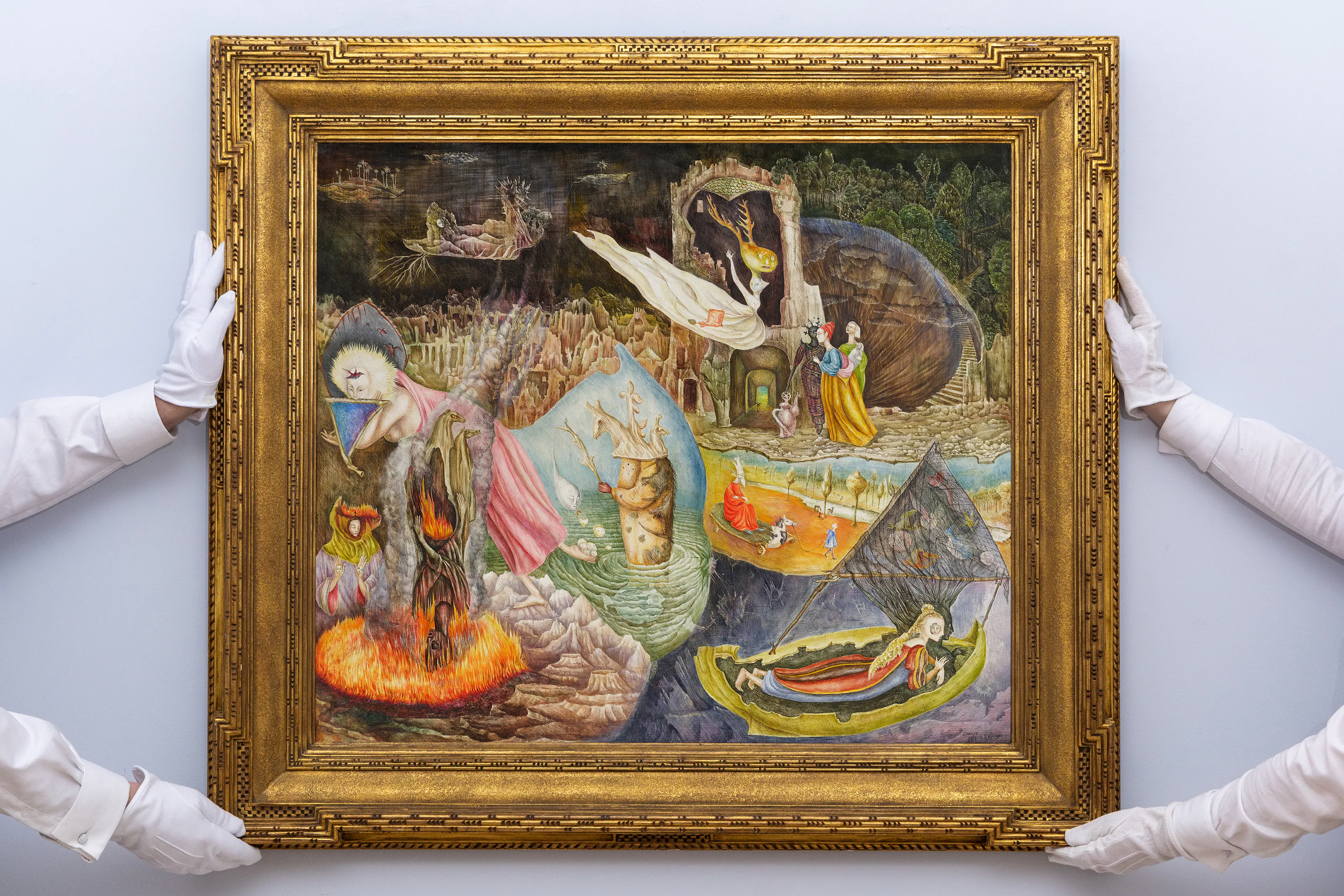
It was during these early years in Mexico City that she painted what is considered her pièce de résistance: Les Distractions de Dagobert in 1945. The painting is a surrealist symphony, drawing inspiration from the medieval Celtic imagery of her childhood and Mayan mythology of her adopted homeland, as well as the dream-like visions conjured during her psychosis and time spent in an asylum. Her exquisitely rendered work is striking in its dynamism: biomorphic figures swirl around in the four elements: earth, wind, fire, and water, as faces appear within faces, and rocky canyons fuse into dark forests. Echoes of Hieronymus Bosch's Garden of Earthly Delights, which Carrington saw after it was acquired by the Prado in 1939, reverberate throughout with its distinct episodes that collide dreamily into each other.
Related: Surrealism and the Subconscious
Want more articles like this straight to your inbox? Subscribe to our free newsletter!
Les Distractions of Dagobert was one of Carrington's works exhibited at the Pierre Matisse Gallery in New York in 1947 to much acclaim. Many exhibits, especially solo, followed around the world, from Tokyo and Paris to Sao Paulo and her native England. Carrington's commitment to the cause of equality for women in the arts culminated in her winning the Lifetime Achievement Award at the Women's Caucus for Art convention in New York in 1986. She died on May 25, 2011 in Mexico City at the age of 94. Her paintings are now found in the world's top museums, including the Metropolitan Museum of Art and MoMA, as well as the Museo Leonora Carrington in Mexico.
Related: The 15 Most Expensive Female Artists
With the record-breaking sale of her major masterpiece, Carrington's role as a pioneering surrealist and committed feminist is brought into the spotlight fittingly in 2024, which marks the 100th anniversary of André Breton's Surrealist Manifesto.