The malevolent influence that has for centuries dogged with discord and disaster the owners of the famous Hope diamond has started again.
The fantastic history of the Hope Diamond begins over one billion years ago, when it was formed in the Earth, created by the intense bonds between carbon atoms and the inclusion of boron atoms, which contribute to its rare deep blue-violet shade. The details of the diamond's extraction are murky, but the stone first appeared on record in 1666, owned by gem merchant Jean-Baptiste Tavernier in Paris. He claimed that the Tavernier Blue, the 112-carat uncut diamond, was from the Kollur mine in India, where many of the world's most valuable diamonds originate. It is unclear how Tavernier acquired the diamond, but salacious theories include stealing it from a temple of a Hindu goddess, who cursed the gem.
Related: Barnebys’ Guide to Diamonds
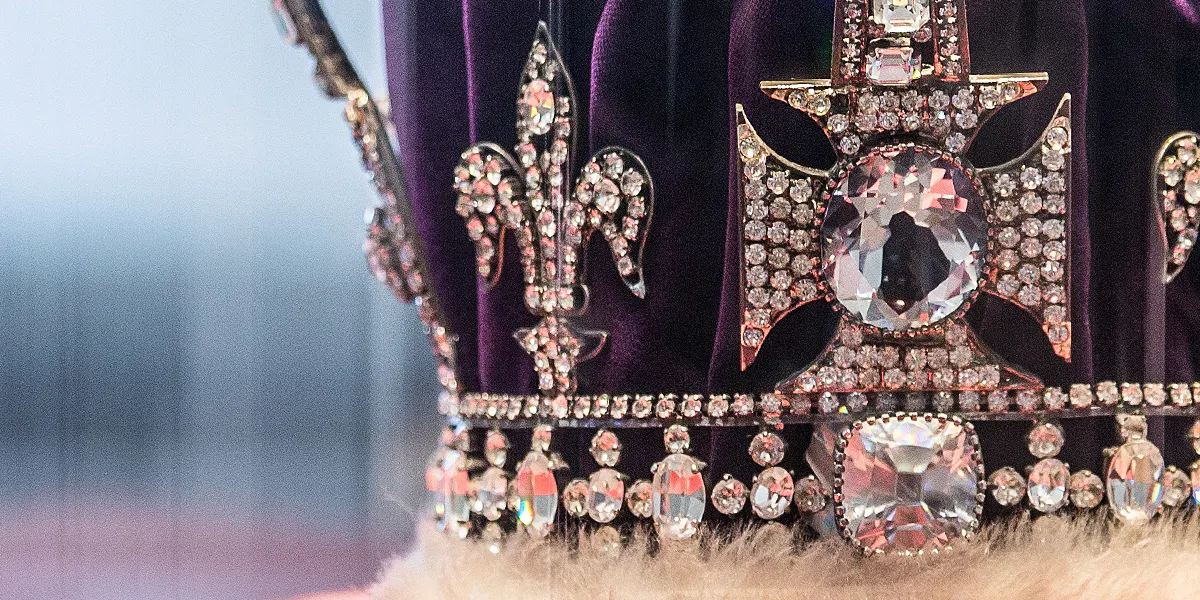
Two years later, in 1668, he sold the Tavernier Blue, along with 25 other diamonds, to King Louis XIV. The king had the diamond recut by the court jeweler into a 67-carat stone, renamed the French Blue. It was set in gold and suspended by a ribbon to be worn around the King's neck during official ceremonies.
Related: Diamonds: An Iridescent Investment
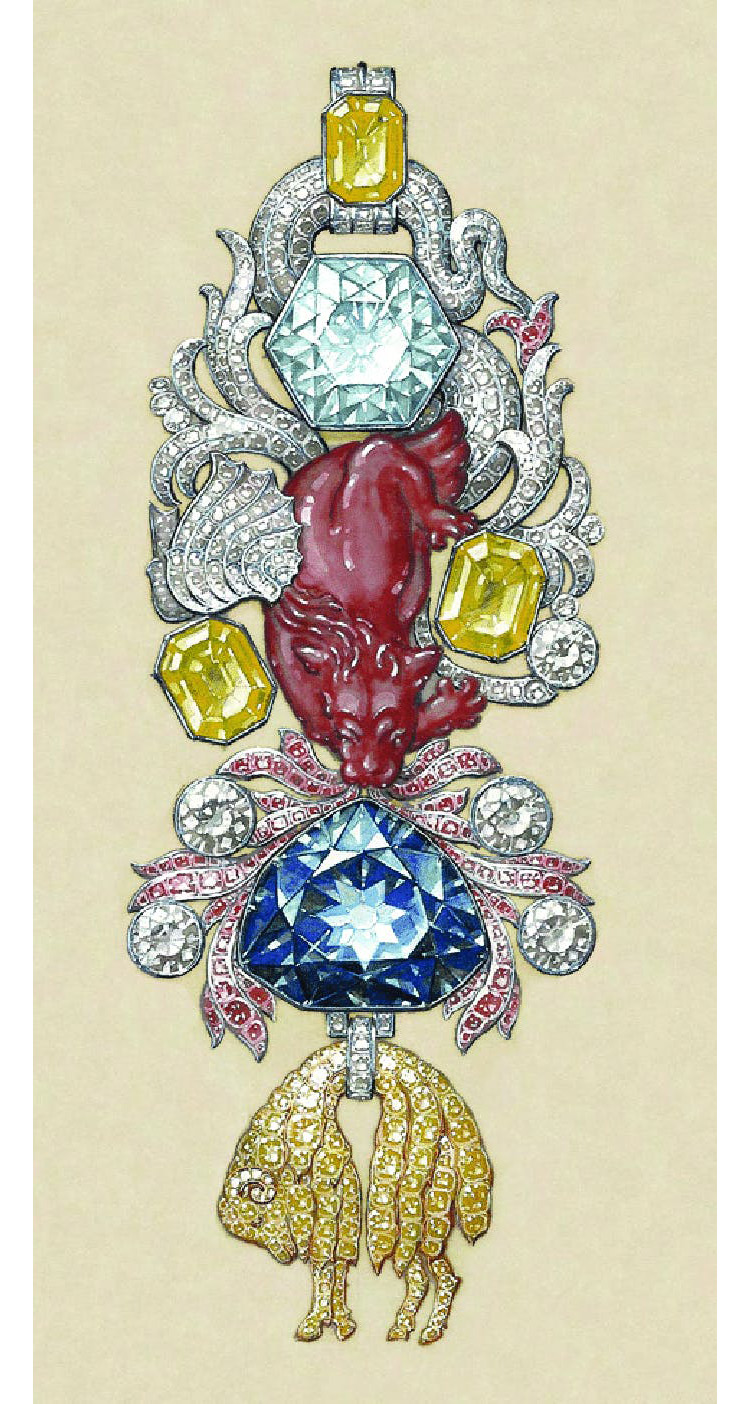
In 1749, Louis XV, the king's great grandson, inherited the stone and had it reset into an elaborate brooch for the Order of the Golden Fleece, a Catholic order. The extravagant piece included red, yellow, and white diamonds, culminating in the French blue, under which was a yellow sheep of diamonds.
Related: Crown Jewels: 5 Times Royal Jewelry Made Auction Headlines
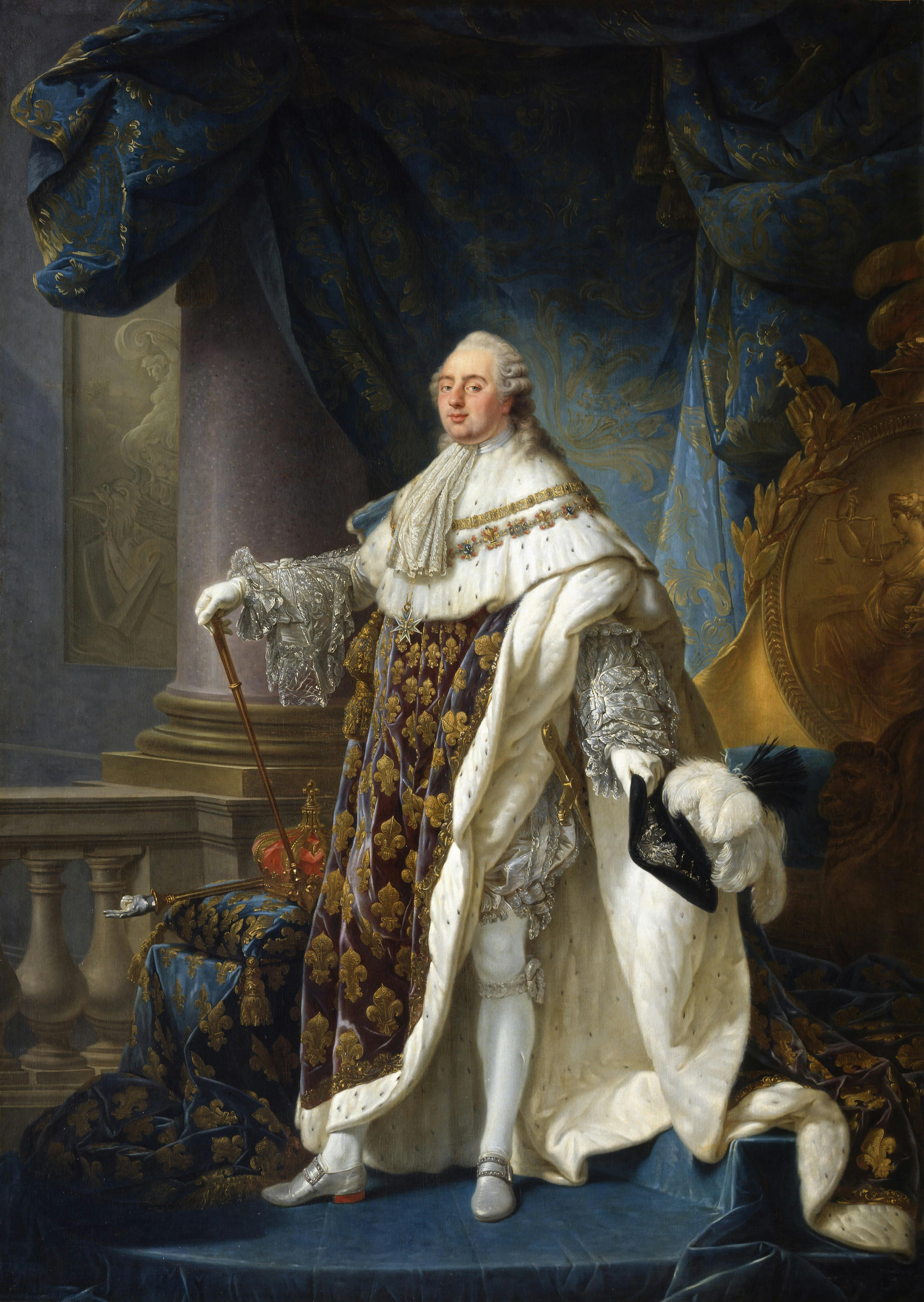
The stone remained in the medal of the Golden Fleece until the French Revolution. On September 11, 1792, the royal family, including King Louis XVI and Marie Antoinette, was imprisoned and the French Royal Treasury raided, resulting in the disappearance of all of the Crown Jewels. A year later, the King and Queen were guillotined.
The French Blue reappeared in London in 1812, but had been cut down to 45 carats. It was then owned by Thomas Eliason, a diamond merchant. Some believe the diamond was sold to King George IV, the portly and extravagant ruler whose private life was riddled with addiction, severe health problems, massive debts, and an estranged marriage. After his death in 1830, the diamond was privately resold.
Related: The World's 10 Most Expensive Diamonds
Within a few years, the diamond was purchased by prominent British banker Thomas Hope. In 1839, it was recorded in the estate of his brother, Henry Philip Hope. Here is where the diamond got its enduring moniker of the "Hope" Diamond. Thomas Hope's son, Henry Thomas Hope, inherited the diamond after the death of his uncle and lent it to expositions in London and Paris in the 1850s. Later it passed to his wife, Adele, after his death, and later his grandson, Lord Henry Francis Hope, the Duke of Newcastle.
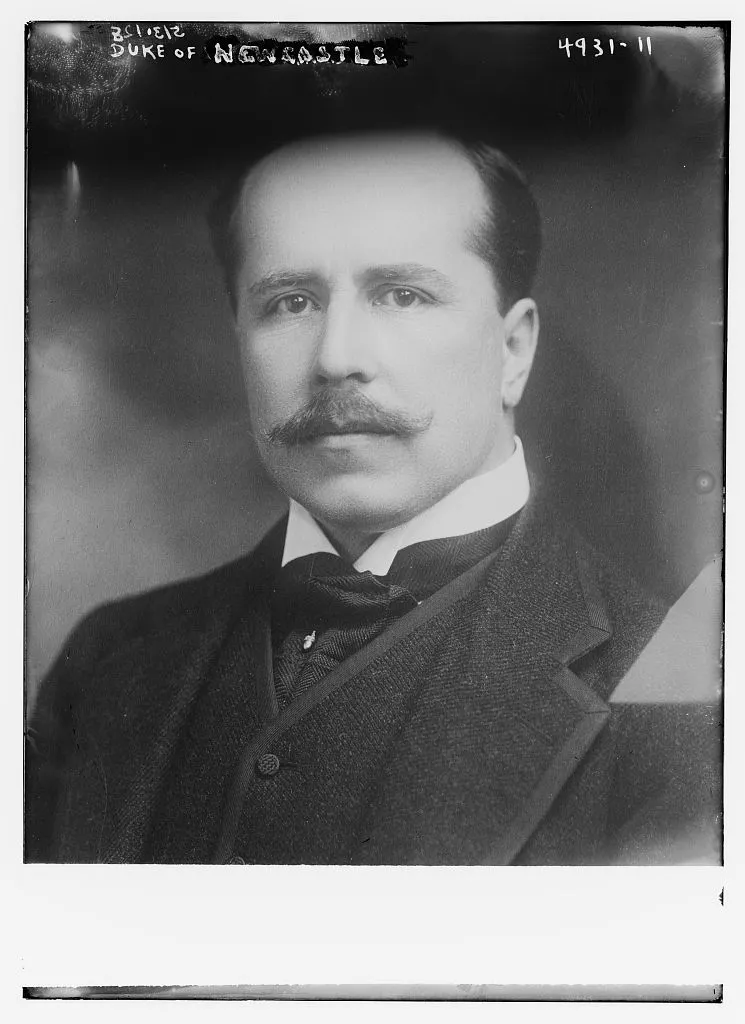
In 1894, Lord Francis would meet the woman who would lead to his undoing, the beautiful May Yohé, an American concert singer. He married her that year and spent lavishly on her, incurring heavy debts. By 1901, he was finally allowed by the courts to sell the diamond, but his marriage had crumbled, and May left him for another man.
Related: Cartier: A Love Affair
The diamond was sold for £29,000 (equivalent to $3 million today) to a London jeweler, who resold it to another jeweler, Simon Frankel, for $250,000 ($7 million today). Frankel brought the diamond to New York in 1902. After the Depression of 1907, Frankel had financial problems and had to sell the diamond to a wealthy Turk, Sem Habib, who was believed to be a front for the Turkish Sultan Abdul Hamid II. The mania around the diamond increased in 1908 when the Washington Post published an article "Hope Diamond Has Brought Trouble To All Who Have Owned It", though many of the tales of murder, suicide, imprisonment and financial ruin were largely anecdotal. A year later, however, the Sultan was deposed, and the diamond was sold by Sem Habib in Paris.
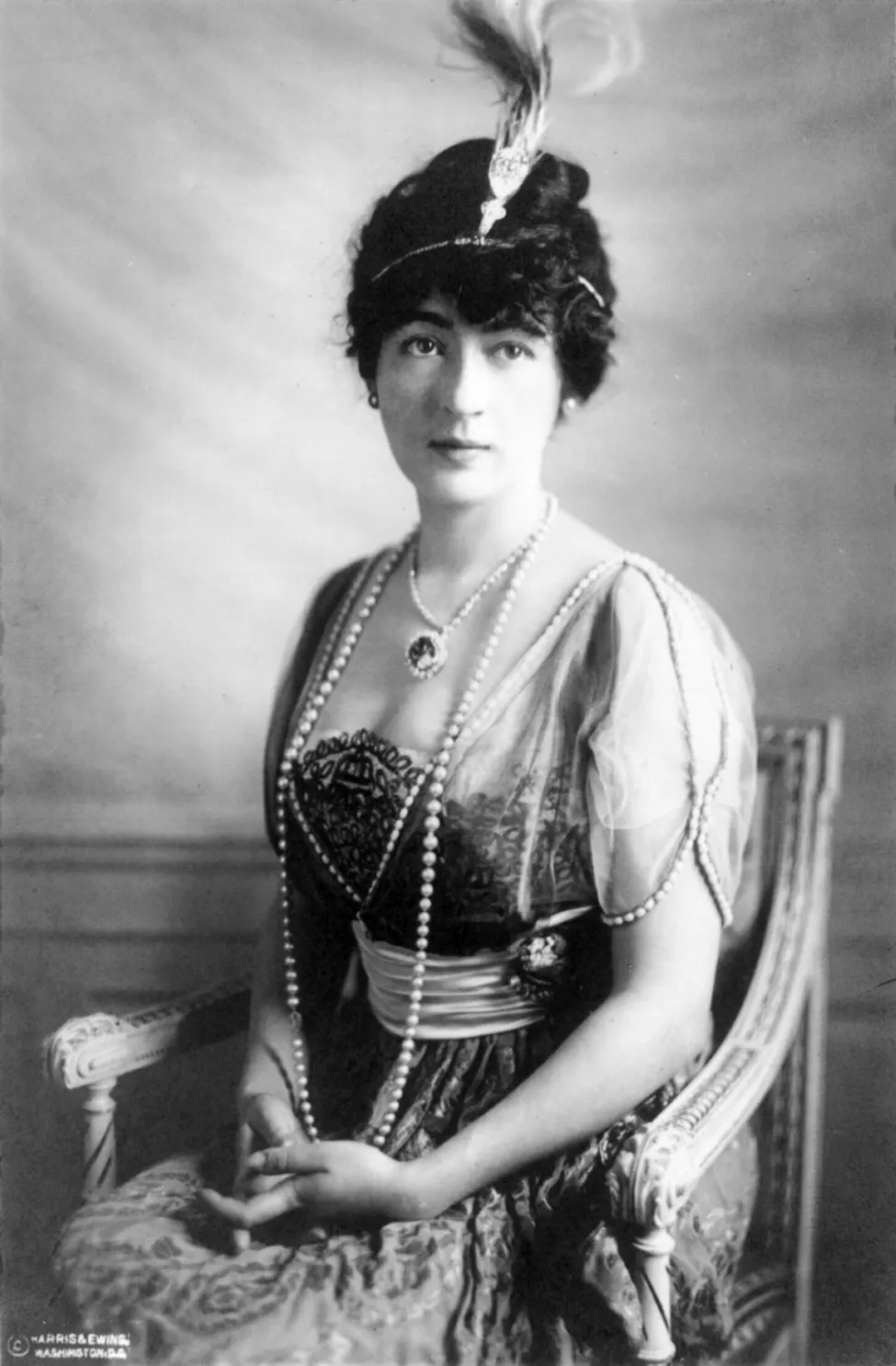
The Hope Diamond was acquired by Pierre Cartier in 1910, who presented the storied stone to Evalyn Walsh McLean, a wealthy heiress and socialite in Washington, DC. Evalyn and her husband, Ned, bought the necklace in 1911 for $300,000 (about $8.2 million today), although McLean's family would warn her to sell it back because of the alleged curse. The New York Times published a rebuttal in 1911 to the Post's earlier article to explain that most of the stories were fabricated to add publicity to the diamond and increase its price.
Related: The 9 Most Popular Jewelry Brands
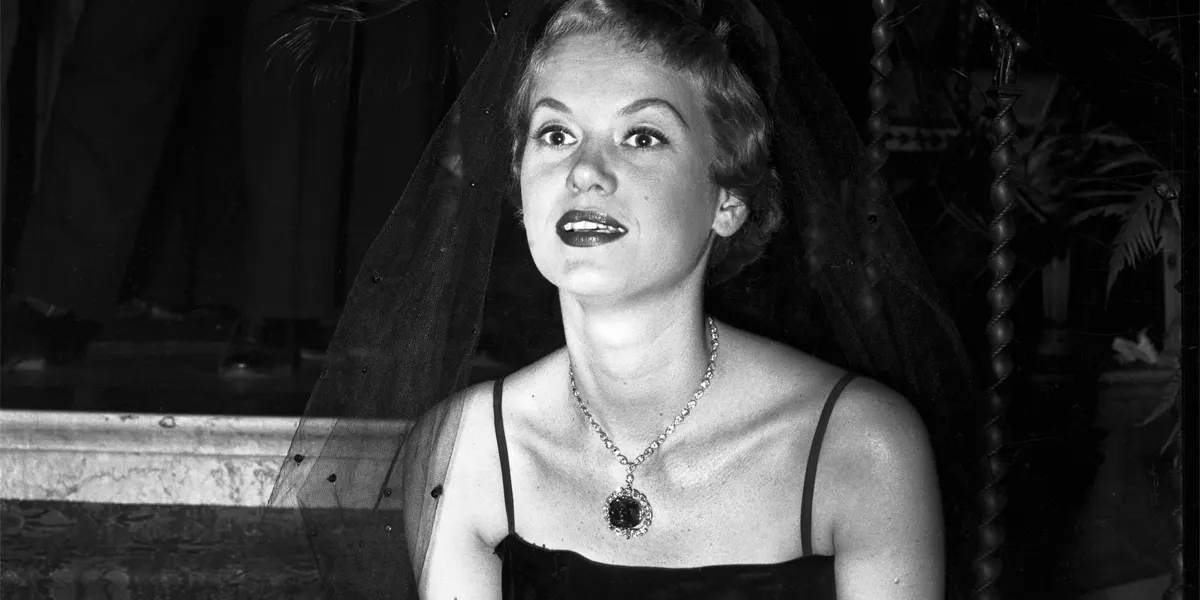
Cartier had reset the stone into a headpiece, but McLean would later have him convert it into the traditional diamond necklace setting, with 16 white diamonds encircling the blue diamond and a chain of 45 white diamonds. She would frequently wear the diamond necklace at social events at her estate in Washington, DC and is even rumored to have hung it around her dog's neck. It was guarded by three security detectives and kept in a locked vault every night.
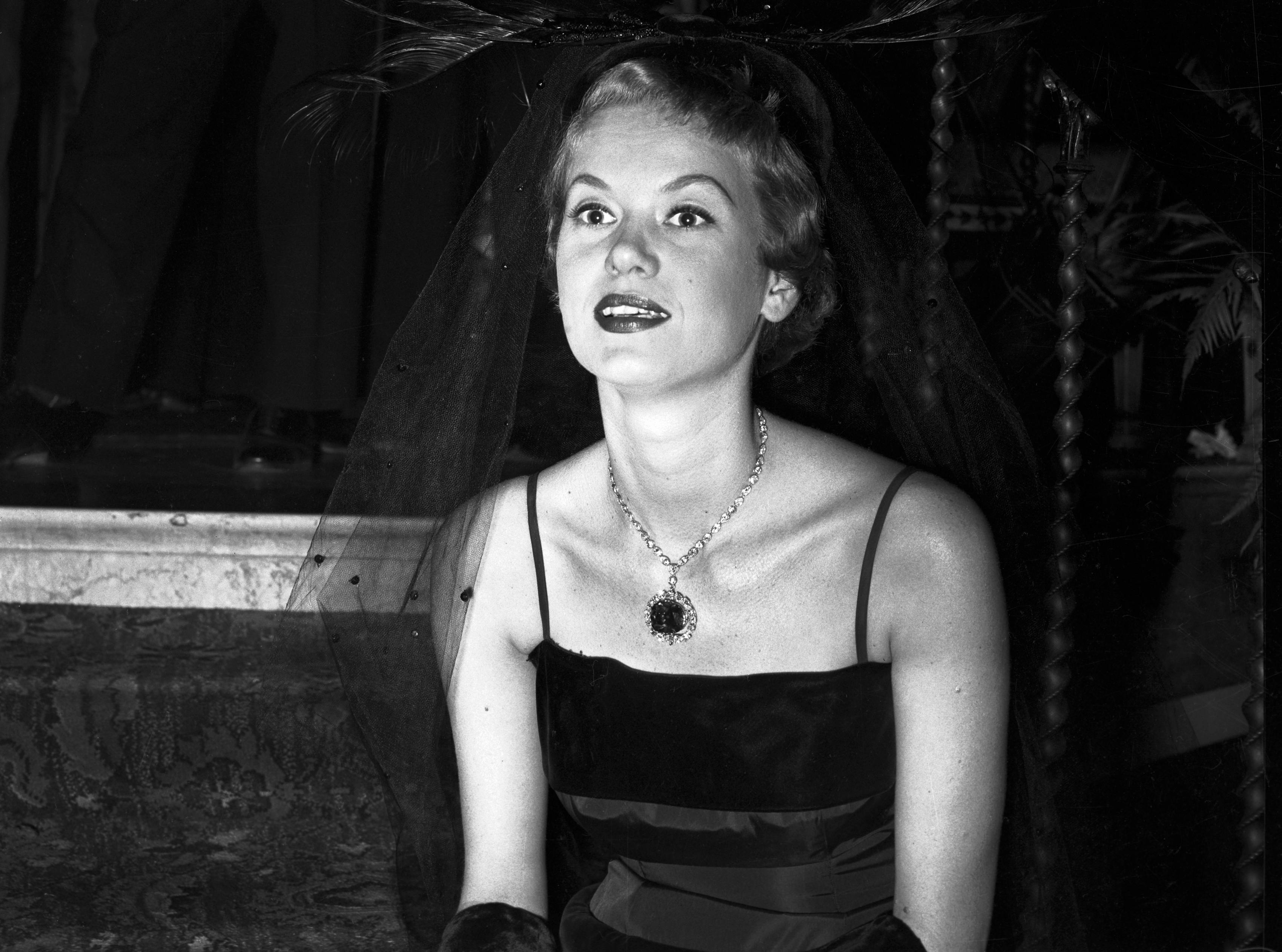
However, misfortune did come to the McLeans. In 1919, their young son was hit by a car and killed, and they divorced in 1932. Ned, who was the publisher of the Washington Post, was beset by mental illness and died in 1942. Evelyn died later in 1947 of pneumonia. The diamond was sold from her estate to Harry Winston in 1949, along with her other massive diamonds, including the Star of the East, Star of the South, and the McLean Diamond. He toured the Hope Diamond around the US for a decade, before agreeing to donate it to the Smithsonian Museum of Natural History in Washington, DC in 1958.
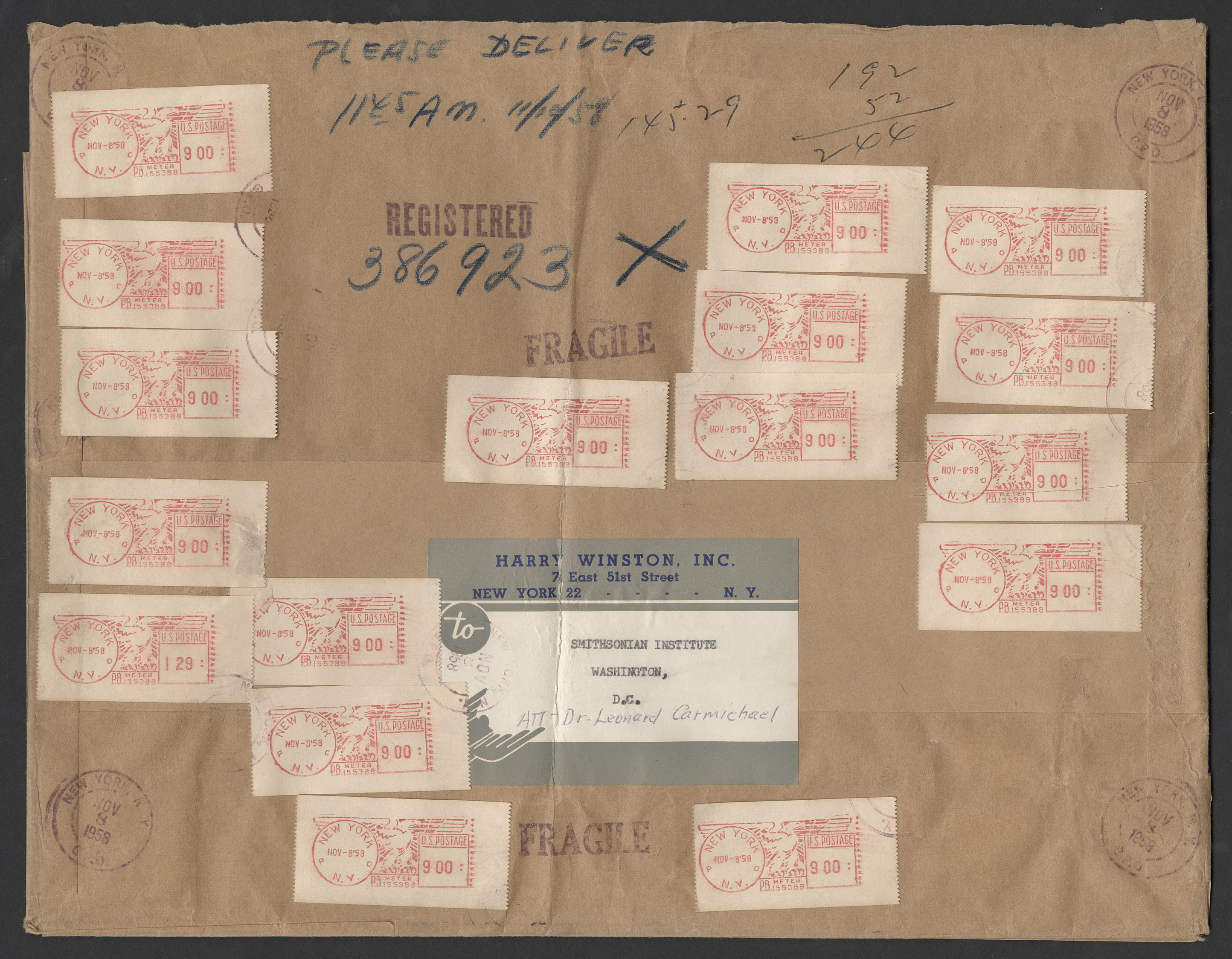
The diamond was sent from Winston's New York headquarters to the museum in a plain brown paper package, insured for $1 million. It became the main attraction for the museum and has rarely been lent out, only leaving the Smithsonian four brief times in the past 62 years. Although the Hope Diamond has been placed in different settings at times, it is still exhibited in the same Cartier necklace that Evalyn Walsh wore.
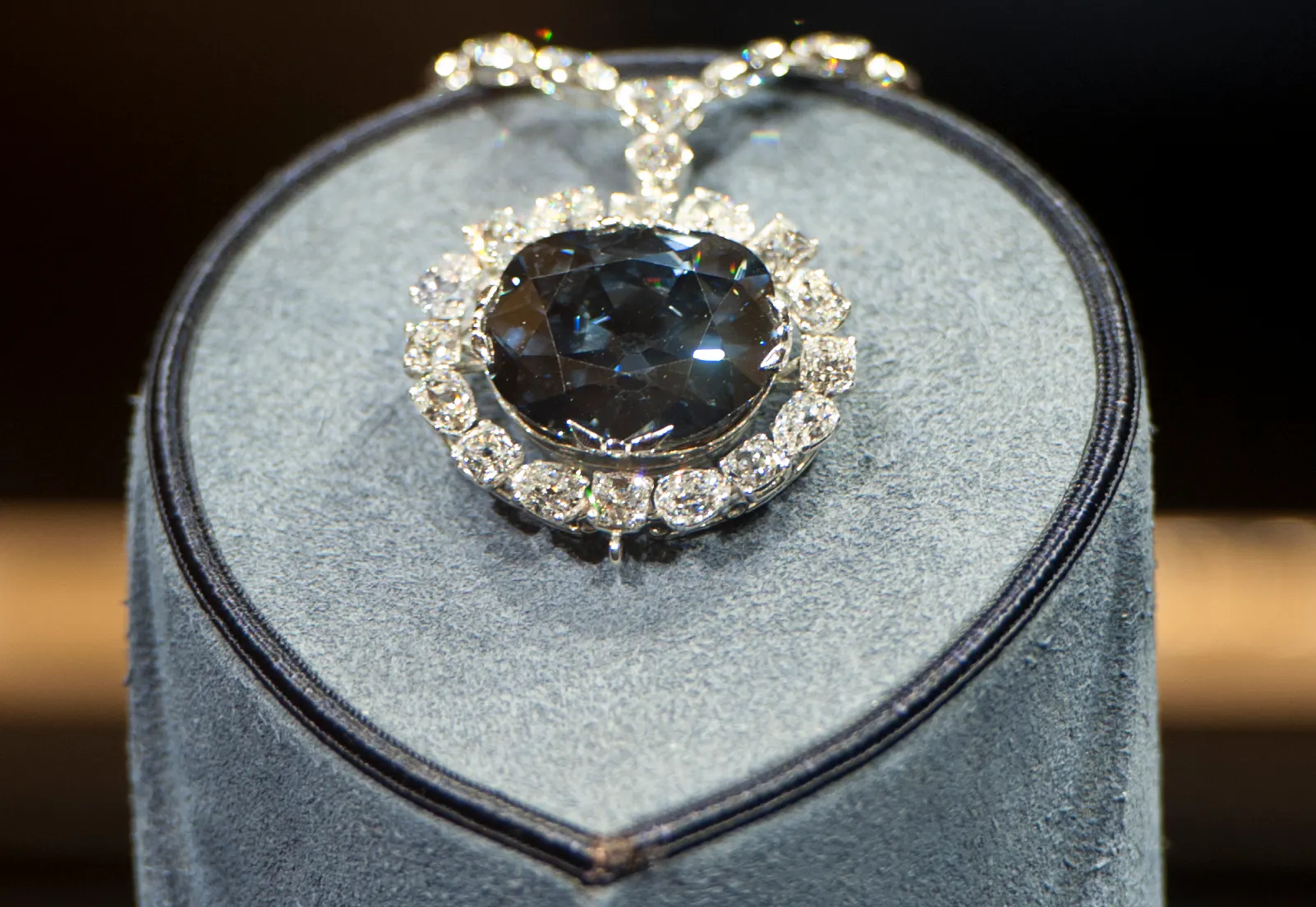
Today, the diamond is said to be worth $250-350 million. Although its fascinating history has its share of disaster, many of its more sordid tales have never been proven and were likely concocted to incite public interest in the gem. A curator at the Smithsonian stated the Hope diamond has only brought record attendance to the museum, so perhaps the curse, if there ever was one, is now broken.