If your child wants to be a writer or a poet, strongly advise against it. If they continue, threaten to disinherit them. Beyond these attempts, if they resist, thank God for having given you an inspired child, different from others.
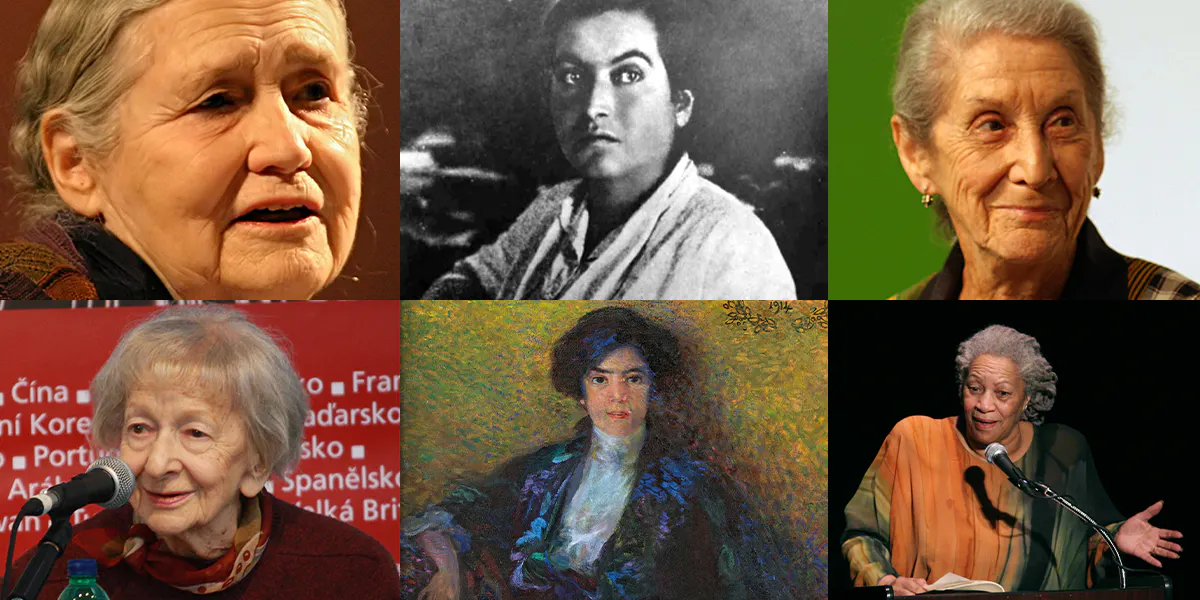
The Nobel Prize is an international award, given annually to those who have distinguished themselves in a specific field of human knowledge and have 'conferred the greatest benefit to humankind.' So far, over 90% of the winners have been men. Today, we explore the lives and works of six female laureates in literature.
1. Grazia Deledda
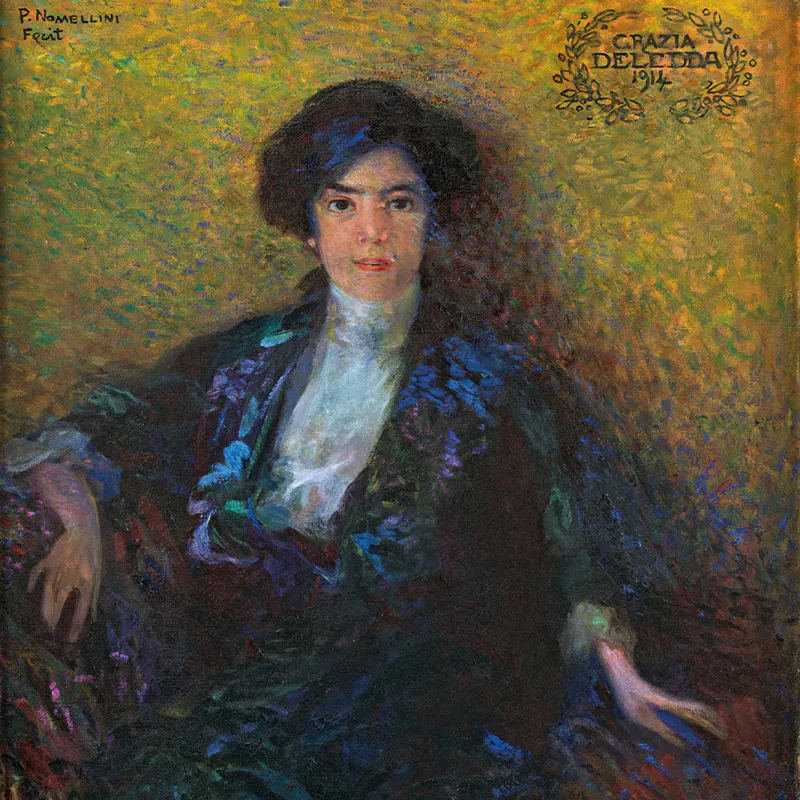
The second woman ever to win a Nobel after the Swedish Selma Lagerlöf and the second Italian to win the Nobel Prize for Literature, Grazia Deledda obtained the coveted recognition for her "idealistically inspired writings which with plastic clarity picture the life on her native island and with depth and sympathy deal with human problems in general."
Born in 1871 in Nuoro, Italy, into a wealthy family, her youth was burdened by grief and misfortune. She was self-taught, and developed a unique and original poetic style, not immediately welcomed by the literary community, which criticized her focus on an archaic world, too hidden and far away for them. However, it is precisely in that ‘archaic’ aspect that the magic of her books is contained - her art formed "like a song, or a motif that springs spontaneously from the lips of a primitive poet." In an interview, Deledda claimed that she was able to learn essential truths from the mouths of certain Sardinian shepherds, with their pure and atavistic simplicity.
Although often criticized, Deledda has the merit of having been a very modern figure who demonstrated women’s ability to write and be successful just as the men of her time. Palmiro Madesani, her husband with whom she moved to Rome, gave up his job to devote himself exclusively to being her literary agent, demonstrating a devotion and a modern attitude unusual for the time. Today, the author's manuscripts, especially her letters, are successful at auction. This ‘little little woman’, as she called herself, ‘but as daring and courageous as a giant’ is now, with full rights, in the hall of fame as one of the greatest Italian writers of all time.
2. Gabriela Mistral
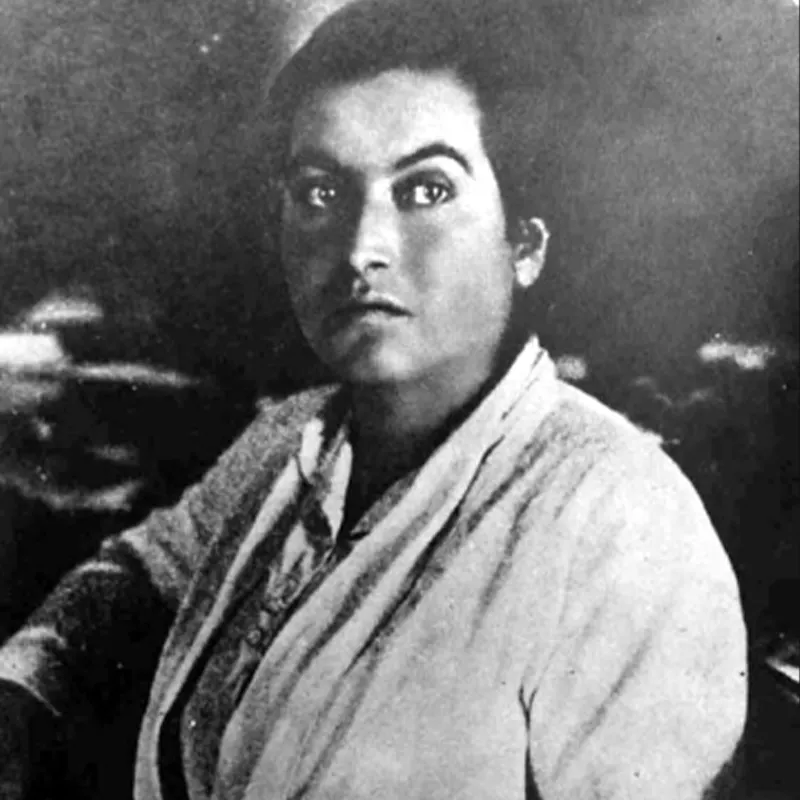
Lucila de María del Perpetuo Socorro Godoy Alcayaga, also known as Gabriela Mistral, was born in 1889 in Vicuña, Chile. Although she dropped out of school at the age of fifteen, she became a teacher herself at a very young age and later became a university professor of Spanish, minister of culture and diplomat. She took the pseudonym Gabriela Mistral borrowing the names of her favorite authors, the Italian Gabriele D'Annunzio and the French Frédéric Mistral. Three events initially kindled her writing: some verses written by her father, found by chance, which awakened her ‘poetic passion’; the private lessons of her elder sister, who transmitted her love for teaching and the Bible (both recurring themes in her works); the suicide of a lover, after which pain, a theme already widely present in her poetics, took on even more of a starring role.
Gabriela Mistral travelled extensively and became involved in diplomatic activity in numerous countries. Having grown up in poverty, she felt particularly sympathetic to vulnerable people and used her poetry to lend her voice to the ‘voiceless’, defending the freedom of democracy and siding with those who were mistreated by society. In 1945 she became the fifth woman, and the first of Latin American descent, to receive the Nobel Prize for Literature by virtue of her "for her lyric poetry which, inspired by powerful emotions, has made her name a symbol of the idealistic aspirations of the entire Latin American world."
Mistral died in 1957 at the age of 67 of pancreatic cancer, accompanied to the end by the American writer Doris Dana, with whom she was rumored to have a romantic relationship.
Related: The Best Selling Novel of All Time
3. Doris Lessing
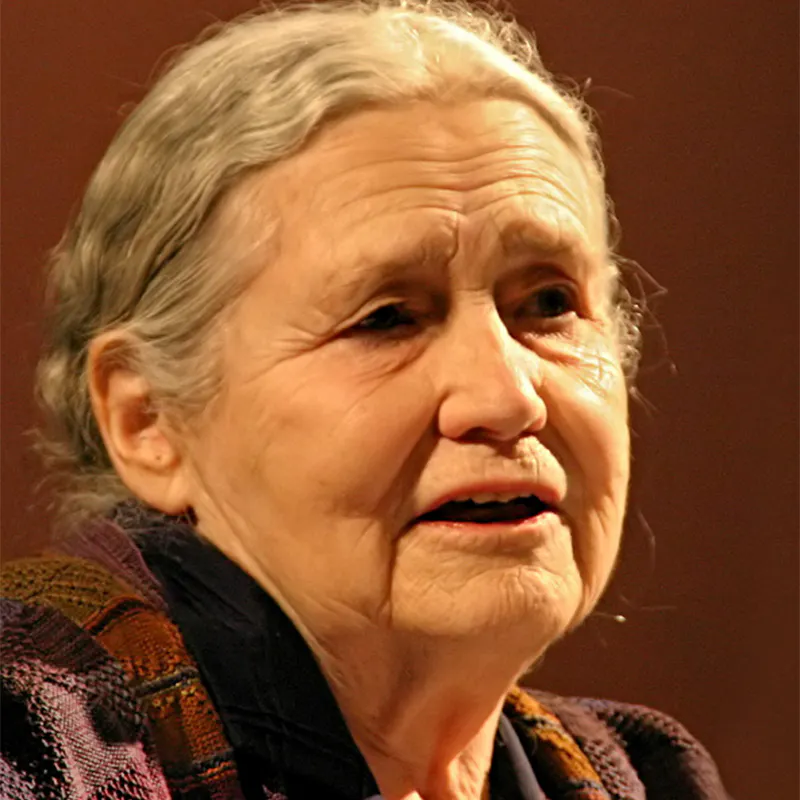
Doris Lessing was a Zimbabwean writer of British origin, whose works are commonly divided into three periods: the communist phase (1944-1956) when she wrote mainly on social issues, the psychological period (1956-1969), influenced by the radical psychiatrist R.D. Laing’s theories, and the Sufist phase, explored concurrently with science fiction writing in the Canopus series. Her novel The Golden Notebook is considered by many to be a classic of feminist literature, although the author has always rejected this label. As well as engaging in political and social issues, for example by fighting actively against the use of nuclear weapons, she was also an active opponent of apartheid, which led to her being banned from South Africa and Rhodesia for many years.
In 2007, Lessing received the Nobel Prize for Literature, making her the eleventh and oldest woman to receive it. Lessing was lauded as "that epicist of the female experience, who with skepticism, fire and visionary power has subjected a divided civilization to scrutiny." In 2017, after just 10 years, her Nobel medal was auctioned at Christie's in the Valuable Books and Manuscripts sale. She had died in London four years before, on November 17, 2013 at the age of 94, having published over 50 books, with some under pseudonyms.
A ‘cat lady’ curiosity: Doris Lessing adored cats and considered them special beings. In her short novel Particularly Cats (1967), she describes the quirks and temperaments of some of the cats that have been part of her life with the same clarity with which she analyzes human society, in a narrative full of anecdotes that is sometimes melancholy and sometimes amusing.
Do you have an ancient or rare book that you don’t know the value of? Get it appraised with ValueMyStuff!
4. Wisława Szymborska
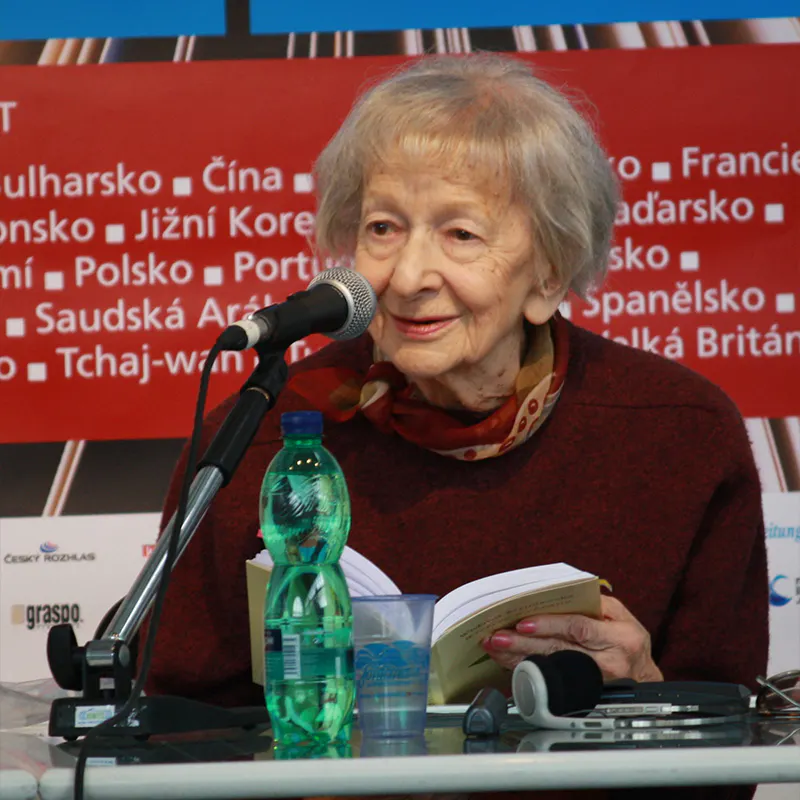
Although not well known by the general public, Wisława Szymborska's poetry reaches everyone's heart once discovered. Hers is poetry "that with ironic precision allows the historical and biological context to come to light in fragments of human reality," as the Nobel awarded to her in 1996 states. She once said, with characteristic irony, that poetry generally pleases no more than two out of a thousand people, although in her native Poland, her books have sold as much as prominent prose authors. Colon, the most recent poetry collection, published in 2005, was met with great success, selling over 40,000 copies in less than two months. Her works have been transposed into music, inserted into films and translated into English and many European languages, as well as Arabic, Hebrew, Japanese, Persian and Chinese.
Szymborska preferred free verse and her poems, characterized by great simplicity, illustrate universal philosophical themes and existential topics in an ironic and direct way. Deep intellectual introspection goes hand in hand with a succinct choice of words, the compositions are often very short and sometimes show the world from unusual points of view, as in the case of the very tender poem The Cat in an Empty Apartment, where a cat talks, after the death of its two-legged friend.
Her complete works are based on a relatively small corpus, with fewer than 350 poems. When asked why she had published so few poems, she ironically replied that it was her bin’s fault.
After a lifetime of heavy smoking, she died in her sleep in her home in Krakow in 2012 after several months of lung cancer. "There is no life / that at least for a moment / is not immortal," says one of his poems. Certainly, her life and her poetry will be immortal forever.
Want more articles like this straight to your inbox? Subscribe to our free newsletter
5. Nadine Gordimer
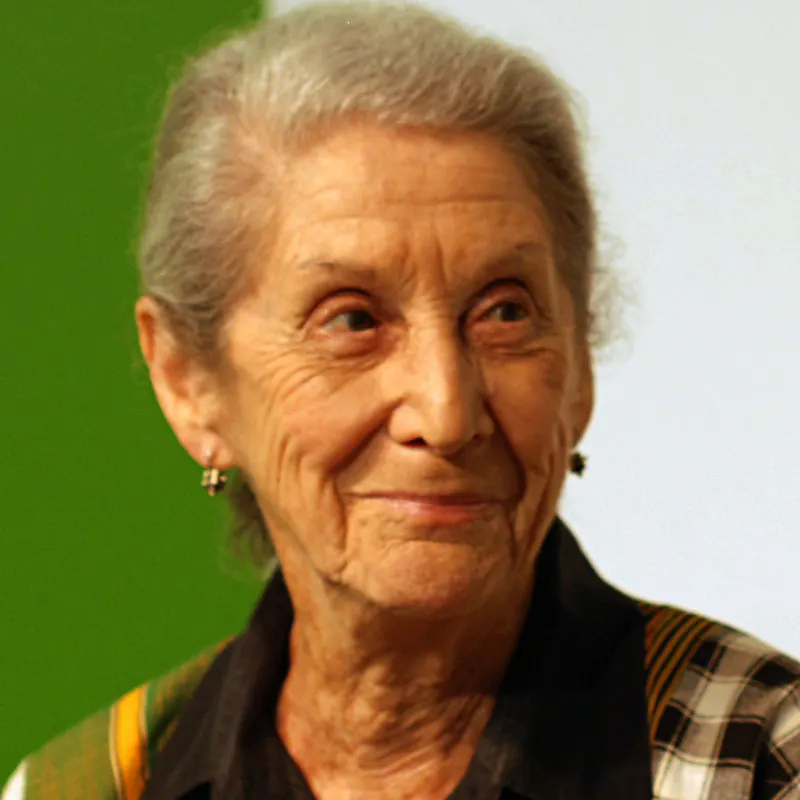
Nadine Gordimer, a South African writer born and died in Johannesburg, published novels and essays, winning the Booker Prize in 1974 and the Nobel Prize in Literature in 1991 for "her magnificent epic writing that has - in the words of Alfred Nobel - been of very great benefit to humanity." Born of Jewish immigrants, she became aware from a very young age of the racism that permeated society and the barriers between white and black students in the university system. She soon began her fight against racial discrimination and in the 1960s and 1970s, she taught at some American universities as she fought for the retraction of South Africa’s apartheid policy. Her works were often centered on her homeland’s ethical tensions due to racial segregation, a commitment that earned her various honorary titles.
In 1954 she married Reinhold Cassirer, an art dealer who founded Sotheby's South African base. That ‘wonderful marriage’, as the writer herself defined it, lasted until his death in 2001.
This extraordinary author left us in July 2014, due to a pancreatic cancer that in the last months of her life had also taken away the energy to write. However, her battle against racism continues to live on through her words.
Related: 7 Greats and Their Favorite Fountain Pens
6. Toni Morrison
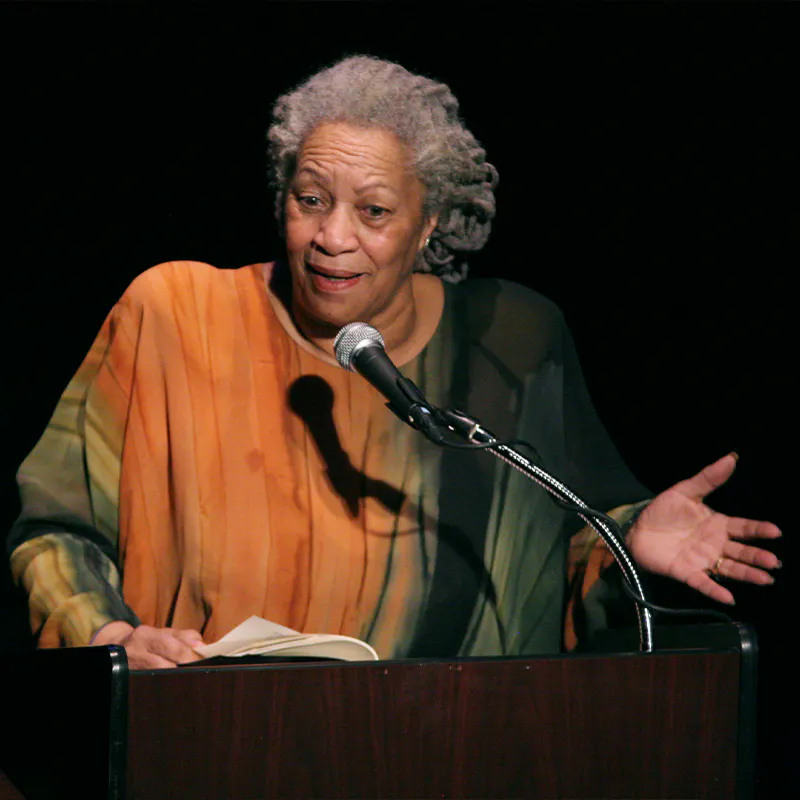
American author Toni Morrison conquered the audience with her words and her calm and warm voice. The first African American to win the Nobel Prize for Literature, she used her words as her ‘weapon’ against racism, putting the truth in black and white, however painful it was. Her stories on the condition of Black people in America are difficult, painful, but true and concrete, her narrative intense and enveloping.
Born Chloe Ardelia Wofford, she changed her first name to Toni when she was in college, as a tribute to Saint Anthony of Padua, and later took her husband's surname when she married in 1958. After winning the Pulitzer Prize in 1988 for the novel Beloved, she received the Nobel Prize in 1993 for her fiction which, with "novels characterized by visionary force and poetic import, gives life to an essential aspect of American reality." Later in 2012, President Barack Obama awarded her the Presidential Medal of Freedom, while in 2016 she received the PEN/Saul Bellow Award for Achievement in American Fiction and was inducted into the National Women's Hall of Fame in 2020.
Toni Morrison died at 88, in 2019, after a short illness, but she left us some important lessons, with her reclaiming of the political value of literature and the transformation of her novels into lucid analyses of the condition of human beings. The author once said, "when you get those jobs that you have been brilliantly trained for, remember that your real job is that if you are free, you have to free someone else. If you have some power, then your job is to give more power to someone else." Giving a voice to the oppressed, conquering one's freedom and helping others to reach it: this was Toni Morrison’s mission and gift to the world.