
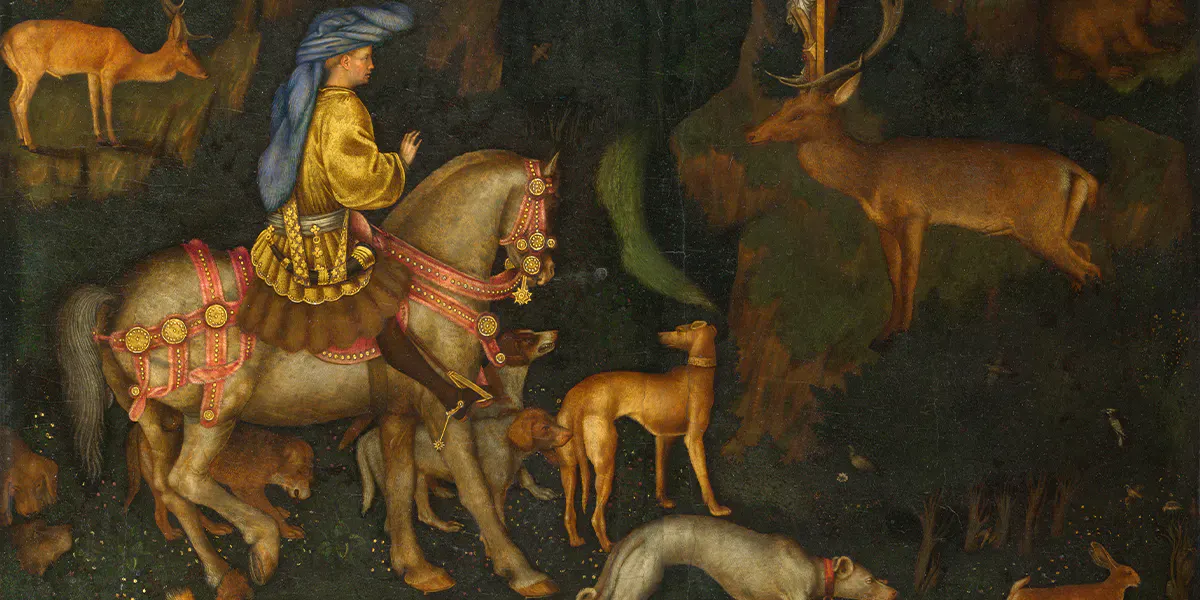
When one thinks of the Gothic era, the first thing that might come to mind is its cathedrals, which emerged in France in the early 11th century and replaced the squat Romanesque basilicas. The places of worship with their pointed arches, ribbed vaults and flying buttresses grew to dizzying heights such as had never been seen before. Their stained-glass windows took up more and more space and pushed back the fresco paintings on the walls. The focus was on the art of the stonemasons and sculptors, who decorated the churches with magnificent portals and figures of saints.
Related: The History of Notre Dame
In general, panel painting became more important, not only in the religious arena. In the course of the 14th century, a completely new self-image was discovered, which led to the creation of the first portraits. After art had for a long time been shaped almost exclusively by a religious idea of the hereafter, people began to be interested in God's creation on earth, which was depicted with increasing naturalism.
Giotto di Bondone (around 1267 - 1337)
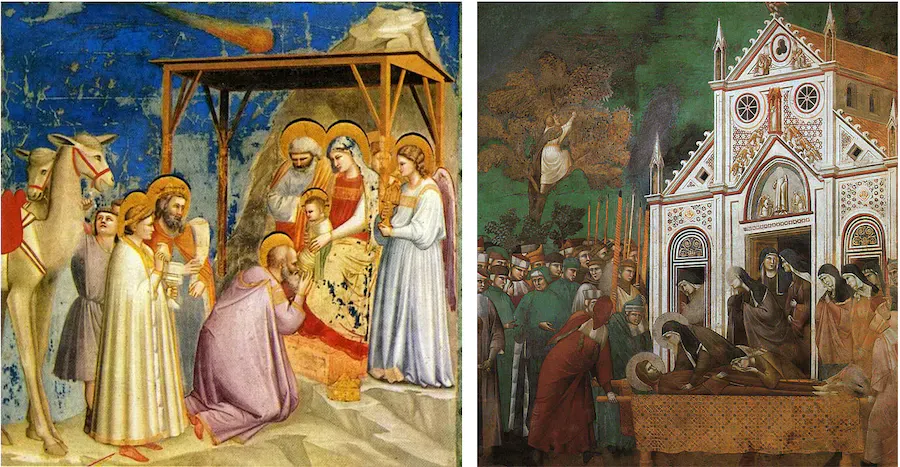
The filigree church architecture of the Gothic period, dominated by stained glass windows, could not gain a foothold in Italy, so there was enough space in buildings for artists to pursue their commissions. Excellent examples are the frescoes of the Basilica of San Francesco in Assisi and the Cappella degli Scrovegni in Padua. Giotto di Bondone created outstanding examples for both buildings, which contributed to displacing pictorial mosaics (wall painting was previously considered a cheap alternative). Giotto's characters seemed approachable and interacted with each other instead of just existing in proximity. The naturalness of his representations seemed alive and revealed a perspective.
Related: The $26 Million Cimabue Painting Will Remain in France
His teacher, the Florentine painter Cimabue, is said to have discovered him while he was tending a flock of sheep and painting pictures on rocks. According to an anecdote, Cimabue recognized that his pupil finally trumped him when he thought a fly that Giotto had secretly painted in a picture was real and tried to shoo it away. And once an emissary from the Pope asked for a sample of Giotto's work and he drew a perfect circle freehand.
Antonio Pisanello (before 1395 - c. 1455)
When it came to naturalism, Antonio Pisanello was an expert. The Codex Vallardi, a volume with the collected drawings by the artist who worked at the courts of northern Italy, provides exceptional evidence for this assertion. The studies and sketches show domestic as well as exotic animals such as cheetahs, lions, monkeys and even a sea turtle that he might have found in the menageries of his clients.
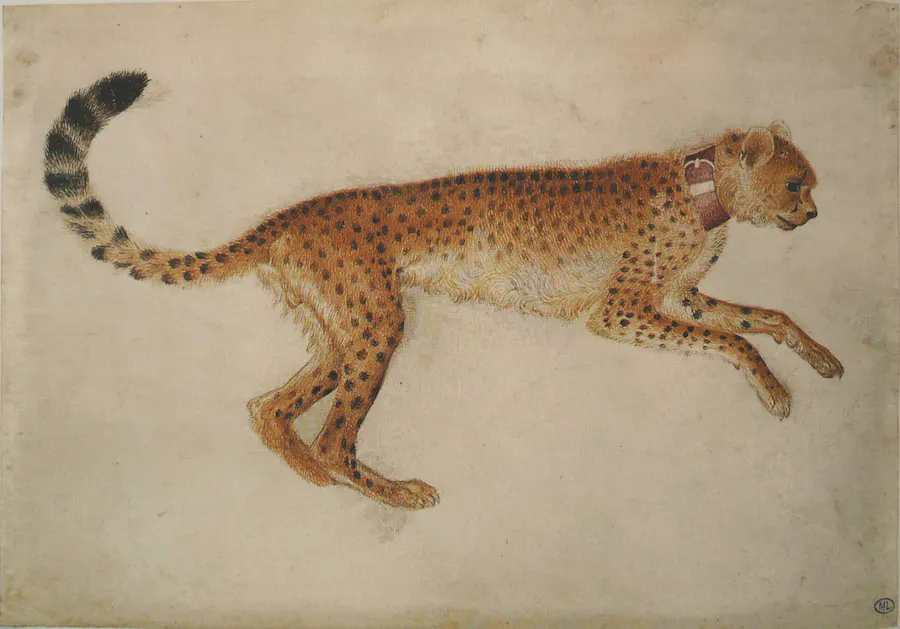
In addition to his work as a painter, Pisanello was also an excellent medalist, who continued ancient traditions with his portrait medals. He also executed excellent portraits, which show the sitters in profile. The most beautiful examples are the portraits of Leonello d'Este, Margrave of Ferrara, and his half-sister Ginevra.
Related: Painted with Stories: Isabella D'Este's Renaissance Maiolica Service

Cimabue (c. 1240 - after 1302)
Cimabue was already admired by the Florentines during his lifetime, but his importance was later overshadowed by the genius of his master student, Giotto. Giorgio Vasari said that Cimabue was the first to overcome the "Greek style," the flat and formal style of the Byzantine Empire, which found its way into Western art primarily in the form of icons. These were transformed into panel paintings and used primarily for the newly fashionable altarpieces, with the Maestà, the enthroned Madonna, being particularly popular.
Related: Cimabue: Late Medieval Genius
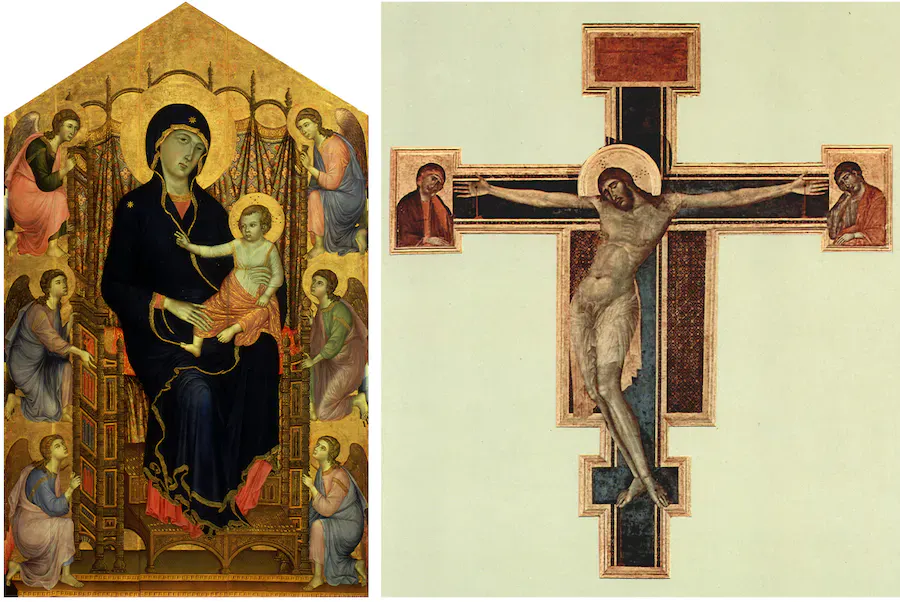
Cimabue introduced a new liveliness to his depictions, which is particularly evident in his crucifixes that address the suffering of Christ instead of showing him in the triumph of the soon-to-be resurrection. Cimabue also broke new ground anatomically, not shying away from depicting details of the human body, such as muscles and tendons.
Related: The Sacred Art of Icons
The Limbourg Brothers (1380s - 1416)
Duccio (c. 1255 - 1318/19) was also an innovator who combined traditional Byzantine art with modern art in France, which he most likely encountered there. In France, both stained glass for the cathedral windows flourished, as did book illumination, such as psalters and books of hours. The Gothic era was the last epoch for which book illumination was important and gave way in favor of book printing.
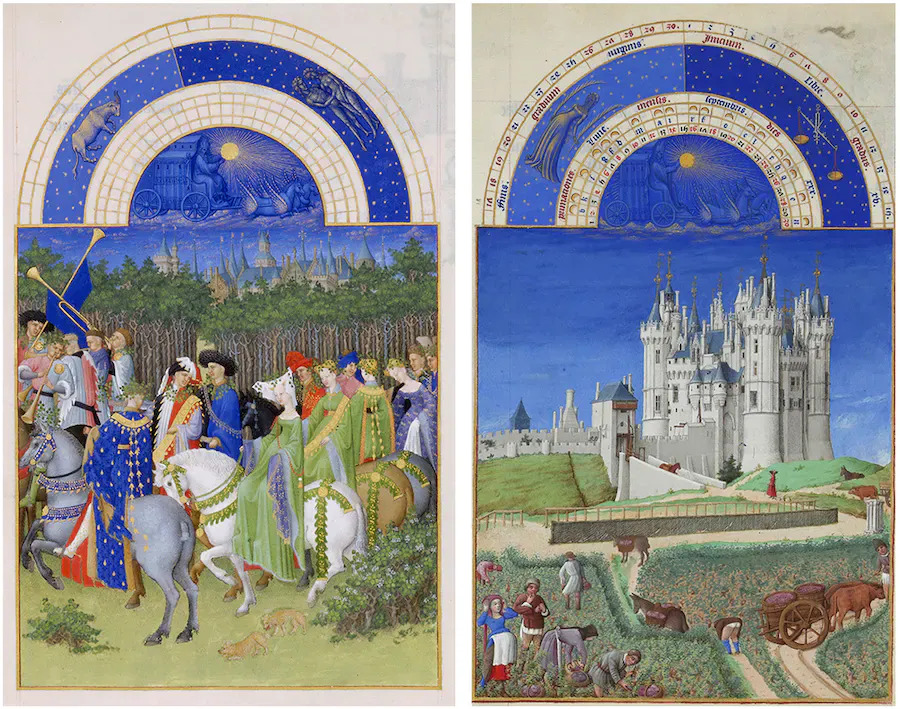
The most famous example - and not only for the Gothic period, but for illumination as a whole - is the Book of Hours of the Duke of Berry ("Très Riches Heures"), which was published by the three Limbourg brothers, Paul, Johan and Herman, in the early 15th century. The brothers, who came from what was then the Duchy of Geldern, had been trained in Paris as goldsmiths and artists and were given a job by Duke Philip II of Burgundy in 1402. When the Duke died just two years later, his brother, the Duke of Berry, became their new client. They created several projects for him, most notably the ambitious Très Riches Heures, which they began to work on in 1410 but still remained unfinished when both the Limburg brothers and the Duke of Berry died of the plague in 1416. It was then completed a few decades later.
Related: An Illustration by Albrecht Dürer Has Been Discovered in an Ancient Book
In the Book of Hours of the Duke of Berry about half of the 208 leaves are full-page illustrations, which not only depict religious episodes but also courtly scenes that offer a glimpse into the life and customs of the elite of the time. The reasons for this lie in the increase in private commissions and a passion for collecting, which constantly required new ideas from painters.
Ambrogio Lorenzetti (around 1295 - around 1348)
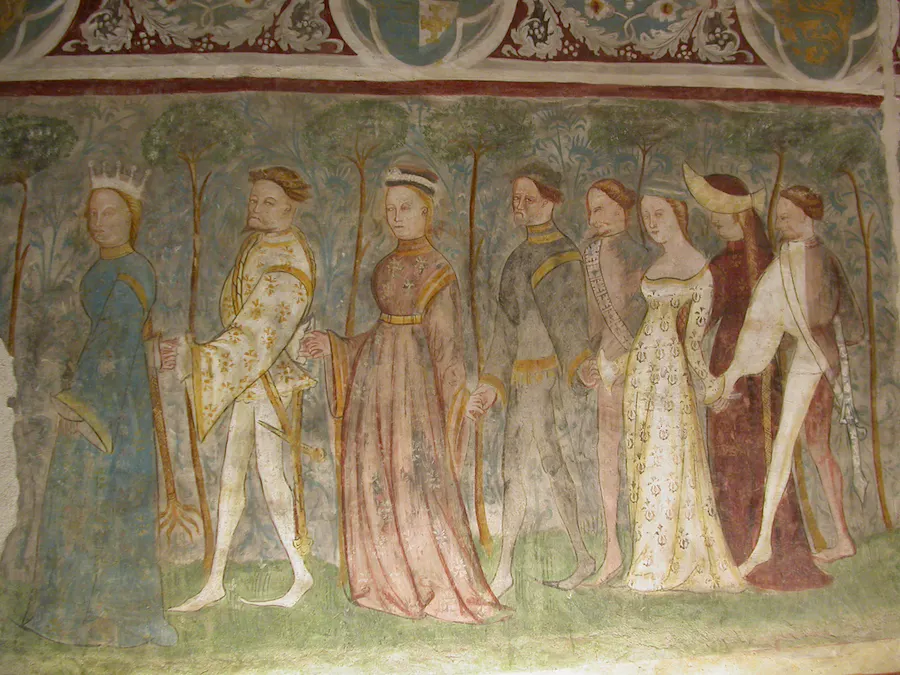
While frescoes in churches have survived in many places for reasons of religious worship, their secular counterparts have mostly fallen victim to changing fads. However, anyone who would like to get an impression of such frescoes should visit the South Tyrolean Runkelstein Castle, where a whole cycle of courtly scenes tells of bygone splendor.
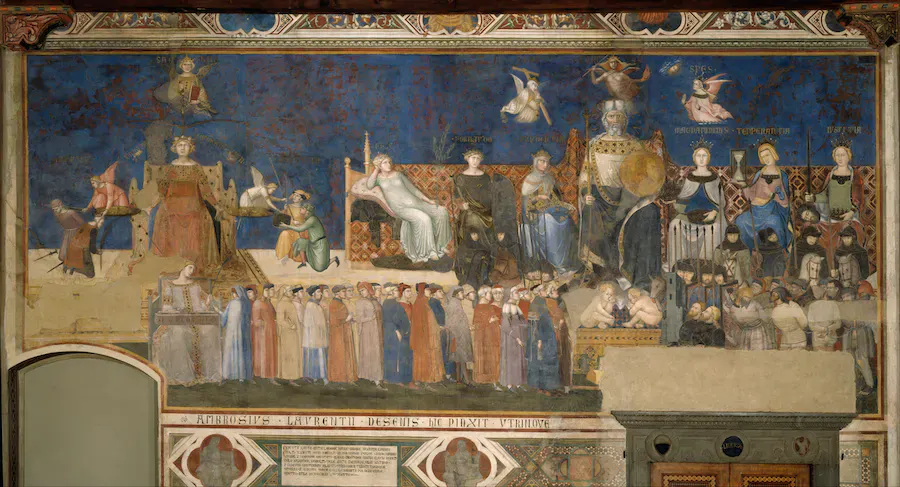
Another important cycle of secular frescoes can be found in the Palazzo Pubblico in Siena, where in the Sala dei Novi the consequences of good and bad government are allegorically represented. Ambrogio Lorenzetti carried out this commission from the government of his hometown of Siena in 1338-1339. The fresco of City Life Benefiting from Good Government is also a seminal masterpiece, in which Lorenzetti placed great emphasis on depth, proportions and the interaction of the characters.
Related: The First Known Artworks of 10 Famous Artists

Simone Martini (1284 - 1344)
Another artist entrusted with the decoration of the Palazzo Pubblico in Siena was Simone Martini, a pupil of Duccio, who took the mixture of Byzantine and French styles from his teacher and enriched them with his own innovations.
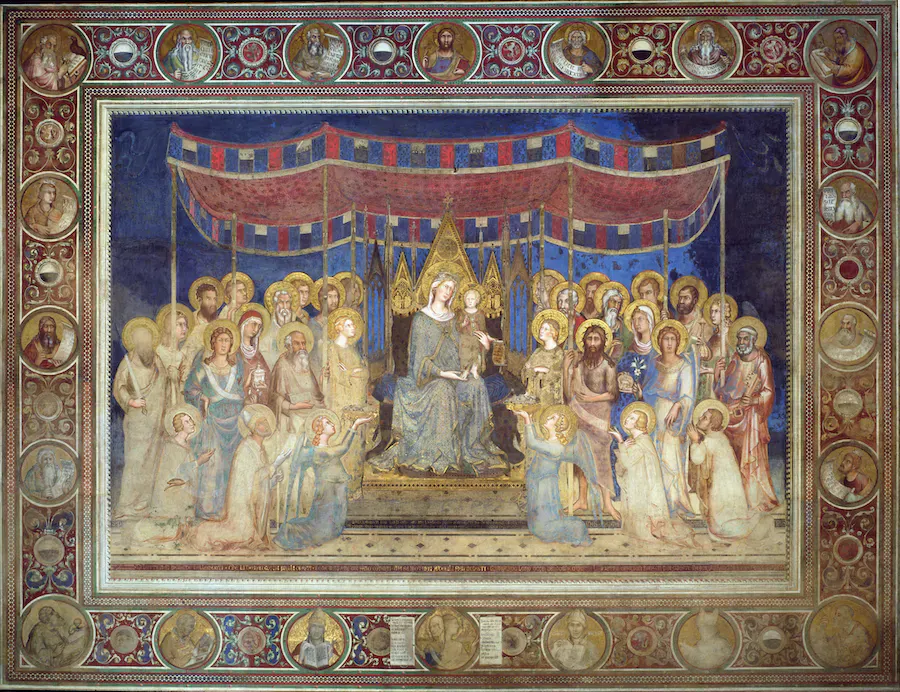
His most important innovation came against the backdrop of competition between painters and goldsmiths. The art of goldsmithing was very popular at the time and the painters, who were still relatively inexperienced, did not (yet) have any competition (two of the Limbourg brothers had also enjoyed training as goldsmiths). However, Simone Martini wanted to conquer the field in order to make devotional and altarpieces that were not inferior to the golden masterpieces in terms of radiance. He used goldsmith's tools to work on gold surfaces, especially the nimbus around the heads of his saints, so that they seemed to glow when the right light hit them.
Want articles like this straight to your inbox? Then register today for our free newsletter!
Simone Martini is one of those artists who founded the Gothic International style that was to be found in sculpture and painting in many places in Europe and which represents the last chapter of Gothic art. The Madonnas are now of an unearthly, idealized beauty, which is emphasized by the skillful use of thinly glazed oil paints, allowing the white background to show through. The term "softer style" commonly used in German research is based on the soft folds of the fabrics depicted, which create a new three-dimensionality.
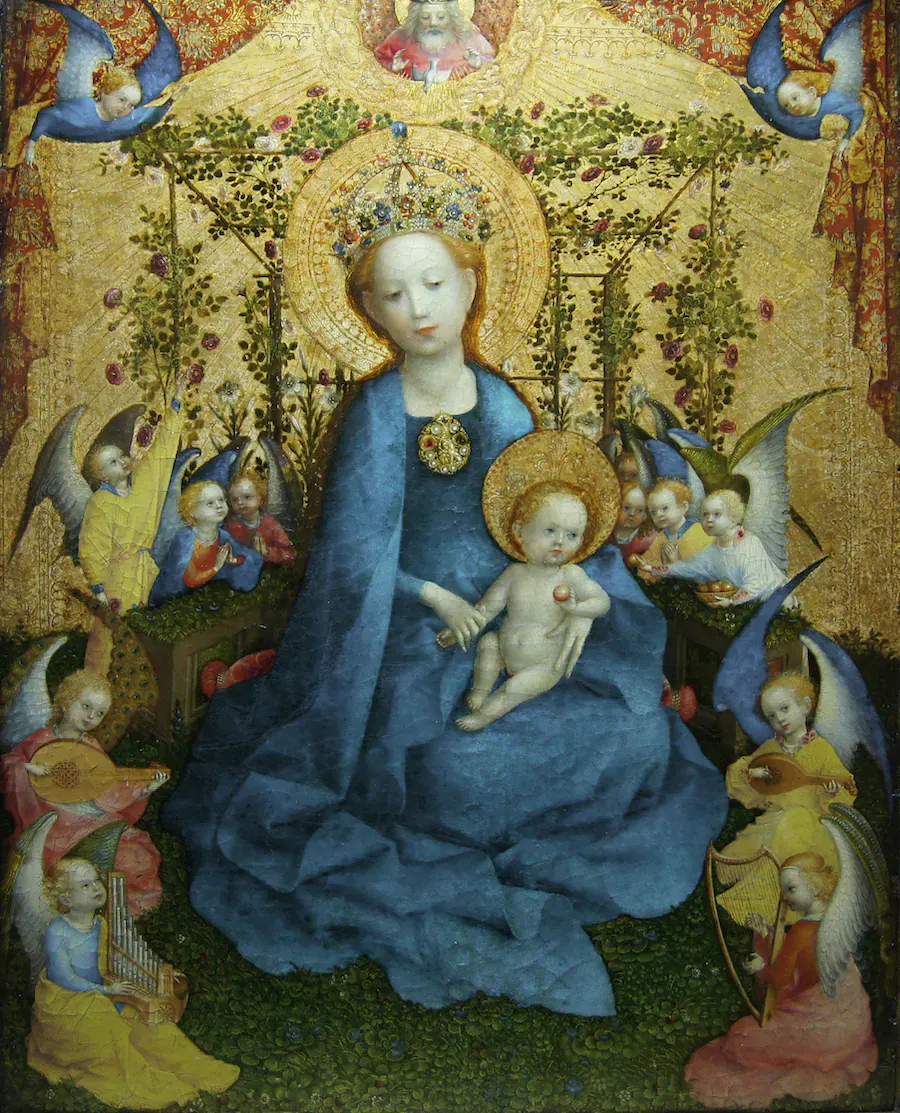
A master of this style was Stefan Lochner (around 1400 - 1451), the most important representative of the Cologne school of painting. Lochner reproduced this very vividly in his famous Madonna im Rosenhag, in which the shading of the bright blue cloak was created solely by color gradations. Lochner was a contemporary of Jan van Eyck (c.1390 - 1441) and Rogier van der Weyden (1399/1400 - 1464), who favored a more realistic and naturalistic style known as Old Netherlandish painting.
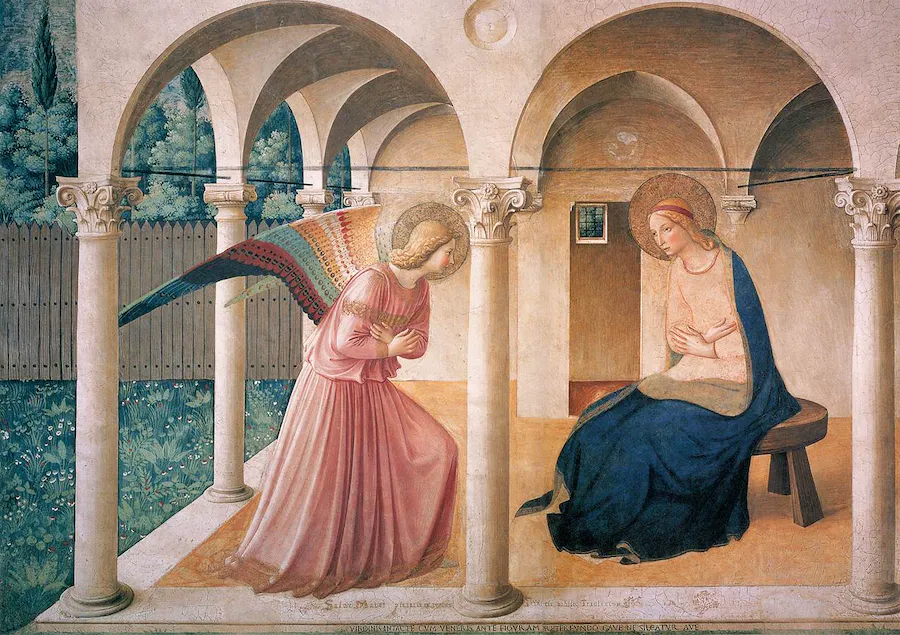
In Italy, the great Fra Angelico (around 1395 - 1455) stood on the threshold from late Gothic to early Renaissance. His contemporary was Masaccio (1401-1428), the great Florentine pioneer of the Renaissance, from whom he copied the lighting and the architectural rigor of the pictorial composition.
Related: Tommaso Masaccio: The Cradle of the Renaissance
The late Gothic represents an exciting art historical epoch in which painting began to step out of the shadow of sculpture for the first time in the Renaissance to be recognized as the highest genre of art.

![Leonardo Da Vinci, ‘Mona Lisa’ [detail], 1503-06, Department of Paintings of the Louvre. Photo public domain](https://images.prismic.io/barnebys/1fc21453-719c-4ece-92a7-05b4d2543d5c_Cover+new.jpg?auto=format,compress)