His childhood
Jean-Jacques Sempé was born on August 17, 1932, in Pessac, France. He grew up in an abusive and poor family, with an alcoholic father. More hopeful than frustrated, he escaped his difficult situation with the help of his imagination and some pencils. Sempé was a solitary child with a slight stutter, but he found refuge at school, and in his mother's magazines and the radio, which gave him a way out to a different world, rich in music and literature.
Resourceful but uneducated, he drew Mickey Mouses at the age of 12, delivered powdered toothpaste and wine by bicycle at the age of 14, and, at 17, headed for Vincennes (in the Paris region), where he did his military service.
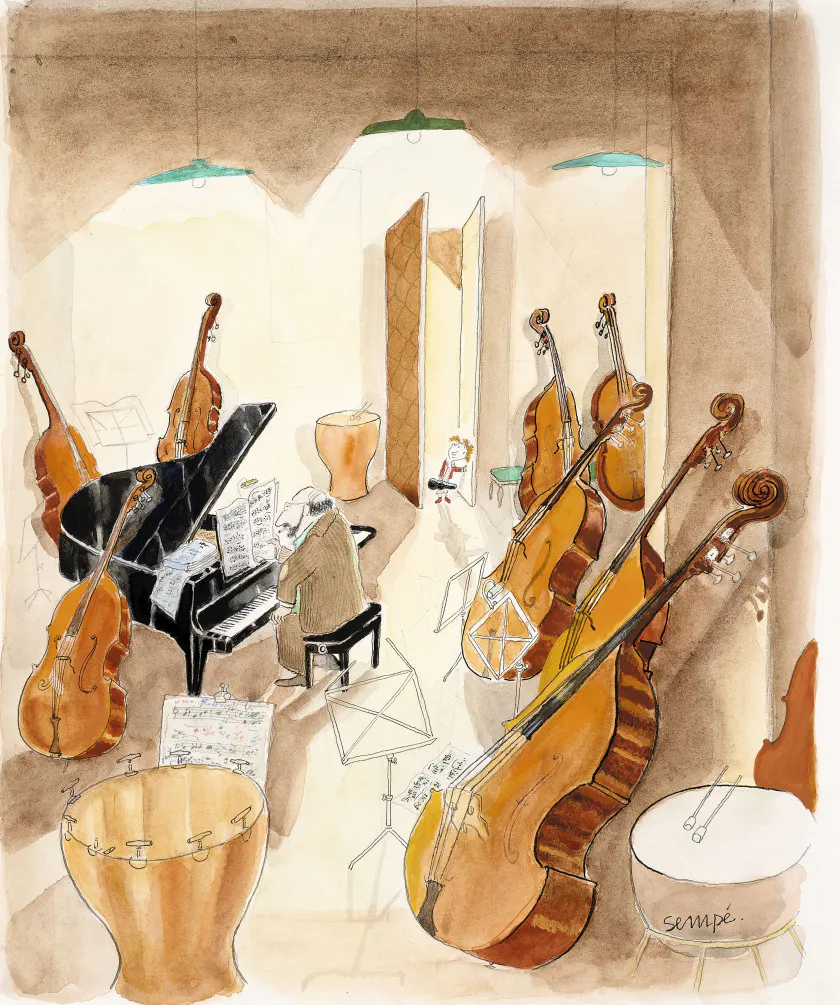
Bewitched by jazz, which gave him immense joy, he never missed any radio concert by his idols Duke Ellington and Ray Ventura. In 2012 he confided that he would often stop in the middle of the countryside and invite himself to people's homes to listen to a live broadcast by Duke Ellington on the radio. This passion for music allowed him to draw musicians like no one else.
But all his talent as a designer did not stop him from considering himself illiterate, because for him, "when you don't know how to read music, and you haven't studied music theory, you are illiterate!"
Related: Frank Sinatra's Secret Talent Revealed
Life in Paris
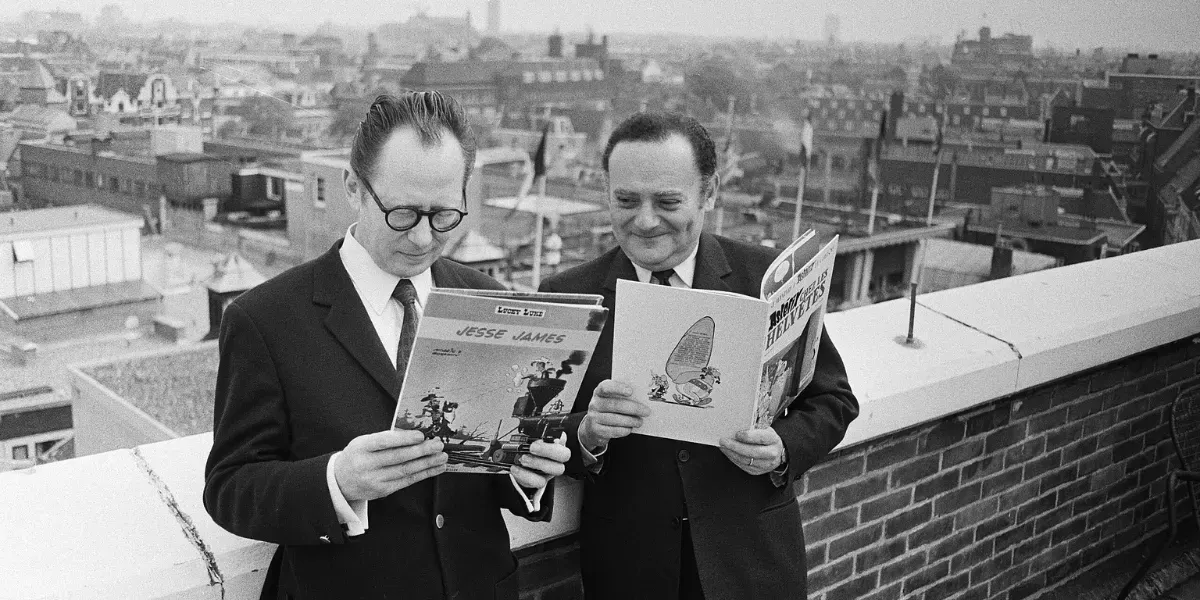
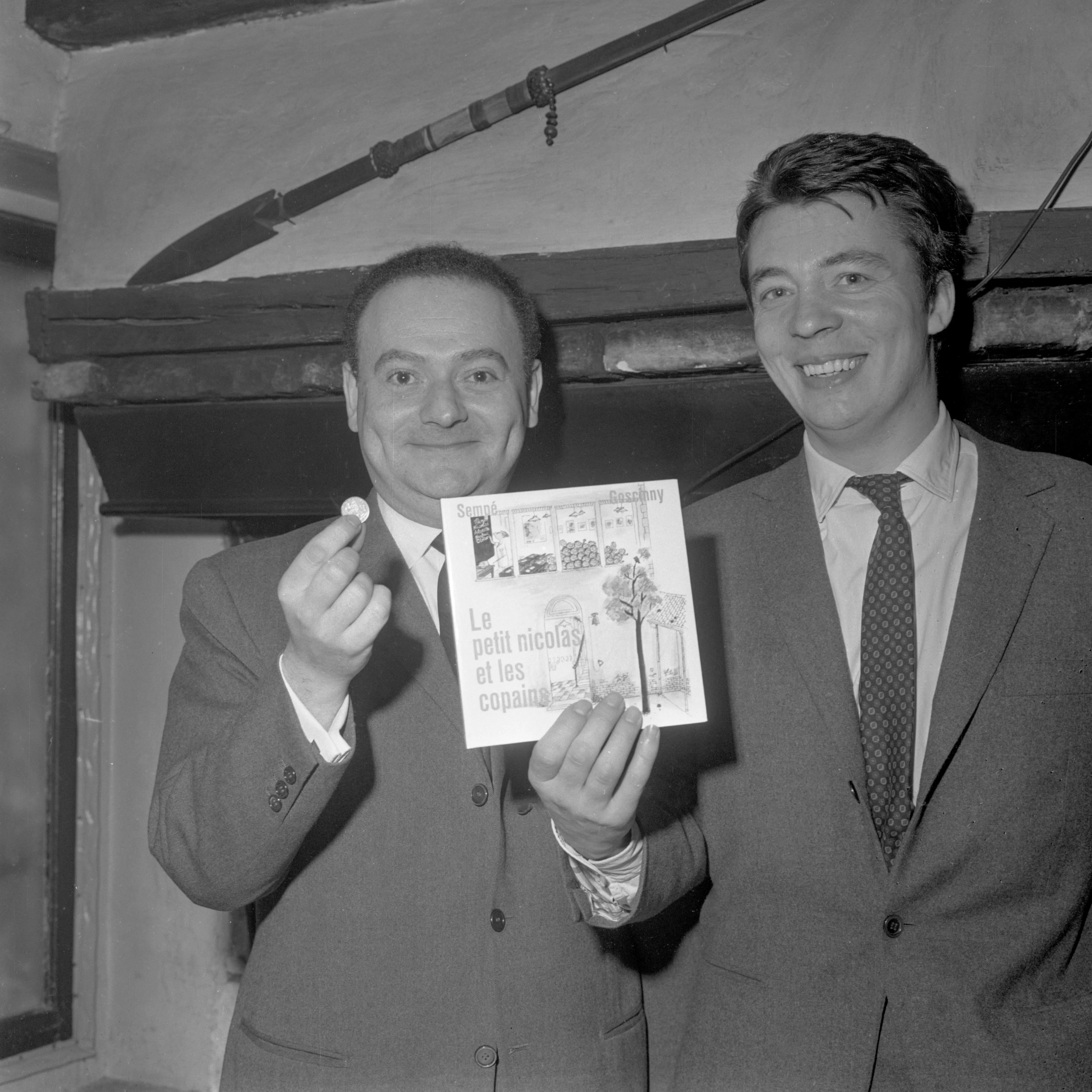
Sempé thrived in Paris: he loved the metro, buses, shop windows, gentlemen with their hats and ladies with their handbags, Mondays under an oak tree at Luco and Sundays at the Saint-Sulpice church. In 1950, he published a few drawings in Sud-Ouest Dimanche, a magazine with an excellent reputation, and in 1954 he met René Goscinny at a Champs Elysées drugstore. Goscinny, considered at the time the 'Molière of comics', fascinated him and became his first friend in Paris: “He came from the United States. This impressed me enormously. It was a bit like an astronaut returning from a mission.” With Goscinny he began a 10-year adventure: Le Petit Nicolas. Together, they created this dreamy playground with great kids, playful bickering, balls and games. The two friends worked on this series of short stories between 1956 and 1965. The series had the look of children's literature, but was based on a deep philosophical background – a factor that helped them achieve great success.
Nicolas' stories were a way of revisiting the misery I endured growing up, while making sure everyone would come out of it just fine.
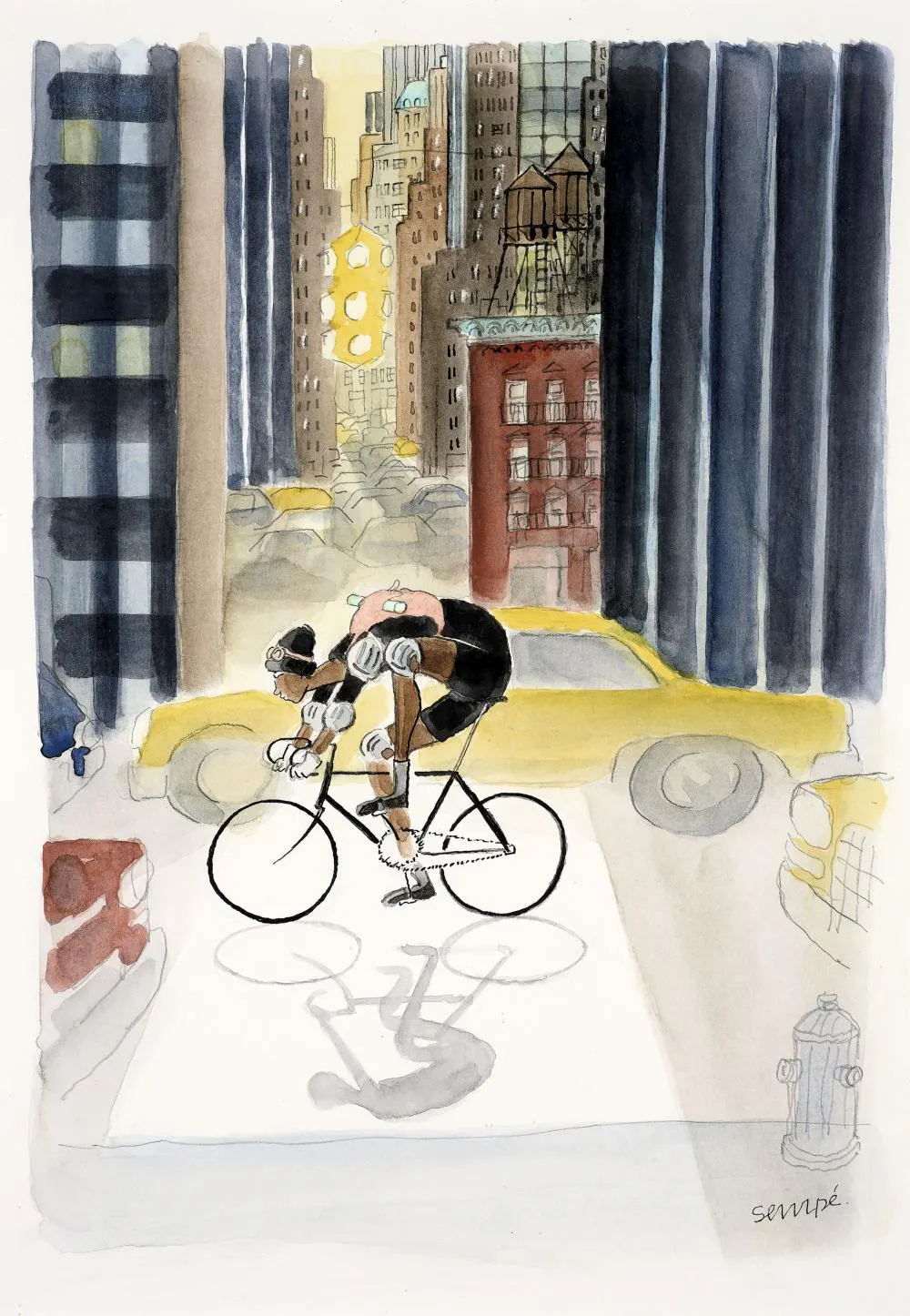
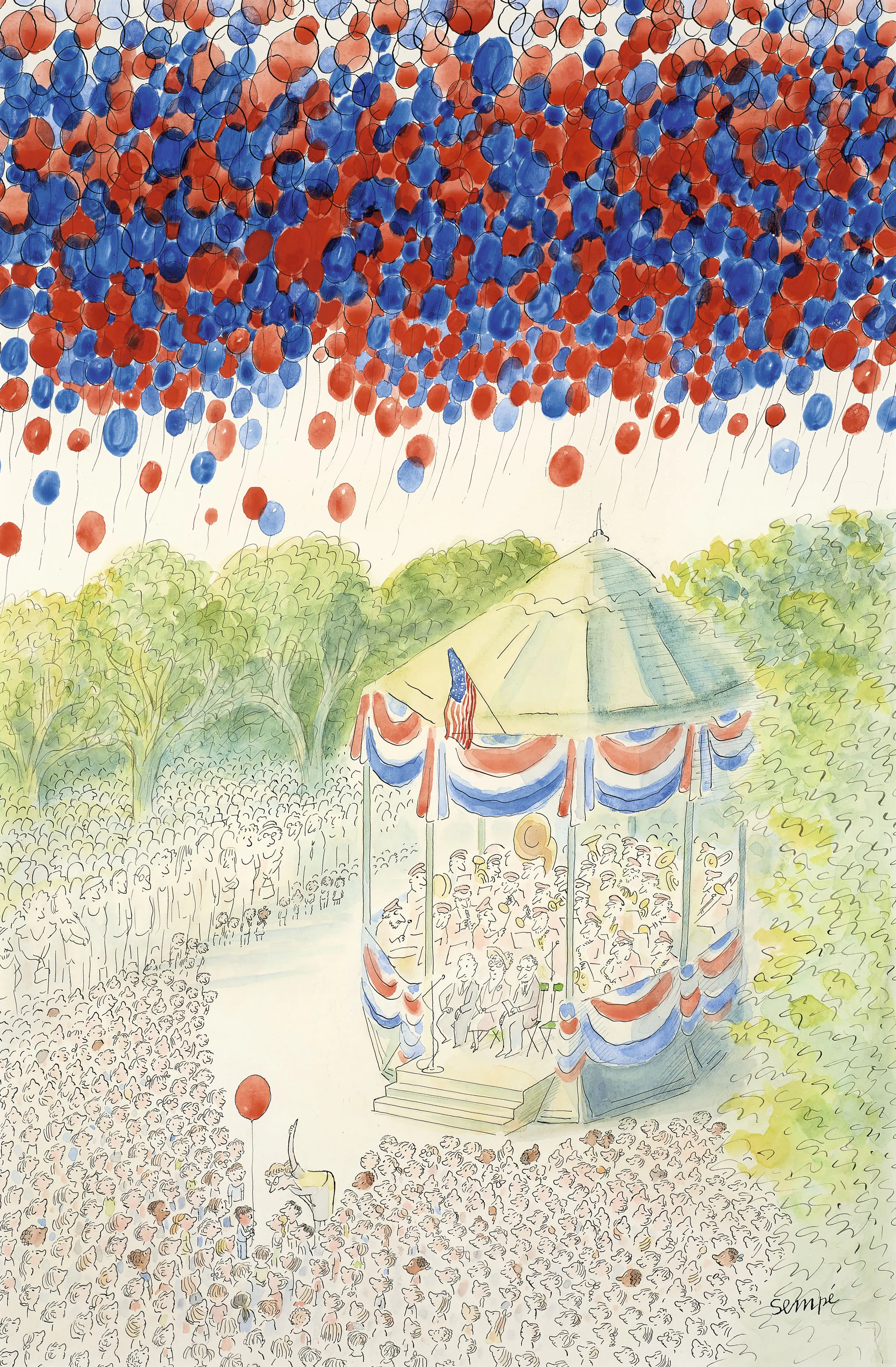
Having found success in Paris, he was invited to publish for magazines such as France Dimanche, Paris Match, Le Figaro, L'express, Télérama. In 1978, he produced his first cover for the American magazine The New Yorker, for which he would draw hundreds of covers thereafter.
He also published an album a year for Denoël editions, with often cheerful titles: Gusts and Lulls, Everything Is Complicated, Save Who Can, Nothing Is Simple were some of them.
Related: Illustrating Fashion in 1920s Paris: The Work of Georges Barbier
Want more articles like this delivered straight to your inbox? Subscribe to our free newsletter
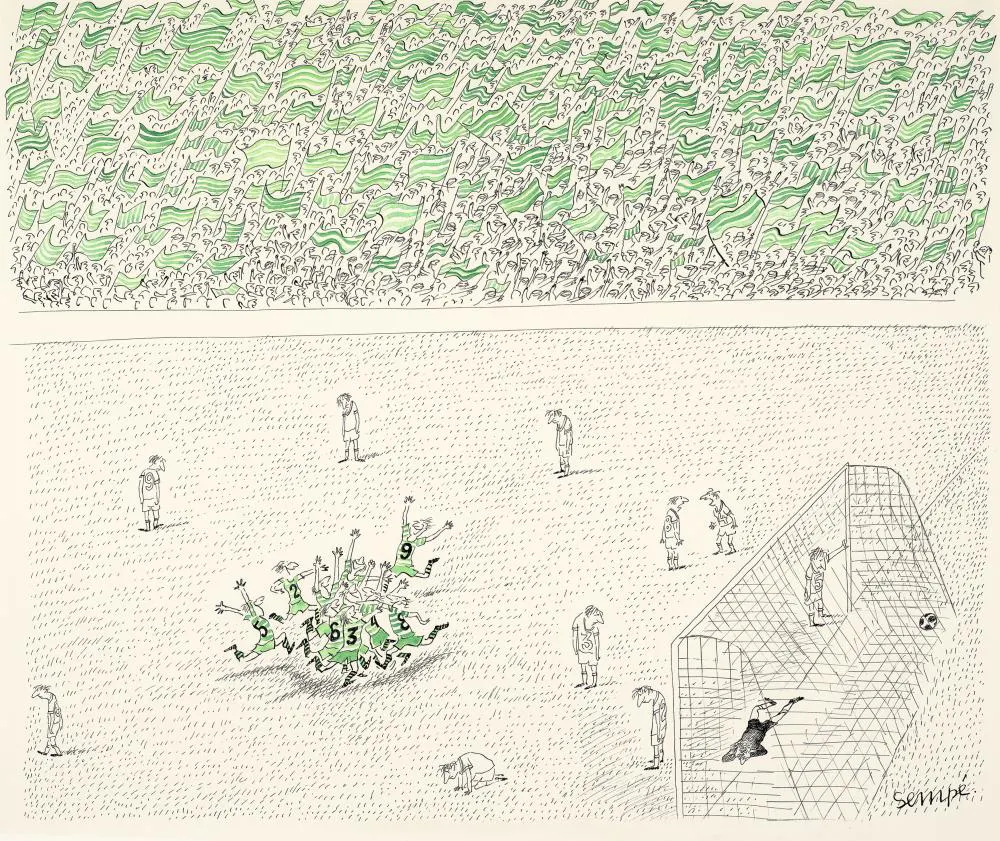
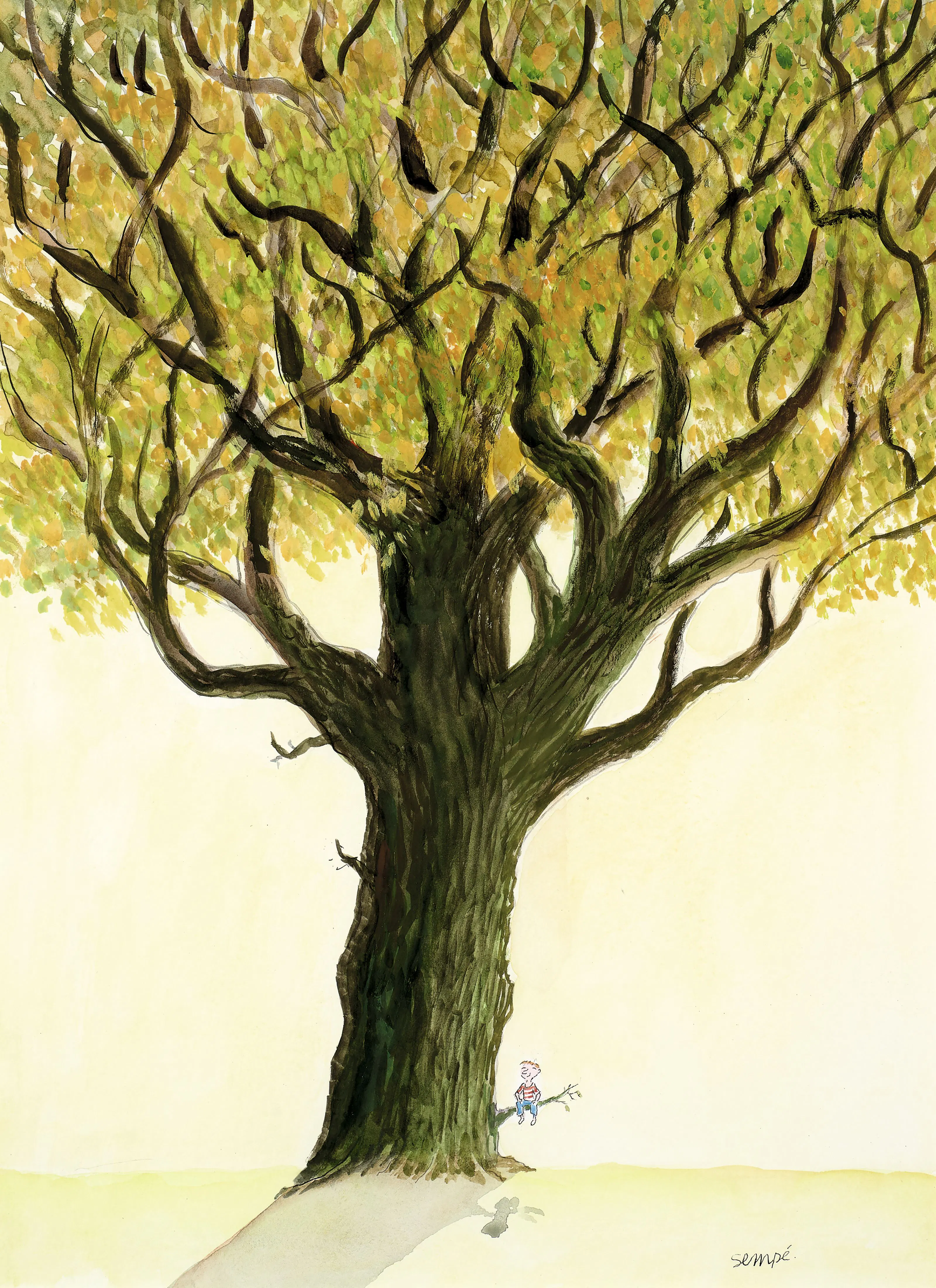
Sempé's drawings represent for many the encounter between human vulnerability and the beauty of the world, stupidity and genius, humility and the grandiose.
As a stubborn perfectionist, he took a long time to draw his little men on paper. He described his process: "I think I draw every day, but it is very rare that I do a drawing in a day. I work very, very slowly. It annoys me, but that's the way it is. I often start over, and sometimes, to no avail, I become fixated with an image that I would like to achieve that, of course, I don't end up achieving!"

Final honors
In 2011 he was honoured with an exhibition dedicated to the Hôtel de Ville. In 2014, he was invited to create a series of coins for the Monnaie de Paris on the theme of 'values of the Republic'. In June 2021 Artcurial devoted its first sale dedicated to his art, which achieved a total of 1.1 million euros. The record was broken by his 4th of July cartoon, made in the 1980s for The New Yorker, which sold for €66,979 – double its estimate.
On August 11, 2022 at 89 years old, a few days before his 90th birthday, Jean-Jacques Sempé died in his vacation home in the Var, surrounded by his loved ones. He is remembered and celebrated for his unique ability to analyze a situation, and make both the young and old laugh.