In 1962, with close to 100 victories as a Corvette race car driver, Bill Thomas was preparing a race car out of the new Sting Ray. However, when Carrol Shelby introduced the Cobra, Thomas quickly realized that the Corvette would not be competitive against the Cobra.
In an effort to beat Shelby at his own game, Thomas contacted General Motors Performance Group with whom he had a past working relationship with. Thomas and the group head, Vince Piggins struck a deal for Thomas to develop a concept vehicle that could challenge Shelby’s Cobra.
Funding for the project came from private investors, Thomas himself and from John Grow, a California Chevrolet dealer.
The prototype was designed and constructed by Thomas and his lead manufacturer Don Edmunds.
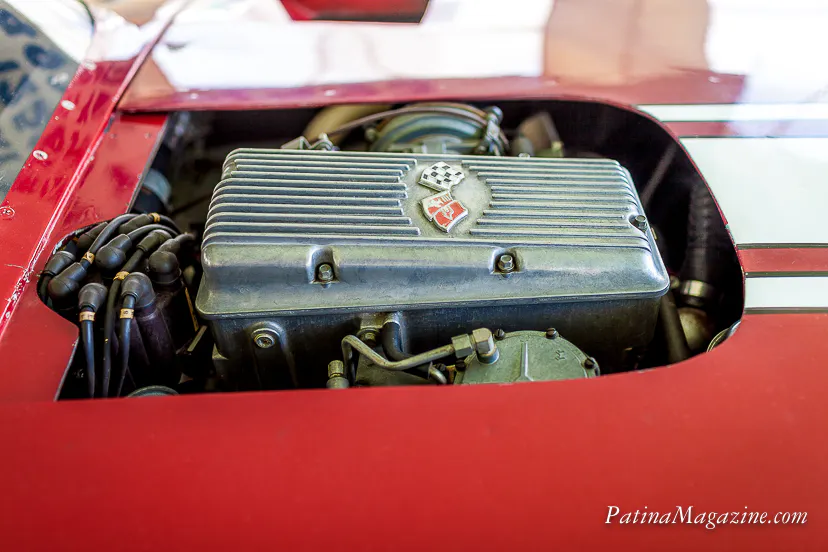
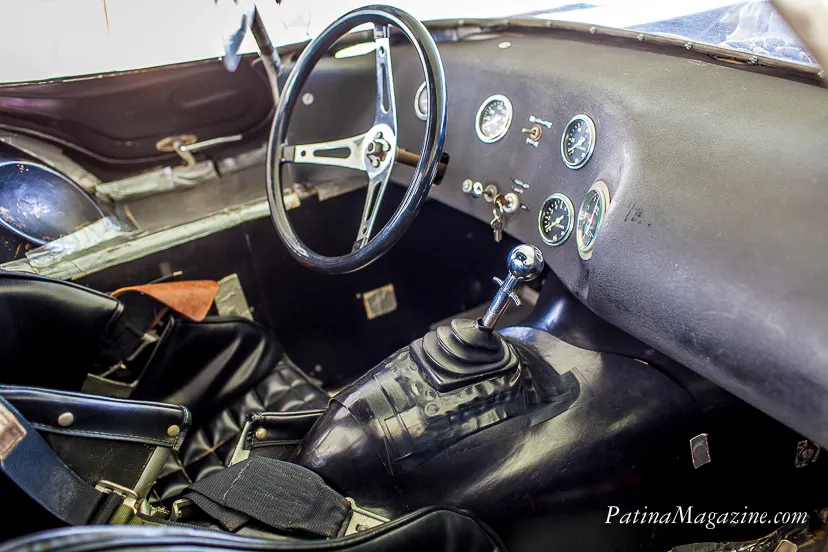
After gathering components through Thomas’ racing connections, the major components were placed on the shop floor and Edmunds sketched in chalk the basic layout for the chassis directly on the floor. The major components consisted of a 327 ci Corvette engine, a Muncie M21 4-speed transmission and an independent Corvette rear end. Other components were Chevrolet spindles from a passenger car and NASCAR specification drum brakes.
After the chassis was completed, Edmunds constructed a body buck out of plywood with removable metal frames outlining the windows. The body buck was sent to California Metal Shaping that manufactured the aluminum body.
The prototype Cheetah was originally designed to be a drivable styling exercise to show General Motors. After the construction started, Thomas decided to promote the car by entering it into races. It soon became clear, however, that the chassis was not rigid enough for racing.
The Cheetah was scheduled to make its debut at the 1963 Los Angeles Times Grand Prix at Riverside, but it crashed two days before during practice. The aluminum body was replaced with one made out of fiberglass, and the car made its actual debut at Riverside on February 1, 1964. Driven by Jerry Titus, it crashed at the end of the first lap. It seemed that a water hose had come undone and sprayed water under the rear wheels making the car skid off course. Titus continued to race the car throughout the 1964 season.
Ralf Salyer, Bud Clusserath and Alan Green were among the other drivers that tried the tame the powerful Cheetah at race tracks. Salyer being the most successful with 11 minor wins between 1964 and 1965.
In 1964 the race rules were rewritten. Homologation (approval of racing cars) was raised to 1,000 cars from 100. This resulted in Thomas losing his backing from Chevrolet. At this time race cars evolved quickly and the move to mid-engine cars was evident. Shelby’s Daytona Coupe also suddenly became obsolete in favor of the new Ford GT40.
It is estimated the 11 cars were completed and others were in various stages of completion when a fire destroyed the factory on September 9, 1965, and production ended.
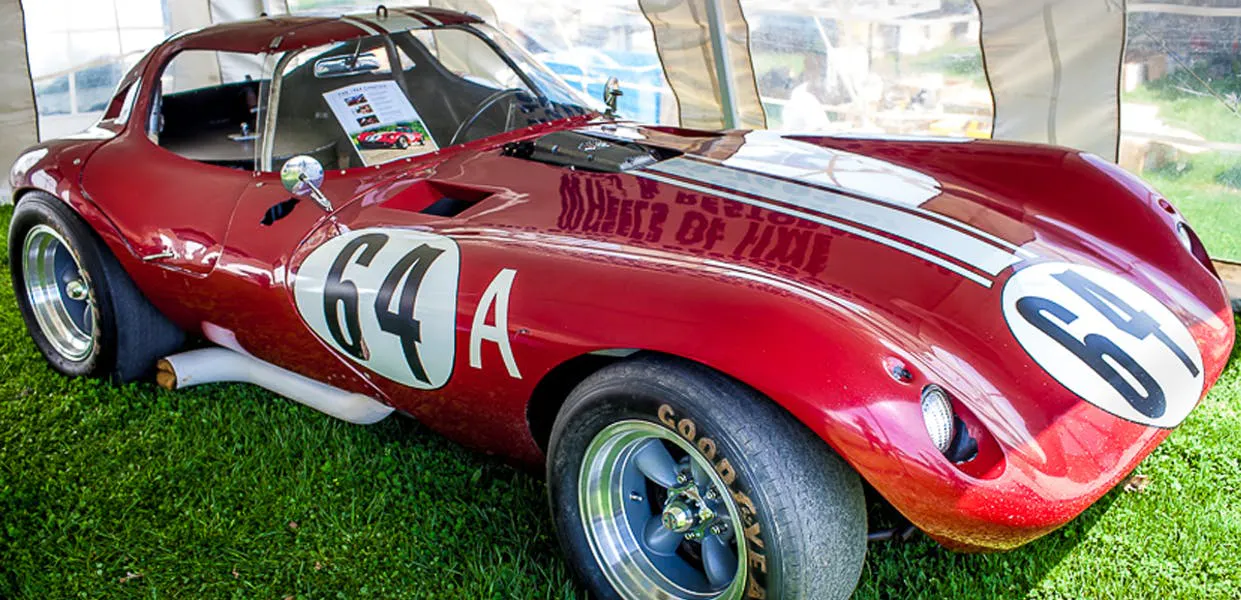
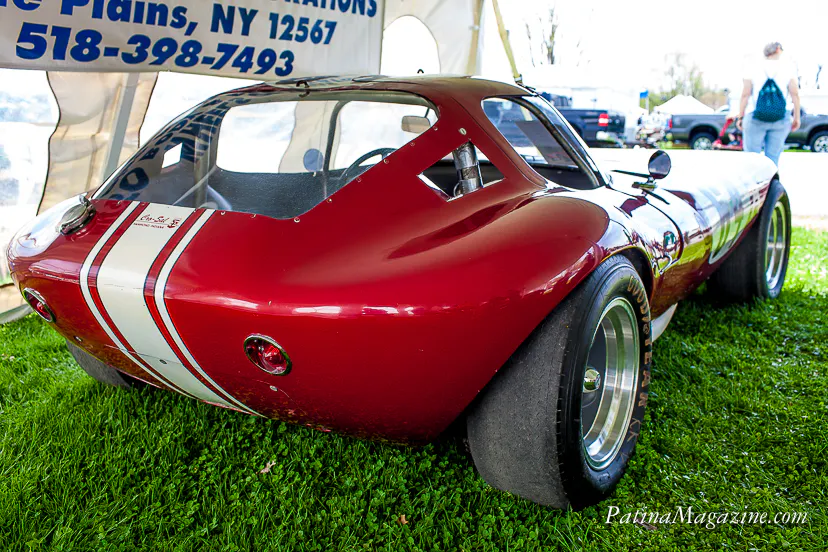
The car sold at the auction is Cheetah number 4, originally owned and raced by Bud Clusserath. “The undersigned believes that this Cheetah #4 is the Cheetah sold to Bud Clusserath, January 1964, by Bill Thomas Motors, a California corporation.”
In 1965 Clusserath sold the car to Ohio racer Sam Goins, who raced it until 1970, amassing an impressive record during that time. Goins maintained the car in its original race condition for the next 48 years, occasionally exercising it at Gymkhana events and shows, and finally selling it at auction to the Juliano Collection in 2018 after 53 years with its second owner.
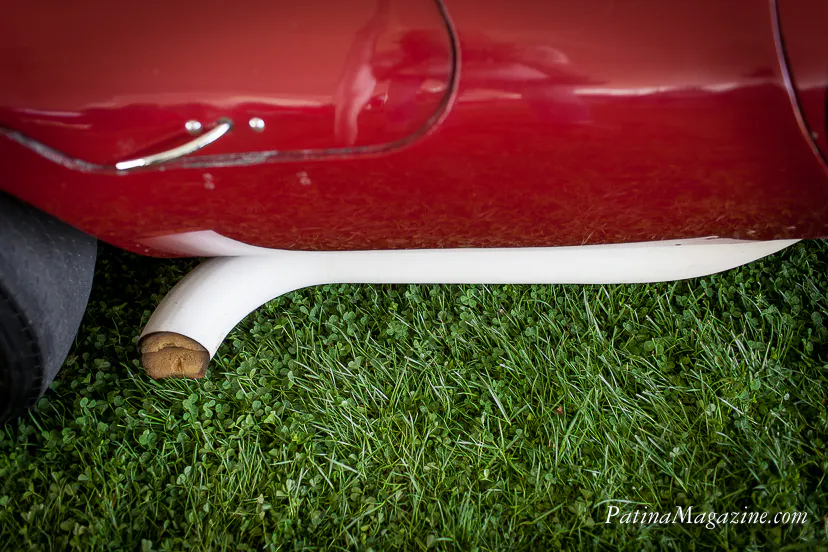
Long known as the Clusserath Cheetah, the car’s first run at Daytona in 1964 caused its fiberglass body panels to balloon under the pressure created by air trapped inside at speed, eventually blowing out the tops of its gullwing doors. On Salyer’s car, which was similarly affected, mechanic Gene Crowe’s solution was to convert it into a roadster, but because Clusserath preferred the look of the coupe, Crowe installed safety latches on the door tops, reinforced the body at crucial points, and modified the belly pan and radiator ducting to increase airflow.
In its original configuration, the Clusserath Cheetah’s output surpassed 520 hp on Champion’s company dynamometer in Long Beach. Crowe built that first engine, which was bored out to 377 ci and used Rochester fuel injection modified with dual air metering, and it remained in the Cheetah until Clusserath put the car up for sale in 1965.
That is when Goins entered the picture. He and his wife had been regular attendees at the SCCA Runoffs held each September at Elkhart Lake when he came across the Cheetah there in 1965. Clusserath had put a “For Sale” sign in the window in anticipation of replacing the car with a new McKee Mk VI. He had also swapped the Crowe-built 377 ci engine with an L84 327 fuel-injected Corvette unit that Crowe modified to produce an estimated 485 hp.
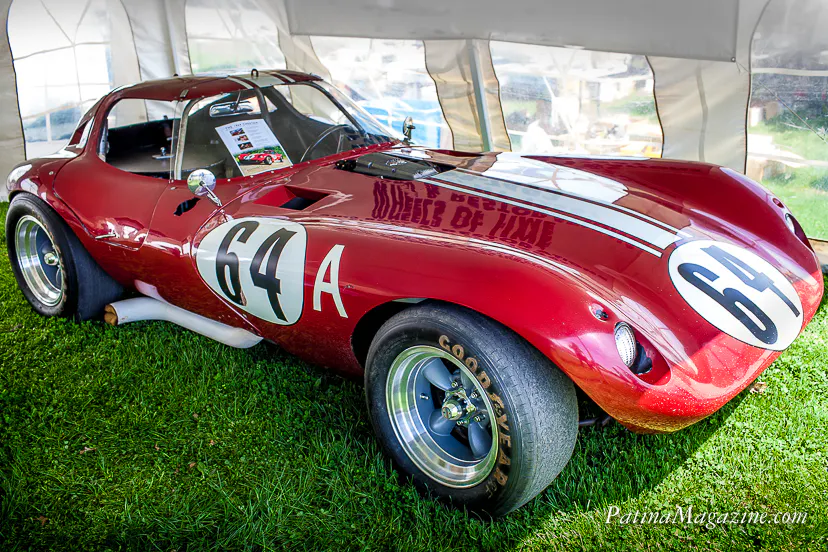
Goins purchased the Cheetah on the spot; already experienced in Gymkhana racing with his own fuel-injected Corvette, he successfully raced the Cheetah in sports-car competition at Mid-Ohio, Nelson Ledges, Lindale Farms, Road Atlanta and other eastern tracks. Aside from regular maintenance, the only modifications he made to the Cheetah were a driver-operated choke and the installation of a heavy-duty radiator after rebuilding the engine.
Thoroughly documented and famously featured in “Automobile Quarterly,” Volume 19-3, the car is otherwise original and unrestored. Bill Thomas’ son, Bill Thomas III, has certified this car as No. 4 of the 11 first-design original Cheetahs, writing in a letter to Sam Goins dated March 11, 2018, “Your Cheetah absolutely is one of the most complete and original Cheetahs, and it lives up to its reputation as looking like it was in a time capsule ... This letter certifies that the undersigned, Bill Thomas III, has thoroughly inspected Sam Goins’ Cheetah #4. The undersigned authorizes that this Cheetah meets the specifications of a Bill Thomas Race Cars/Bill Thomas Motors Cheetah, produced at, 510 E. Julianna St., Anaheim, California 92801. The undersigned authorizes that this Cheetah includes the following appropriate in period components: Chevrolet Corvette 327 Rochester fuel-injected engine, Muncie M21 transmission, C2 Corvette rear differential, Chevrolet stock car drum brakes, and a Jones Motorola, key reset, tattle tell, racing tachometer.
The 1963 Cheetah sold to only its third owner for a record-setting $625,000 in New York.