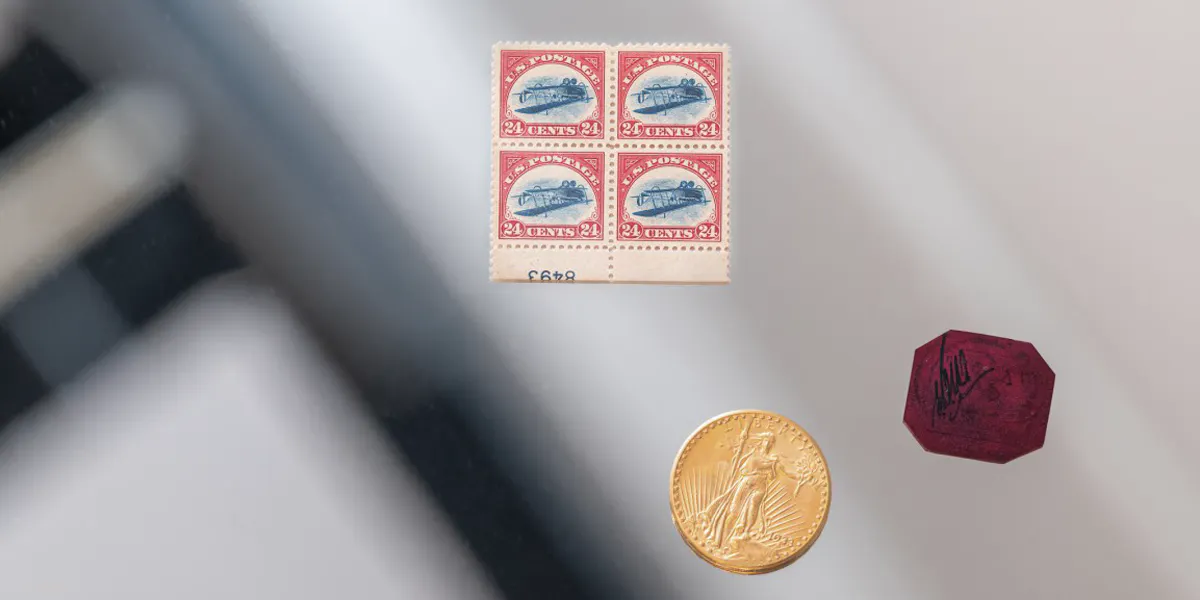
‘Three Treasures – Collected by Stuart Weitzman’ is a live auction of three legendary treasures from the personal collection of the renowned fashion designer and collector. Taking place at Sotheby’s on June 8, should these lots from Stuart Weitzman’s collection meet their estimates, they could set auction records in each of their respective categories.
As the most aspirational objects in their respective collecting fields... [they] all hold an indelible place in history.
These three objects include the fabled and elusive 1933 Double Eagle Coin (est. $10-15 million), the sole-surviving example of the British Guiana One-Cent Magenta stamp (est. $10-15 million), and the Inverted Jenny Plate Block, the most well-known and sought-after American stamp rarity (est. $5-7 million).
Richard Austin, Sotheby’s Global Head of Books & Manuscripts, commented: “It would be a true privilege to present just one of these sought-after rarities at auction but offering all three one-of-a-kind treasures together in the same sale is a once-in-a-lifetime occurrence. It is a testament to Stuart’s perennial passion and dedication to his childhood ambition of acquiring these prized pieces that we are able to create a special moment to share their stories with the world at once.”
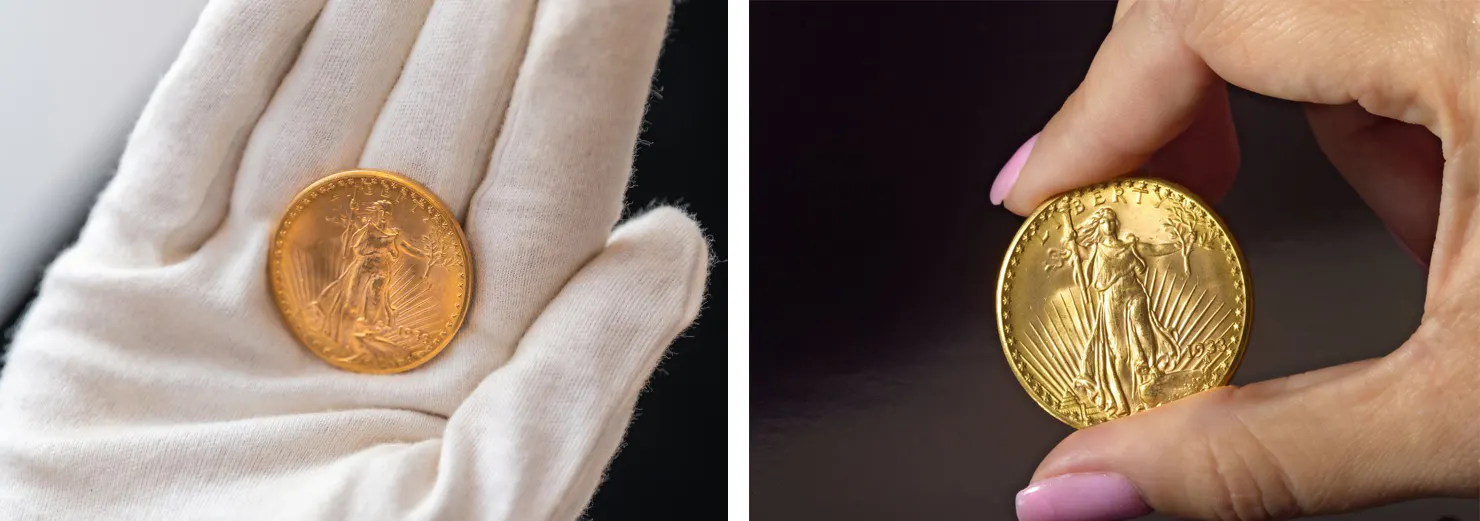
One of the most coveted coins in the world, the 1933 Double Eagle is unique in that it is the only example that can be legally owned by a private individual. It was originally cast as a $20 coin but was never issued for use. After US President Franklin Roosevelt took the country off the gold standard, all of the Double Eagles were ordered destroyed. However, a handful were released and all but one of them deemed stolen.
Related: From $35 to $500,000: A Garage Sale Bowl
Stuart Weitzman purchased the coin at a Sotheby’s/Stack’s auction in 2002 for $7.59 million with premium, a word record price and nearly double the previous record.
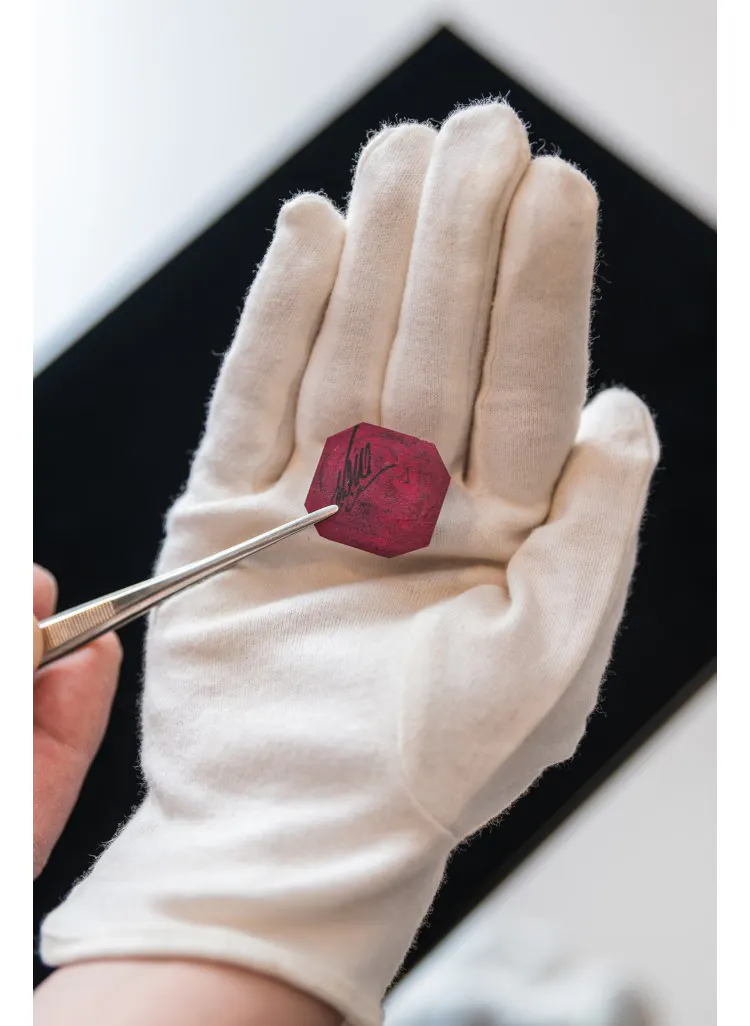
No stamp is rarer than the sole-surviving example of the British Guiana One-Cent Magenta. It is a unique yet unassuming penny issue from 1856, described by Sotheby’s as “the pinnacle of stamp collecting for more than a century." Each of the four times it has sold at auction, it has established a new record price for a single stamp, last selling to Weitzman in 2014 at Sotheby’s for $7.9 million or $9.48 million with premium, nearly one billion times its original face value.
Related: The Story Behind Robert Indiana's 'LOVE'
The stamp was produced in British Guiana after a clerical error caused a shortage of imported stamps. These British Guiana stamps were created as a result, as part of a contingency supply of stamps, and were made using the printers of the local Royal Gazette newspaper. They were thought to be lost until they were rediscovered by a 12-year-old schoolboy living in South America in 1873, and from there passed through some of the most important stamp collections ever assembled.
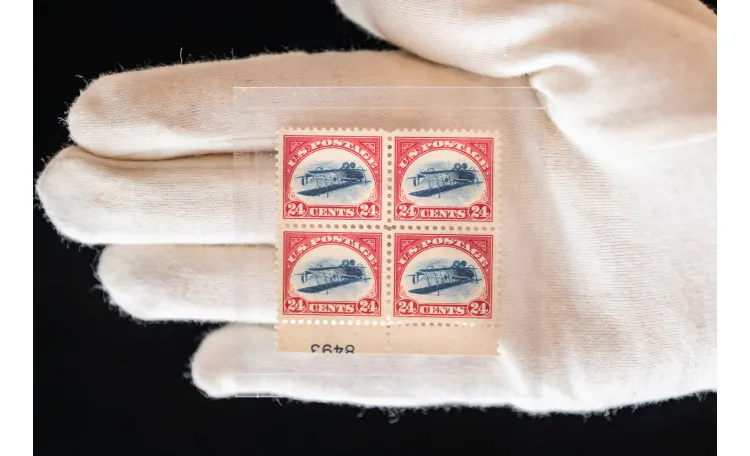
The Jenny Plate Block came about as a result of a philatelic error. The first United States airmail issue and the most highly recognized and sought-after philatelic error, the 1918 24-Cent Inverted Jenny Plate Block is the most famous and valuable item in United States stamp collecting. There was only one sheet of 100 Inverted Jennies ever sold, and only one plate block (comprising positions 87-88 and 97-98). It last appeared on the market 16 years ago when it sold at auction for $2.97 million and was subsequently purchased privately by Weitzman in 2014.
Related: The World's Most Expensive Dala Horse Has Sold

Weitzman says: “I had a life-long dream of collecting the single greatest rarities in the two great collecting areas of stamps and coins and then placing these extraordinary treasures, hidden away for decades, on continuous public view.”
The proceeds of the sale will benefit charitable ventures, including The Weitzman Family Foundation, which supports medical research, higher education and the arts.