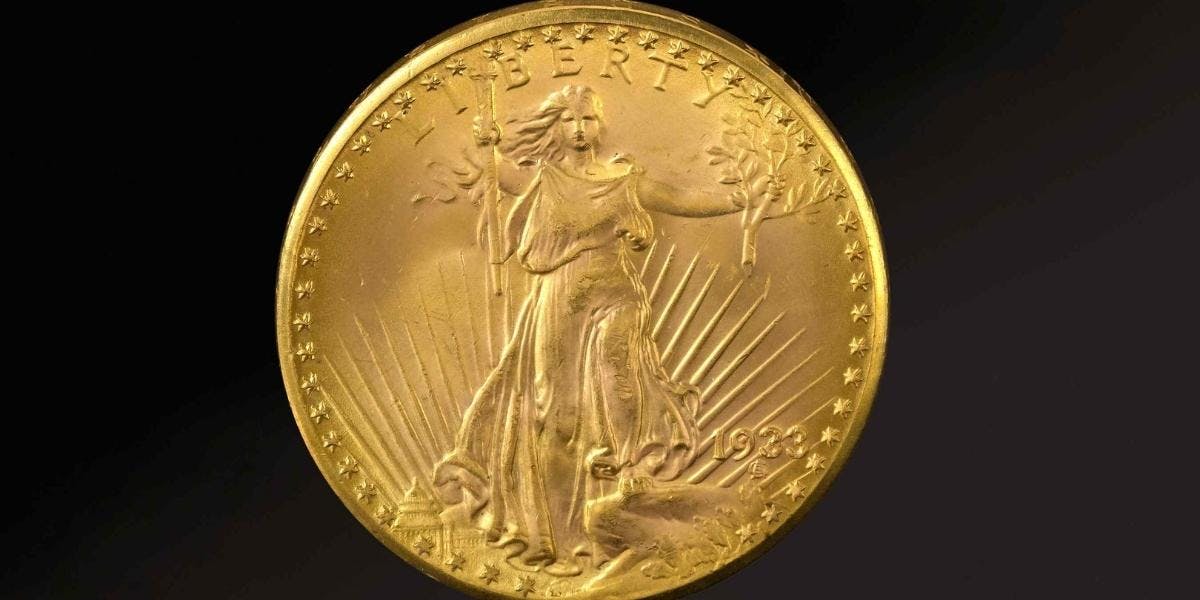
Coin collecting has been referred to as "the king of hobbies" because it has endured throughout centuries, reaching its zenith during the Renaissance when almost every European royal had a substantial antique coin collection. Today, this hobby has become quite lucrative for investment purposes, with single coins selling for millions at auction. The most expensive coin is a 1933 double eagle coin, which sold last year for $18.9 million at Sotheby's. Three other eagle coins round out the top 10 most expensive coins list. Here, we look back on this highly in-demand American coin family and why they're so valuable today.
Related: The Top Trends at Auction
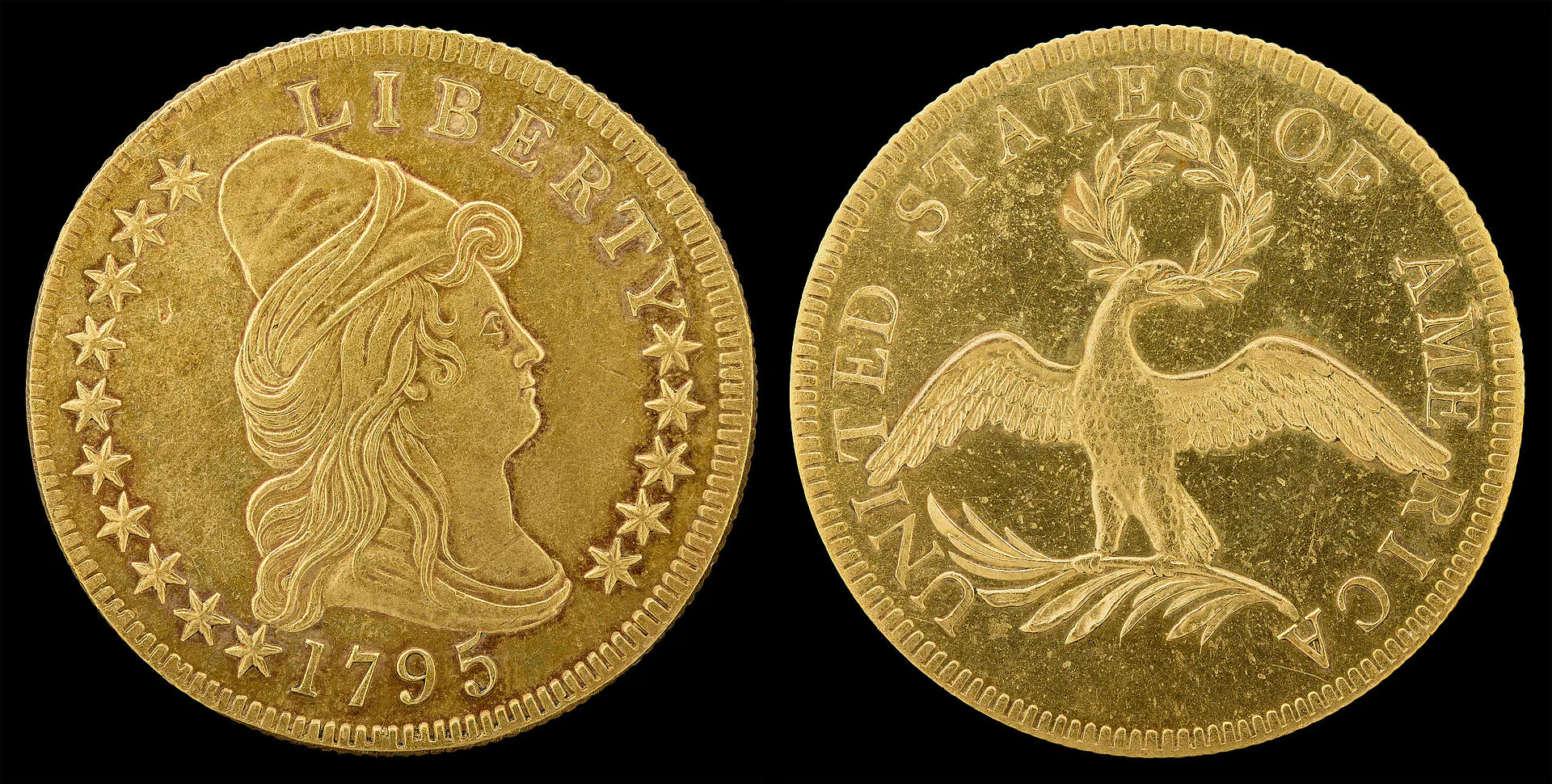
The history of coinage in the U.S. begins in 1792 with the passing of the Mint Act, which created the U.S. dollar as the standard American currency and determined coin denominations. At the time, the most valuable American coin was the eagle, worth $10 (equivalent to nearly $300 today.) In following years, quarter eagles ($2.50) and half eagles ($5) were also produced, with double eagles ($20) coming decades later. Originally these coins were composed of 11/12ths 22-karat gold and 1/12th silver and copper alloy. They were first struck in 1795 and the original editions are now known as Turban Head eagles, designed by Robert Scot. On the front was the profile of Lady Liberty wearing a turban, which may be a pileus, an ancient Greek cap. On the back, an eagle was surrounded by a victory wreath.
Related: An $800K Penny Found by Metal Detector
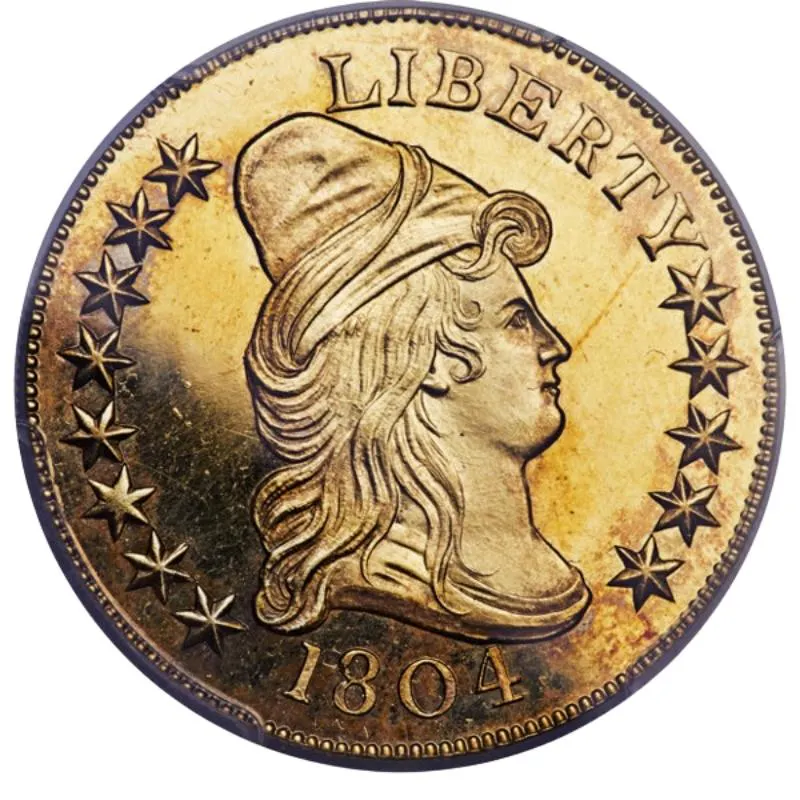
Minting was expensive and the price of gold so exorbitant, that by 1804, President Thomas Jefferson ordered that no more eagles be struck. By this point, most of the gold coins had been purchased in silver and exported to Europe, with few in circulation in the U.S. In 1838, the eagle came back into production, but with less gold content.
Related: The Royal History of the World's Most Expensive Clock
However, four years prior to this, in 1834, special envoy Edmund Roberts was sent to southeast Asia and the Middle East on an American diplomatic mission. President Andrew Jackson directed that Roberts gift the Sultan of Muscat, the King of Siam, and the Emperors of Cochin China and Japan sets of U.S. coins. However, Jefferson's decree was still in place that no more gold coins could be minted, so the mint director used proofs from 1804, the last year that they were allowed, for these sets.
As Roberts died on the journey, the presents were only given to the Sultan of Muscat and the King of Siam, with the other two sets returned to the U.S. As the Sultan of Muscat's empire fell apart in following decades, his collection was dispersed. The coins started appearing in England in the 1860s. A rare 1804 proof gold eagle saved from the Sultan's collection sold at Heritage Auctions for $5.2 million, after passing through various prestigious collections. It was once owned by colonel Edward Green, the son of Hetty Green, the "Witch of Wall Street" and the wealthiest woman in the U.S. during the Gilded Age.
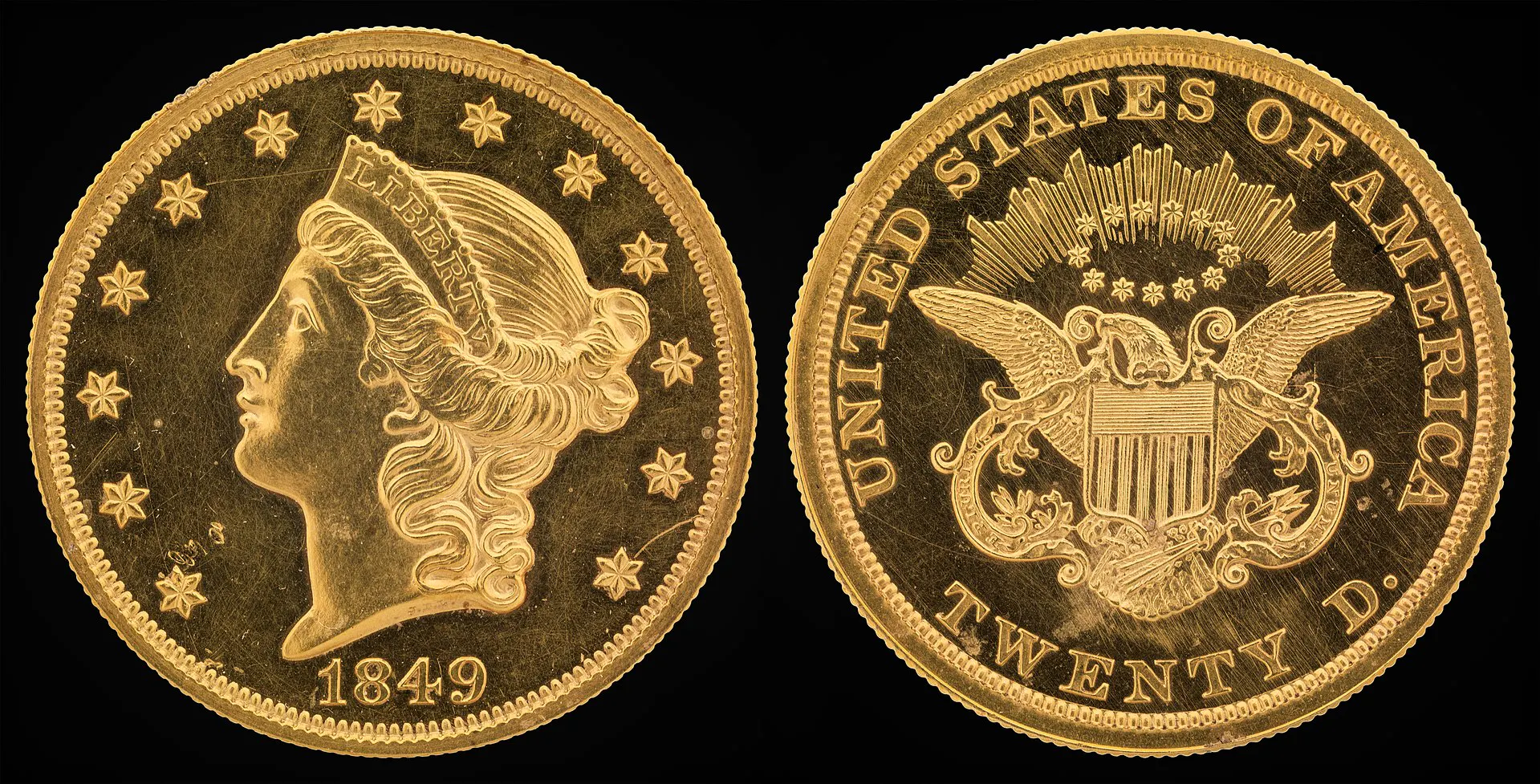
From 1838 to 1907, the Liberty Head eagle was the reigning design for the eagle, showing a profile of Lady Liberty in the Greco-Roman tradition with a coronet in her hair. During the California Gold Rush in the late 1840s, which brought an influx of gold, the double eagle coin ($20) was proposed, also designed with the Liberty Head profile. However, by the early 20th century, President Theodore Roosevelt wanted a fresher, more beautiful design. He enlisted Augustus Saint-Gaudens, the famous French sculptor and his close friend, to craft a new look for America's highest value coin.
Related: Record Set for Most Expensive Envelope and Stamp
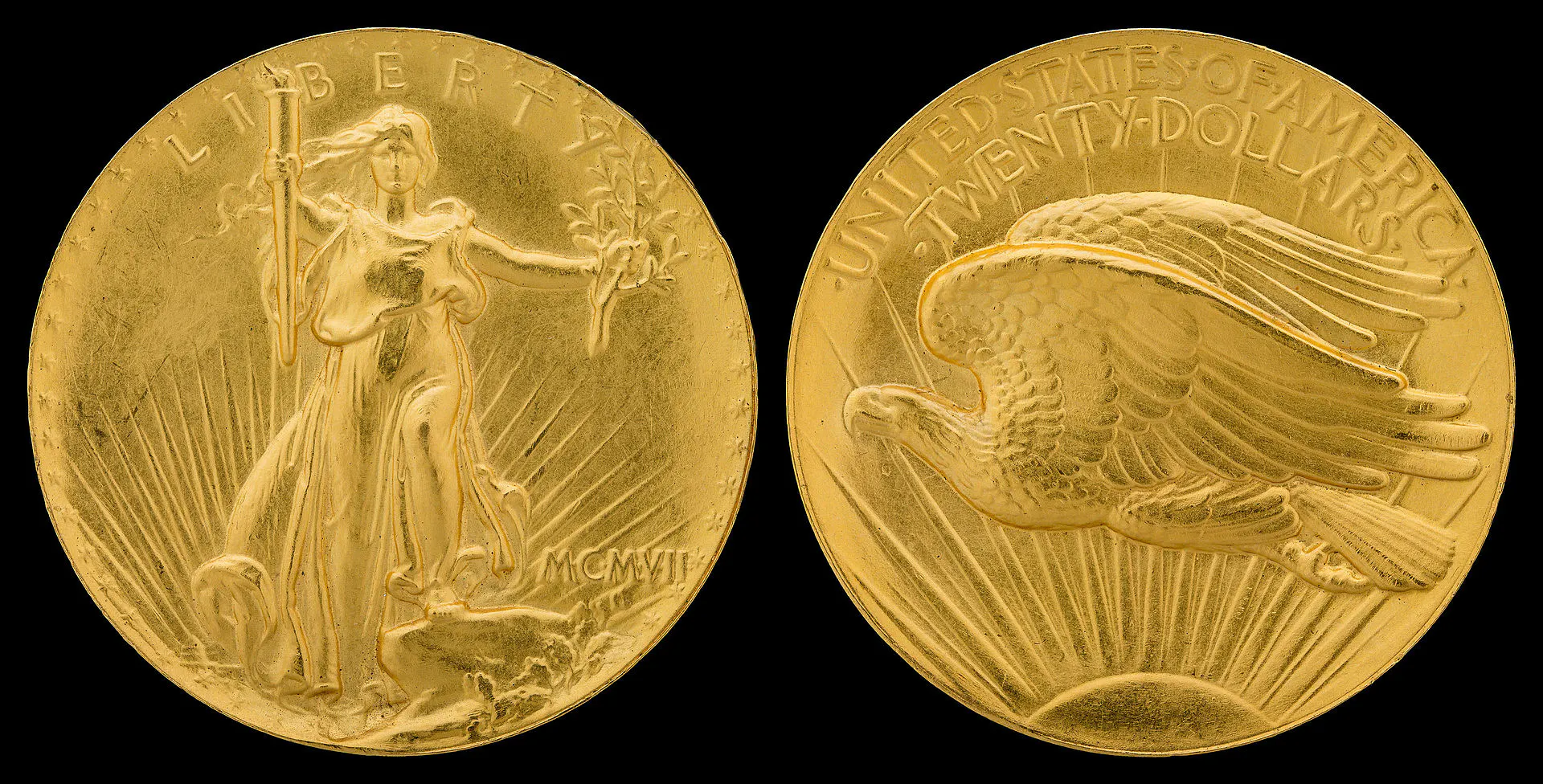
Saint-Gaudens' version was in ultra high relief, depicting a full-body Lady Liberty holding a torch in one hand and olive branch in another, with an eagle in flight on the reverse side. Today, these coins are considered the most beautiful American coins ever minted. Since they were in such high relief, only about 20 were minted because they were difficult to produce and didn't stack well, making them impractical. The next set were minted in a lower relief, with about 12,000 produced, before a low relief version was settled on. One of the 20 ultra-high relief coins sold for nearly $3 million at auction in 2005.
Want more articles like this directly to your inbox? Subscribe to our free newsletter here!

The golden age of coinage came to a halt with the Great Depression, brought on by the Stock Market crash of 1929. As part of President Franklin Roosevelt's New Deal, the gold standard was abolished, and gold coins were outlawed. American citizens were required to turn their gold coins in to banks for other currency in 1933. By the time of the decree, nearly half a million double eagles had already been minted at the Philadelphia Mint, yet they were not allowed to be circulated. Two of these coins were presented to the U.S. National Numismatic Collection, but the rest were ordered to be melted down. However, over the years, over 20 double eagles from 1933 have been found, meaning that they were likely stolen by a Mint employee after Roosevelt's decree.
Related: World’s Most Expensive Coin and Stamps at Auction
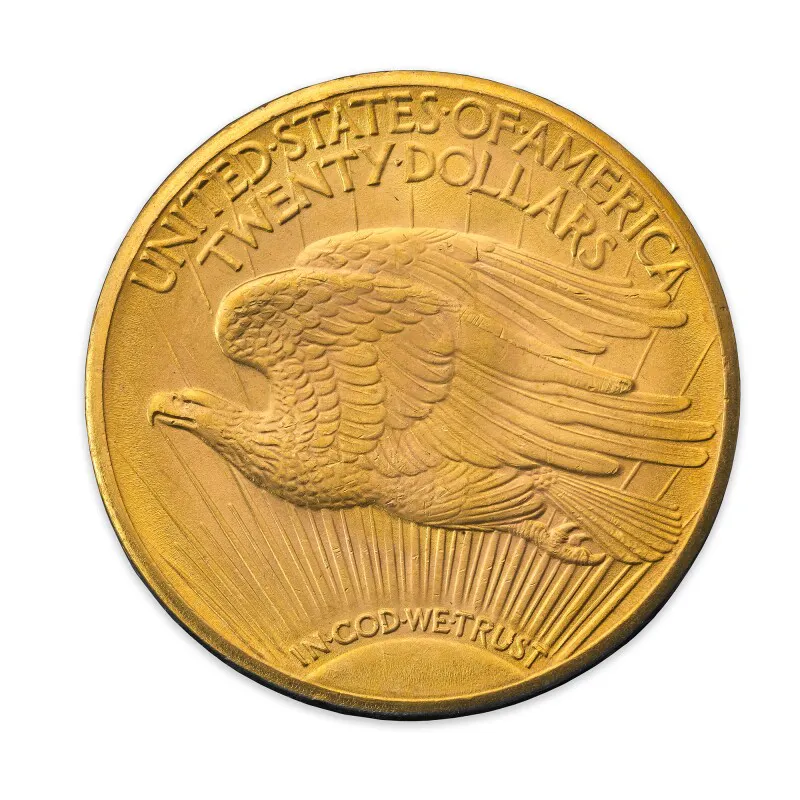
The most valuable coin in the world is one of these 1933 double eagles. It was purchased by King Farouk of Egypt in 1944, who was able to get an export license for it before the government realized they made a mistake. Earlier that year, the Secret Service launched an investigation into these stolen 1933 double eagles as they kept appearing on the market, despite being ordered to be melted down. Though the U.S. tried to get the coin back from Farouk, World War II made it difficult. It remained in his possession until he was deposed in 1952. The coin reappeared in 1996 during a sting operation on coin dealer Stephen Fenton in New York, who claimed he got it from King Farouk's estate.
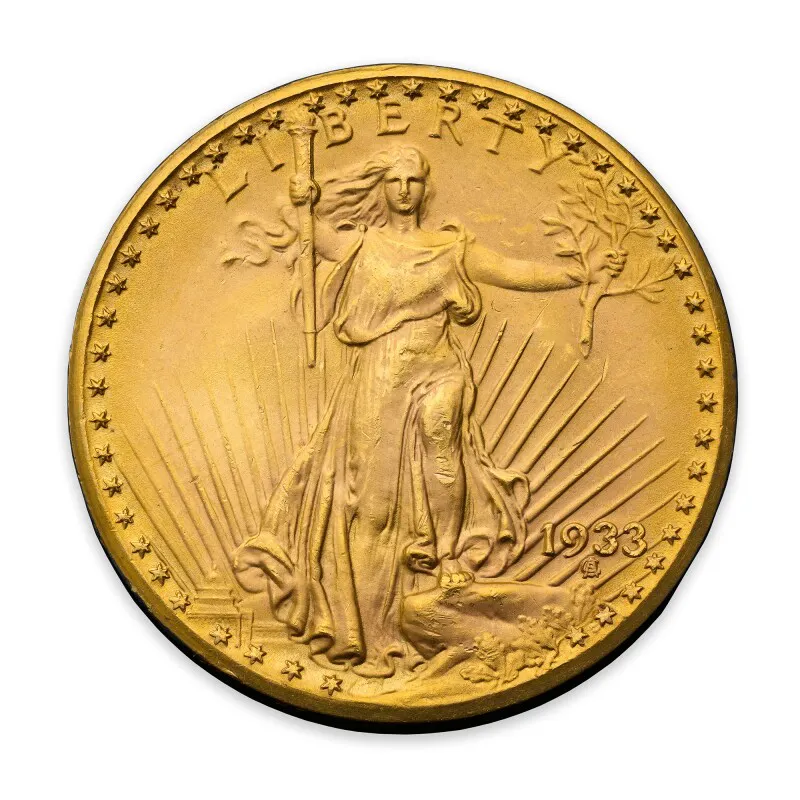
After years of lawsuits, it was decided in 2001 that the coin could be legally sold. It was monetized with $20 and then sold at auction in 2002 for $7.5 million to shoe designer Stuart Weitzman, with half of the proceeds going to the U.S. government and the other half to Fenton. In 2021, Weitzman offered the coin at auction at Sotheby's, where it sold for a record-breaking $18.9 million. The incredible price reflects the fact that all 1933 double eagle coins, except this one due to the 2001 lawsuit, cannot be privately owned because they were never officially issued and are considered U.S. government property.
Related: How to Become an Outstanding Stamp Collector
Related: A Trove of Gold Coins Found in France is Auctioned
Today, most of the known double eagles have been returned to the U.S. government, with 10 returned by the family of Philadelphia jeweler Israel Switt, who illegally sold nine additional double eagles. However, there are likely more circling around, though they can never be legally sold. The evolution of the American eagle coins, reaching its pinnacle in the 1933 double eagle, reflects interesting aspects of America's political, diplomatic, economic, and artistic history. The high prices fetched at auction for eagle coins show that coin collecting of this type is truly a "hobby of kings."