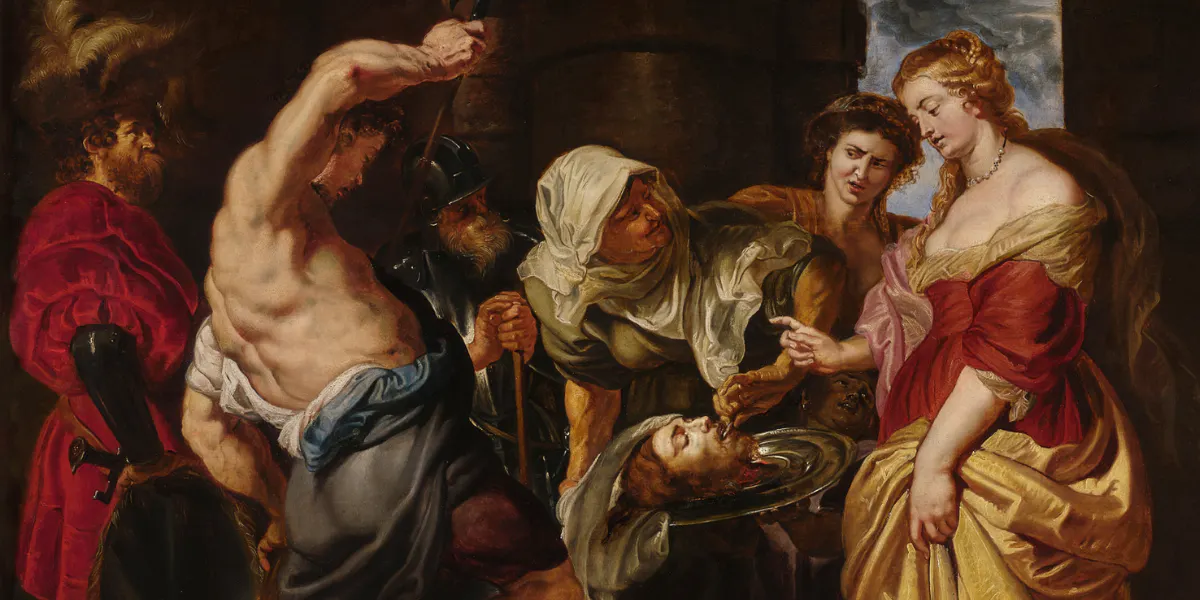
When it comes to women beheading men, in the Western world it all starts with the inescapable text that is the Bible. Full of myths and incredible stories, the Bible was an endless source of inspiration for artists. Some myths are about women – well, very few of them to be honest, and most are overlooked. Still, two specific myths managed to catch the eyes of many artists throughout the centuries: Judith and Holofernes, and Salome and John the Baptist.
The first comes from the apocryphal Book of Judith from the Old Testament. The Assyrian king Nebuchadnezzar sent his general Holofernes to besiege the Jewish city of Bethulia. A beautiful young widow, Judith, took it upon herself to save her people by killing Holofernes. She puts on her finest clothes to seduce him. As the evening went on, Holofernes drank a large amount of wine, allowing Judith to decapitate him with the help of her servant Abra.
The second comes from the New Testament and can be found in the biblical Gospels of Mark and Matthew. Saint John the Baptist was thrown in jail because he didn’t approve of King Herod of Galilee marrying Herodias – Herod was still married to his first wife and Herodias was previously married to his brother. And if this wasn’t incestuous enough, Herod asked Salome, his step-daughter/niece to dance for him, in an obviously sensual way, during his supper. Pleased with her performance, he granted her a wish, not unlike a creepy biblical genie. Her mother Herodias urged her to ask for John’s head and Salome agreed.
These two myths couldn’t be more different. The brave and heroic Judith saved her people. whereas poor Salome seemed to be the instrument of a petty revenge. Be that as it may, many paintings of Judith have been mistitled as Salome, and vice versa. Artists used these myths frequently, and the most brilliant managed to add to the original story.
Related: Artemisia Gentileschi: Passionate Feminist Artist
These episodes are instrumental in exploring and interrogating power dynamics and gender identity. Two main types of representation emerge: the femme forte (a pious and strong woman) and the femme fatale (a dangerous seductress). Judith tends to oscillate between the two, depending on the historical period and context, while Salome generally falls into the second category.
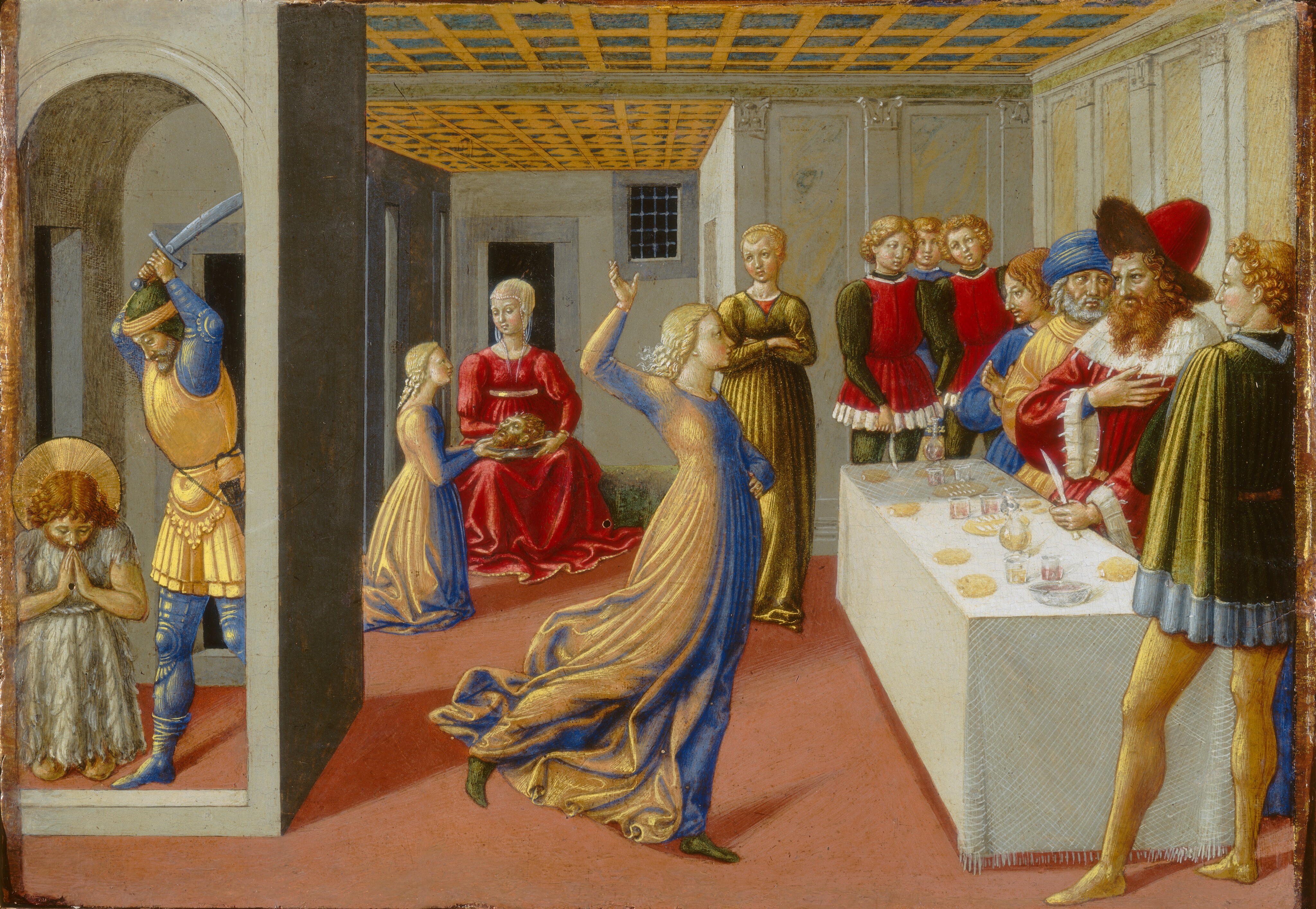
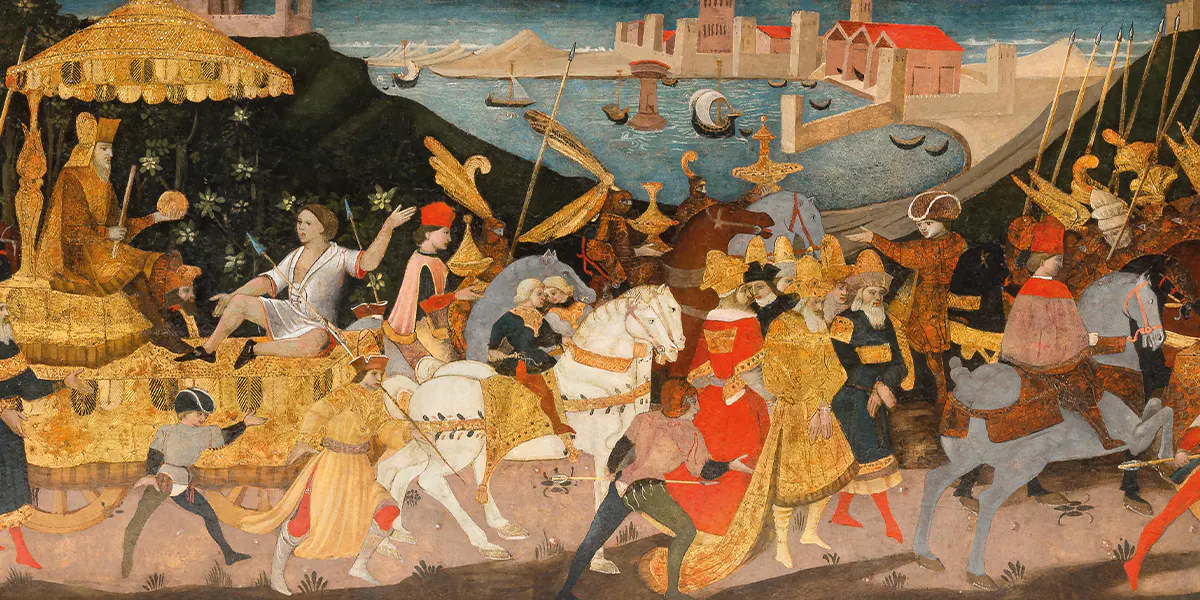
During the Middle Ages, Judith was an immensely popular figure due to her piety. On the contrary, Salome was depicted as the evil seductress responsible for Saint John the Baptist’s martyr. In The Feast of Herod and the Beheading of Saint John the Baptist, Benozo Gozzoli uses the medieval technique of representing many scenes in one painting. One can follow Salome’s story scene after scene – she dances on the right-hand side while John the Baptist gets beheaded, and finally she brings his head to her mother Herodias.
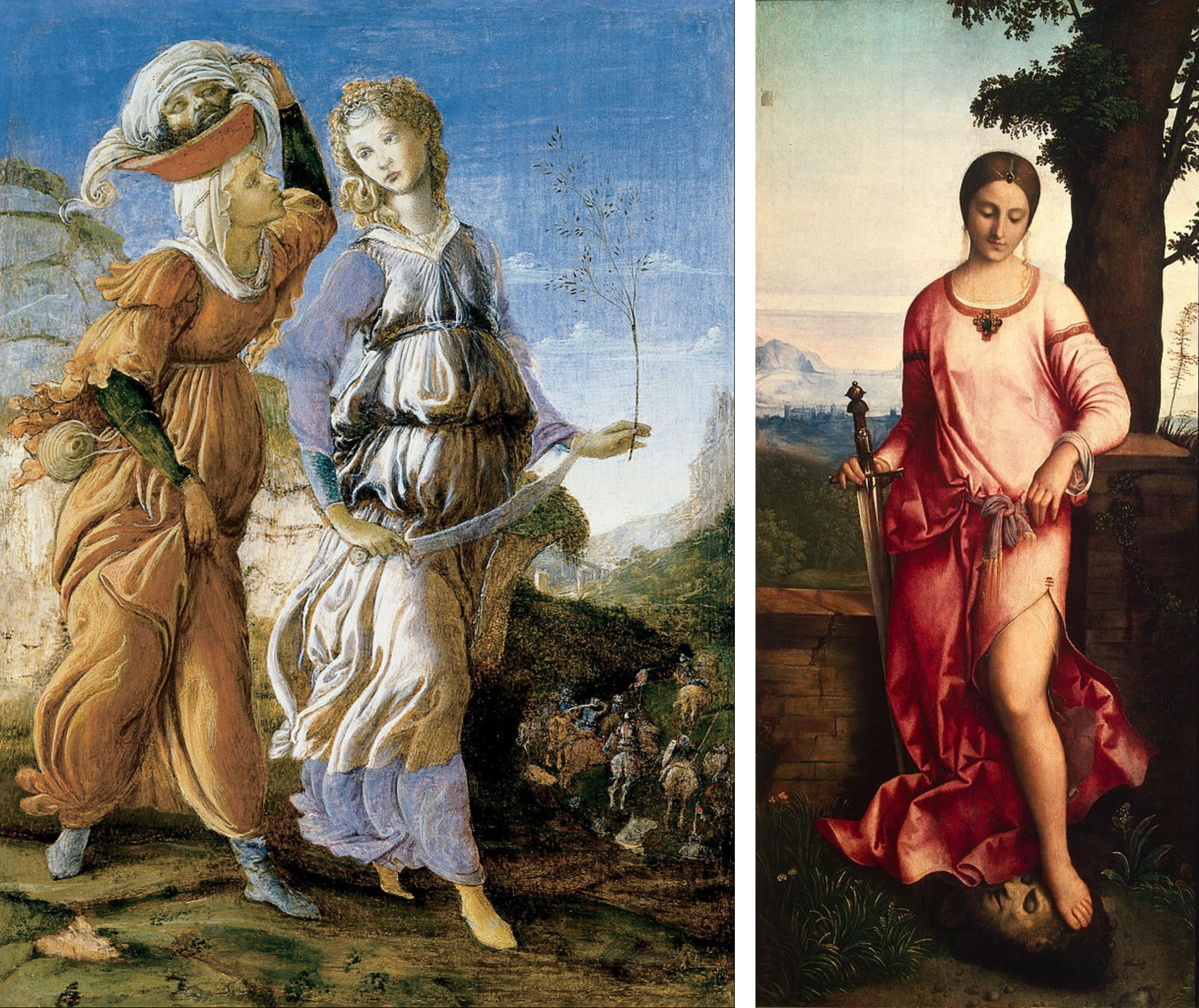
With the onset of the Renaissance, Judith’s representation shifted. She was no longer used as a religious example and became more politicized. She stood for a symbol of an oppressed population overpowering the tyrant. Artists chose to represent the moment before or after the beheading.
Related: The Female Look: 11 Women Who Changed Photography
In Sandro Botticelli's Judith, the protagonist isn’t portrayed with any signs of violence. The sword seems to get lost in her skirt and is counterbalanced by an olive branch, a symbol of peace. Her servant is taking care of the severed head. Judith is depicted as a goddess-like heroine bringing peace to her people. Giorgione depicts a much more triumphant Judith, stepping on the severed head, but her facial expression remains peaceful and composed.
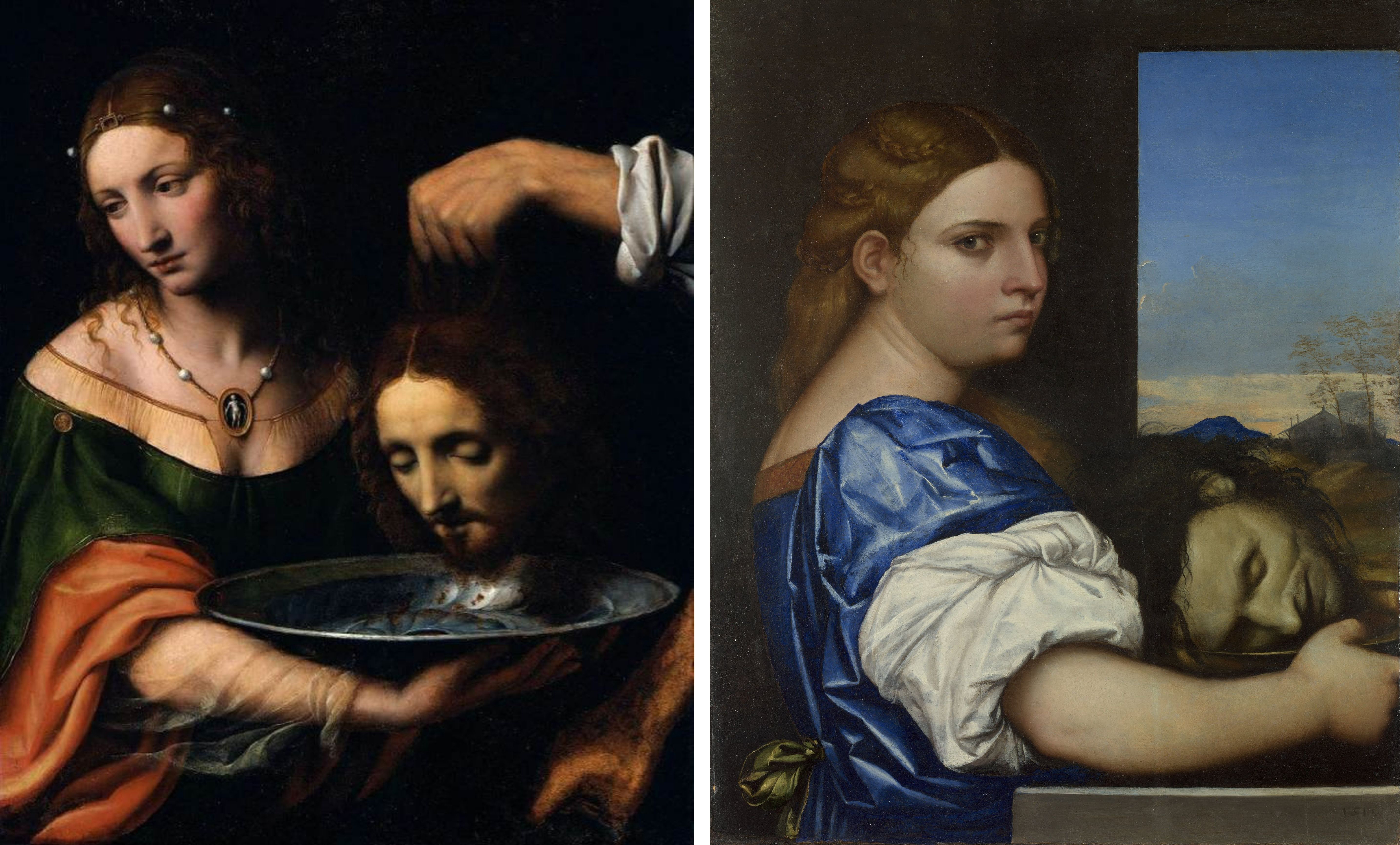
During the sixteenth century, most representations of Salome moved away from the carefree seductress and instead showed a remorseful young woman. Bernardino Luini’s Salome is a prime example of this new wave. Salome turns her head away from John the Baptist’s severed head. During the Renaissance, John’s head on a platter was widely understood to be a symbol for the Host, or sacramental bread in the Christian ritual of the Eucharist. The myth of Salome is deeply rooted in misogynistic reasoning: women such as Salome and Herodias are revengeful seductresses, Saint John is the martyr but at no point is King Herod held responsible for agreeing to Saint John’s beheading.
Related: 12 Women Who Rocked the Art World
Sebastiano del Piombo chooses to portray Salome without any judgement in The Daughter of Herodias – she is no seductress nor is she a regretful child. Salome looks directly at the viewer, withstanding our scrutiny. She looks as if she did nothing wrong, that she had her reasons. This troubling depiction of Salome allows her to no longer be only a femme fatale but also become a femme forte.
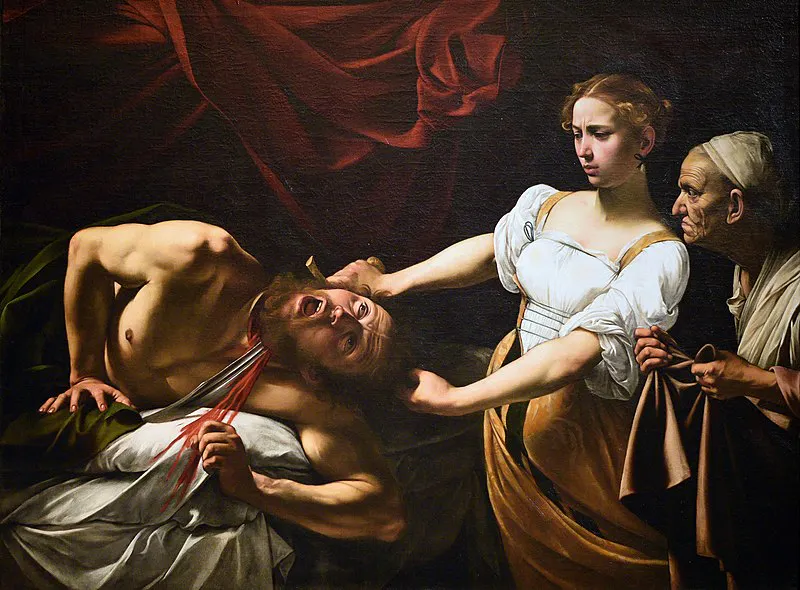
The gore and bloodiness of the representation rose to its climax during the Baroque era. During this period, Judith was portrayed as a coldblooded assassin, leaving the righteous woman at the door of the Renaissance. Before, artists showed the moment before or after the beheading, as if following the Greek tragedy rule of no violence onstage. But with the Baroque era, many artists chose to depict the exact moment of the beheading. The myth of Judith was at that time a favorite.
Related: 5 Portraits of Women in White
Caravaggio delivered one of the most realistic depictions in regard to Holofernes: Holofernes woke up at the feel of the blade and Judith started cutting. Shock, terror and pain dominate his facial expression, whereas Judith mostly shows disgust.
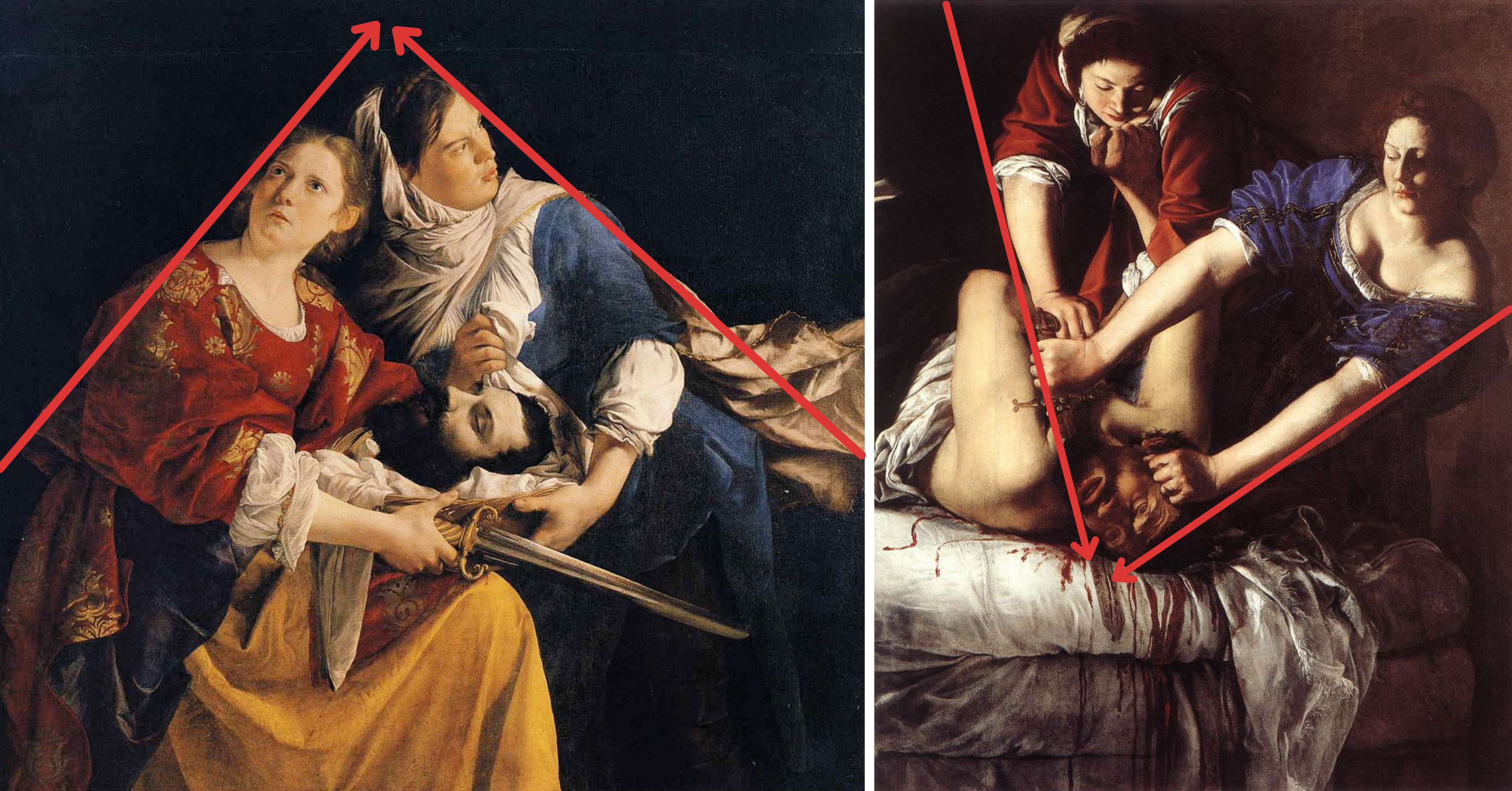
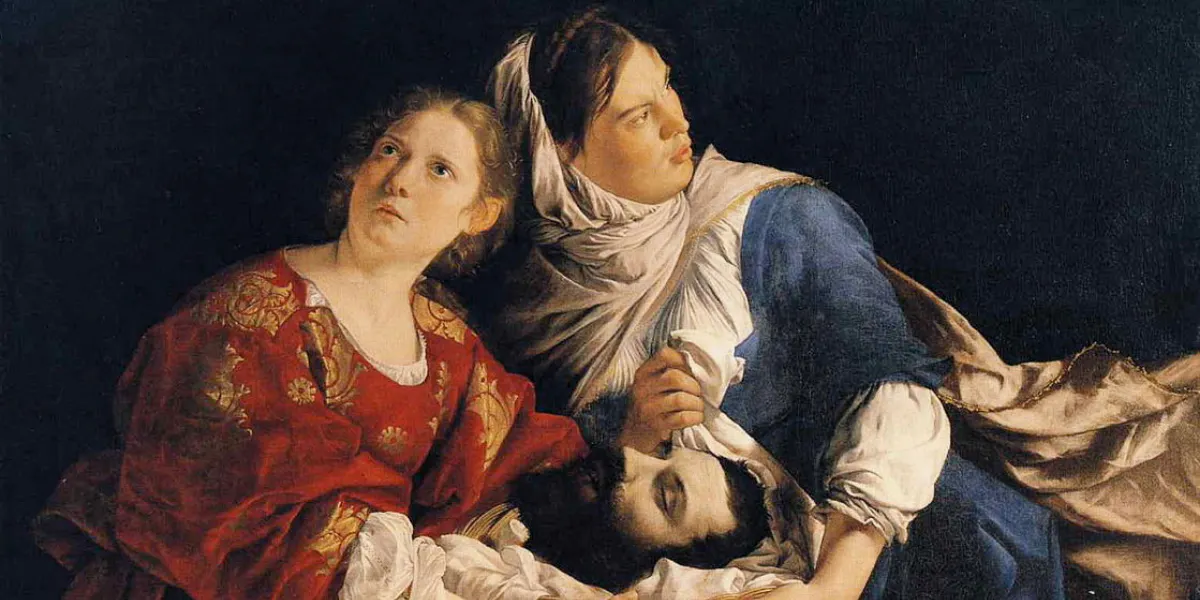
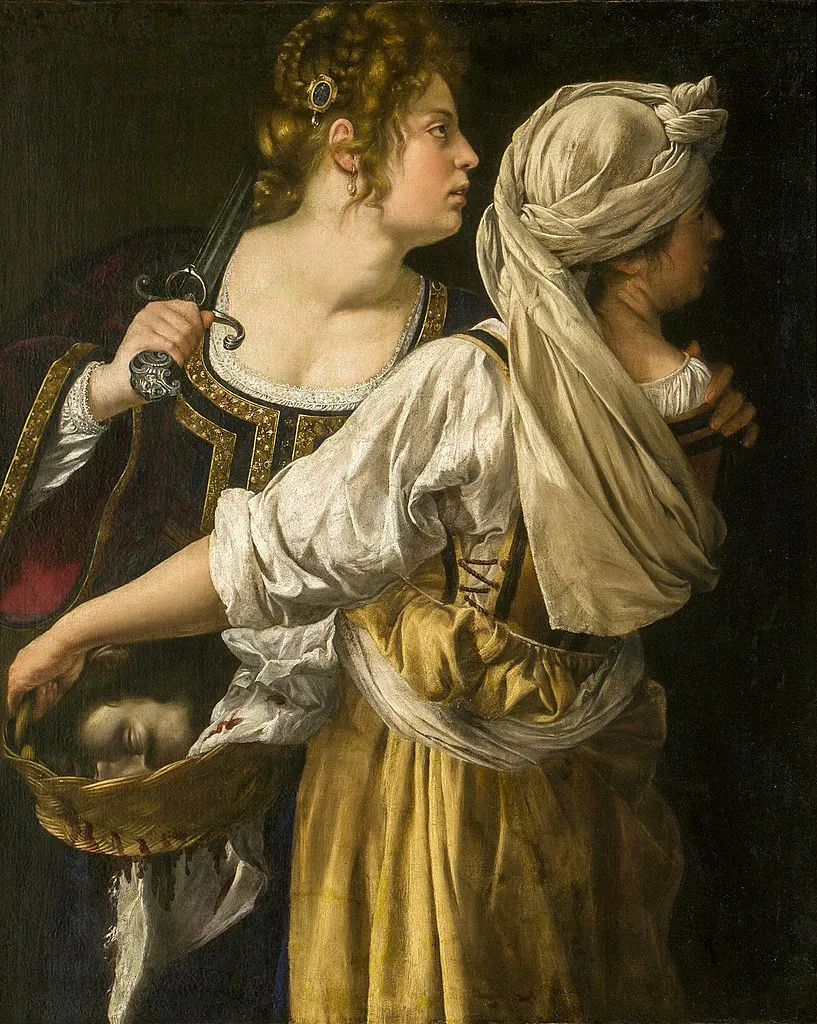
The theme of Judith and Holofernes was a favorite for the Gentileschi family. Father and daughter separately painted this beheading during the same year. Orazio Gentileschi chose a very Renaissance-like style, whereas his daughter Artemisia Gentileschi indulged in the gore. Who took the opposite line of whom, we don’t know.
Related: Artemisia Gentileschi: 5 Extraordinary Facts
Orazio depicted the aftermath of the beheading with a classic pyramidal composition, with the three primary colors and the head at the center of the composition. Judith and Abra are looking towards opposite sides – at first, one might think that they couldn’t bear to see what they had done, whereas they are really just on the lookout.
Artemisia delivers a radically different interpretation, depicting the exact moment of the beheading. At that point, Holofernes is all pain and weakly tries to push Abra back. Judith is focused on her task, one hand firmly holding the head while the other one cuts it off. Blood is flowing out onto the sheets. Many have suggested that Artemisia’s personal story – being raped by one of her father’s associates when she was just a girl – played an important part in her interpretation.
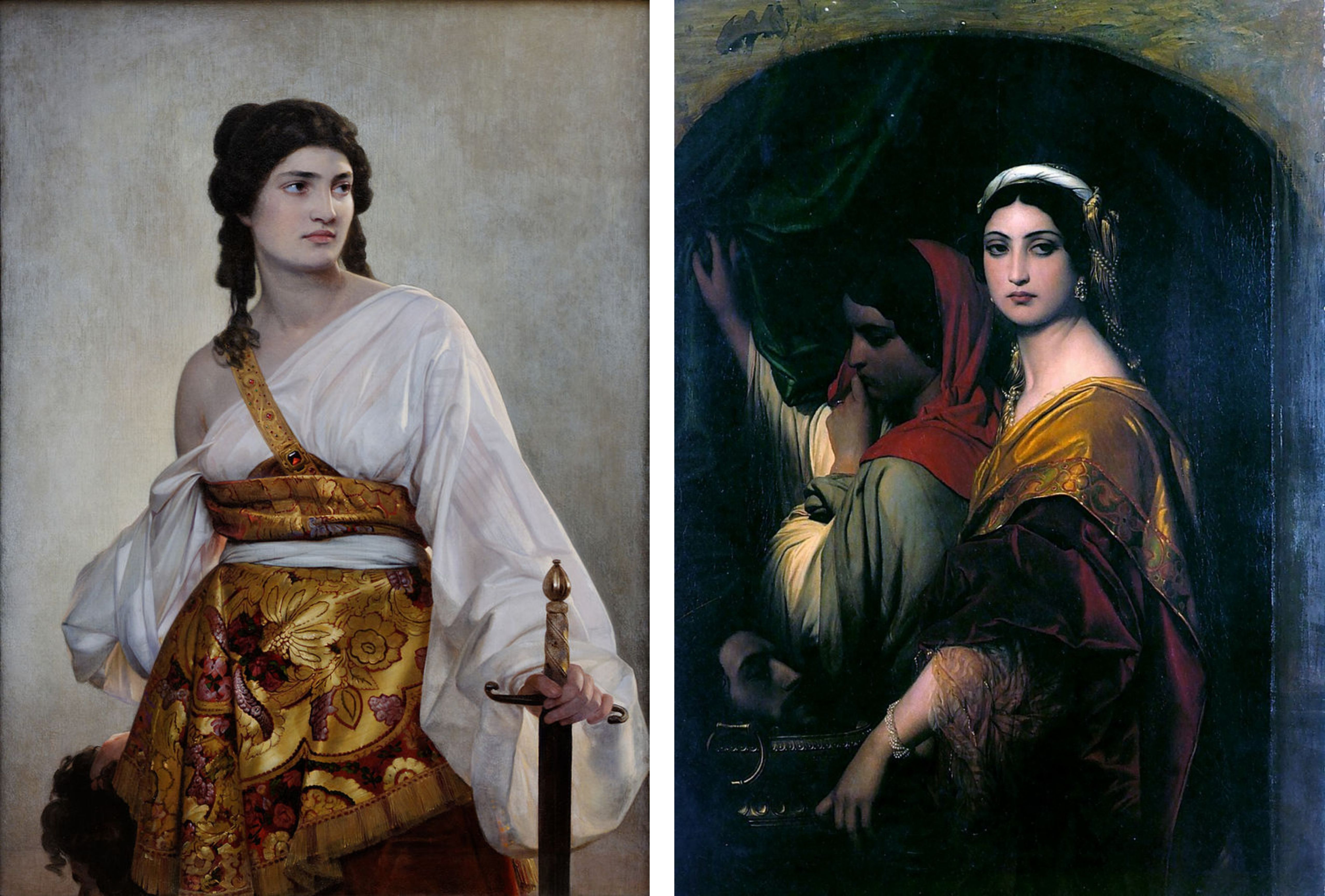
After being somewhat neglected during the eighteenth century, Judith and Salome returned stronger than ever in the nineteenth century. At the time, artists were inspired by the Orient and who better than two Middle Eastern heroines to be their subjects?
Related: The 15 Most Expensive Female Artists
Herodias, the mother of Salome, was more often represented. In Paul Delaroche's Herodias, the mother is the main subject. She is wearing finely embroidered clothes. Salome is standing in the shadows and the head can barely be seen. Similarly, August Riedel's Judith hides Holofernes’ head, and the sword is the attribute put forward. Judith is depicted as a warrior, and the beheading is not the central theme. Painting these women was more a pretext for European men to depict what they thought of as beautiful and assertive ‘Oriental’ women (at that time they considered that Orient was everything east of Europe): strong dark-haired women with gold embroidered clothes.
Related: The Women’s Decade of Revenge
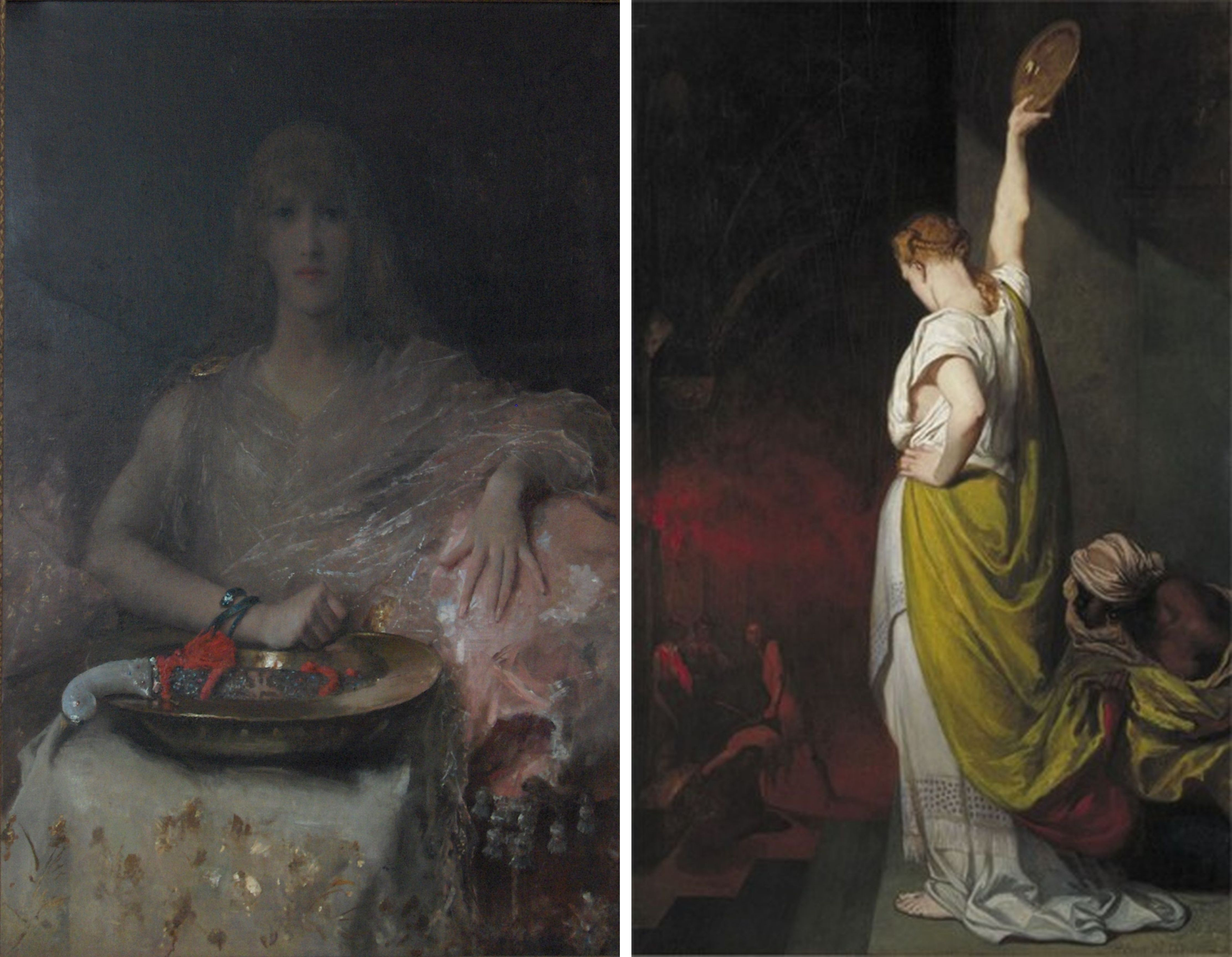
Conversely, some nineteenth-century artists chose to give a greater role to Salome. Alfred Stevens represents Salome with the executioner’s knife and the platter, before the execution: she is now in charge, no longer an instrument to her mother's revenge. Pierre Puvis de Chavannes goes even further in The Beheading of John the Baptist. The subtitle – The Daughter of Herodias Gives the Signal for the Ordeal of Saint John the Baptist – indicates that Salome is present for the beheading and that she’s even the one directing it.
The second half of the nineteenth century gave way to a powerful Salome who became the main character of the tale.
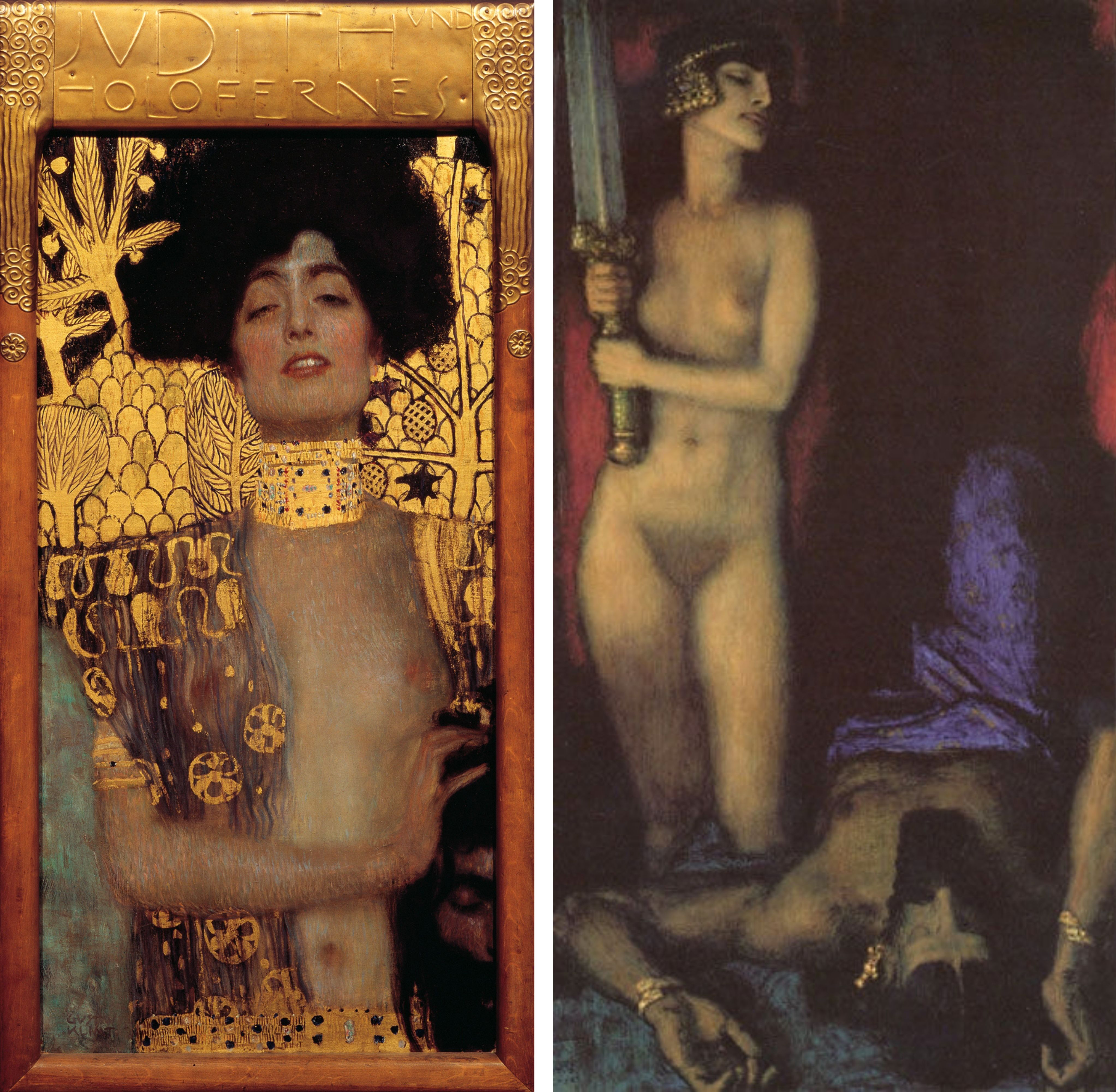
One can see a clear and obvious pattern of Judith’s and Salome’s representations: it alternates between strong women in charge and sheer seductresses. The twentieth century didn't shy away from these themes, either. In 1901, Gustav Klimt depicted a very nude and sensual Judith. Holofernes is merely there, his head is cut – a second time – by the frame. The main subject is Judith as a contented seductress in an expression of sexual fulfillment.
Franz Stuck followed the way and delivered another sensual interpretation of the myth. Judith is wearing only a helmet and wields a huge sword above Holofernes. The sword is a phallic symbol, which could be read as some kind of sexual role play. Both Klimt and Stuck choose to put forward the intimate backstory of the myth.
Contemporary interpretations focus on the political and social aspects of the myths. For instance, Kehinde Wiley represented Judith in 2012 as a black woman holding a white woman’s head instead of the traditional Holofernes’ head. This painting is a symbolic representation of the need to beat, destroy and overcome white supremacy.
Based on these examples, the myths of Judith and Salome encapsulate the representation of female rage in art history and the weaponization of femininity. It oscillates between heroism and crude sensualism. Sometimes, it’s only a pretext to show the female body as a sensual and sexual object, but many artists go further: they put Salome in charge and give credit to Judith for getting her hands dirty to save her people. For the contemporary viewer, the most significant artworks are the one focusing on the exact moment of the beheading.
Find more history from the art world with Barnebys Magazine
Article by Ostiane Moitry