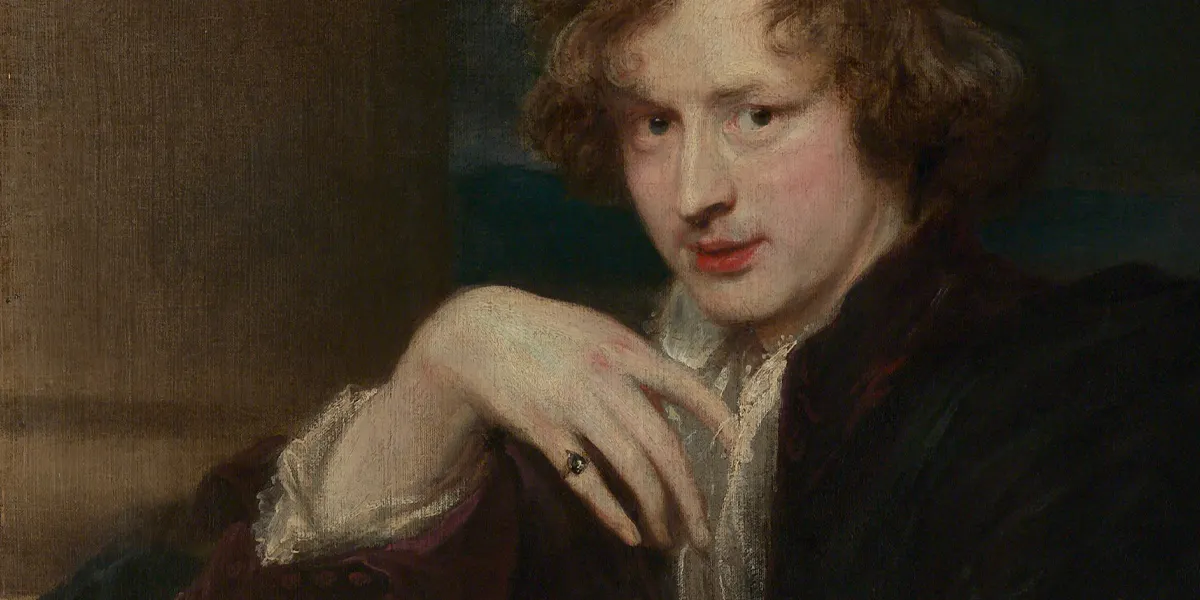
In autumn 1621, Anthonis van Dyck left his hometown of Antwerp and traveled to Italy to study the great masters. By this time, he was already a distinguished young artist—appointed a master by the Guild of Saint Luke at just 18 and a collaborator of Peter Paul Rubens for several years. Rubens' Equestrian Portrait of the Duke of Lerma (1603), a creative interpretation of Titian’s Emperor Charles V after the Battle of Mühlberg (1548)—both now in the Prado—may have inspired Van Dyck to create his own portrait of the emperor, who had died in 1558.
Whether Van Dyck painted this portrait in Antwerp or later in Italy remains uncertain, but the work has been documented in Italy for over 300 years and is now displayed in the Uffizi in Florence.
See also: Peter Paul Rubens: 5 Facts to Know
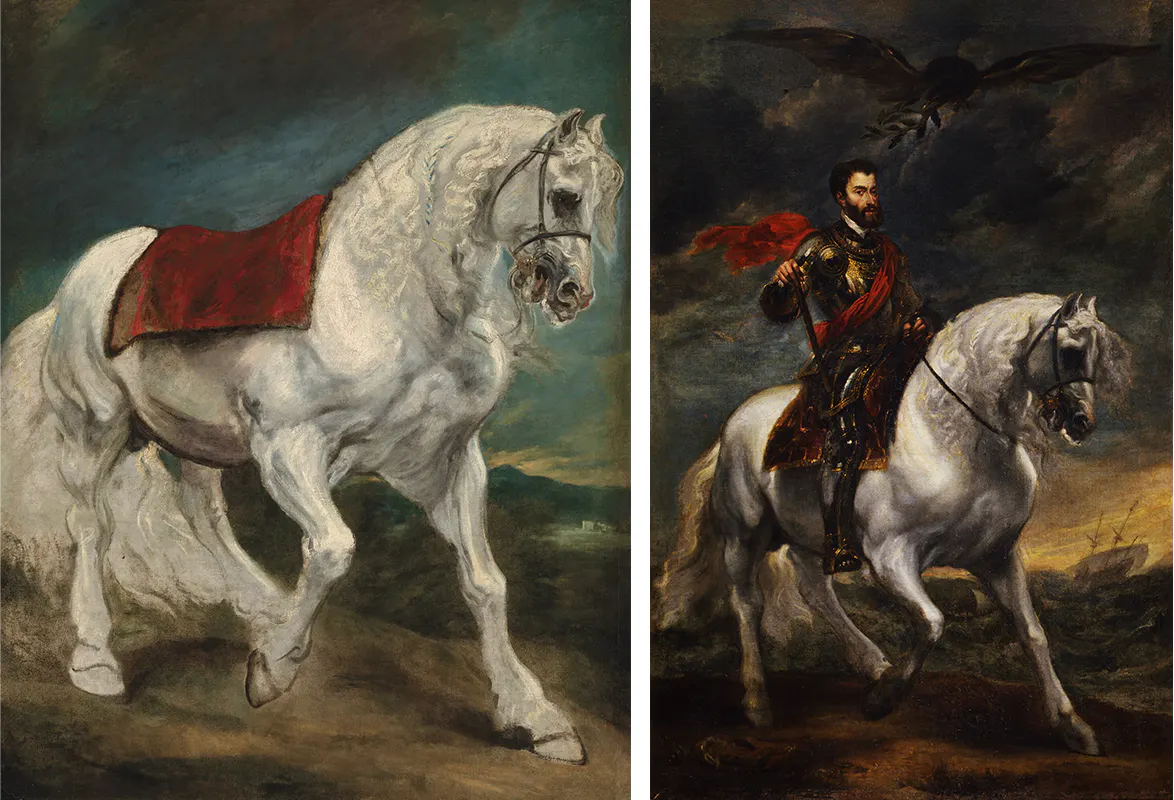
For his portrait of Charles V, Van Dyck produced a large-scale oil study of an Andalusian white horse—the earliest surviving example of his renowned equestrian portraits. This study will be auctioned on December 3rd as part of the 'Old Masters Part I Sale' at Christie’s in London, with an estimated value of £2–3 million.
In the 19th century, the study became part of the notable collection of Thomas Gambier, most of which is still housed at the Courtauld Institute in London. It was last auctioned at Christie’s in 2000, selling for £773,750.
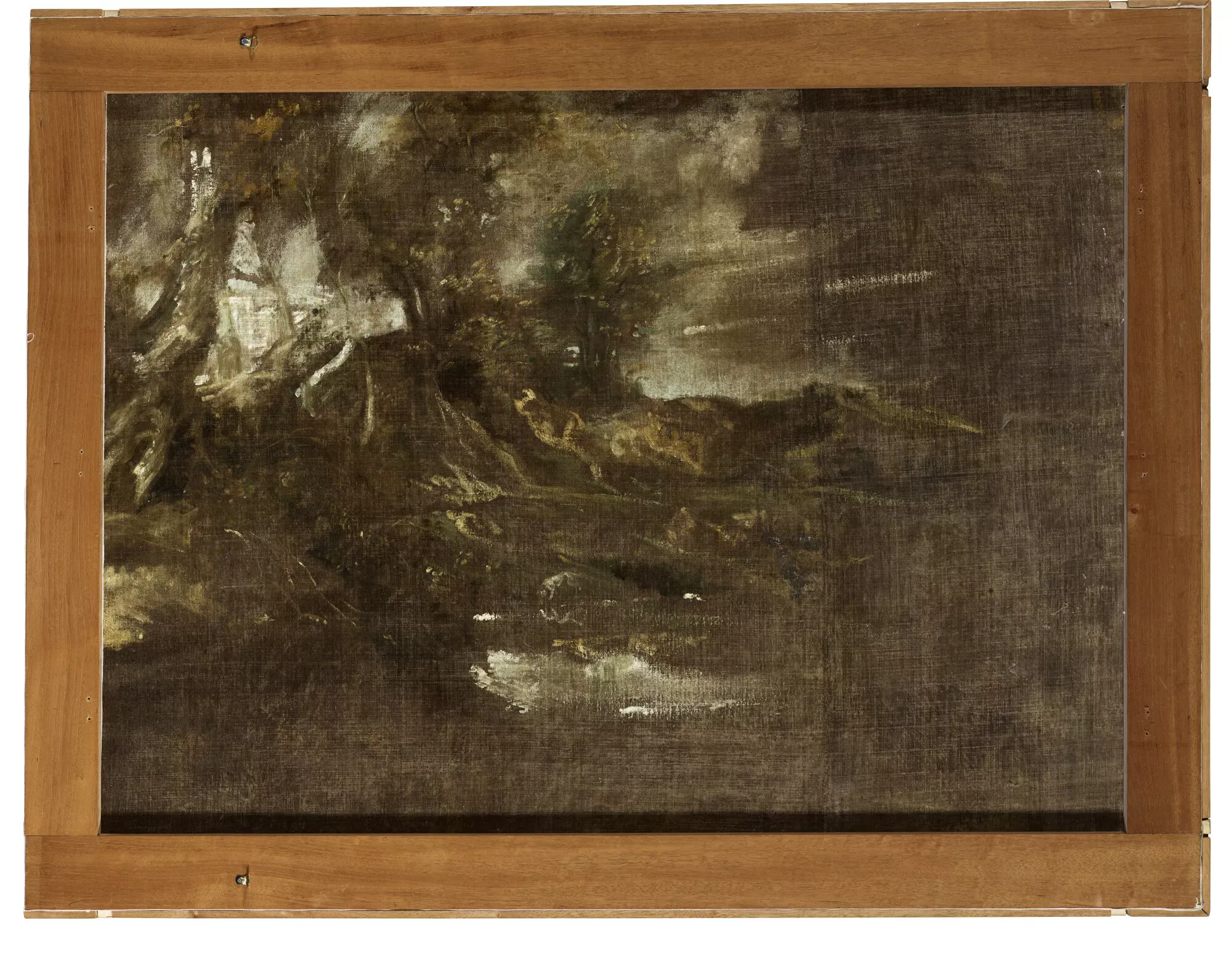
The much higher current estimate is due to a discovery made during restoration after the auction: on the reverse side of the horse painting, hidden beneath an additional canvas, was an oil-painted landscape depicting the tree-lined shore of a lake from which a dog is drinking. Until this restoration, this hidden work had remained unknown. It is known that Anthonis van Dyck also painted pure landscapes, though none have survived, making this discovery truly remarkable.
Want more news like this straight to your inbox? Subscribe to our free newsletter!
Clementine Sinclair, Head of the Department of Old Master Paintings at Christie’s London, commented: “We are delighted that this powerful work by one of the greatest artist of the Northern Baroque is returning to Christie’s for sale after over 20 years with the added significance and excitement of van Dyck’s only surviving landscape in oil having been revealed on the reverse of the original canvas in the interim.”