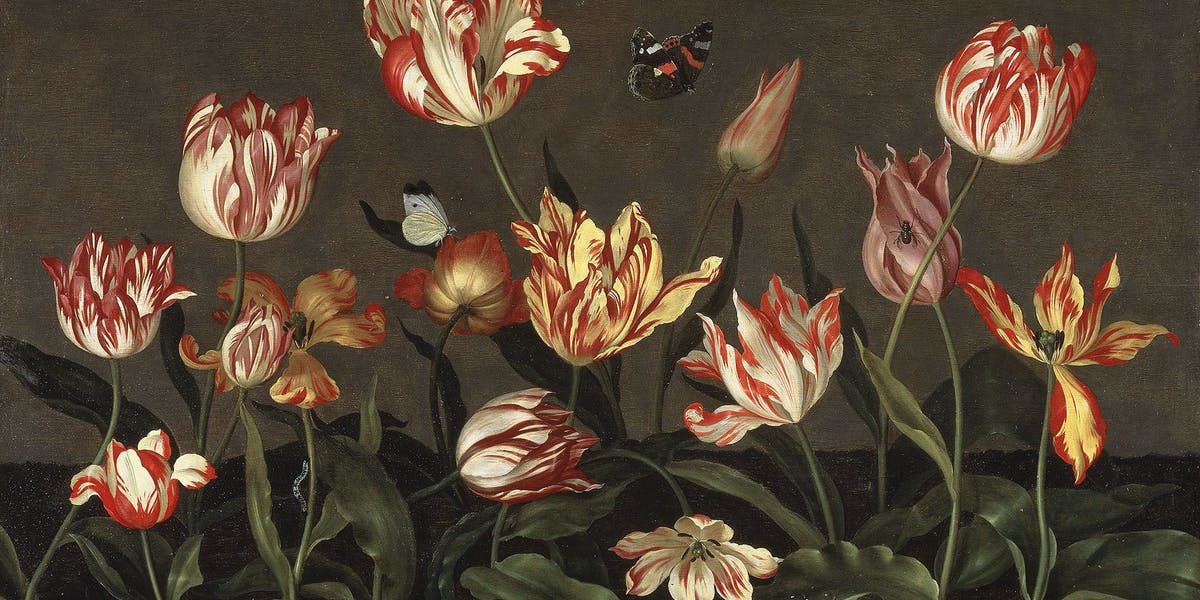
On the walls of Dutch homes during the 16th and 17th centuries hung still-life paintings depicting abundant breakfast tables with shiny cups on freshly pressed damask, market scenes with bargaining women in fashionable lace collars, family portraits and landscapes with windmills.
But the most coveted works were colorful still-life paintings with beautifully composed bouquets of tulips and other exotic flowers, which were often mixed with wildflowers and more local plants.
During the 16th and 17th centuries, the Netherlands was a European superpower with far-reaching international trade relations. Antwerp was Europe's leading trading city and when it became independent in 1648, the Netherlands developed into one of the world's leading shipping nations with colonies.
A rarely seen artistic life grew in the bustling cities where the bourgeoisie decorated their newly built townhouses and farms, and Holland and Flanders became the world's art centers. This is where the big deals and orders were made, and art took on an ever greater role as a status indicator and value meter.
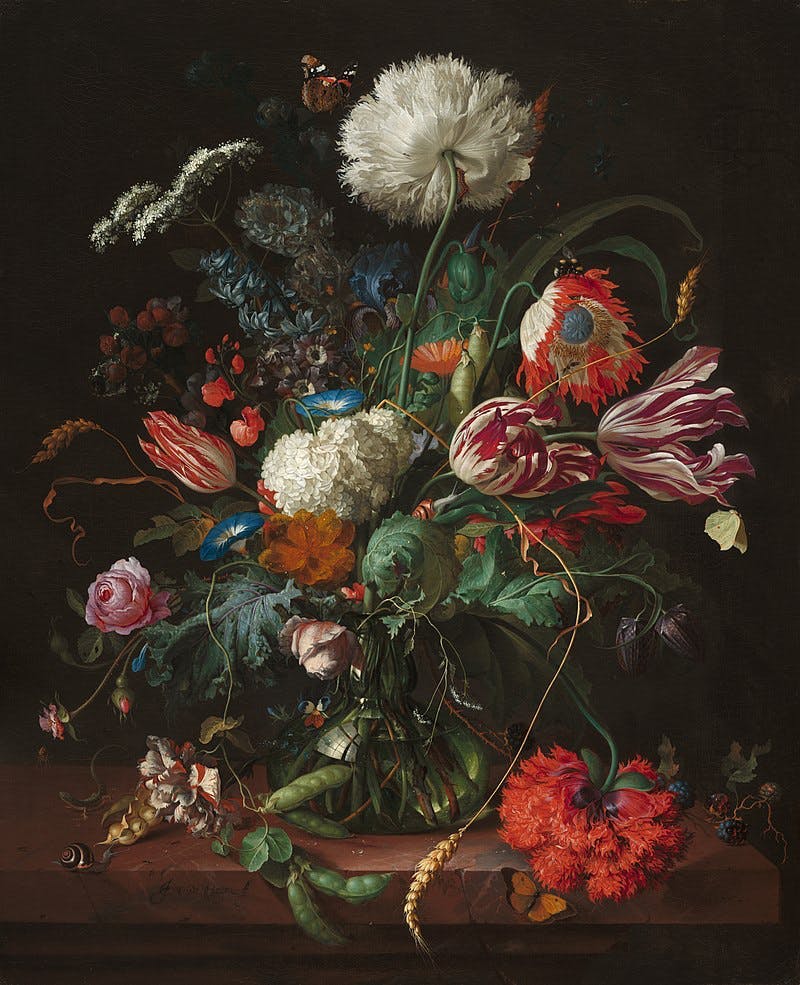
Having a lush garden all year round was one of the most prestigious elements of a Dutch home. But someone, presumably an art dealer, businessman or economically minded artist, got the brilliant idea of depicting the colorful tulips on beautifully-painted canvases and sanded panels.
See also: Rembrandt: Painter of the Soul
The floral motif itself was not a new phenomenon, as it had been a central motif already in late medieval religious paintings. Each flower symbolized one of Mary's different virtues, both as a virgin and mother.
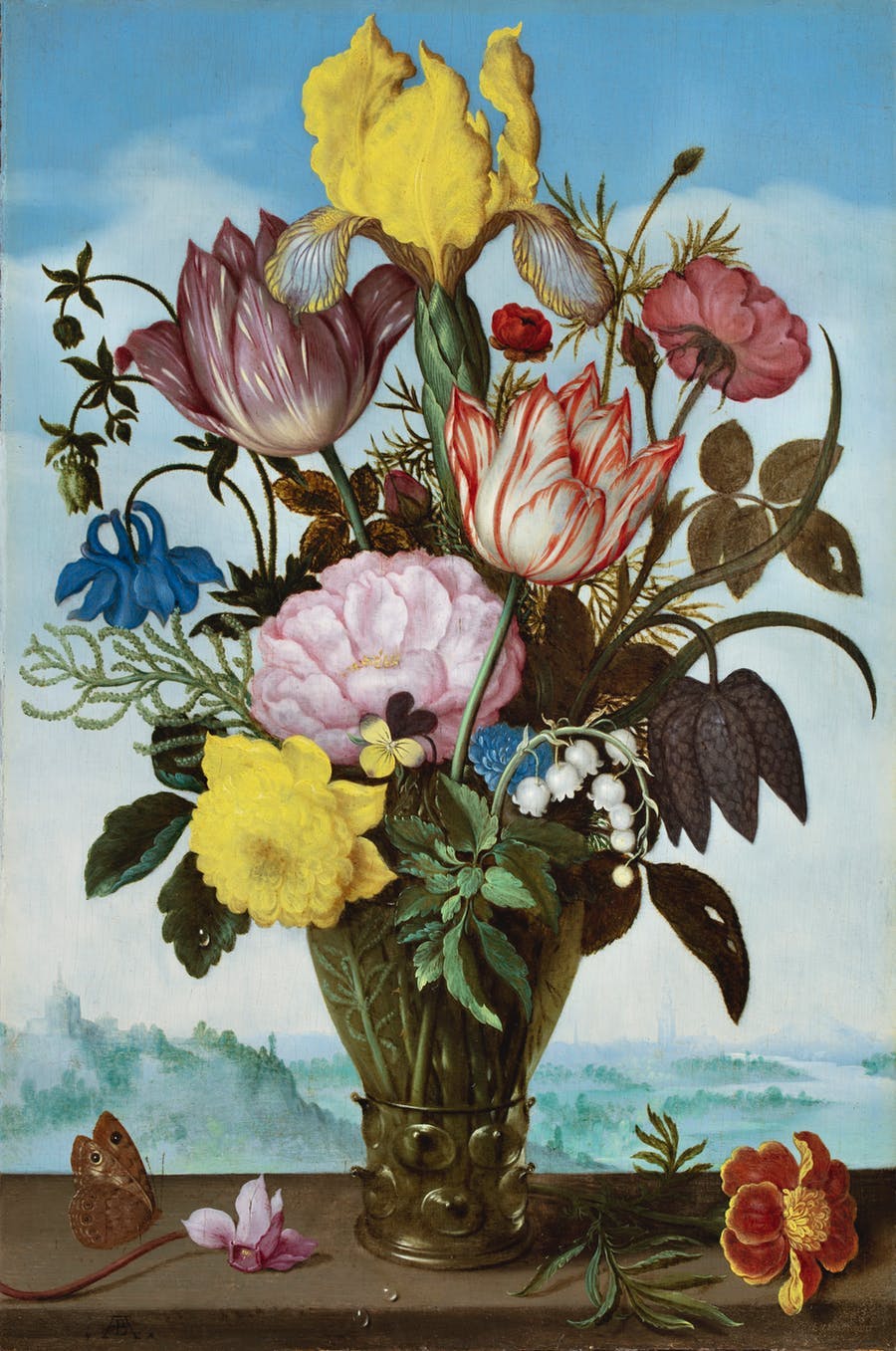
Now the paintings came to symbolize transience, science and beauty. The fascination for these carefully-rendered bouquets spread and the paintings often served as sales material for those who bought and sold tulip bulbs. The intended buyers found it difficult to imagine the beautiful flowers, but thanks to paintings, drawings, etchings and books, their investments became more concrete. The main flower painters were in-demand artists who became wealthy.
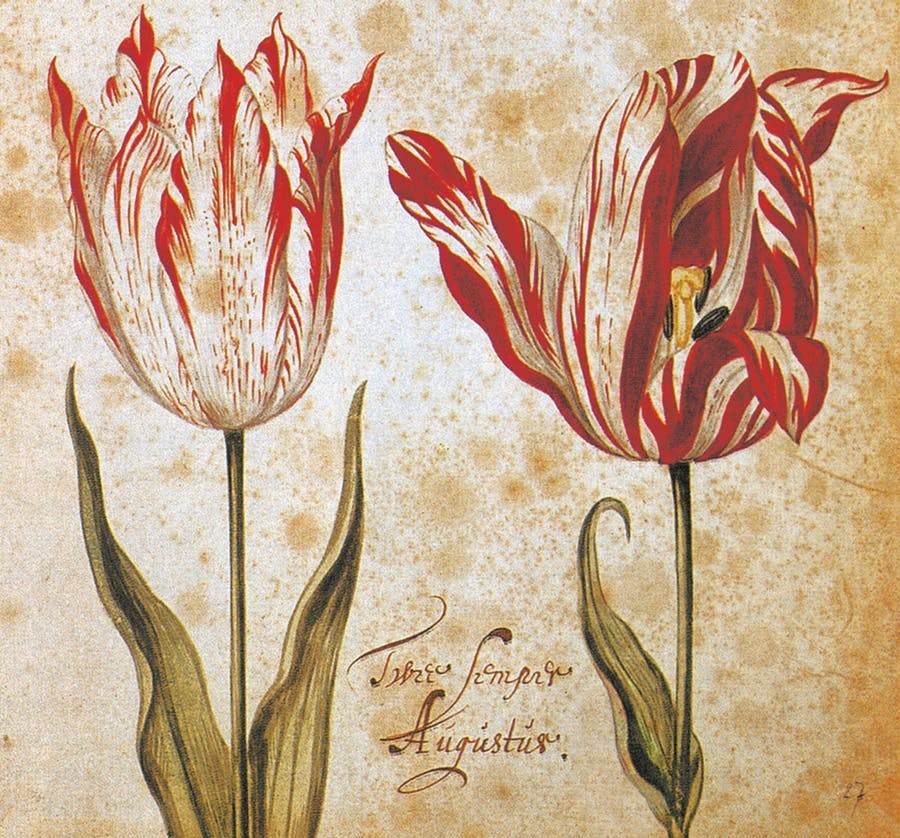
Although tulips, according to history books, reached Europe in the middle of the 16th century when the Austrian ambassador, Angerius Ghislenius Busbequius on behalf of Emperor Ferdinand I, was sent on special assignment to Constantinople, it took a few years before the trade started in earnest. In cargo from Turkey there were potatoes, peppers, tomatoes and other vegetables, but it was the exotic flowers that stood out most. From Vienna, the new discoveries were passed on to important and rich commercial cities such as Augsburg, Antwerp and Amsterdam.
The tulip's real breakthrough came in the 1590s when Dutch botanist Carolus Clusius summed up his knowledge of the subject at the University of Leiden, after meeting Ambassador Busbequius and realizing that the Dutch cultivation conditions suited the exotic flower well.
See also: The 10 Most Scandalous Artworks
Tulipomania In the trading halls, tulip portraits hung in long rows while negotiations on expensive tulip bulbs took place around the tables.
Initially, there was a regulated trade for the sale of bulbs and the price increases took place under controlled conditions, but eventually speculation swept over and the extensive speculation wave and trade in tulip bulbs came to be called 'Tulipomania'.
At this point, a single tulip bulb could cost the equivalent of several millions in today's monetary value, and as a comparison, a tulip bulb could cost as much as ten annual salaries for a craftsman. During the speculation wave, some tulips were higher in value than others. Tulip variety Semper August was one of the most expensive. A single bulb could cost as much as three canal houses, and those who cultivated tulips kept the sites secret. Often they were cultivated in the gardens of noblemen or in the monastic gardens of nuns and monks.
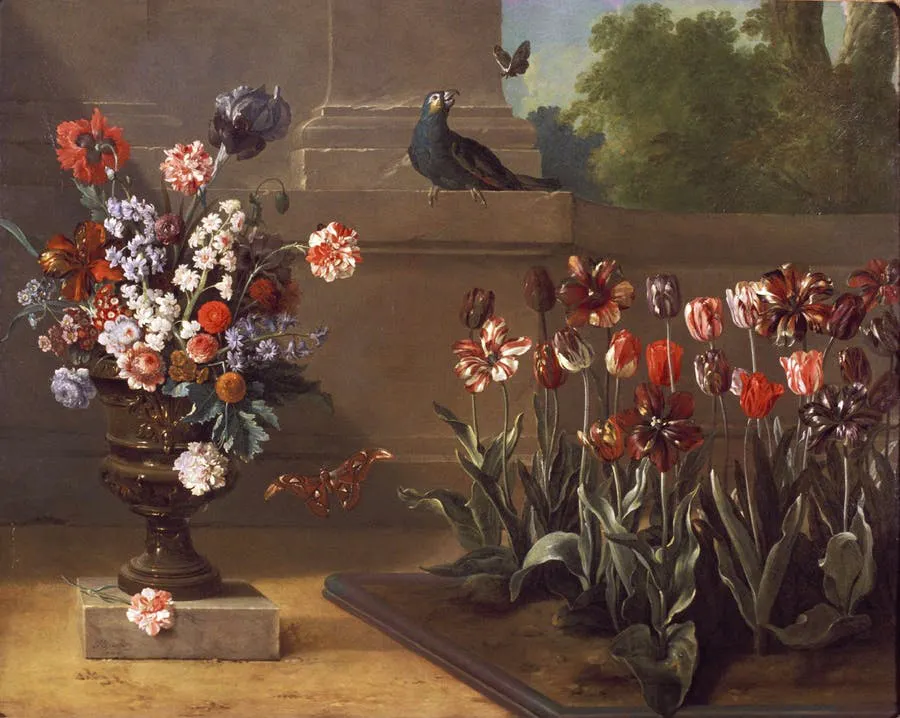
It wasn't long before they began to fertilize various varieties and produce new, even more beautiful ones, to satisfy the demands of the market. This process that took many years and was certainly a risk.
See also: Pierre-Auguste Renoir: Joie de Vivre on the Canvas
Around 1630 there were more than 140 different tulip species registered in the Netherlands. Single and multicolored tulips with streaks, stretches and flaming leaves were divided into different families. Often they were named after those who grew the flowers or, more often, after the financiers of the crops where the bulbs were grown.
Initially, bulbs were traded in weight, but the more speculative the market became, tulip brokers began trading with written contracts for next year's harvest.
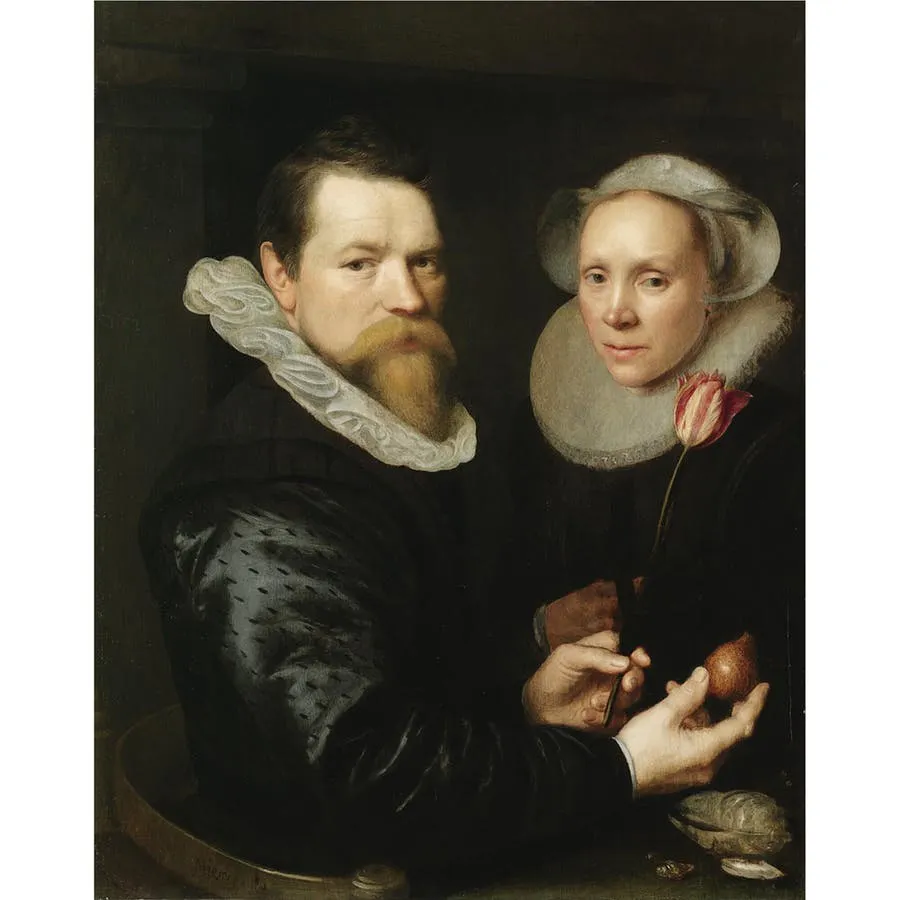
But it was not only the Dutch who were fond of tulips.
In the mid-1630s, the market for tulip bulbs reached new heights after French businessmen also entered the game. Prices rose and the tulip contracts were able to change owners up to ten times in one day in trades that took place at taverns.
All traded with tulips and tulip bulbs, from nuns and wealthy noblemen to carpenters and peasants who exchanged their farms for a single bulb. Besides, it was hardly the bulbs one wanted anymore. One wanted them for the quick gains that were to be made in those exchanges.
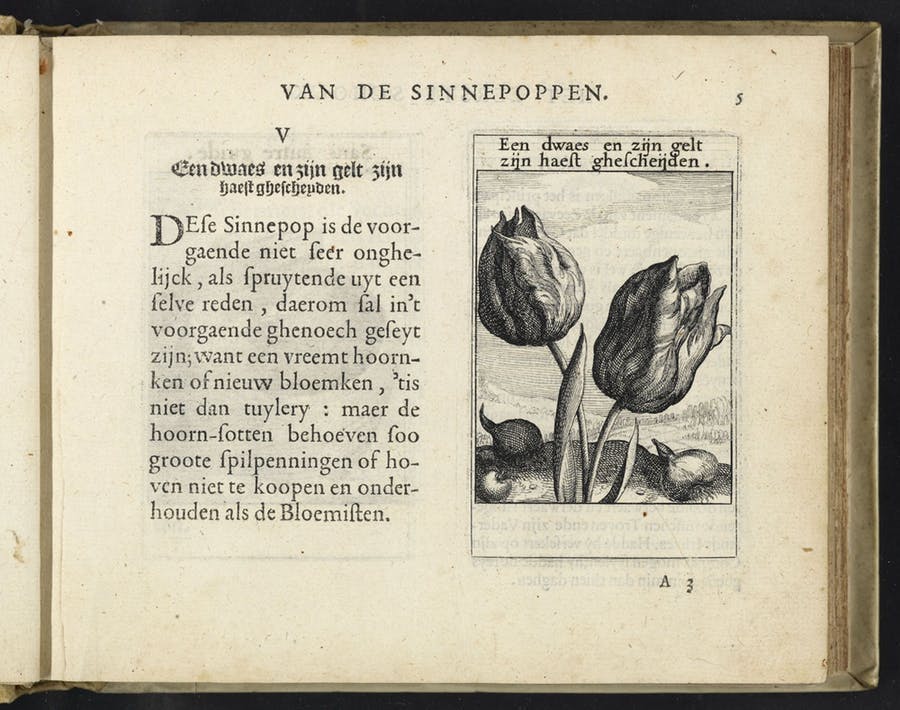
As early as 1614, the well-known merchant and author Roemer Visscher wrote a commentary on the increased trade in tulips; "Een dwaes en zijn gelt zijn haest ghescheijden" which can be translated to "The fool and his money will soon be separated".
In 1636, tulip bulbs were Holland's fourth largest export product, and at the end of the year, the Tulipomania reached its peak.
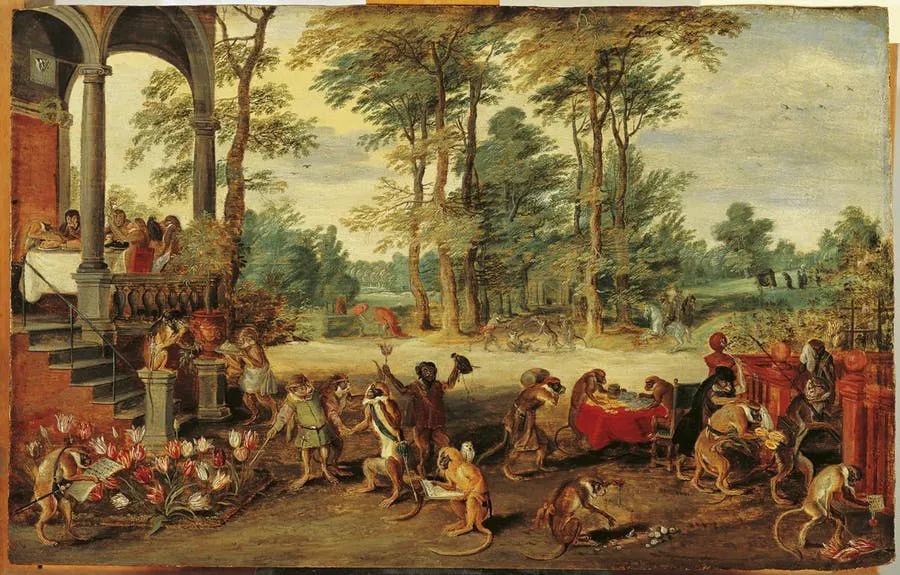
One February day in 1637, the air went out of the market. At one of the auctions in Dutch Haarlem, which was expected to be another sales success, several of the usual bidders did not show up.
Maybe it was because of a plague that ravaged the country, or maybe it was because some had made enough money. Or it was a matter of some experienced brokers seeing how the trade attracted high-achieving speculators. It was time to pull out.
The bubble burst and many of the bulbs became largely worthless and Roemer Vissher got it right to the end. The fools were separated from their money.
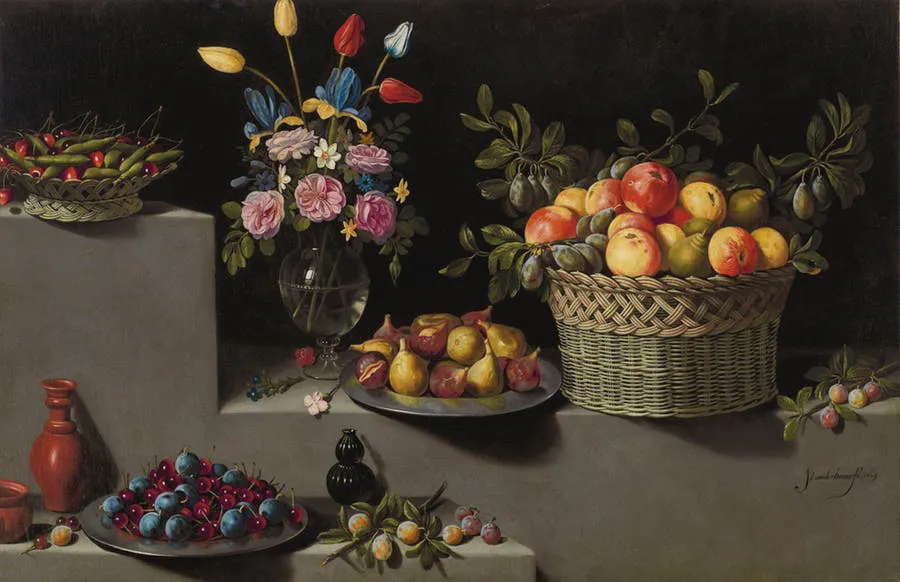
In addition to the now 7,000 kinds of tulips that we can choose from January to Easter each year, it is above all the fantastic paintings that constitute historical remnants from this era.
Many works hang in museums around the world, but flower still lifes can still be found at auction and in the art market.

The tulip bulbs are still a symbol of the speculative fluctuations of the global stock market as it is a constant reminder of the consequences of excessive risk-taking. The seductively beautiful tulips can almost be compared to the 16th century equivalent of Bitcoin.