![Gustave Caillebotte, ‘Rue de Paris, temps de pluie (Paris Street; Rainy Day)’ [detail], 1877 oil on canvas, Art Institute of Chicago. Photo via Wikicommons](https://images.prismic.io/barnebys/191bfd0c-b0d9-466c-8600-e7b64164b33a_Cover.jpg?auto=compress,format)
For those dreaming of sunny escapes or cultural trips abroad, why not travel the globe with art? Throughout art’s history, artists have captured the very best of their surroundings: Hockney’s California, van Gogh’s France, Emily Carr’s Canada. Let’s globe-trot together.
California, United States: David Hockney, Pacific Coast Highway and Santa Monica (1990)
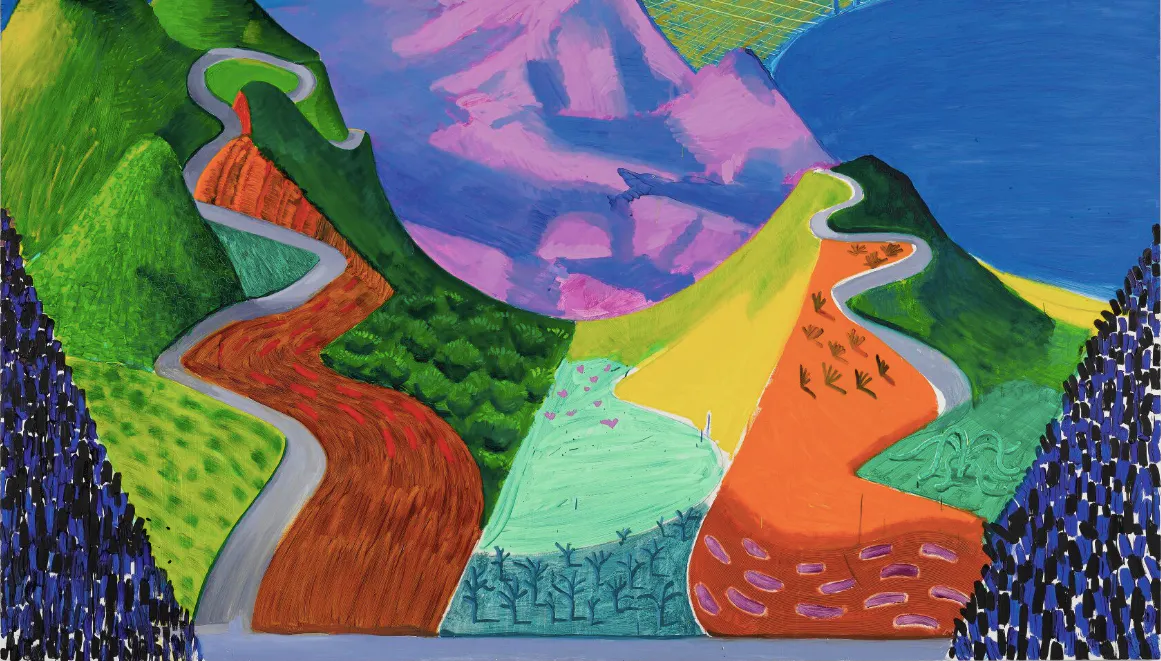
Described by Sotheby’s as “an Edenic panorama and brilliantly ambitious paragon from David Hockney’s celebrated oeuvre, Pacific Coast Highway and Santa Monica represents a dazzling tour de force of a critical breakthrough from the artist's decades-long career.”
Hockney’s California work is indeed an incredible work of art, replete with a unique pictorial vocabulary. With majestic purples, oranges, greens and blues, it depicts the landscape of the Pacific Coast, with the environment's undulating hills and luscious vegetation, speckled in light. Further proof of the artwork’s status, it sold for a whopping $28.4 million at Sotheby’s in May 2018.
Paris, France: Georges Seurat, A Sunday Afternoon on the Island of La Grande Jatte (1884-86)
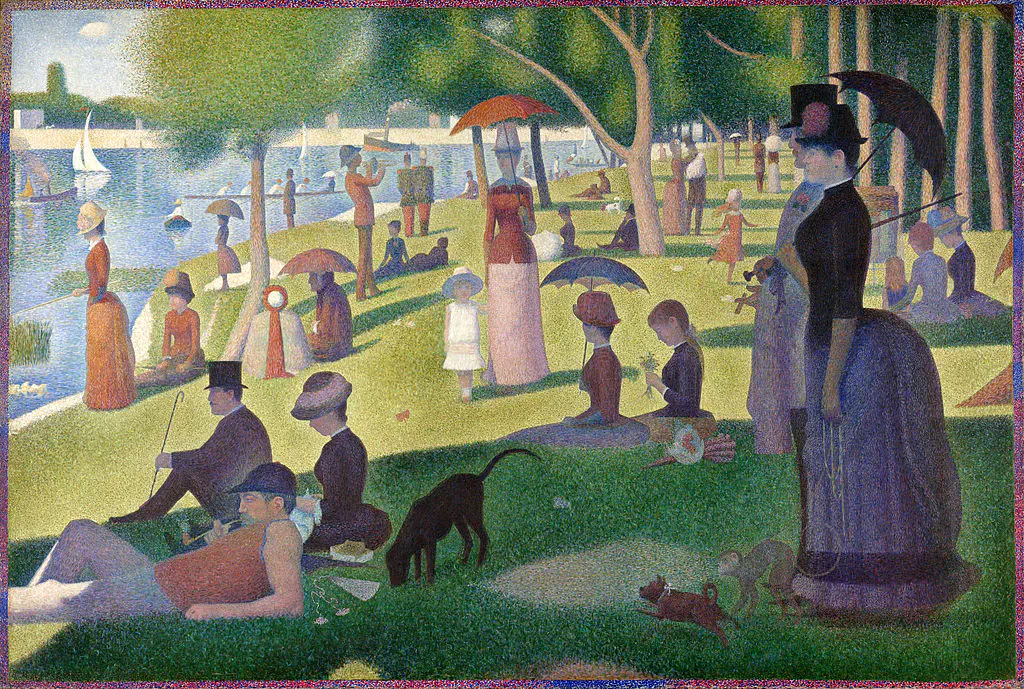
One of art history’s most famous artworks, Georges Seurat’s Un dimanche après-midi à l'Île de la Grande Jatte (A Sunday Afternoon on the Island of La Grande Jatte) is a pointillism masterpiece – pointillism being a painting technique in which small, distinct dots of color are applied in patterns to build a bigger image. Seurat and Paul Signac developed the technique, a branch from Impressionism, in 1886.
This work depicts the Island of la Grande Jatte, which is located at the gates of Paris, lying in the Seine between Neuilly and Levallois-Perret, a short distance from where La Défense business district currently stands.
Oslo, Norway: Edvard Munch, The Scream (1895)
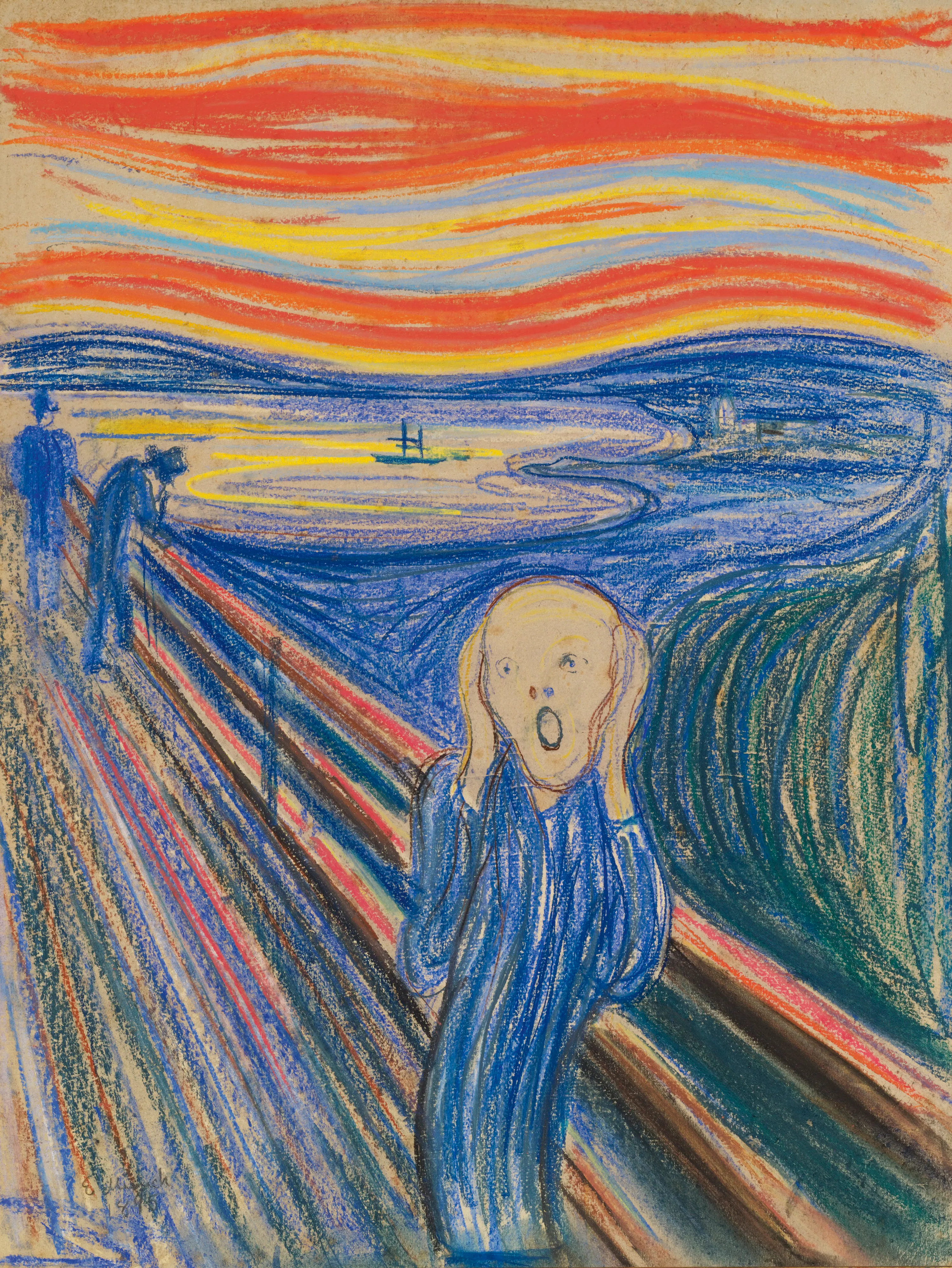
Edvard Munch, The Scream (1895), which sold for a cool $120 million in 2012 at Sotheby’s, is another of one of history’s most famous and recognizable artworks, exploring the themes of love, anxiety and death (though this artwork is in fact just one of four different versions).
… an Edenic panorama and brilliantly ambitious paragon
Tahiti: Paul Gauguin, Te Fare (La Maison) (1892)
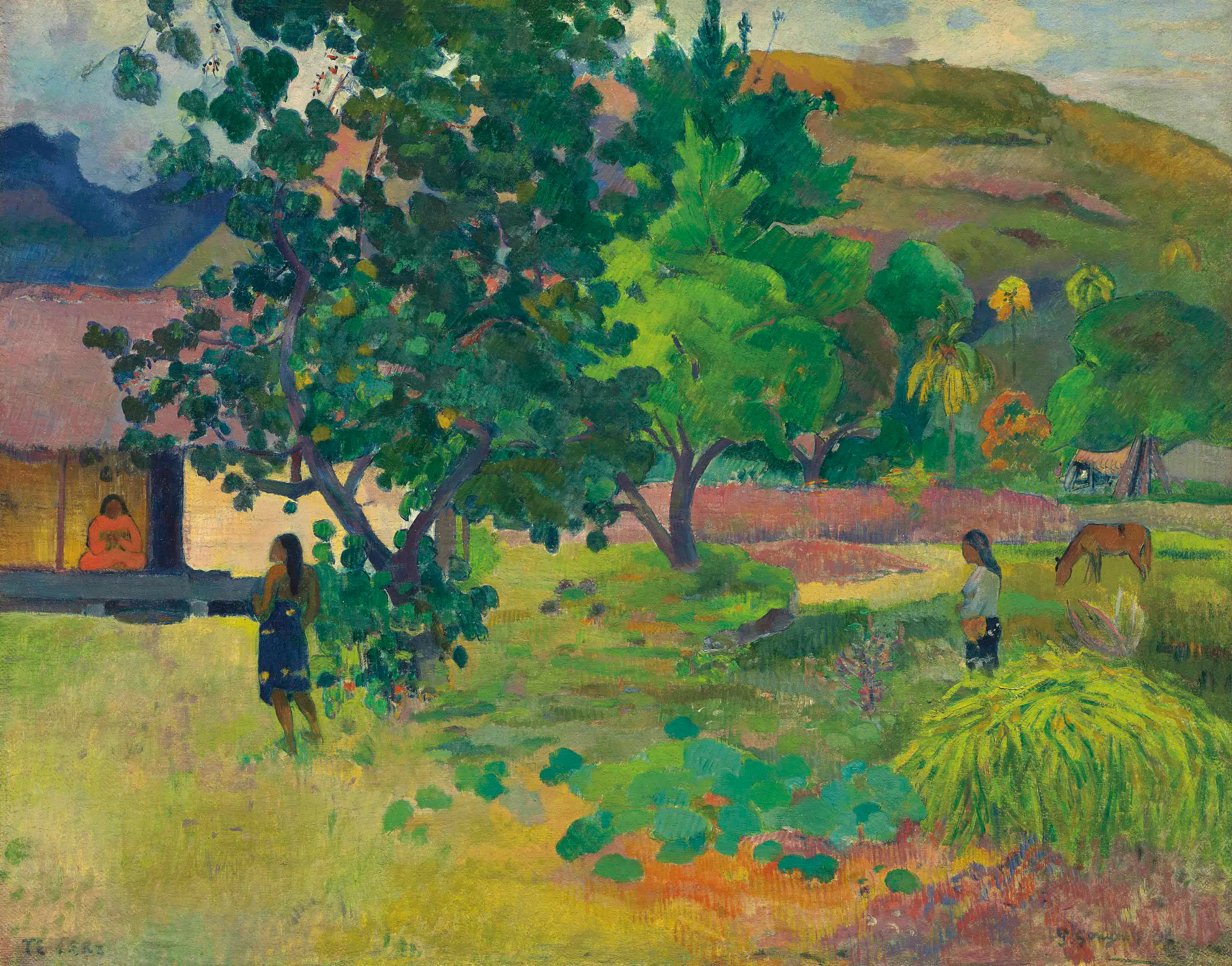
Paul Gauguin’s oeuvre is peppered with works located in the idyllic paradise of Tahiti: the artist moved there in 1891, aged 43. His works from this period are typified by their bold colors, mesmerizing landscapes, beautiful people and lusciously inspiring surroundings.
His Te Fare (La Maison) realized $25.5 million at Christie’s in 2017 – 69% above its estimate.
Sydney, Australia: Percy Trompf, Australia Travel Poster
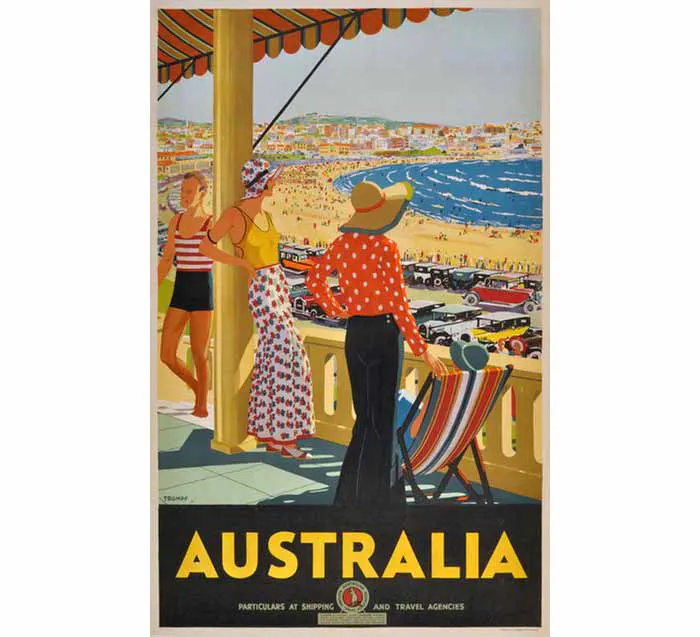
Percival ‘Percy’ Albert Trompf was an Australian commercial artist, best known for his travel posters – including this one of Australia. Although the beach is not named on the poster, it is unmistakably Sydney’s Bondi Beach, as seen from the front of the former Astra Hotel.
According to Australian Beach Cultures, the iconic image is considered a "national treasure [and]... the embodiment of a national culture in the interwar years". This scene of the busy beach-going crowd at Bondi was one of the first posters produced by the Australian National Travel Association (ANTA), which was formed in 1929. Its purpose was to help promote Australia as a travel destination to the American and British markets (and quite successfully, in our eyes).
London, United Kingdom: Claude Monet, Waterloo Bridge, Temps Couvert (1904)
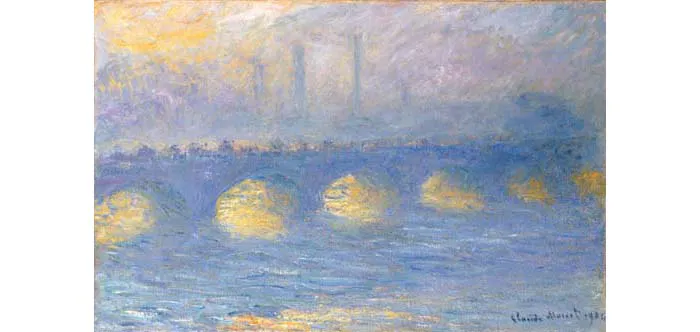
The name Claude Monet immediately conjures up images of either haystacks, water lilies or bridges (or both of the latter two) – and rightly so. The French artist captured countless impressions of these throughout his lifetime.
Though not quite as famous as some of his other bridges, Monet's impressions of London are nevertheless still celebrated in collections around the world. However, despite the profusion of works painted by Claude Monet in the English capital, these views of bridges are mostly in private hands and rarely appear on the market. This variant, Waterloo Bridge, Temps Couvert, sold for $35.5 million at Christie’s in 2007 – 199% above its estimate.
British Columbia, Canada: Emily Carr, The Indian Church (1929)
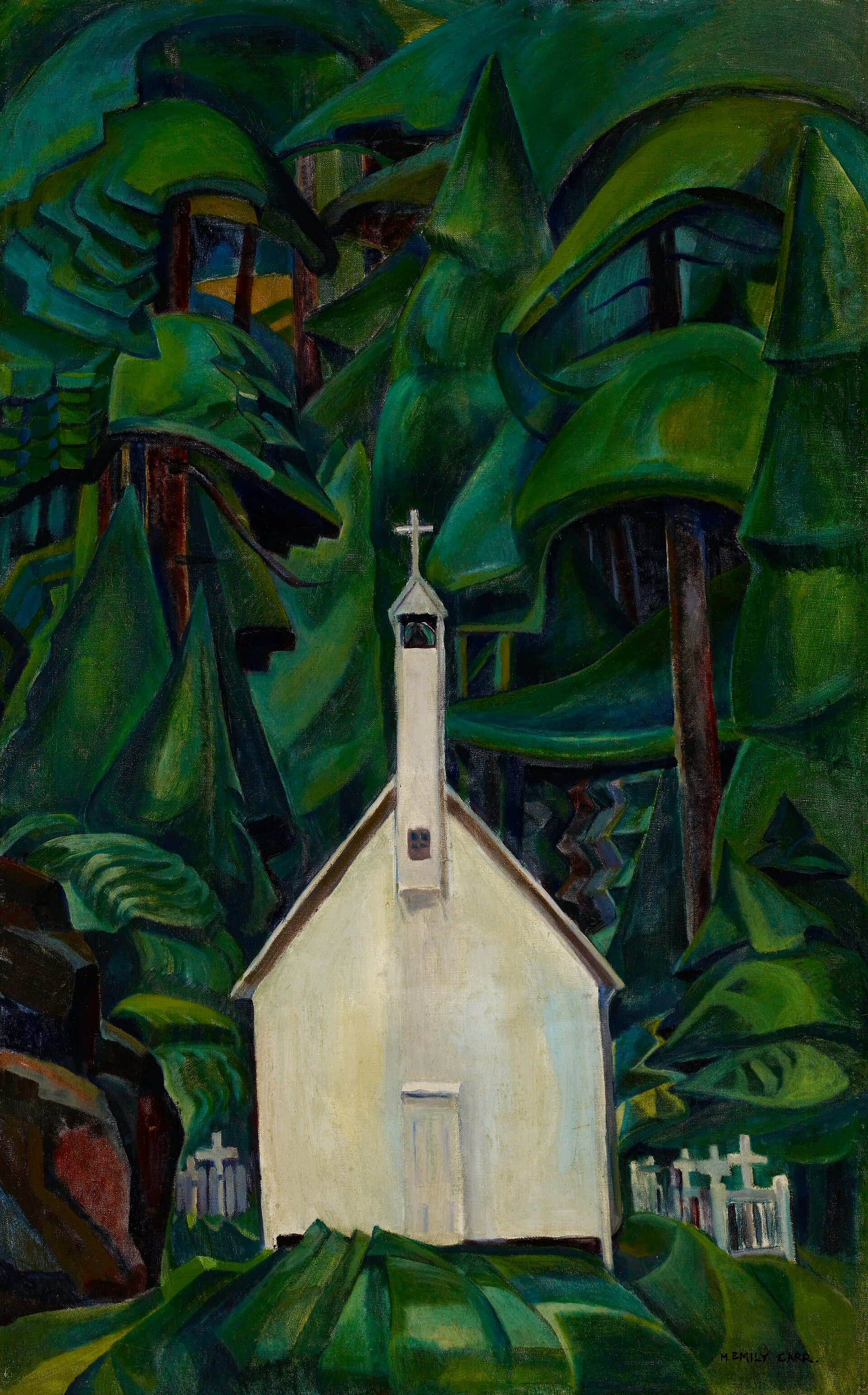
Look for any work by Canadian artist Emily Carr and you’ll find glorious, swirling canvases awash with earthy greens and browns. She was inspired by her native home of Canada – and one of the first painters in Canada to adopt a Modernist and Post-Impressionist painting style.
A 1929 trip to Yuquot (Friendly Cove) on Nootka Island (territory of the Nuu-chah-nulth tribe) inspired Carr to paint this small, white Roman Catholic Church. Yuquot was the first place of contact between Europeans and First Nations in 1770, and in 1923 was established as British Columbia’s first national historic site.
Though the church burnt down in the 1960s, the Mowachaht-Muchalaht community rebuilt it and it now serves as a cultural centre and museum for visitors. Carr was fascinated by the spirituality of indigenous people, whose cultural practices were outlawed at the time.
Stockholm, Sweden: Eugène Jansson, Sen marskväll i Tantobergen (1894)
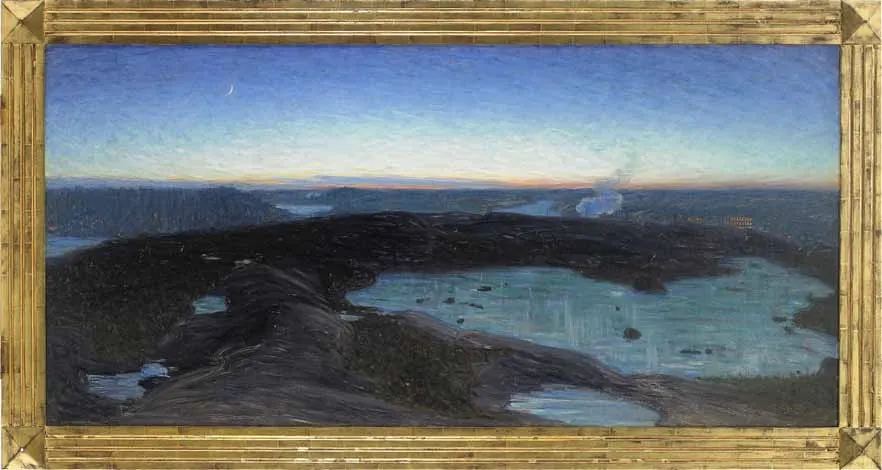
While Swedish artist Eugène Jansson may be best known for his portraits of nude men, which he mainly painted towards the end of his life, he also executed many nighttime landscapes and cityscapes, thick with bluish hues and tints. He is sometimes referred to as ‘blåmålaren’ (the blue-painter) – not completely surprising if we take a look at his Sen marskväll i Tantobergen.
The work is believed to be of an archipelago outside of Stockholm. Jansson travelled to Tjockö, an archipelago north of Stockholm, during the 1890s, so it is likely this is the stunning view to which we are looking. The work sold at Stockholms Auktionsverk for $600,000 in 2012 – 167% above its estimate and a true testament of Jansson’s skills and expertise.
New York City, United States: Piet Mondrian, Broadway Boogie Woogie (1942-43)
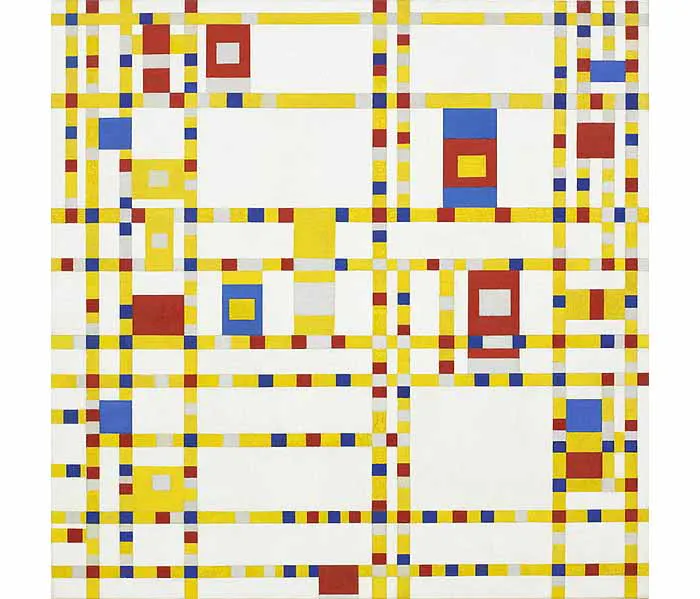
This might not be New York as you know it, however when Piet Mondrian moved to the city (he had a studio in Midtown Manhattan) he became fascinated by its grid-like layout and his style of painting forever changed.
While Mondrian had originally been creating works of solid flat totality, with black lines and blocks of color, after his move to New York his lines not only became primary colors but traversed the square canvas and interweaved amongst one another: not unlike the gridded streets of New York.
Next time you get the chance to wander down the city’s streets, why not imagine you’re walking the line of one of Mondrian’s strips?