Born in 1401 in San Giovanni Valdarno, near Arezzo, Italy, Tommaso Masaccio singlehandedly stands for the emergence of a new type of creator: the Renaissance artist. Giorgio Vasari, in his compilation of artist biographies called Vite (1550), named Masaccio as one of the four founders of modern art, alongside Ghiberti, Donatello and Brunelleschi.
Masaccio arrived in Florence in 1417 with his family: his mother, who had remarried a wealthy spice merchant after the death of Masaccio’s father, and his brother Giovanni, who also became a painter.
Early on, Masaccio joined Bicci di Lorenzo’s workshop. It was during his apprenticeship that he discovered the works of Donatello and Brunelleschi. His own talent did not go unnoticed, and he was entrusted with a first commission for a fresco in 1422 for the Santa Maria del Carmine (today destroyed).
Related: How the Medici Influenced Renaissance Florence
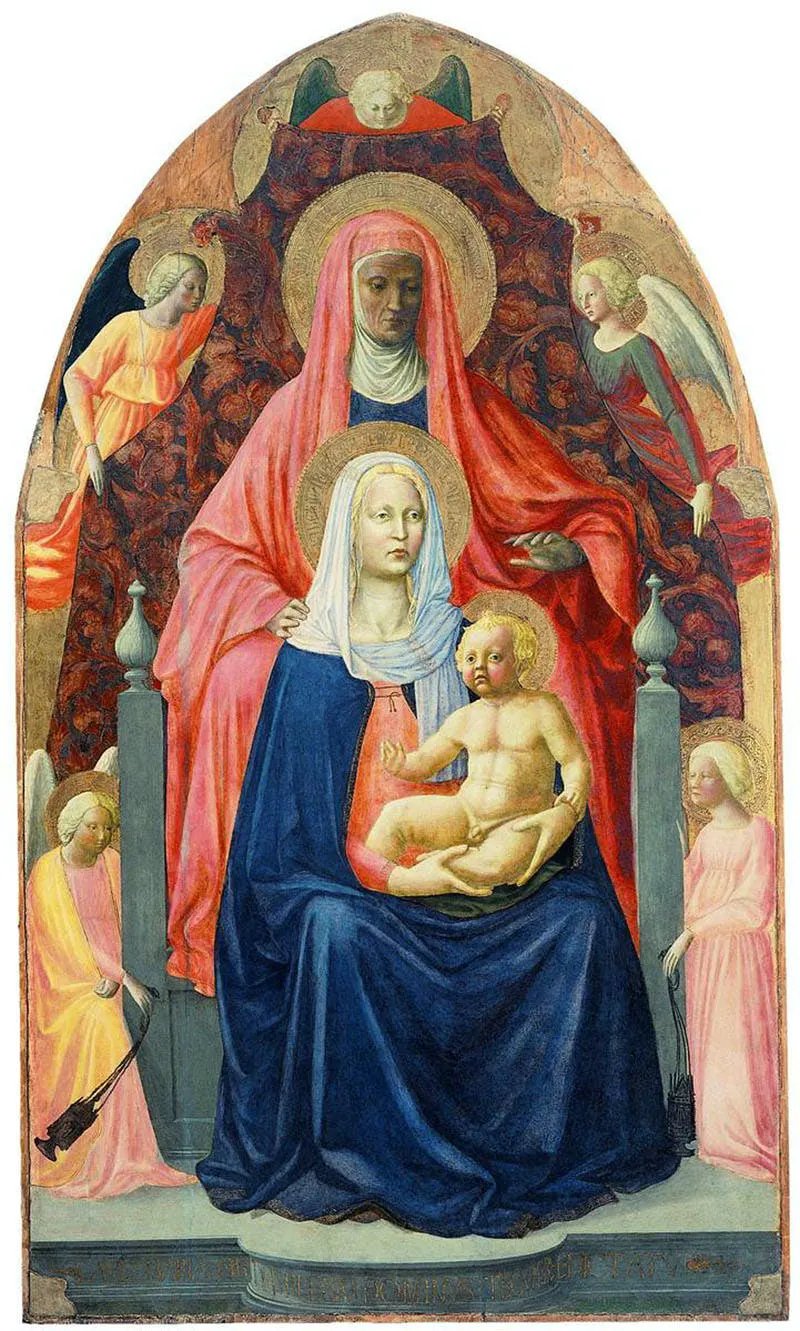
Masaccio also paired up with painter Masolino da Panicale, twenty years his senior, to produce a first joint work: Saint Anne, the Virgin and Child, and Five Angels (at the Uffizi Gallery, Florence).
In 1424, a rich merchant commissioned the two artists to complete a project that allowed them to fully express their talent. The duo thus collaborated on creating the frescoes of the Brancacci Chapel at the Santa Maria del Carmine, focusing on the life of St Peter.
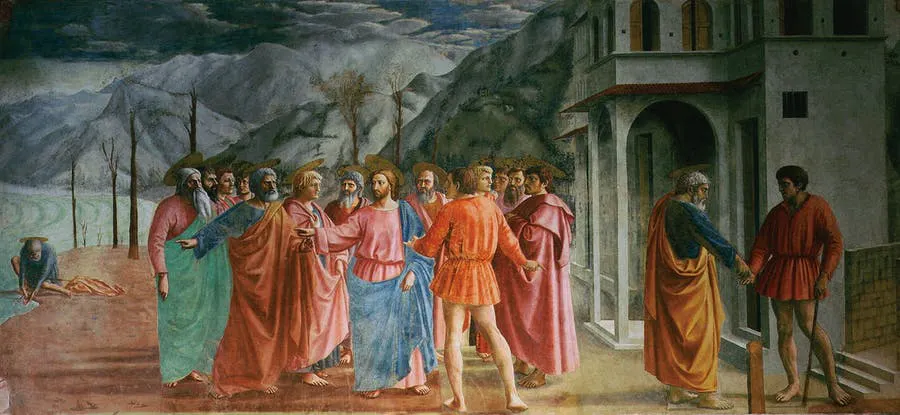
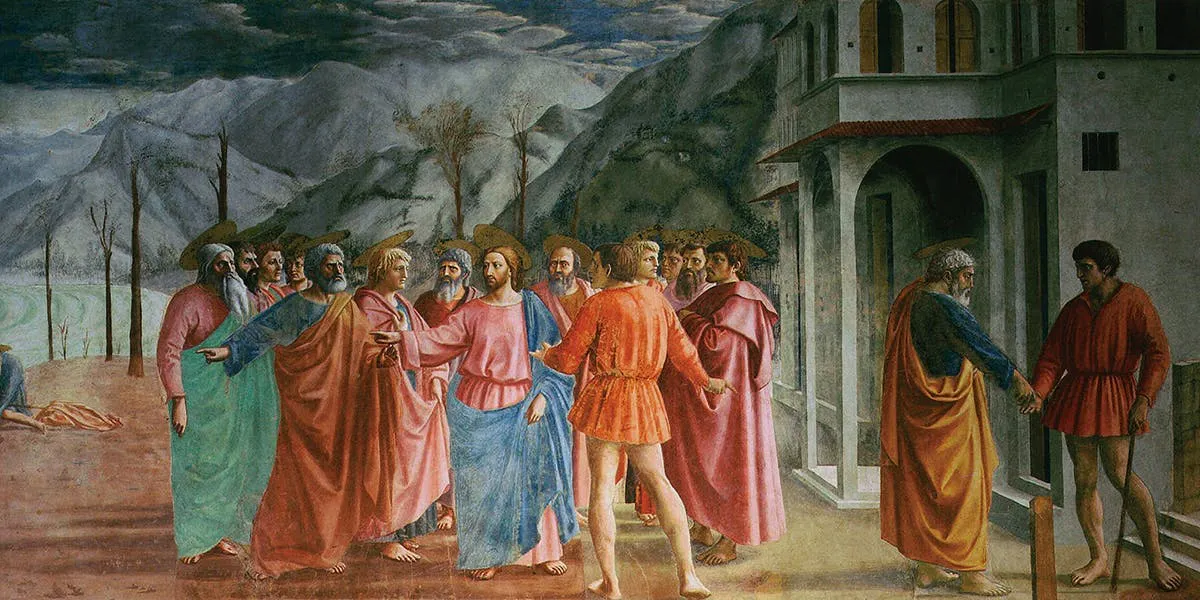
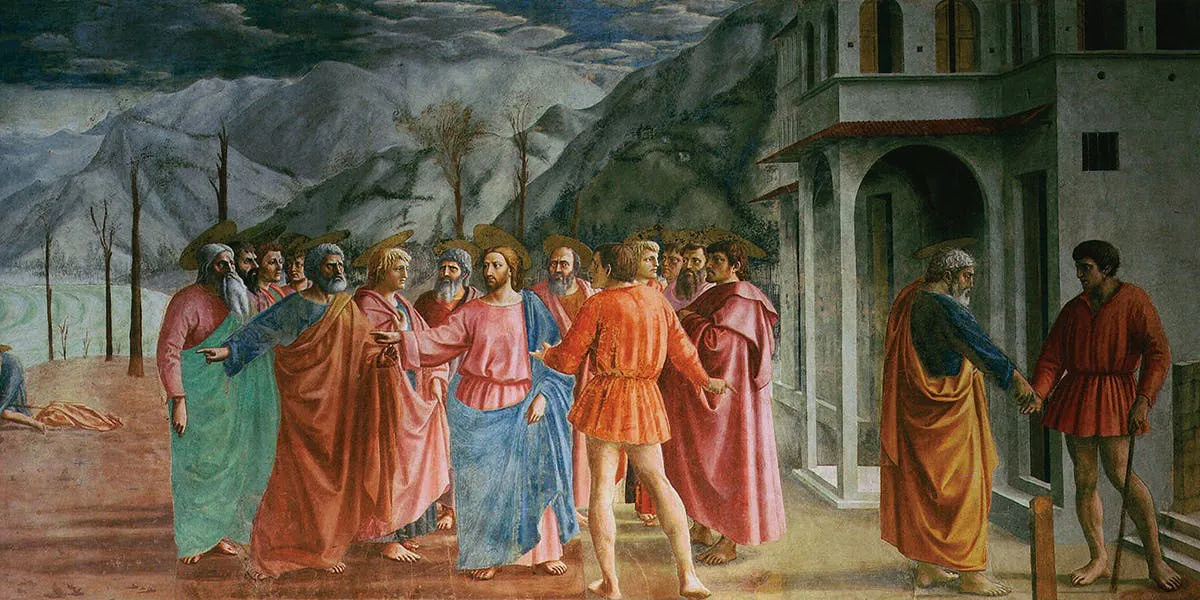
Masaccio’s artistic boldness stands out in many of these fresco scenes. In The Tribute Money, the painter employs a revolutionary perspective: a simple yet innovative geometric layout that played on lines, cubes and circles. Clearly influenced by the International Gothic movement that was in fashion in Florence at the time, the work also opens up a new field of artistic vision.
Related: The 10 Most Famous Works of Art and Where to Find Them
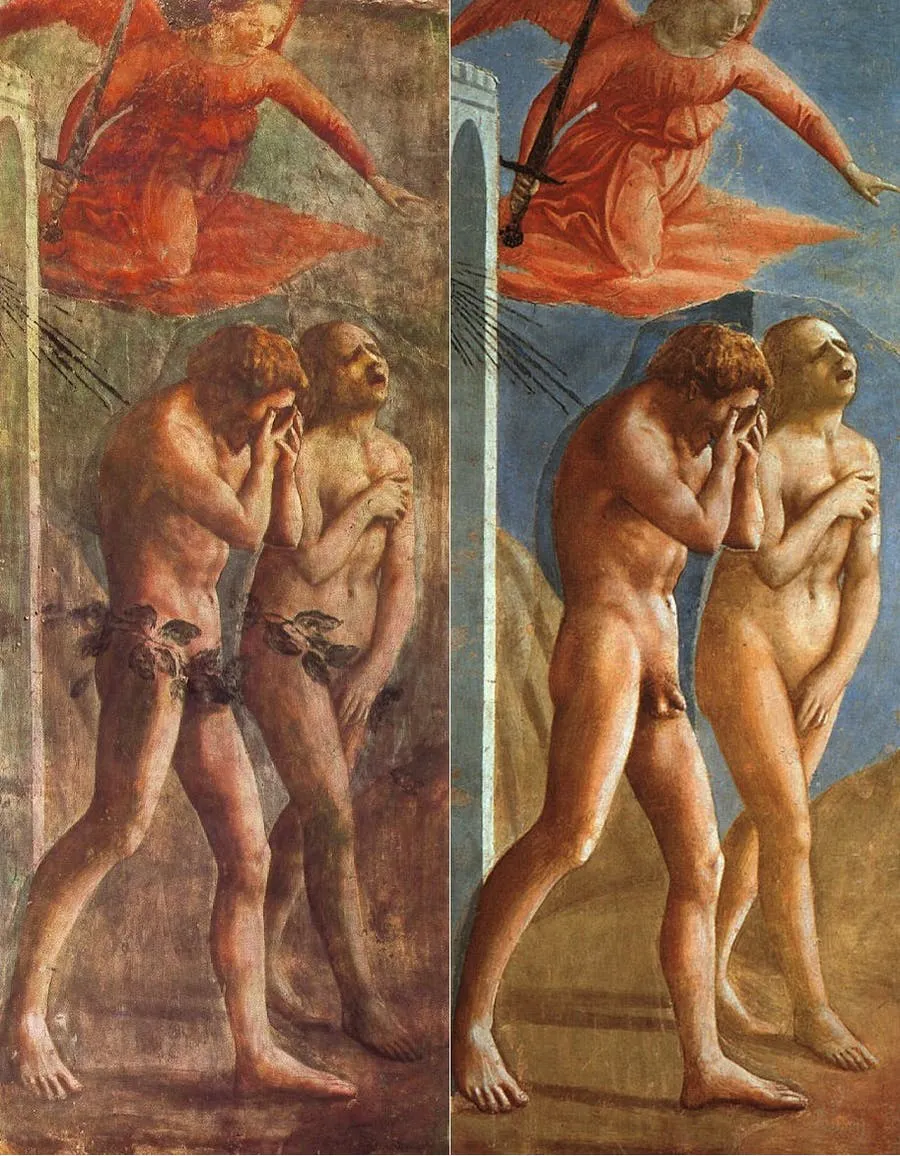
In The Expulsion from the Garden of Eden, Masaccio endows his figures with untold expressiveness through tortured gestures and grimaces; touches of theatricality that hint at the upcoming Baroque movement. The naked forms were covered up in 1674 under Cosimo III during the Counter-Reform, but a recent restoration (completed in 1980) gave justice to the artist’s original work.
The Brancacci Chapel presents several famous scenes, such as the Raising of the Son of Theophilus, the Baptism of the Neophytes, and the Death of Ananias. But the project remained unfinished, only to be terminated at the end of the century by Filippino Lippi.
Masaccio’s work nevertheless marks the emergence of a new model: the Renaissance artist, a modern creative genius who stood for a new concept of art, society and the world. The themes chosen by Masaccio reflect this newness: the notion of the ideal city, a taste for landscapes, the humanity of human figures, and of course, self-portraits. These innovations quickly cropped up in other works by the artist from the same period, such as Polyptych of Pisa (c. 1426).
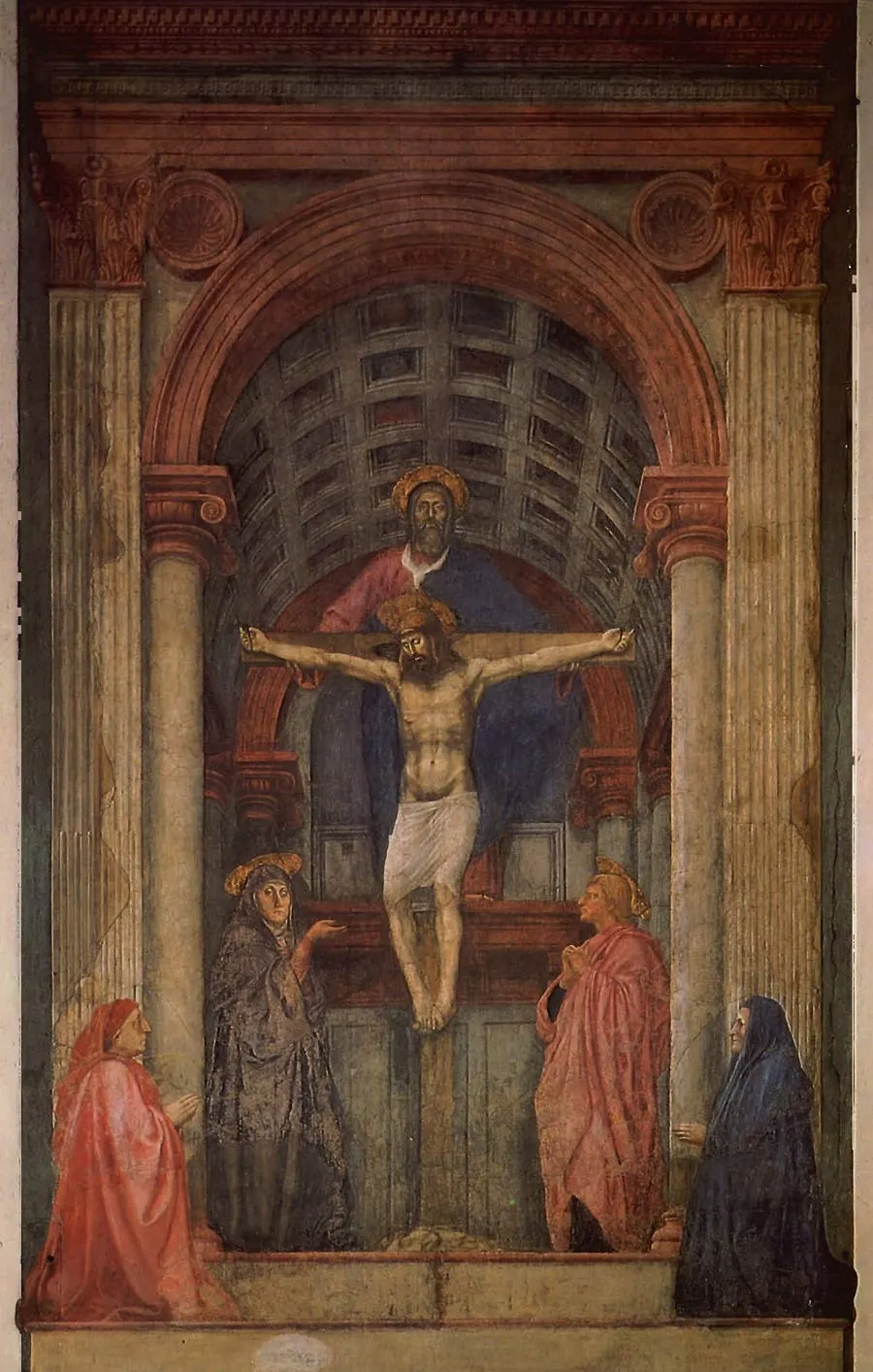
Without a doubt, Masaccio’s most accomplished work remains the fresco of the Holy Trinity at Santa Maria Novella, which he commenced around 1425. It is a masterful demonstration of perspective taking the form of a monumental trompe-l’œil.
Related: The 12 Most Expensive Paintings Ever Auctioned
The front décor, inspired by Brunelleschi’s Barbadori Chapel, features an impressive barrel vault which gives depth to the scene. The work’s pyramidal organization leaves a disproportionately large space for the décor compared to the figures. Symbolically, it represents the ascension from the terrestrial to the celestial realm. God the Father is seated on the throne on high, accompanied by the dove of the Holy Spirit. Below is the crucified Christ, with Mary and St John at his feet. At the bottom of the scene kneel the work’s (unidentified) patrons.
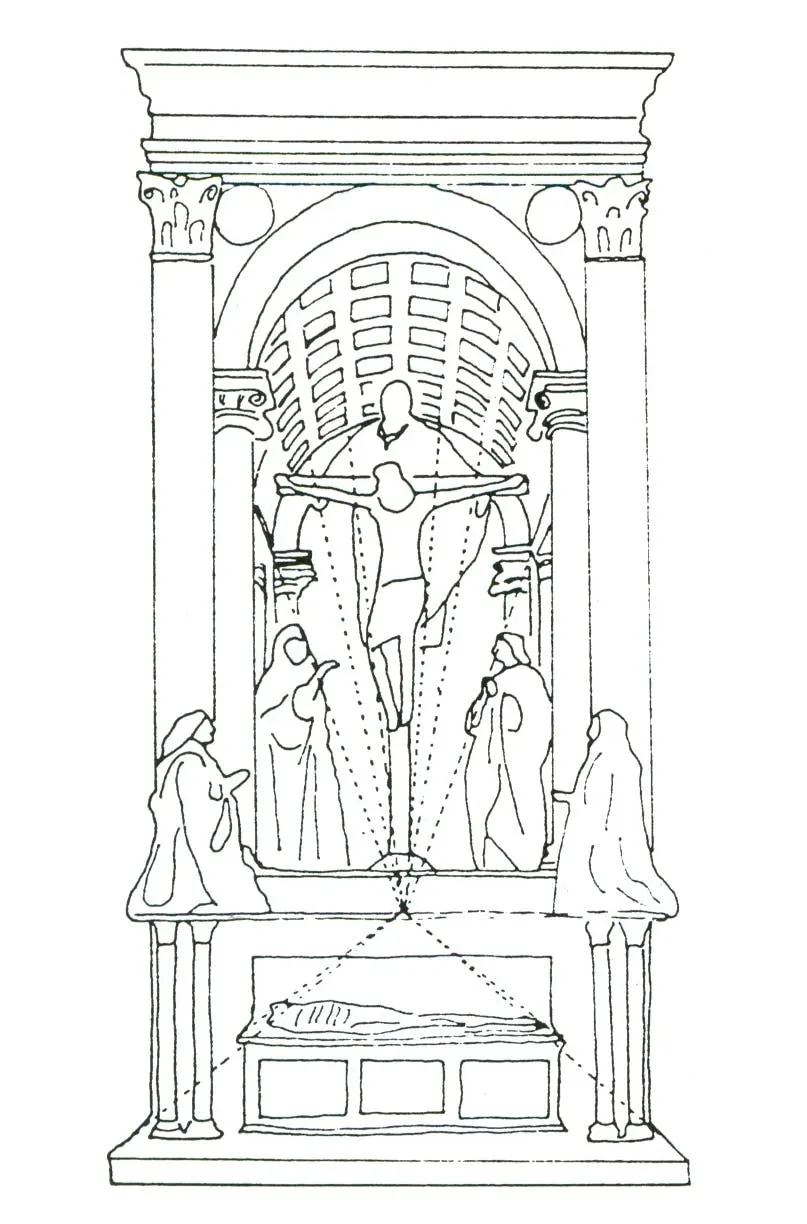
More than elsewhere, the piece’s pilasters and capitals hint at a keen rediscovery of Antiquity. The application of mathematical perspective also reflects the new theories that were soon formalized by Alberti in his treatise Della pittura (1435).
But nor has Masaccio’s work shaken free of the past, for it preserves traces of the Medieval period, namely the message delivered to the viewer in the form of a phylactery inscribed over the reclining skeleton of Adam: “I was what you are, you will be what I am”.
See also: Michelangelo: From Man to Genius
The work is a true masterpiece, however it went ‘missing’ for some time. It was covered in 1570 by a painting by Vasari before reappearing during restoration work in 1861.
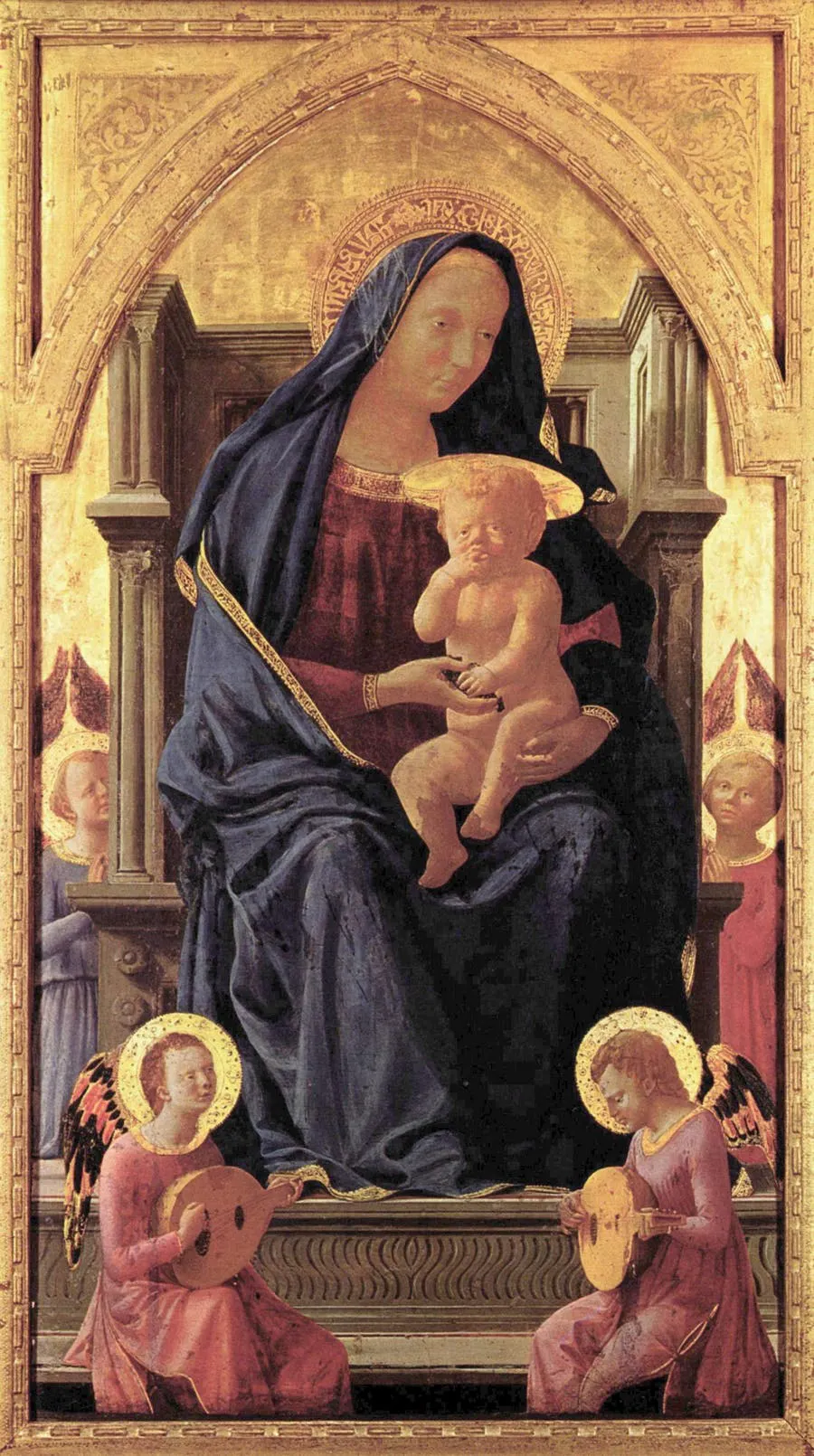
Celebrated but penniless, Masaccio died mysteriously at the age of 27 years, possibly a victim of the Plague that was ravaging Italy. Yet his artistic genius was immediately recognized. His influence can be identified in the work of Donatello (Herod’s Feast), Fra Angelico (Pala de Fiesole), Piero della Francesca (Arezzo cycle) and Andrea del Castagno. His frescoes even had an impact on French painter Jean Fouquet when he travelled to Italy.
Today, Masaccio is still recognized as one of the greatest Italian Renaissance artists. The frescoes at Santa Maria del Carmine and Santa Maria Novella, today admired by tourists from the world over, remain key masterworks in the history of Western art.