
According to Sotheby’s Director of eCommerce Development, Brahm Wachter, interest in vintage sneakers as a collecting category has been growing exponentially. Why? The idea of the sneaker as an art form is widening. ”I think many sneaker heads have been shocked at how quickly this growth has picked up,” Wachter says, ”as well as the quality of material that is now surfacing in the market.”

But how has the sneaker gotten such a coveted following? To investigate, we need to go back to where interest in sneakers was taken to the next level.
It was the spring of 1984 and former lawyer David Stern (1942-2020) had recently been made commissioner of the National Basketball Association. The league and the sport were, however, not new territory for the 42-year-old from New York City; Stern had begun working as an outside counsel two decades earlier in 1966, and in 1978 became an official part of the NBA as a general counsel. When he left in 2014, he did so as the longest-tenured commissioner in major North American sports leagues history.
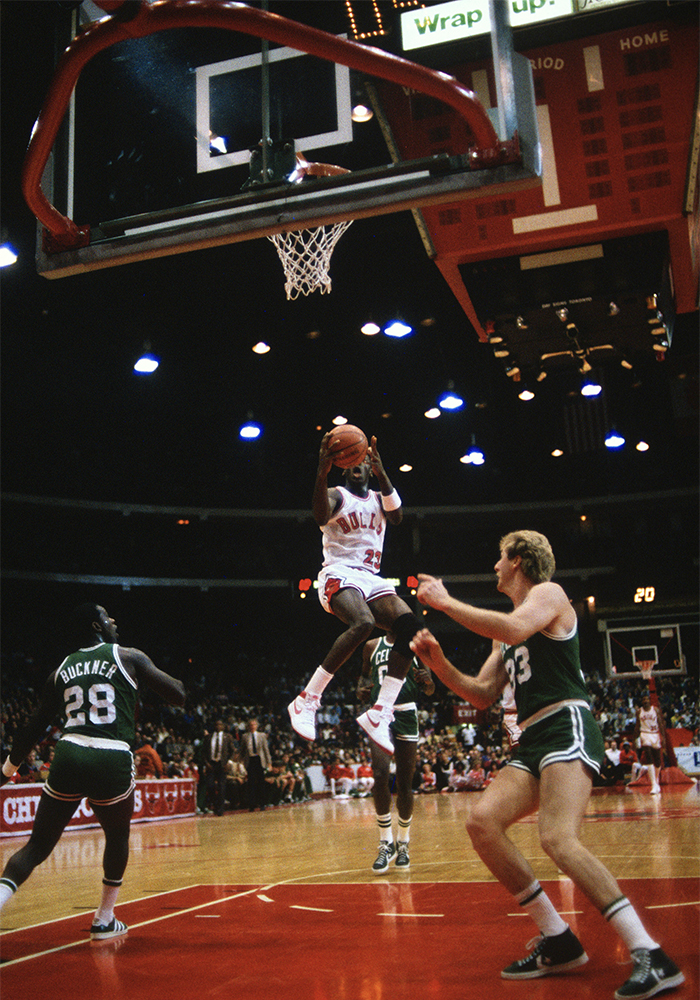
The relationship between David Stern and basketball legend Michael Jordan began when Jordan was drafted from North Carolina in 1984, the same year as Charles Barkley. David Stern wanted to change the NBA’s approach and marketing strategy, and did so by focusing on particular players instead of the NBA teams. These players included Larry Bird, Magic Johnson, and of course Michael Jordan. With Jordan, a new era of basketball began. With the possibility of a great commercial overhaul and the help of NBA stars, Stern could dig the Association out of the dark period it had been stuck in.
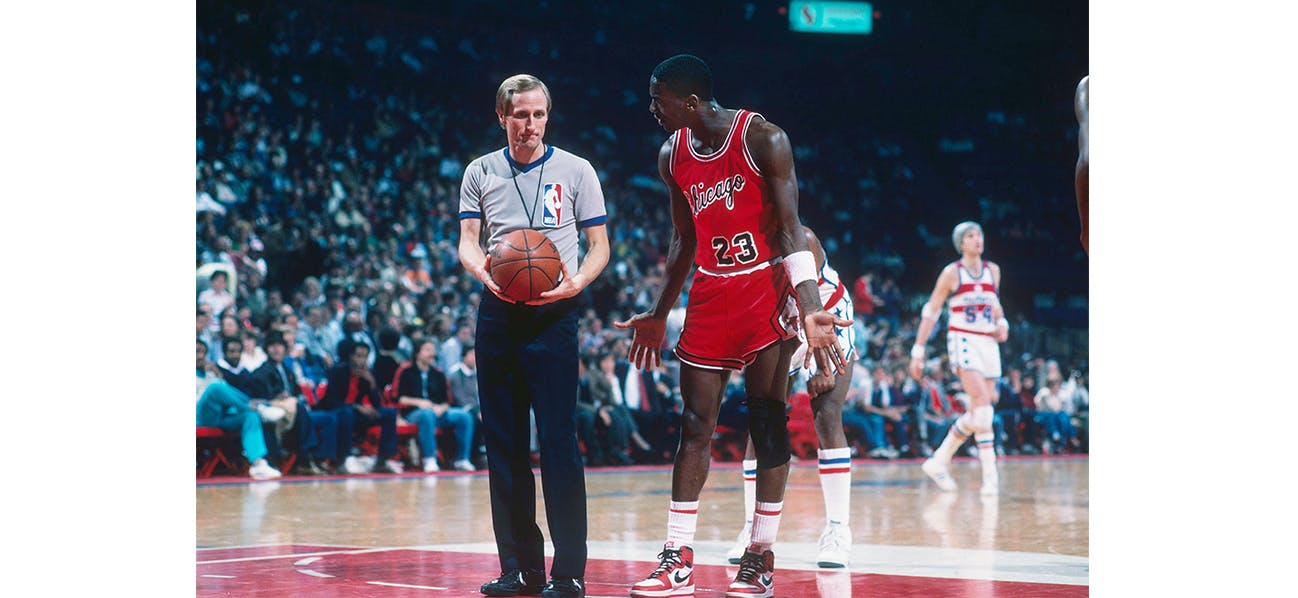
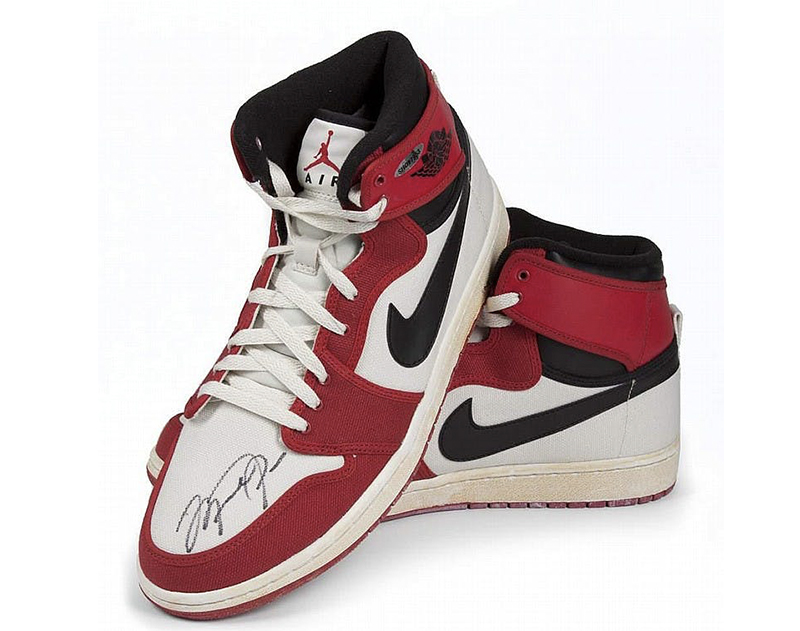
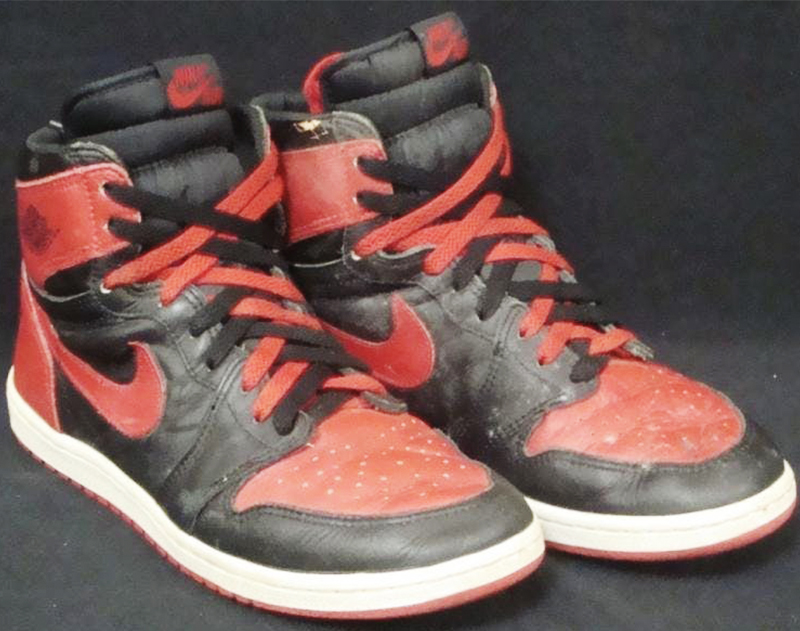
However, when Michael Jordan stepped out on the court during pre-season in 1984 in a black-and-red pair of unreleased Nikes, David Stern was furious. Back in those days, the NBA had a very strict rule called the '51 percent rule', which stated that shoes worn on the court must correspond with the shoes of your uniform and those of your teammates, and must also be at least 51 percent white. That first pair of Nike Air Ship barely had any white at all. The NBA sent a letter to Jordan stating that he would receive a fine of $5,000 every game he played in the Air Ships, which Nike agreed to pay in order for Jordan to keep wearing their shoes.
What’s important to remember is that this all happened in the early 1980s, when 'limited edition sneakers' weren’t a thing. The Nike Air Ship were made specifically for Jordan. But no one took any particular notice. If it were the 2010s, however, the people would have demanded a public release, even though it would be extremely limited. Because that’s the thing: the more limited a sneaker release is today, the more everyone wants them. Because everyone wants to be unique, right?
The black-and-red Nike Air Ship have become sort of a mystery, because there’s not a single picture of Jordan actually wearing them in a league-game. The white-and-red version, not illegible for fines by the NBA, is however much more common. In fact, it was this style that was sold by SCP Auctions on April 26, 2015 for a staggering $71,554. During the 1980s, Khalid Ali was a ballboy for Los Angeles Lakers, and the seller of the white-and-red Nike Air Ships. The shoes were given to him by Michael Jordan himself in the locker room after the Lakers played Bulls at home on December 2, 1984. The buyer remains anonymous.
”We sort of view the Air Jordan I as the first shoe people were craving more than the average sneaker," says Emilian Minas, founder of the Stockholm-based store Plug Me Please, which specializes in buying, trading and selling limited sneakers and clothes. "The connection between Nike’s revolutionary new basketball shoe, and the rebellious attitude of Michael Jordan when he was named Rookie of the Year while wearing the NBA-banned shoe, gave Nike a unique marketing possibility. It meant they were able to open up an entirely new segment filled with customers who would eventually form today’s sneaker culture.”
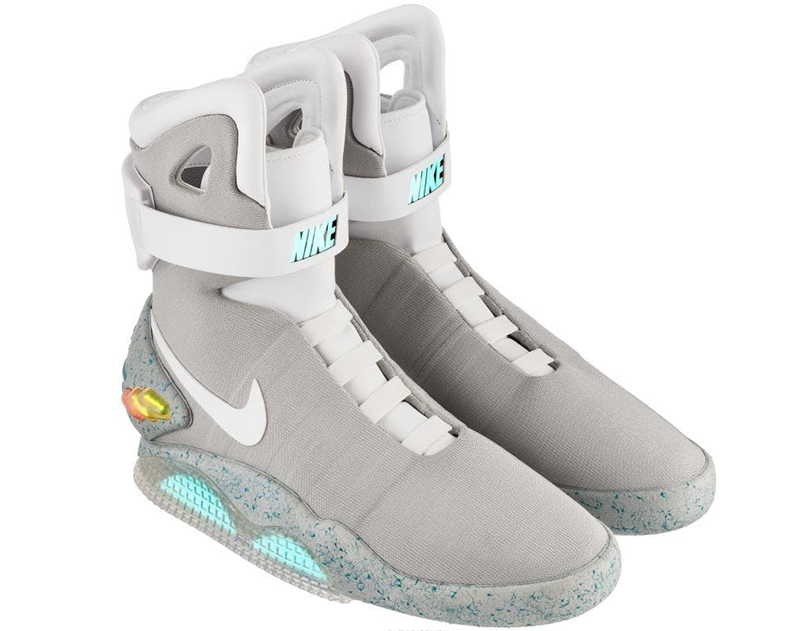
The 'Back to the Future' shoe Air Mag recently saw an (obviously) limited release recently, and one pair were sold through Heritage Auctions on June 11, 2017 for $52,500.
Plug Me Please is not an auction house by any means, but that still doesn’t stop them from selling rare pieces for high prices. ”The most expensive pair of shoes we’ve ever sold is a sample pair of the Pharrell Williams NMD Human Race,” Minas recalls, ”and they sold for $6,400. Just after that we also sold a pair of shoes from Kanye West’s collaboration with Louis Vuitton, released in 2008, for around $5,000.”
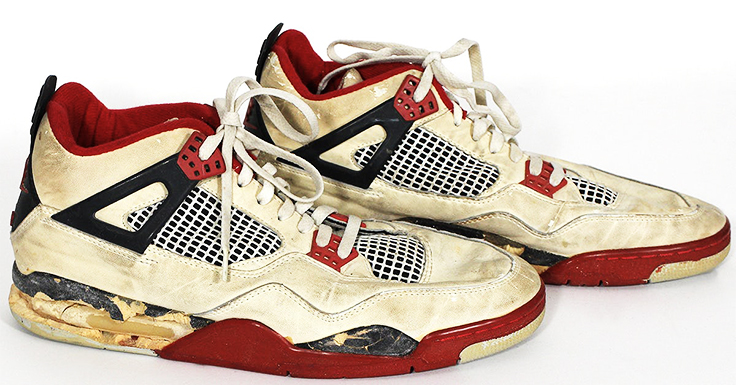
The Nike Air Ship did sell for a considerable stack of cash back in 2015, but are only the second-highest priced for game-worn sneakers. The original 'Flu Game' Air Jordan 12 went for $104,765 in 2013. Of all sneaker brands out there, Nike are probably the one with the most limited editions. The Back to the Future shoe Air Mag recently saw an (obviously) limited release recently, and one pair were sold through Heritage Auctions on June 11, 2017 for $52,500.
Considering the element of rarity often attributed to these kind of sneakers, one cannot help but in some way consider the sneaker as a sort of art form. The rarity is there, and sneakers still go for huge sums of money even if they’ve been previously worn. It's just dependent on who wore them.
Brahm Wachter tells me they’ve been hosting dedicated sneaker auctions at Sotheby’s for just under a year now. ”Our first was in collaboration with Stadium Goods (supplier of rare and limited editions sneakers, ed note) in summer 2019, featuring a curated selection of 100 of the most exclusive and coveted sneakers ever produced. During that sale, a 1972 Nike waffle racing flat ’Moon Shoe’ sold for $437,500 – the world auction record for a pair of sneakers. Almost every day, new sellers and potential buyers emerge expressing interest in participating in these categories, and we’ve seen many ’grail’ sneakers that we aim to auction throughout 2020. In many ways, the Moon Shoe really opened the market for us. The category is still developing at auction, so it will be interesting to see how the market responds to our offerings this year, some of which haven’t seen the light of day in 30+ years.”
With Sotheby’s hosting their own dedicated sneaker auctions, and the world of buy, sell, trade and consignment for sneakers growing, the future of sneaker culture sure looks bright.
”We think the future of sneaker culture is going to be pretty similar to the one we have today, where you have the possibility to sell through physical stores or websites with a wide customer base. There’s always someone out there ready to buy a pair off of you,” says Minas.
But how does he feel about sneakers making their way into the auction world? ”It’s an interesting thing, usually shoes sold through auction houses sell for way beyond their worth. We’ve always seen sneakers as a form of art, and I guess it’s no more than right for it to be sold wherever any other kind of art form is being sold.”
For more modern pairs, there are experts that use a variety of methods to track provenance, including photo matching to ensure authenticity.
When selling sneakers previously worn, the provenance is obviously key to even being able to auction off a pair.
”Experts and researchers are key in tracing provenance and to understanding an item’s history," Wachter told Barnebys. "Studying materials is also an extremely important part of the process. At Sotheby’s, we are fortunate to partner with experts who either have first-hand experience with Nike, or who were able to go into the archives and to find out the smallest nuances of sneakers. For example, we look at why Bill Bowerman, the founder of Nike, used one material instead of another, why the pairs are marked in a certain way – the list goes on. For more modern pairs, there are experts that use a variety of methods to track provenance, including photo matching to ensure authenticity.”
See also: The Futuristic Design of Joe Colombo
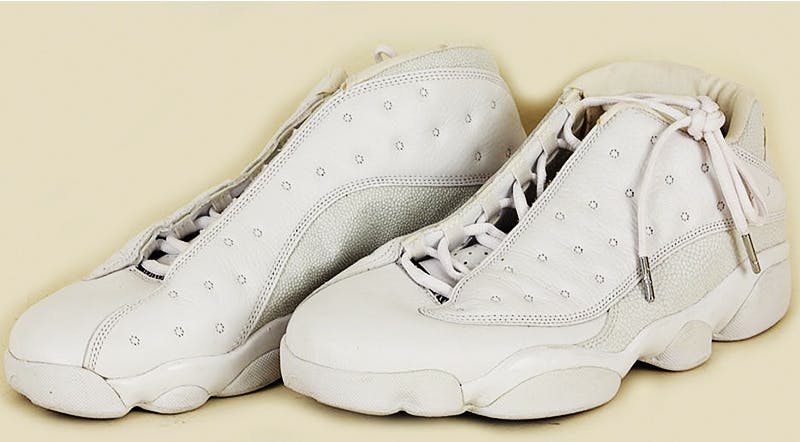
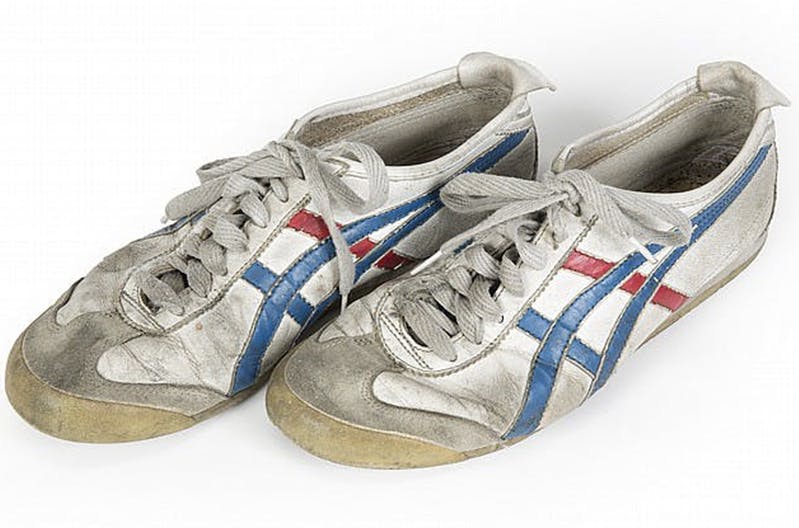
In order to receive true insight in to what the market actually looks like, Sotheby’s have, according to Wachter, ”some incredible offerings coming this year”. Offering up the comparison between a pair of prototype Bill Bowerman Spike versus a pair of incredibly important and historical Air Jordans, it’s clear there’s a lot more to be accounted for when putting a value on a pair of sneakers. ”How do prices fluctuate based on condition? Is a sneaker more valuable if the pair is ’used’ by an important athlete, or do collectors want something that is more visually appealing?”
When asked about whether or not sneakers could be considered a piece of art, there’s no hesitation, at least coming from Wacther. ”I think art is – and always has been – about the dialogue a person has with an object. When someone sees a painting or sculpture and it speaks to them in some way, the viewer interacts with the object’s beauty and meaning. Sneaker collectors have this same set of interactions with sneakers. It’s art you can wear, or just appreciate owning.”
Brahm Wachter also believes that sneakers bought at an auction could also bring water to one’s mill. ”We see many of our clients in different collecting categories crossing over into new areas of interest. I believe it’s highly likely that sneaker collectors are interested in many of Sotheby’s offerings – whether it’s contemporary art, prints and multiples, watches. Given the success of our previous auctions and interest among collectors, there is opportunity for growth in the vintage market at auction.”
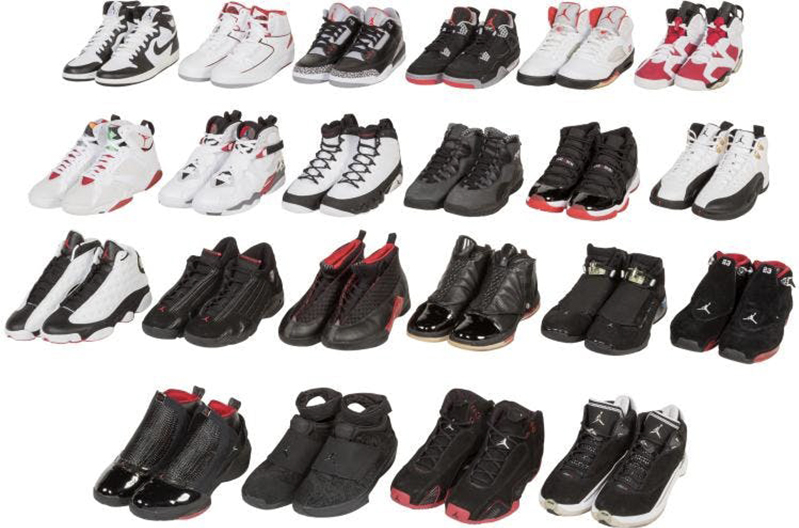
Perhaps not everyone is interested in a pair of red-and-white Nike Air Ship, but considering sneaker collectors usually belong to a younger generation, it’s worth considering what sneakers at auctions can lead to, bringing in an entirely new generation to the auction world.
Article by David Johansson