
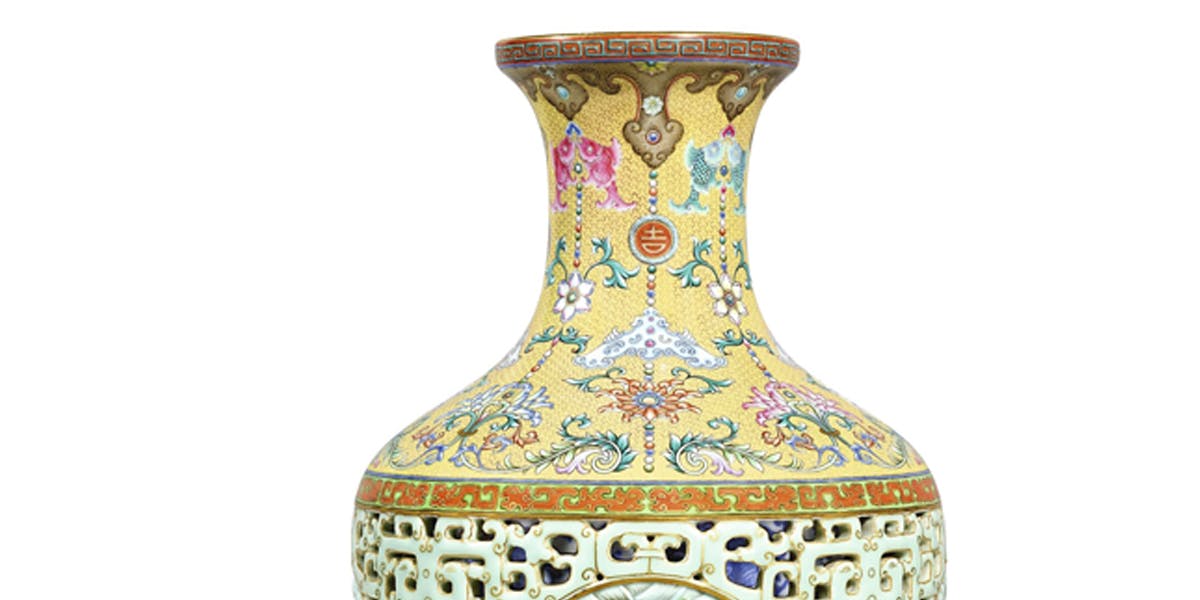
The Yamanaka is said to be the twin of the famous "Bainbridge Vase", a sensational piece of porcelain that passed under the hammer of the English auctioneer Bainbridge in November 2010 and which, after a bid of $70 million, became the most expensive Chinese work of art in the world. Following a payment problem, the transaction was never finalized, and the Bainbridge vase wasn’t sold until 2013 for half of its value, about $35 million.
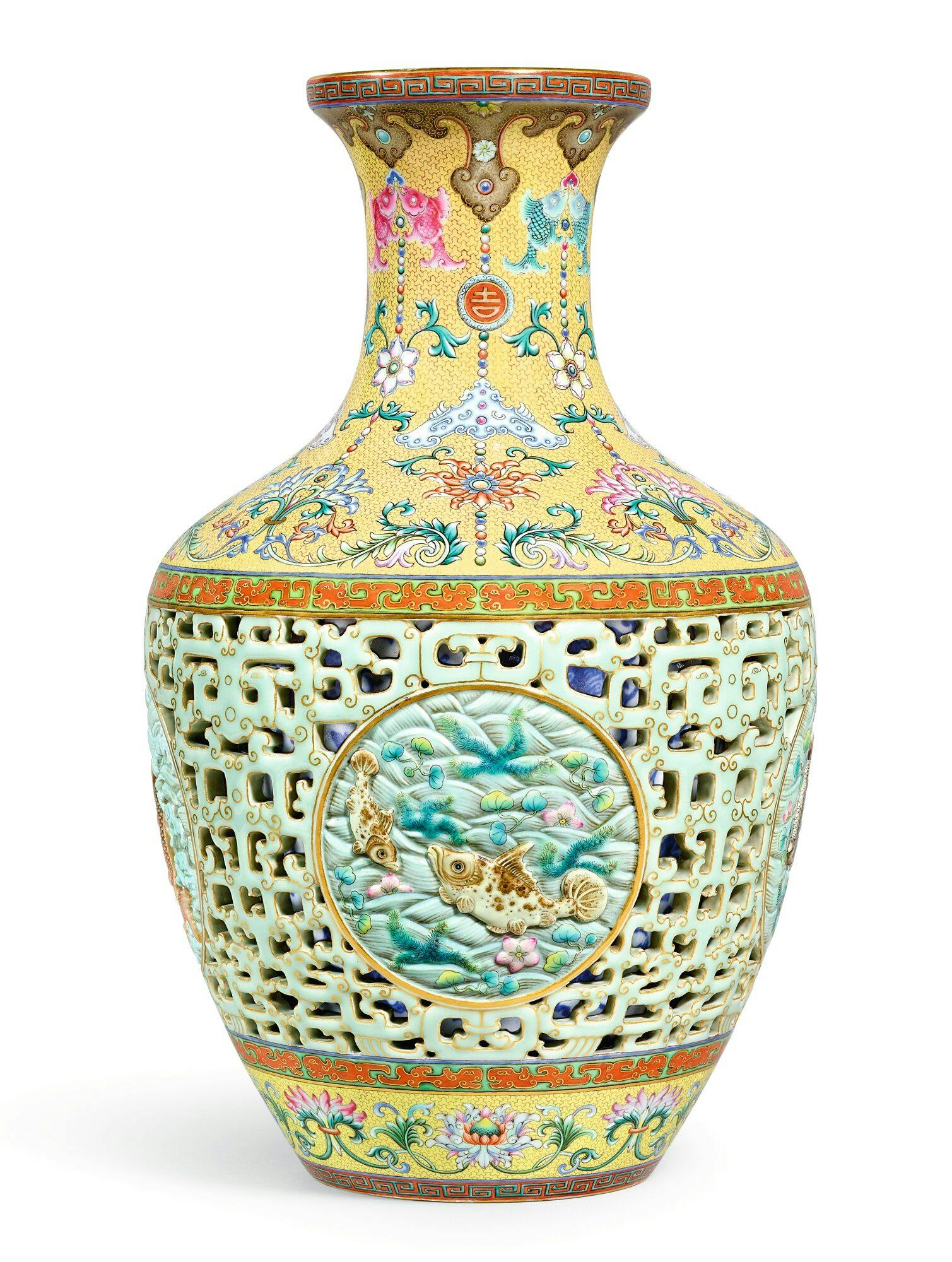
On October 3, Sotheby's Hong Kong sold a vase identical (with some details) to its predecessor for $19 million. These so-called "double-walled" enameled vases have Yangcai decorations (historically classed under the Rose Family palette) and are among the most complex porcelains ever made by the imperial manufactory of Jingdezhen.
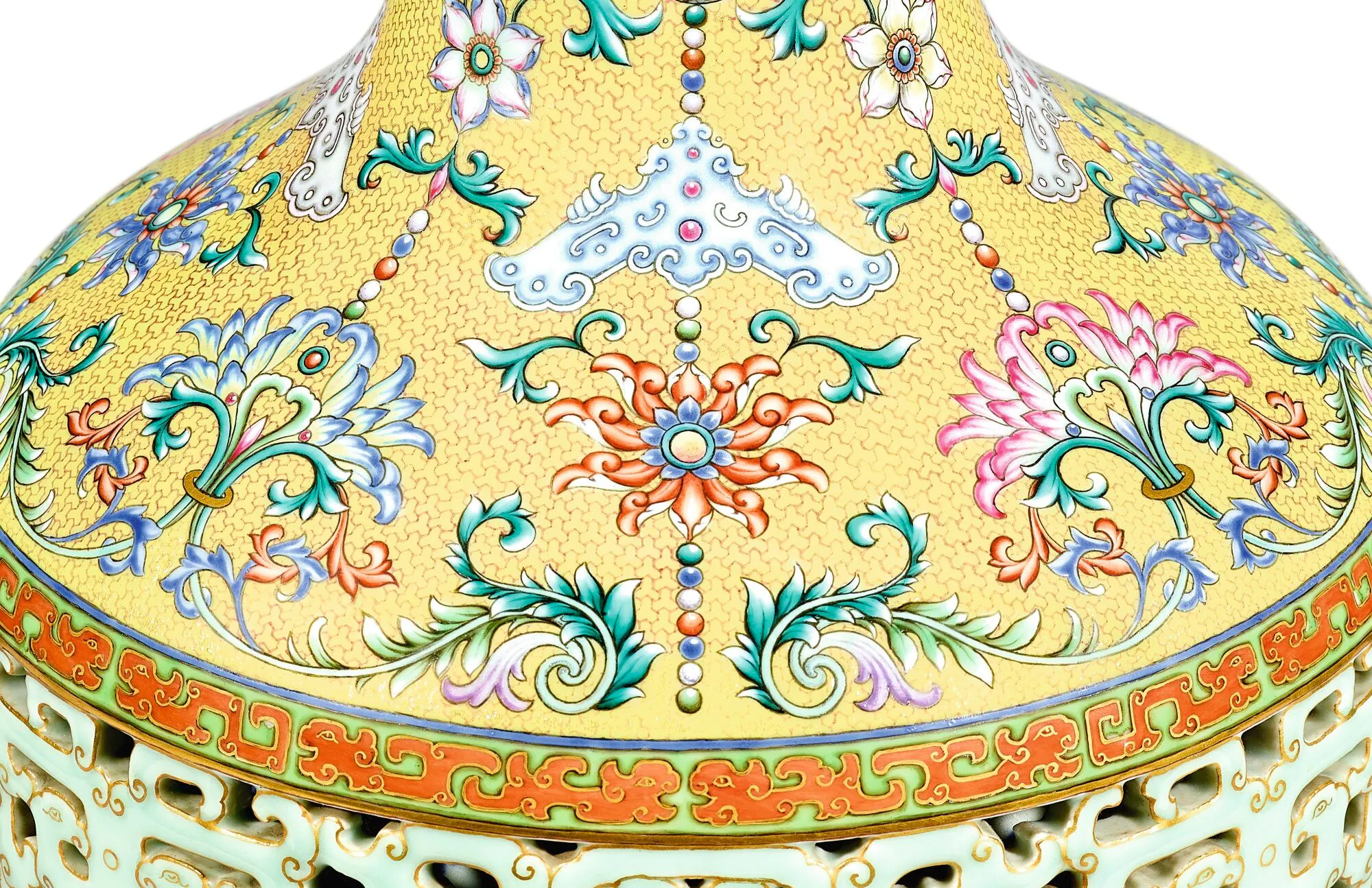
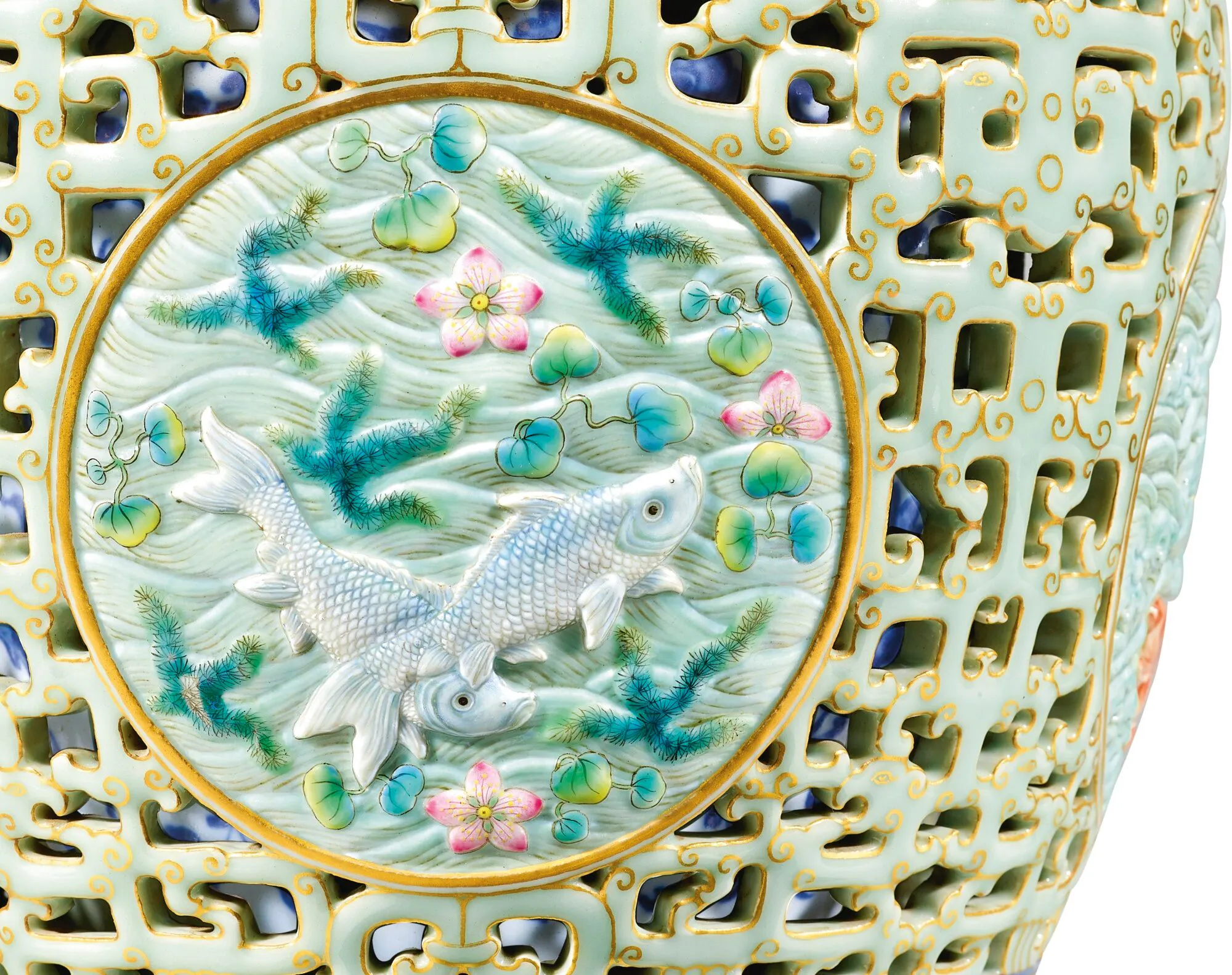
Designed for Emperor Qianlong (1736-1795), these high-flying handicrafts have a reticulated porcelain body adorned with four discs inspired by the Rococo spirit. A pair of fish is on each corner of the vase, while a blue and white inner vase is hidden under the mesh of water-green porcelain. Aside from some dissimilarities in color and floral patterns, the Yamanaka vase is identical to the Bainbridge vase.
Estimated at $6.3-8.9 million, it ended up selling for $19 million, making it one of the most expensive Chinese vases ever sold.