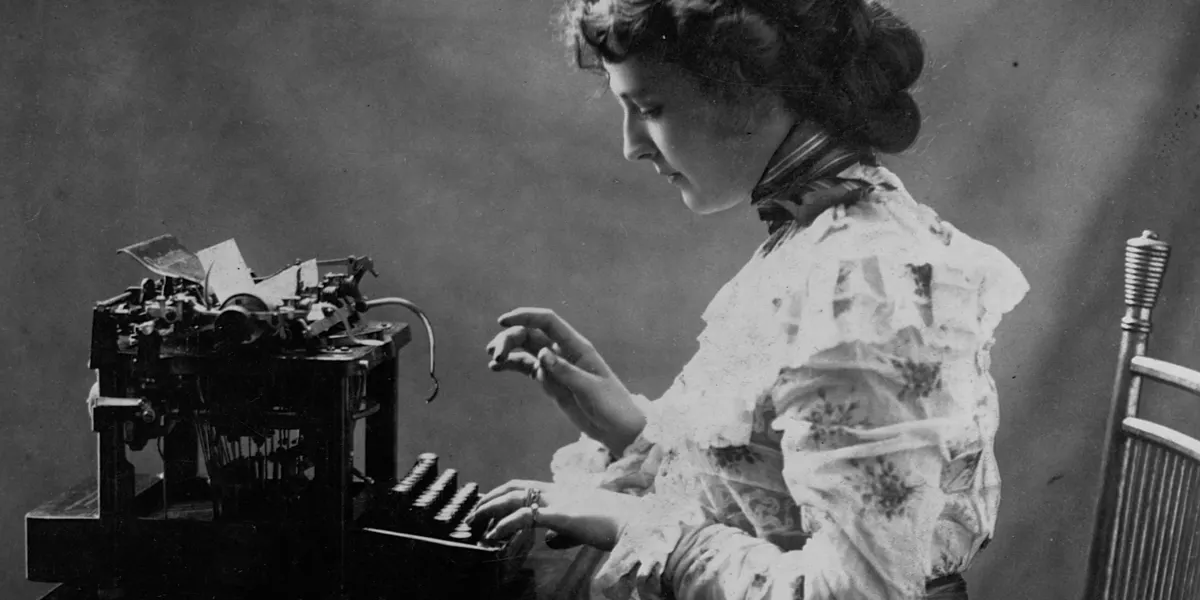
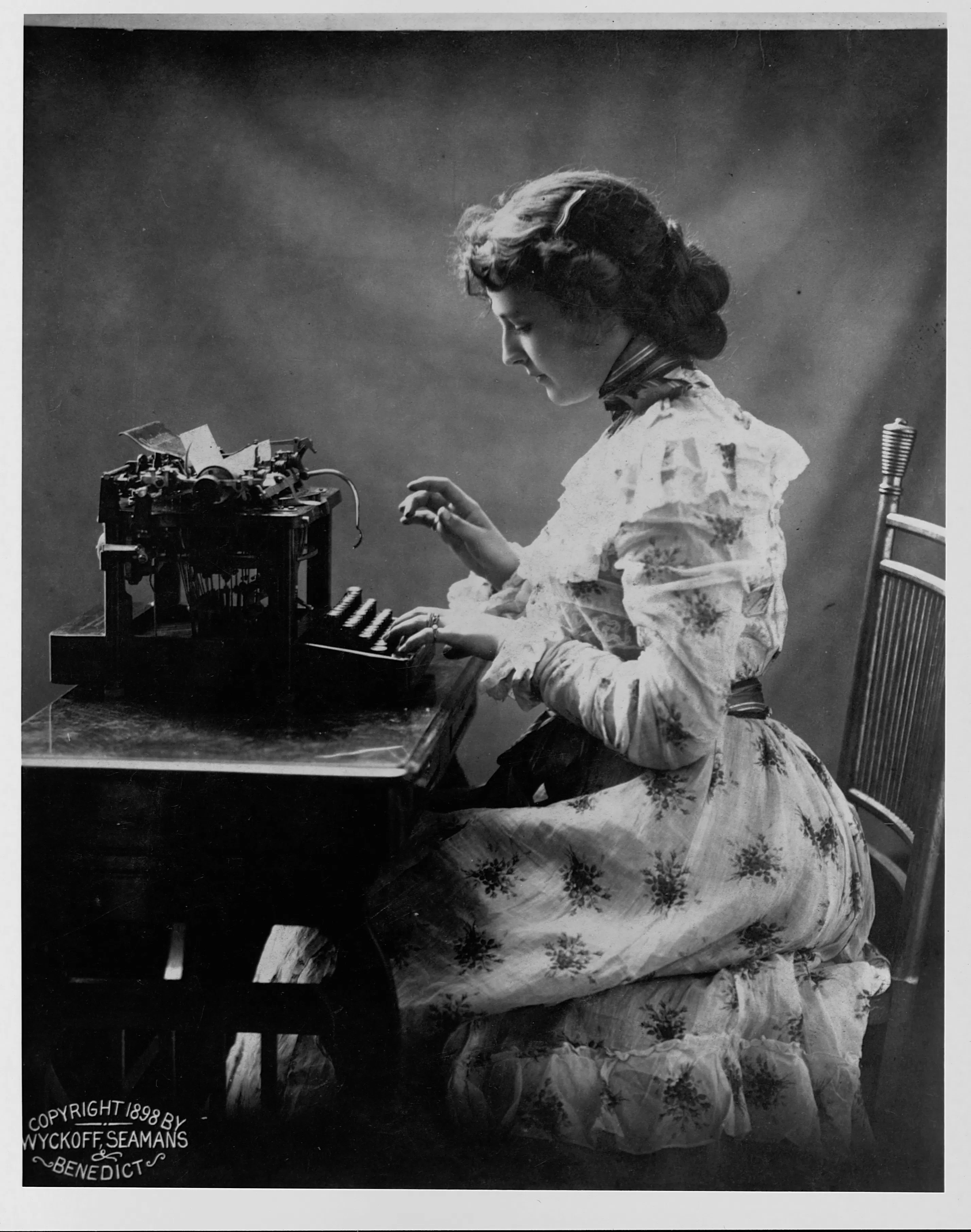
The typewriter is one of the most significant inventions of the late 19th century, ranking alongside the internal combustion engine, camera, motion picture, phonograph and the telephone. Although pioneers had been experimenting with type-machines since the 18th century, Christopher Latham Sholes, Carlos Glidden and Samuel Soule patented the first practical typewriter in June 1868, which is best described as a wooden cabinet with piano keys to operate the type. Exploring new avenues following the American Civil War, the Remington Arms Company of New York took the Sholes prototype and improved it, turning the wooden machine into an upgraded cast-metal equivalent.
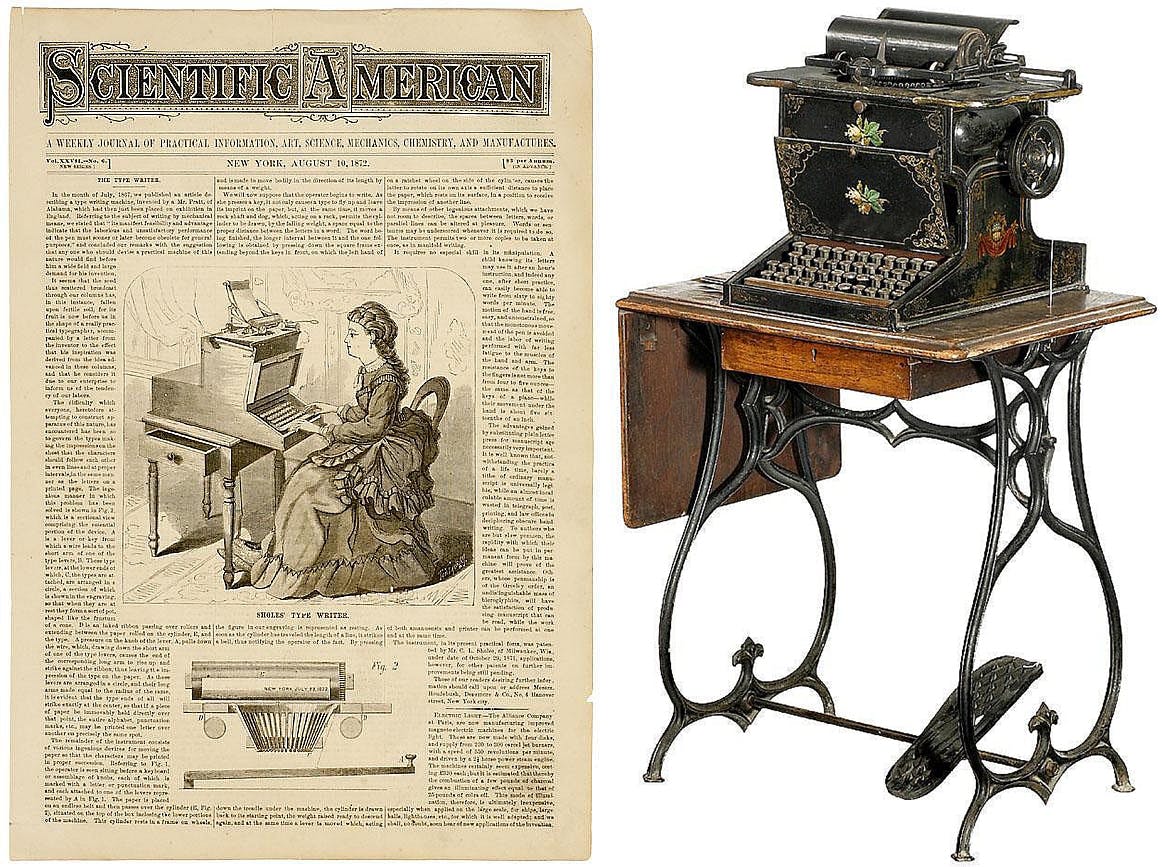
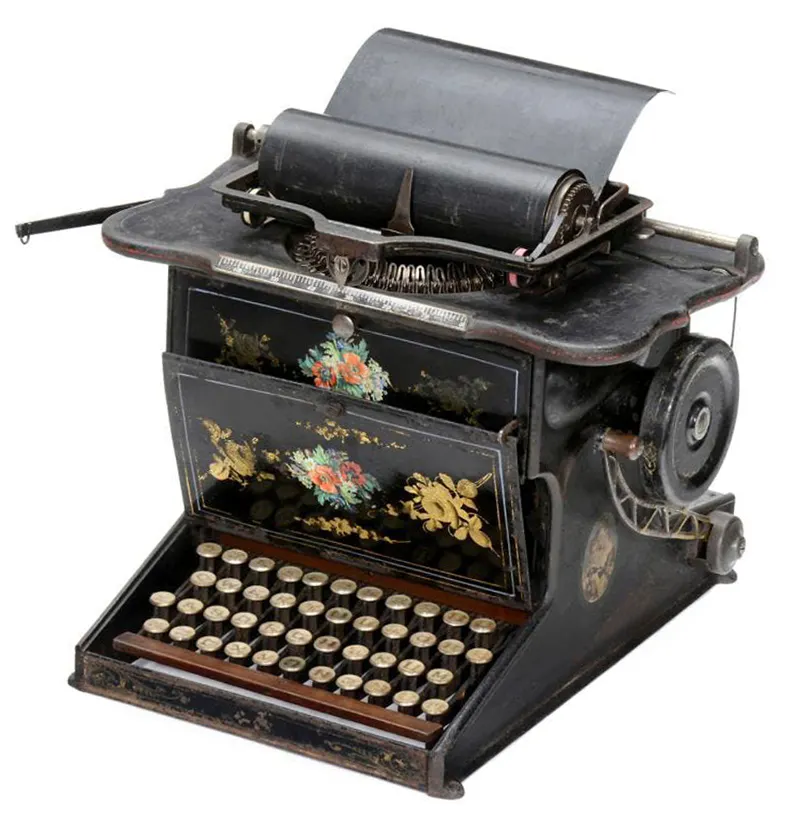
The new machine was beautifully made and decorated with painted sprays of flowers (so typical of that High Victorian period), not unlike a japanned sewing machine or music box. Production of the Sholes & Glidden typewriter began in 1873. Although the new device only typed in capital letters, it introduced the QWERTY keyboard, the industry standard, which we still use today. There is an ongoing debate about why this is so. One theory is that the word 'typewriter' can be spelt out using only the letters on the top row; possibly a clever marketing device for a commercial traveler demonstrating the new machine to potential clients. Another suggestion is that Sholes deliberately spaced out the letters according to their common usage to avoid mechanical jams, although the juxtaposition of the E and R letters hints otherwise.
Related: The Gramophone: A History
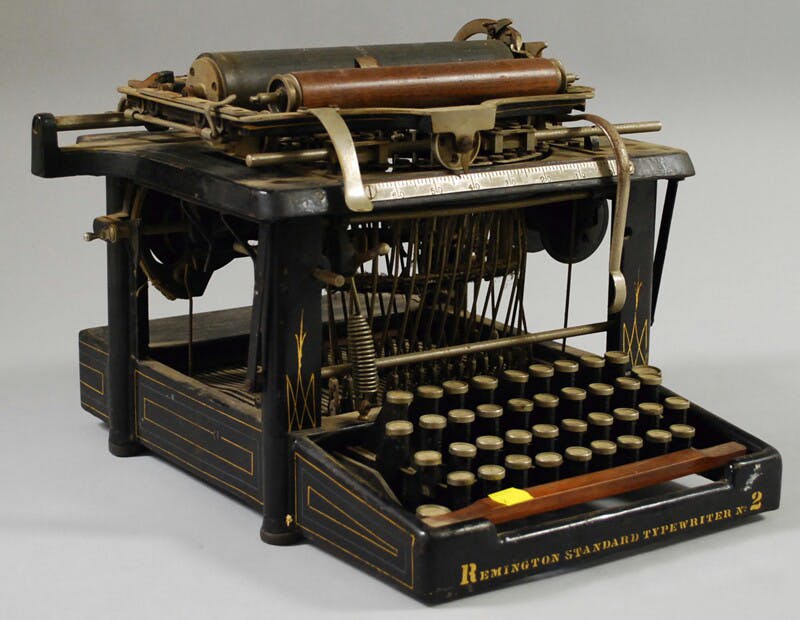
The Sholes & Glidden typewriter cost $125, a significant asking price which may explain its unenthusiastic reception, as it sold only a thousand units in the first year. Recipients of typed messages found the upper case font impersonal, even insulting. In 1878, The Remington 2 typewriter solved the problem with the addition of the lower case, a turning point for this revolutionary machine. By the mid-1890s, there were as many as sixty typewriter manufacturers in America and Europe. In 1881, the first typing class opened at the YWCA (Young Women’s Christian Association) in New York, a significant step towards women's emancipation. Today, the Sholes & Glidden typewriter is not only rare but hugely desirable because of its historical importance. In 2019, a restored Remington no. 1 (with stand) sold for €35,000 at Auction Team Breker of Cologne. A second example, but lacking the ribbon (and one typebar guide), sold for €29,000 against an estimate of €15,000-25,000.
Want more articles like this straight to your inbox? Sign up to our free newsletter
For collectors, old typewriters are big business. Notable enthusiasts include Tom Hanks, who owns more than 250 typewriters. His collection is not just for show; he uses them. Hanks is a connoisseur, seduced by the solid mechanics, the tactile experience, the evocative 'clack' of finger hitting key. In California Typewriter, a touching documentary released in 2017, Hanks waxes lyrical, enthusing on the difference in sound between a dependable Smith Corona ('soft muted') or the report of an Olympia ('crisp solid'). Even the names of these old typewriters have a poetry about them, with brand names which roll off the tongue: the Smith-Corona Sterling, the Standard, the Skywriter, the Clipper, the Galaxy, the Super Silent.
Related: The Story of the Trunk, From a Suitcase to a Treasure Chest of Memories
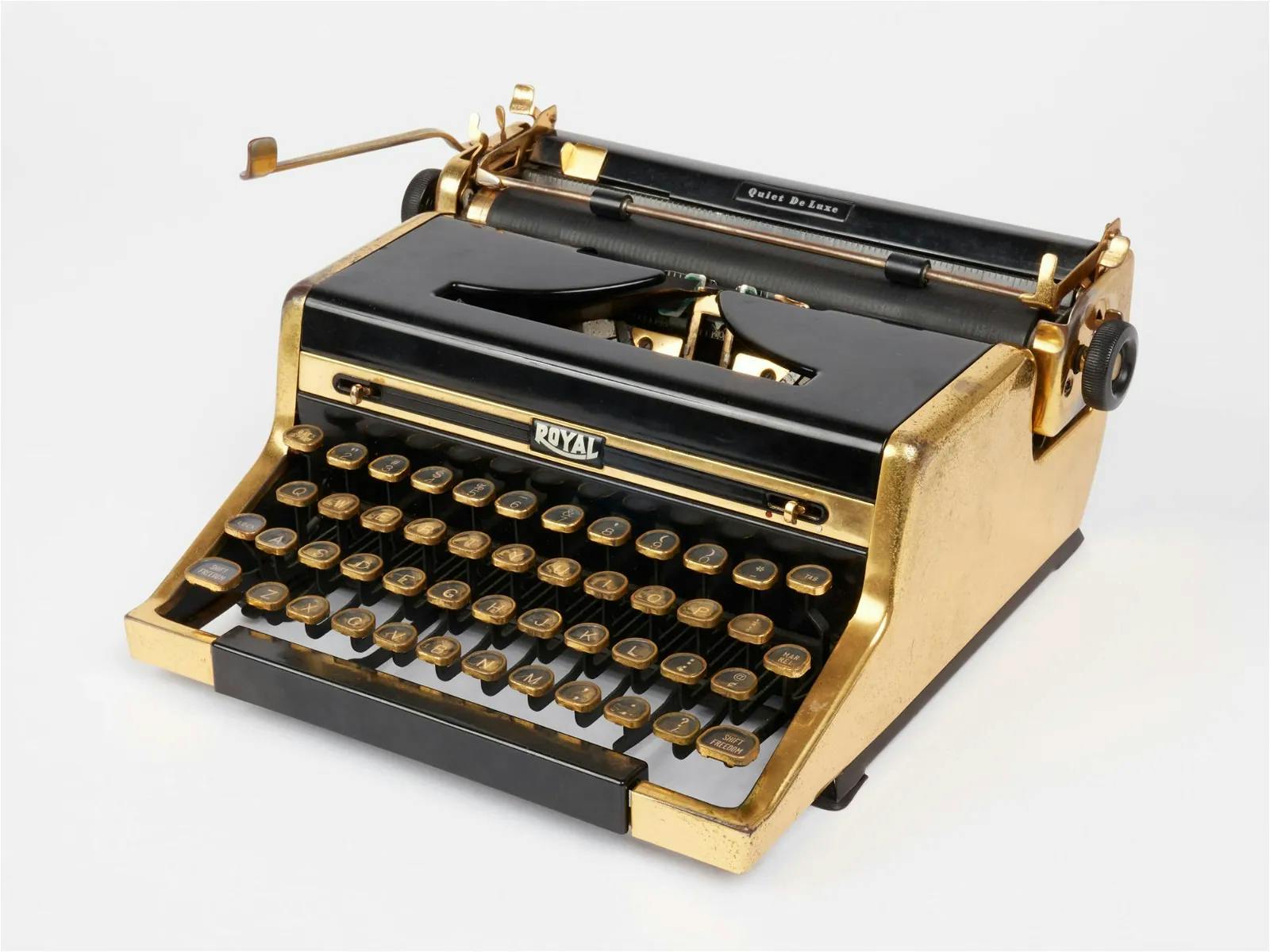
And there's the added appeal of provenance. To celebrate the first draft of Casino Royale, Ian Fleming bought his gold-plated Royal Quiet Deluxe Portable from a New York dealer in 1952 for $174. That very same typewriter sold at Christie's for $89,229 in 1995, a record price at that time. The Royal Typewriter Company, based in Hartford, Connecticut, introduced the first-generation Quiet Deluxe in 1939 (Ernest Hemingway's typewriter of choice), and the model went through various re-designs in the late 1940s. The gold-plated edition was available to order, with an optional engraved tag showing the owner's name, a desirable temptation. Although rare, gold-plated Quiets are more affordable without celebrity provenance: a working example in good condition sold for $3,400 at Briggs Auctions Inc. in June 2020. And as with any other antique or collectable, provenance is key: Daphne du Maurier's Olympic SM4 de Luxe fetched £5,000 at Rowley's Fine Art Auctioneers in 2019 and Cormac McCarthy's Olivetti manual sold for a phenomenal $254,500 in 2010.
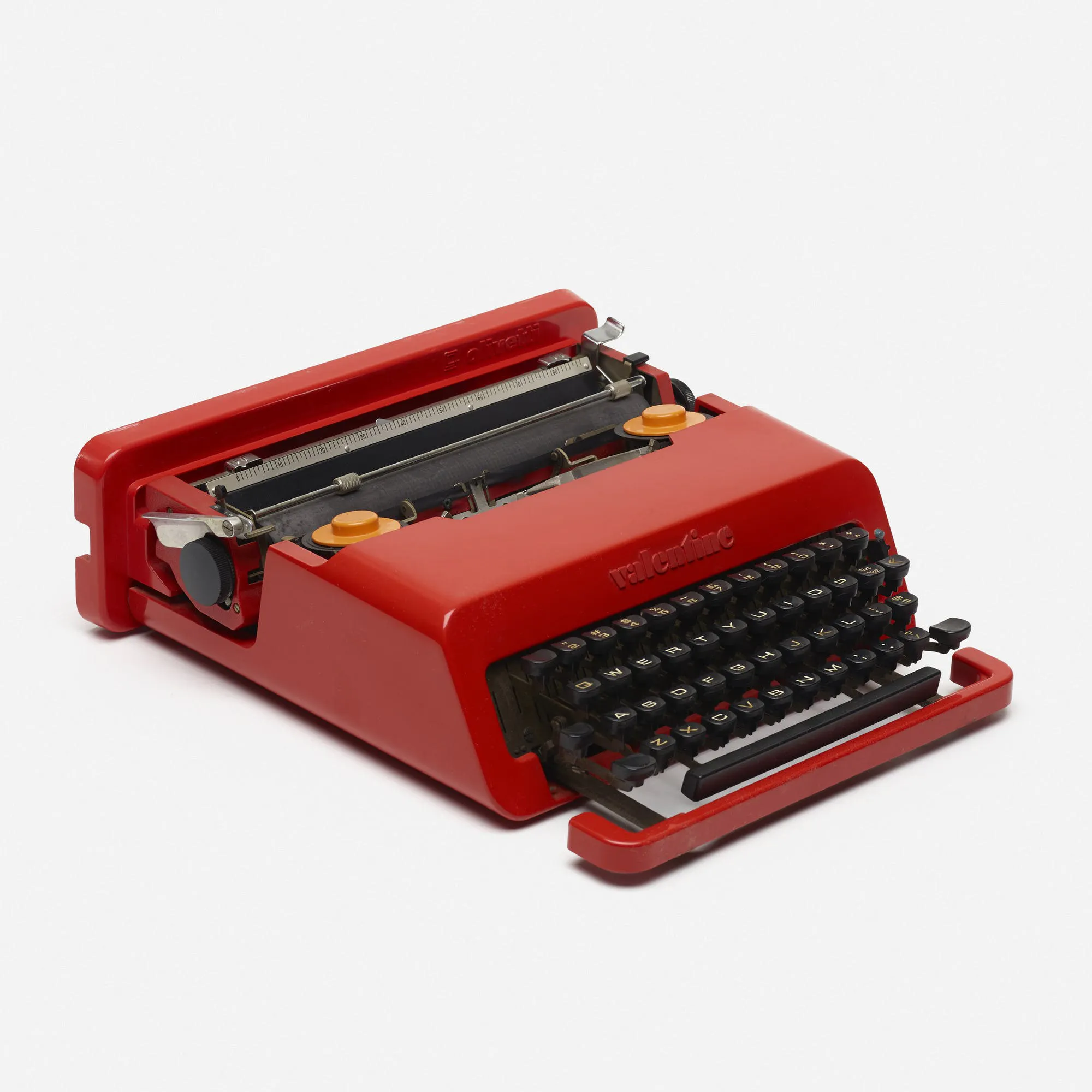
That said, some classics of typewriter design can be surprisingly affordable. Ettore Sottsass (1917-2020) designed the glamorous Valentine portable typewriter in 1968 with the help of British designer Perry King, winning the Compasso d'Oro award in 1970. Made from an injected-molded ABS plastic (in the best Pop Movement tradition), it came in a red, green, blue and white case, the most popular color being red. The bright colors were innovative and an antidote to the drudgery of office life, as the Valentine was the iPad of its day and way ahead of its time. Light in weight and easy to carry, the rigid case also doubled as a work surface, the orange scroll caps inspired by the nipples and breasts of Tom Wesselman's nudes. For Sottsass, form and function were not enough, design should be 'sensual and exciting', a 'desirable consumer artifact'.
Related: The Appeal of Antique and Vintage Board Games
In 1970, Elizabeth Taylor and Richard Burton were photographed at the London airport carrying a Valentine amongst their luggage, underlining the machine's glamorous image, which was exemplified by an enterprising marketing campaign directed by the designer himself. Sottsass intended his typewriter to be an inexpensive, almost disposable product with no lower-case letters, no bell and a cheap plastic case, "an unpretentious toy... to keep amateur poets company on quiet Sundays in the country or to provide a highly colored object on a table in a studio apartment." The Italian manufacturer Olivetti thought otherwise, and the finished result was sold at high cost, explaining its lack of commercial success. Valentine typewriters come up for sale at auction on a regular basis, and, despite their cult collectability, sell for prices often ranging below $100 – although dealers can ask for substantially more online.
Want to know what your vintage typewriter is worth? Value an item with Value My Stuff
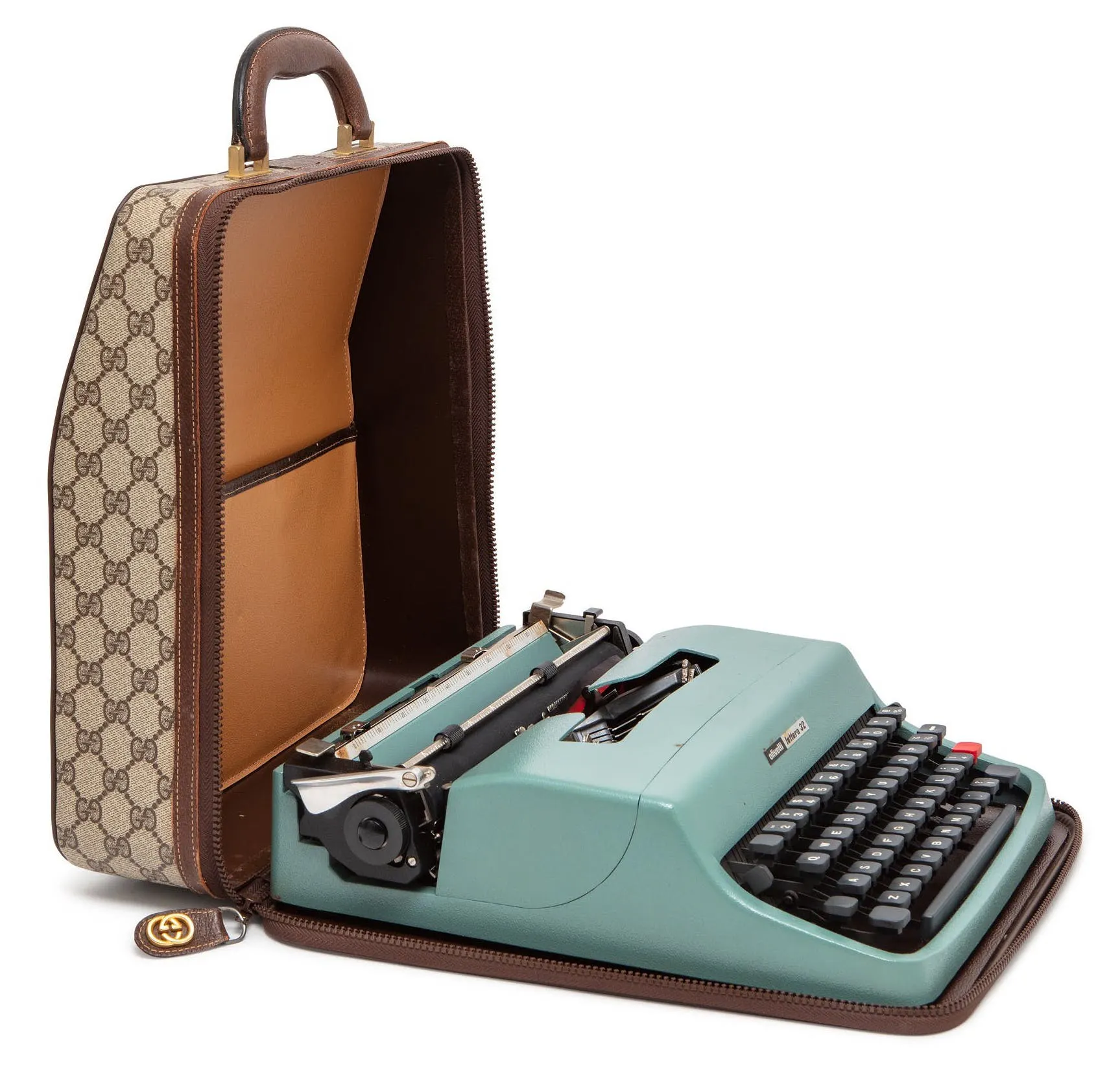
For design aficionados, Olivetti made several other striking typewriters. The Olivetti Graphika (1957-59) features a curvy Italianate design, and mirroring Henry Ford's dictum for the Model T Ford, sold in only one color (in this case, a subtle pistachio green). The Graphika came with proportional spacing and two alternative fonts: the 'Reiner', created by Hungarian graphic designer Imre Reiner (1900-1987), and the 'Cassandre' of 1958, created by Adolphe Jean-Marie Mouron (1901-1958). The Lettera 22, another Olivetti design classic, is included in the collection of the Museum of Modern Art in New York. Designed by Marcello Nizzoli in 1949, this typewriter was compact and relatively portable; its ergonomic curves are especially appealing. Reliable and practical, the Olivetti Lettera can be bought online for an eminently reasonable price.
Related: The Hand Fan: An Enchanting Collectible
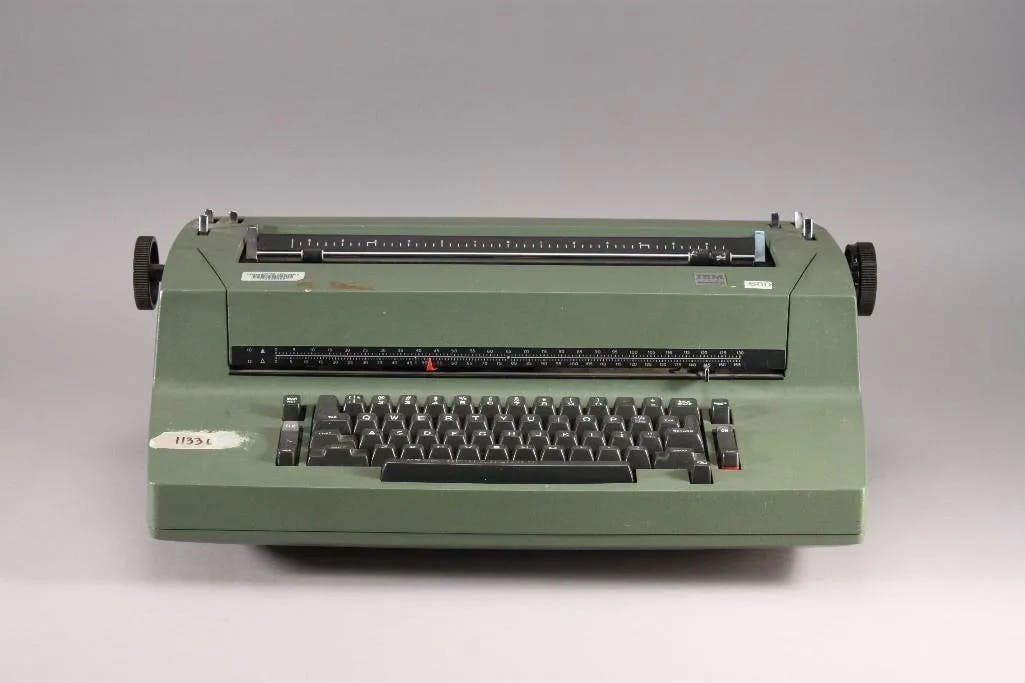
A significant development was the IBM Selectric typewriter, first introduced in 1961, featuring the rotating 'golf' ball, which pivoted to the appropriate position before striking the paper. Typists could interchange the ball, allowing for a choice of different fonts. By the 1980s, the Selectric dominated the market, becoming a staple of office life. But, inevitably, following developments in the microchip, typewriters became overtaken by word processors, then personal computers.
Godrej & Boyce, the last typewriter manufacturer in the world, finally shut its doors in 2011. But in our throwaway digital society, typewriters have an instant appeal; a mechanical permanence. Type out a letter, and you have it forever. There's a typewriter insurrection afoot: a flourishing underground subculture, a return to books, film and the printed word, a reaction to the loss of digital data and our inhuman life online. So for the moment, analogue survives. For enthusiasts, life without a typewriter would be unbearable. Long live the typewriter revolution!
Explore more articles on collectibles with Barnebys Magazine
Article by Luke Honey
Luke Honey is a former auction specialist (Phillips, Bloomsbury Auctions and Bonhams), turned writer, columnist and antiques dealer. He lives in London with his wife and book-munching whippet.