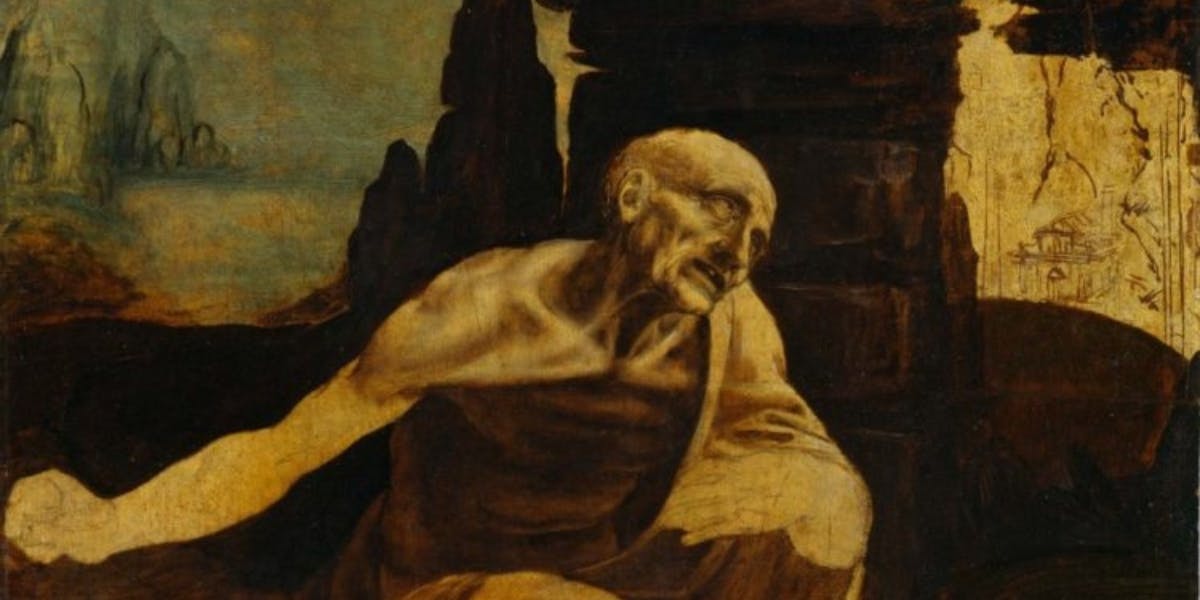
Although Leonardo da Vinci is one of the world's most famous artists, and the most expensive with the $450.3 million sale of Salvator Mundi in 2017, there are only 15 known paintings by him, with just eight that are universally accepted. One of these is the unfinished Saint Jerome in the Wilderness, perhaps da Vinci's most powerful work.
Related: Leonardo da Vinci: Universal Genius
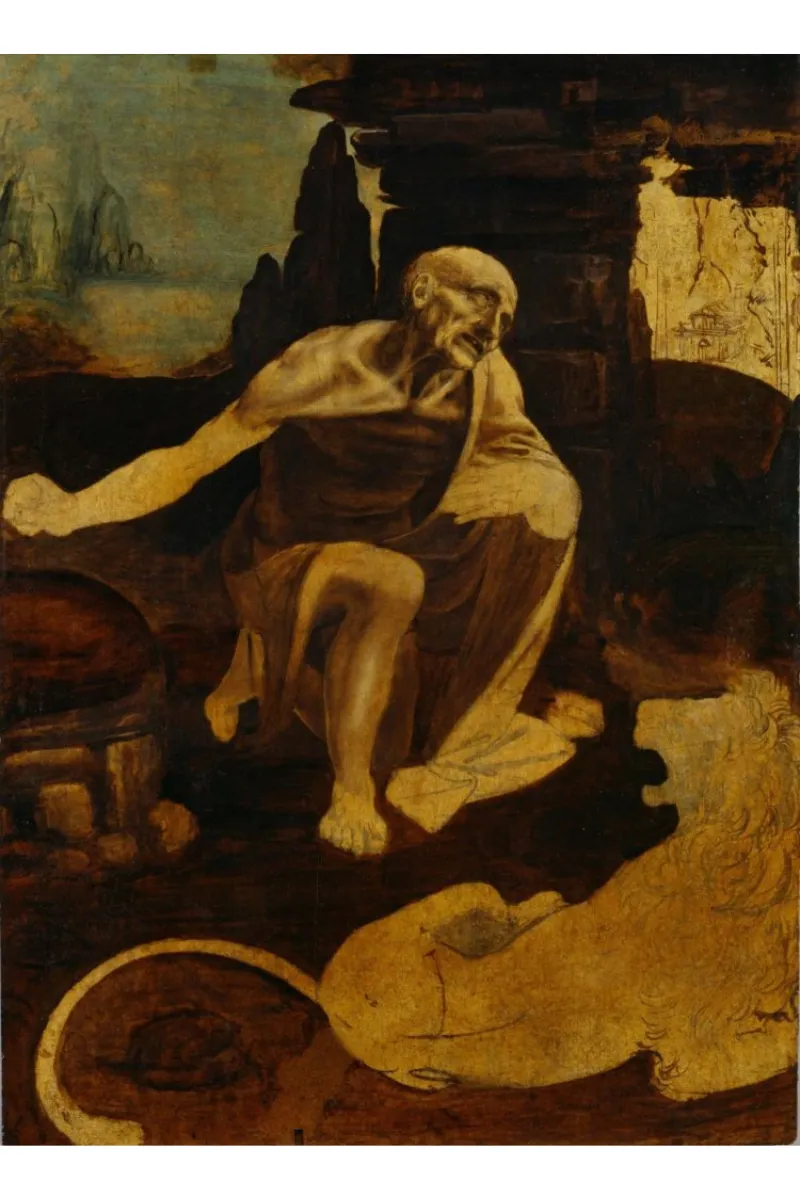
He began this tempera and oil on walnut panel in the early 1480s, when he was in his late 20s. The painting depicts an emaciated Saint Jerome, his face contorted in spiritual agony as he kneels in the desert. In the 4th century, Jerome eschewed his classical studies for the life of a hermit in the wilderness, where he dedicated his time to translating the Bible into Latin. He clutches a rock in his right hand, a symbol of penance, and his sinewy frame is representative of da Vinci's focus on anatomy. The saint is always shown with a lion, here lounging in front of him, who became his companion after he removed a thorn from his paw according to the Golden Legend, compiled in the 13th century.
Related: Art History's 8 Most Unforgettable Faces
It is not clear why da Vinci didn't finish this painting, but it was likely commissioned for a private chapel. The work reveals his artistic process, showing how he sketched his subjects before painting them and used his fingers to mix paint directly on the panel.
Want more articles like this straight to your inbox? Subscribe to our free newsletter!
The emotional pull of Saint Jerome's expression is undeniable and differs drastically from the serenity of his Mona Lisa or the Virgin of the Rocks. Art historians have noted that this work was painted after a young da Vinci was accused of sodomy with a male prostitute, a crime in 15th century Florence, though he was never charged. The accusation deeply affected da Vinci and he moved to Milan in 1483. However, there is no evidence on whether he started Saint Jerome while still in Florence or once in Milan.
Related: Angelica Kauffman: The Child Prodigy
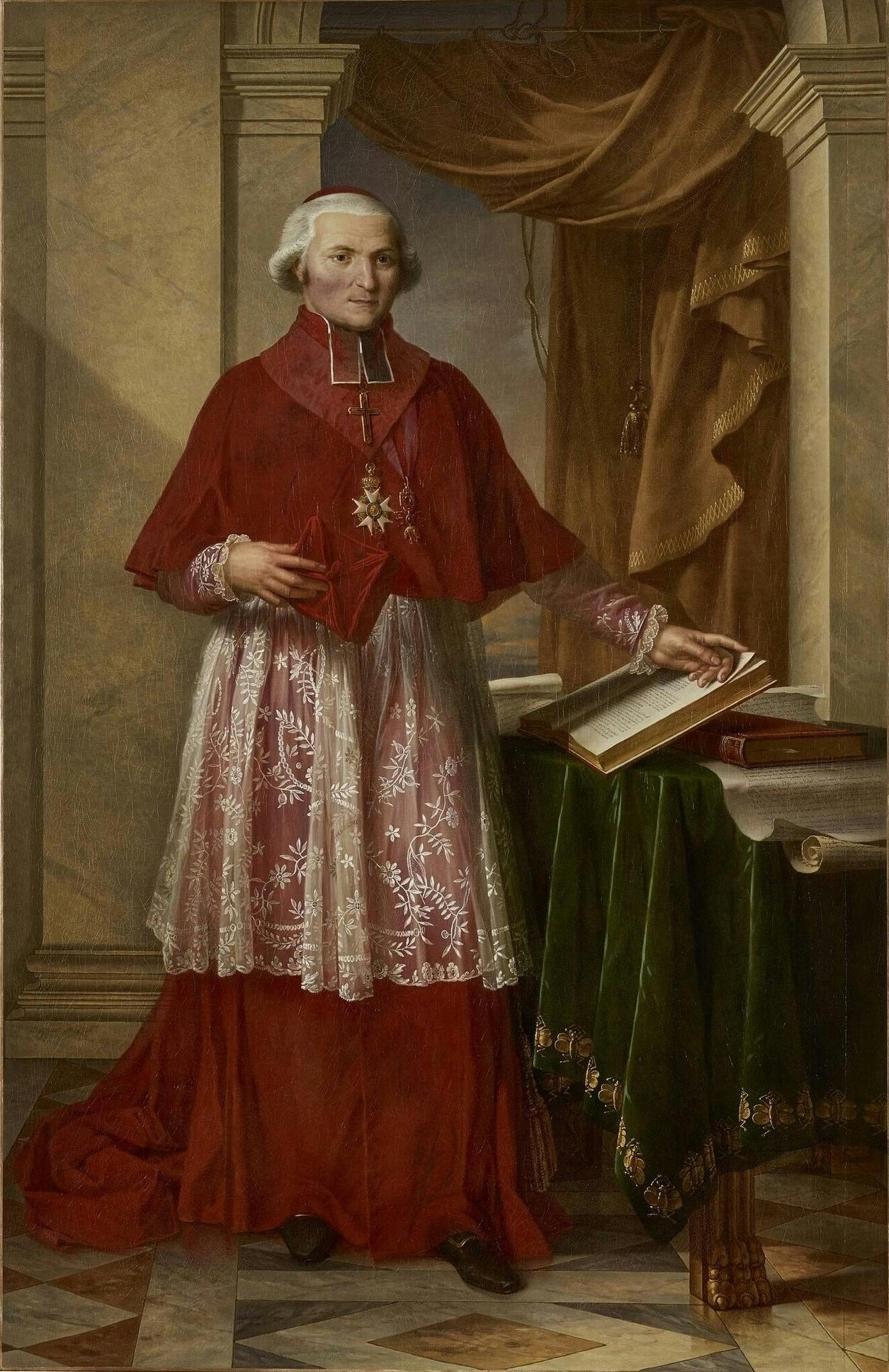
The later provenance is enigmatic, and it is believed that it was in da Vinci's possession until his death in 1519. The painting was first mentioned in the will of Angelica Kauffman, the Neoclassical artist who helped found the Royal Academy, in 1807. Then it is claimed that the panel was divided in half, and the section with the torso of Jerome was found in a Roman shop by Joseph Fesch, a Cardinal and Prince of France, who then reunited it with the other part he found in at shoemaker's shop. Cardinal Fesch was the uncle of Napoleon Bonaparte and a prolific art collector, owning works by Michelangelo, Raphael, Titian and Botticelli. It was later sold to Pope Pious IX, the longest ruling pope whose tenure exceeded 30 years, who gifted the work to the Vatican Museums in the mid-19th century where it has been ever since.
Related: Mona Lisa: Art History's Ultimate Muse
The angular and agonized Saint Jerome adds a profound dimension to da Vinci's small, but extraordinary body of work. In no other painting does the Renaissance master capture powerful emotion as he does in his Saint Jerome, imbuing the work with the pain of penance and sacrificial commitment to asceticism.