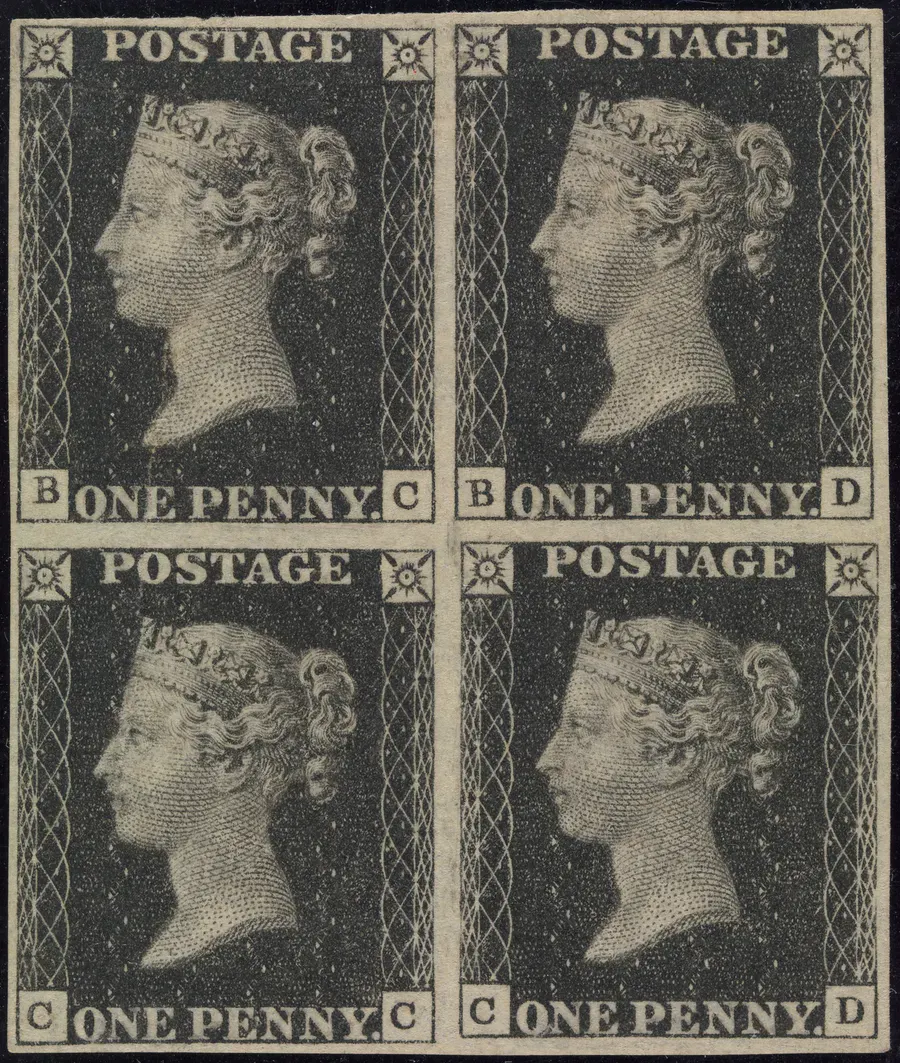
In 1840, Sir Rowland Hill (1795-1879) revolutionized the postal system by introducing his proposed stick-on postage system to England. Previously it had been customary for the recipient to pay for the delivery of a letter. Hill was also responsible for the motif of the first postage stamp, which was issued from May 1, 1840: the portrait of the then 21-year-old Queen Victoria in profile on a black background. The world's first postage stamp is known as the One Penny Black.
Other countries soon followed the English example: Brazil, the United States and Switzerland were among the first.
Related: How to Become an Outstanding Stamp Collector
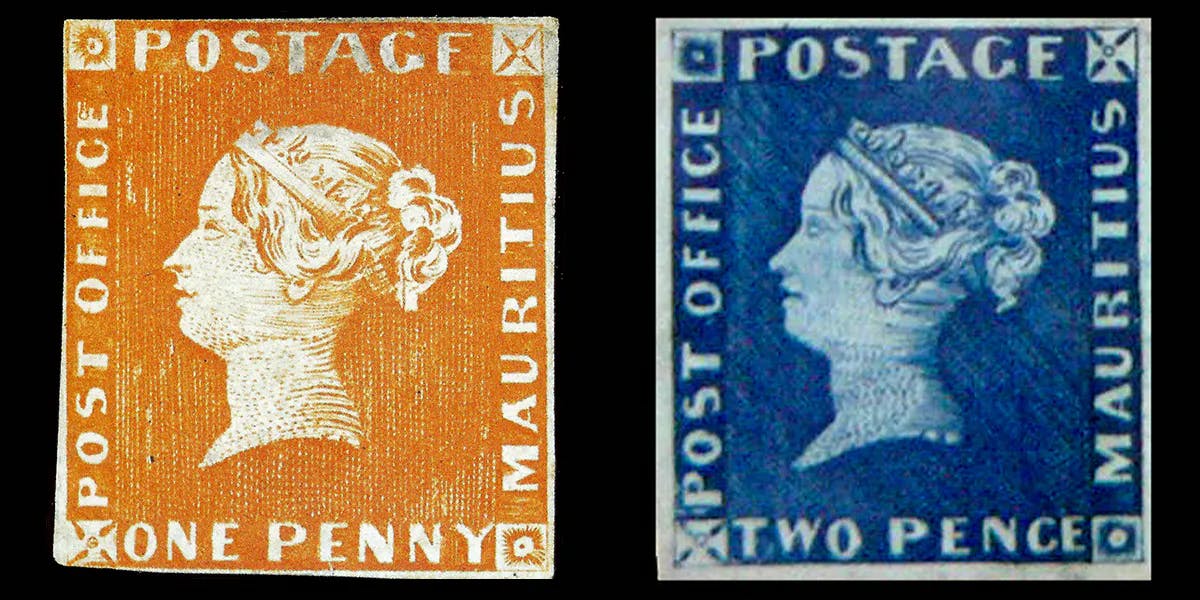
Of course, the officer and Waterloo veteran Sir William Maynard Gomm (1784-1875) also had knowledge of the new and revolutionary English postal system with him when he took up the post of governor of the British crown colony of Mauritius in the southern Indian Ocean in 1842. Once there, he found that a postal system was virtually non-existent on the tropical island paradise. At the end of 1846 he finally initiated a reform based on the English model. Two stamps were to be issued, a 1p stamp for local mail and a 2p stamp for overseas letters.
The engraver Joseph Osmond Barnard (1816-1865) was entrusted with the design and printing of these first stamps, modeling them on the motherland stamps. For the print, Barnard used a small copper plate from his own stock, into which he hand engraved both motifs, each of which contained the lettering "Post Office" - the birth of a legend.
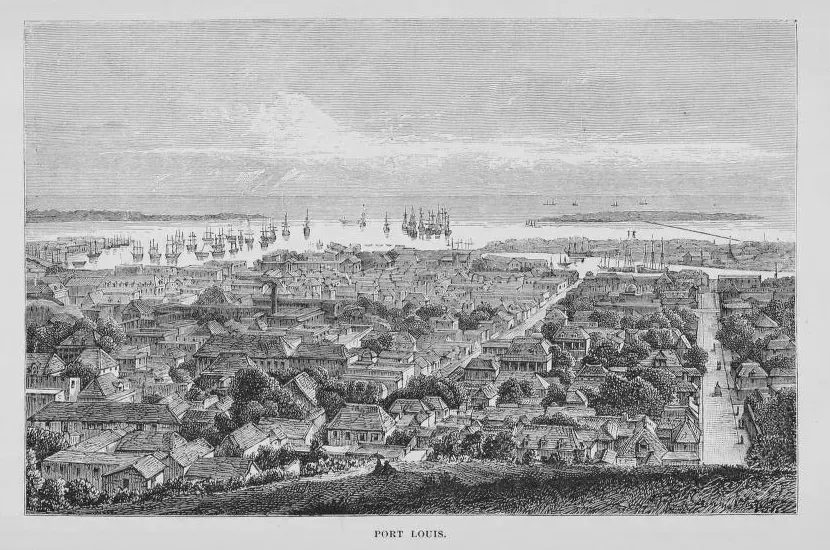
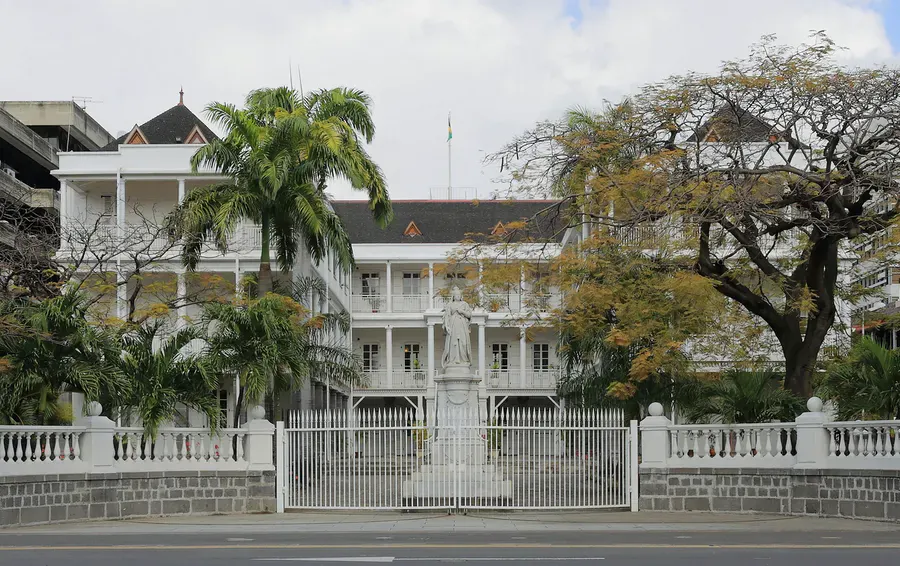
The first edition of the first postage stamps of Mauritius were produced with 500 each in blue and red, which could be purchased from September 22, 1847. However, one person used the revolutionary stickers a day earlier: Lady Elizabeth (1807-1877), Governor Gomm's second wife, who had accompanied him to Mauritius and led the social life there. An event of the 1847 season was Lady Elizabeth's fancy dress ball, held at Government House in Port Louis on September 30. The lady stamped the invitations on September 21 with a Red Mauritius.
As early as 1848, more postage stamps were needed in Mauritius. Again, Joseph Osmond Barnard was commissioned to make them. The new stamps looked almost exactly like the first ones, except that they read 'Post Paid' instead of 'Post Office'.
Do you have an interesting stamp and want to know how much it's worth? Find out today!
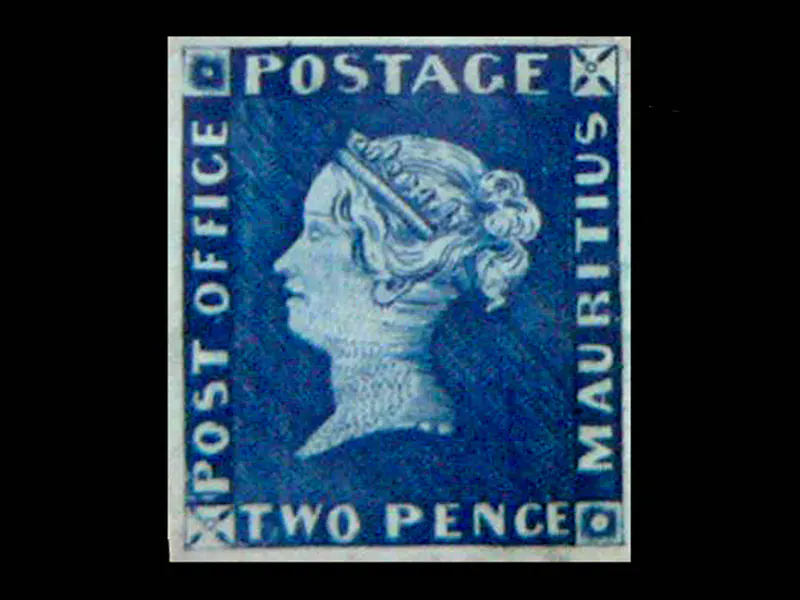
The first series fell into oblivion in the following years. When people finally became aware of them in 1864, they were initially thought to be misprints because of the lettering "Post Office" and the wildest assumptions were made as to how this could have happened: Barnard was said to have been half-blind or hard of hearing or simply forgetful. It is now known that this was by no means an accident, after older postmarks from Mauritius were identified with the corresponding lettering.
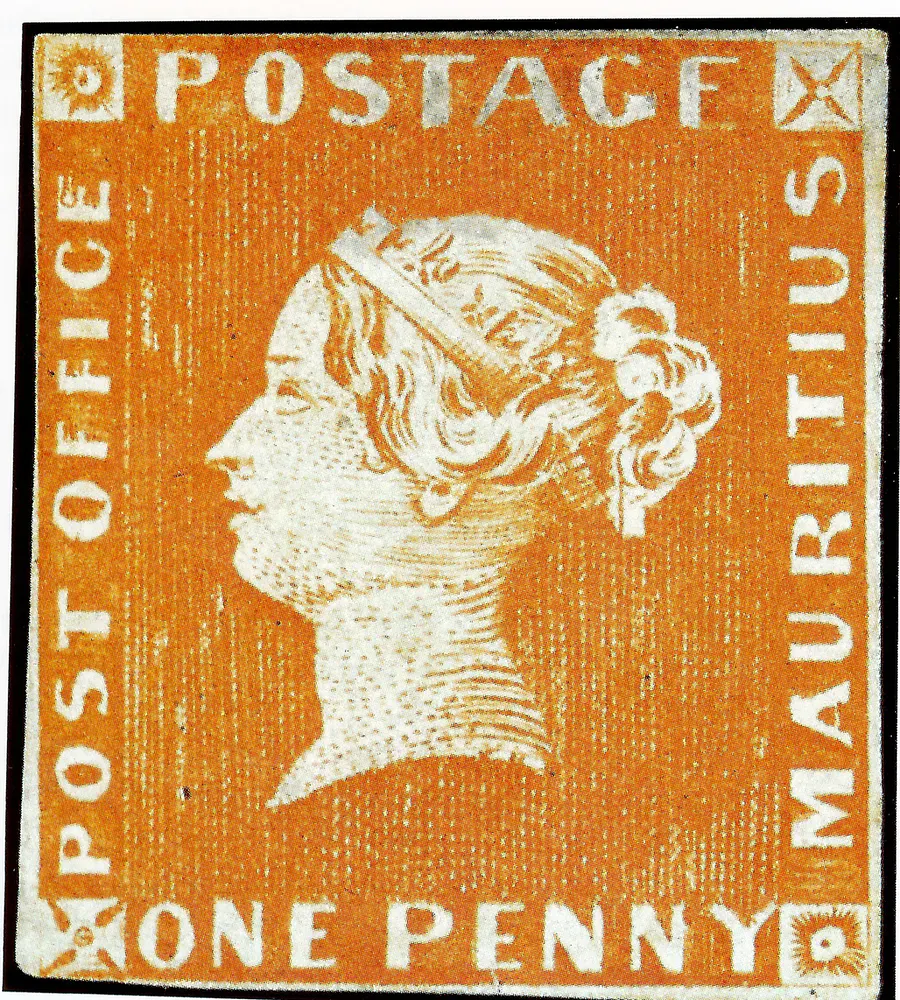
The discoverer of the first Mauritius stamps was Jeanne Borchard (1827-?), whose husband Adolphe (1816-1869), a shipowner and merchant in Bordeaux, maintained trade contacts with Mauritius. Madame Borchard discovered a total of 13 copies of these stamps in his correspondence, which she sold mainly to the book and stamp dealer Marie Desbois (1815-1912).
Related: A Brief History of the Postcard
Six more copies appeared by 1898, including two envelopes containing invitations to Lady Elizabeth's Ball (known in collectors' circles as "Ball Covers" or "Ball Invitation Envelopes") and a letter addressed to Bombay (now Mumbai), India, which was discovered there in 1897 at a bazaar. The first postage stamps from Mauritius aroused such great interest that the Belgian philatelist Jean-Baptiste Moens (1833-1908) set about creating a volume with all the provenance histories of the 19 stamps, which he numbered from I to XIX . This numbering with Roman numerals was retained subsequently.
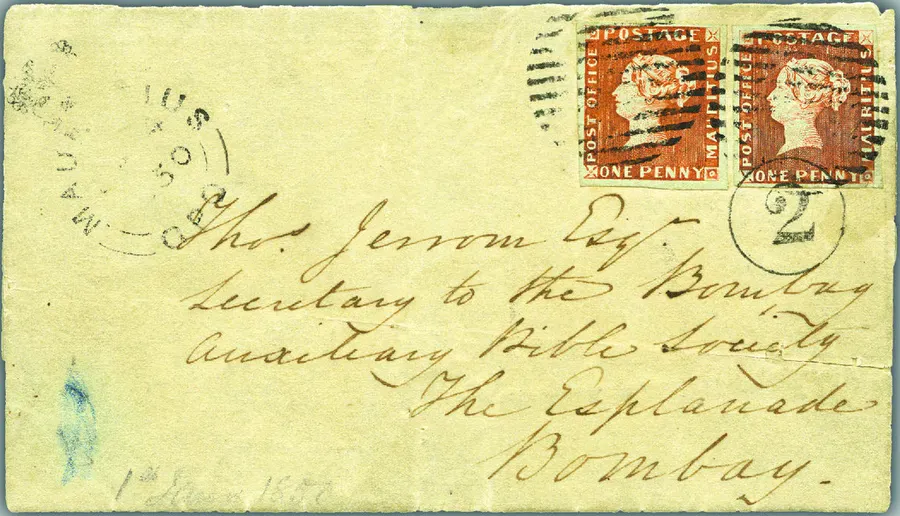
Today 27 of the 1,000 red and blue stamps of the first Mauritius series are known (15 1p and 12 2p). So, with a little (or a lot more) luck, you might actually come across another one. However, the last find was more than 100 years ago.
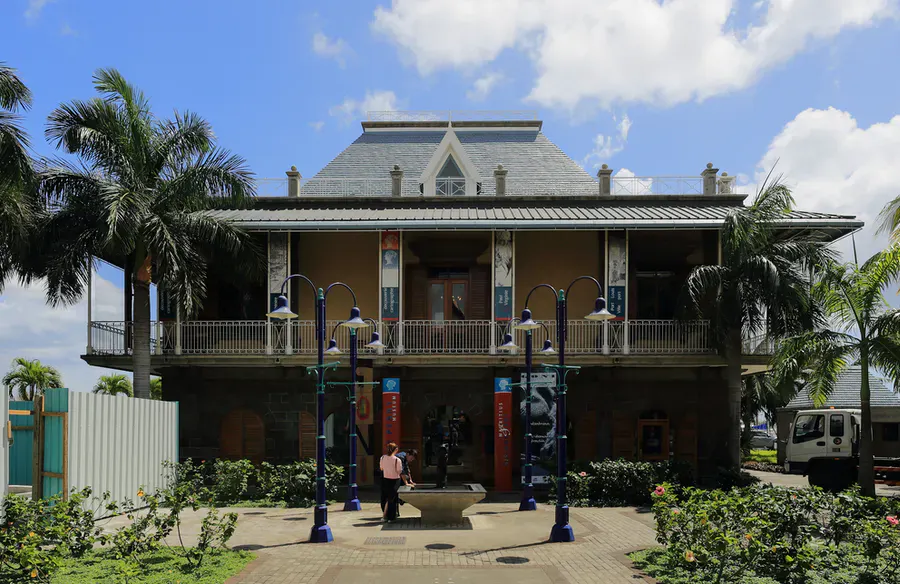
Most of the specimens are privately owned. You can admire two each in the Museum for Post and Communication in Berlin, in the British Library in London, in the Post Museum in Stockholm and in the Blue Penny Museum in Mauritius' capital Port Louis. There is also the 2 pence stamp in the Museum voor Communicatie in The Hague. And Queen Elizabeth II calls two copies her own, which are managed by the Royal Collection Trust.
Want to discover articles like this in your inbox? Then register today for our free newsletter!
The first Mauritius stamps were also part of many important historical collections. An example of this is the "Bordeaux letter", which was sent in December 1847 with an order to the wine merchant Ducau & Lurguie in Bordeaux, where it was accidentally discovered in 1902 by a schoolboy looking through the old company correspondence. It was later owned by such eminent philatelists as Alfred F. Lichtenstein (1876-1947), Arthur Hind (1856-1933) and Maurice Burrus (1882-1959), before being sold in 1971 for 120 million yen (about $1 million at the time) to the Japanese industrialist Hiroyuki Kanai (1925-2012). In 1988 he auctioned it off at the David Feldman auction house in Geneva, where it achieved $3.8 million.
With six specimens, Hiroyuki Kanai owned one of the largest collections of Mauritius stamps ever, surpassed only by the seven specimens of Philipp von Ferrary (1850-1917), who is said to have possessed the largest and most important stamp collection of all time.
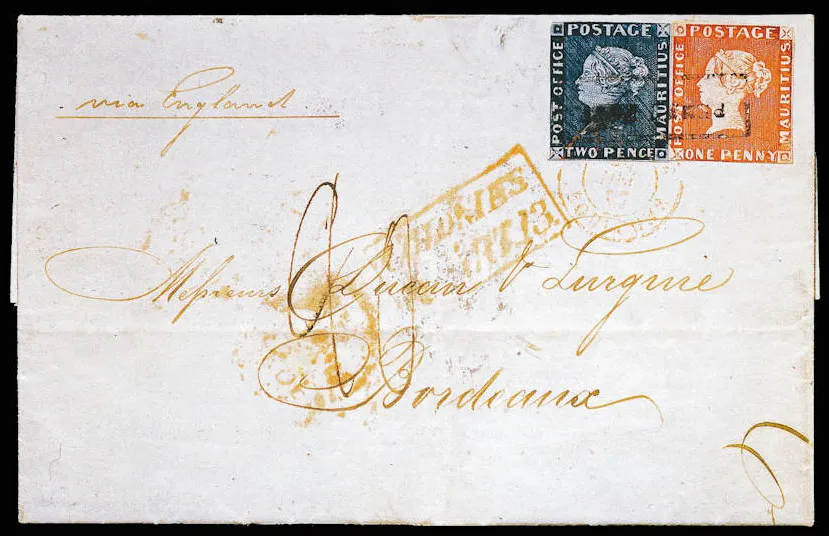
Also at David Feldman, Hiroyuki Kanai parted with his Mauritius stamps in a sensational auction in 1993. The “Bordeaux letter” was also called up again and now achieved CHF 6.1 million, making it the most expensive philatelic treasure in auction history. In 2014, the British Guiana 1c magenta took the title from him when it changed hands for $9.48 million. But since June 2021, a Mauritius stamp once again became the most expensive stamp, when one of the "Ball Covers" was sold at auction house in Germany for 8.1 million euros (approx. $9.6 million).
Related: Record Set for Most Expensive Envelope and Stamp
The Mauritius Blue and Red are not the rarest stamps in the world, but the stories and legends that arose around their creation as soon as they were rediscovered have certainly contributed to their iconic status, which is reflected in their still rising prices. But there is also the danger of falling for fakes, and that's where another mystery comes into play.
In 1912, an extraordinary discovery was made in a London safe deposit box: the original 1847 copper printing plate by Joseph Osmond Barnard, which could only print one of the 1p and 2p stamps at a time, making each stamp to a certain extent unique. After its discovery, the printing plate was in the possession of various London stamp dealers, who made reprints with it, but did not mark each one as such.
Related: Why a $20 Coin Sold for Nearly $20 Million
In 1935, the Alsatian collector Maurice Burrus bought the printer at auction, which caused it to disappear from public view. Even after Burrus' death in 1959 and the subsequent auction of his collection, it did not turn up again and has since been considered lost. Renewed research brought it to light again in 2015 in the estate of Burrus' niece, who has also died in the meantime, and on December 1, 2016 it came under the hammer - with David Feldman - and achieved 1.3 million euros.
The stamps of the legendary first series from Mauritius are therefore still in existence, and who knows, maybe such a surprise is in an old box in your attic.