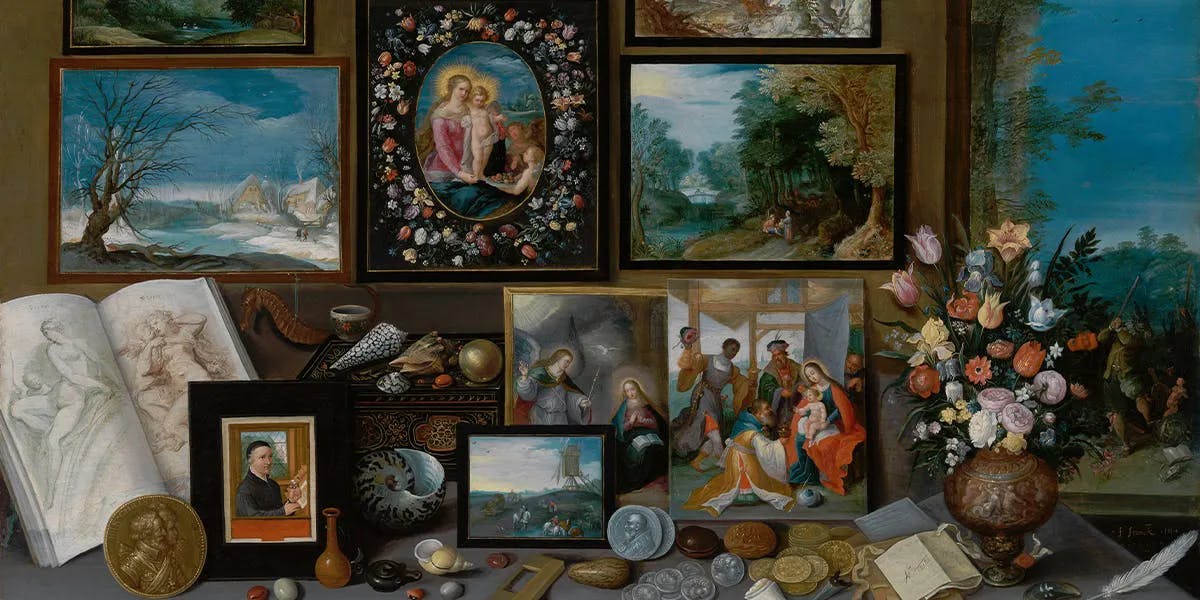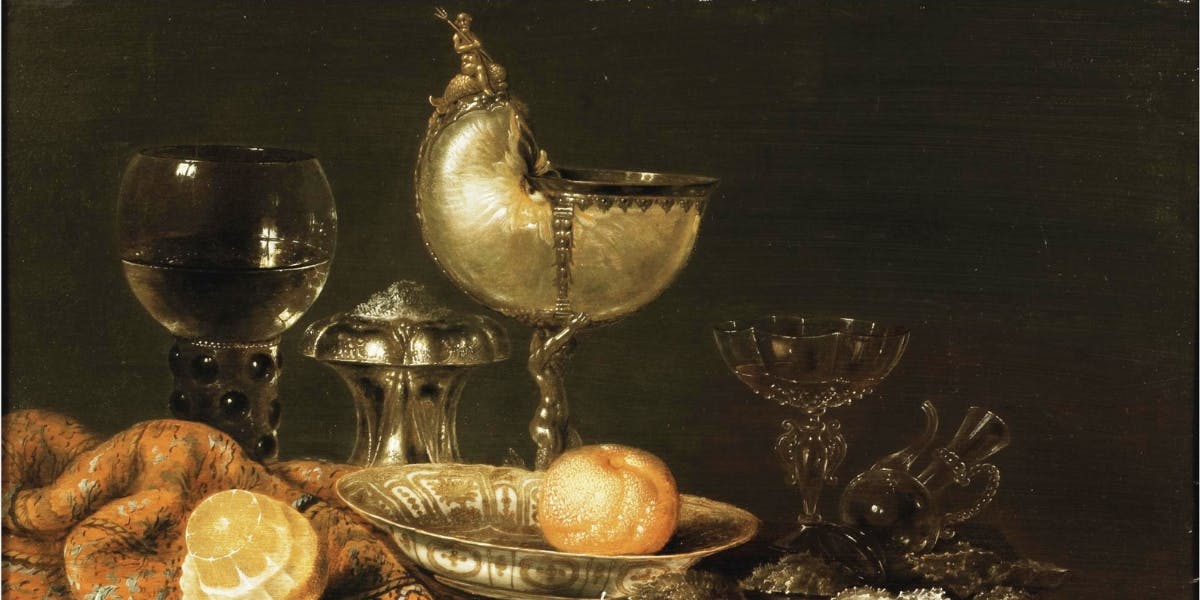
Now that it's officially summer, the beach beckons, and collecting shells along the seashore is a timeless and beloved activity. Anyone who has gone shelling can say that the ocean's treasures are truly nature's smallest sculptures, crafted in fantastical spirals and shapes, decorated with colorful patterns and varying in size, from tiny to monumental. These natural works of art have similarly intrigued artists, who have featured shells in their paintings or used them as a basis for an objet d'art. Perhaps the most popular shell among artists is the nautilus shell, known for its extraordinary spiral shape composed of chambers and iridescent, pearly interior.
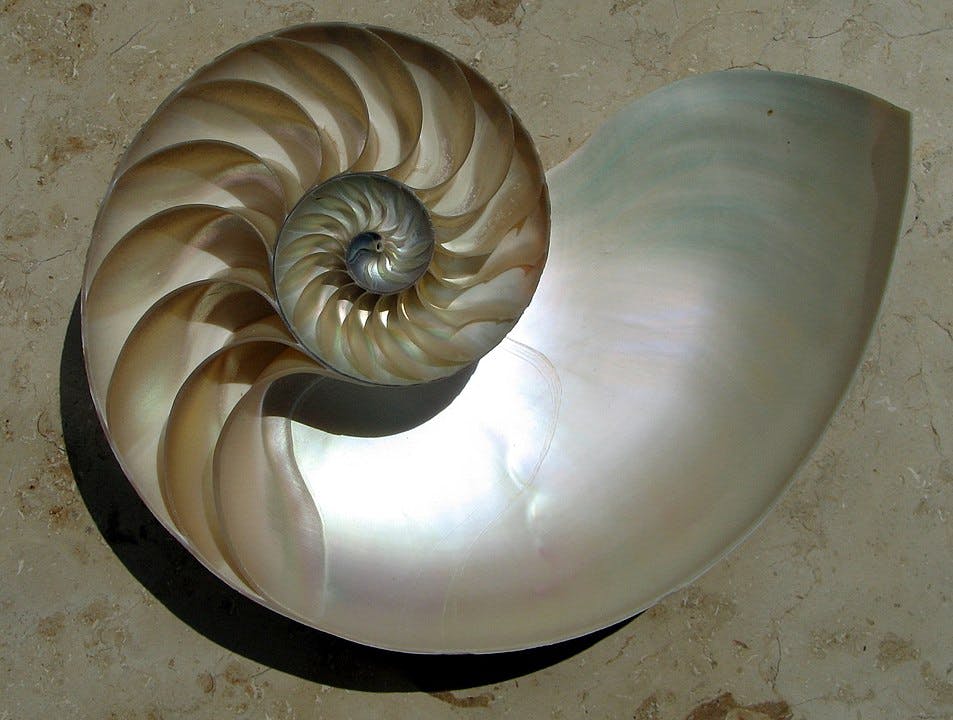
Only found in the Indo-Pacific region (stretching from the coast of East Africa, through South-East Asia and Oceania, to the middle of the Pacific Ocean), these nautilus shells are often hidden in deep coral reefs. Centuries ago they were discovered by fishermen, who retrieved them by baited traps. Nautilus shells first arrived in Europe during the Renaissance period, and they enchanted collectors with their lustrous color and logarithmic spiral that was divided into chambers. An incredible specimen of the natural world, nautilus shells were also a marker of global trade and expansion. These shells were often put on golden bases and featured in Wunderkammers, or Cabinets of Curiosities, that were built in royal residences to exhibit wonders of the natural world, from ancient tablets and religious relics to taxidermied animals and still life paintings.
Related: Wunderkammer: The Cabinet of Curiosities
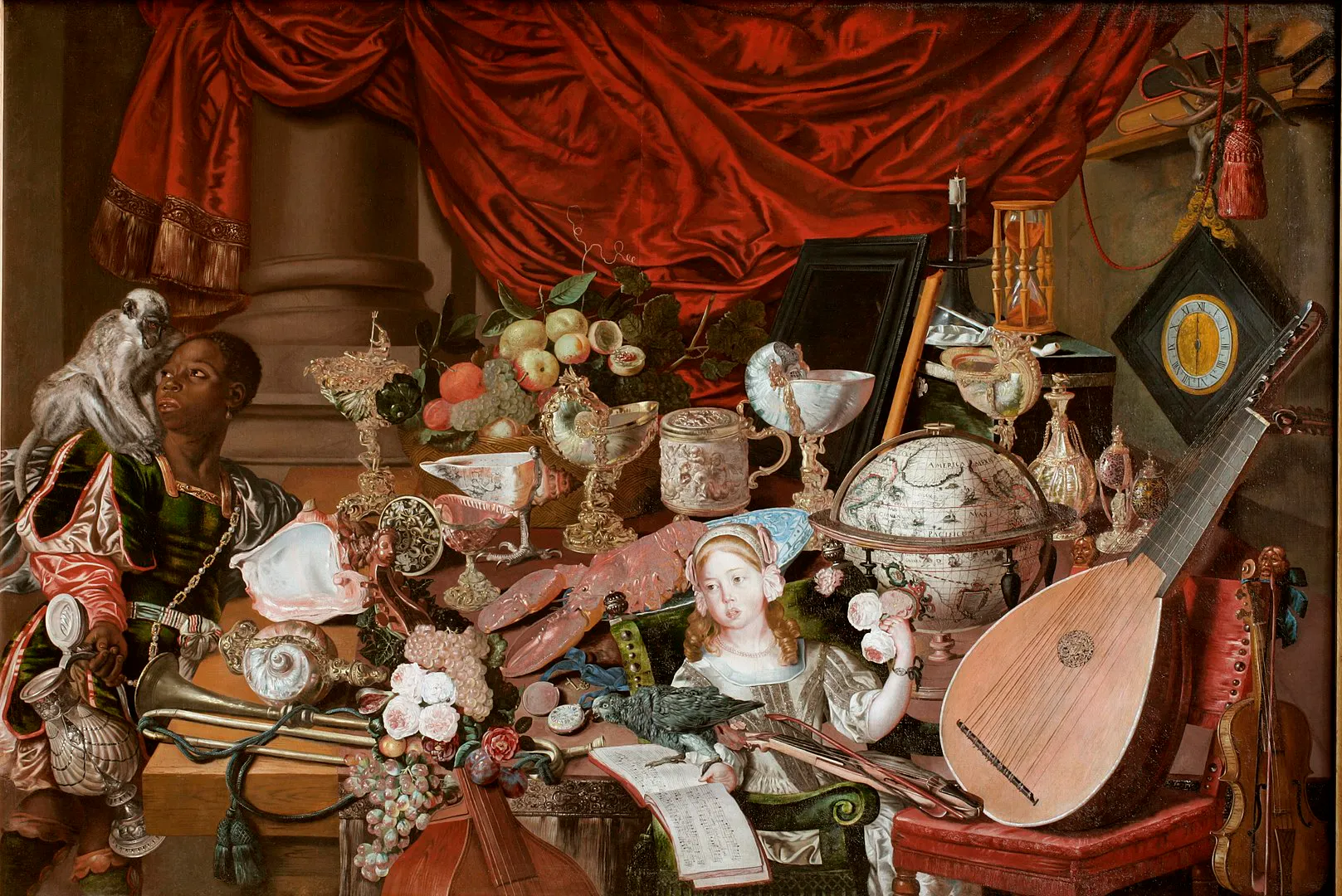
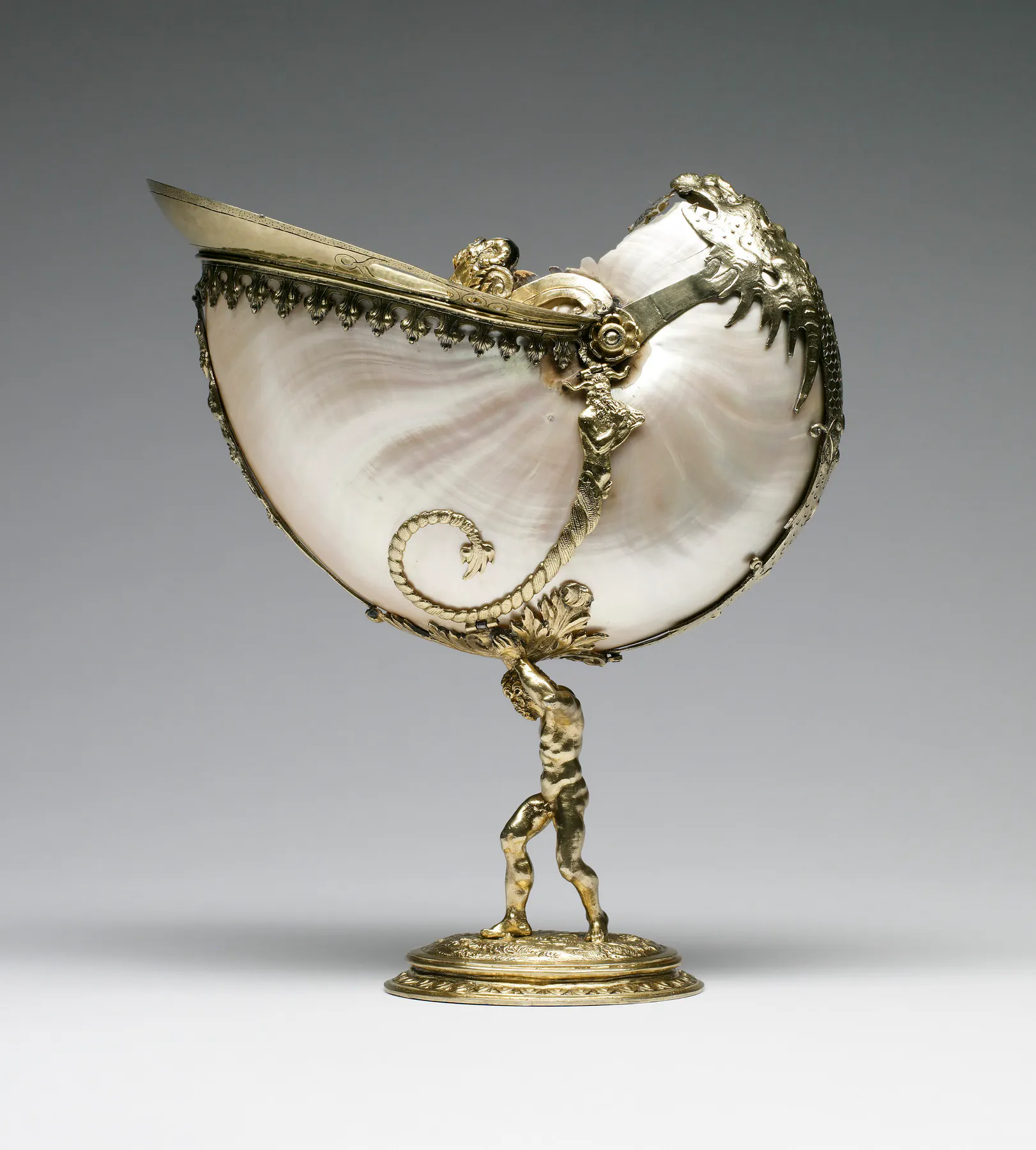
Not only were these spectacular shells on display in their natural state, nautiluses were often further embellished into opulent artworks. In the 17th century, silver and goldsmiths transformed nautilus shells into nautilus cups by etching designs into the shell's exterior, adding intricate gold carvings to the opening of the shell, and setting them upon elaborate bases. While nautilus cups were designed throughout Europe, most were made in the Netherlands, which was the center of global maritime trade at the time.
Related: The Art of Ornamentation: Van Vianen Silver
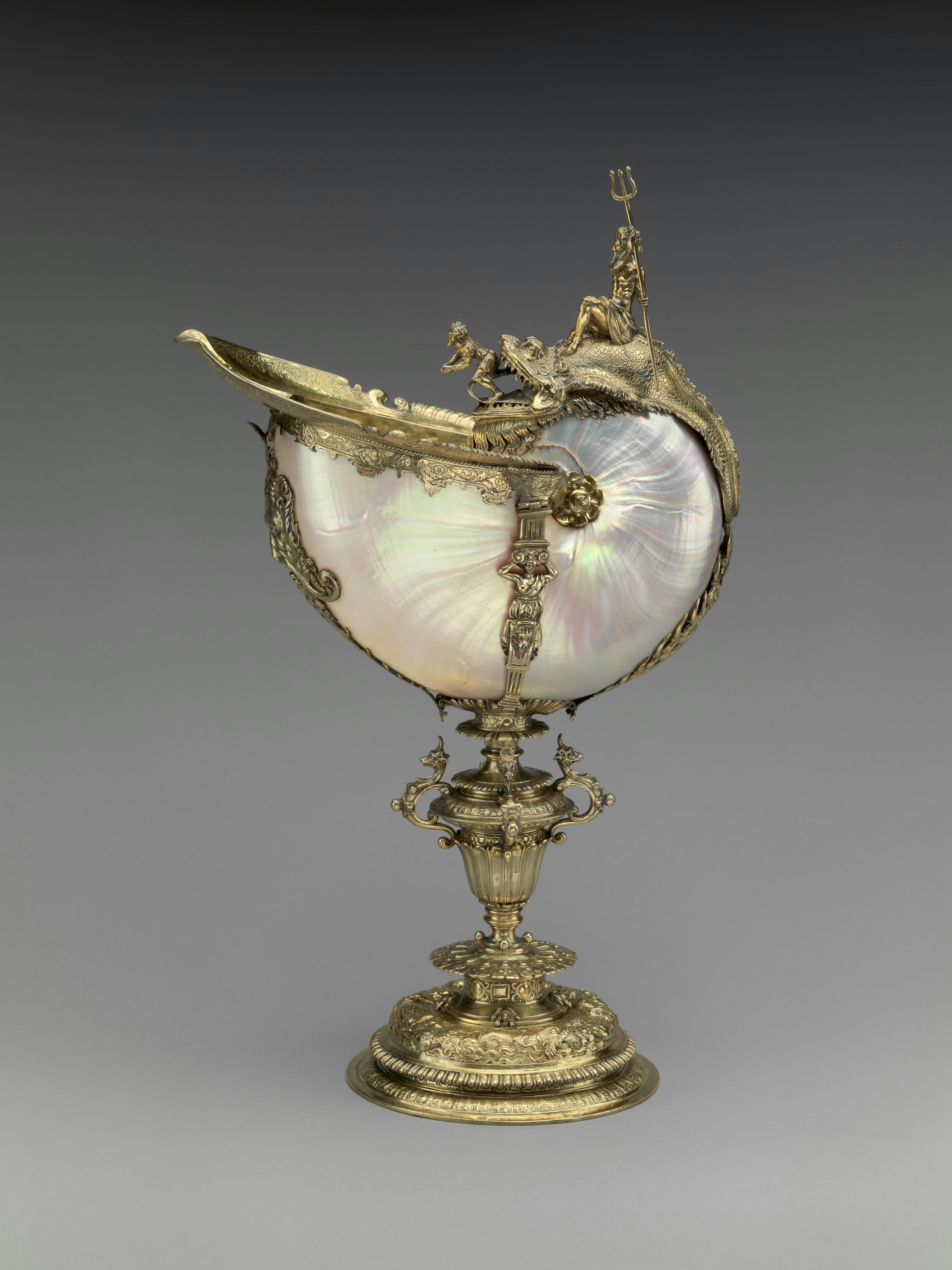
The artisans in the Netherlands were highly trained during the Dutch Golden Age and showered their prowess on these nautilus shells. The engravings and their base mounts were often inspired by the sea in fantastical ways with depictions of the Roman gods (like Neptune or Venus), mythological sea creatures, mermaids, fish and more. The nautilus' functional use as cups made them popular for royal banquets, and they were prominently placed in famous Dutch Golden Age still lifes of abundant tables.
Want more articles like this straight to your inbox? Subscribe to our free newsletter!

Two major Dutch Golden Age artists that repeatedly used the nautilus cup as a motif were Willem Kalf and Willem Claesz. Heda, as well as Heda's son Gerret Willemsz. Heda. While still lifes were a common genre in Dutch painting, pronkstilleven ('splendid still lifes') were a subgenre that depicted particularly sumptuous tablescapes with luxurious and exotic objects, art and food.
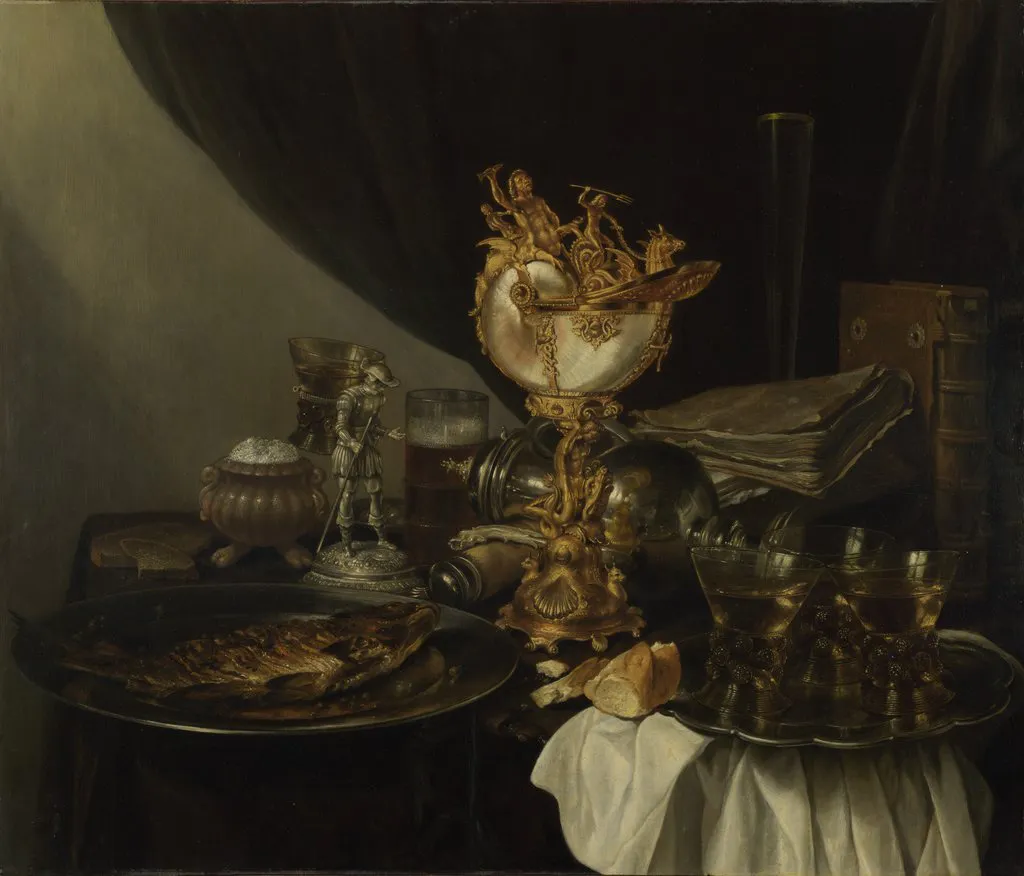
These extravagant works were a type of vanitas painting to show the ephemeral quality of earthly wealth. Kalf was interested in including items discovered around the world, such as nautilus shell cups, to appeal to the rich merchant traders who were his clients. The nautilus shell was a reminder of their power at sea across the world and how they harnessed its treasures for personal prosperity.
Both of these artists' pronkstilleven works continue to fetch multimillion dollar prices at auction. One of Kalf's still life paintings, which prominently features a nautilus shell cup, goes to auction at Sotheby's next month with a £300,000-500,000 estimate.
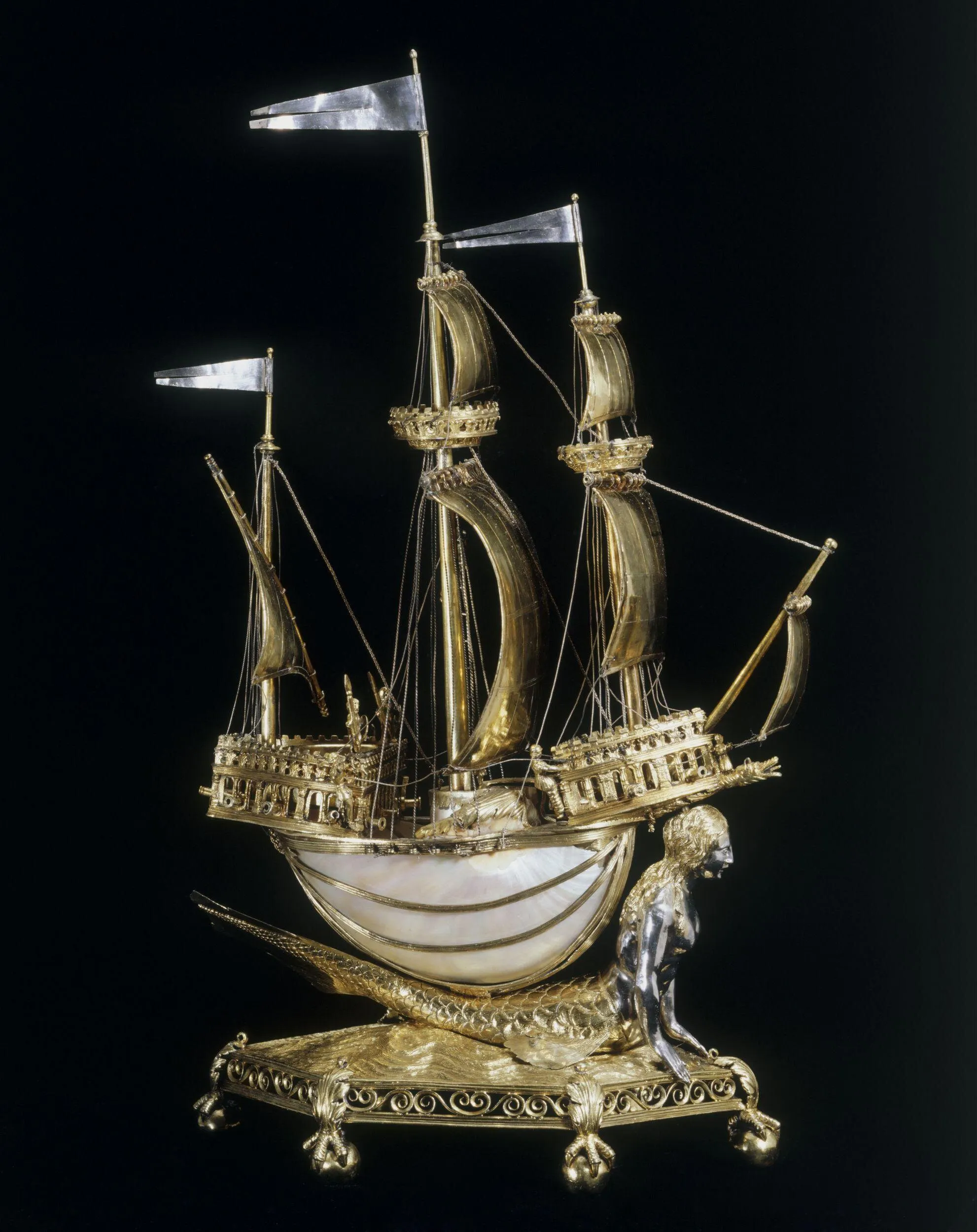
Another use of the nautilus shell was as a "nef," a boat-shaped container displayed at a banquet that would typically hold spices or salt. The most famous nef today is the Burghley Nef, made in Paris in 1527, with the nautilus shell becoming the hull of the ship to hold salt. Lavishly adorned with a deck and sails made of gold, the opalescent nautilus shell balances atop a mermaid-shaped base. Called the Burghley Nef because it was rediscovered at Burghley House in England, it is now part of the Victoria & Albert Museum collection.
Related: Rococo: The Art of Shells and Idylls
In the 18th century, the ornate and playful Rococo style dominated, which was actually named for the French term rocaille ('shellwork'). The most expensive nautilus ever sold is a Rococo-style Louis XV ormolu-mounted nautilus shell from 1740 that was once part of Baron Nathaniel von Rothschild's collection. It achieved £1.1 million in 2005 (far above its £100,000-200,000 estimate). In 2019, a nautilus shell cup also from the Rothschild collection sold at Christie's for £395,250 (about $501,572).
While many nautilus cups come up to auction with impressive six-figure estimates, they can also be purchased for a few hundred or thousand dollars, depending on the size of the shell, the extent of the gilding, and the provenance of the cup. However, due to overfishing, the chambered nautilus is listed as an endangered species and is thereby protected, making antique nautiluses more valuable.
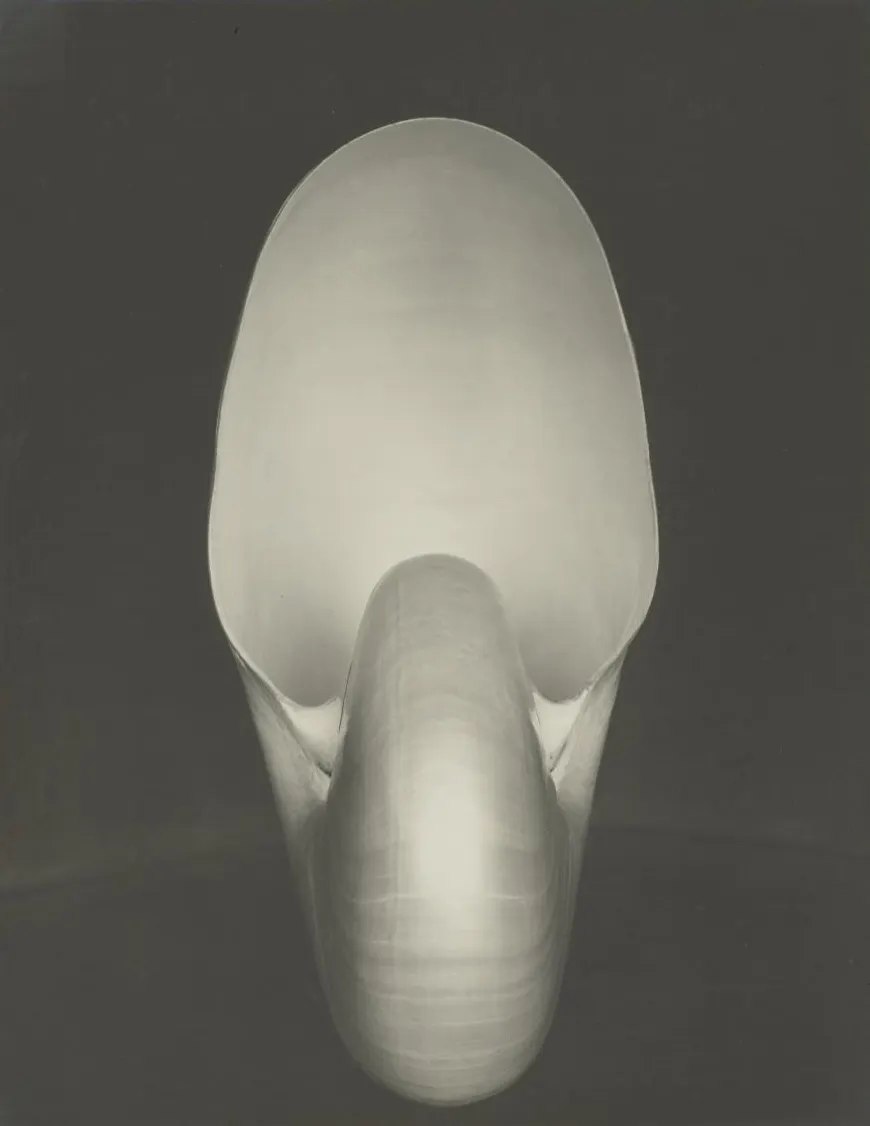
The enduring fascination of the nautilus was captured in the 20th century with Edward Weston's famous 1927 photograph Nautilus. Upon seeing a painting Henrietta Shore had made of seashells, Weston was inspired to photograph the large chambered nautilus. His images of the nautilus immediately struck its viewers with its mystical, visceral quality in a modernist composition. Diego Rivera even said to photographer Tina Madotti, "These photographs are biological, beside the aesthetic emotion they disturb me physically, ‒ see my forehead is sweating. Then ‒ 'Is W[eston]' very sensual?" Two of Weston's Nautilus photographs have sold for over a million dollars each at auction, and his profound images of the shell are considered some of history's most iconic and important photographs.
Related: The 11 Most Expensive Photographers
One of nature's most exquisitely crafted specimens, the nautilus shell has featured prominently in artworks throughout the centuries, as a symbol of the sea and global expansion, then as one of wealth and luxury, and later as a marker of modernity. Called the "ship of pearl" by poet Oliver Wendell Holmes in his 1858 poem The Chambered Nautilus, the nautilus shell has represented the constant evolution of nature and humanity to outgrow its past "till thou at length art free, leaving thine outgrown shell by life’s unresting sea!"