The Aulanko hotel project, located on the historic Karlberg estate site on the shores of Lake Vanajavesia, was featured in the Hämeen Sanomat newspaper on November 9, 1937. Built in an ideal setting, the hotel had a meeting room, offices and a music room accessible by a spiral staircase on the ground floor, as well as a terrace restaurant and a courtyard overlooking the vast park.
The hotel was conceived as a single work of art and the furnishings, dishes and textiles were part of the project. Completed in 1939, the property was the epitome of Finnish functionalism, with all of the most comfortable facilities available at that time, positioning Finland as a pioneering nation of modernism.
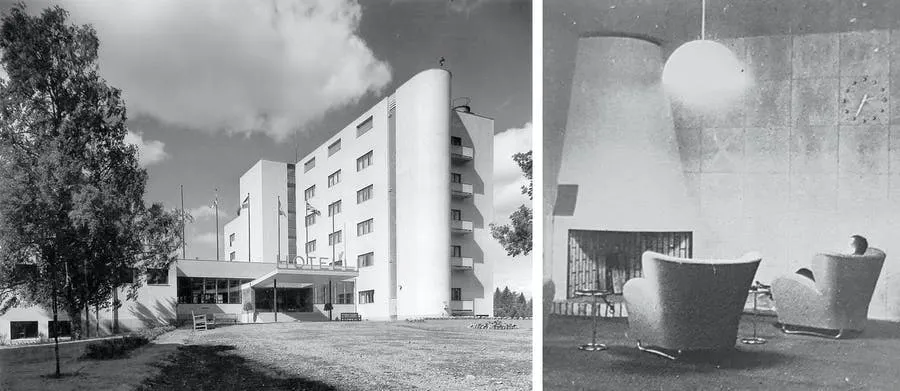
For the choice and design of its furniture, the two architects Matti Lampen and Märta Blomstedt took to the catalogues of major Finnish furniture manufacturers, such as Artek, Schauman, Merivaara and Stockmann. The interior of the hotel was therefore strewn with the creations by some of the most influential designers of the time, including Alvar Aalto, Werner West, Pauli Blomstedt or Paavo Tynell.
With the exception of the large armchairs in the entrance hall, made with tubular steel legs.
See also: The Aalto Vase: Small in Size, Big in Impact
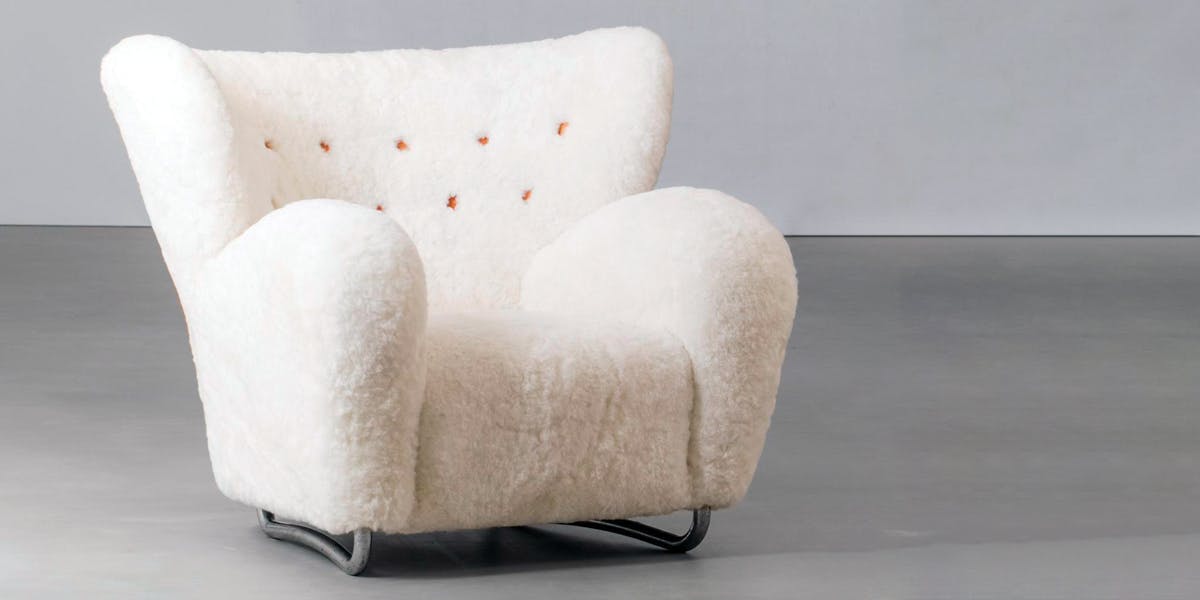
Two years before the public announcement of the project, in 1935, at the ‘Copenhagen Cabinetmakers' Guild’ fair, cabinetmaker AJ Iversen presented an armchair designed by Flemming Lassen. In the fair’s next edition, in 1936, he returned and exhibited at his stand a seat similar to the previous year's one but slightly larger, covered in lambswool and fitted with chrome tubular legs and which he labeled ‘The Tired Man’.
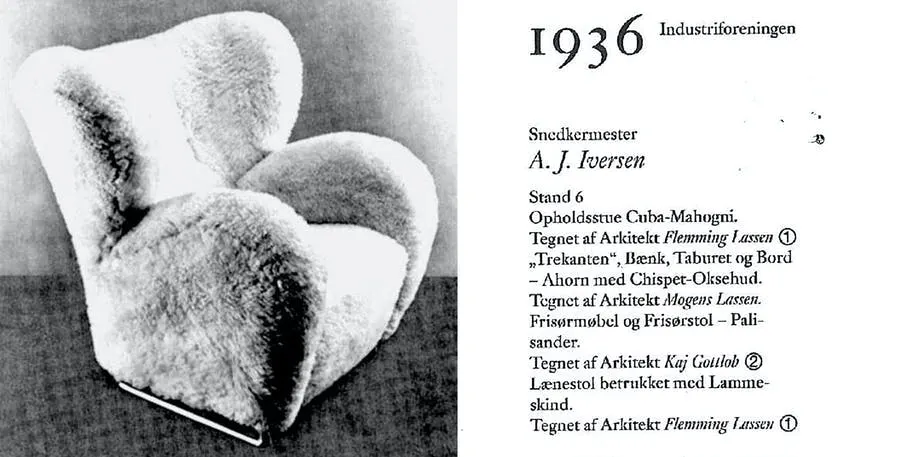
The resemblance between the prototypes presented in Copenhagen and the models of the Aulanko hotel is striking. The dates of conception are close, adding to the mystery. Because nothing indicates that the two seats are linked.
See also: 10 Reasons to Buy Vintage
The first drawings of the Finnish hotel model are dated 20 July 1938. No specific designer is credited, only the mention of 'Architects office Blomstedt / Lampen’ and the stamp of Artek, the company to which they appealed to obtain the model. The sketches are similar to the original drawings by Flemming Lassen, those of the chair at the 1936 Copenhagen fair. Dimensions, shape and feet are the same.
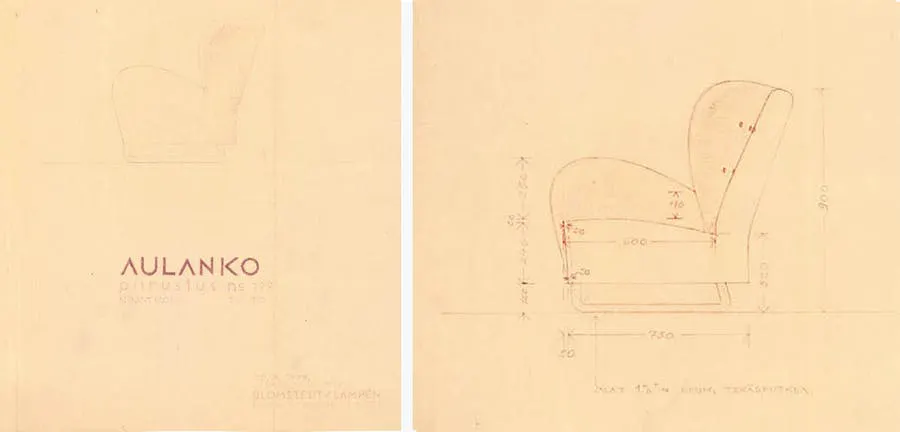
However, a few discrepancies arose during the manufacture of the first prototype of the Aulanko armchair: the model featured straighter legs, a slightly wider backrest and a more pronounced incline than in later drawings.
See also: The 10 Most Popular Furniture Designers
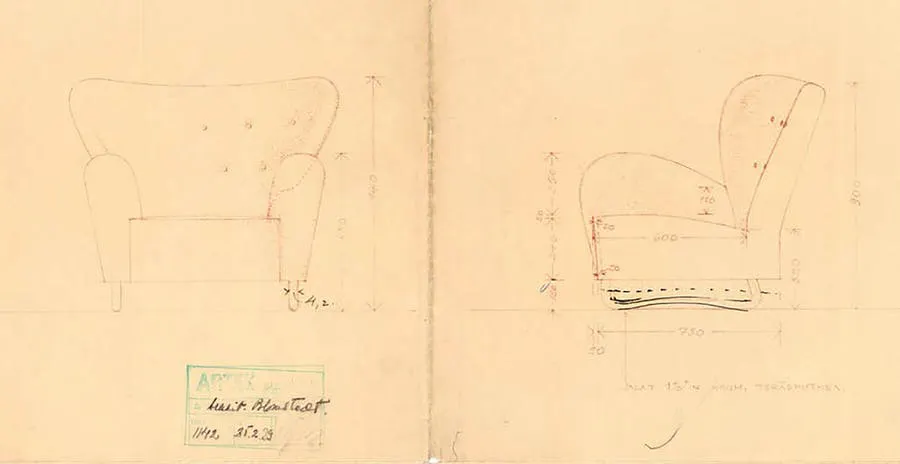
These differences were subsequently ‘rectified’, as there are slightly curved legs on sketches annotated by Märta Blomstedt. These sketches were sent and approved by the company Artek, as indicated by the stamp and the annotation ‘25.2.1939 Architect Blomstedt’, visible on one of the sheets. Finalized and with precise dimensions, the drawings were finally sent to cabinet maker Arvo Laine in Hämeenlinna for fabrication.
See also: The Curse of the Clam Chair
Artek is a design company specializing in furniture founded in 1935 by Alvar Aalto and his wife Aino. If the main reason behind this company was the promotion and production of Alvar Aalto's furniture and glasswork, the drive to increase catalogues led Artek to acquire rights from other designers, like Tapio Wirkkala, Ilmari Tapiovaara or Yrjö Kukkapuro.

The point is, in Artek's archives there is no mention of Flemming Lassen or AJ Iversen. It is impossible to know if the firm had acquired the rights to one or the other, but it seems that the famous Aulanko armchair was made from their designs, as the similarities are too obvious. If Artek did not have a production agreement, then the chair could have been copied, but would a company of this scale have dared to do such a thing? Especially for an upscale hotel that was going to be mentioned in architecture publications around the world…
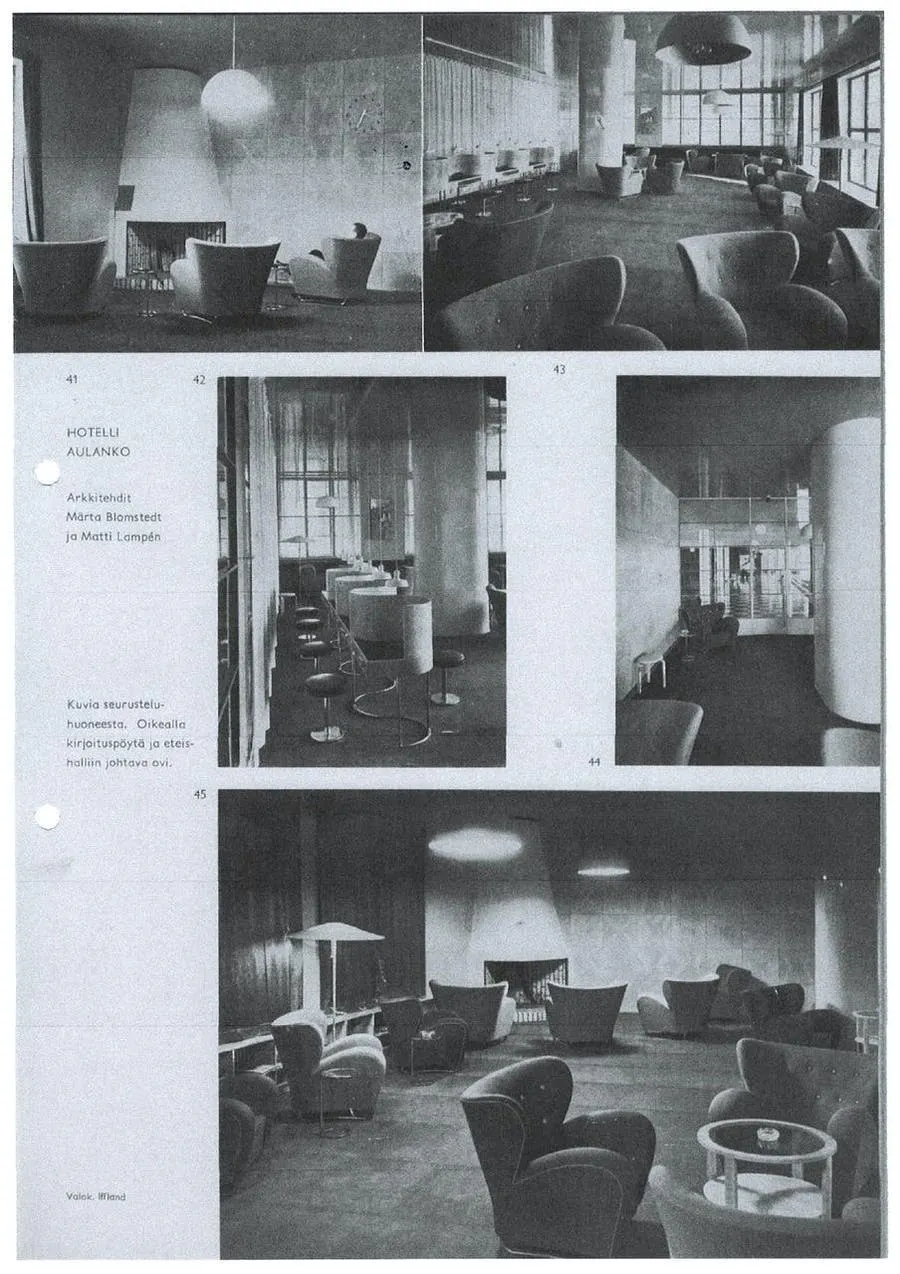
In the 1939 Finnish architectural magazine Arkkitehti, several pages were dedicated to the Aulanko Hotel, and in particular to its furnishings (page 12): “To a large extent standard Finnish designs were used, except armchairs in the living room, which are typical.” The term ‘typpivalmisteita’ used in the article to describe these chairs can be translated as both a single product made under license, or a similar product made by copy.
Today there are many variations of this chair, such as a 1941 model with wooden legs. Available in abundance in Finland, wood was used by many furniture makers as a substitute for metal, which was banned for furniture during the war.
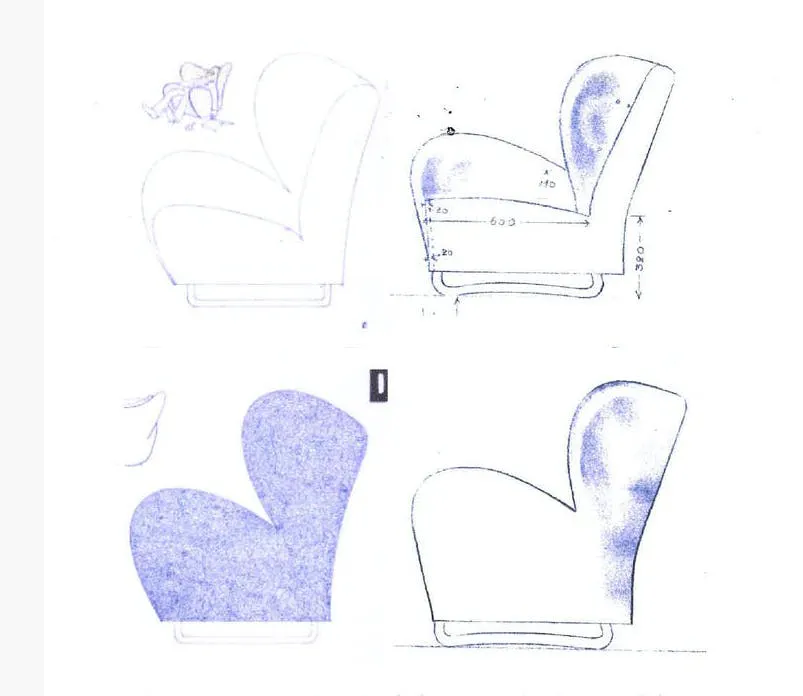
Until the late 1940s, Artek marketed a version of the armchair with round wooden legs. In the 1950s, similar but smaller models were produced by different manufacturers, including Kantosen Puutyö. This craze explains the appearance of many variations with slight differences.
See also: Inside a Designer's Punk-Inspired Italian Home
From 1936 to the 1950s, the variations followed one another, but not all of them have the same value: the rarity, origin and date influences price.
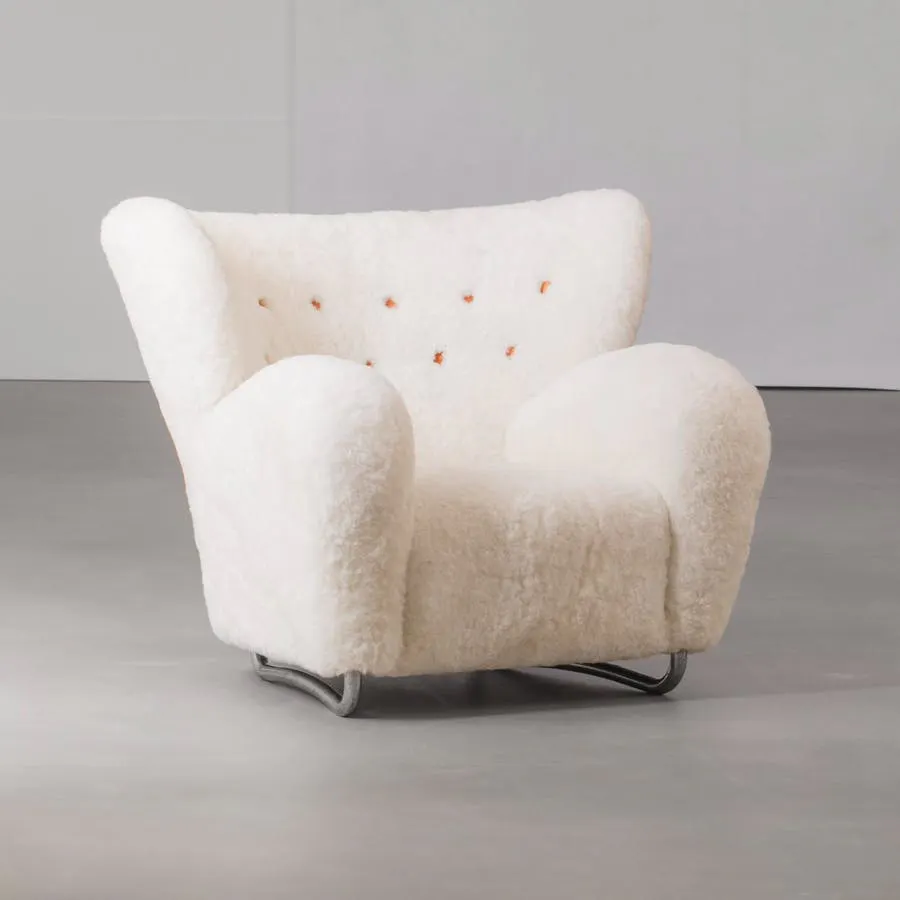
Annmaris Auctions auction house offers an original 1939 Aulanko Hotel lobby armchair. Its features are closer to Flemming Lassen's 1936 model than any more recent armchair. The current lining is in sheepskin but the armchair was originally covered with a dark blue fabric, which is still present. In addition, the signature of the manufacturer Arvo Laine is always clearly identifiable on the structure.