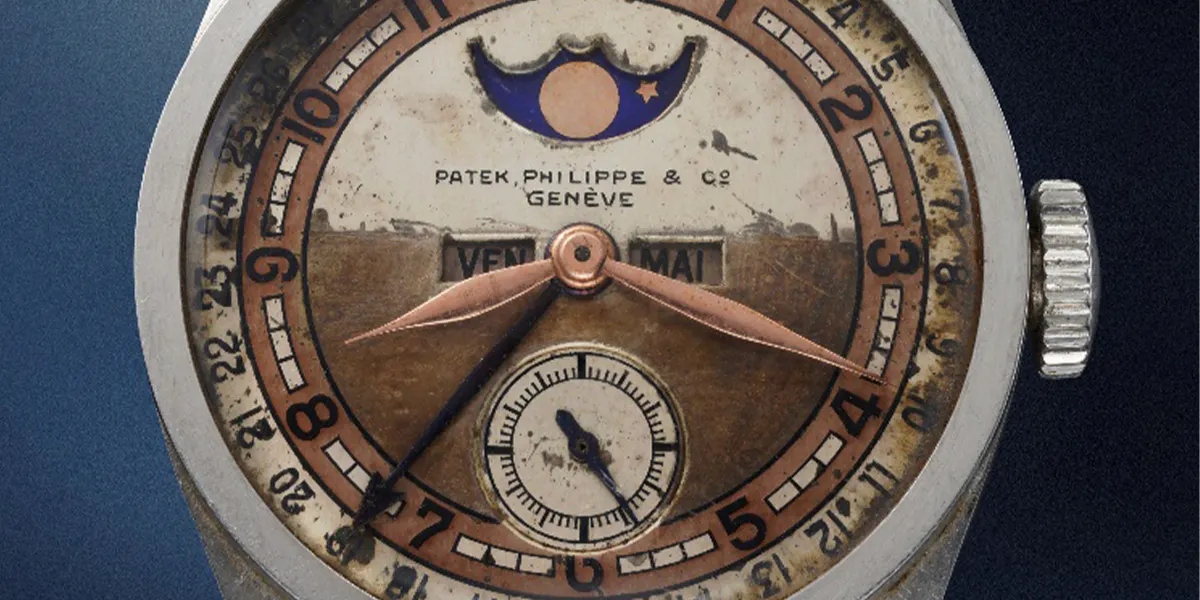
In 2019, Phillips consigned the watch once worn on the wrist of the last emperor of China, Aisin-Gioro Puyi. Three years of intensive research followed, after which the watch's history and unique provenance were confirmed. On May 23, the imperial timepiece was auctioned at Phillip's new Asia headquarters in Hong Kong. Although its estimated price was HKD 25 million (about $3.1 million), it sold for a stunning HKD 48 million (about $6.2 million).
Related: Patek Philippe: A Timely Investment
Aisin-Gioro Puyi was born in 1906, the son of Prince Zaifeng, the younger brother of the childless Emperor Guangxu. Guangxu died in 1908, and at only two years old, Puyi became the Emperor of China. He was the twelfth emperor of the Qing dynasty – and the last. On January 1, 1912, the Republic of China was proclaimed and six weeks later Puyi abdicated, though still retaining some of his privileges. For a while, Puyi remained a resident of the Forbidden City, where he continued to lead an isolated life. Following a coup, he moved to the port city of Tianjin in 1925, where he came under the protection of Japan, enjoying a lively social life for the first time in a while. In 1934, Japan, interested in expanding into China, made Puyi 'Emperor of Manchukuo', a satellite state in Manchuria occupied by Japanese troops.
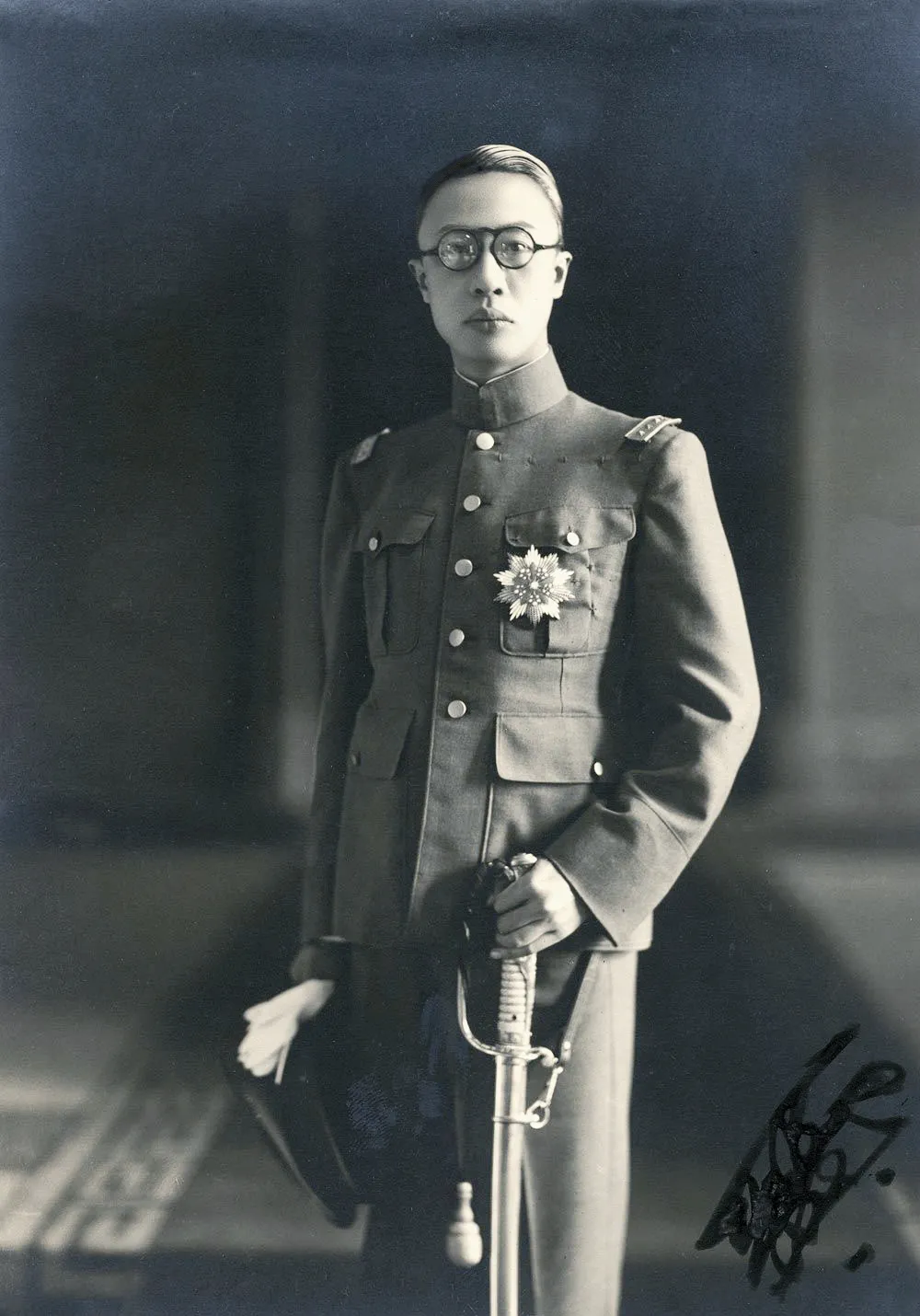
In 1945, Puyi tried to make his way to Japan, but before he could leave China, he was captured by Soviet troops and taken to the Khabarovsk POW camp near the Chinese border, where he would spend the next five years. In 1950, he was handed over to the now communist China, where he was imprisoned for another nine years in an effort to 're-educate' him. By 1959, Puyi was released from prison and pardoned by Mao Zendong. Initially, he took up a job as a gardener at the Beijing Botanical Garden, and then became a literary editor in 1964 and published the first part of his autobiography, which served as the basis for Bernardo Bertolucci's Oscar-winning film The Last Emperor in 1987.
In 1967, Puyi died at the age of 61 as a result of kidney cancer.
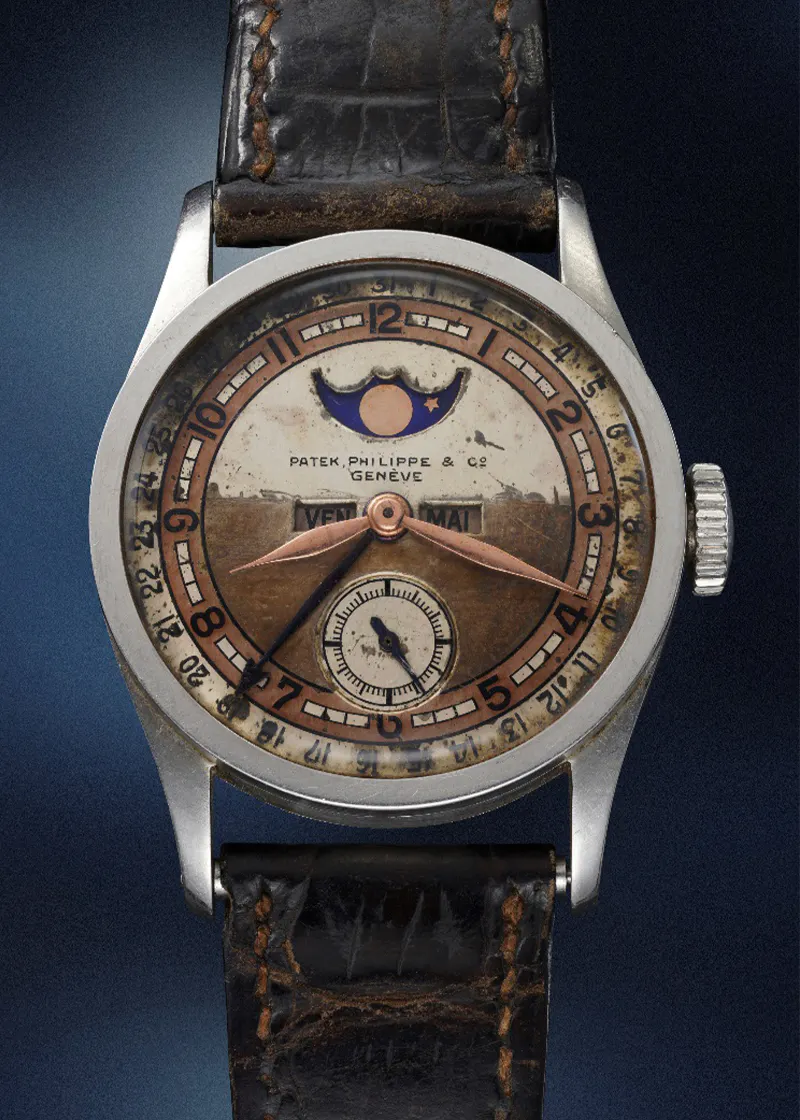
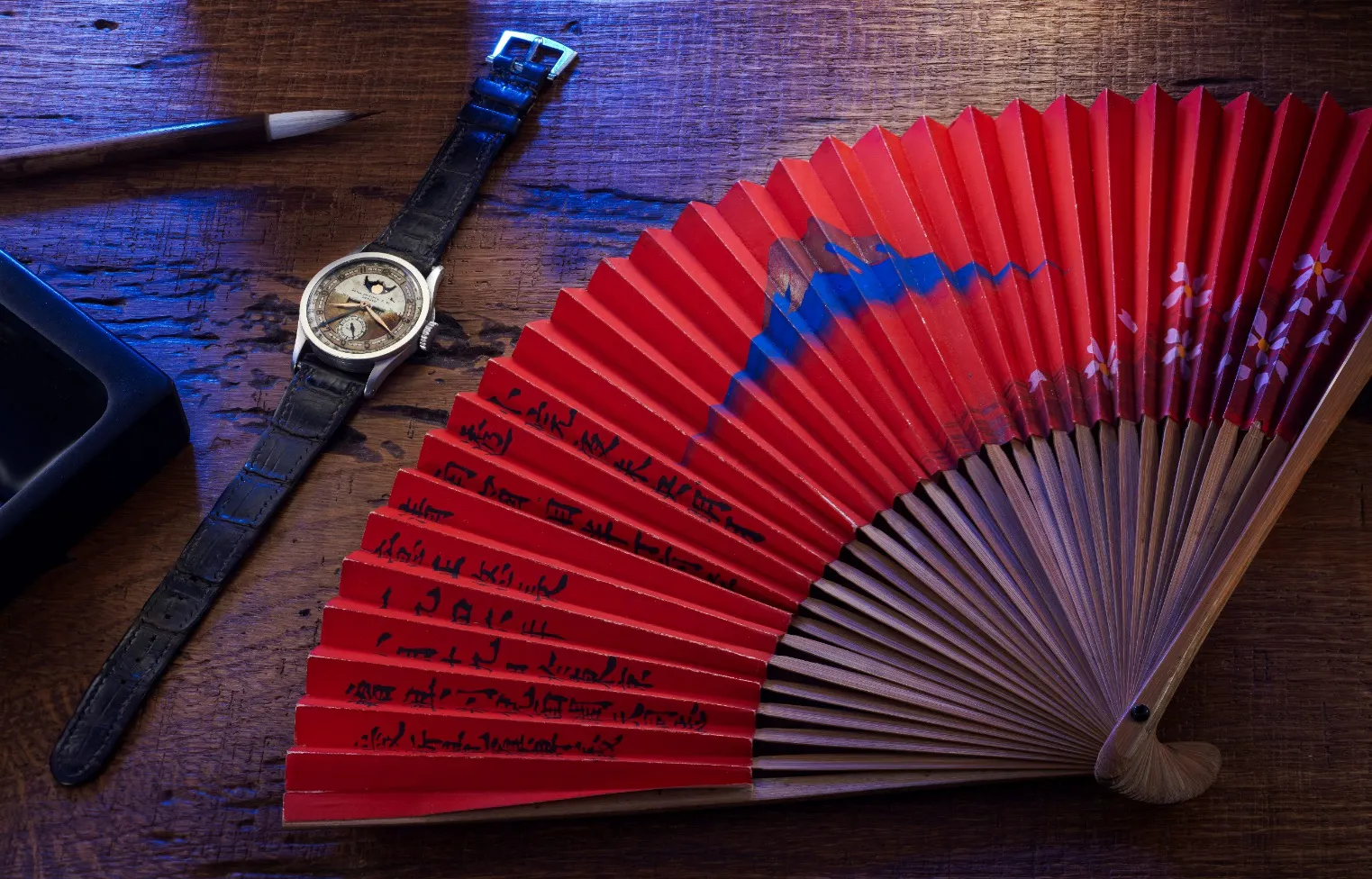
The wristwatch of the last Emperor of China sold at Phillips is a Patek Philippe Ref. 96 Quantieme Lune in platinum. It adorned Puyi's wrist from 1937 and was still with him when he became a Soviet prisoner of war in 1945. In the camp, Puyi was given a tutor and translator, Georgy Permyakov, whom he apparently liked very much, because when he left the camp in 1950, he gave the watch to Permyakov (who died in 2005). His heirs finally entrusted it to Phillips in 2019.
Related: The World's Most Expensive Watch
Only eight examples are known of the Patek Philippe Ref. 96 Quantieme Lune, the first reference of the Calatrava line introduced in 1932. An enclosed certificate issued by Patek Philippe confirms that the watch was sold in 1937 at the Guillermin luxury shop in Paris, but that the movement was manufactured as early as 1929.
Want to keep up with all the latest industry news? Subscribe to our free newsletter!
The dial is unique, showing the day of the week, the date and the moon phase in addition to the time. The white enamel, however, is eroded. Puyi's servant Li Guoxiong, who had also accompanied the former emperor into captivity, explained that Puyi had become curious as to whether the dial was also made of platinum like the case, and instructed Li to scrape off the paint. What emerged was brass, which, with its current patina, lends it an additional charm and makes this imperial watch truly unique.
"I am thrilled with this groundbreaking sale for the international collecting community which kicked off our first watch auction series taking place at Phillips’ new Asia headquarters," said Thomas Perazzi, Head of Watches, Asia, Phillips. "This historic sale was led by the priceless Patek Philippe ref. 96 Quantieme Lune which sold for HK$49million/ US$6.2 million and set three records – the highest result for any Patek Philippe reference 96 ever sold, a record for any wristwatch previously owned by an Emperor that has been auctioned, and the most valuable lot ever sold by Phillips Watches in Asia."