"Return to the state of nature" was a notion of the second half of the 18th century proposed by Jean-Jacques Rousseau (1712-1778) to demonstrate that the primitive nature of man had been corrupted by society. This desire for nature, in the face of an industrializing and urbanizing world, expressed that people free of society were naturally "peaceful and timid."
Art and design of the period also mirrored this belief. In the English landscaped gardens, for example, which replaced the sober French Baroque gardens, nothing was left to chance: each tree, each bush was carefully planted to create the impression of a picturesque whole in which one could play shepherd and the shepherdess for an afternoon.
Related: Spring in Art: 10 Works of the Season
Naturalness was also sought in painting. Landscapes, which had generally served only as backdrops for mythological or biblical scenes, were now emphasized to create a harmonious atmosphere for the eye of the viewer.
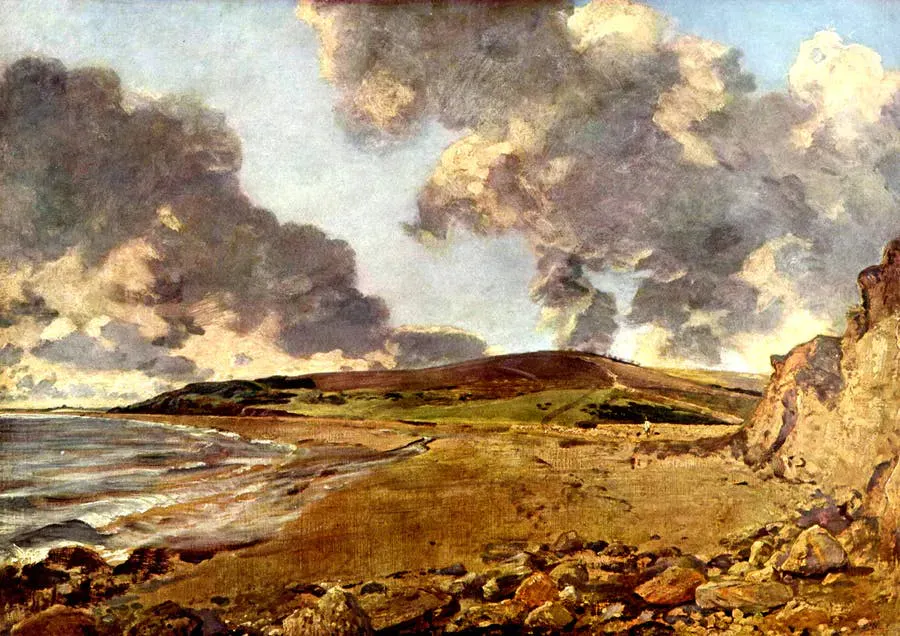
At the time, “appropriate” themes and techniques were mostly dictated by academies, which favored polished historical paintings. Fueled by archaeological finds in Pompeii and later in Egypt, this type of painting reached its peak with classicism, which quickly faced a counter-current: Romanticism. However, even the Romantics simply painted their landscapes in their studio, creating idealized and often unrealistic scenes.
Related: Symbolism: Europe’s Mystical Art Movement
In 1824, Paris hosted an exhibition of contemporary English painting comprising works by two Romantics John Constable (1776-1837) and Richard Parkes Bonington (1802-1828). Their precise rendering of nature fascinated many young French painters, including Théodore Rousseau (1812-1867; unrelated to Jean-Jacques Rousseau), who a few years later traveled to the forest of Fontainebleau to visit and reproduce nature as faithfully as possible on small canvases (“intimate landscape”). This initiative not only marked the birth of the community of artists known as the “Barbizon School”, but also of realism, which aimed to move away from the ideal in order to get closer to the everyday and the immediate.
[L]et the civilized world go to the devil! Long live nature, forests and ancient poetry!
Year after year, Rousseau returned to the forest of Fontainebleau and other artists joined him, notably Charles-François Daubigny (1817-1878) and Jean-François Millet (1814-1875), who readily adopted his new painting style. Millet, on the other hand, was more concerned with representing the rural population in their daily tasks, and not the landscape. Rousseau and Millet ended up settling permanently in the village of Barbizon. "[L]et the civilized world go to the devil! Long live nature, forests and ancient poetry!” Théodore Rousseau once said.
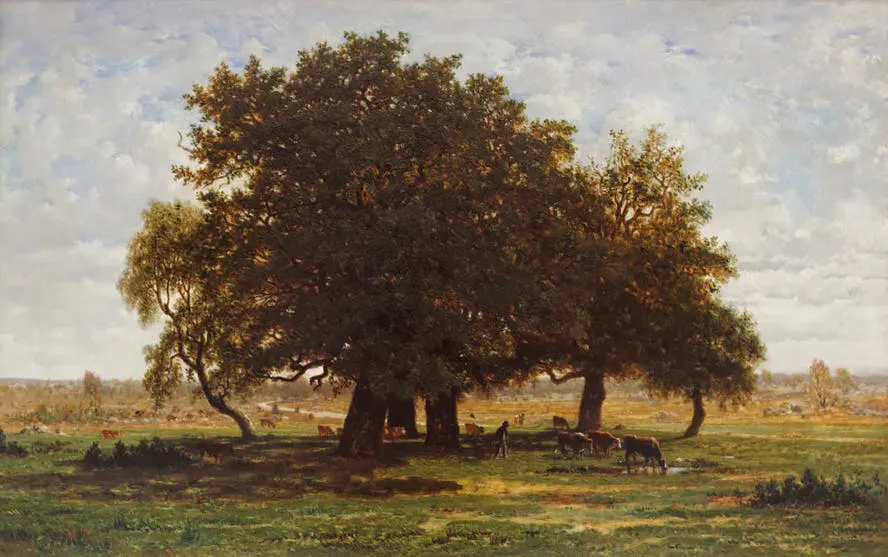
Another important representative of the Barbizon school was Camille Corot (1796-1875), whose landscapes strongly influenced the following generation. He counted among his pupils Impressionists such as Berthe Morisot (1841-1895), Camille Pissarro (1830-1903) and Eugène Boudin (1824-1898), as well as other great names.
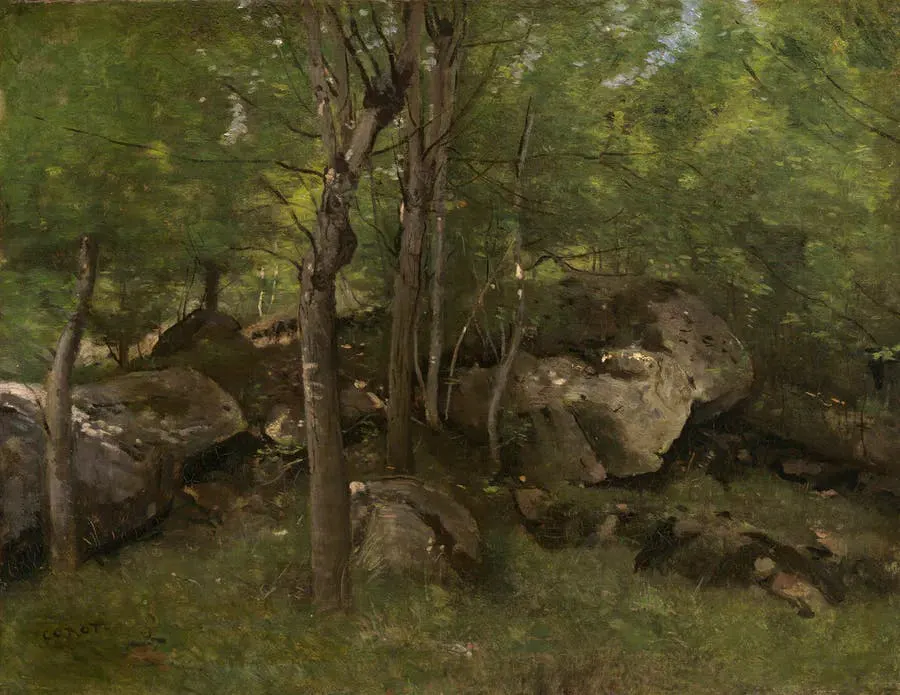
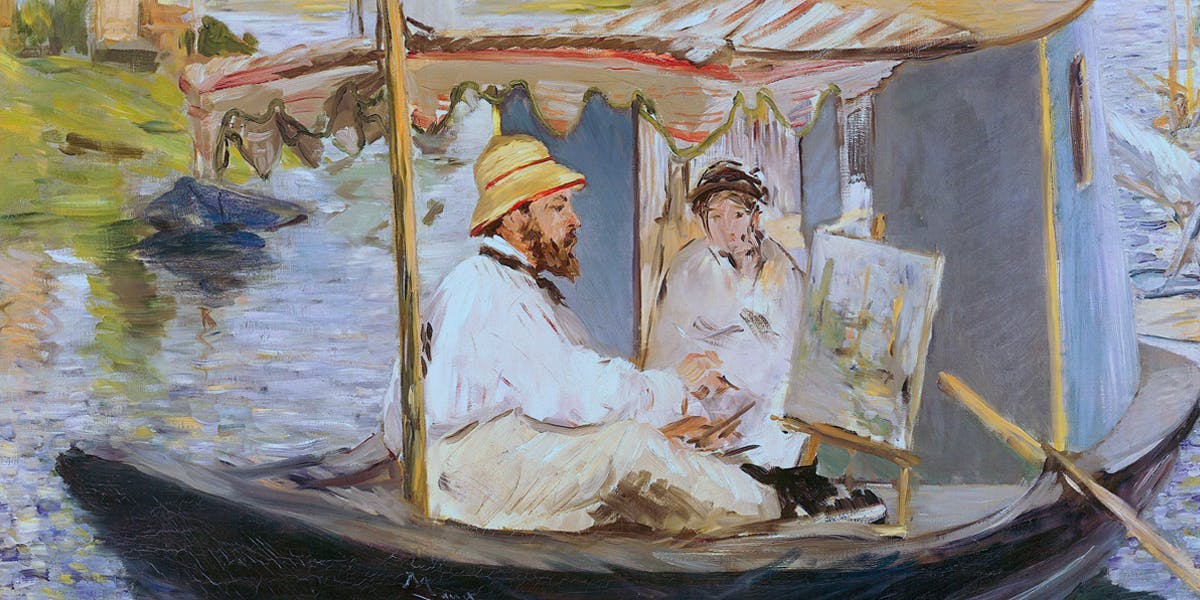
While realistic landscapers tried to reproduce their designs as accurately as possible, they could not paint "in place." Indeed, until the 19th century, oil paint had to be mixed by painters with pigments to create the desired palette, but dried quickly and made long-term transport impossible. The situation changed in 1841, when the American painter John Goffe Rand (1801-1873) invented ready-to-use paint in airtight tubes. Pierre-Auguste Renoir (1841-1919) would later say, "Without the tubes of paint, Impressionism would not have existed."
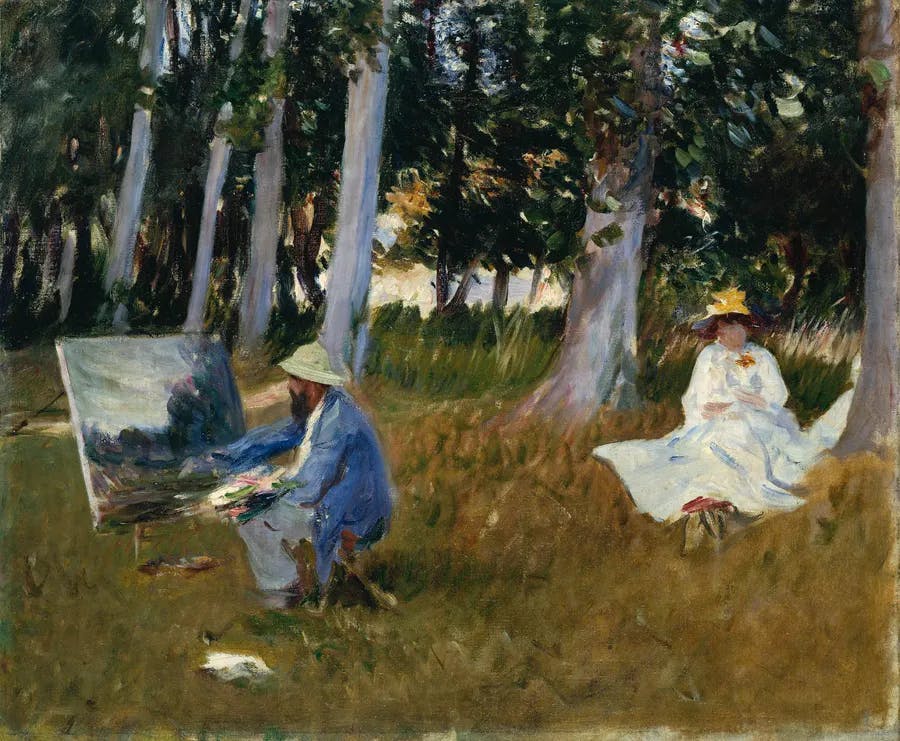
Thanks to Rand's invention, the new generation of artists, inspired by the Barbizon school, could paint entire compositions outdoors. Artists like Renoir, Alfred Sisley (1839-1899) and Claude Monet (1840-1926) were able to capture the interplay of light and color instantaneously that their artwork is known for. Putting their easels in forests, meadows or on paths, they created, with rapid brushstrokes, small-format works capturing the magic of a moment.
Related: 8 Artists Inspired by the South of the France
It took some time before their paintings were favorably received by critics and the public. Collectors and artists from abroad were excited by this new style and the trend of plein art spread internationally. Everyone was now in search of more natural places, outside cities, where they could capture the nature around them in situ.
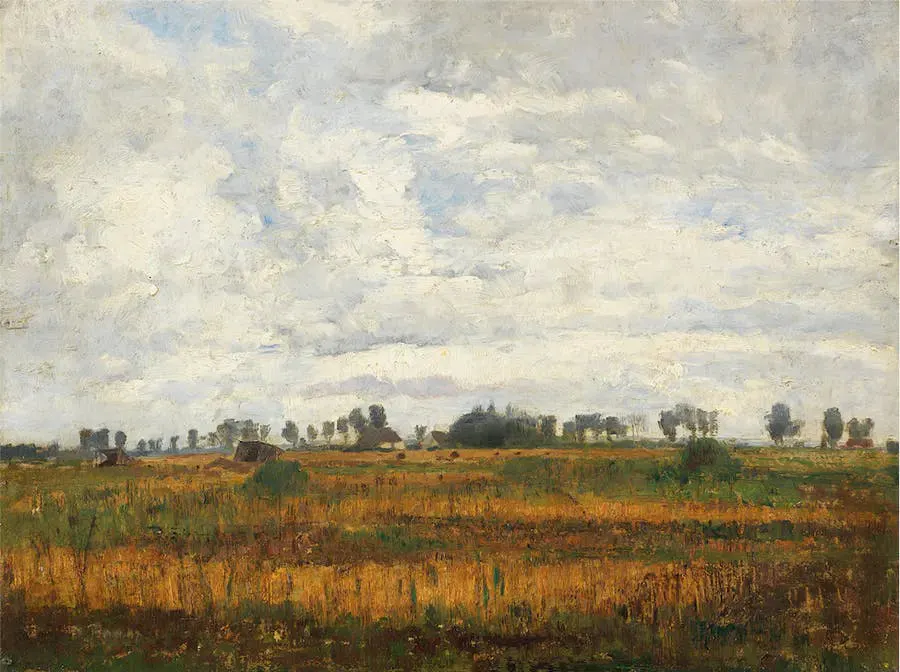
Many important artist colonies were founded around plein air painting, such as Worpswede and Dachau in Germany, Skagen in Denmark and the Newlyn School in Cornwall, southern England. These artist colonies, where members lived and worked together, endured even as the avant-garde gradually pushed painters to retreat into the studio. However, plein art painting has inspired artists ever since, who know the best way to capture the world around them is to see it firsthand as they work.