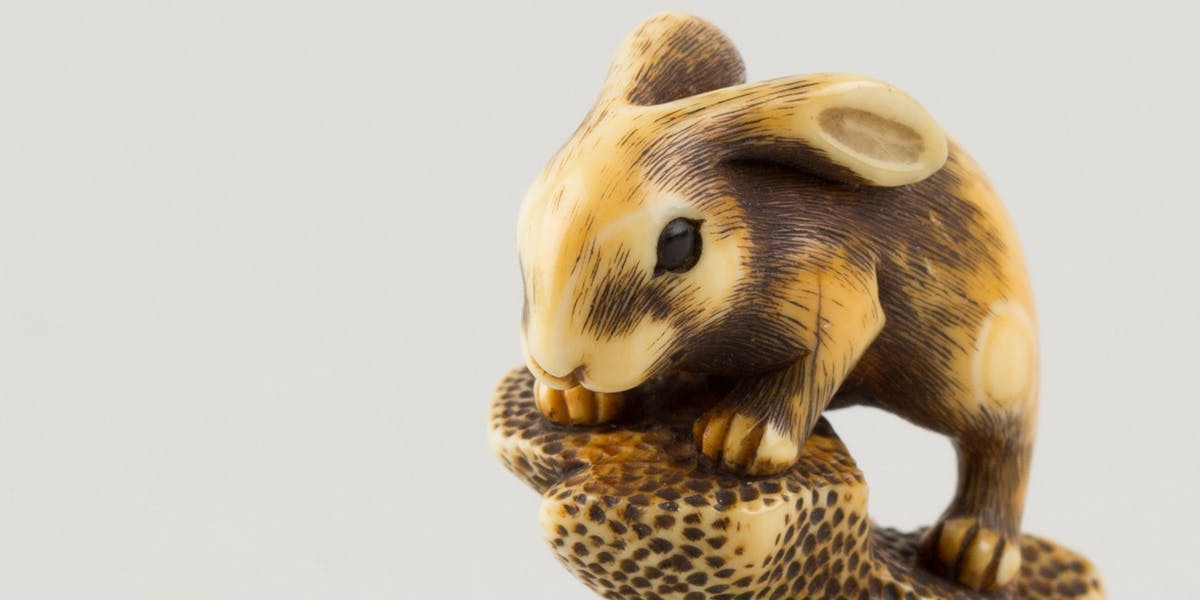
The Sagemono and the Netsuke originated several centuries ago. It was mainly during the Edo Period, from the early 1600s to around 1868, that they democratized. Originally designed to put an end to a clothing problem, these little curiosities are now deeply rooted in Japanese traditions and are considered works of art and crafts in their own right.
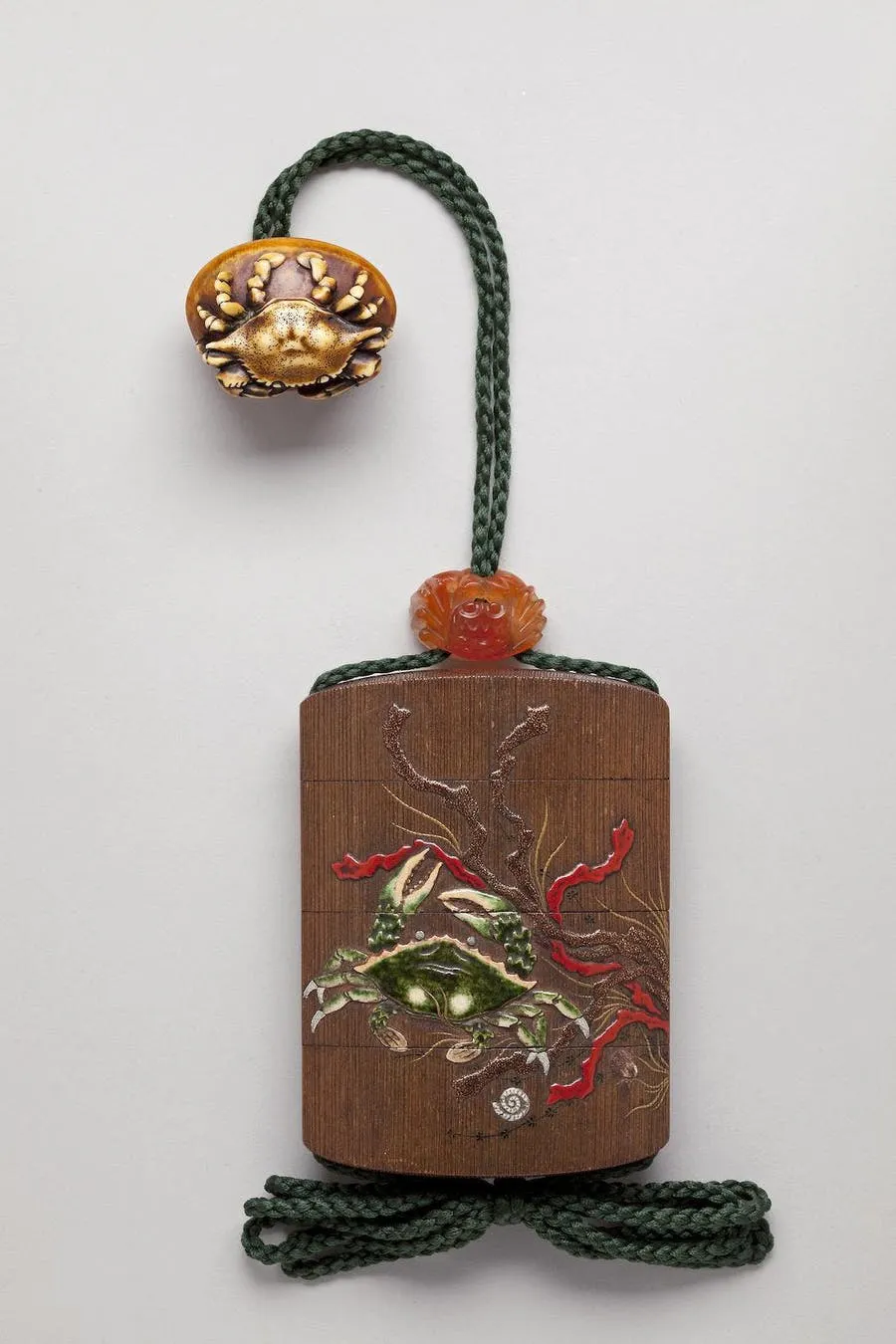
Their invention is rooted in clothing: it is while wearing the traditional kimono that the Japanese realized that they could not move with their personal items. As the kimono did not have pockets, it restricted the transport of small items such as money, calligraphy instruments, medicines or tobacco.
See also: Ukiyo-e: The Art of Japan
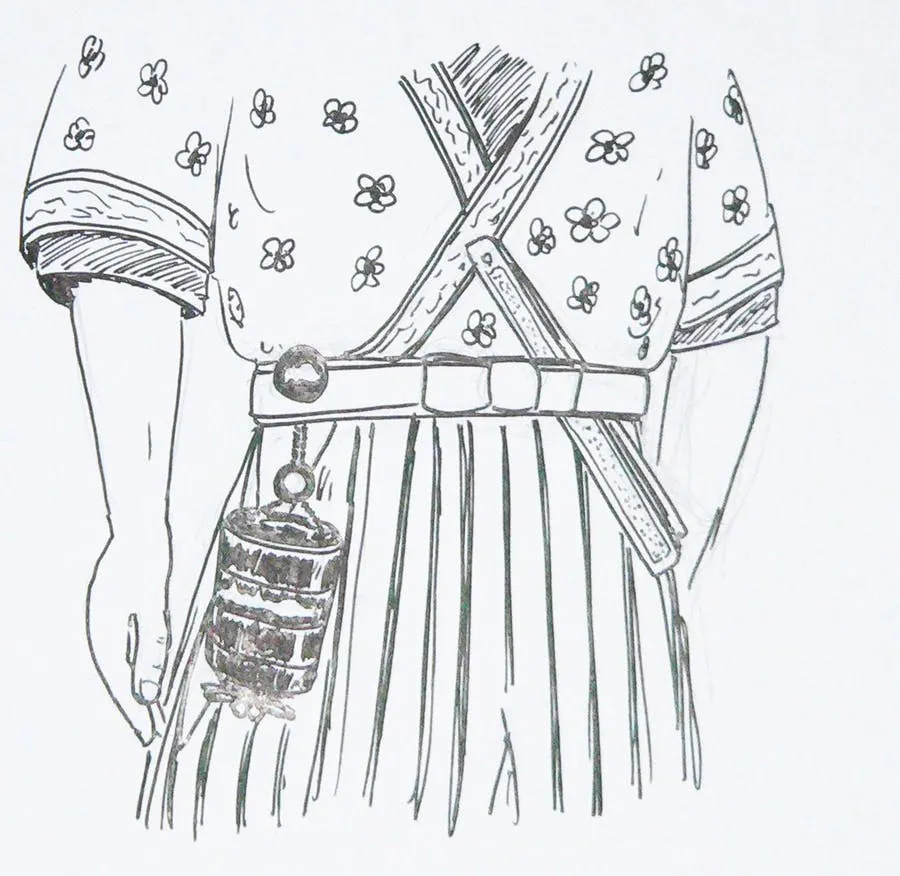
Thus appeared the Sagemono, a small box that can contain everyday objects designed to hang on the Obi (belt) of the kimono, hence their name literally meaning ‘hanging objects’. Simple and functional, it quickly established itself as a necessity and adorned Japanese clothing in an almost systematic way.
Over time, the Sagemono has become a true fashion accessory, and its aesthetic, initially sober, has strongly developed to integrate more into the outfit. Craftsmen put their creativity to the test to carve, paint and adorn the small saddlebags while exploring the use of varied materials such as wood, bone, ivory and resin.
If women could wear the Sagemono in the sleeves of their kimono, men had to hang it on their Obi. This is why all Sagemono are provided with a cord which is adjusted under the waistband of the coat, and are then secured by another small object: the Netsuke.
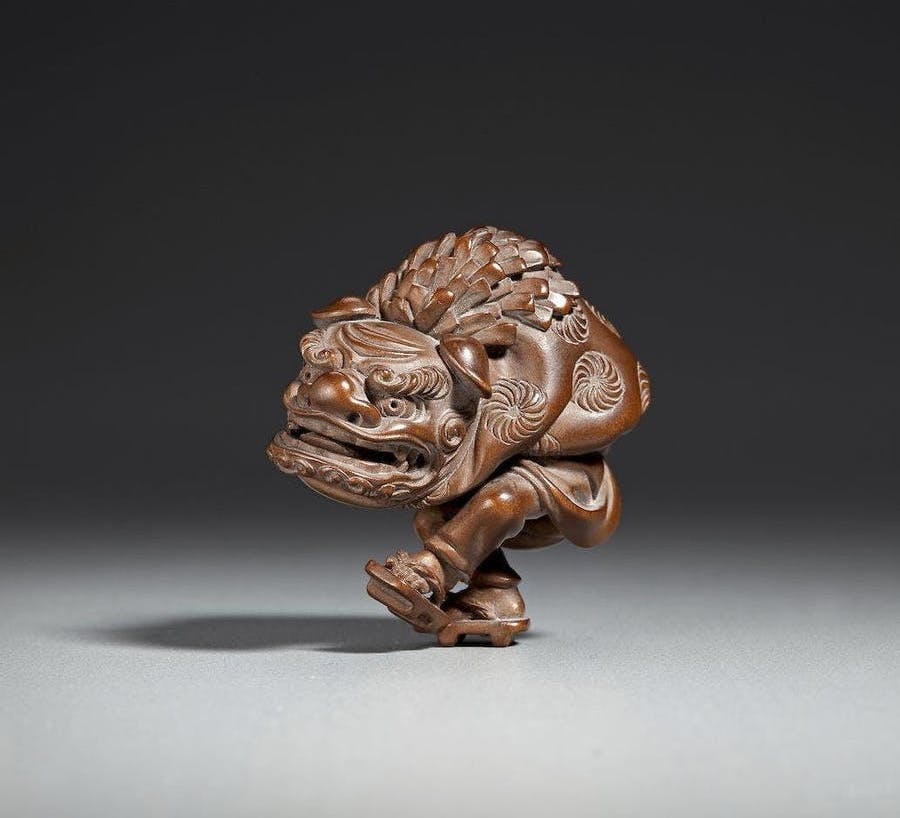
The Netsuke has undergone the same stylistic evolutions as the box it accompanies. At the very beginning, a simple piece of wood, bone or shell did the trick, but after the democratization of the Sagemono as an accessory, its appearance changed to harmonize with the kimono. The word breaks down etymologically into two Japanese characters: ‘ne’ and ‘tsuke’, which respectively mean ‘root’ and ‘attach’.
See also: 103 'Lost' Hokusai Drawings Join the British Museum
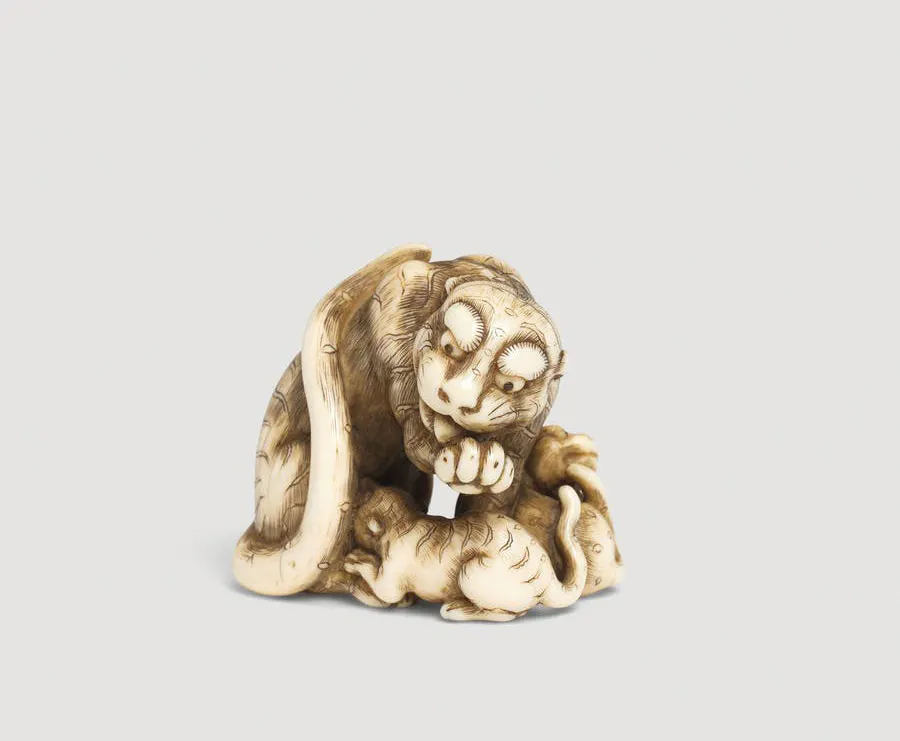
Ivory, before its ban, was the most common material in the manufacturing, later replaced by boxwood and more resistant woods. The subjects illustrated are varied, the craftsmen drew their inspiration from nature and the animals of the zodiac, even if all the themes were subsequently exacerbated. There are thus pieces representing activities of daily life, mythological creatures and even erotic scenes.
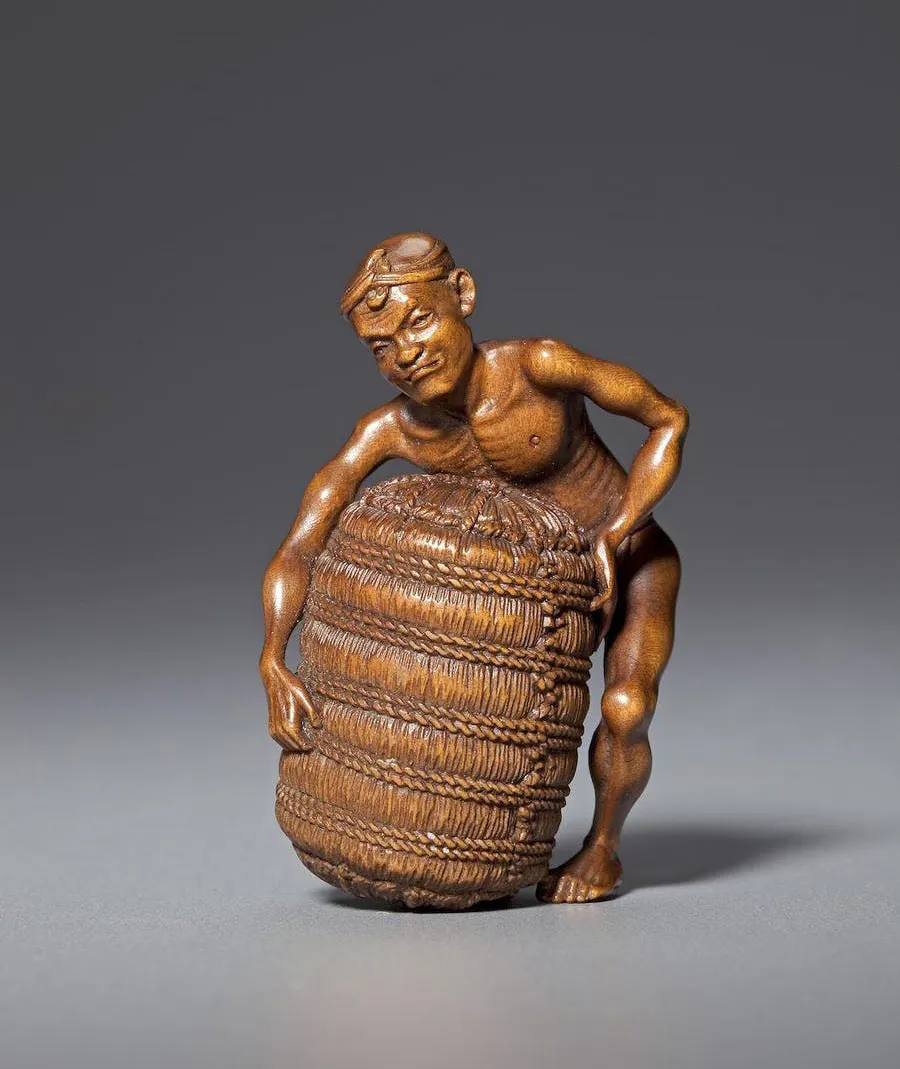
Be careful, however, not to confuse a simple figurine with a Netsuke: indeed, the latter is characterized by its cavities (usually one or two) in which the strings of the Sagemono are introduced.
See also: Snuff Bottles: Still up to Snuff
In nearly 300 years, the Netsuke has grown from a simple practical object to a masterpiece of Japanese craftsmanship. Even today, we are impressed by the know-how of the artisans, who skillfully sculpt complex shapes on a very small scale and make their modern and contemporary creations highly prized by collectors.
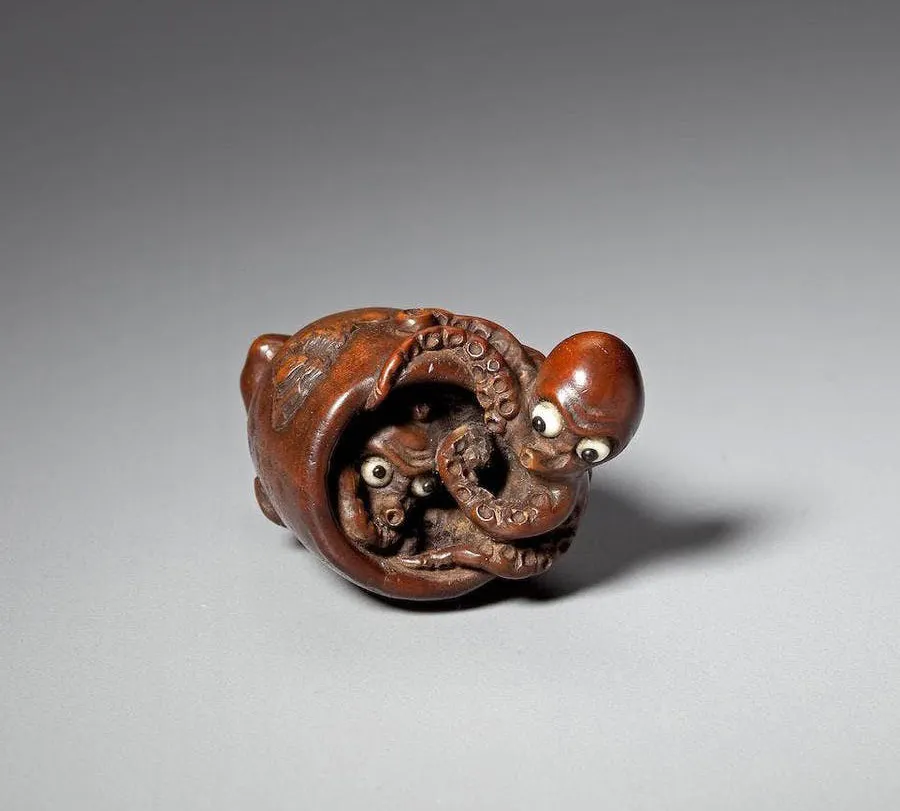
Netsuke and Sagemono circulate relatively smoothly in the auction market, and are usually integrated into Asian arts or ancient craft sales. The rarest copies, those designed by the most recognized master craftsmen or in the most precious materials, can reach more than $200,000 at auction.