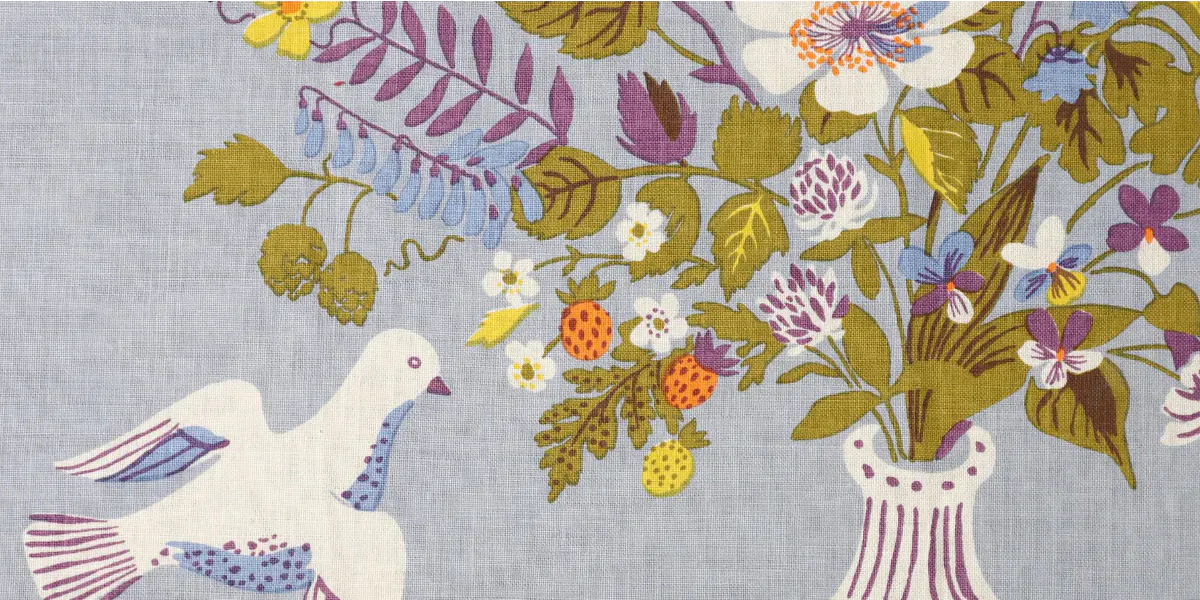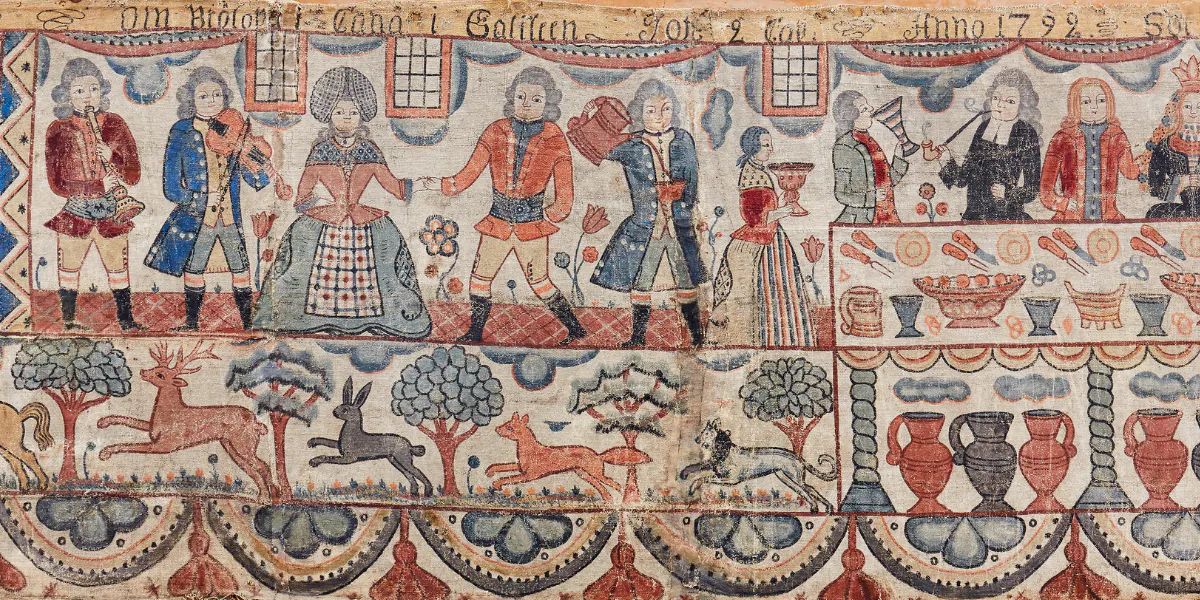
In Old Norse, a medieval Scandinavian language, all möghe means ‘all the people’. The term allmoge, derived from it, has long been used to refer to peasants and other members of peasant society. In style and aesthetics, allmoge refers to an early and often rustic style, which dominated agricultural society from the mid-17th century into the 20th century.
In the proper sense of the term, allmoge designates a ‘large group of people’. However, this initial definition evolved as society became more hierarchical, becoming the word to distinguish those who did not belong to the upper classes. As a result, allmoge became associated with farmers and peasants, rather than with the people of the nation as a whole. The townspeople, on the other hand, stood out as a distinct class, as did the bourgeoisie at the top.
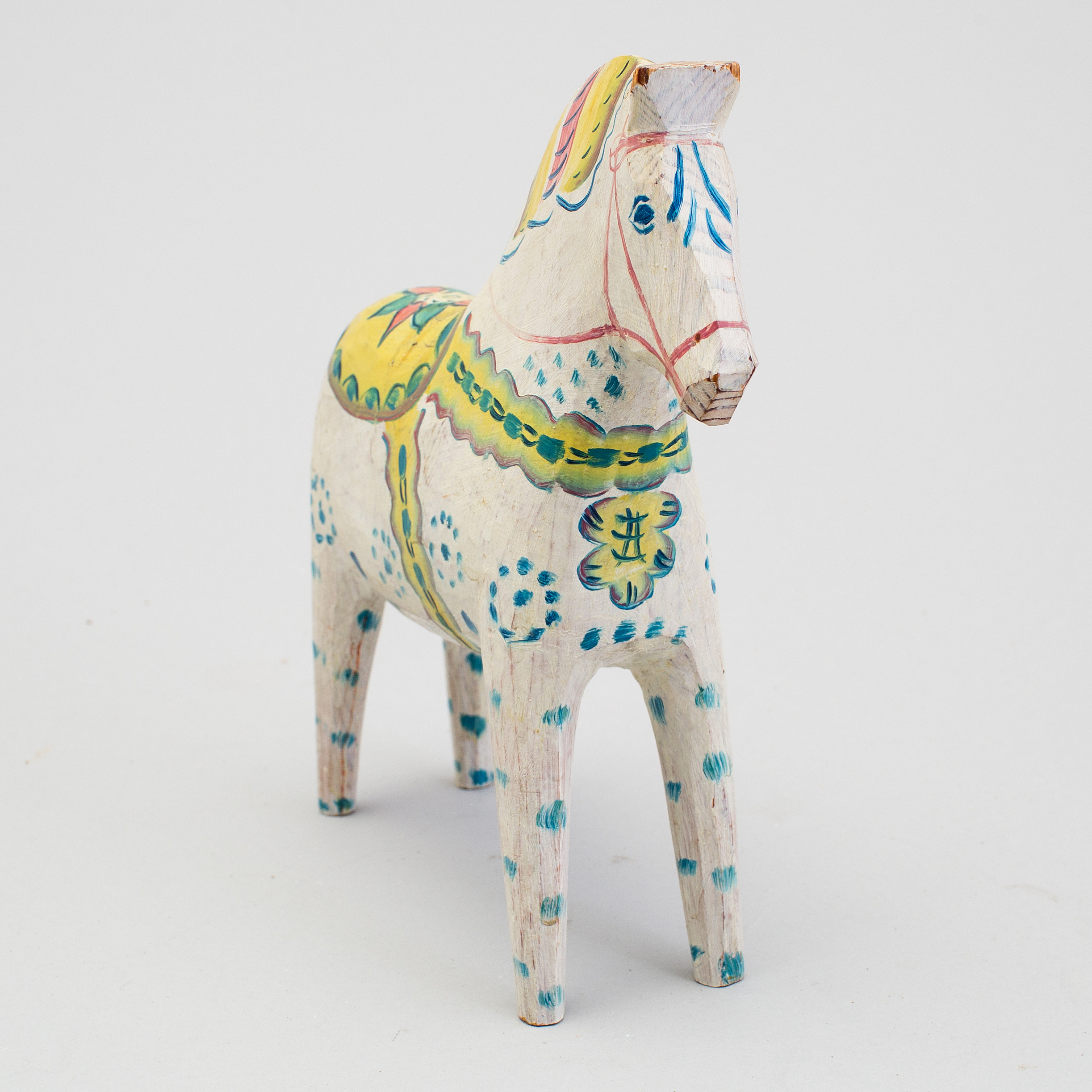
Scandinavian folk art, as a result, includes allmoge art, a craft produced according to local traditions, without regard to pre-established artistic styles or movements. Over time, this craft evolved into artisanal production that imitated older models, often designed under regional traditions.
Related: How to Furnish Your Modern Home with Antiques
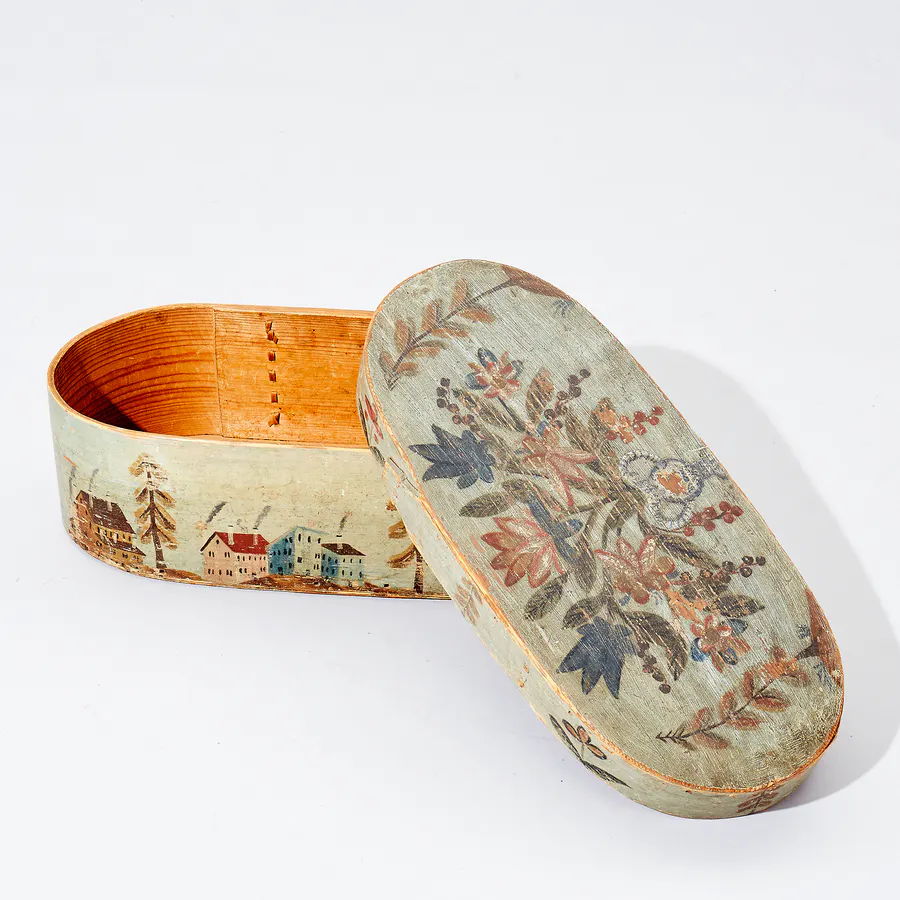
Utility objects, originally created to fulfill a function, gradually became decorative objects. Rustic wooden objects would often be decorated with paintings of various styles representing the different regions of Sweden. Colorful textiles depicting a village, town, or landscape also became common in peasant society. During the 18th century, basketwork painting spread from Dalarna and Hälsingland to neighboring regions, becoming a common way of decorating homemade objects and furniture.
Related: Need to Know: Tips for Buying at Auction
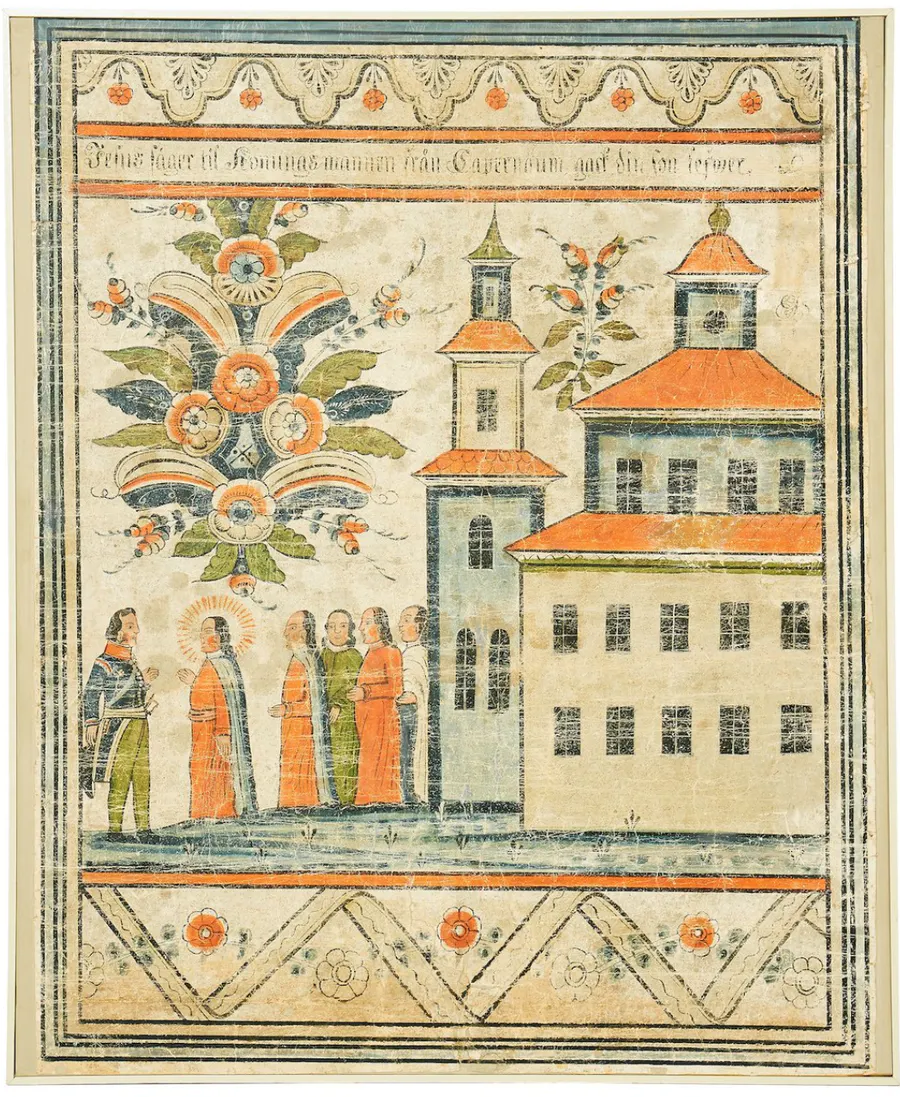
The painting of ‘kurbits’, a decorative art originating in Dalarna, also took the world of Swedish folk art by storm in the 17th century. This style of painting was characterized by plant motifs, which artists used to decorate scenes and stories, often of a religious nature, painted on both walls and furniture.
Related: Anders Zorn: Sweden's Most Popular Painter
The word kurbits comes from the Latin cucurbita and designates a genus of climbing plants belonging to the Cucurbitaceae family. The painting of kurbits was full of pumpkins, petals and leaves in repetitive patterns of an ornamental nature. The characters found in these works were often drawn from the Bible but dressed in local costumes, creating regional stylistic characteristics that kept with ancient cultural traditions.
Related: A Brief History of Furniture Design
Despite the meaning of the word, the style was not limited to old rustic pine or wooden furniture. Inasmuch as allmoge art from the rural communities was not particularly attached to a style or an era, but rather an evolving genre, it has also been influenced by more modern innovations. For example, everything from undecorated planters to cobbler's lamps is now considered folk art.
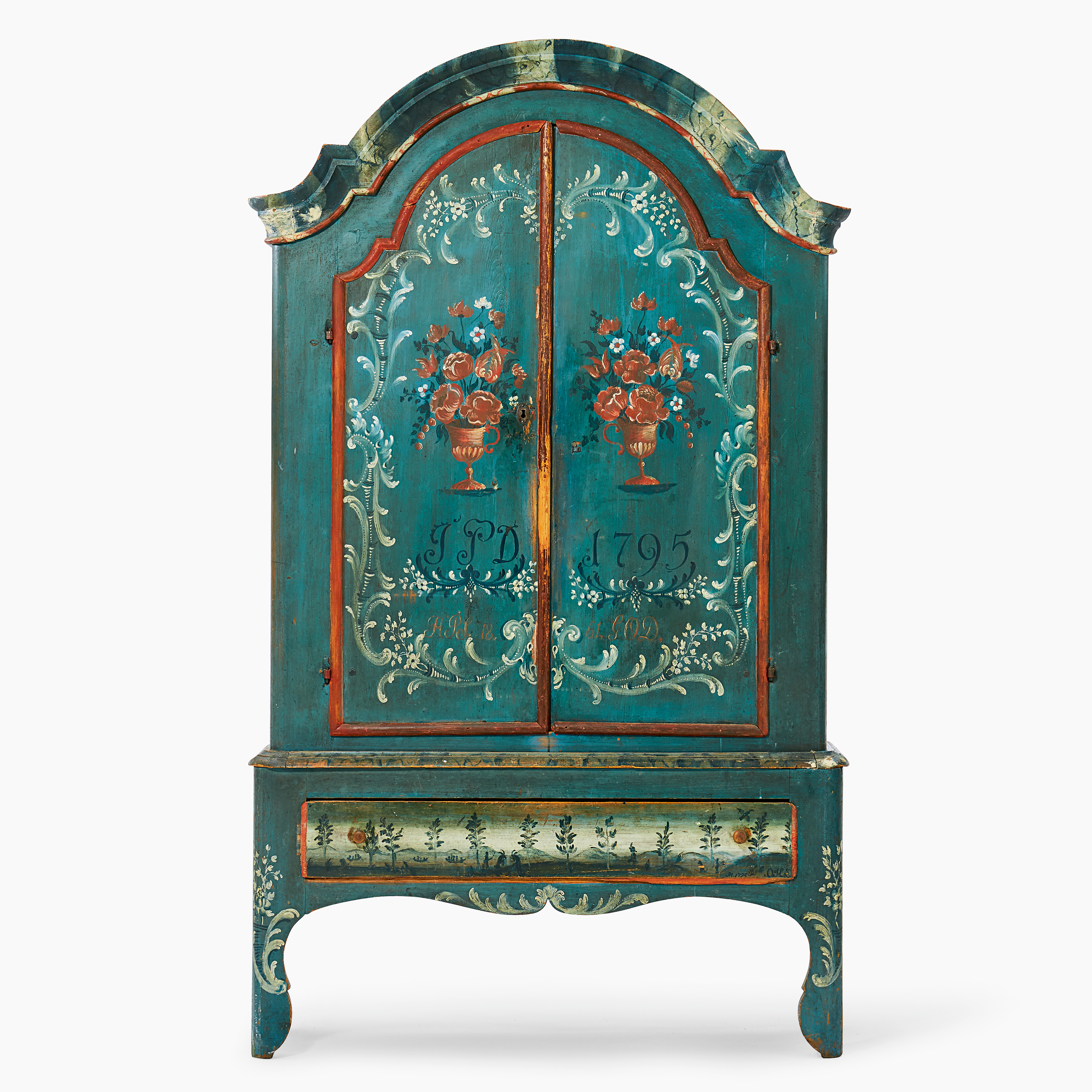
Interest in allmoge art reached a new high in December 2021, when a new record was set for the most expensive piece of furniture ever sold at auction. The piece in question was a cabinet from Jämtland dating from the end of the 18th century, auctioned by Uppsala Auktionskammare for the astonishing sum of 300,000 Swedish crowns ($33,000).