
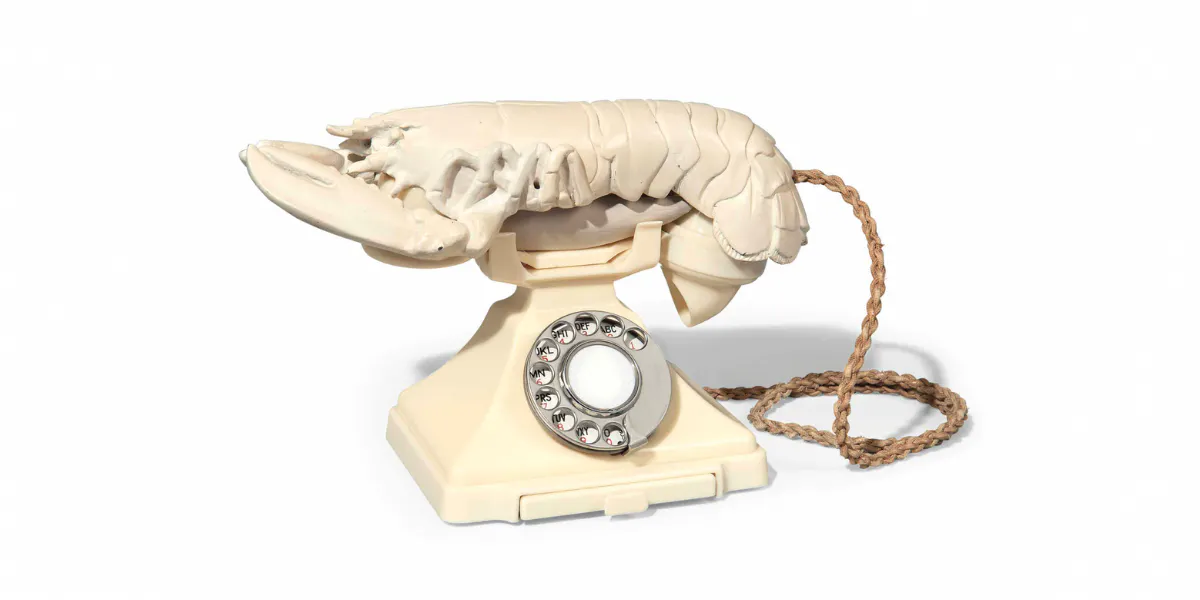
I do not understand why, when I ask for a grilled lobster in a restaurant, I am never served a cooked telephone.
Composed of a period telephone base and an elegant crustacean-shaped receiver, the Lobster Telephone is one of the most famous objects to be created by the Spanish artist Salvador Dalí. Here are 5 facts to know about the famous design:
It was made for his patron
The Lobster Telephone was made for the British poet and patron of the arts Edward James (1907-1984), whom Dalí met in Catalonia in 1934 and remained the artist’s main patron until 1939. Edward James was a wealthy British man who had inherited a fortune from his merchant father Daniel James and spent much of his inheritance supporting the arts and the surrealist movement, most famously financing Salvador Dalí and René Magritte. James decided in the mid-1930s to redesign his house in central London at 35 Wimpole Street by giving it a surrealist makeover. Dalí designed many furnishings including the now iconic Mae West Lips sofas, inspired by the eponymous Hollywood actress's lips, lamp stands in the shape of stacked champagne glasses, and the famous Lobster Telephone.
Related: Salvador Dalí: Art Crazy
It was born out of an accident
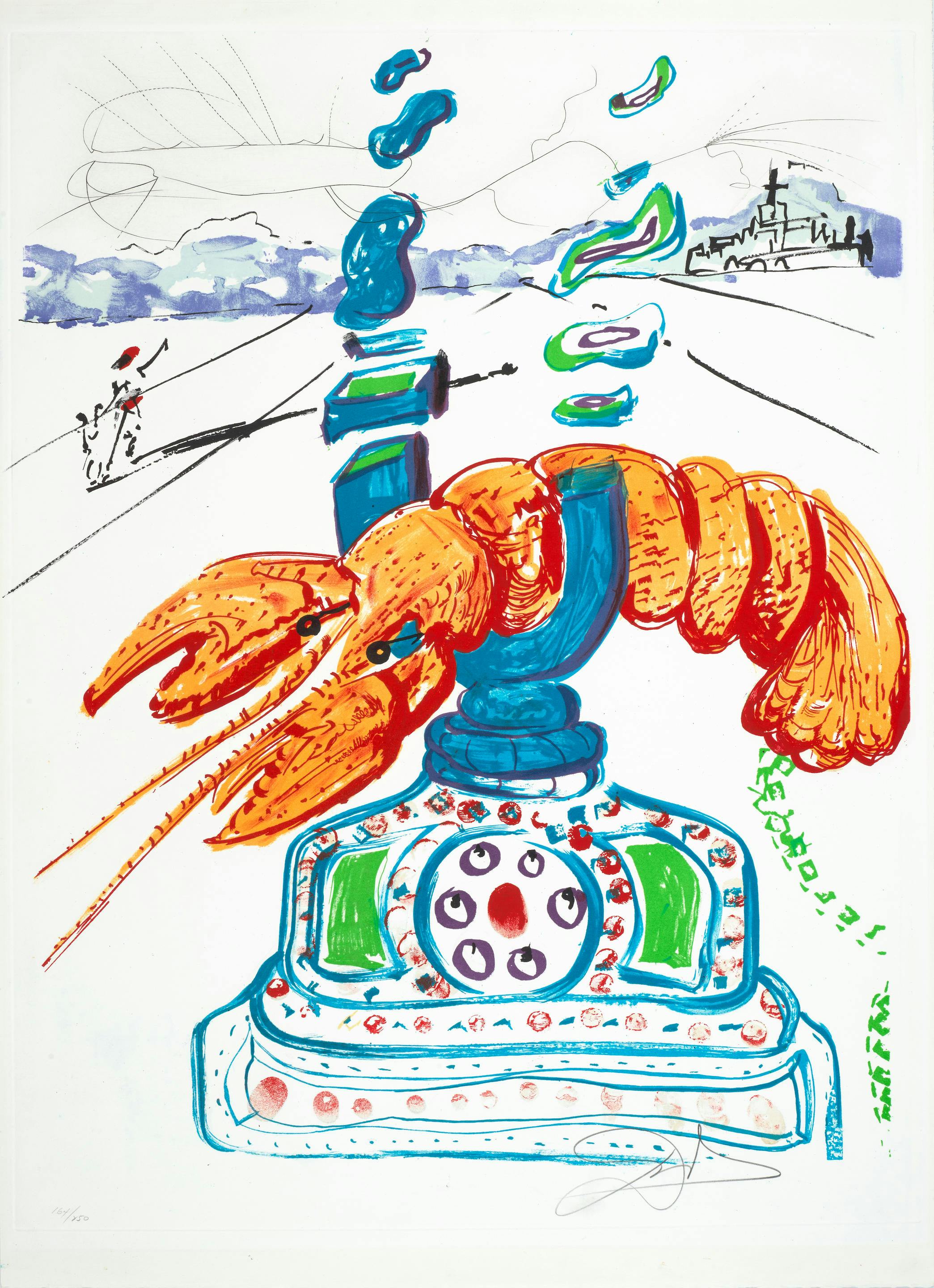
Initially conceived in 1936, the idea of the Lobster Telephone dates back to a drawing that Dalí made in 1935 for the popular journal American Weekly, which commissioned the artist to describe his thoughts on American culture through drawings, among which was New York Dream - Man Finds a Lobster Instead of a Phone, depicting a horrified man reaching for the phone and picking a lobster instead. Edward James later recalled an incident when Dalí and his lover Gala, while staying at his home in London and sitting in James’ room eating lobster, once finished, threw the shells off the side of the bed, one of which landed on top of a telephone.
Related: 6 Artists in Front of the Camera
Another story recounts that in 1936 James had visited a wealthy Roman aristocrat who, entertaining guests at her bedside beside a bucket of lobsters, retrieved a lobster instead of a ringing telephone. It is said that later that year the incident inspired James to prompt Dalí to create the Lobster Telephone.
Only 11 copies exist
Once Dalí designed the concept, James commissioned the decorating company Green & Abbot to create 11 copies of it. A letter from July 1938 testifies to James’ overseeing the production of these objects, deciding on the color schemes and quantities.
Seven of the 11 copies are entirely white, while 4 are black telephones paired with red lobsters. The telephones seem to be cast from a real lobster, and indeed in 1938 Dalí exhibited a live lobster on a red-painted telephone in New York. For the 11 copies, the inside of each plaster lobster was hollowed out to fit a telephone receiver, and a hole was created in the tail to input the cord. The tail bends over the speaker to fit around the mouth part. Several models are conserved in public collections in London (including the Tate Modern), Rotterdam, Minneapolis, Johannesburg and Lisbon.
It has sexual connotations
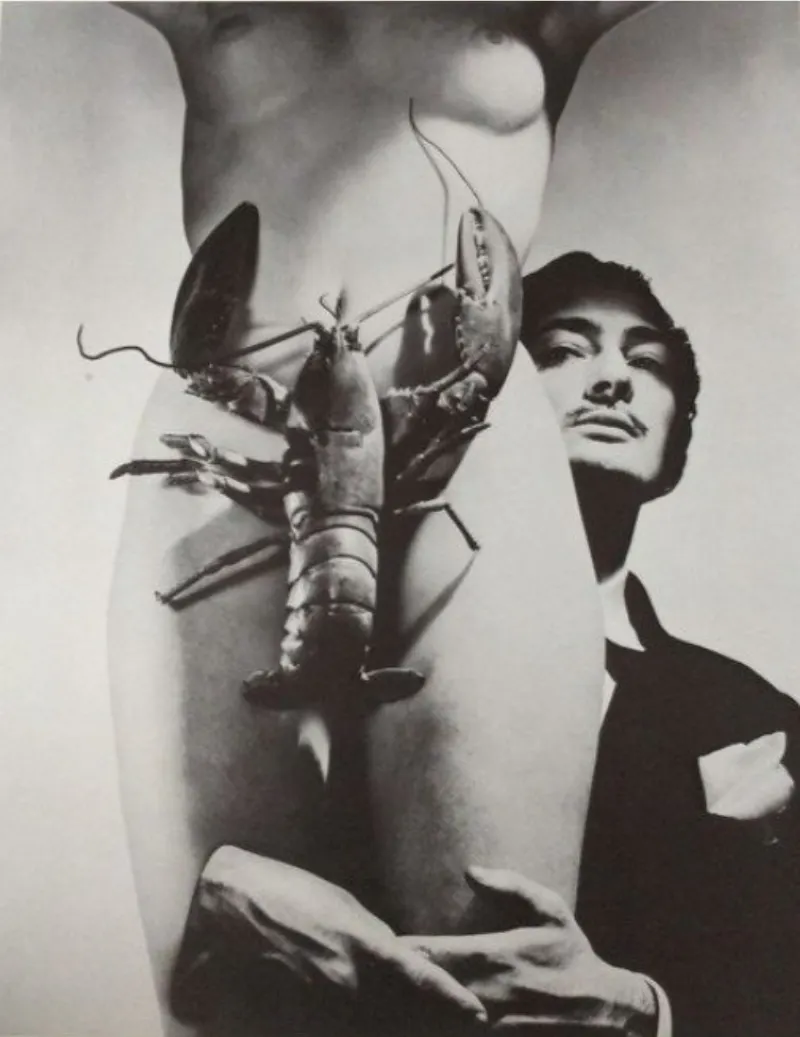
In January 1938 Dalí exhibited one of the lobster telephones at the famous Exposition Internationale du Surréalism in Paris under the name of ‘Aphrodisiac Telephone’: for Dalí, lobsters were sexually charged beings. Indeed, along with their associations with luxurious food, Dalí was drawn by their aphrodisiac power and erotic associations, which are emphasized in the Lobster Telephone by placing the lobster’s tail (and by extension its sexual organs) over the mouthpiece of the receiver.
Related: Surrealism and the Subconscious
Interestingly, Dalí and James visited Sigmund Freud, the father of psychoanalysis and one of the artist’s heroes, on July 19, 1938, just a day after James wrote to Green & Abbot to detail the commission. Dalí dug deeper into this erotic association with the 1939 project The Dream of Venus at the World’s Fair in New York, where he designed an installation funded by James which included nude women adorned with seafood costumes and live lobsters placed over their genitalia.
It inspired others
The idea behind the Lobster Telephone was also taken up by the fashion designer Elsa Schiaparelli, who collaborated with Dalí in 1937 to create a dress that featured a printed lobster on the bottom front of the skirt, the tail placed strategically between the legs of the wearer. The A-line silk dress, coined the Lobster Dress, was designed by Schiaparelli and the crimson lobster motif was drawn by Dalí and printed onto the dress by the silk designer Sache. The dress debuted in Schiaparelli’s Summer/Fall 1937 collection.
Related: The Thriving Thirties: Cecil Beaton's Photography
Later on, the dress would be worn by Wallis Simpson in photographs taken by Cecil Beaton before her marriage to Edward VIII. Simpson was criticized in the press for wearing the dress, which was considered “charged with erotic flippancy” and giving the British public “even more reason to hate Wallis” (Nevertheless She Wore It, by Ann Shen). In 2012, the dress was reimagined by Miuccia Prada for the Metropolitan Museum of Art’s retrospective Schiaparelli and Prada: Impossible Conversations, and worn by Anna Wintour at the 2012 Met Gala.
Want more articles like this delivered straight to your inbox? Subscribe to our free newsletter!
Though the Telephone Lobster poses as an inexplicable juxtaposition of two objects from unrelated realms, it all made sense in the artist's mind, as he explained in his autobiography The Secret Life of Salvador Dalí: ‘I do not understand why, when I ask for a grilled lobster in a restaurant, I am never served a cooked telephone; I do not understand why champagne is always chilled and why on the other hand telephones, which are habitually so frightfully warm and disagreeably sticky to the touch, are not also put in silver buckets with crushed ice around them’.


