
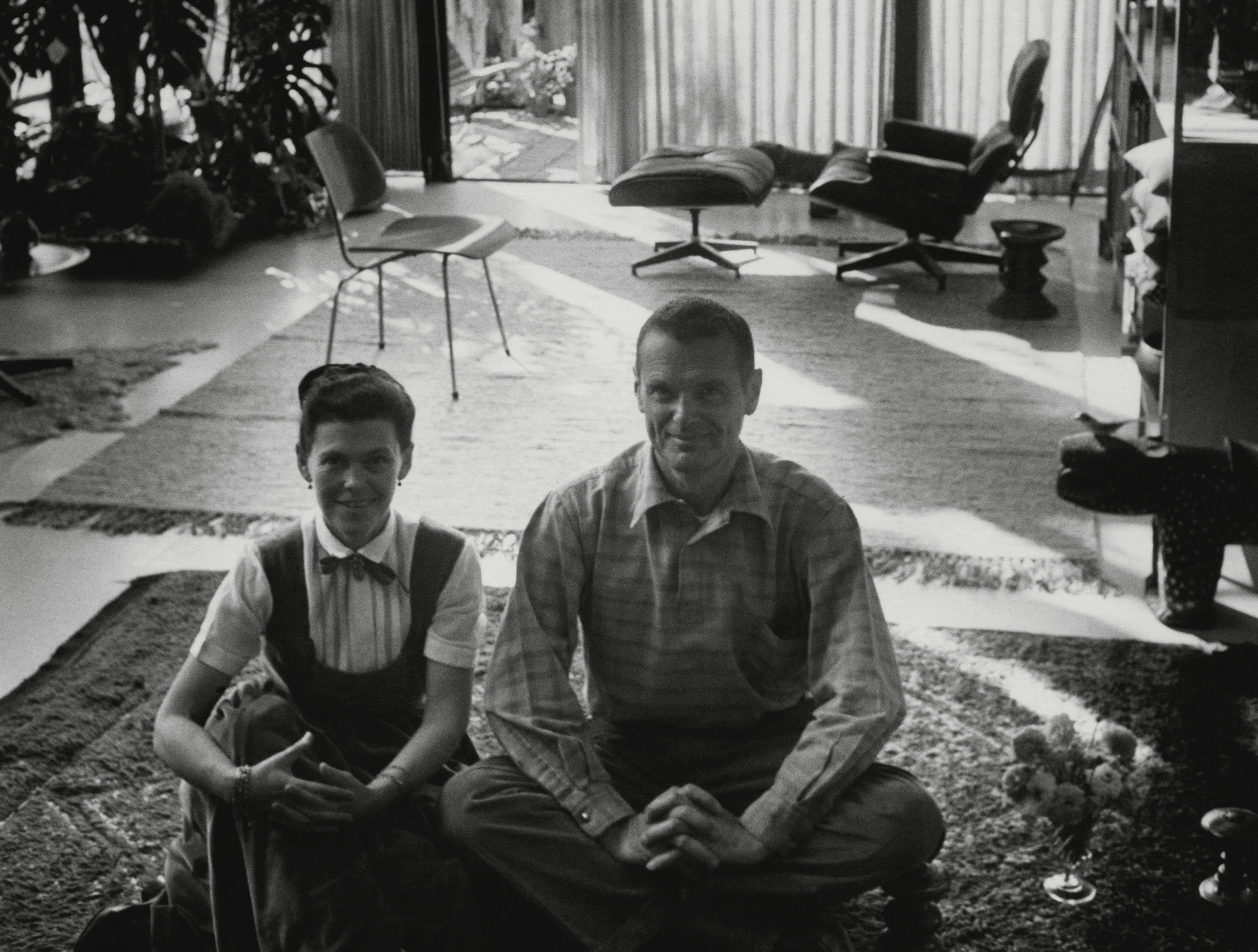
We want to make the best for the most for the least.
The legacy of Charles and Ray Eames largely helped to democratize the discipline of furniture and décor. The emblematic couple made their creations accessible through a modern, industrial approach and by using innovative techniques and materials, such as plywood and aluminum. Without neglecting the luxury market, they believed that scientific and technological innovations should be placed in the reach of a broader consumer audience, and geared themselves towards mass production. As skillful pedagogues alongside their design activity, they also made a number of educational films from the 1940s onward.
Born on 17 June 1907 in St. Louis, Missouri, Charles Eames Jr. embarked on an architecture degree in 1925 at Washington University but interrupted his studies to travel to Europe, where he discovered the first works by Ludwig Mies van der Rohe and designs by Le Corbusier, the father of the Unité d’habitation (‘Housing Unit’). Upon his return to St. Louis, Eames opened his own architectural firm in 1930 and notably collaborated with architect Eliel Saarinen, who had immigrated to the United States from Finland several years earlier.

Upon the latter’s invitation, Eames resumed his architectural studies in 1938 at the Cranbrook Academy of Arts in Michigan, where Saarinen was president. During these years, Eames also helped to set up the Cranbrook Kingswood School, an American equivalent of the Bauhaus School in Germany. Arriving at the Academy to deepen his knowledge in architecture and town planning, Charles later became an industrial-design teacher there. It was here, most significantly, that he made an encounter that would change the course of his career and his work: Ray Kaiser (b. 1912), at the time a student in abstract painting. Originally from Sacramento, California, Ray teamed up with the idealistic and inventive designer, whom he later married in 1941.
See also: Le Corbusier, Pierre Jeanneret and the Silver City
The couple then moved to Venice, near Los Angeles, and began working for the film industry, namely creating film sets for Metro-Goldwyn-Mayer (MGM) productions. Researching the latest design developments, they explored new moulding and material-bending techniques. When the United States joined the war, the Navy looked to Charles and Ray Eames for their expertise in plywood and fiberglass. The couple helped to manufacture splints, stretchers, and even fuselage parts for gliders.
Along the way, the couple discovered mass production – an approach which they then transposed to their own furniture universe. “We want to make the best for the most for the least,” Charles Eames once said.
See also: Josef Frank: The Definition of Modern Swedish Design
Their company Evans Product was created as an extension of this democratic, mass production momentum, yet struggled to find customers. It was under the name Herman Miller Inc., an office-equipment and furniture company based in Michigan since the 1920s, that the Eames’ creations were distributed. From 1946 onward, they rapidly found success among America’s wealthy and middle classes.
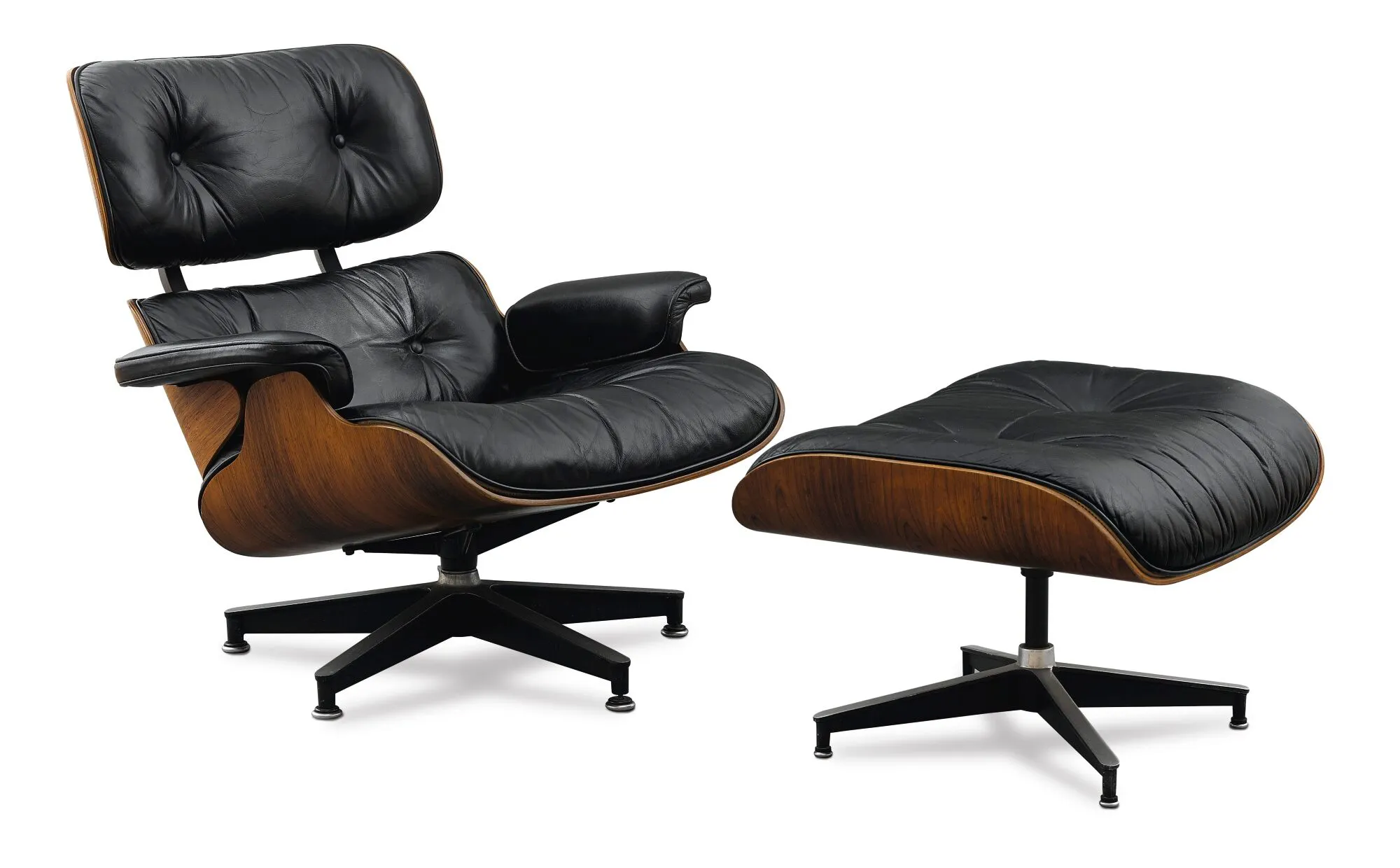
Drawing inspiration from sources as unexpected as a potato crisp or a baseball mitt, the Eames chairs and armchairs sought to mould to the shape of the human body with the help of plywood, aluminum, steel wire, plastic, and other materials used in aeronautics to provide more comfort, flexibility and suppleness. With its seat separated from its back, the Lounge Chair Wood, or LCW, is undoubtedly their most famous model; it was an undeniable commercial success, selling several million chairs, and opening the way to multiple variations. Produced from 1956 onward, the Eames Lounge Chair, which democratized relaxation chairs, also reached new summits, selling six million copies. The way the Eames couple saw it, the goal of design was to improve society and to understand the world better.

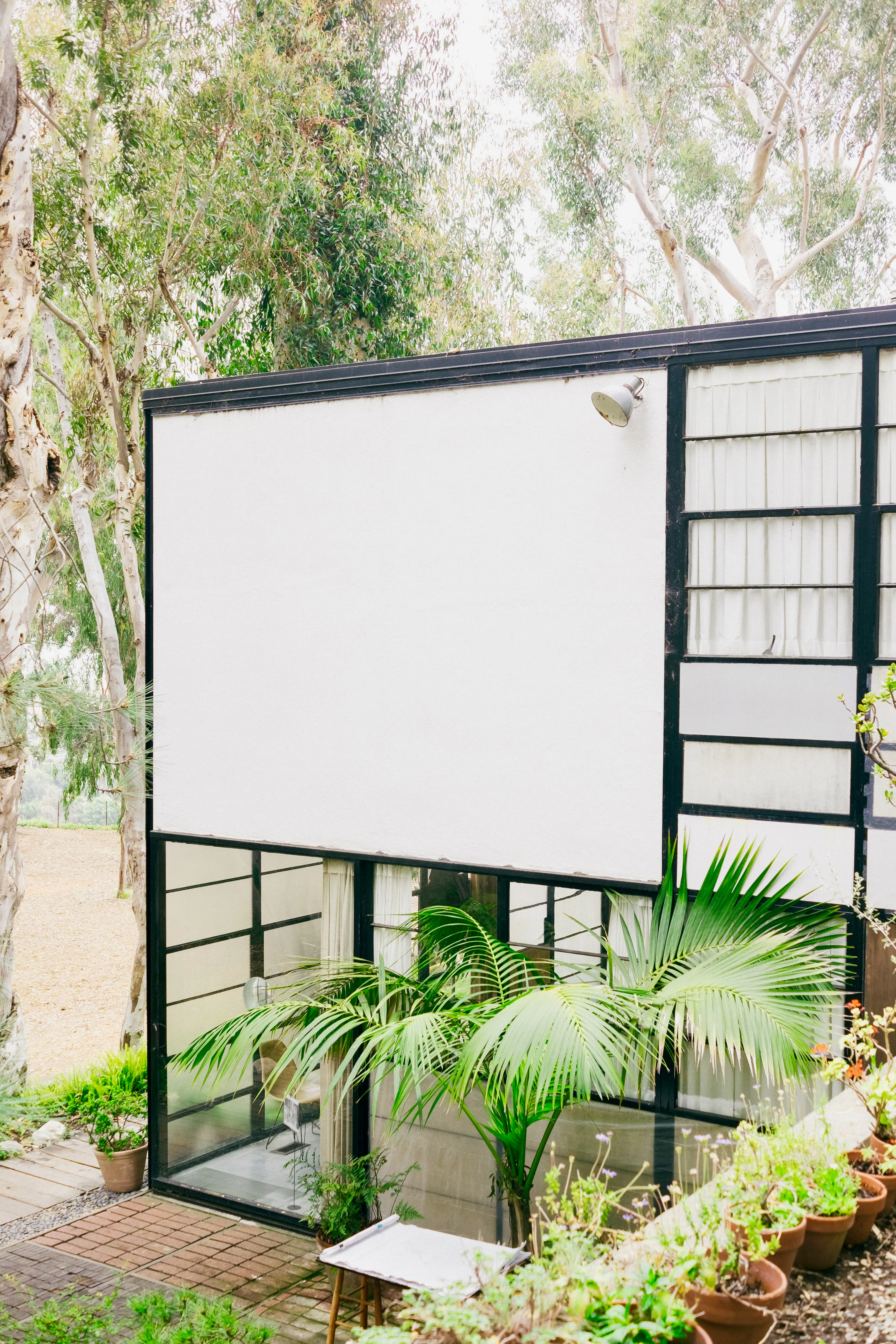
This goal prompted the husband-and-wife team to take part in the 'Case Study Houses' program, launched in 1945 on the basis of an idea put forward by the head editor of the magazine Arts & Architecture, John Entenza. The principle was to design and build practical and economic houses that could be reproduced easily via the use of prefabrication techniques and the era’s industrial materials, namely recycled materials. The house designed by Charles and Ray Eames in the Pacific Palisades neighborhood of Los Angeles was presented in 1949. Simple and light, drawing inspiration from traditional Japanese architecture, it remains a reference in the field of prefabricated construction: the steel frame was installed in less than 90 hours.
See also: The Futuristic Design of Joe Colombo
Apart from their decidedly modernist furniture and architecture, the Eames also excelled in toy-making, graphic design, photography, film, and multimedia installations. Their films, educational in intent, sometimes propagandist, often experimental, not only dealt with their artistic and scientific subjects, but also political ones.
Charles Eames died of a heart attack in St. Louis in August 1978, and Ray died on the same day ten years later in Los Angeles. Their work, both multifaceted and popular with their industrial-scale approach, remains impactful even to this day.
Part of their personal collection is conserved by the Vitra Design Museum, in Weil am Rhein on the Swiss-German border, and Vitra, a furniture maker based near Basel, continues to produce and distribute the most timeless Eames pieces today.