
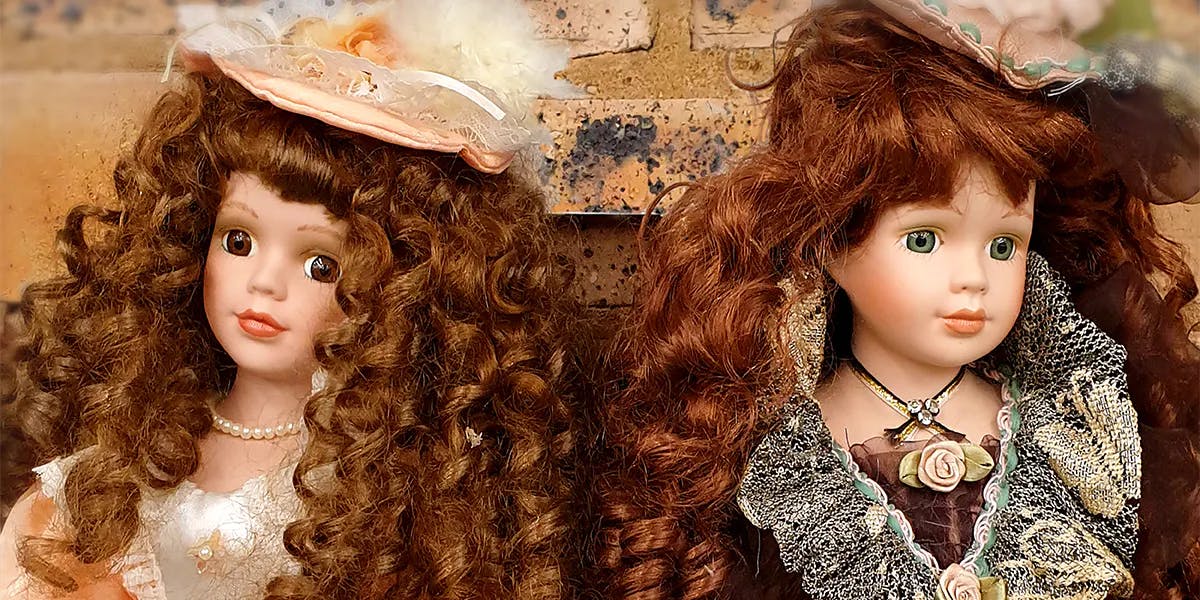
China was the first region in the world to design porcelain dolls, followed by the Middle Kingdom of Egypt. It was not until the first half of the 19th century that Western Europe countries such as Germany, France, and England. saw the rise in popularity of porcelain doll manufacturing.
Related: Käthe Kruse: The Doll Mother
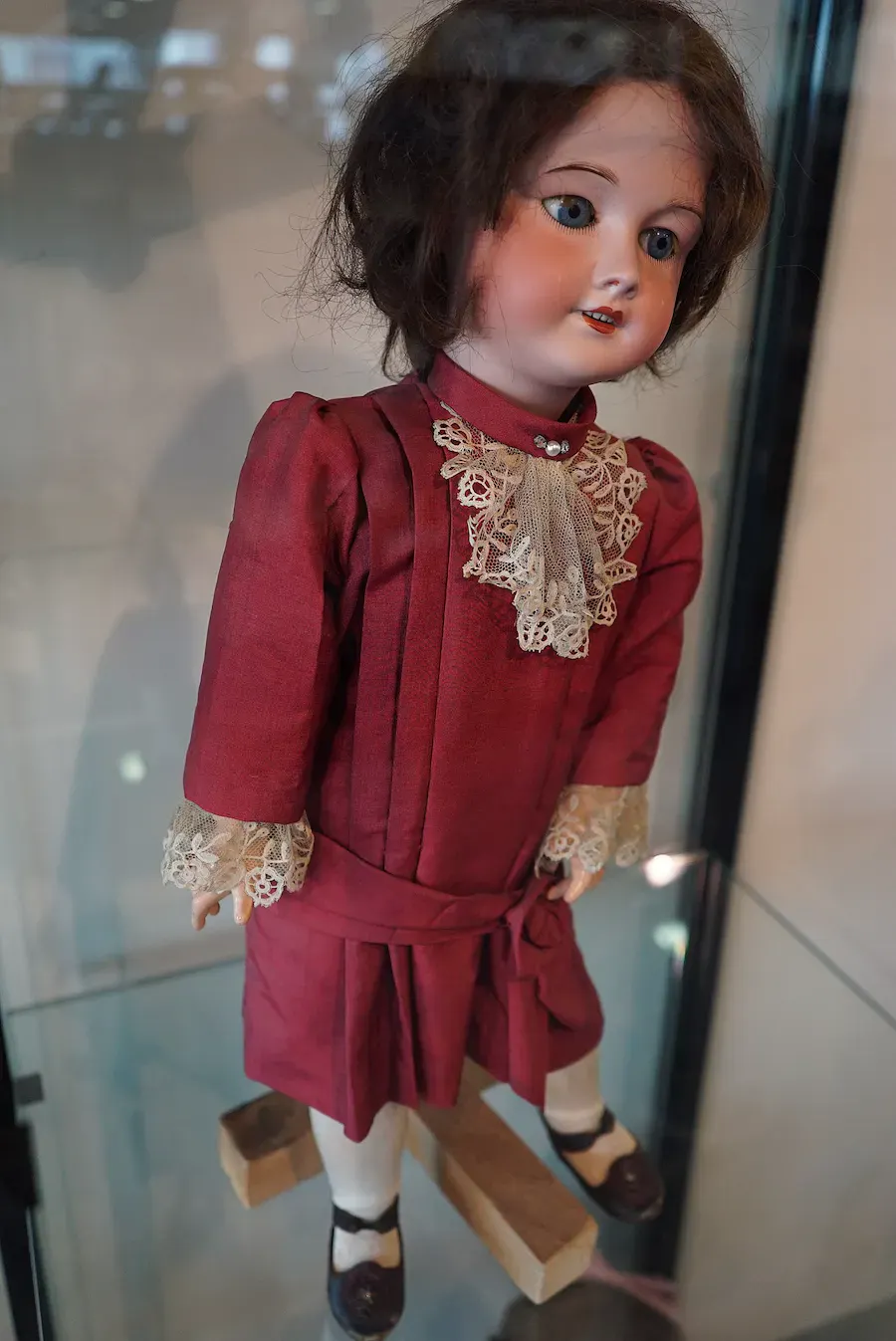
During most of the 19th century, these dolls depicted women. More rarely were depictions of children and babies, which would not become popularized until 1880 and onward, after the development of porcelain biscuit production, a type of earthenware fired at high temperatures. These first models were dressed in contemporary fashions, sometimes quite elaborately, just like their papier-mâché and wax model counterparts. Porcelain dolls were able to especially distinguish themselves thanks to their touch of elegance. The facial features, topped with hairstyles made out of mohair wigs, were more realistic appearing than previous modes of doll making. These fragile and expensive dolls were generally equipped with a trousseau full of clothes and accessories; young girls, typically of the nobility, would be entertained by playing pretend and dressing up their dolls for different occasions.
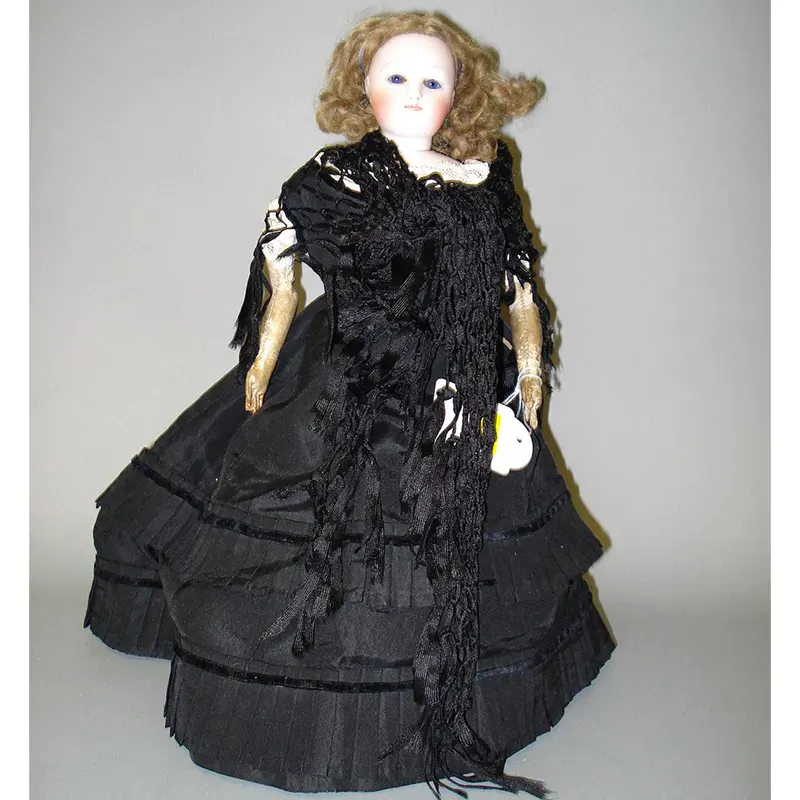
Over the decades, the newfound mastery of the baking process combined with the discovery of new materials such as gutta-percha and celluloid would become more widespread and give rise to real works of art in the doll making field, most notably at the end of the 19th century. Germany, for example, enjoyed a flourishing market for porcelain dolls in which existed a large number of small craft companies, as well as the dominant company of Armand Marseille, which is now considered the world’s best known manufacturer of bisque porcelain doll’s heads.
Find out what your porcelain doll is worth with ValueMyStuff!
Armand Marseille was a Russian born son of a Huguenot architect who immigrated to Germany with his family in the mid-19th century. In 1884 he bought a toy factory and then a porcelain factory and with these two entities, he created a porcelain doll empire. Between the years 1900 and 1930, his company produced nearly 400 different models of dolls and characters in biscuit, fabric, kid, and body composition.
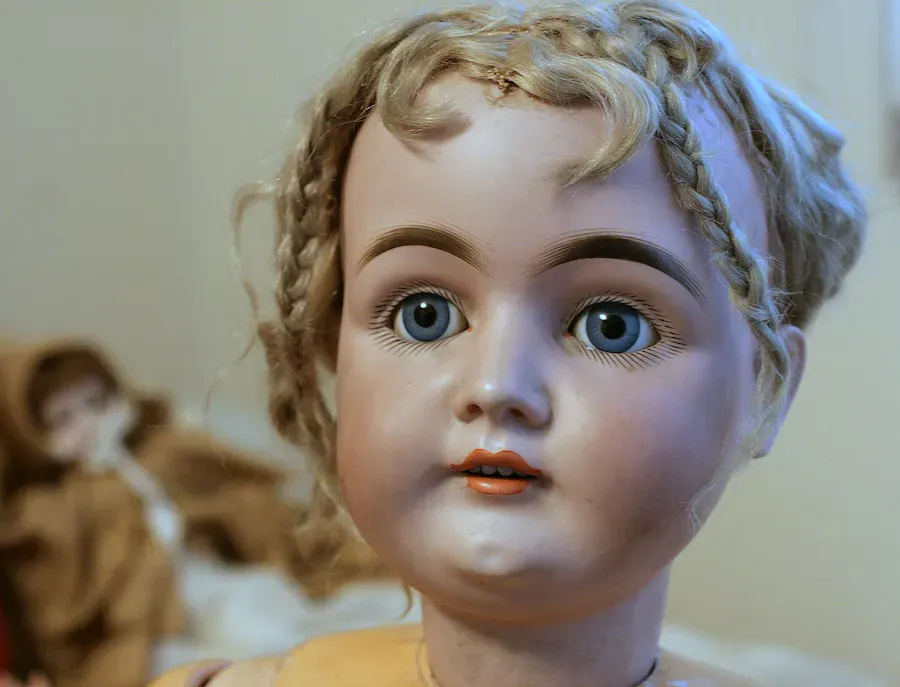
France enjoyed a similar phenomenon. At the turn of the 20th century, Parisian-style doll models became outdated and gave way to a new kind of articulated dolls which came in different sizes and, above all, possessed a more childish look as opposed to earlier dolls which exclusively represented adults. Brands such as Jumeau, Steiner, and Bru began creating French Bébés, all designed by highly skillful sculptors and dressed in contemporary children’s clothing.
Want more articles like this straight to your inbox? Subscribe to our free newsletter!
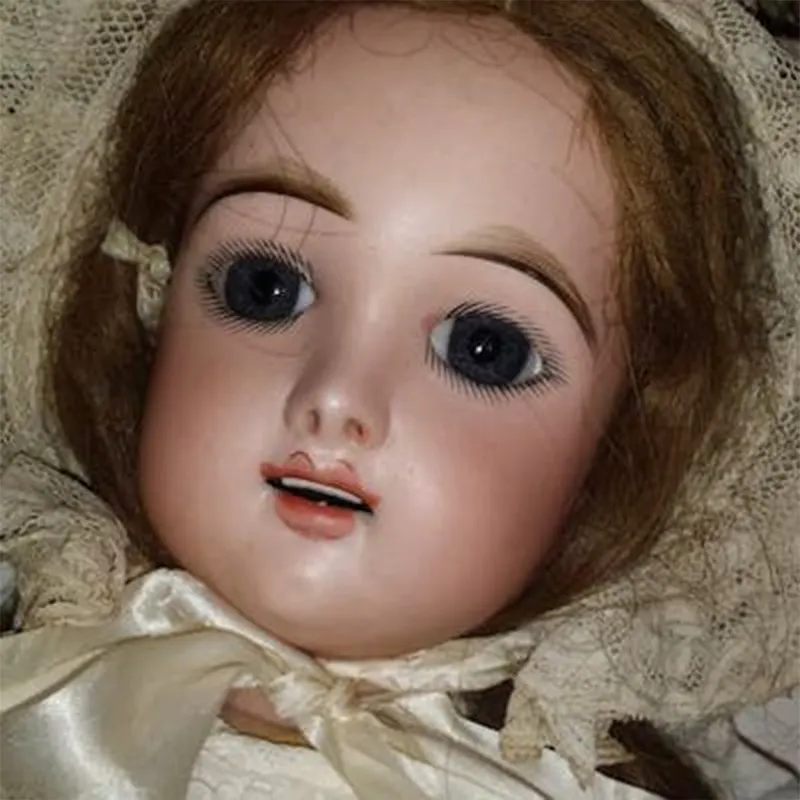
French doll-making companies of this time distinguished themselves from their competitors by their inventive spirit and the originality of their creations, which displayed facial expressions of striking realism. The Jumeau company earned its reputation with its famous unbreakable Baby with a Sèvres porcelain face, which won several prizes at international exhibitions.
Related: Steiff: The Teddy Bear Empire
However from 1900 onward, sales gradually collapsed, marking the end of the golden age for these toys marketed for the luxury goods sector. One of the last great successes of this kind was the Bleuette doll, which was offered with the annual subscription to the French children’s magazine La semaine de Suzette, and whose model, manufactured with a biscuit head until 1939, sold several tens of thousands of copies. Later on, baby dolls took over the market, adapting more resistant and less expensive materials, such as celluloid, stuffed fabric, felt, etc., and new brands launched on the market such as Steiff, Lenci, Kamkins, and Venus.
Related: The History of Barbie: The World's Most Popular Doll
Despite being up to 150 years of age, some specimens have not withered a bit and can be sold for more than tens and even hundreds of thousands at auction. In 2014, a Kämmer & Reinhardt doll sold for a record $331,800 at Bonhams.


