
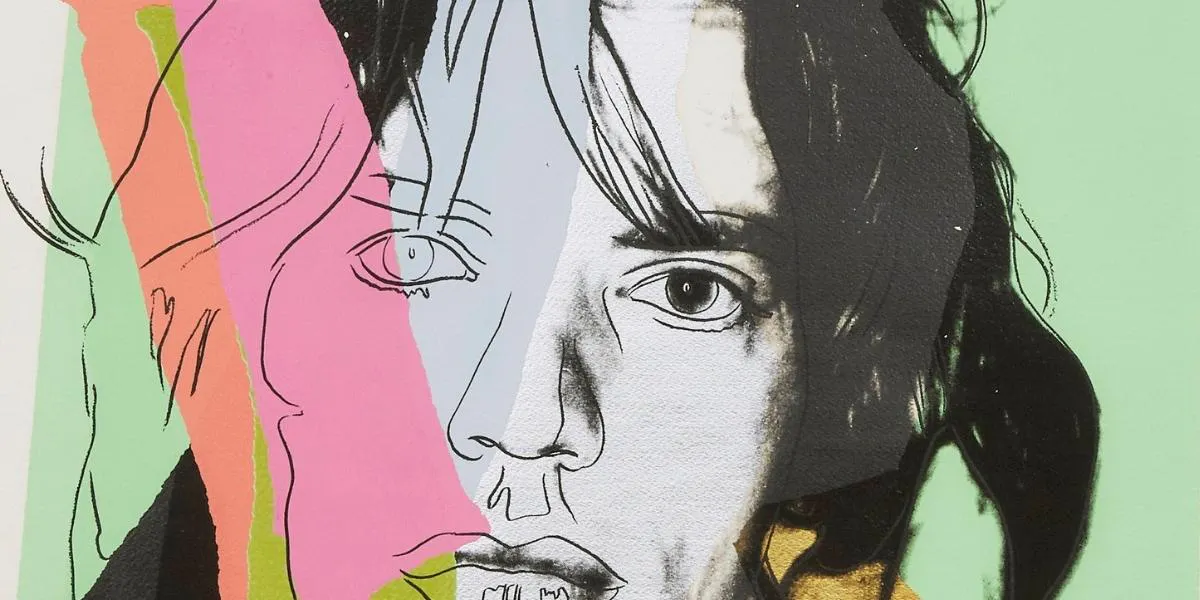
Featuring works by international artists Andy Warhol, Salvador Dalí, Roy Lichtenstein, Marc Chagall, Joan Miró and Romare Bearden, enhanced by contemporary powerhouses Jeff Koons, Tracey Emin, Damien Hirst, Donald Sultan, and Alex Katz, alongside leading Inuit printmakers Kenojuak Ashevak, Jessie Oonark, and more, Waddington's Prints & Multiples auction will be offered online from November 5-10, 2022.
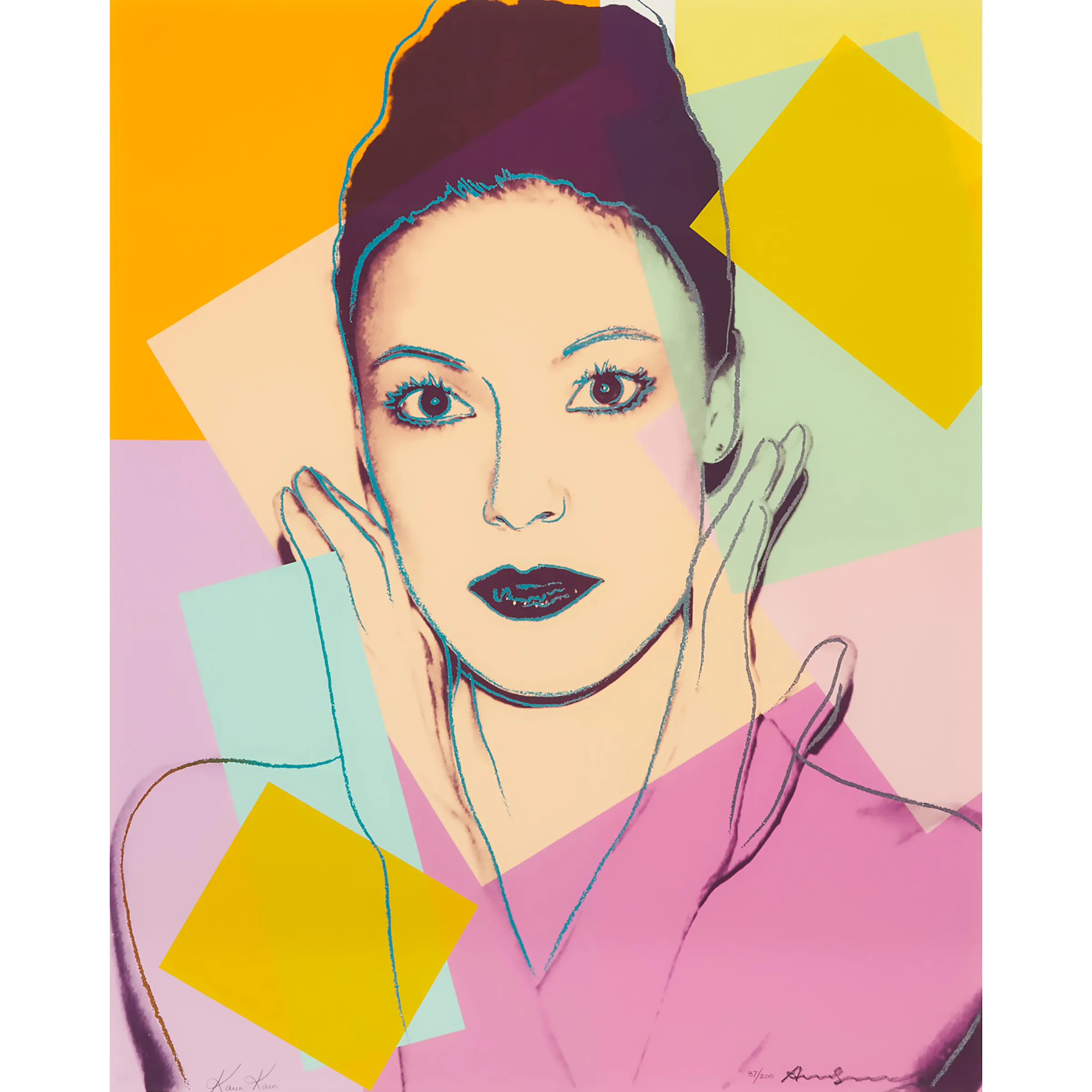
Andy Warhol, Karen Kain
Canadian ballet dancer Karen Kain’s portrait stands out from Andy Warhol’s oeuvre precisely because of her hands, which are typically absent from his portraits, particularly those of female sitters whom he depicted from the shoulders up, in the style of a classical bust. Warhol’s screenprints of Kain were unveiled in Toronto on June 19, 1980, at an event at the Sutton Place hotel. The proceeds from the first 50 prints from the edition of 200 went to benefit The National Ballet of Canada. Kain recalls that by the time the unveiling happened, she had largely forgotten about her trip to the Factory, so immersed was she in her ballet career.
As payment for her sitting, Kain was given the choice to receive two screenprints or one painted portrait. She chose the former, giving one copy to her parents. Kain’s copy hangs in her Toronto home, and her opinion of the iconic image has certainly changed over the years: “I feel very differently about Andy’s work now, with maturity and the passing of time and an understanding of his place in the artistic milieu. Honestly, I really was not taken with the paintings or the silkscreens at all in the beginning.” She adds, “I really didn’t get why he was so famous or why everyone wanted their portrait done by him, but now I have a different appreciation of what he brought to the world.”
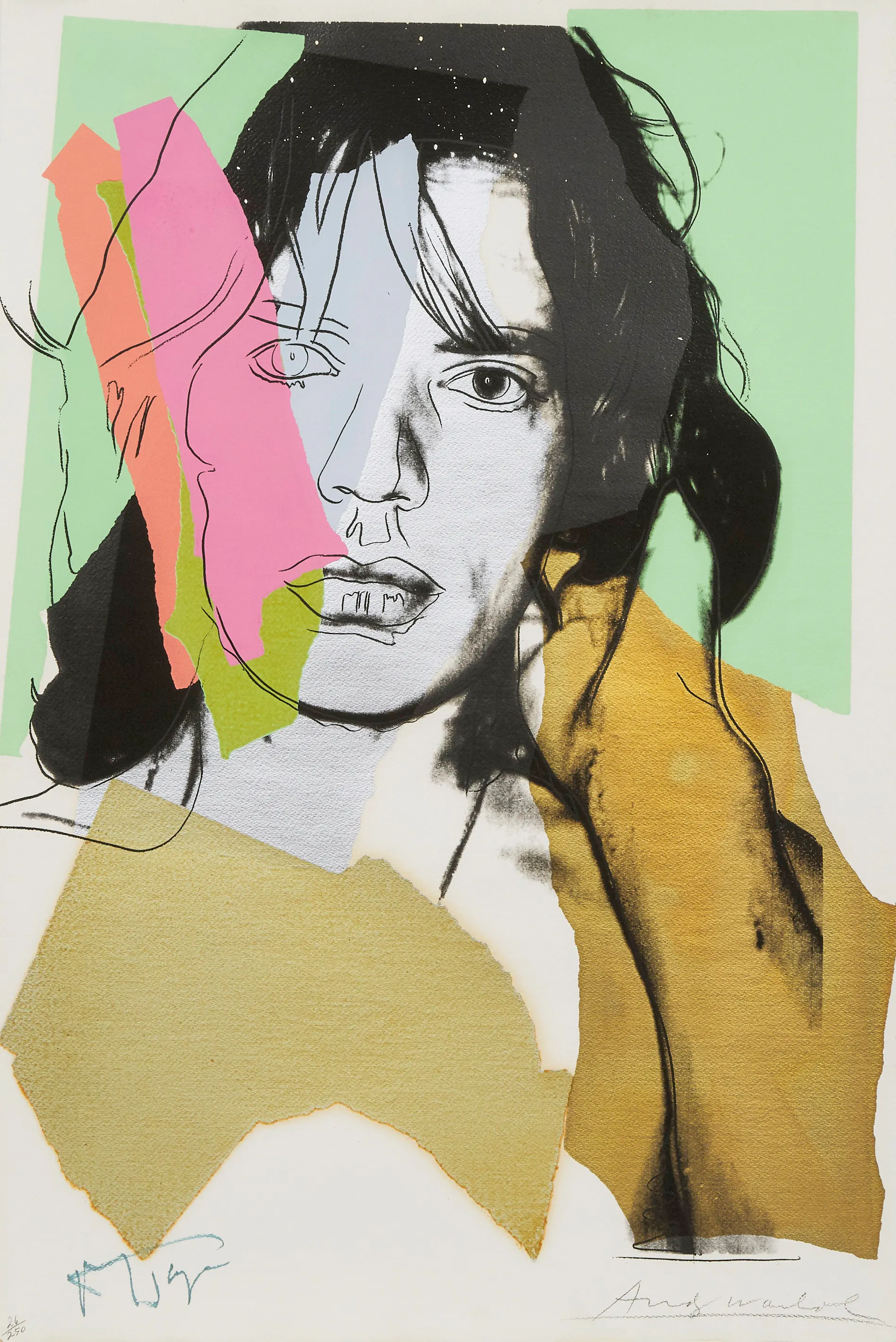
Andy Warhol, Mick Jagger
The great themes of Andy Warhol’s career – celebrity, sex, and glamour – also found their ultimate expression in his portraits of Mick Jagger. Jagger and Warhol first met in New York City in 1964, at a party held for the Rolling Stones during their first US tour. At the time, the Stones were relatively unknown in mainstream American culture, as was Warhol – though both would rocket to superstardom within years. Despite a 15-year age gap between Jagger and Warhol, the two stars began a friendship and a working relationship that would continue through the height of their careers. By the 1970s, Warhol had turned a corner stylistically, moving away from using found imagery, instead preferring to take his own photographs. In the summer of 1975, Warhol rented out his Montauk, Long Island home to Jagger and his wife Bianca while the Stones were rehearsing for their sixth American tour. Jagger’s stay allowed Warhol the opportunity to take a series of photographs of the star. From them, Warhol produced a ten-print portfolio, each seeming to express a different side of Jagger, across a variety of moods. The resulting prints feel multidimensional, compounded by Warhol’s layering in his interests in collage and drawing. Warhol had begun to explore non-representational art by the early 1970s, and in this portfolio, abstract chromatic sections both accentuate and obscure Jagger’s dramatic features. Hand-drawn elements – though printed – lend an expressive component.
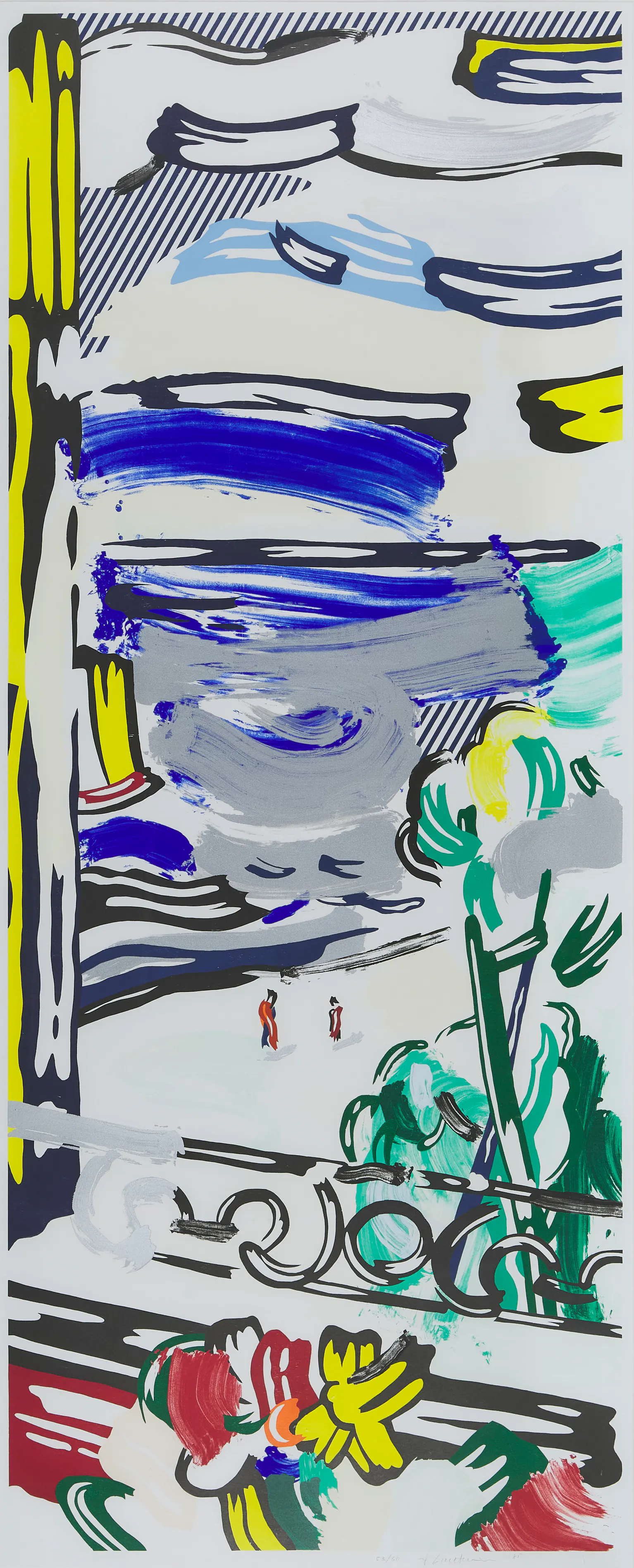
Roy Lichtenstein, View from the Window
Though Lichtenstein is perhaps most associated with his early comic-book inspired scenes, by the mid-1960s, the artist had shifted his focus towards a different subject matter: the landscape. Well aware of the monumental tradition he was grappling with, Lichtenstein blended the landscape genre with his Pop Art aesthetic to produce something new. That same year, Lichtenstein created his first paintings of oceans, skies, and hills, at first honing in on the landscapes which formed the backgrounds of comic book panels. He would explore the landscape theme further over the following decades, sourcing images from both “high” and “low” culture: mass-produced iconography, such as travel postcards, or heavily reproduced paintings by popular artists including Claude Monet or Vincent van Gogh. Other times, his landscapes were imaginary, composites sourced from his memory. Tying his output together was his continued formal vocabulary of Ben-Day dots, strong black outlines, and a bold color palette borrowed from consumer culture and commercial printing.
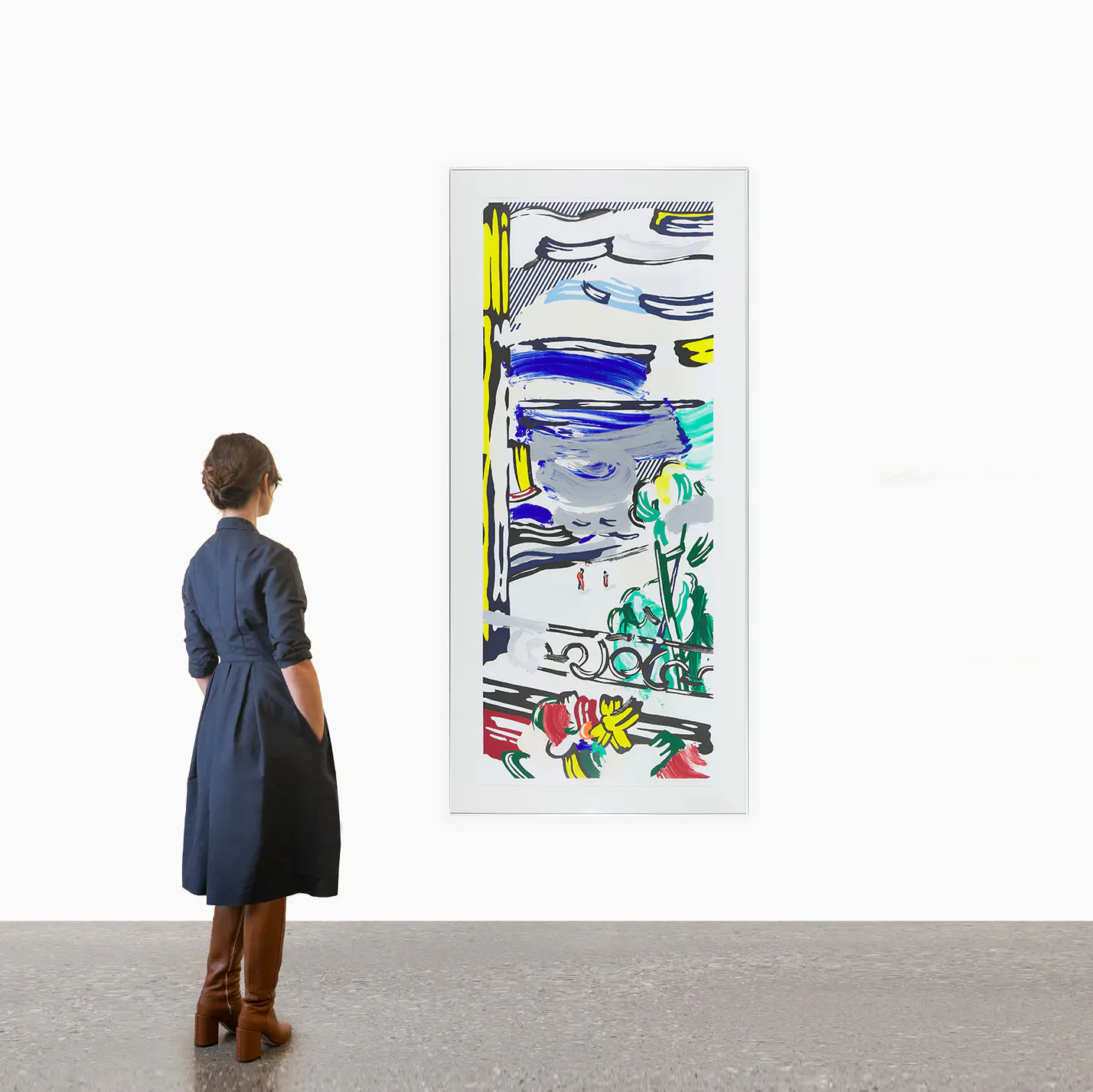
In View From the Window, Lichtenstein almost entirely obscures the landscape behind a thicket of obvious brushstrokes, both cartoon and realistic-looking in style – though they aren’t brushstrokes at all, but rather printed facsimiles. A nod to his 1960s “Brushstroke” series, these motifs were central to Lichtenstein’s work: rather than using brushstrokes as a tool to make a final image, he made the brushstrokes his subject. Lichtenstein was fascinated by the idea of painting pictures about pictures – as with much of the artist’s work, this results in a great tension between flatness and depth, style and substance.