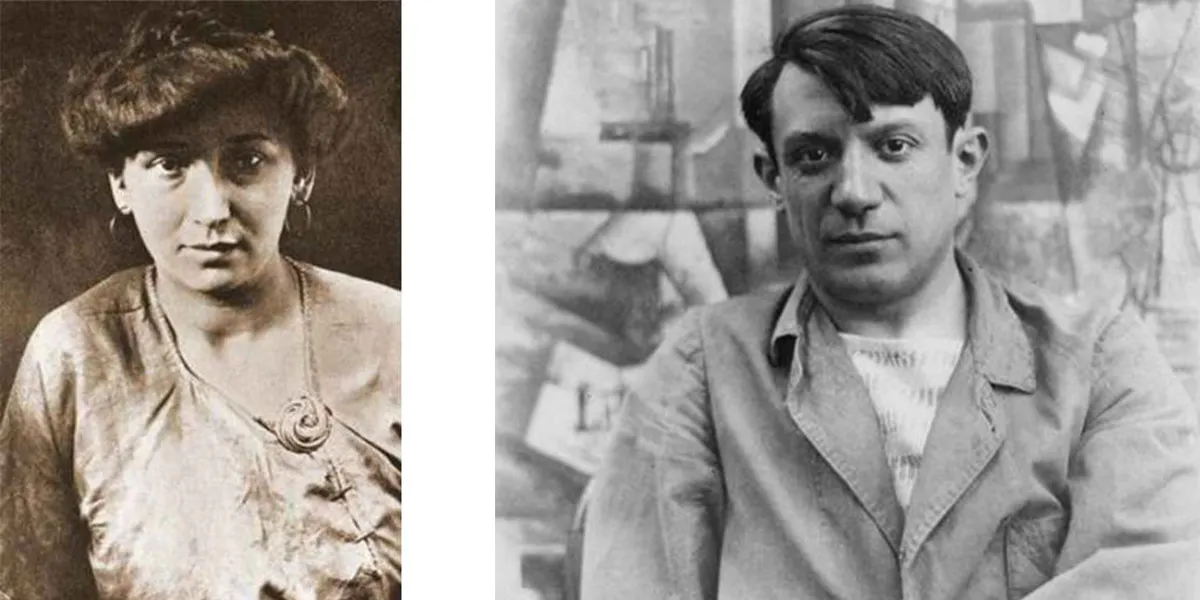
In 1904, Amélie Lang, who worked as an artist’s model and called herself Fernande Olivier, met Pablo Picasso in Paris. The following year, she became his first steady partner and moved in with him in his shabby Bateau-Lavoir studio in Montmartre, where it was bitterly cold in winter and blazing hot in summer.
In the seven years that Fernande spent at Picasso's side, she became his most important muse. He portrayed her in around 60 paintings, drawings and sculptures in the style he devoted himself to and significantly developed and changed: Cubism.
Picasso wasn’t a trained sculptor, but he used his three-dimensional works as a complement to his paintings, with which he could test the change of light and the effect from different angles.
Related: The Tales Behind Art History's Most Important Muses
With the bust Tête de femme (Fernande), Picasso created his first Cubist sculpture in the autumn of 1909, after he and Fernande stayed in the Catalan village of Horta de Sant Joan (then Horta de Ebro), which was highly significant for his development of Cubism.
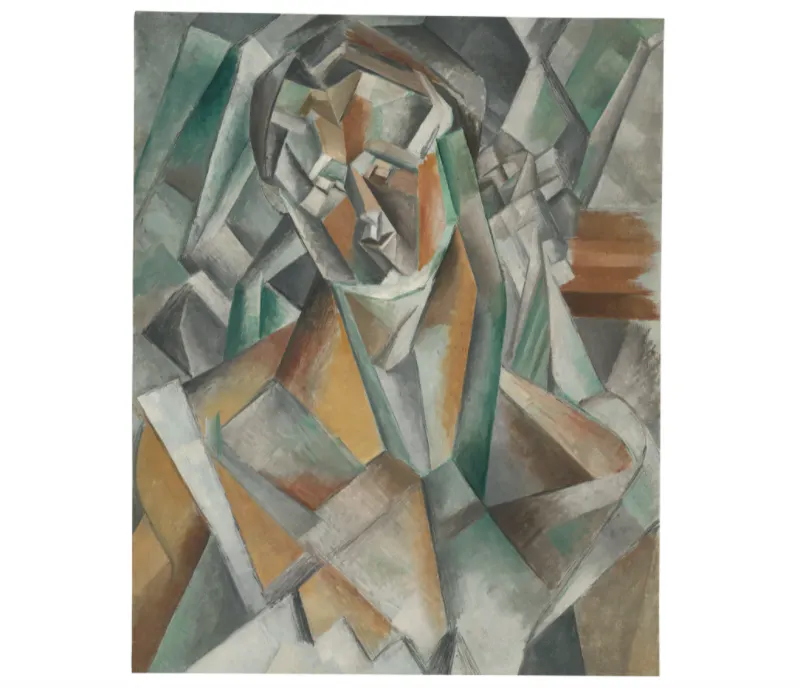
The following year, Picasso's art dealer Ambroise Vollard bought the original clay version of the bust and obtained permission from his protégé to have it executed in plaster and bronze. Around 20 of these casts are known today and are in major museums, including the Musée National Picasso in Paris, the National Gallery of Art in Washington, DC, the Moderna Museet in Stockholm, and the Metropolitan Museum of Art in New York, which even has two in the collection.
Related: The 10 Most Expensive Sculptures Sold at Auction
However, in order to be able to supplement its collection with new acquisitions, the Metropolitan Museum of Art has now decided to sell one of the two busts. The sale has been entrusted to Christie's in New York, where Tête de femme (Fernande) will be up for auction in May as one of the highlights of the 20th Century Art Evening Sale.
“It is a true privilege for us to partner with The Metropolitan Museum of Art on the sale of Picasso’s seminal sculpture Tête de femme (Fernande) to benefit future acquisitions for the Museum’s collection," noted Marc Porter, Chairman, Christie’s Americas, in a press release from the auction house. "Created in 1909, this three-dimensional bronze bust, inspired by the artist’s first muse Fernande Olivier, is a rare example, representing an absolutely crucial moment in the development of Picasso’s artistic practice, Cubism, and the art historical canon at large.”
Christie's has listed the estimated value of the sculpture as "in the region of $30,000,000". Interested parties will only receive more detailed information upon request. If this goal is reached or even exceeded, a new auction record for a sculpture by Pablo Picasso is possible. The current one was made fifteen years ago with the sale of Tête de femme (Dora Maar) for $29.1 million.
For more news from the auction market, check out Barnebys Magazine