On 27 January 1908, despite the winter cold, a crowd gathered outside the Cornelius Vanderbilt II House on Fifth Avenue and 57th Street, the largest private residence in New York City. They had come to watch the city’s high society, wrapped in furs and jewels, step from their carriages and automobiles. All were heading to the social event of the year: the wedding of Miss Gladys Moore Vanderbilt, daughter of Cornelius Vanderbilt II and Alice Claypoole Vanderbilt, to Count László Széchenyi. He belonged to one of Hungary’s oldest and most distinguished families, then part of the Austro-Hungarian monarchy.
From the mid-19th century onwards, such weddings were common. European aristocrats, often titled but short of money, sought wealthy American brides, targeting the daughters of industrialists and entrepreneurs who became known as “Dollar Princesses.” Few families embodied this world more than the Vanderbilts. Their Dutch ancestors were among the earliest settlers of New York, and by the 19th century Cornelius Vanderbilt, a railroad magnate, had made the family one of the richest and most influential in the United States.
See also: 5 Portraits of Women in Black
Born in 1886, Gladys Moore Vanderbilt grew up between the family’s New York mansion and their summer residence, The Breakers, in Newport, Rhode Island, and was educated by private tutors and elite schools.
Her cousin Consuelo became perhaps the most famous Dollar Princess in 1895 when she married the future Duke of Marlborough, Charles Spencer-Churchill. In 1908, it was Gladys’s turn.
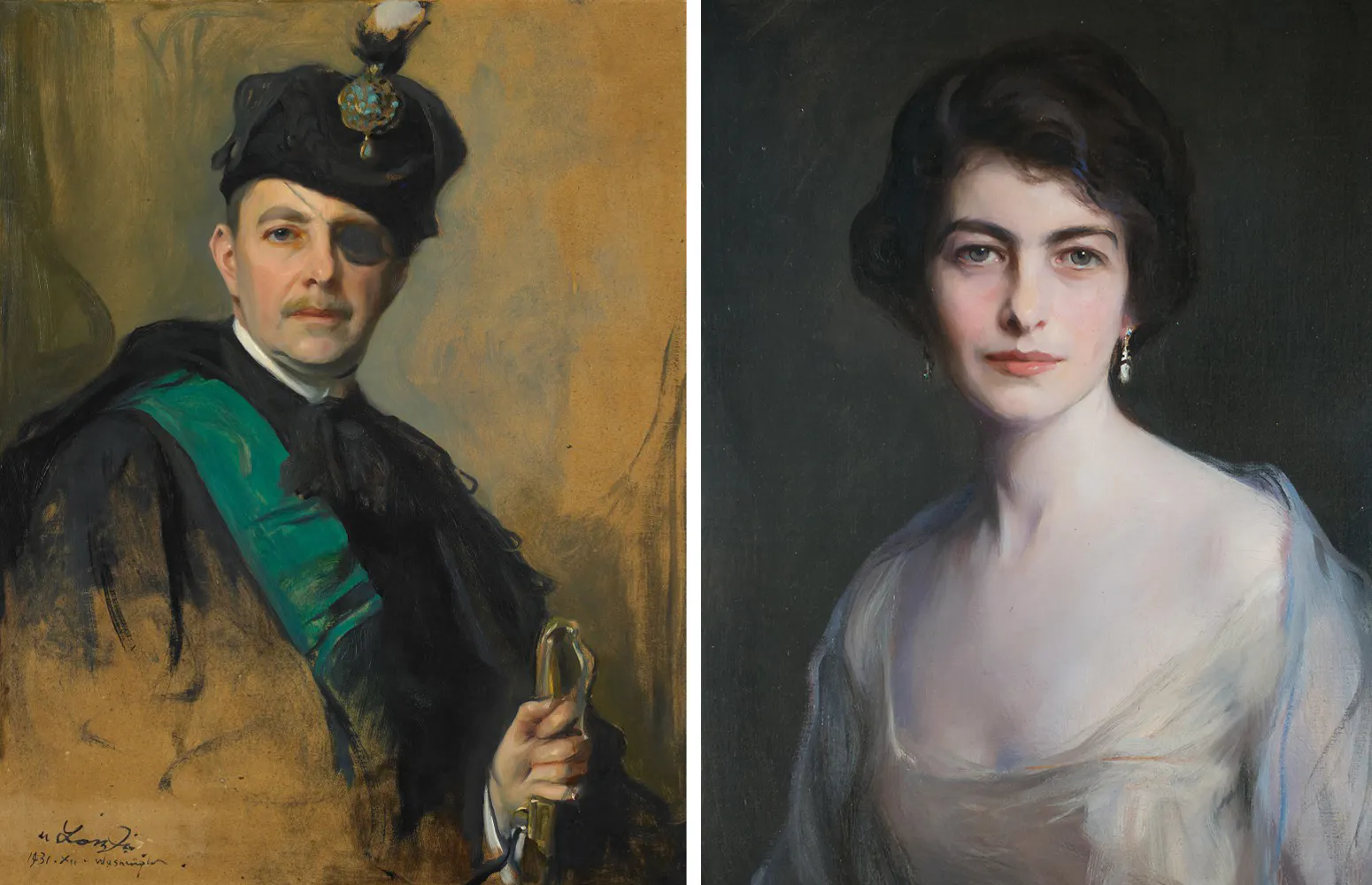
Gladys met Count Széchenyi in the summer of 1907 at a ball at the American Embassy in Berlin. Soon afterwards, just before her 21st birthday, she inherited around $25 million (about $1 billion today) from her late father. The couple soon became engaged and married in January in New York.
See also: History's Most Famous Engagement Rings
They lived between their country estates and the City Palace in Budapest and had five daughters, though the marriage was troubled. In 1913, rumours spread that Gladys, weary of her husband’s gambling, was considering divorce. During the First World War she supported relief efforts and offered her palace to the Hungarian army. After the war she divided her time between Europe and the United States, while László served as Hungarian ambassador to Washington and London until his death in 1938. Gladys later inherited The Breakers and spent her final years there, dying in 1965 from a heart attack.
In 1912, jewelry worth $200,000 (around $8 million today) was stolen from their estate, though later recovered. Some of the most notable pieces from Gladys’s collection have survived and will now be offered at auction by Phillips in Geneva on November 10.
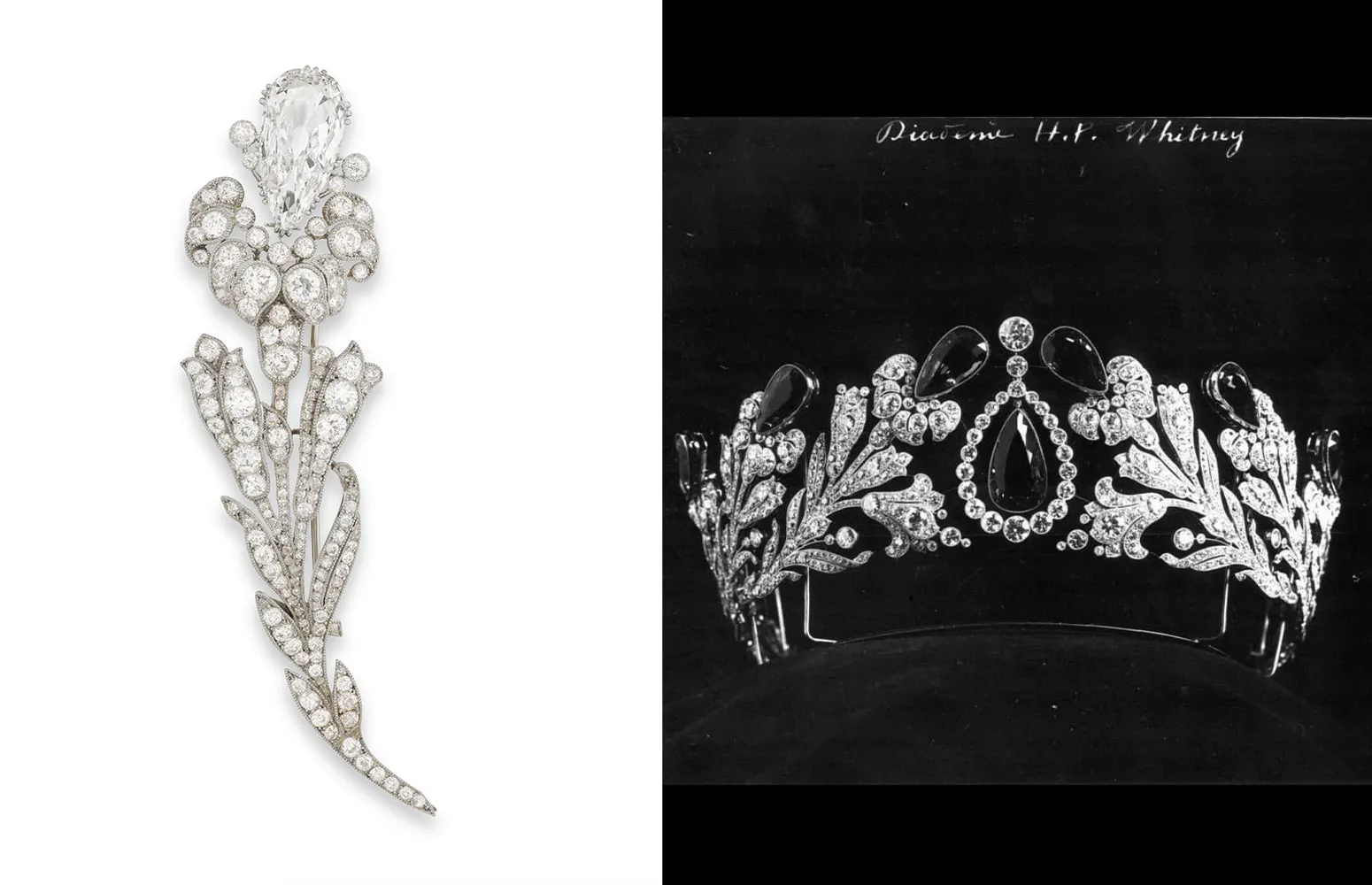
Among them is part of a wedding gift from her mother. In Gilded Age high society, lavish jewelry was expected at a wedding, and for a Dollar Princess entering European aristocratic circles it was indispensable. To mark her marriage, her mother commissioned a spectacular Cartier tiara in Belle Époque style, which Gladys later wore at the coronation of Emperor Charles I in 1916. Designed with interchangeable pear-shaped amethysts and diamonds, its elements could also be worn separately as brooches.
One brooch from her dismantled Cartier tiara, set with a 4.55-carat pear-shaped old-cut diamond, will be offered for sale with an estimate of CHF 80,000–120,000 ($100,000-150,000).
See also: Cartier: A Love Affair
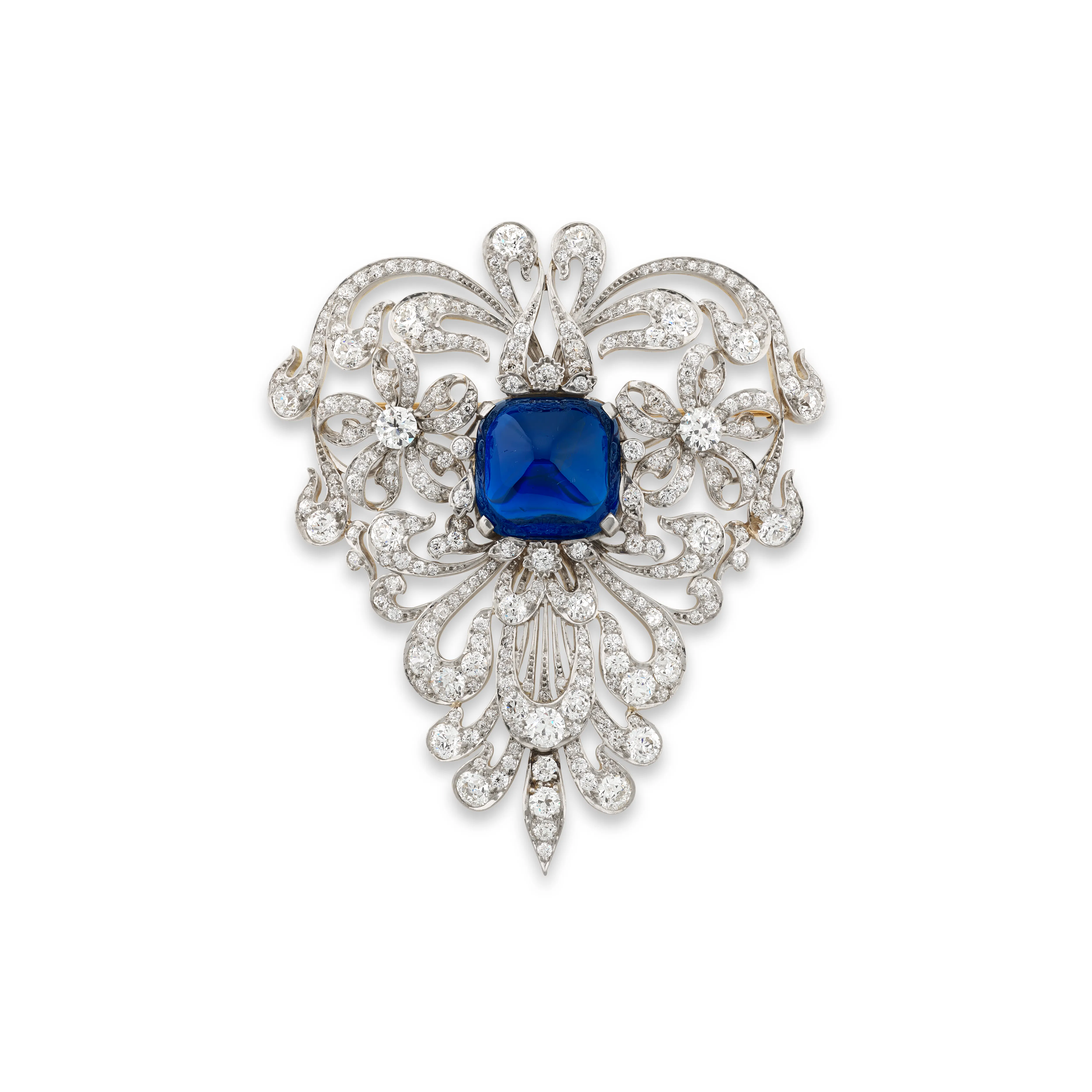
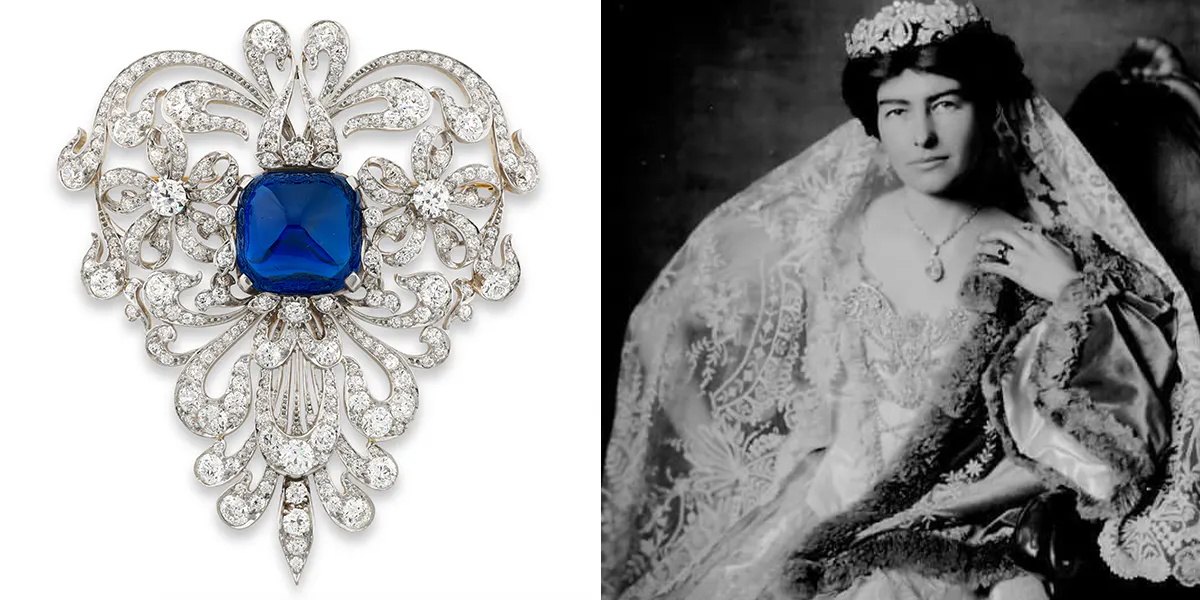
Another highlight is the Vanderbilt Sapphire, a 42.68-carat sugarloaf-cut Kashmir sapphire mounted in a diamond-set brooch by Tiffany & Co., also a gift from Gladys’s mother. Phillips estimates it at CHF 800,000–1,200,000 ($1,000,000–1,500,000).
See also: Tiffany: The King of Diamonds
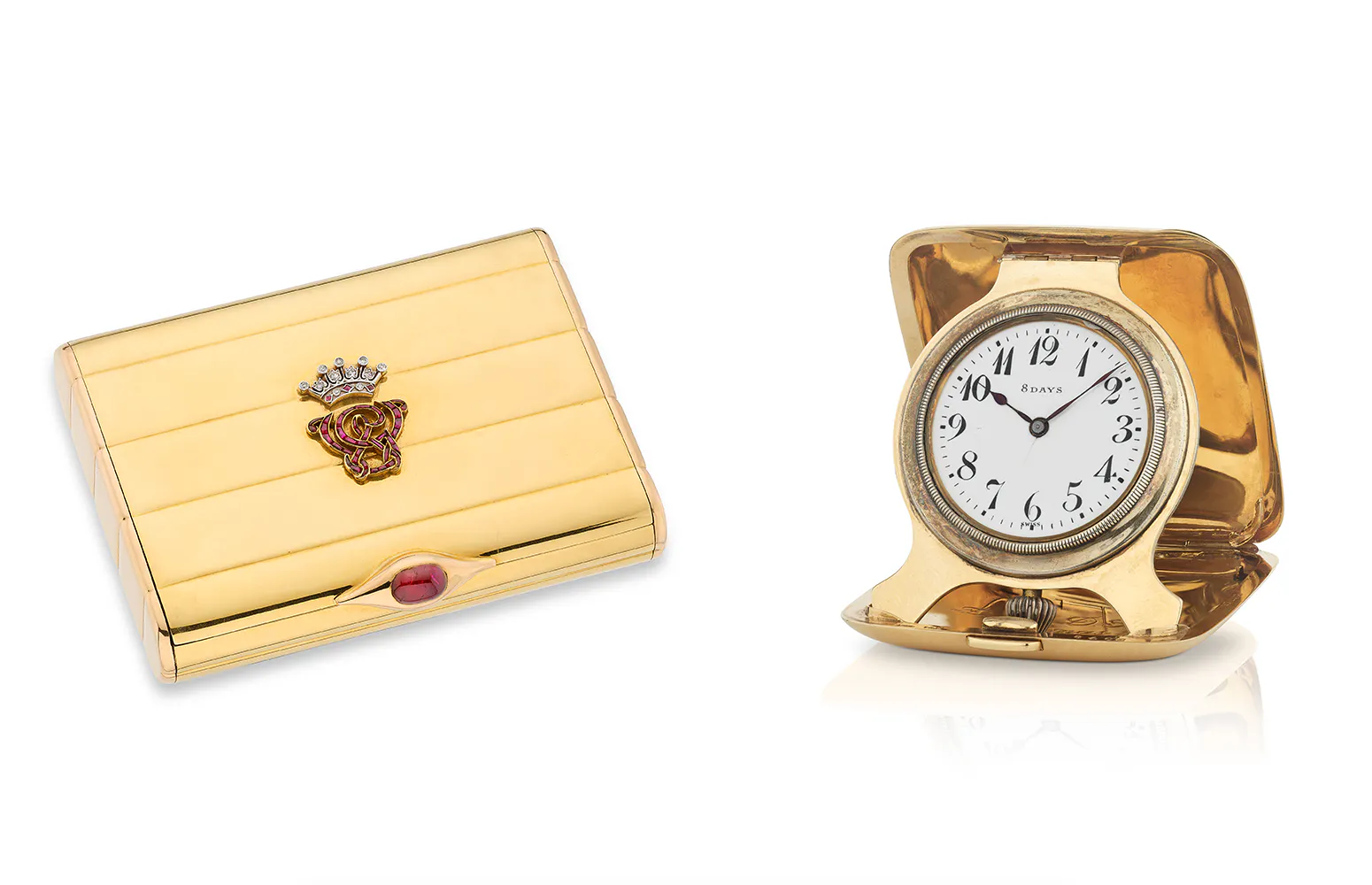
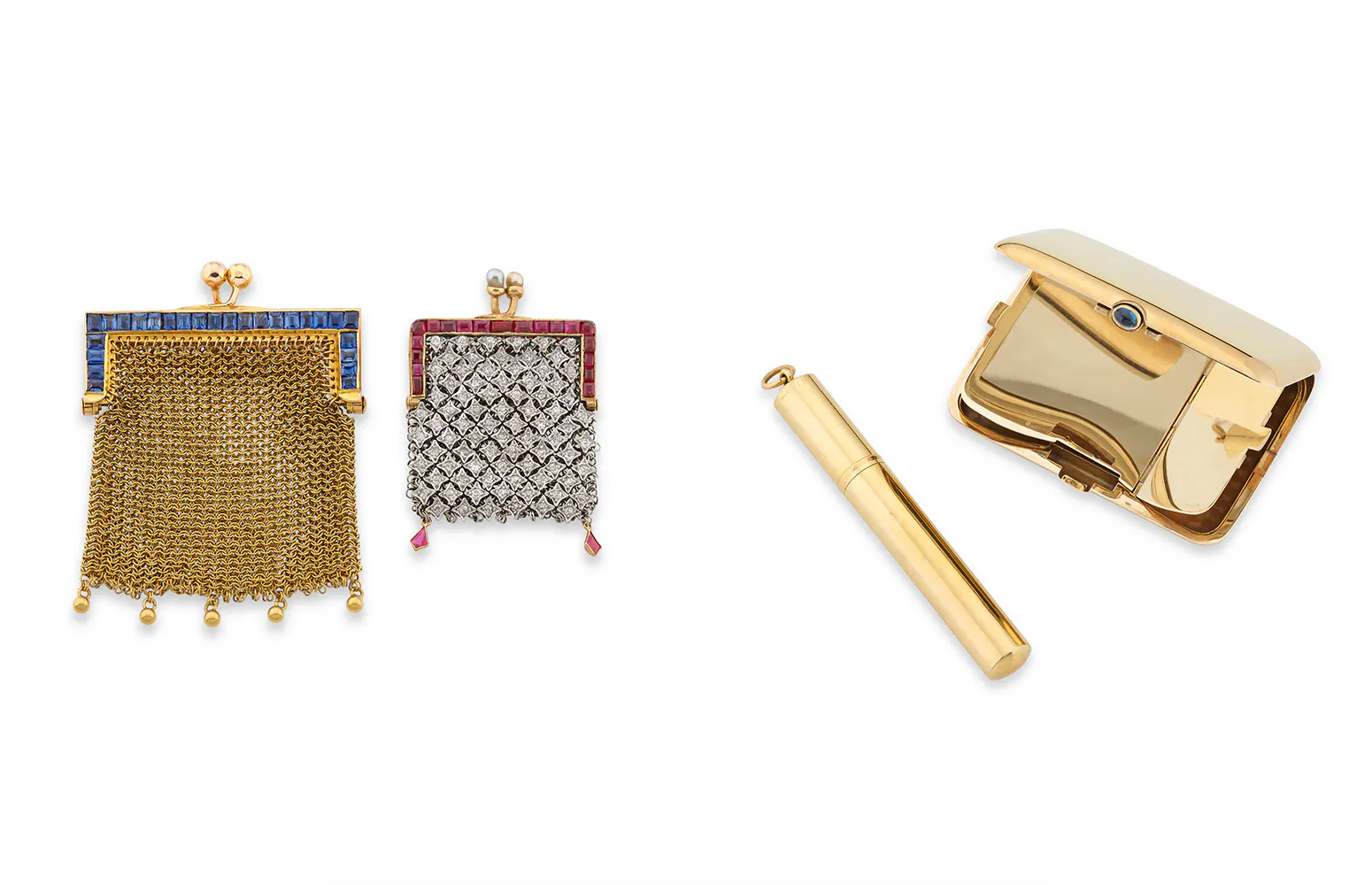
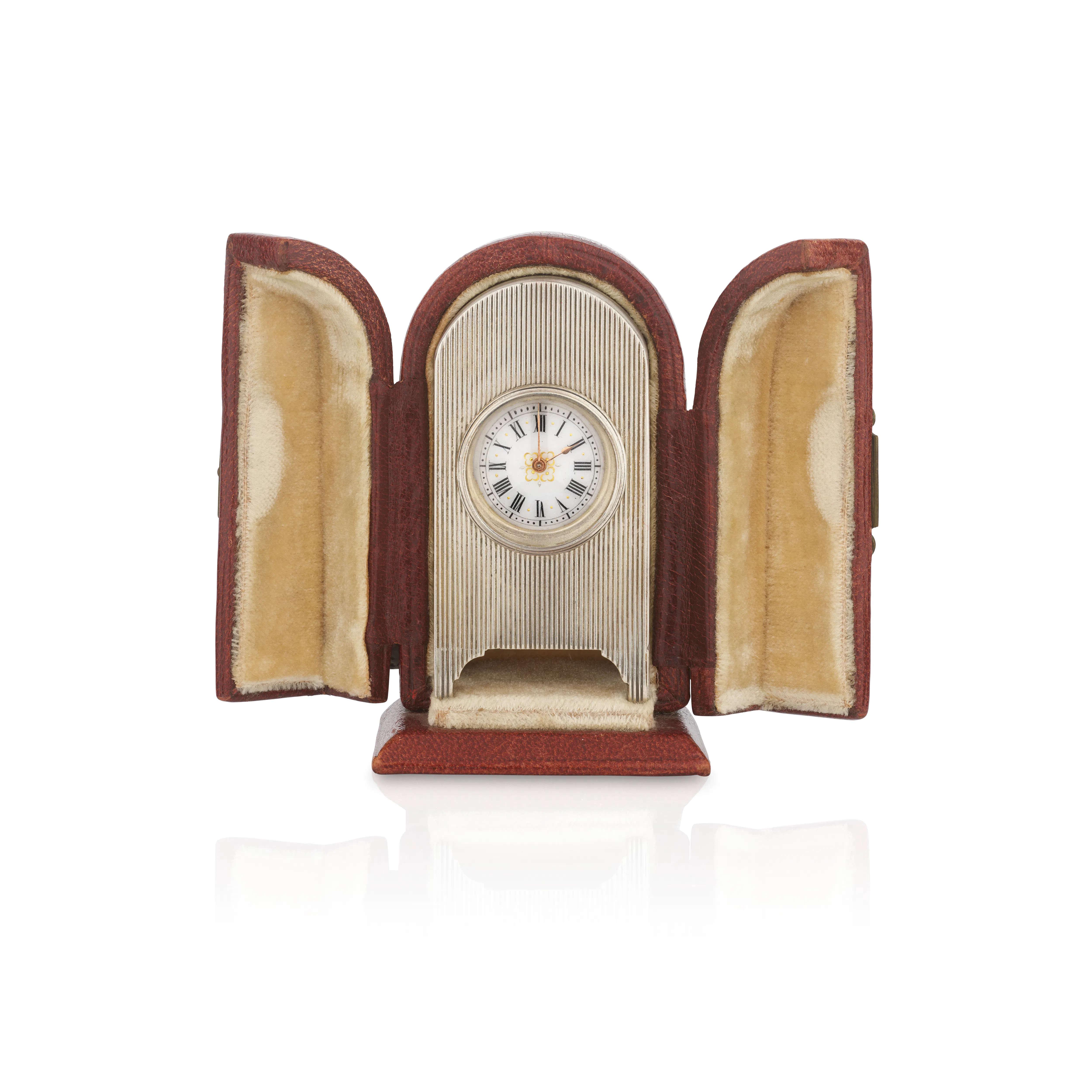
The auction also includes a gold travelling clock, a wristwatch, and a gold, ruby and diamond vanity case with Gladys’s monogram, all by Cartier.
See also: Who Wore the First Wristwatch?
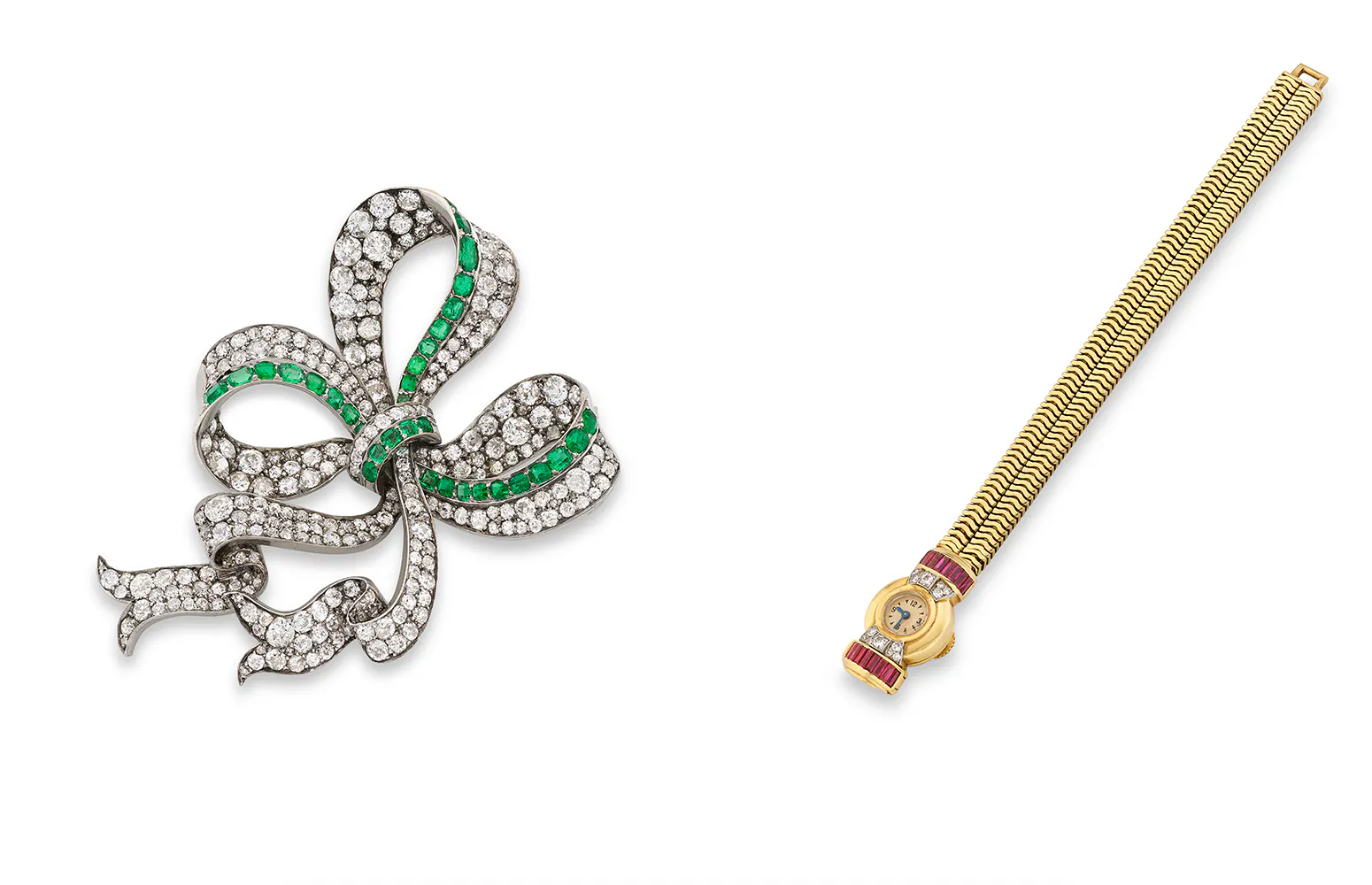
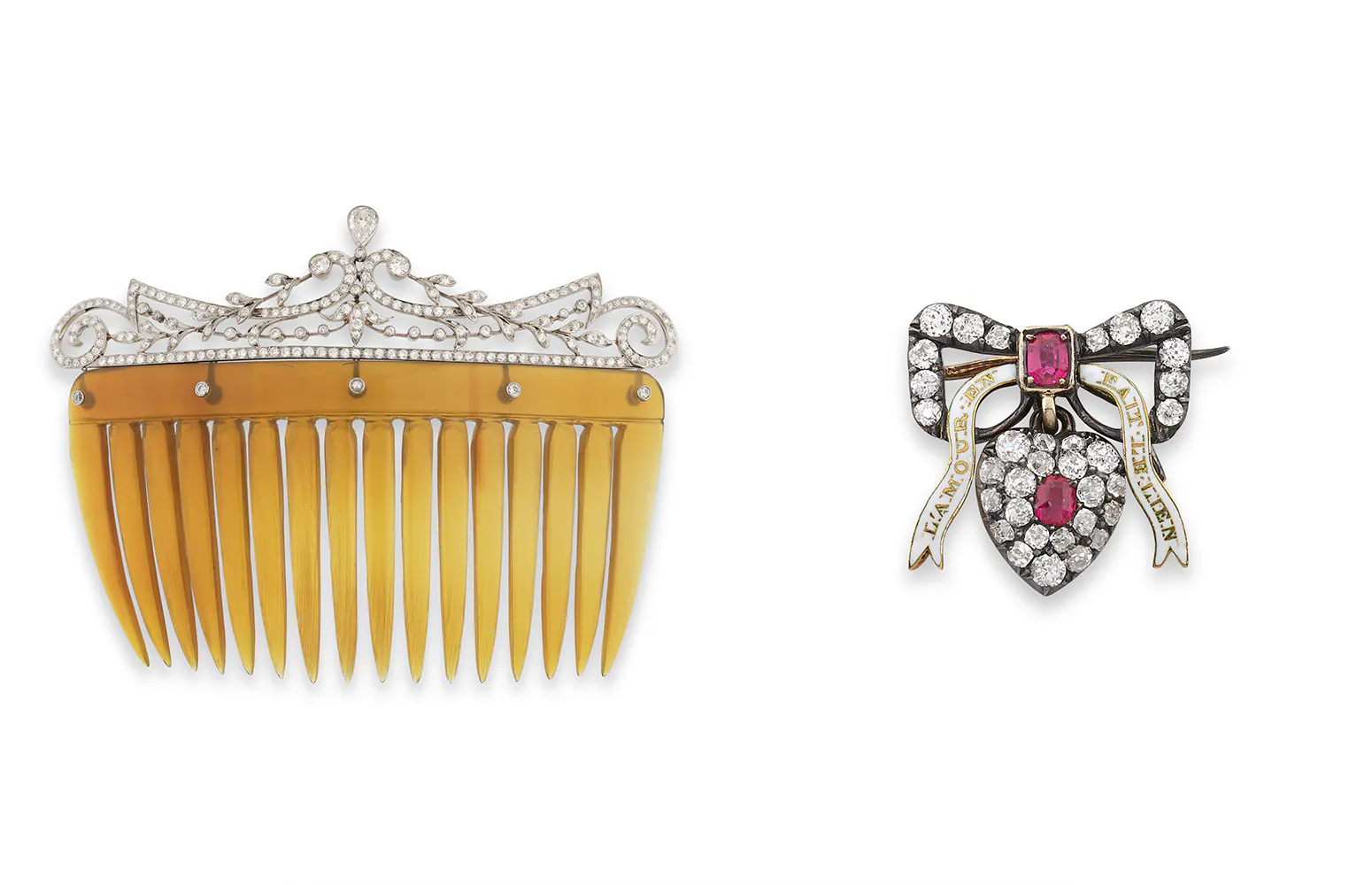
There are also more diamond brooches, a diamond-set decorative comb, two gem-studded evening bags, a gold powder compact with lighter, and a silver and enamel table clock.
See also: 10 Historical Diamonds You Should Know
Benoît Repellin, Worldwide Head of Jewelry at Phillips, said: “The Vanderbilt Family Jewels stand as the purest embodiment of Gilded Age elegance – pieces of extraordinary beauty, historical resonance, and fascinating provenance. We are deeply privileged to present these iconic creations at our Geneva Jewels Auction, which promises to capture the imagination of collectors worldwide. This comes at a time when the market is particularly enthusiastic for period jewels – Belle Epoque and early-20th-century masterpieces are in especially high demand – reflecting a broader appetite for rare signed and historically rich pieces.”
See also: 10 Things You Didn’t Know About The Ritz Paris
Interest in the period has been boosted by the series The Gilded Age, created by Downton Abbey’s Julian Fellowes. The current season focuses on “Dollar Princesses” such as Gladys Vanderbilt, whose often difficult lives have inspired much of the plot.
Want more news like this straight to your inbox? Subscribe to our free newsletter!
Phillips’ Geneva Jewels Auction: V will take place on November 10 at the Hotel President Wilson in Geneva, following a preview tour through Hong Kong, New York, Singapore, Taipei, London and finally Geneva.