Caroleans were soldiers in the Swedish army who served under the kings Charles XI and Charles XII during Sweden's great power era. The army's battle tactics were offensive, which led to fierce close combat with blunt weapons such as pikes, bayonets and swords. Charles XII was able to lead the Carolean army to several victories during the opening stages of the Great Northern War (1700-1721). These successes contributed to the Swedish army being regarded as one of the best in Europe during its time.
In 1687, Charles XI introduced a uniform in Sweden, which is still synonymous with the era of Swedish great power. The Caroleans were in most cases dressed in blue coats with yellow lining, folded up at the bottom. On their feet they had low shoes with buckles of brass and soles of fists. The shoes were the same length on the left and right and had a sharp end at the toes, which meant they could be used on both feet.
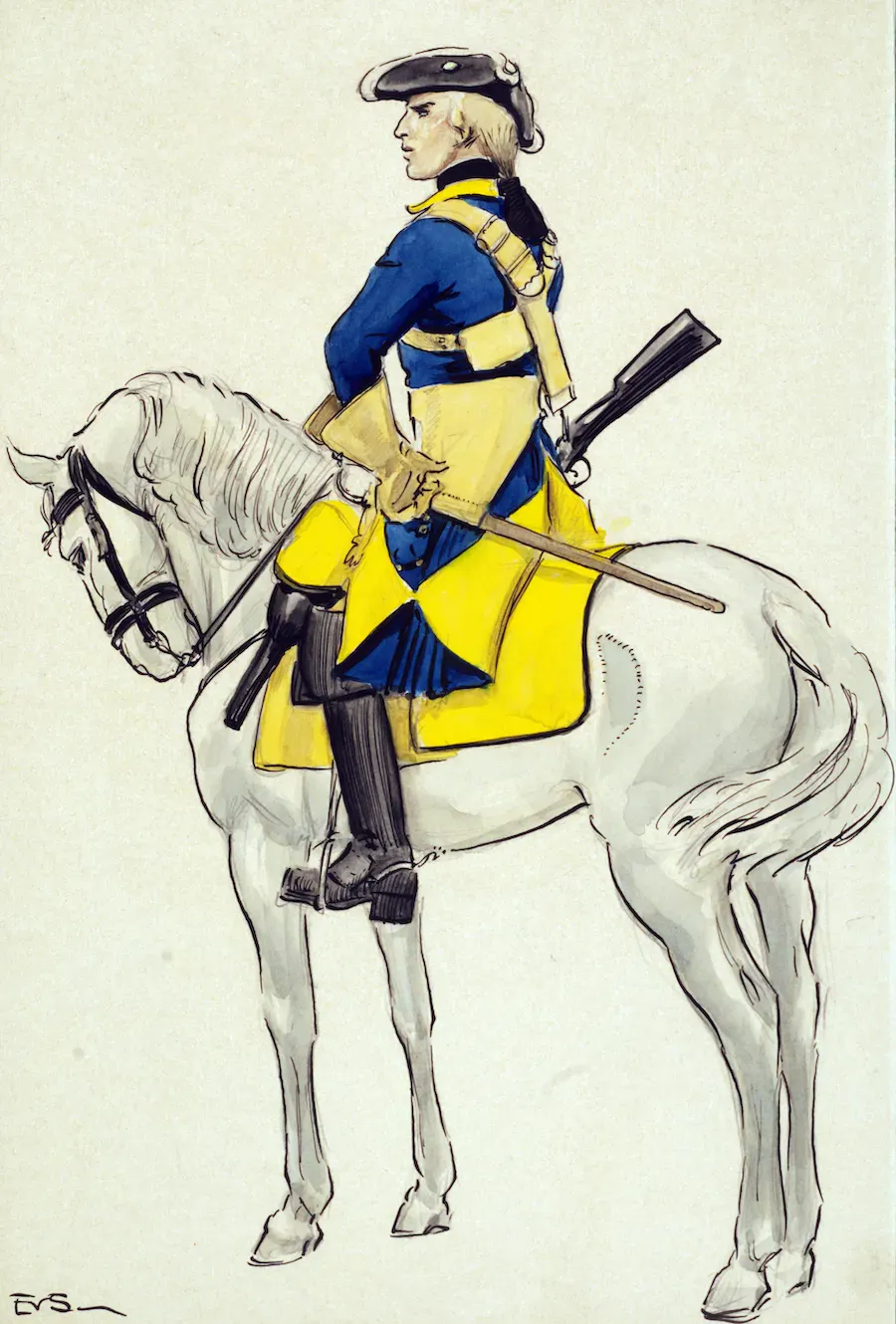
The cavalry (horsemen) wore a uniform similar to that of the infantry (foot soldiers), but adapted to their role as horsemen. Instead of yellow lapels, the cavalry uniform had blue lapels with brass buttons. On their heads they wore the triangular felt tricorne hat.
Want to stay up to date with the latest news from the art and auction world? Subscribe to Barnebys' free newsletter!
All soldiers in the Carolean army were armed with a sword, a blunt weapon intended for thrusting. Most of the swords were produced in the Vira mill north of Stockholm. Between the years 1701 and 1718, Vira bruk supplied 217,000 swords to the army.
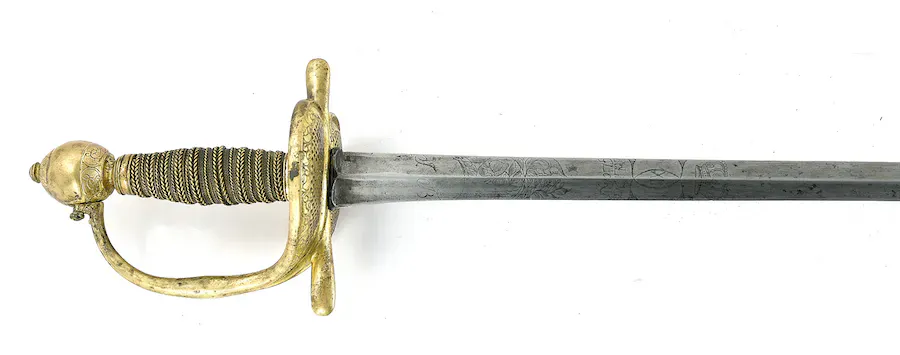
On November 20, 2023, a Carolean cavalry officer's coat of arms was sold at Probus Auktioner. The sword was hammered for SEK 105,000 (about $10,000), which is a new world record for a Carolean sword.
The sword has etched decoration, Charles XII's monogram and the text SOLI DEO GLORIA ("To God alone the glory"), dating to 1711. It is also signed IB, which stands for Johan Bertram (1655-1734). Bertram was a German-Swedish bladesmith who worked as a master blacksmith at Vira mill. He is considered one of Sweden's foremost metal engravers during the 18th century and was one of the few who signed his works.
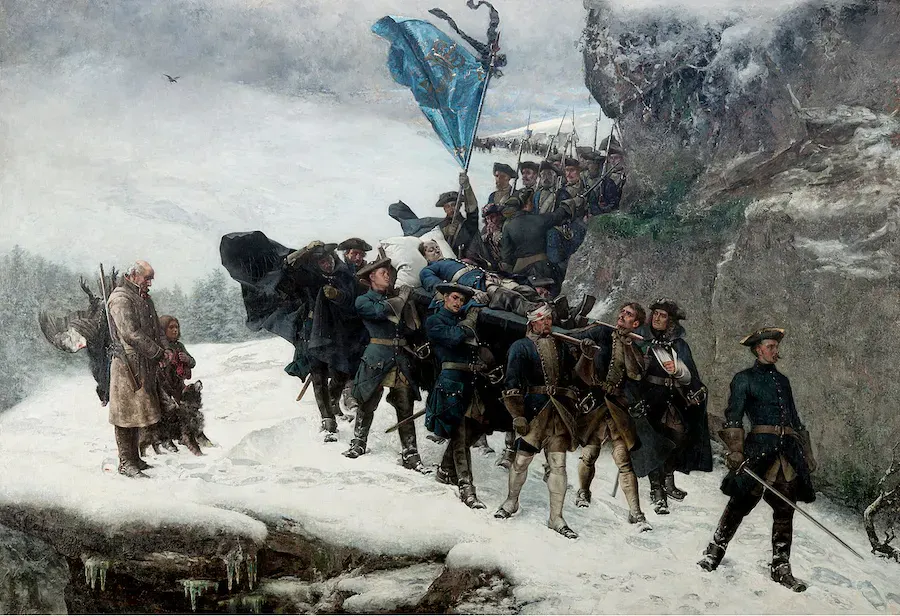
When Charles XII died in 1718, the era of Sweden's great military power also ended. In March 1719, Charles XII's sister Ulrika Eleonora was crowned as reigning queen but abdicated in 1720 in favor of her husband Fredrik I.