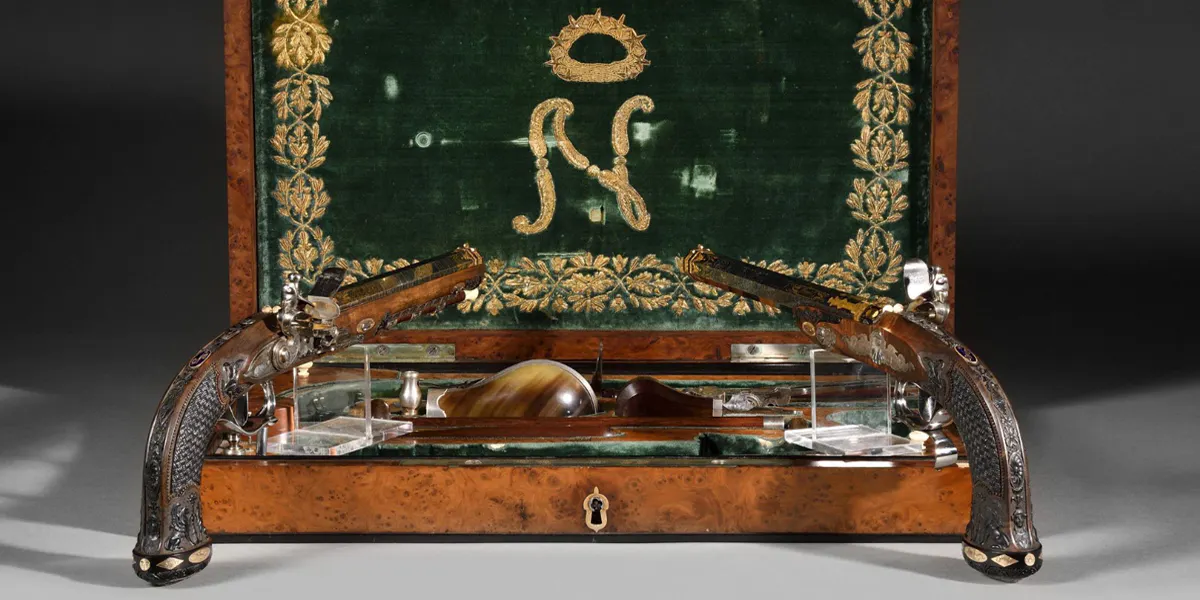
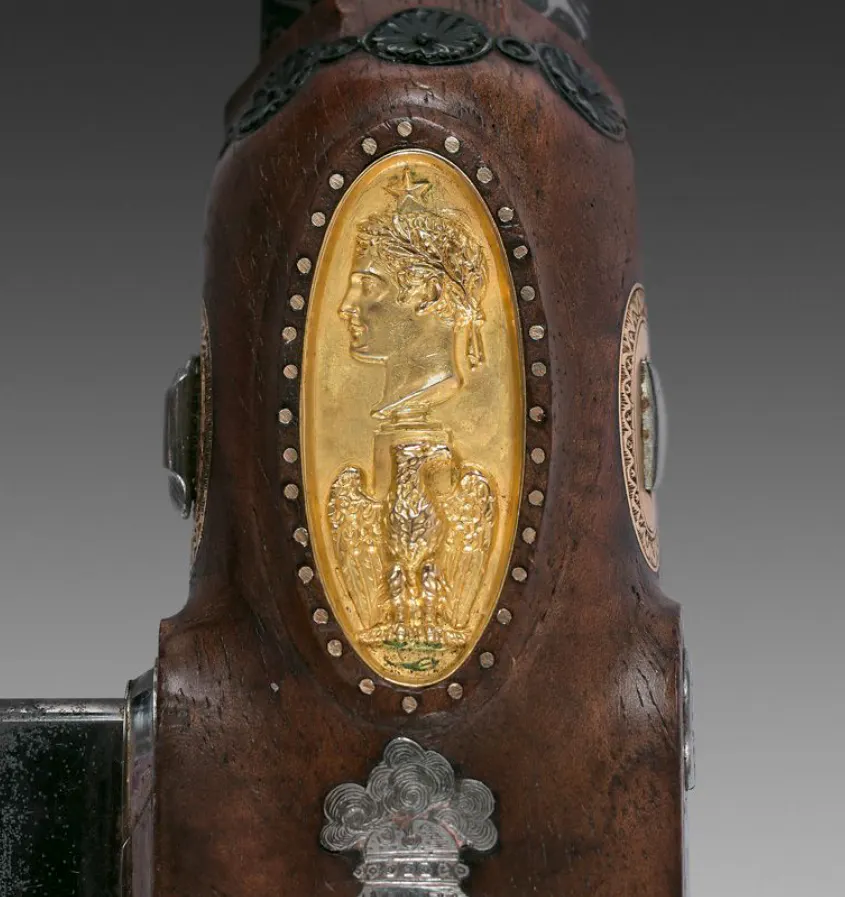
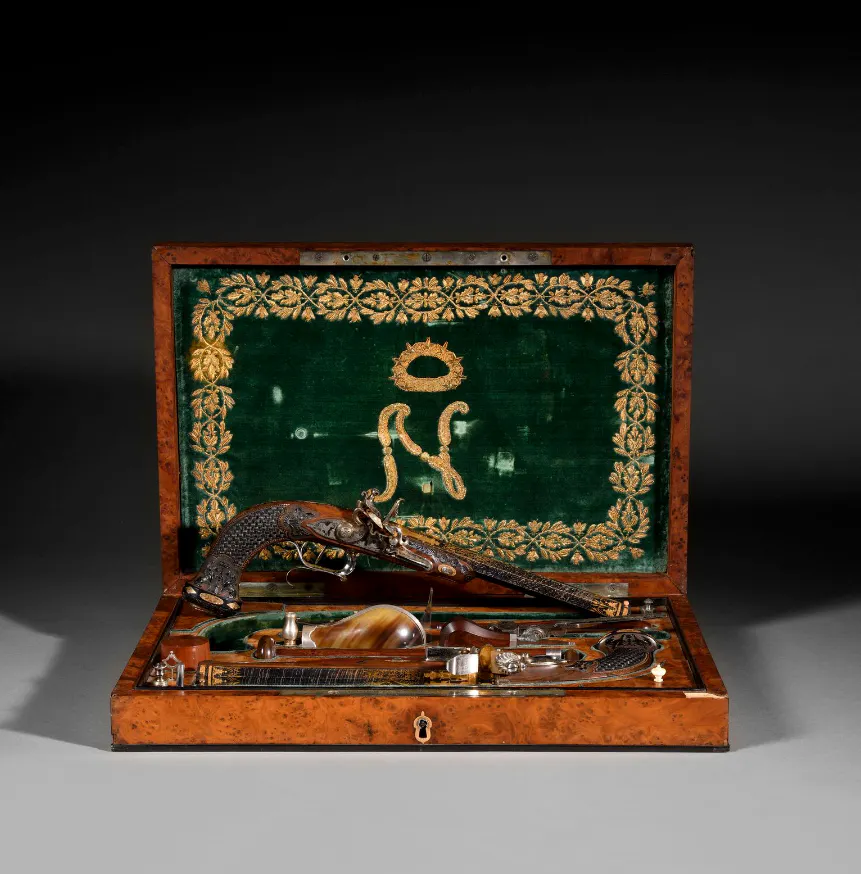
Richly decorated and bearing the profile of the French Emperor, two percussion pistols were auctioned by the Osenat and Rossini auction houses on July 7. Of significant importance simply because they belonged to Napoleon I, these pistols are also linked to a notorious episode, as they could have played a pivotal role in French history.
Want more news delivered straight to your inbox? Subscribe to our free newsletter!
At the time of his first abdication on the night of April 12 to 13, 1814 at Fontainebleau, the Emperor was contemplating suicide and had specifically ordered the pair of pistols from the gunsmith Louis Marin Gosset. "After the defeat in the French campaign, he was deeply depressed and intended to use these weapons to end his life, but his grand-écuyer Caulaincourt (Armand Augustin Louis, marquis de Caulaincourt, duc de Vicence, 1773-1827) removed the gunpowder. Napoleon then attempted to poison himself, but he vomited it up and did not die," explained expert Jean-Pierre Osenat.
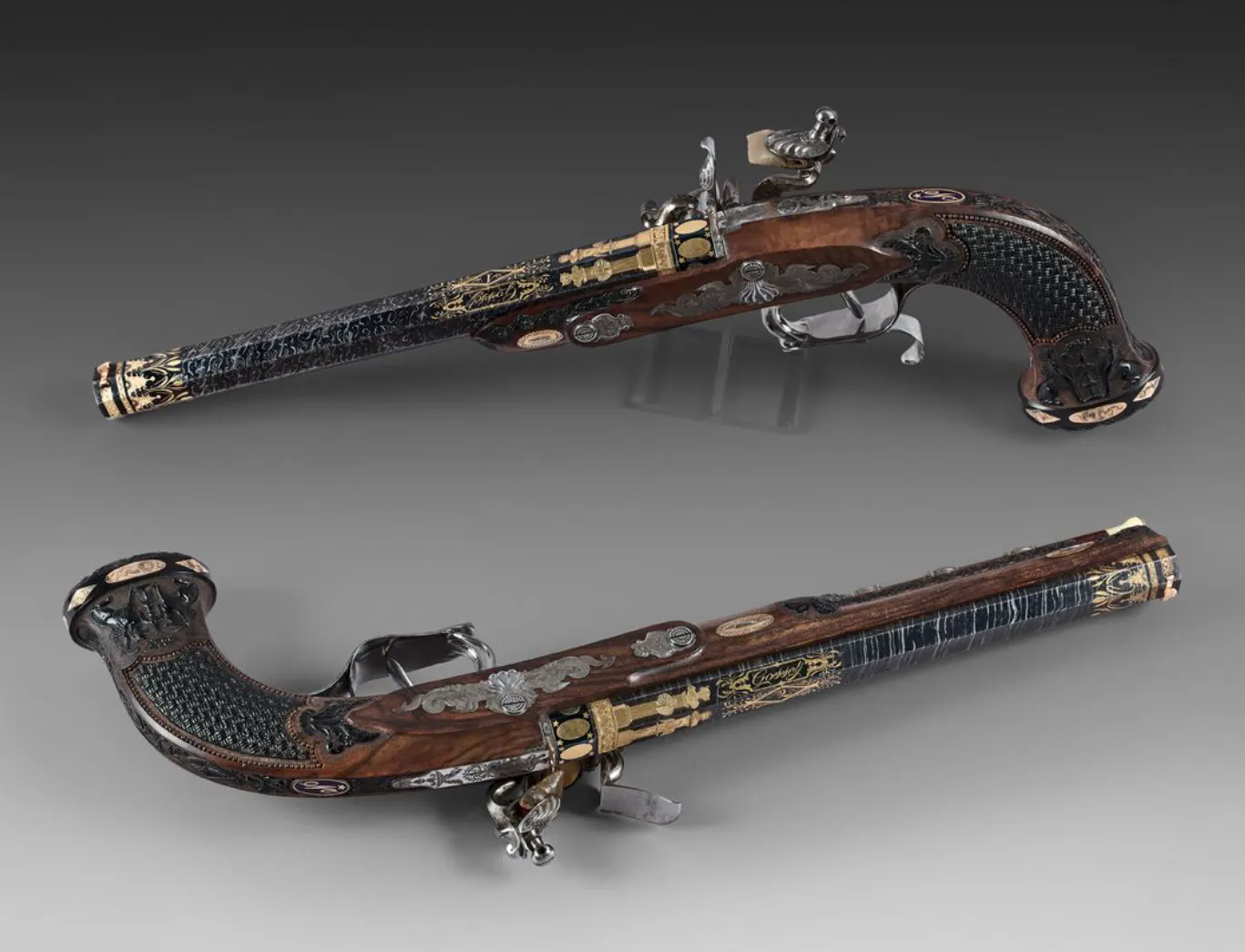
To thank him for his loyalty during this dark period, the Emperor then gifted the two pistols to Caulaincourt. The pistols have remained in his family ever since, before making a notable appearance at auction.
Related: Why is Napoleon So Popular at Auction?
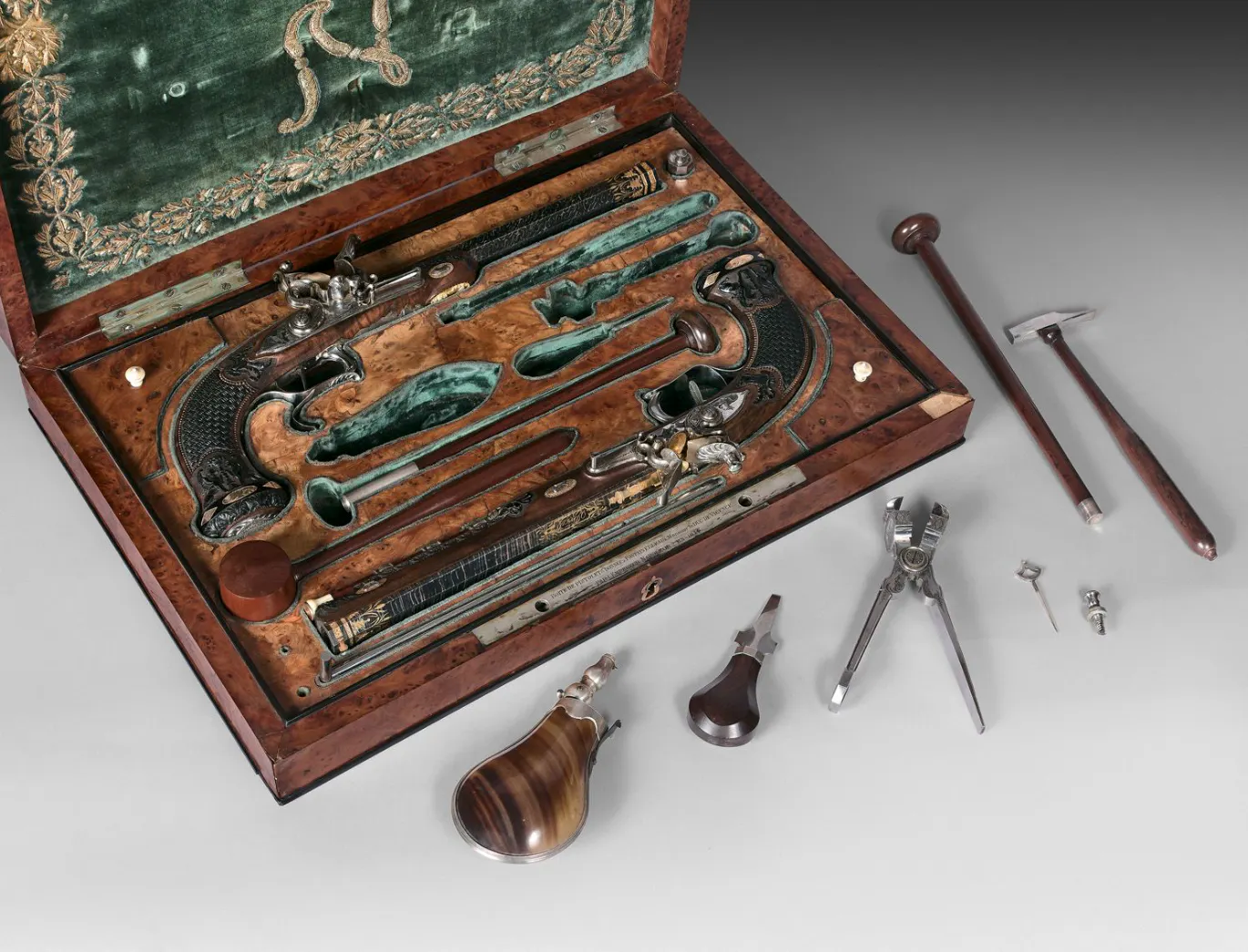
The pair of weapons was presented in a wooden box with a velvet interior, complete with accessories. Estimated at between €1.2 and €1.5 million, they ultimately sold for €1.69 million ($1.83 million). Osenat and Rossini regard the sale as a great success but have yet to reveal any details about the buyer.
The story of these historic weapons does not end here, however, as they have now caught the attention of the Commission consultative des trésors nationaux. In an opinion accompanying an order refusing their export certificate, published in the Journal officiel, the Commission immediately "designated them as a national treasure." The Ministry of Culture has now weighed in and intends to keep the pistols in France, stating that they are "destined to join the sabre known as the Emperor’s Sabre, which was offered at the same time by the recently deposed Emperor to General Caulaincourt, in the national collections."
Related: The Top 10 Weirdest Collectibles Ever Sold
The export of a cultural object requires obtaining a certificate, which can be refused if the object is deemed a "national treasure" and of significant interest to the national heritage in terms of history, art, or archaeology. The refusal of such a certificate, as is the case with these pistols, initiates a 30-month period during which the French authorities can make a purchase offer to the buyer, who has the right to refuse. Once classified as a "national treasure," the cultural property can only leave the country temporarily and must be returned.
Following this development, a representative of Osenat remarked that this classification as a national treasure "adds incredible value to the object."
Related: Napoleon's Famous Hat Sets a New Auction Record
When it comes to selling significant Napoleonic objects, Osenat is no newcomer. The Fontainebleau-based auction house has overseen many record sales of Empire-period items, particularly those related to the history of Napoleon. These include the sale of his imperial throne in 2019 for €500,000, his sabre worn at the Battle of Marengo for €4.8 million in 2007, and the record sale of his bicorne last November for €1.93 million.
The sale of these two pistols, which, as mentioned on social media, "could have changed the course of history," took place during a collaborative event between Osenat and Rossini, a Parisian auction house renowned for its high-end specialty sales.