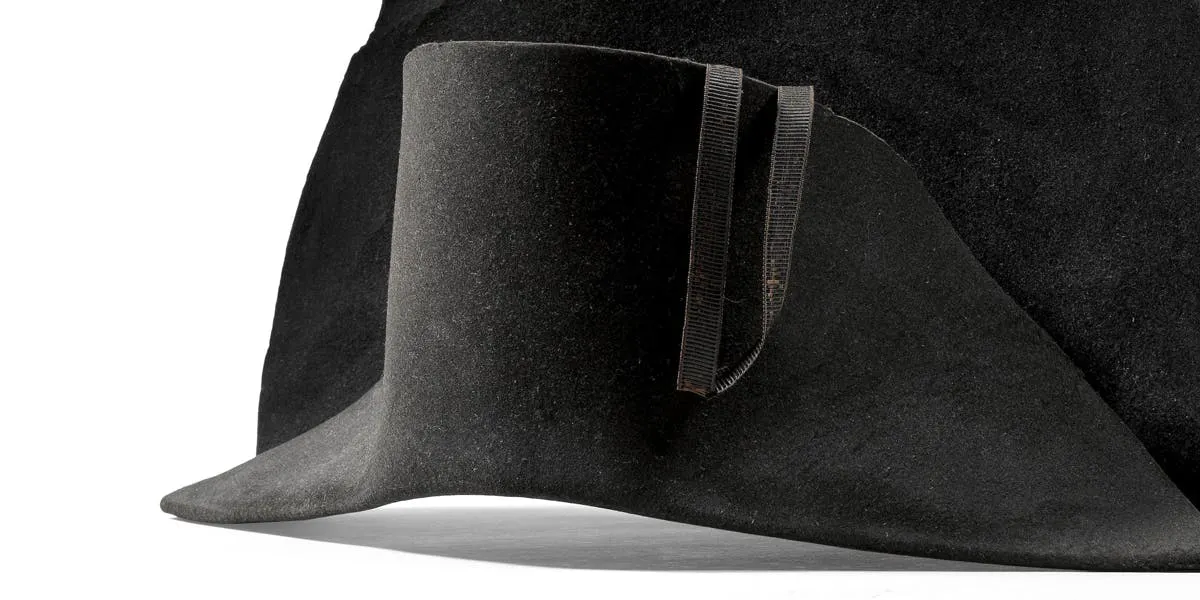
Few historical figures can be identified so easily by their hats as Napoleon Bonaparte. The bicorne, a headpiece originally designed for equestrian activities that became a male standard in the 18th century, was worn so frequently by the Emperor of the French that it has become a defining feature of his dress.
Napoleon Bonaparte began to wear the bicorne around 1799. While the hat was typically worn with the tips front to back, he wore it with the tips shoulder to shoulder. This stylistic choice allowed his soldiers to immediately identify him on the battlefield. As the Duke of Wellington, the man who defeated the emperor at Waterloo, once said, "On the field of battle, his hat is worth forty thousand men!”
Related: Why is Napoleon So Popular at Auction?
Of the 120 felt bicornes produced by the Parisian hat maker Poupart & Cie. for Napoleon, only 20-30 have survived. The model that will be auctioned off at Bonhams in October, which experts have described as the "hat of the winter military campaigns," was reportedly worn during the battles of Jena and Auerstadt in 1806 and is believed to be the only one of the emperor's hats to bear traces of his DNA.

It also has a fascinating history: it comes from the collection of German theater costume designer Leopold Verch, who was not only the leading wholesaler of stage and screen costumes in Germany, but also the official supplier to the Royal Prussian court. Verch had acquired a large collection of clothing and hats during his travels in Europe in order to use them as a model for his costumes. The bicorne in the sale, probably purchased during one of these stays, had several distinct marks, including the inscription "Original Napoleon I."
Research carried out by the Musée de l'Armée at the Invalides confirmed that the dimensions and age of the hat corresponded to those of other Napoleon's known bicornes. Also, the leather headband usually inserted in hats of this type had been removed, as Napoleon had done on other models because he found them uncomfortable.
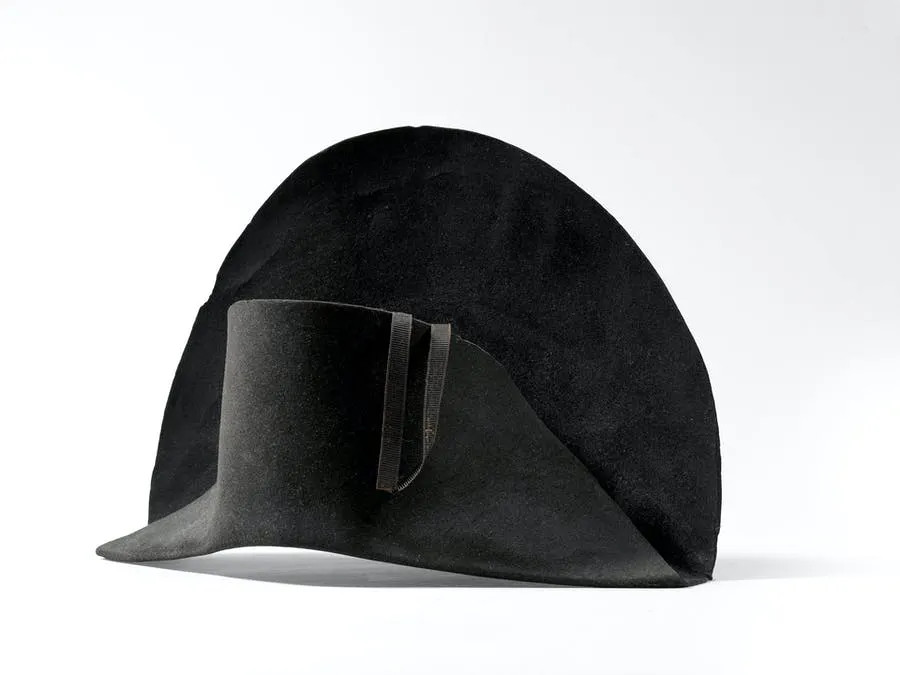
Then came the DNA analysis, carried out by Professor Gérard Lucotte, the molecular geneticist who was the first to identify Napoleon's DNA ten years ago. Thanks to spectroscopy (the study of color on the electromagnetic spectrum), Lucotte confirmed in the bicorne the presence of hair carrying the Emperor's DNA. Bonaparte's genetic markers were also discovered from samples taken at random from inside the hat, proving that this bicorne is the first and only one that is confirmed to have been "well worn" by the emperor. The felt used for the hat was also found to be similar to that of other official Napoleonic headwear, confirming the date of manufacture to the early 19th century.
Related: The Fascinating Market for Celebrity Hair
"This is a very exciting and significant discovery," said Simon Cottle, Bonhams Head of Sale. "The bicorne can be dated to the early 19th century, the material is beaver felt exactly as in the Poupart hats and – crucially – the DNA research has established beyond all reasonable doubt that this was indeed the hat of the Emperor Napoleon."
The cocked hat will be one of the flagship lots of the 'Napoleon Bonaparte: The British Sale' in London on October 27 and will be presented with an estimate between £100,000-150,000 (approx. $138,000-206,000). It will be accompanied by copies of Professor Lucotte's research (in French and English), as well as the hair on which the conclusions were based.
Related: Jacques-Louis David: The Neoclassical Revolutionary
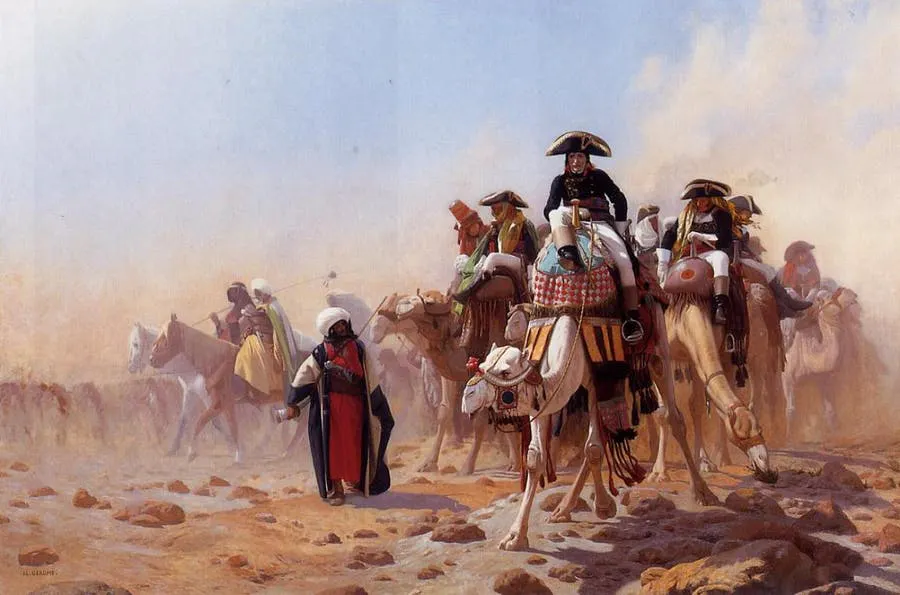
Napoleon wore the same model of hat during the 15 years of the Empire, with some variations in the proportions. Very simple, in form as in ornamentation, the Napoleonic cocked hat is instantly attributable to the Emperor and, which, after 1799, he was rarely seen without, as evidenced by the paintings of Horace Vernet, Jean-Léon Gérôme and the iconic Napoleon Crossing the Alps by Jacques-Louis David.
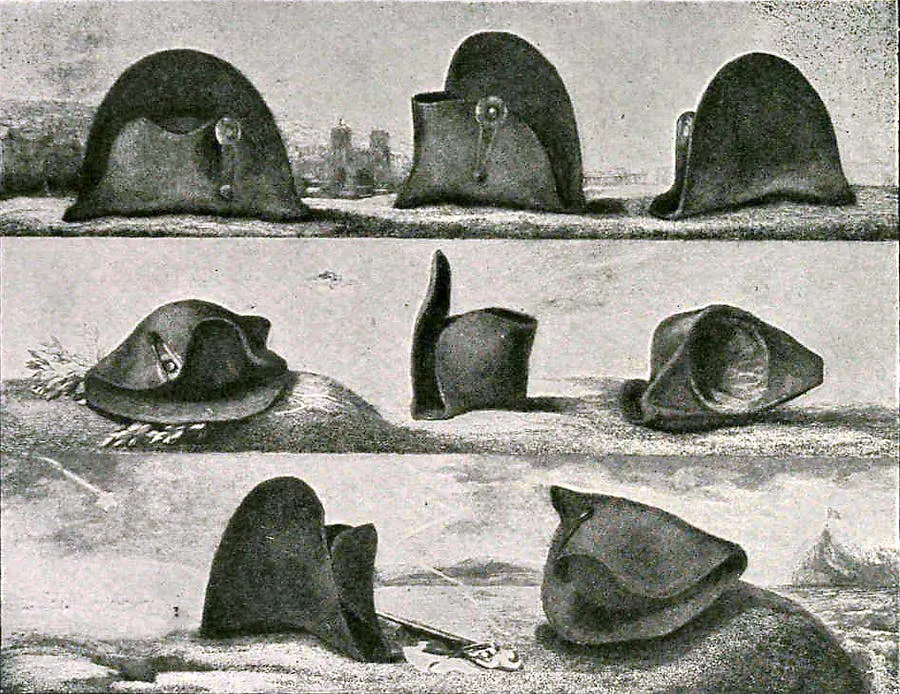
It is said that during his (unsuccessful) attempt to take the the city of Acre in Israel in 1799, Napoleon let a cannon fire his hat into the city, so that at least part of him would enter it. The quote "If I can't get in, then my hat shall!" was attributed to him at this time.