
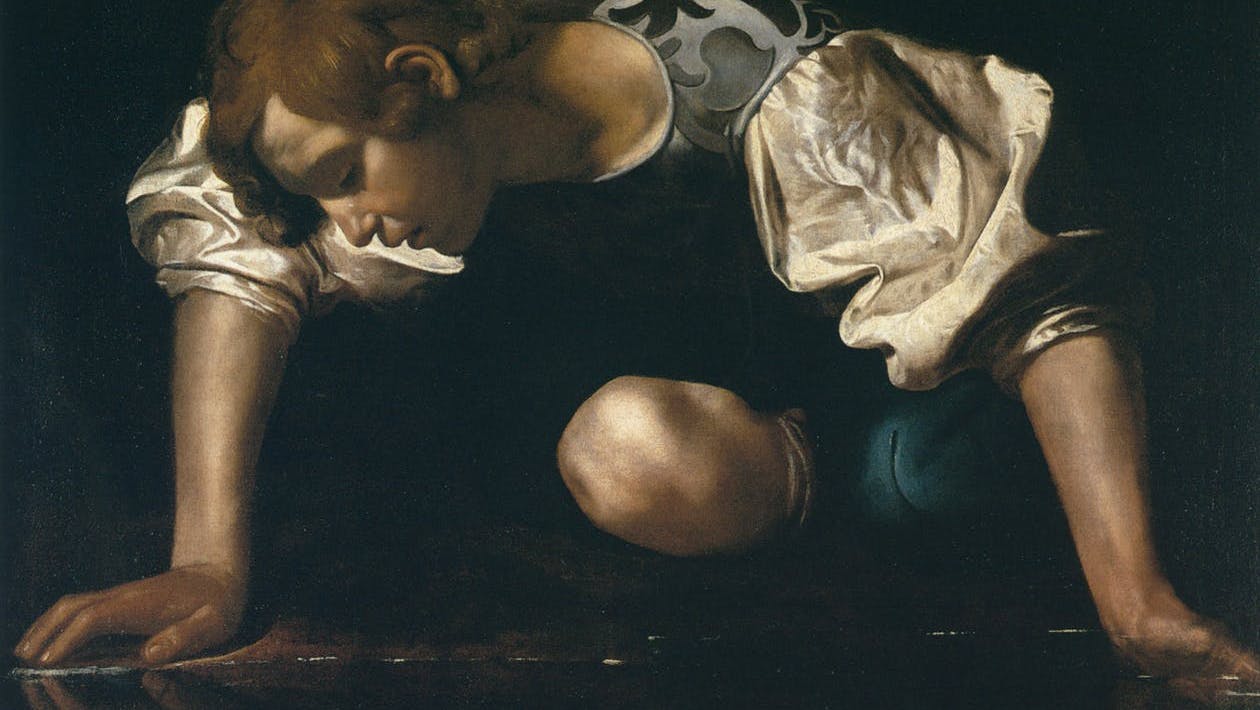
In its original form, the mirror is a natural phenomenon known even to animals. Water is the surface of reflections of both day and night, and it was perhaps above a pond that our ancestors discovered, and were amazed by, their own depictions. Myths and stories, like that of the Greek hunter Narcissus, remind us of this today. The appearance of the oldest mirrors is difficult to date, but polished and reflective pieces of obsidian from around 6000 BC have been found in Anatolia.
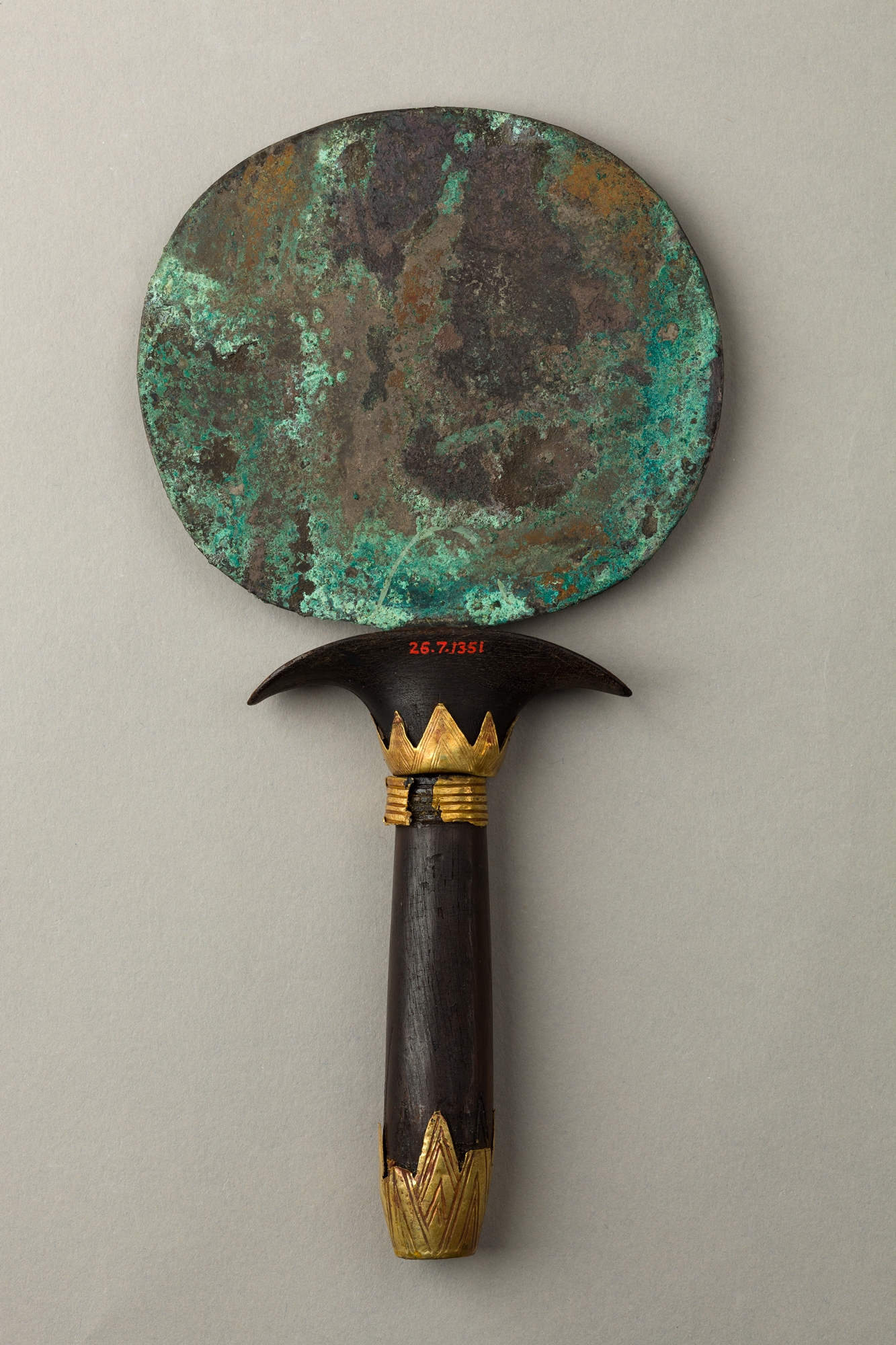
The development of metallurgy in Egypt and Mesopotamia allowed these civilizations to design mirrors in bronze and copper, and later the Romans used lead and silver. The mirror was then an expensive object to manufacture, and only the wealthiest could afford it. There are also sources that make reference to the ancient craftsmen of Sidon, which indicates that they created glass mirrors, likely backed in metal. The oldest such artifacts preserved today date to around the 3rd century AD.
See also: Artemisia Gentileschi: 5 Extraordinary Facts
It was not until the Renaissance that the mirror as we know it appeared: a smooth glass wall covered in a layer of tin or mercury. Venice is where the most beautiful specimens were made, though possession was still limited to the wealthy. The mirror became a subject of luxury, and artists quickly adopted it for symbolic purposes, such as the famous curved mirror in Jan van Eyck's Arnolfini Portrait (1434). Here the mirror creates an expansion of the pictorial space, while also possibly symbolizing the purity of the bride.
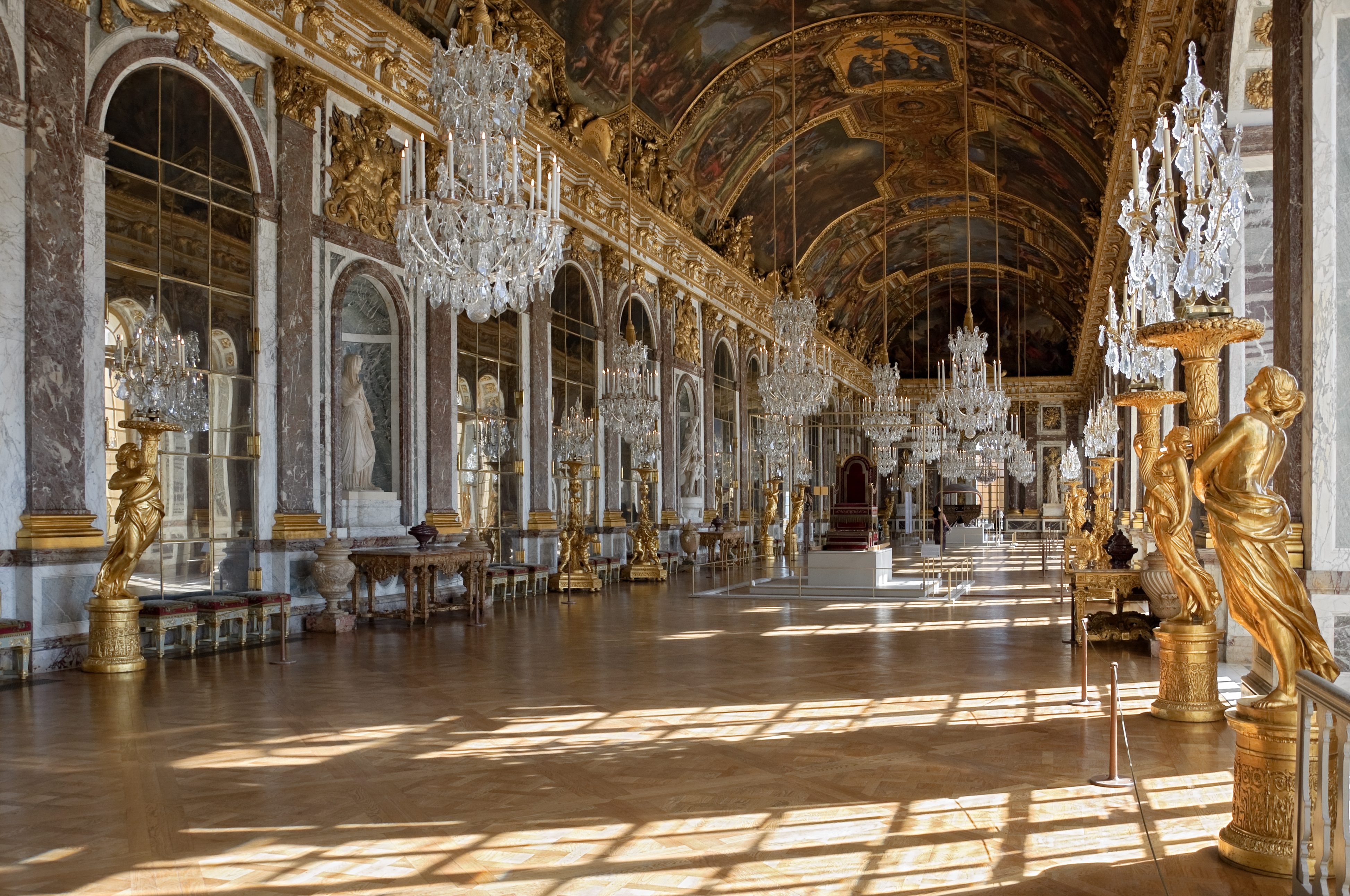
The success of the mirror swiftly grew and its uses multiplied. Coupled with new social behaviors, the mirror became synonymous with distinction, and the art of the ‘toilette’ developed considerably. As an object of prestige, the mirror was unparalleled, which is why Louis XIV chose it as a key material for his palace in Versailles. The Manufacture des Glaces, formed in 1665, was responsible for producing the mirrors for the Grande Galerie Hall of Mirrors, which still enchants visitors of Versailles today. The monumentality of the walls evoked the importance and glamour of the sovereign, and the manufacture of the large glazed surfaces was a real technical feat.
See also: The Mysterious Underground Baths of María de Padilla
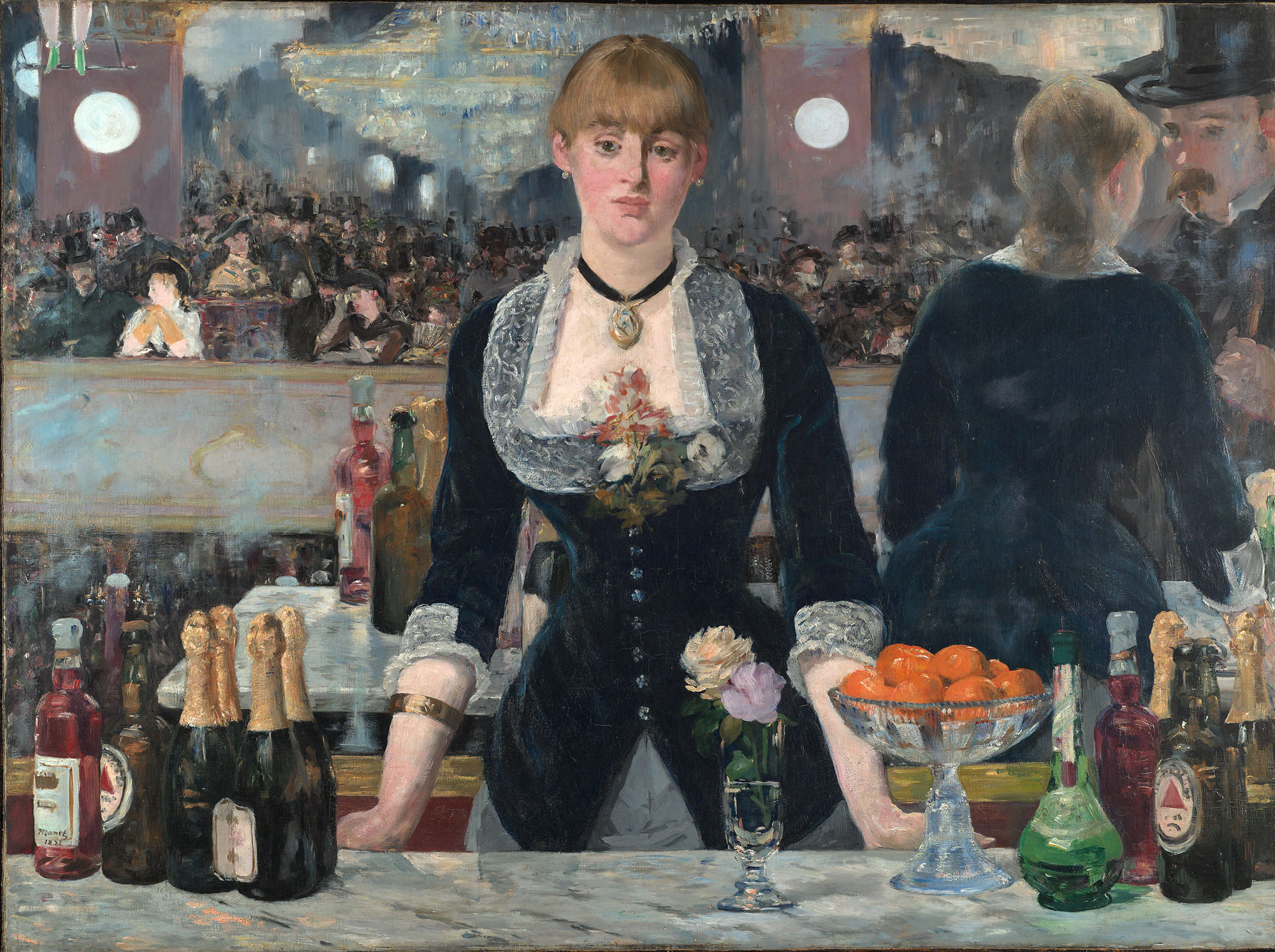
In the 18th century, mirrors were commonly placed in ornate gilded frames or integrated into furniture and architecture. The ‘popular’ mirror did not reach its peak until the 19th century. This was due to technical developments and the replacement of toxic mercury with silver, and the renewed concept of public and private hygiene also explains its growing success. The commonness of the mirror, in turn, provoked an important evolution in the perception of the self and reality, reflected in paintings such as Édouard Manet’s A Bar at the Folies-Bergère (1882). Through the mirror, the viewer gets to see exactly what the barmaid sees and more. This was a revolutionary, new way of painting. The philosopher Maurice Merleau-Ponty describes this reflective phenomenon as, “the instrument of a universal magic that changes things into spectacles, spectacles into things, me into others, and others into me.”
In the 20th century, the mirror found its place in every home, and modern artists used it as support for their creativity. Flat, convex or concave, mirrors became indispensable in countless fields, including medicine, photography, physics, and mechanics.
The instrument of a universal magic that changes things into spectacles, spectacles into things, me into others, and others into me.
Nowadays, many mirrors are regularly offered on the market. Most of them are available from a few hundred dollars, but pieces created by renowned designers can reach new heights. In 2004, a George II mirror, by William and John Linnell in 1752, sold for $1.575 million – 500% above its estimate – at Christie’s New York.

The real winner, however, is the French designer Claude Lalanne (1927-2008): during the Pierre Bergé sale in 2009, one of Lalanne’s mirrors covered in gilt bronze and galvanized copper leaves sold for €1.857 million ($2.3 million) at Christie’s Paris. In 2018, at another Pierre Bergé auction, a ‘Miroir de Tanger’ (1999), commissioned by Yves Saint-Laurent, sold for €909,000 ($1.05 million) at Sotheby’s Paris.
Ancient pieces are also popular – in 2014, an Egyptian mirror from the 18th Dynasty was sold for $137,000 at Christie’s New York, and in 2018 a bronze mirror from the Qing Dynasty sold for €156,000 ($170,000) at Christie’s Paris. Finally, the individual history of an object can also affect its price. On December 10, 2018, an otherwise unassuming mirror that belonged to Edward John Smith, commander of the Titanic, fetched £2,800 ($3,000) at Richard Winterton Auctioneers.