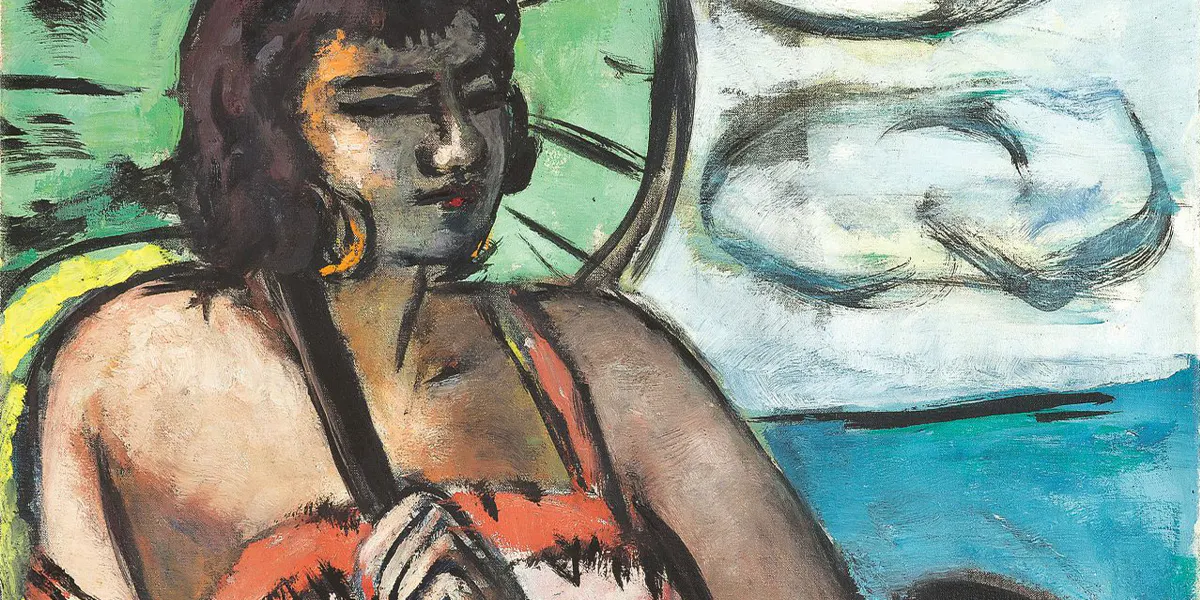
In 1925, Max Beckmann became engaged to Mathilde “Quappi” von Kaulbach, the youngest daughter of painter Friedrich von Kaulbach. Twenty years his junior, she soon became his most important muse, inspiring numerous portraits. Many of these works are housed in major museums, including the Bavarian State Painting Collections in Munich, the Museo Thyssen-Bornemisza in Madrid, and the Metropolitan Museum in New York, as well as in private collections. Among the latter is Quappi with Green Parasol from 1938, which is leading this year's winter auctions at the Berlin auction house Grisebach, with an estimated price of 4-6 million euros.
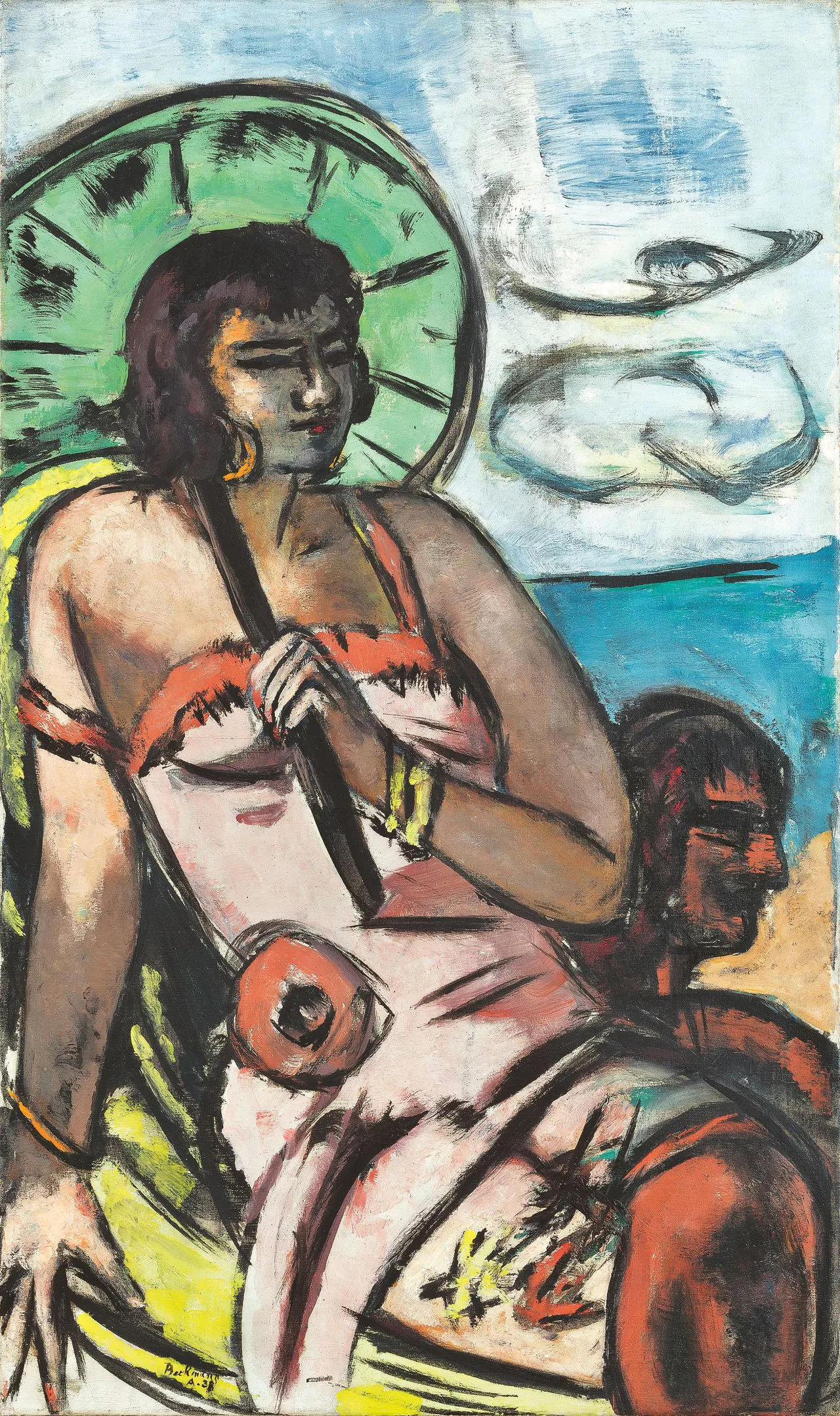
Quappi with Green Parasol is undoubtedly one of the most beautiful portraits Beckmann painted of his wife. In this relaxed and almost casually erotic pose, she is depicted with an enigmatic dark figure beside her. As always, Beckmann painted from memory, capturing a carefree moment from the past. Although Quappi was still by his side, their circumstances had changed. After his art was condemned as “degenerate” by the Nazis in 1937, Beckmann and Quappi went into exile in Amsterdam. It’s possible that one of the nearby beaches served as the backdrop for this portrait.
Despite its significance, Quappi with Green Parasol has been shown in only two minor exhibitions, the last in 1968. Its current return to the public is therefore a true sensation.

Also from Beckmann’s easel is Still Life with Orchids and Pears, which he gifted to Quappi in 1946. She was delighted with the painting, as it prominently features her favorite colors—jade green and pink—creating a subtle link to Quappi with Green Parasol. She kept the still life until her death in 1986.
Both works are part of the Selected Works auction at Grisebach on November 28 at 6 pm. Other pieces by Beckmann in the auction include Beach View Seen from the Terrace (1935) and the rare bronze Self-Portrait (1936), a posthumous cast.
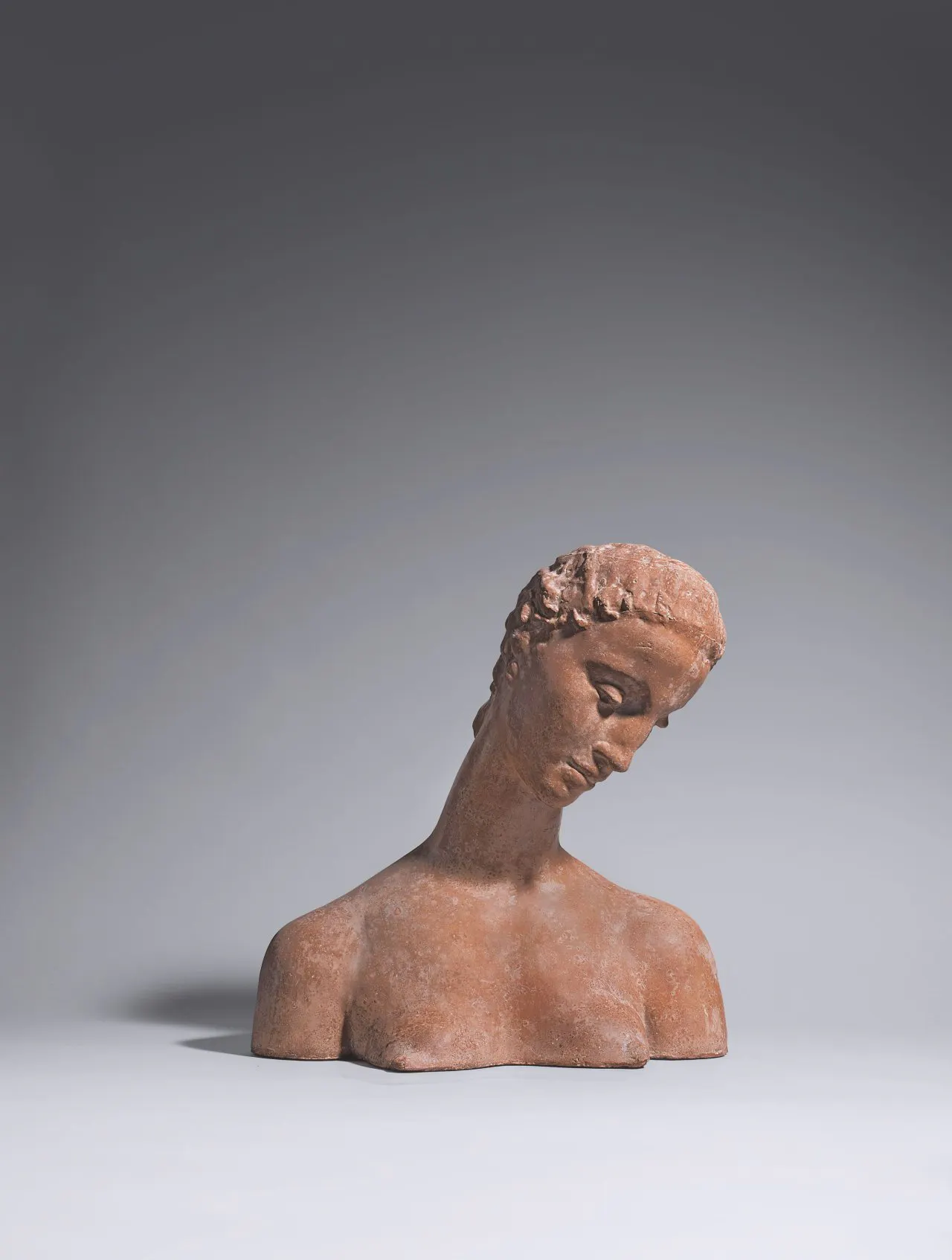
A standout among the sculptural works is Wilhelm Lehmbruck's Bust of the Kneeling Woman (Inclined Female Head). Lehmbruck created the larger-than-life Kneeling Woman in 1911 during his time in Paris, introducing a new aesthetic with her narrow head and elongated limbs. The bust, made the following year, captures the same introverted, vulnerable quality. Grisebach is offering it in a reddish-toned cement cast made during the artist’s lifetime.
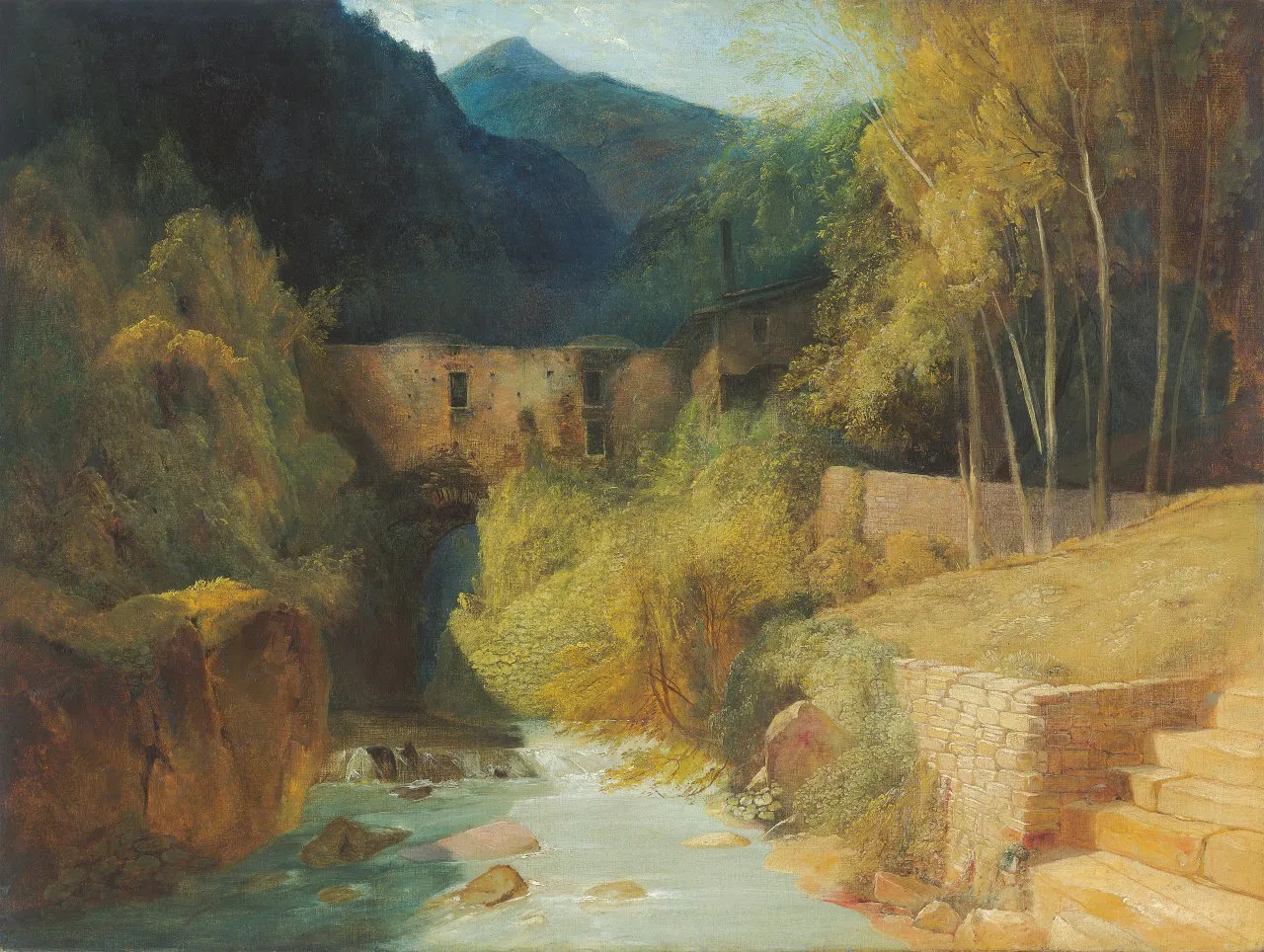
Among the oldest pieces in the Selected Works auction is Valley of the Mill in Amalfi, a 1830 painting by Carl Blechen. When Blechen traveled to Italy in 1828/29, he painted the landscape as he saw it, rejecting the idealized, romanticized depictions of the time. The painting shows a modest paper mill above a river.
Valley of the Mill in Amalfi once belonged to the Jewish Goldschmidt family in the early 20th century. The last owner had to leave it behind when he emigrated to South Africa in 1942, and it was later confiscated by the Gestapo. After the war, it became part of the German Federal Republic's collection and has now been restituted to the heirs.
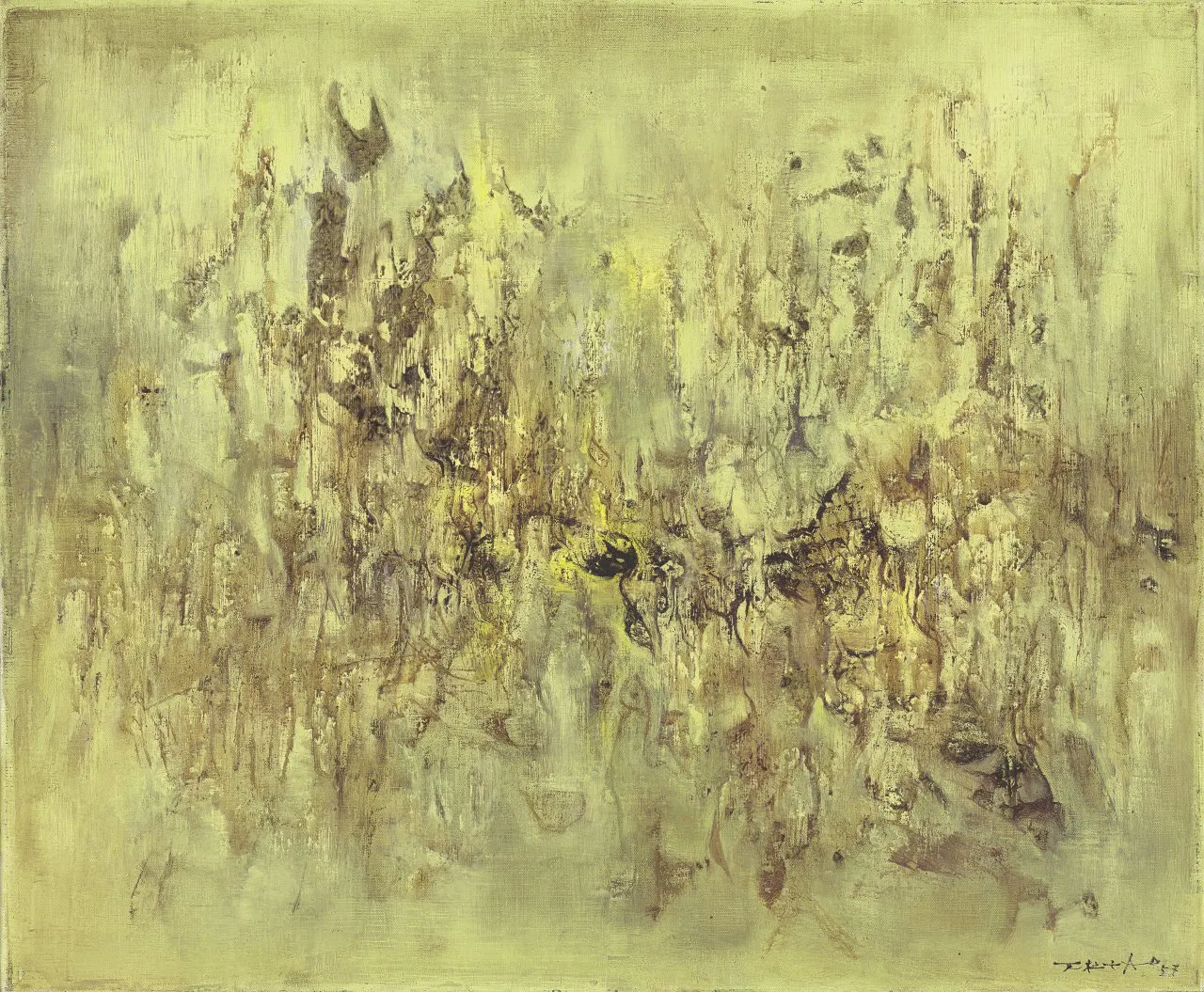
Another highlight in the auction is Au petit jour by Zao Wou-Ki, a prime example of the artist's unique informal style. While Zao Wou-Ki typically focused on large works, this compact piece offers an intense, dynamic energy that creates a striking three-dimensional effect against a luminous background.
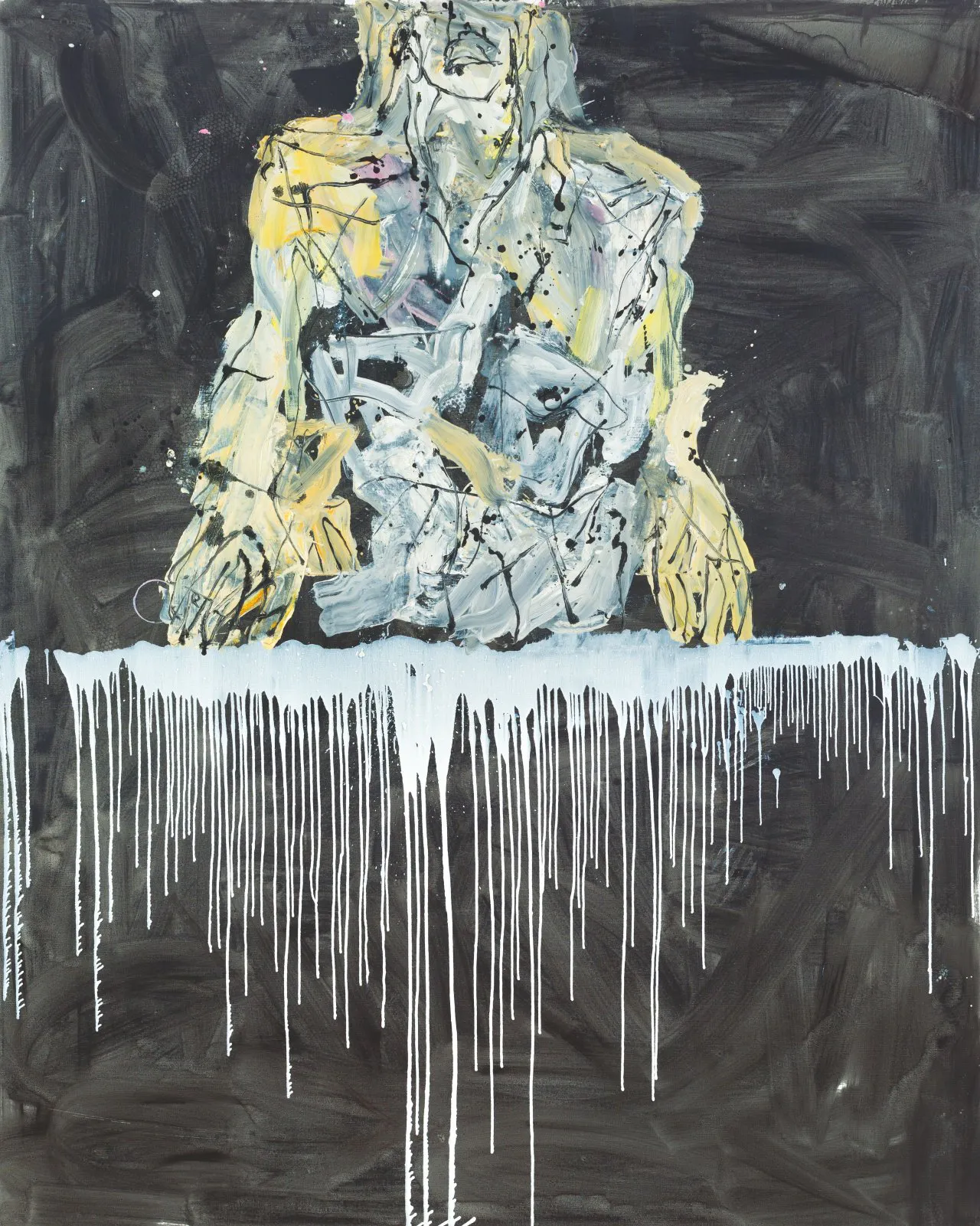
In 2005, Georg Baselitz revisited his own work with the Remix series, particularly the Heroes and New Types from the 1960s, culminating in his Fraktur Paintings. The present work features a fragile figure, outlined with fine lines, beside a crest of flowing color—perhaps symbolizing the healing power of forgetting.
In addition to Selected Works, the Winter Auctions at Grisebach will also include Art of the 19th Century (November 28 at 3 PM) and Modern Art and Contemporary Art (November 29 at 11 AM and 6 PM, respectively).
The auctions will take place at Villa Grisebach, Fasanenstraße 25, Berlin. The exhibition of all works is open from November 21-27.