

The name of the mineral malachite comes from the Greek word μαλάχη (maláchē) for "mallow", as its fascinating green is reminiscent of the plant's leaves. Malachite is mined all over the world, with almost 9,000 locations known.
Related: Gemstones: 5 Interesting Facts
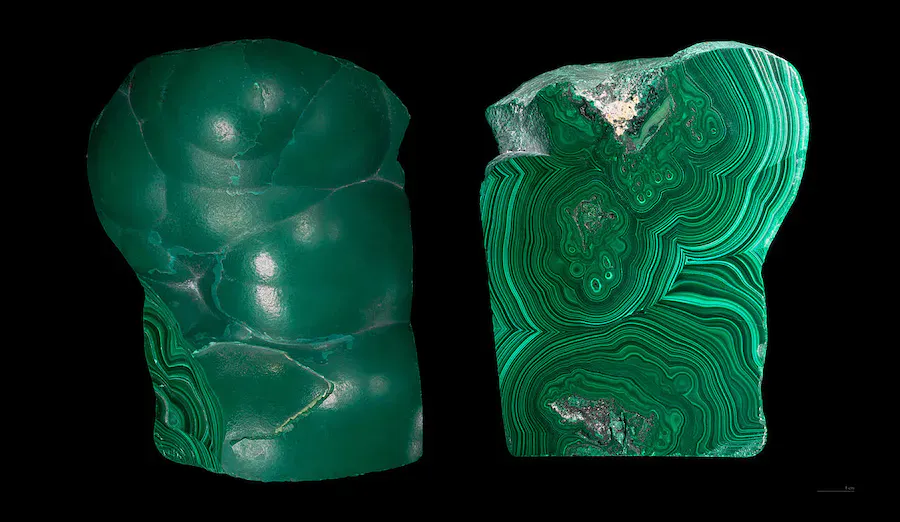
The ancient Egyptians already recognized malachite's wide-ranging potential. In crushed form, it could be used as an expressive eye shadow or by reducing it to its copper content, as a soldering material in metal processing. It was also often incorporated as a color pigment in painting, for example in Raphael's Sistine Madonna. However, caution is advised when processing malachite because the resulting dust is toxic.

Related: From Cleopatra to Queen Elizabeth II: The Aura of the Opal
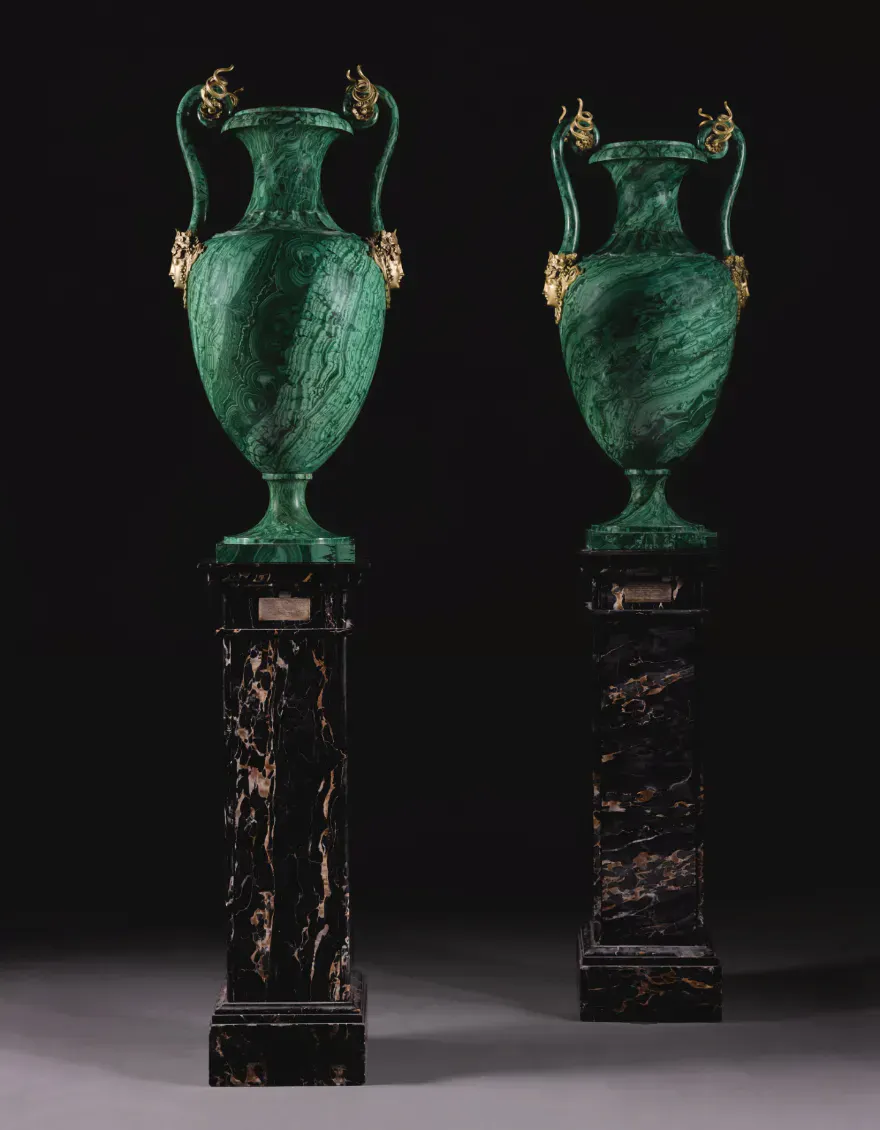
Malachite celebrated its big breakthrough as a decorative stone in Russia in the 19th century. From 1803 onwards, the tsars had it mined on a large scale in the Urals and displayed lavishly in their palaces. Decorative objects such as desk sets, mantel clocks or large vases, as well as tables and consoles or even entire columns, were created. The malachite was placed in smaller pieces, taking into account the striking grain of the material, so that a harmonious overall impression was created. Russian artists developed very special skills to be able to seamlessly decorate even curved surfaces, which is why the technique is called "Russian puzzle."

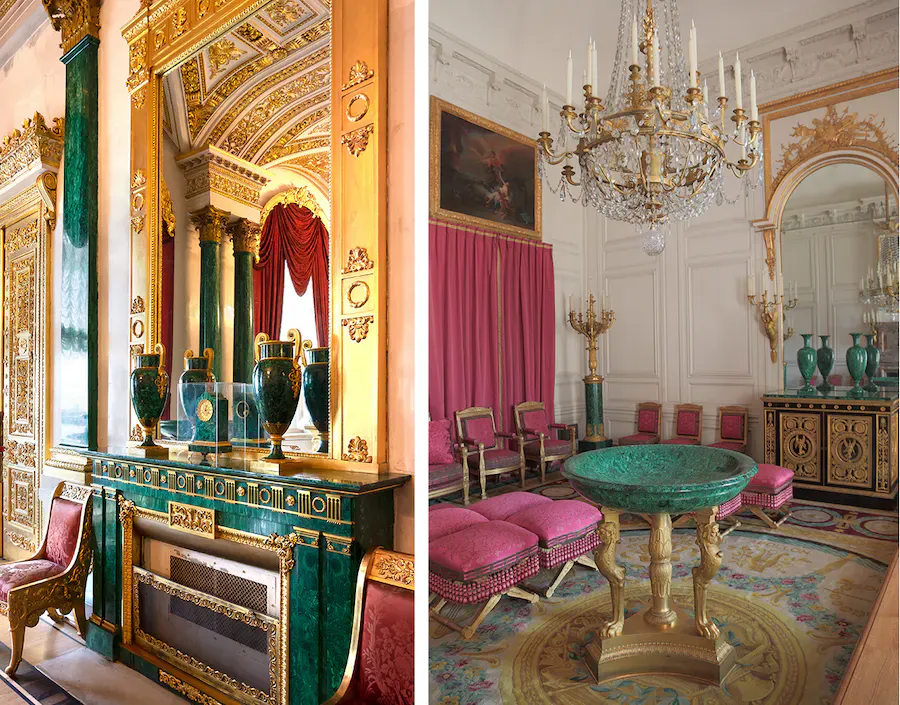
There were also entire rooms with furnishings based on the rich green stone. Beautiful examples of this can of course be found in Saint Petersburg, the then capital of the Russian Empire. In the Tsar's Winter Palace there is the Malachite Hall, so named because of its decoration with malachite pilasters and columns, as well as a fireplace mantle made of the same material.
Related: The Gilded Bronzes of the Empire Style
The room was designed in 1837 for Tsarina Alexandra Feodorovna and served as her reception salon. St. Isaac's Cathedral, also located in Saint Petersburg, has an iconostasis whose individual panels are separated from each other by imposing half-columns made of malachite. Malachite was also used lavishly in the Moscow Kremlin.
Related: How Van Cleef & Arpels Got Its Four-Leaf Clover
But there are also malachite halls and salons outside of Russia, for example in the Grand Trianon, the pleasure palace built under King Louis XIV in the park of Versailles. After the Trianon's inventory was sold during the French Revolution, Napoleon had the rooms redecorated in the Empire style. His apartment also includes a malachite room, named after some gifts given to Napoleon by Tsar Alexander I before the two fell out.
Related: Piaget: The Innovation of the Ultra-Thin Watch
Malachite is still valued as a decorative stone today due to its luxurious appearance with fine grain and bright color. And of course it is still used in the jewelry and watch industries: ground and cut malachites adorn pieces from the Alhambra collection by Van Cleef & Arpels and dials for Piaget wristwatches.