
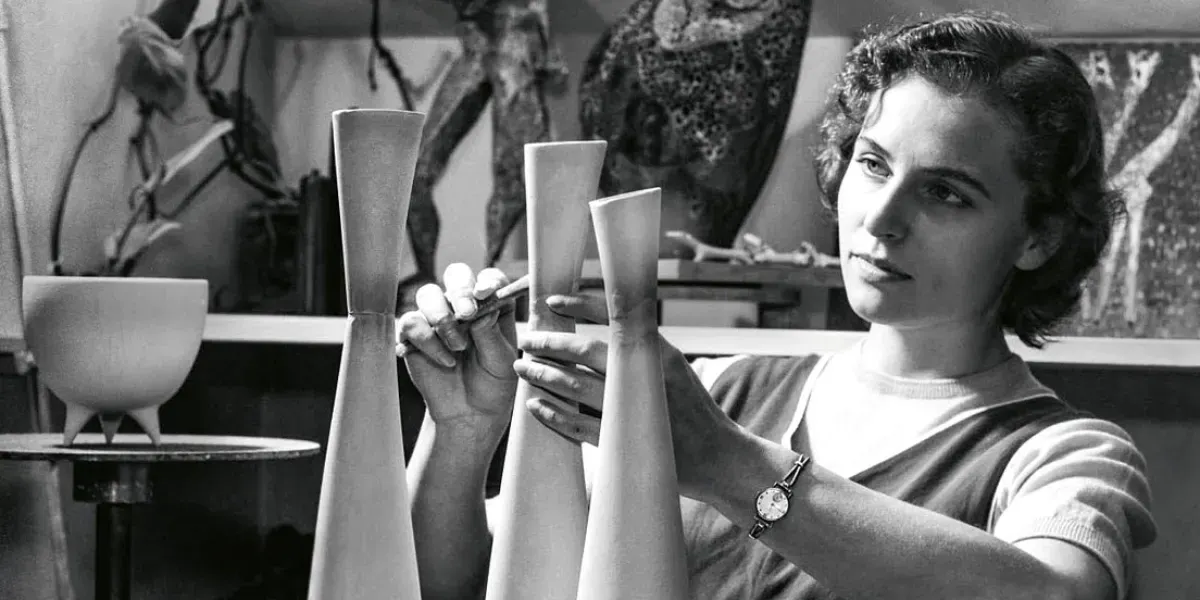
Lillemor Mannerheim was born in Vichtis, Finland, just northwest of Helsinki, on the farm Niemenkylä in 1927. She was the daughter of the Norwegians Ingeborg and Carl Erik Mannerheim, who was the nephew of the future president Gustaf Mannerheim.
Already as a child, Lillemor's artistic talent was encouraged by her family, which had several artistic members, as well as friends. In addition to drawing and modeling, young Lillemor found refuge in the nature that surrounded Niemenkylä with its vegetation and animals. These were two interests that would be decisive for her future artistry.
After Lillemor's parents divorced in 1938, her mother took the children to Helsinki, where they would live until the Soviet Union attacked Finland in 1939. The family then moved to Lekum in Norway, where her mother came from, but after Norway was occupied by the Germans, they moved on to Värmland in Sweden. In 1940 they were able to return to Helsinki.
Related: Remembering Signe Persson-Melin: Sweden's Most Prominent Female Designer
After the war in 1945, Lillemor went back to Sweden to study ceramics at Konstfack. When she came to Stockholm with experiences from a war-torn Finland, there was a belief in the future and a longing for freedom that is also noticeable in her art. During Lillemor's time studying in Stockholm, abstract-geometric modernism flourished. During the summers, Lillemor interned at Arabia where she met artists such as Birger Kaipiainen, Rut Bryk and Toini Muona.
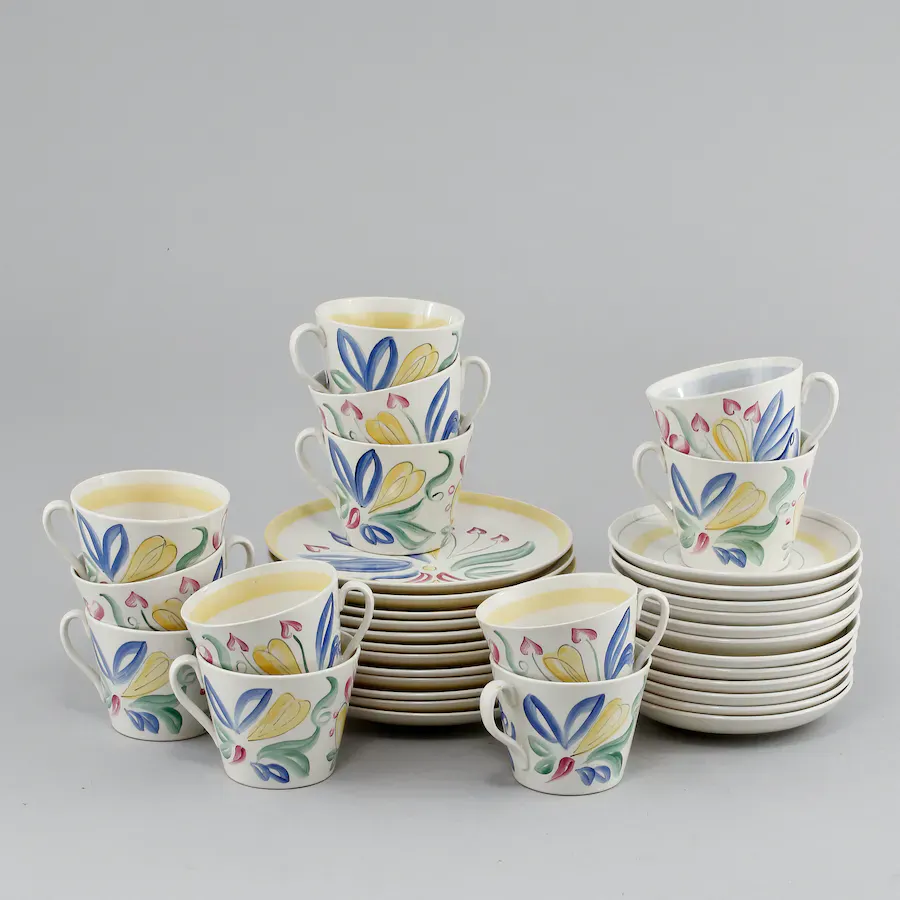
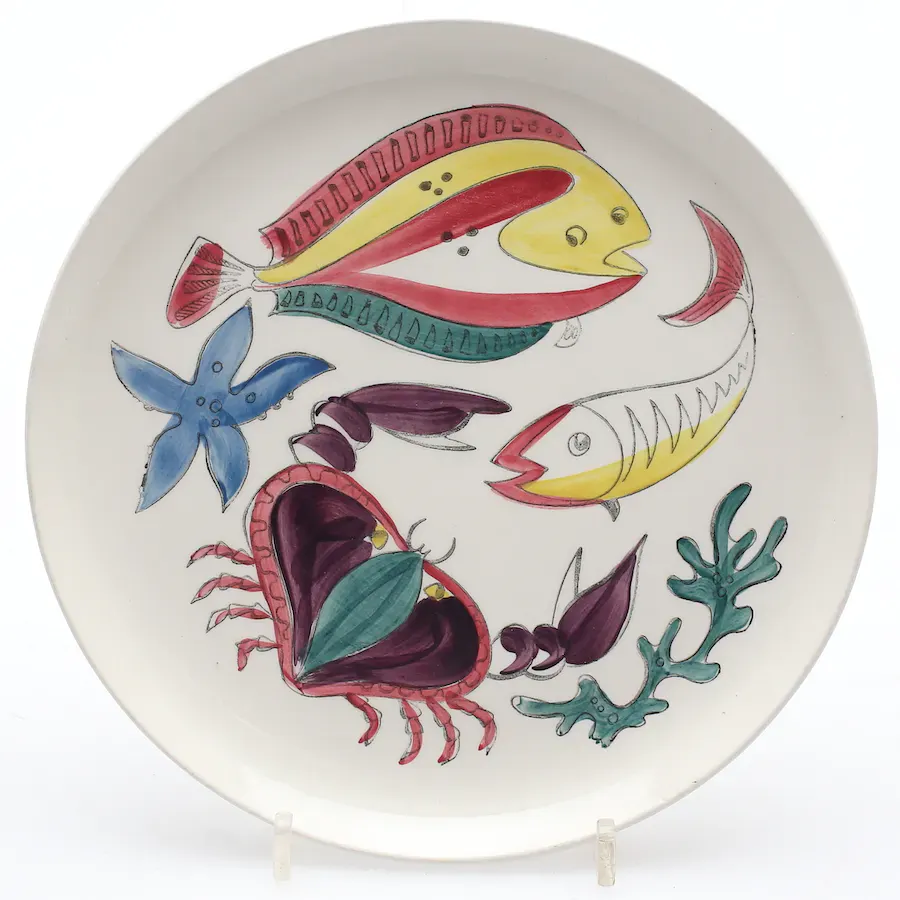
Lillemor got a trial job at the Gefle porcelain factory right after her graduation. The year was 1949 and she had to share a studio with Arthur Percy who was the factory's major artist but was later transferred to Upsala-Ekeby. In Uppsala, she got to work alongside other female ceramicists such as Anna-Lisa Thomson and Ingrid Atterberg.
Related: Jobs: A Flourishing Group of Siblings
She moved to Paris in 1950 to study at the Académie de la Chaumière where artists such as Amedeo Modigliani, Alberto Giacometti, Siri Derkert and Bror Hjorth studied, and there she was able to experiment with her own style. The teacher at the school was the Russian-French sculptor Ossip Zadkine who, according to Lillemor, cared deeply that his students find their own style and originality. In addition to her studies, Mannerheim had an internship at the porcelain factory Manufacture nationale de Sèvres.
In 1952, Lillemor Mannerheim returned to Sweden and, with the experience she gained in Paris, was given a better position at Gefle. She used works she made in Paris as models for the series that Gefle produced.
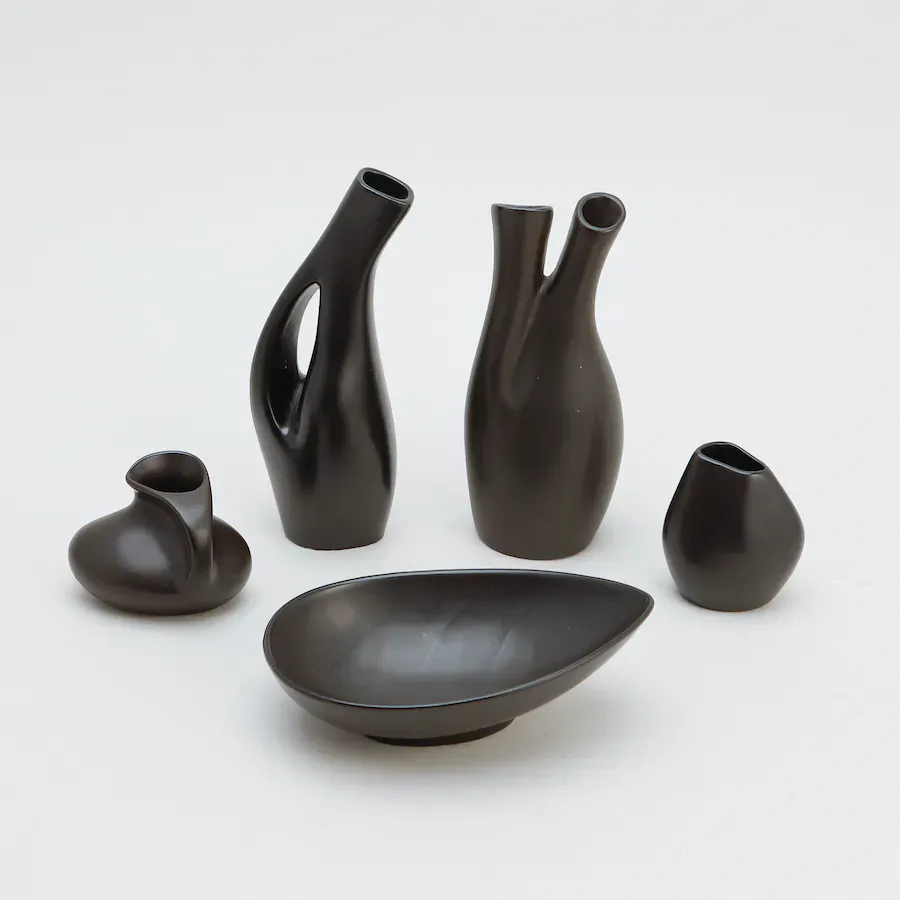
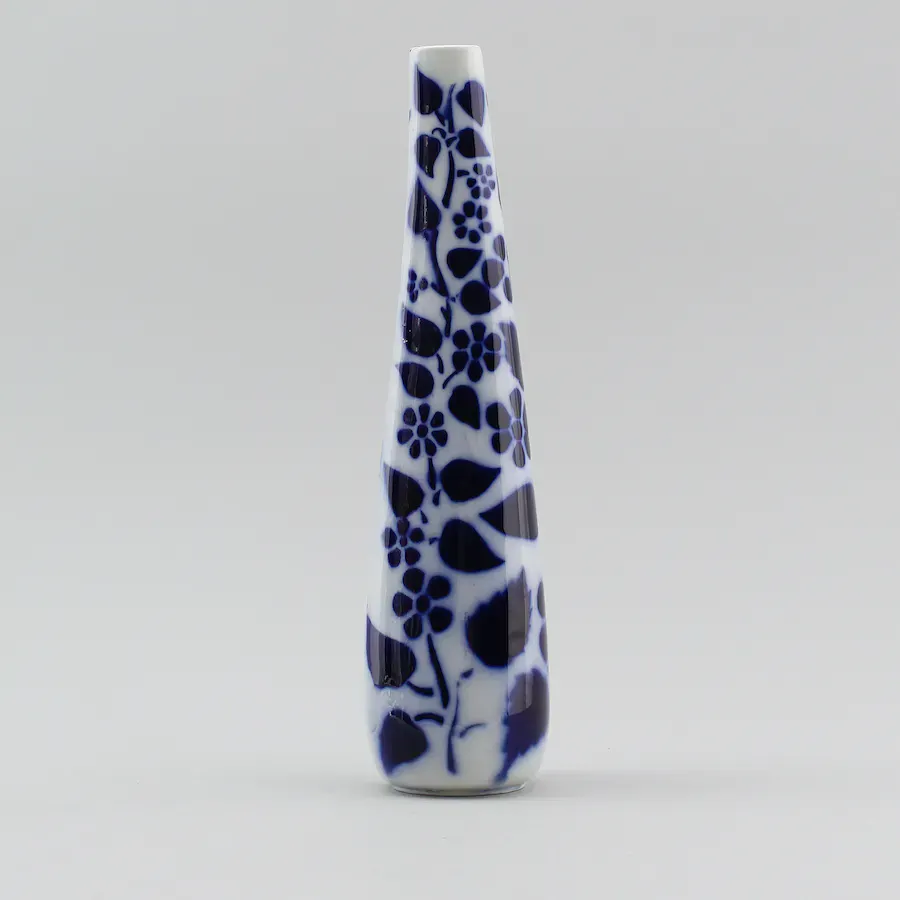
Her M-series was created at Gefle and was put into production in 1955-57. The series consists of vessels, vases, jugs and bowls in asymmetrical shapes. With anthropomorphic forms, Mannerheim connected to organic modernism and drew inspiration from nature, as well as both animal and human bodies. Characteristic of Lillemor were thin designs, monochromatic decorations and a lack of relief decoration.
Related: Barnebys' Guide to Vintage Scandinavian Design
Lillemor Mannerheim belonged to the generation of women who established themselves within the male-dominated world of design despite much resistance. For a woman to work professionally in pottery was very unusual at this time, especially as a main designer.
However, the circumstances at a ceramics factory were often difficult and women were subordinated to the men's work. In a letter to her grandmother after arriving in Gefle, Sweden, Mannerheim wrote: "I am happy about my varied work, there are many who would envy me. The work is free, but censored by the quivering nostrils of the gentlemen who only vent for money, if I'm going to be really mean."
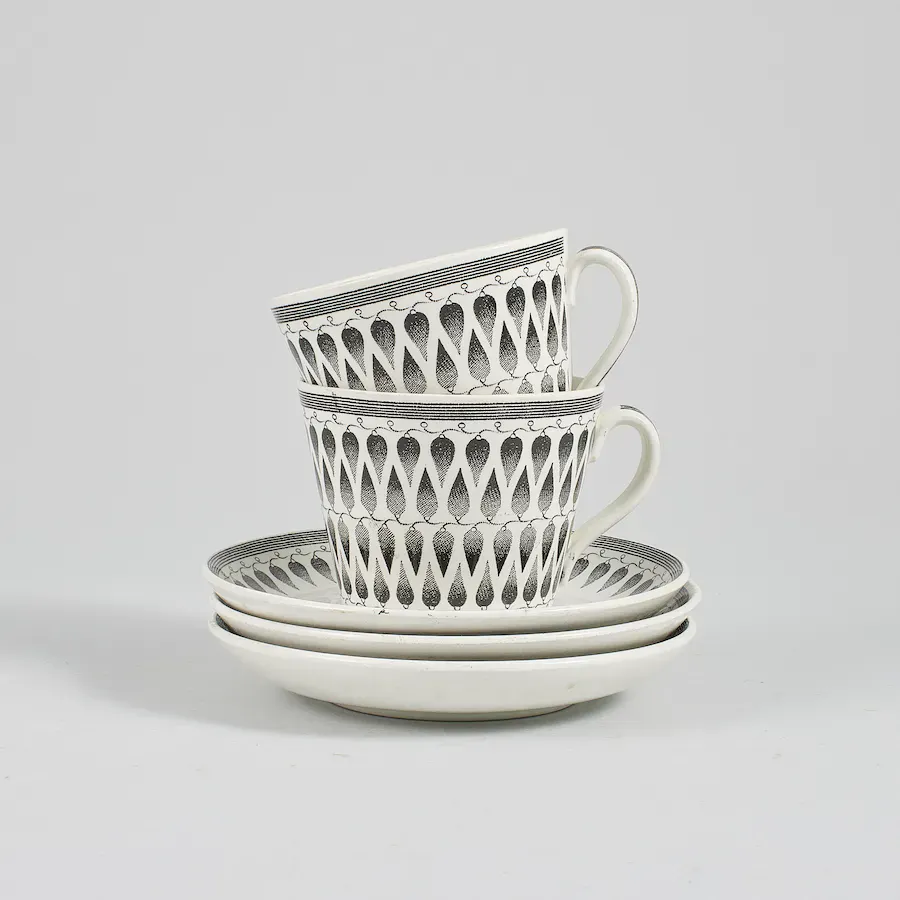
In fact, female-made designs were were often attributed to a man. In Lillemor's case, there is the Lillemor tableware, which was launched in 1950 as one of Arthur Percy's creations. Although the name indicates Lillemor's involvement, it was only much later revealed in an interview that it was actually she who designed it as a new employee at Gefle.
Despite the challenges, some female artists were sought after by several companies because they constituted a large consumer group and had the ability to understand what women wanted to purchase.
Related: Marianne Westman: Everyday Porcelain Made Fun
After Lillemor married Carl-Gustaf Klingspor in 1957, she ended her employment to devote herself more to family life and the farm at Hellekis, which the couple had taken over from Carl-Gustaf's family. However, she did not give up her professional role entirely, but was active for periods at Rörstrand between 1959 and 1964, which was closer to her new home.
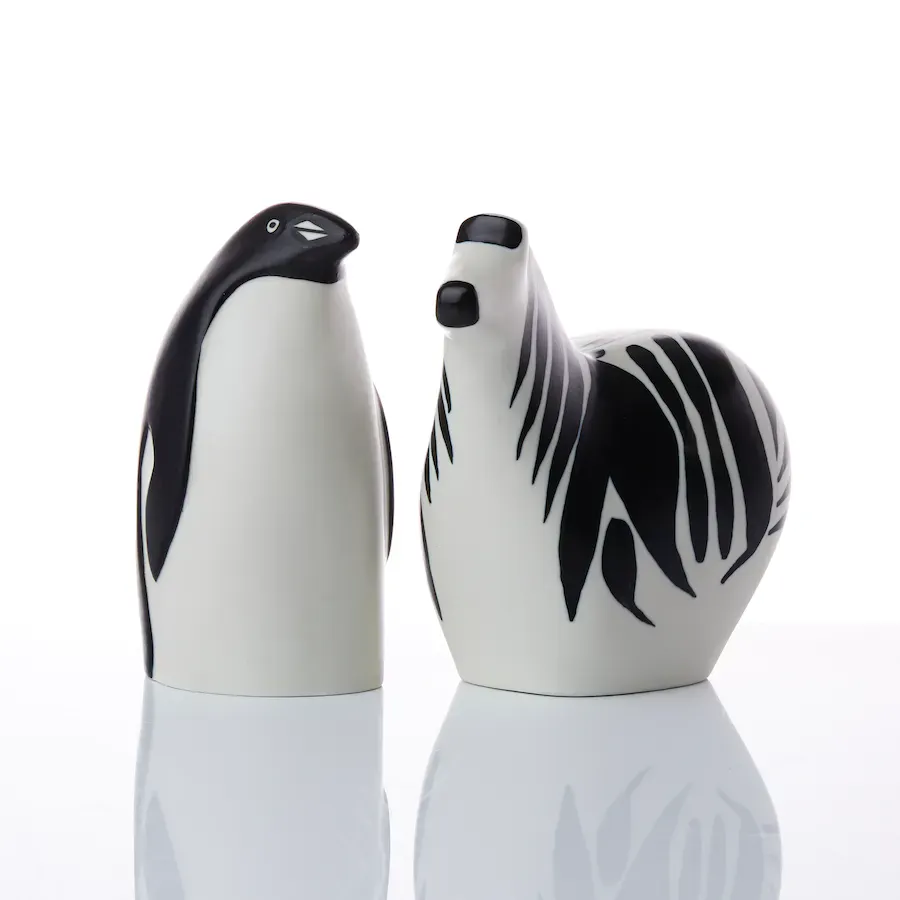
During the 1960s, Lillemor mostly devoted herself to the home. During the 1970s and 1980s, she again worked in the ceramics industry, and during the 1980s she designed a series of animal figurines called The Endangered for the benefit of the World Wide Fund (WWF).
Organic modernism echoed a holistic view of life where all parts of the universe depend on or are influenced by each other. This philosophy was central to Lillemor, who in her childhood was interested in animals, agriculture and outdoor life. Later in life, she also began to take an interest in spiritual matters and science and the search for connections between them. She had an insatiable appetite for knowledge and studied everything from the cellular system, homeopathy, anatomy and physiology to Tibetan medicine.
Her manor at Hellekis, which dates back to the 18th century, still had much of its original design when Lillemor and her family moved in. During the late 1960s, however, Lillemor renovated parts of the large house and hired one of Finland's most prominent architects, concrete brutalist Aarno Ruusuvuori. Over the years, Lillemor also amassed Sweden's largest private collection of her friend Birger Kaipiainen's ceramic works, which adorned the walls.
During the time at Hellekis, Lillemor was very involved in the farm with its garden and horses, as well as the local village. Among other things, she organized riding and music camps and always had an interest in food and health.
Want more articles straight to your inbox? Subscribe to our newsletter!
During the latter part of her life she made several trips, including Cairo to visit conservation expert Kai Curry-Lindahl, the Galapagos Islands to study animal species, Nepal, the Philippines, Mexico, Iceland, Kenya, and Tanzania, as well as Tibet three times. Tibet had interested her since childhood when her father's uncle Gustaf Mannerheim told her about his expeditions in Asia. During her trip to Nepal and India, she got to meet the fourteenth Dalai Lama.
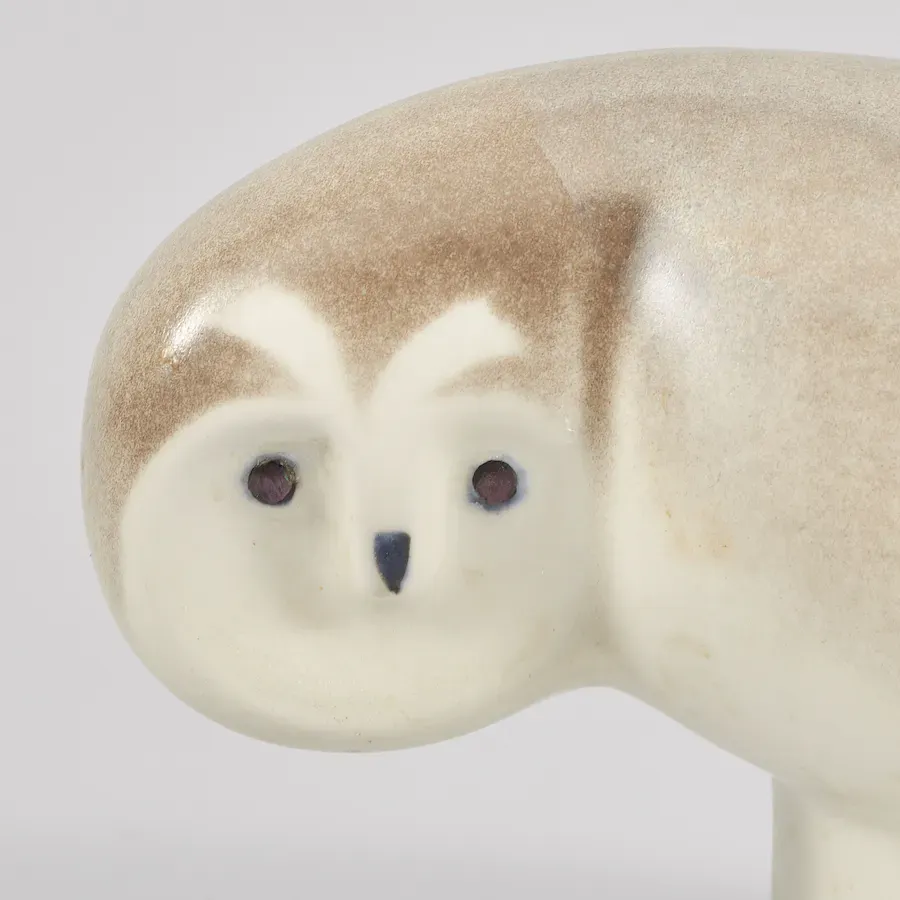
She also traveled to Antarctica with the World Wildlife Fund. After that she produced the series of animal figurines The Endangered at Arabia in Helsinki, which were sold for the benefit of the organization. The figures were based on all the sketches she made of the various animals she had seen during her travels.
Lillemor died in 1994 from ovarian cancer. She had felt pains in her abdomen for a long time but was not examined by a conventional doctor in accordance with her philosophy and belief in alternative medicine. It was only after an operation in 1993 that the cancer was found, and Lillemor did not allow herself to be treated for her illness even then.
Today, you can own Lillemor's work for affordable prices by searching Barnebys to see all of her work available at auction.