
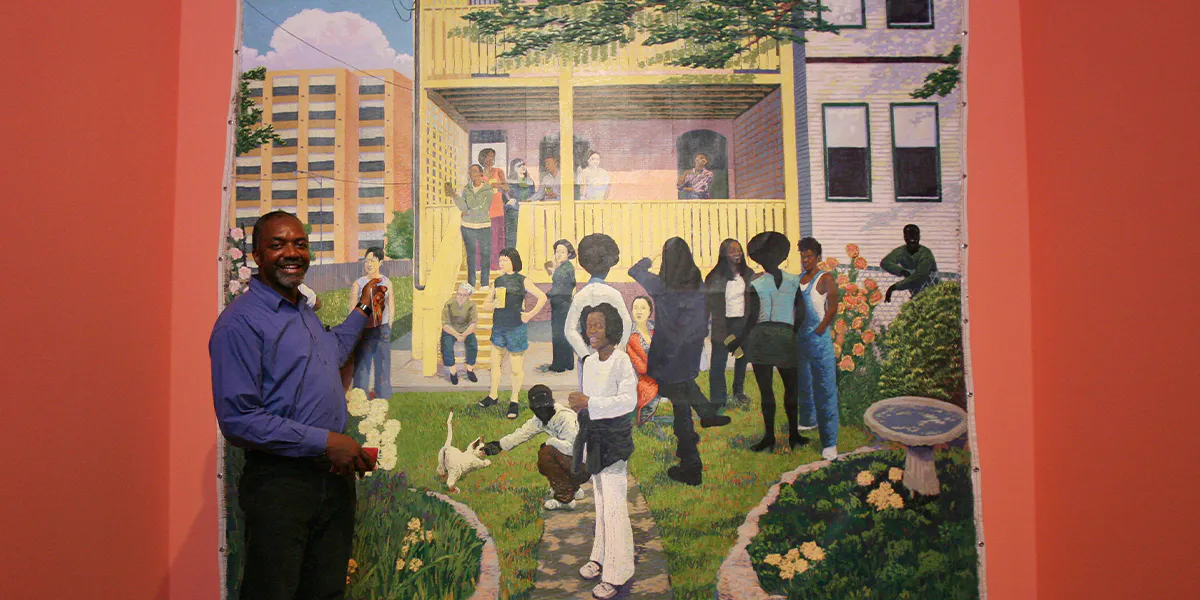
Kerry James Marshall was born 1955 in Birmingham, Alabama, where he spent the first nine years of his life. It was during this time that the wave of civil rights unrest began and, when he and his family moved to Los Angeles, he experienced this firsthand. His new home was in close proximity to the headquarters of the Black Panthers Party, an organization that played a vital role in the fight for civil rights of African Americans. The riots that broke out in 1965 had a particular effect on Marshall’s future works. In an interview with artist Charles Gaines, the artist recalls this event and explains the aftermath it created: “The violence that took place seemed confusing to me. The kids were burning up the school in protest. You had teenagers beating up the vice principal. There were rallies on the athletics field that got people excited about a lot of stuff that was supposed to be wrong but was the interpretation and translation of people who weren’t even going to school there. It was like what was happening with the riots.”
Related: 14 Black Artists Who Changed Art History
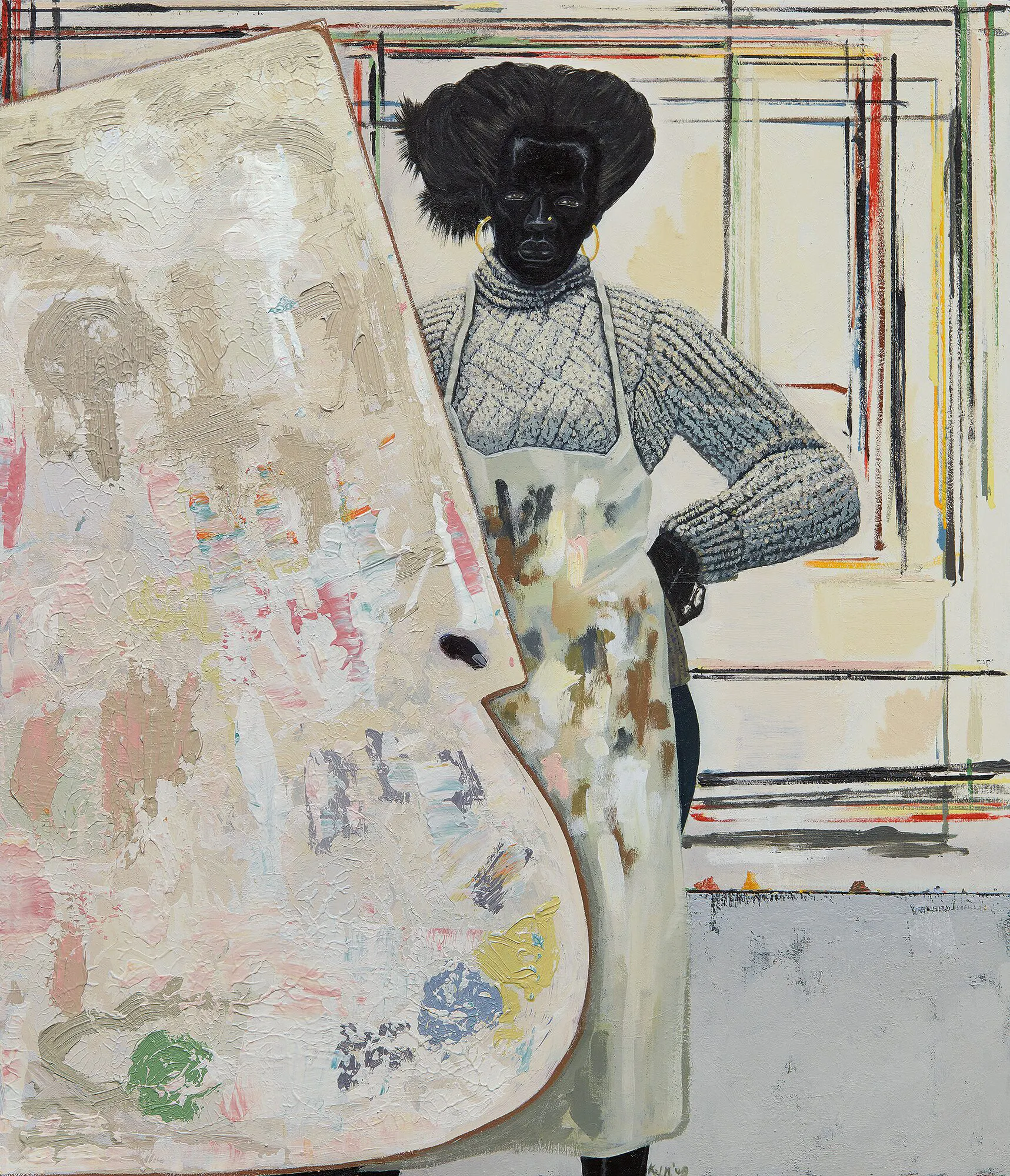
It was this fight for equality that shaped his world perception and affirmed his decision to portray people of color in everyday settings. The normalcy created by the background and surroundings of his work is contrasted by his depiction of his figures. Their skin seems almost jet black, making them standout from the painting while also highlighting the actual moment and their movements. Marshall uses this ‘rhetorical blackness’ to stress the rich and expansive affect the figures have on viewers.
Related: Barkley L. Hendricks: The Brilliant Trail Blazer
By mixing ivory black, carbon black and iron oxide black with other hues, the artist is trying to show the visibility and invisibility, the presence and absence, of minorities in societies. While opening an exhibition in Denmark’s Louisiana Museum of Modern Art, he commented, “I am very aware of the general absence of Black figures in the centre of the narrative of any of the pictures that become the foundation of the art history we know.”
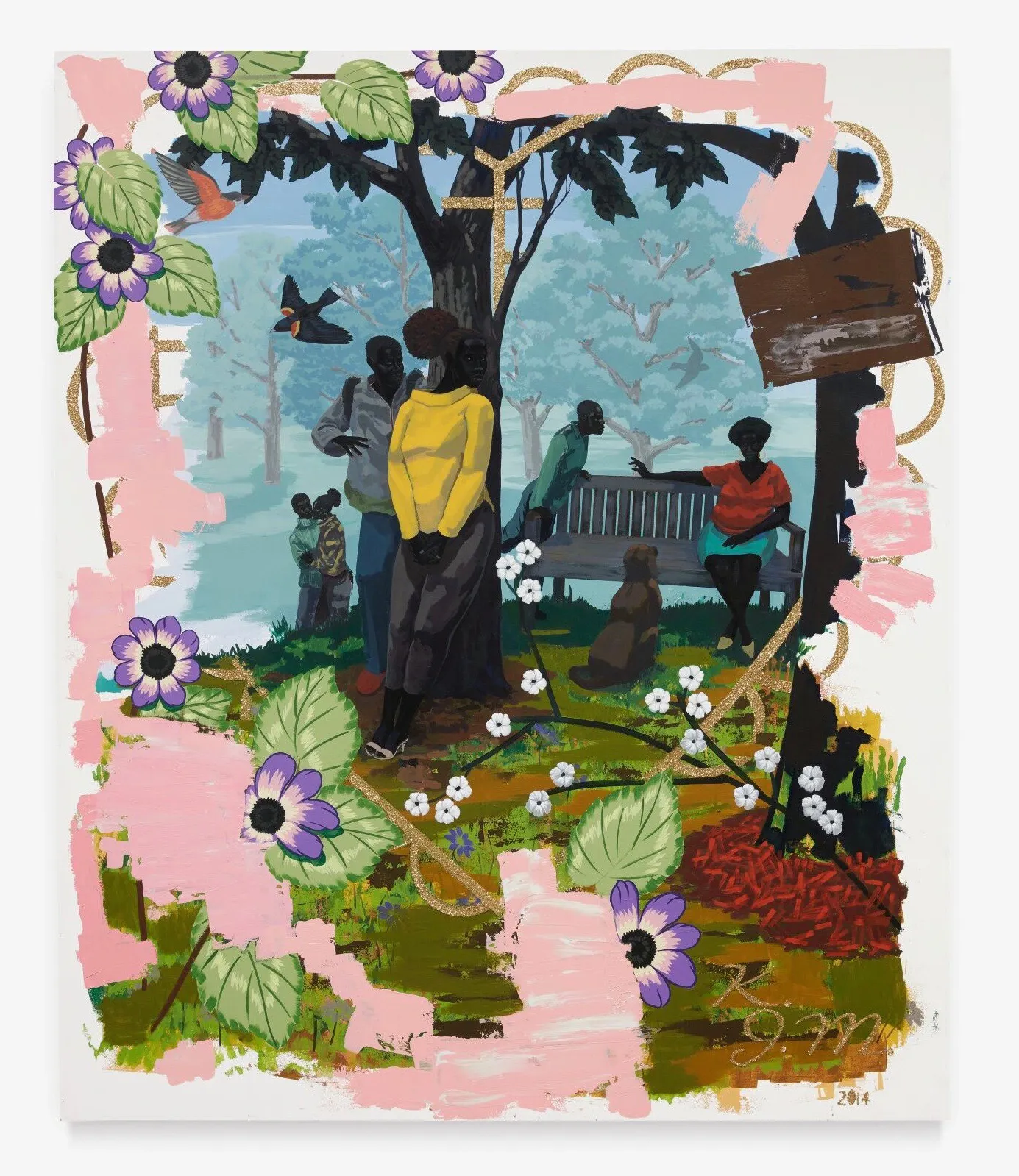
With his works, he is not only changing people’s perspectives but also their expectations of walking into a museum and seeing only white figures on the walls. Yet Marshall never intends to confront the viewer with his works, which he believes shuts down the examination of a subject. What he hopes to achieve instead is to compel the spectator into engaging with the artwork and its message fully, while also leaving room for personal interpretation.
I am very aware of the general absence of Black figures...
One of Marshall’s greatest influences was his mentor and fellow artist Charles White (1918-1979), whom he discovered during his time in primary school in a book titled Great Negroes, Past and Present (1963). Later, Marshall was selected for a summer drawing class at Otis Art Institute of Los Angeles County where White taught and also retained a studio, which the class got to visit. It was there that Marshall discovered the “secrets of the masters”: where ideas became reality on half-finished canvases and scribbled onto scraps of paper.
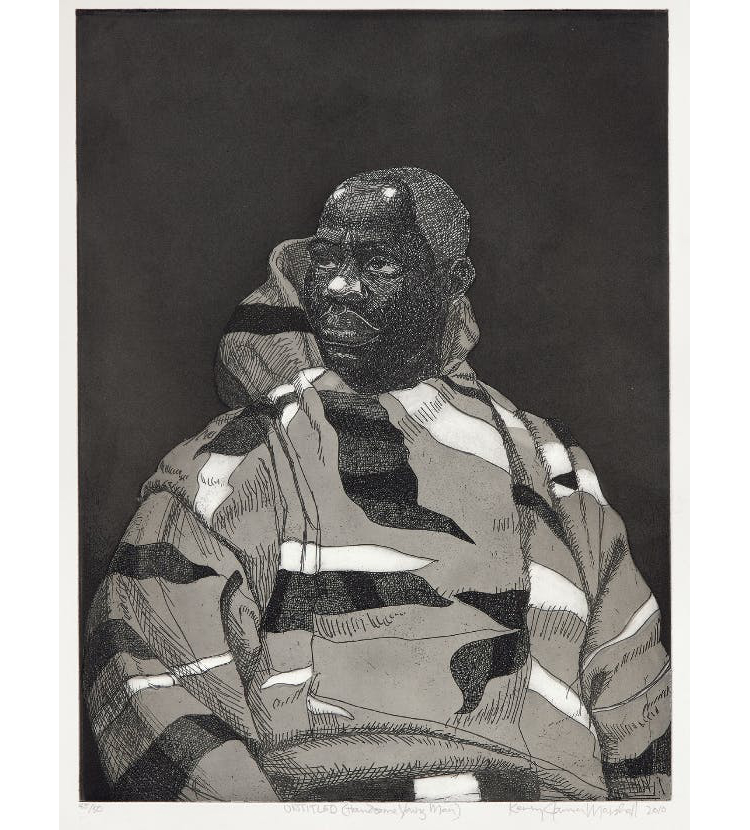
It was during this summer class that Marshall decided to become an artist and study at Otis Art Institute. He was one of four students of color. When he began taking White’s figure drawing classes, he met other students such as Richard Wyatt Jr and Houston Conwill, who were just as captivated by their teacher as Marshall was.
Related: Kara Walker: 5 Facts to Know
The artist is primarily known for his large-scale canvases but he also works with other media, such as collage and sculpture. While becoming more and more successful during the 1980s and ‘90s he decided to teach at the University of Illinois, where he was a professor from 1992 until 2006. His success ultimately led to his recognition and him becoming a McArthur Fellow in 1997.
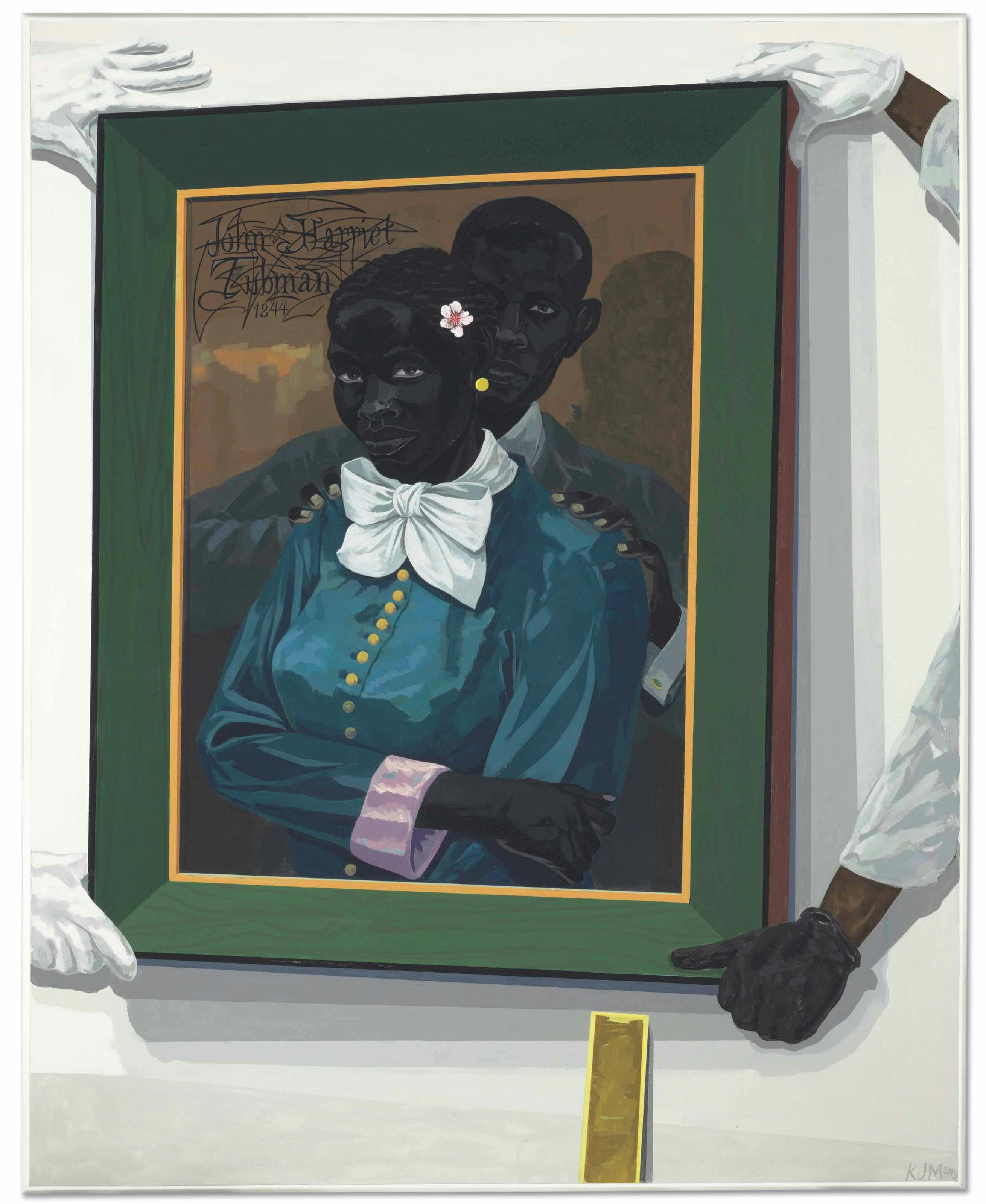
Marshall received a great deal of attention when the Metropolitan Pier and Exposition Authority decided to sell one of his earlier works. Past Times (1997) was auctioned off in 2018 at Sotheby’s in order to finance the infrastructure needs of their campus. The painting, which they bought in 1997 for $25,000, reached a record $21 million and was acquired by Sean Combs, better known by his stage name P. Diddy. The artwork is the ultimate picture of American leisure or the American dream, a dream lived by the American minority.
Related: 10 Record-Breaking Artworks and Who Bought Them
Marshall’s works cover the walls of renowned museums, such as London’s Tate Modern, New York’s Museum of Modern Art and Illinois’ the Art Institute of Chicago, while also being able to count the former First Lady, Michelle Obama, among his fanbase. It is through his art that Marshall hopes to bring awareness to the world about people of color being attacked or discriminated against during their everyday lives, while going about such simple tasks as picnicking, dancing or shopping. He uses his art to make visible the often avoided topics of an unjust reality.
Discover more artists with Barnebys Magazine
Article by Sophie Bubmann