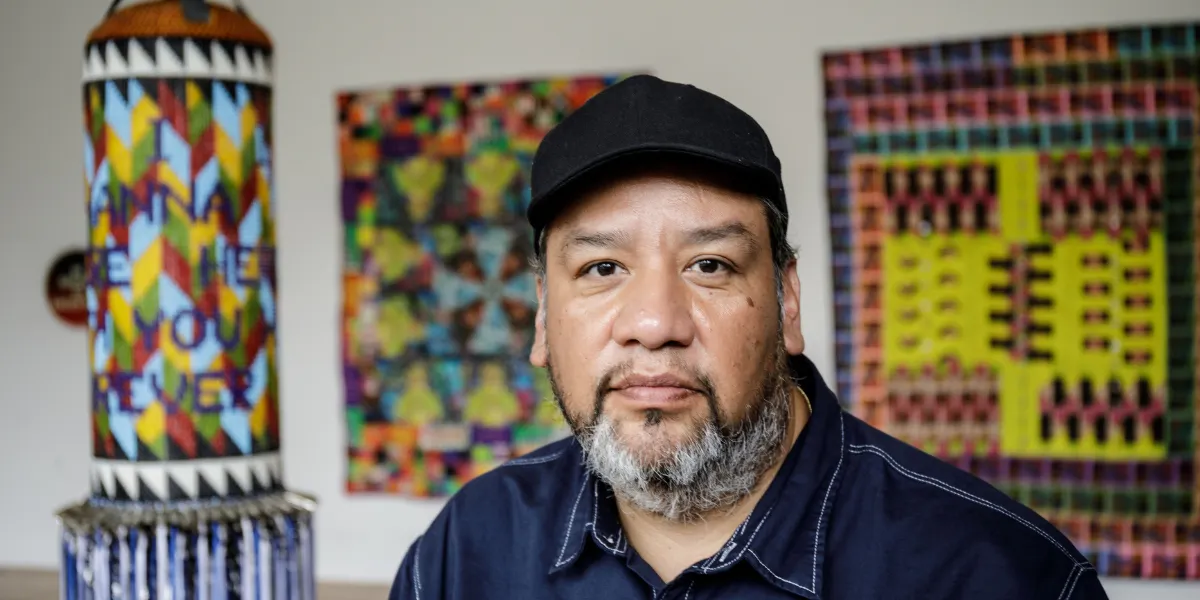
In July 2023, it was announced that artist Jeffrey Gibson would represent the U.S. Pavilion at the Venice Biennale in 2024. Gibson is the first Indigenous artist to have a solo exhibition at the American pavilion of the storied Biennale, which will run from April 20 to November 24, 2024. Founded in 1895, the Biennale is held every two years, and 2024 marks the 60th anniversary of the International Art Exhibition of the Biennale.
Gibson was born on March 31, 1972 in Colorado and is a member of the Mississippi Band tribe of Choctaw Indians and of Cherokee descent. He received his undergraduate artist education at the School of the Art Institute of Chicago and a graduate degree from the Royal College of Art in London, which was funded by the Mississippi Band of Choctaw Indians. His Indigenous heritage has strongly informed his work, particularly the craft tradition of beadwork, totem sculpture, embroidery, painting and more. The materials he employs reflect those used by Native American tribes, including rawhides, glass beads, flowers, and other repurposed textiles, which he combines with contemporary influences of music, pop art and modernist abstraction.
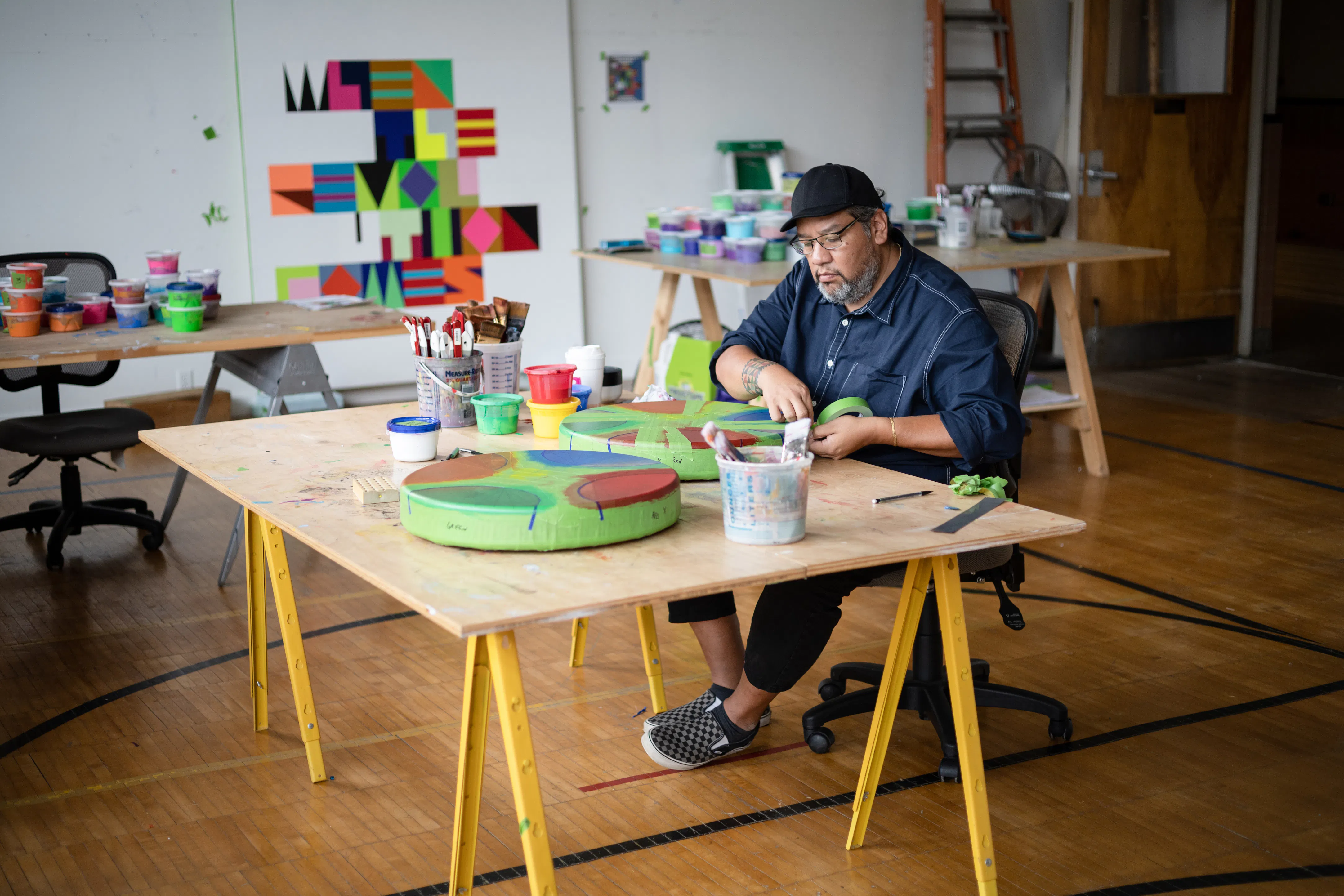
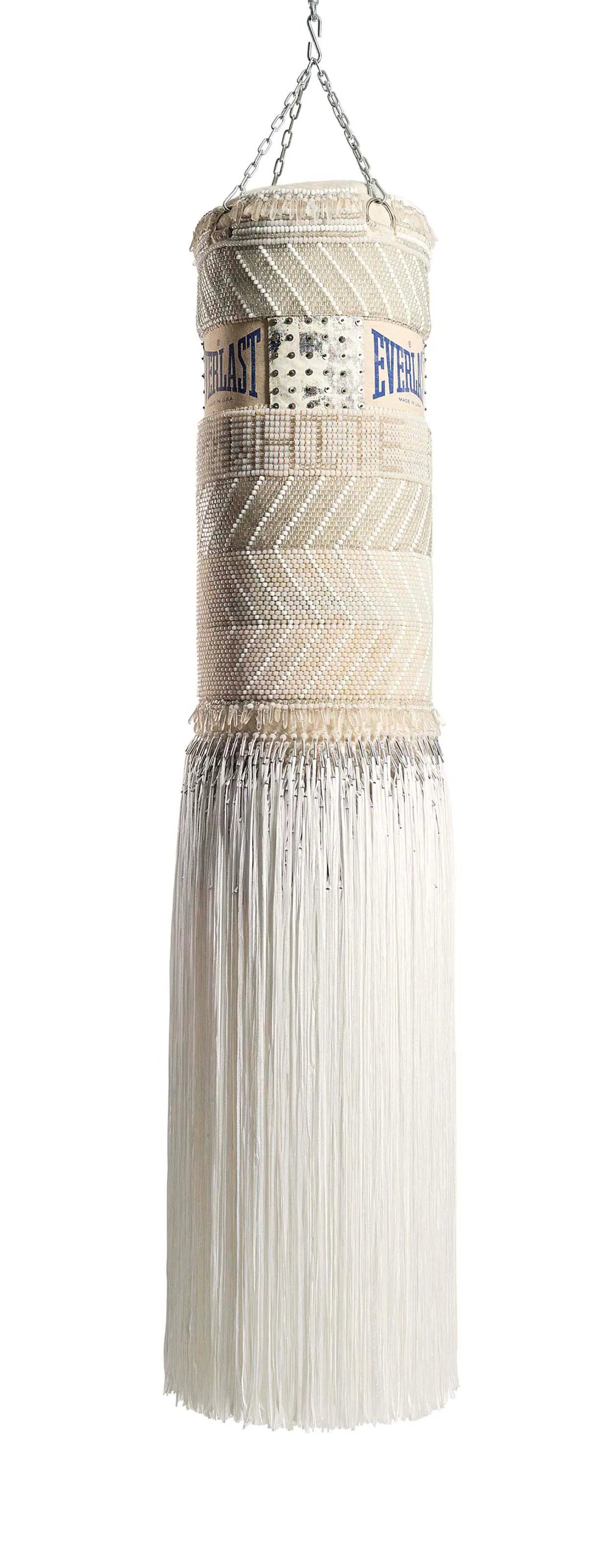
Painting was Gibson's first passion, creating brilliant abstract works rich with color and pattern, reminiscent of Native American quilts. After the Native American Graves Protection and Repatriation Act that was passed in 1990 and required the return of Native American cultural items to their respective tribes, he became more focused on incorporating objects into his artistic practice. For example, his acclaimed Punching Bag series was inspired by Native American powwow regalia, including elaborate beading and metal studs sewn into repurposed gym punching bags, which Gibson says expresses the suffering and struggles of race and class embedded in Native American history.
Today, Gibson works out of his studio in Hudson, New York and has been the Artist-in-Residence at nearby Bard College since 2012. He was awarded the prestigious MacArthur fellowship in 2019, which is an $800,000 prize awarded to 20 "exceptional, creative and inspiring" American individuals each year.
Related: John Akomfrah Will Represent Britain at the 2024 Venice Biennale
"Throughout his career, Jeffrey has challenged us to look at the world differently through his innovative and vibrant work," said Kathleen Ash-Millby, the co-curator of the U.S. Pavilion in Venice, in a statement. "His inclusive and collaborative approach is a powerful commentary on the influence and persistence of Indigenous cultures within the United States and globally, making him the ideal representative for the United States at this moment."
His representation of the U.S. at the Venice Biennale marks a new chapter in Gibson's career, as well as American art in general as he introduces his contemporary vision of Indigenous art to the world.
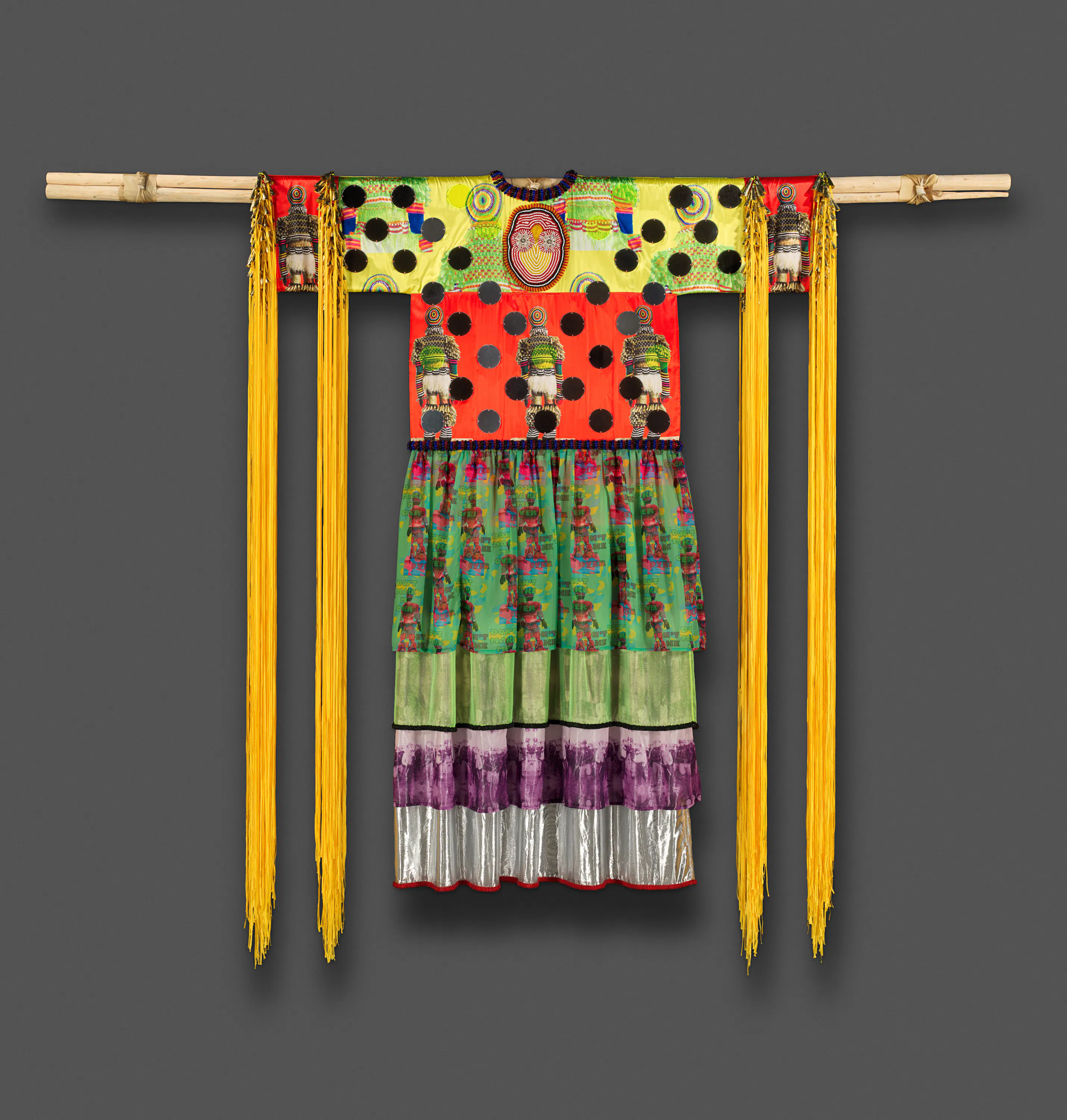
His work is found in some of the most important American museums, including the National Gallery of Art, the Smithsonian American Art Museum, the Whitney Museum, and the Museum of Fine Arts, Boston. It was recently announced that the Metropolitan Museum of Art has commissioned Gibson to create four figurative sculptures for the Fifth Avenue facade of the museum, on view from September 2025 through May 2026. Venice won't be the first time his work is shown internationally, with his first U.K. solo exhibition currently running at the Sainsbury Centre until August.
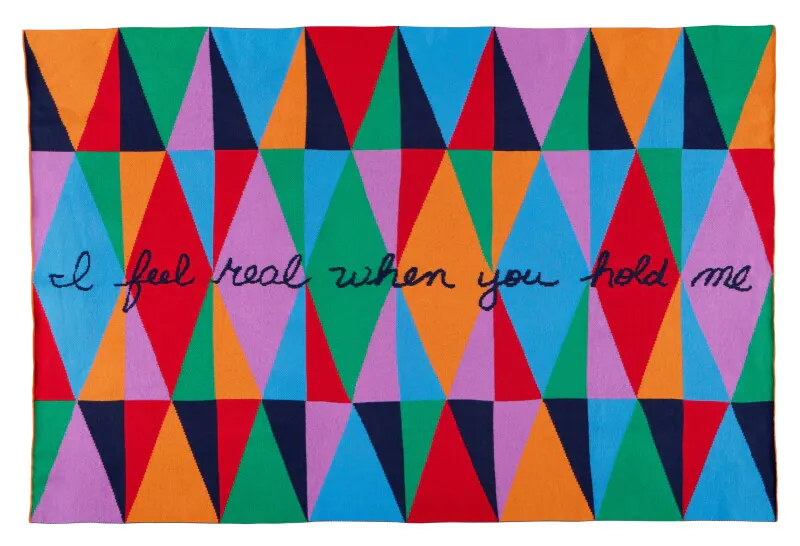
Ahead of the Venice Biennale, Gibson collaborated with Sotheby's to sell 60 cashmere blankets with a flag motif and decorated with the phrase "I feel real when you hold me" in Gibson's handwriting for $7,500 each to help fund the U.S. Pavilion at the Venice Biennale. While the U.S. State Department provides a grant to the U.S. representative, a pavilion costs several million dollars, and therefore the artist's studio is responsible for fundraising.
Related: The 5 Most Famous Civilizations of Pre-Columbian Art

His artworks also fetch impressive six-figure prices at auction, often far surpassing their auction estimates. His auction record was set at Christie's in 2015 when White Power, a sculpture made of a found vinyl punching bag in white leather decorated with glass and plastic beads sold for $233,000, over an estimate of $50,000-70,000. His second most expensive work, Shield, #3, sold more recently in September 2023 at Phillips. The work, which sold for $152,400 (above an estimate of $40,000-60,000), was composed of a geometric design made of deer hide, nails and acrylic paint on found ironing board.
Want more art world news straight to your inbox? Subscribe to our free newsletter here!
While Gibson says he was originally "daunted" by the responsibility of representing the U.S. in Venice, he wants to "create an atmosphere where everyone is invited, not to create a new hierarchy or form of exclusion." Native American history is fraught with colonial oppression, land exile, broken treaties and complicated laws, especially throughout the 20th century. It is also a history rife with hope, resilience, fierce community and rich artistry. This opportunity to introduce his Indigenous culture and history to the rest of the world is one in which Gibson is sure to address in his characteristically colorful, layered and visionary way.