Maiolica, which is tin-glazed pottery, flourished during the Italian Renaissance as a leading decorative art, combining the craft of narrative painting with ceramics. The most expensive piece of maiolica, which sold for a record €1.185 million ($1.77 million), was made for Isabella d'Este, the Italian noblewoman, head of state and art collector, who indelibly left her mark on the Renaissance.
While most patrons of the Renaissance were men, Isabella, the Marchioness of Mantua, stands out as the leading female patron of the period, commissioning a wide range of artworks in a variety of mediums. Her excellent eye for fine craftsmanship associated her with the leading artists of the time, such as Leonardo da Vinci and Titian, who both captured her portrait, as well as top writers, sculptors, and musicians. Here we explore her fascinating life and the extraordinary maiolica service made for her, which represents the pinnacle of the ceramic art.
Related: How the Medici Family Influenced Renaissance Florence
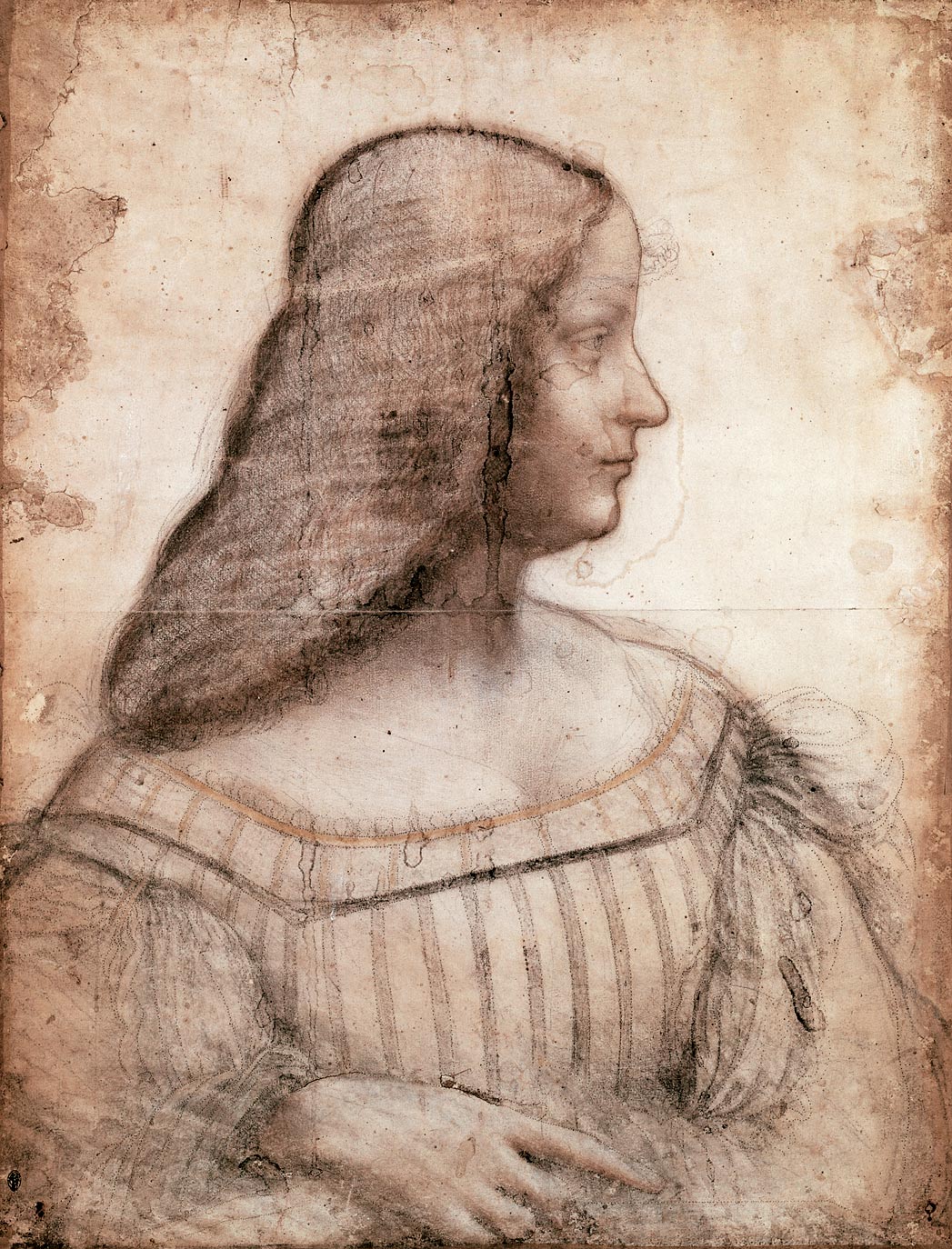
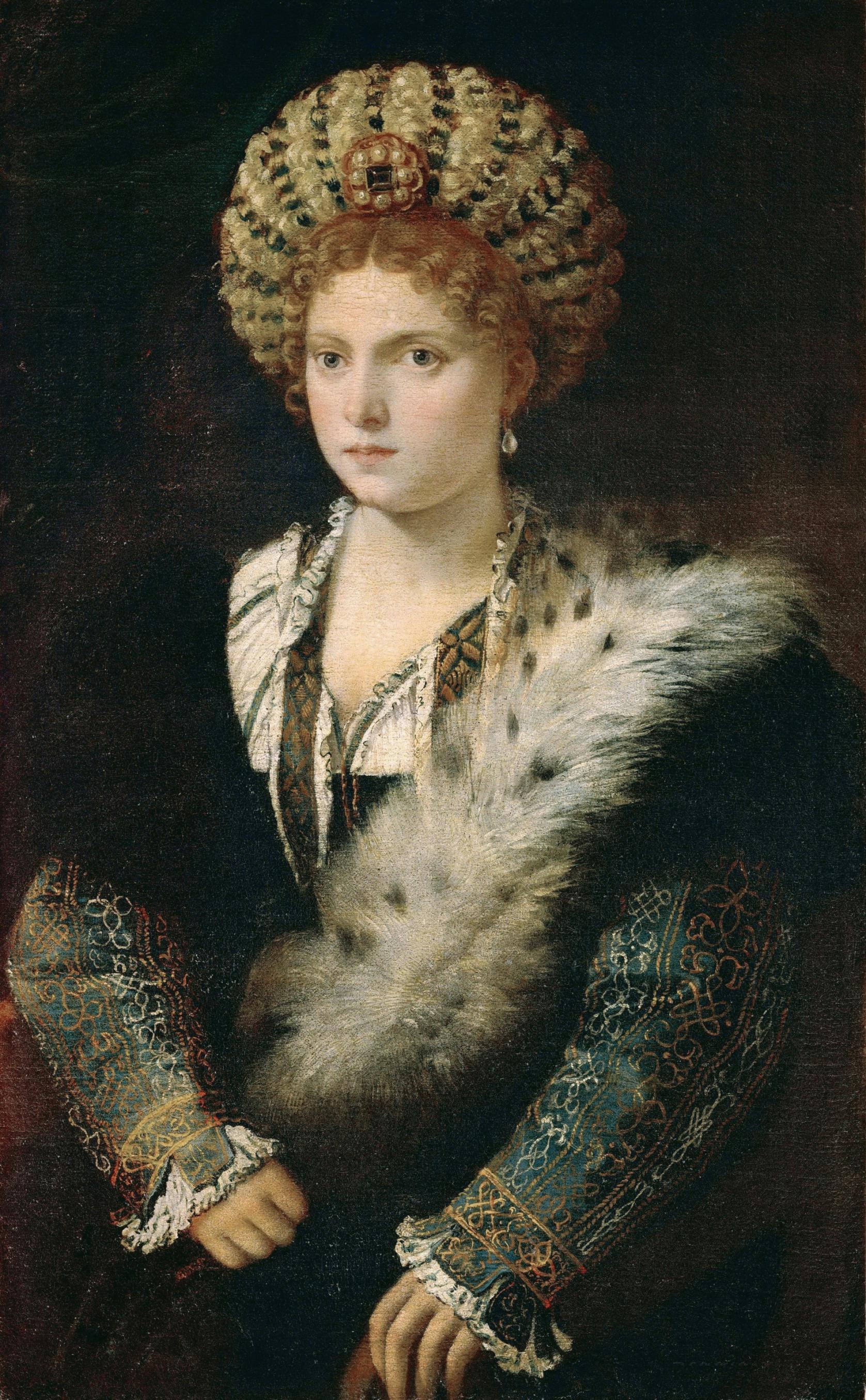
Isabella d'Este was born on May 19, 1474 in Ferrara, northern Italy, to Ercole I d'Este, the Duke of Ferrara, and Eleanor, the daughter of King Ferdinand of Naples. Her love of the arts was cultivated growing up at court, where she learned to read, recite, play music and dance. As a teenager she married Francesco II Gonzaga, Marquess of Mantua, who was often away from home, serving as commander-in-chief of the army of the Italian league and the Venetian army. In his absence, Isabella governed Mantua, proving to be a capable leader and political player. When her husband died in 1519, she became the Head of State of Mantua and was hugely popular amongst the people, so much so that Italian writer Matteo Bandello referred to her as "supreme among women."
One of her lasting legacies was transforming Mantua into a center of culture. Her studiolo, or private study, in the Ducal Palace of Mantua was decorated with commissioned paintings and sculptures by leading Renaissance artists like Andrea Mantegna, Perugino, Michelangelo and Correggio. In addition to these incredible paintings, one of her most famous commissions was a 24-piece maiolica service made for her by Nicola da Urbino (1480-1540s), considered the top maiolica painter of the time.
Related: Wunderkammer: The Cabinet of Curiosities

Maiolica dates back to the Middle Ages, when earthenware was covered with a tin-based glaze to make it an ideal base for painting in vivid color. It is believed to have gotten its name from Majorca, Spain, because it was imported from there during the 11th and 12th centuries. The art reached its zenith during the Italian Renaissance, when skilled painters created true works of art on ceramics. The concept of using tin glaze on pottery spread throughout Europe and was called different names in other countries, such as faience in France and delftware in the Netherlands.
Want more articles like this straight to your inbox? Subscribe to our free newsletter!
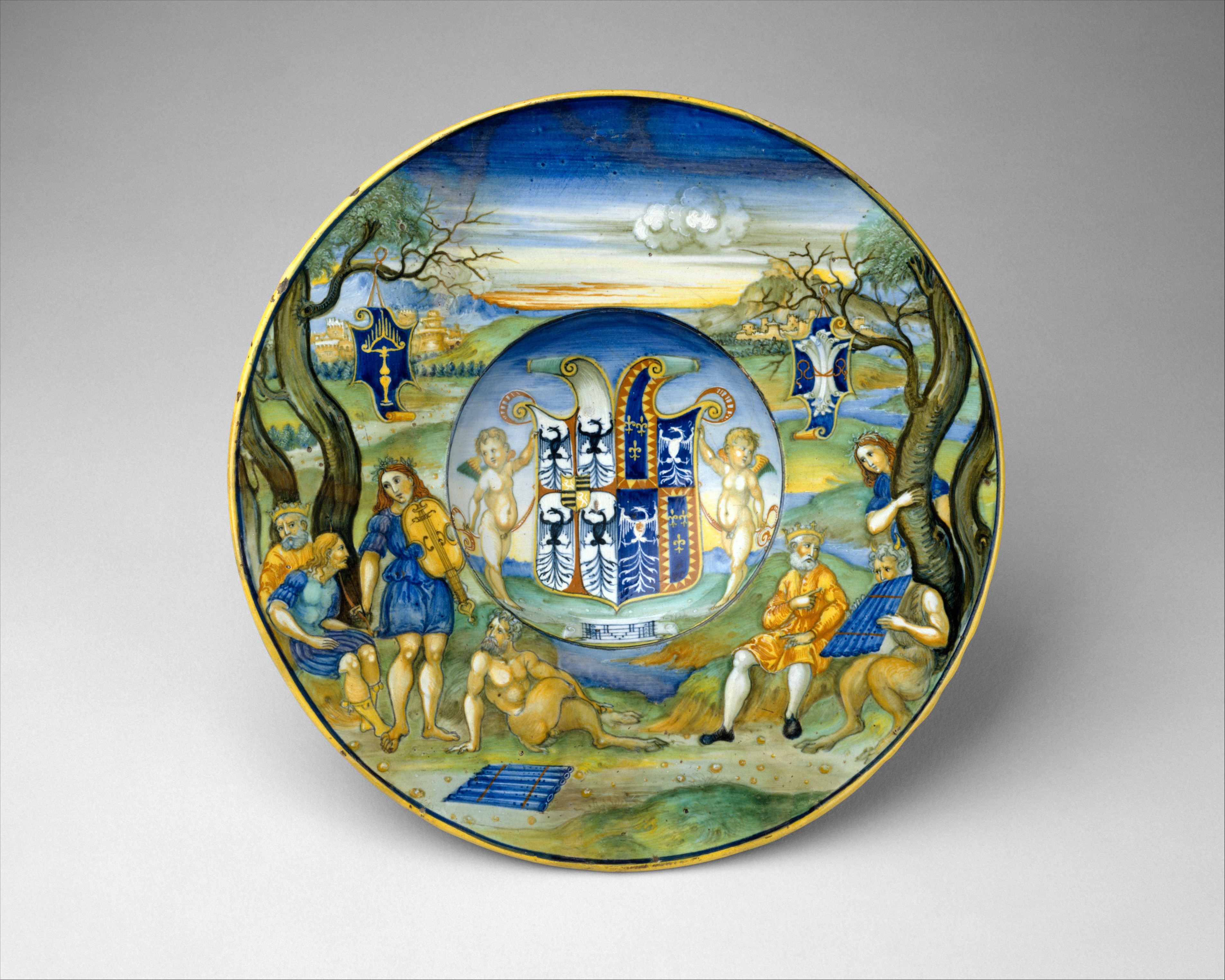
Of all the brilliant and talented maiolica painters in Italy during the Renaissance, Nicola da Urbino stands out as the most pioneering. He introduced istoriato ware (istoriato translates to painted with stories), which showcased elaborate and detailed scenes from mythological, Biblical and ancient texts, as well as paintings by Renaissance masters like Raphael, on plates, dishes and other ceramic pieces. Urbino was the center of istoriato ware during the 1500s, and these pieces have become some of the rarest and most coveted pieces of maiolica.
Related: The 5 Most Important Sculptures in Italy
By the 1700s, porcelain factories like Meissen and Sèvres came onto the scene and became incredibly popular, leading to a decline in maiolica production. However, the rich color, narrative scenes and fine quality of maiolica echo the triumphs of the Renaissance, as particularly seen in the Isabella d'Este service.
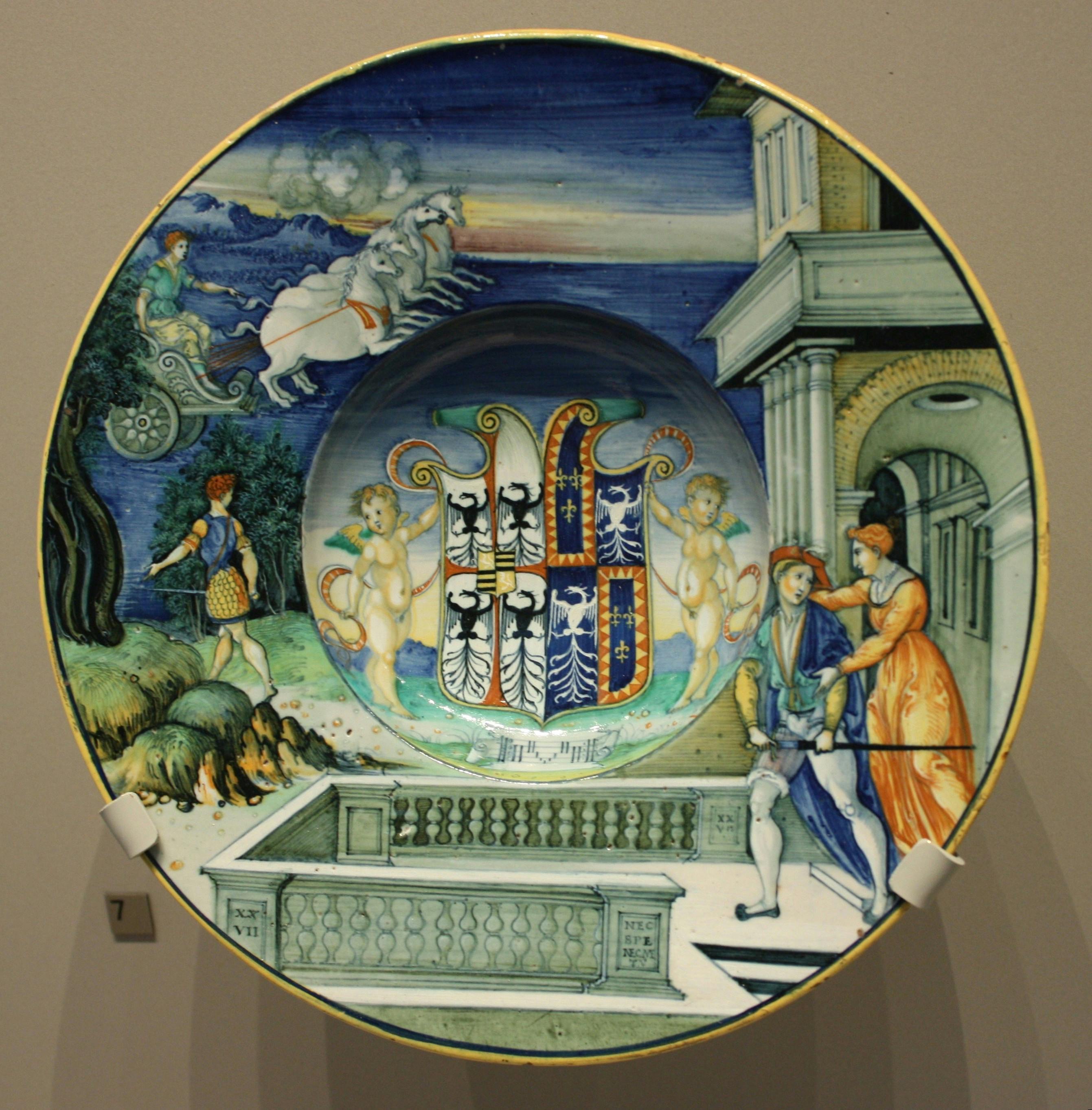
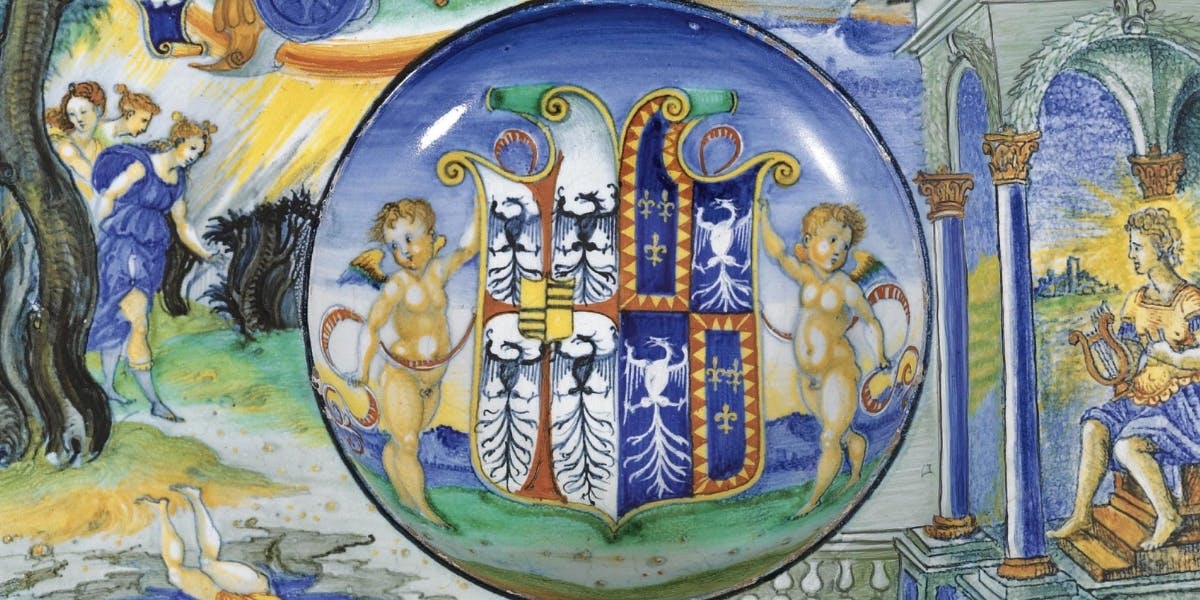
Isabella's service was likely commissioned and completed in the 1520s, though it's not clear whether Isabella herself made the order or her daughter, Eleonora, the Duchess of Urbino, who may have known Nicola da Urbino personally. For the d'Este service of 24 plates, Nicola decorated most of them with mythological scenes, many from Ovid's Metamorphoses, the Latin epic poem, and two with Biblical scenes, all incorporating her family crest that combined the d'Este and Gonzaga emblems.
Related: 5 Things You Didn't Know About Ceramics
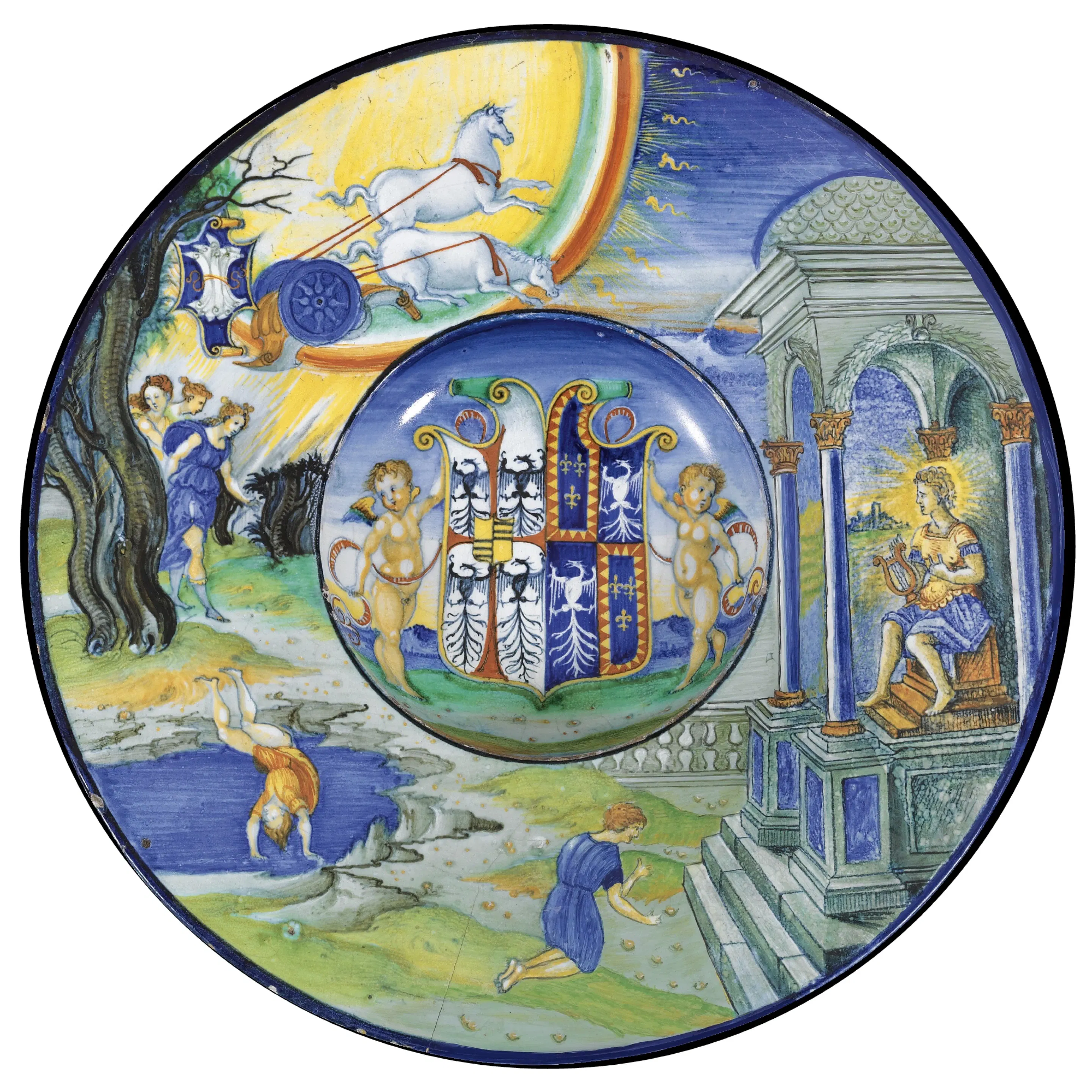
As an example of these painted scenes, the one above shows the fall of Phaethon, the son of the sun god Helios, when he drove his chariot too close to the earth and subsequently falls out of it on the left side of the plate. On the right side, he kneels in supplication to his father. This particular plate sold at Sotheby's in 2010 for £193,250.
After Isabella's death in 1539, it is unknown exactly how the plates were dispersed. However, today, the 23 existing plates from this esteemed service can be found in top museums, including the Museum of Fine Arts (Boston, MA), the Fitzwilliam Museum (Cambridge, UK), the Metropolitan Museum of Art (New York), the British Museum (London), and the Victoria & Albert Museum (London), with just four in private hands.
What's your maiolica worth? Find out on ValueMyStuff!
Maiolica often appears at auction, ranging from a few hundred dollars to tens of thousands. However, the most expensive piece of maiolica comes unsurprisingly from Isabella d'Este's service, a dish selling for $1.77 million in 2009 at Christie's Paris that showed the race of Hippomenes and Atalanta. This record sale emphasizes the importance of this incredible maiolica series, as well as the far-reaching influence of Isabella's Renaissance patronage.
Related: The Dinner Party: A Table for the World’s Most Influential Women
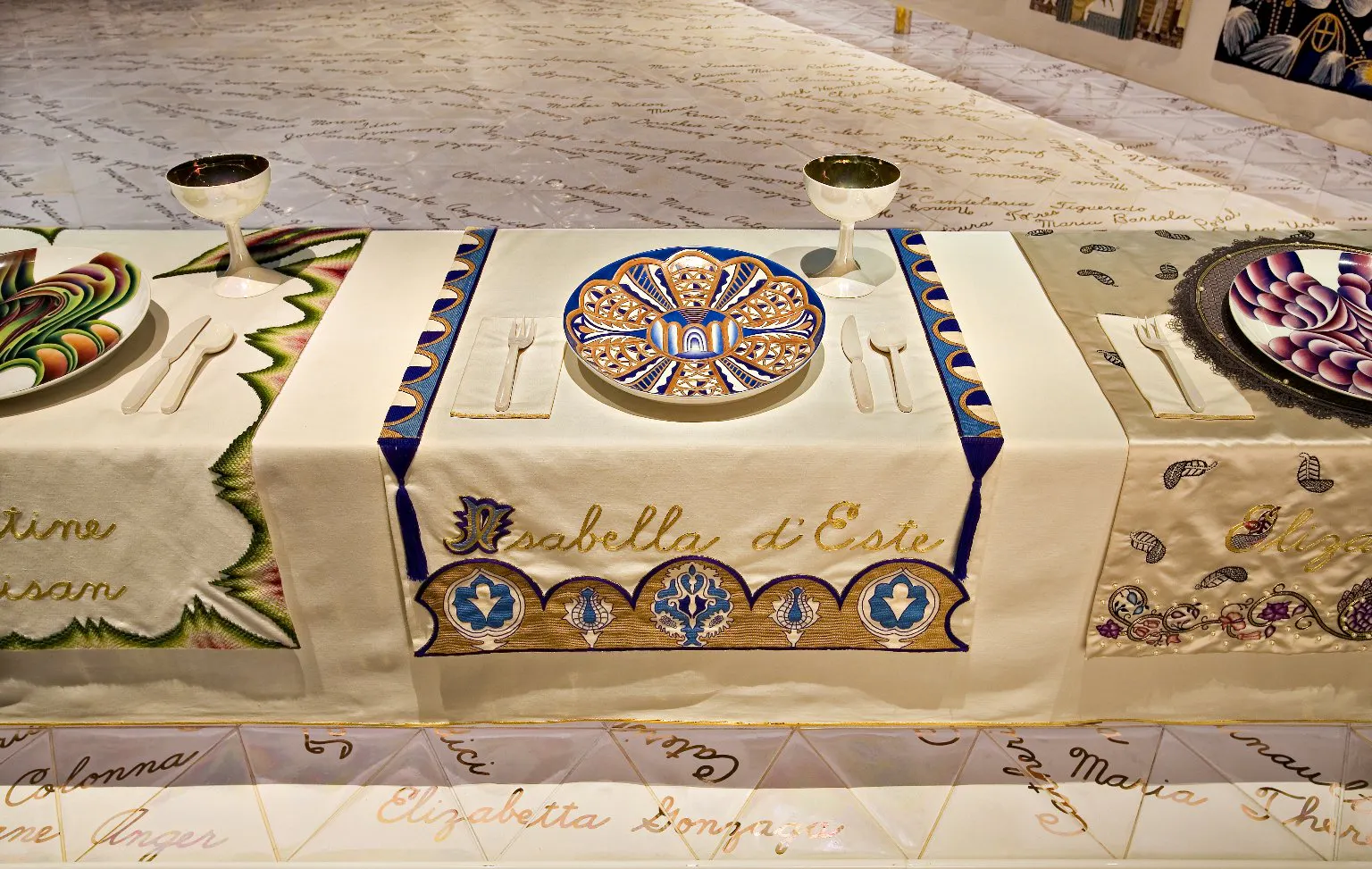
Isabella's love of maiolica, and her importance as both Renaissance ruler and art patron, was also celebrated by Judy Chicago in her famed Dinner Party installation (1974-1979). Isabella is included as one of the 39 famous women of history in Chicago's installation at the Brooklyn Museum, and her place setting even harkens to her maiolica service in a modern way with intricate patterns of blue, white and gold—the colors used in her maiolica service.