
Carrie Eldridge, who founded ATO Gallery in 2016, started her career in the financial services industry before pursuing her passion for art. She realized that the art industry needed better clarity and accurate appraisals in order to monitor the increase in art values, achieve profitability for artists and prevent art fraud. At her gallery, she has implemented blockchain, a digital ledger of cryptocurrencies such as Bitcoin, so that art values and artist's works can be properly tracked. In June 2018, ATO Gallery made the highest sale of a work of art using Bitcoin when Benjamin Katz's mixed media work Chasing Hearts/Northern Lights sold for 150 Bitcoin (equivalent to $1.25 million at the time).

Now, Barnebys talks to her about the future of art galleries in light of the coronavirus crisis, her gallery's platform and the importance of transparency.
Barnebys: How do you think the art world may change or evolve due to the crisis?
Carrie Eldridge: Absolutely the art world has and is changing because of this crisis. I’ve noticed blue-chip galleries start to invest in virtual reality software as well as AI. One of the goals of the gallery is not only to sell art but to educate the community so that there is a consistent demand and appreciation for the arts. I believe that all boats rise with the tide, and if galleries do a better job of investing in people who might not necessarily be able to buy from them, they will see demand from new markets, age groups, and people outside of their network. I believe galleries have a cultural obligation to their communities, both in their neighborhoods and in the virtual world. If a gallery’s only goal is money they are in the wrong business, it’s also about preserving our cultural identity and steering what work is cemented in history for the betterment of humanity and future generations.
Related: Gallery Life During Coronavirus at CFHILL

Do you think more will be available online?
Yes, more art is already available online and I think galleries will continue to attempt to add technology to mirror the experience that people have in the galleries. One thing I think galleries are missing the boat on is UX. Collectors consistently tell me they like going to galleries to network with like-minded people. If galleries took the time to simply add chat room plug-ins and scheduled events or Zoom meet-ups, they could see an explosion of engagement. If any galleries reading this just reach out, I’d be happy to explain how.
Related: The 8 Art Accounts You Should be Following on Instagram
What is the status of the ATO platform?
We have finished 100% of our MVP and we are now working on finishing the mobile app both for Android and iPhone versions of the application. We have streamlined the software to strictly focus on bringing value to collectors through a verifiable chain of ownership and authenticity. For galleries and artist using our software they will be able for the first time to track sales in new values along with earning a small but reasonable transfer interest each time the artwork each time it resells.
Related: Interview with Emma Jameson: Rising Curatorial Star

How do you think blockchain has revolutionized the art industry?
As far as how blockchain has affected the art market I can honestly say it has not affected it much at all. The art market is a vertically integrated industry with major power players sitting at the top with some of the greatest influencers on value being auction houses, which have largely not embraced blockchain technology for pricing transparency.
Artists will continue to suffer without knowing the actual value of their work. Collectors spend money just trying to find out the value of their artwork, and insurance companies struggle with finding verifiable third-party data about artwork value when it comes time to pay out for a loss, often paying out far too much.
Anytime trust is introduced into an industry it grows. Mass transparency of data helps the larger market but we understand that there’s going to be friction. If there was not friction could we or any company really be considered a disruptor?
Are there pros and cons of digitizing the art industry?
There is a litany of positive outcomes for making the art world and art market more accessible online. As far as negative aspects of online display and experiencing art online is my fear that mega galleries and auction houses are slow to adapt and keep up with new technology. If they are not more open minded about technology and don't employ people outside of their traditional industry they will ostracize early adopters who won’t want to use their website or application. For example when it comes to virtual reality there are a number of ways to create a 3-D gallery but only a handful that work across different types of computers or operating systems.
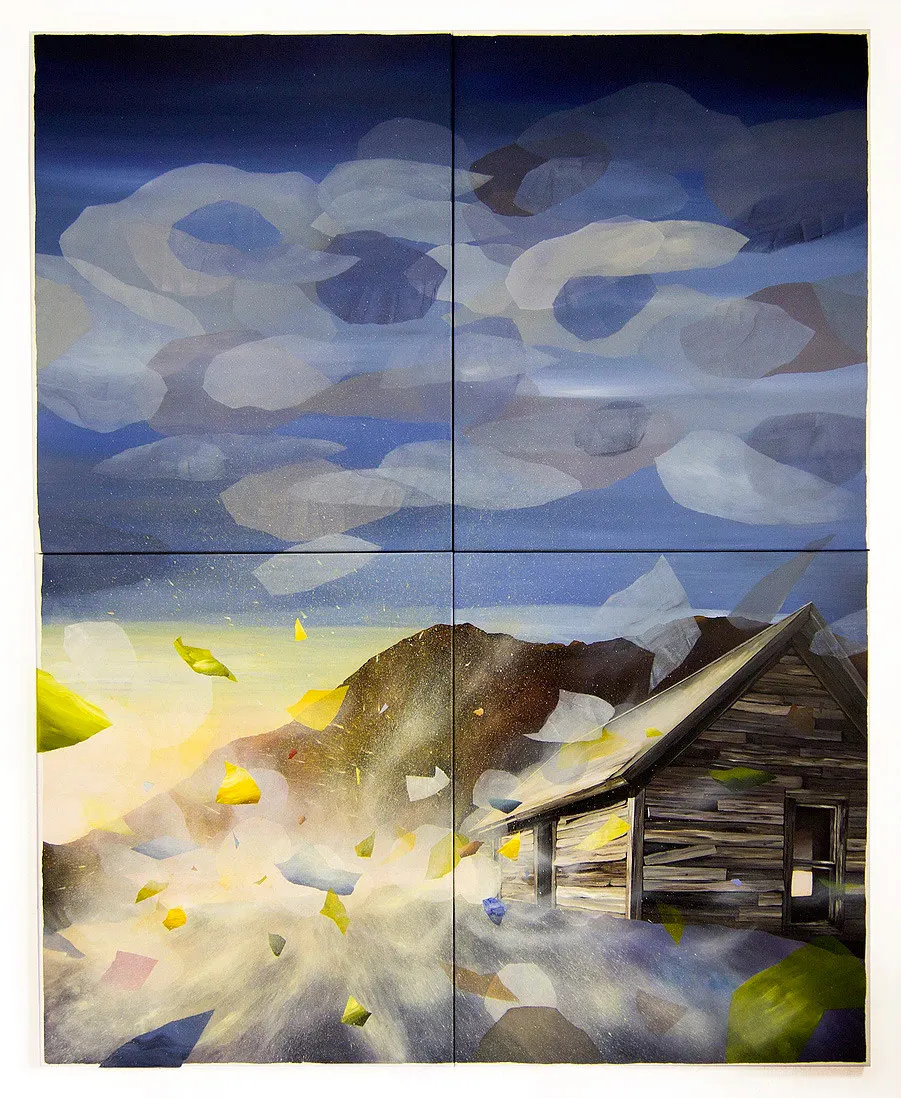
Related: The First Mixed Reality Piece at Auction
What is next for your gallery after the virus has passed?
After the economy gets back to normal we will continue at our regular full speed pace fostering relationships with galleries and artists demonstrating our powerful software. The feedback has been incredibly positive. Regardless of the historic secrecy of pricing, the galleries we are talking with are very savvy and see the long run benefits of reliable chains of ownership, auditable collections, and an easy and logical way to implement a royalty system with benefits to collectors that far surpasses the cost.

![Victorine Meurent, Orientalist scene with hookah smoker, Oil on canvas, 25 x 16.5 cm, Signed and dated '[18]76' lower left. Image © Aguttes (detail))](https://images.prismic.io/barnebys/5b7c8d97-de27-436a-821e-56d5dbac1ca5_Article+Hero+Image+FR.png?auto=format,compress)