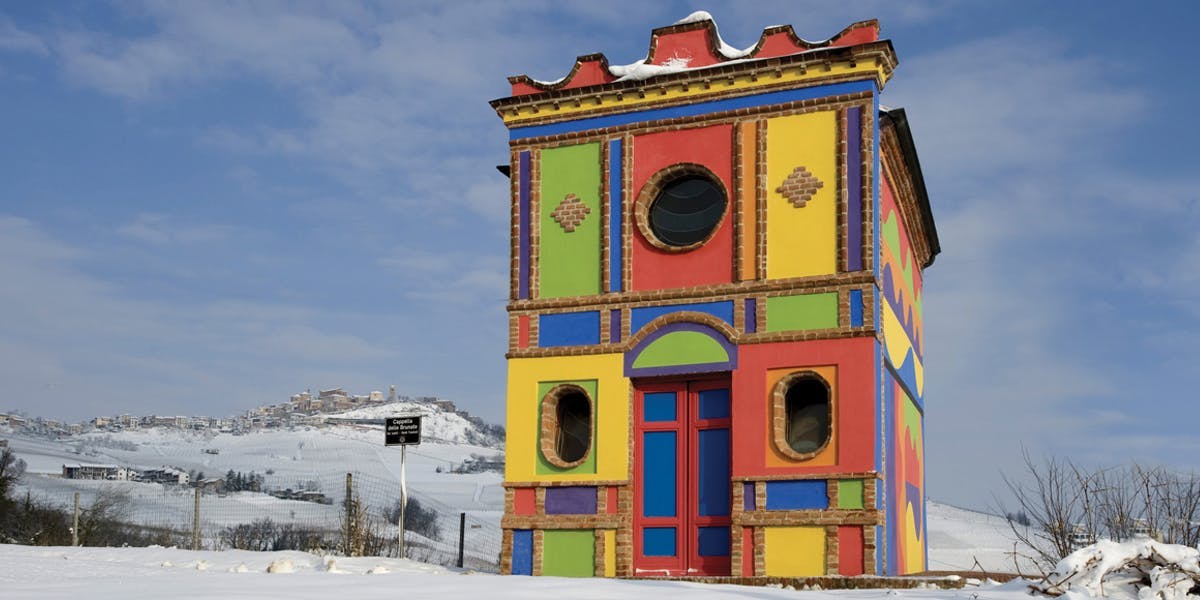
When one thinks of the Piedmont region, food and wine comes to mind, from Barolo wine to truffles and hazelnuts. However, the region holds a special treasure, a work of contemporary art set amongst the rolling hills and vineyards. The Barolo Chapel is a unique project by Sol LeWitt and David Tremlett, marked by its bright and luminous colors.
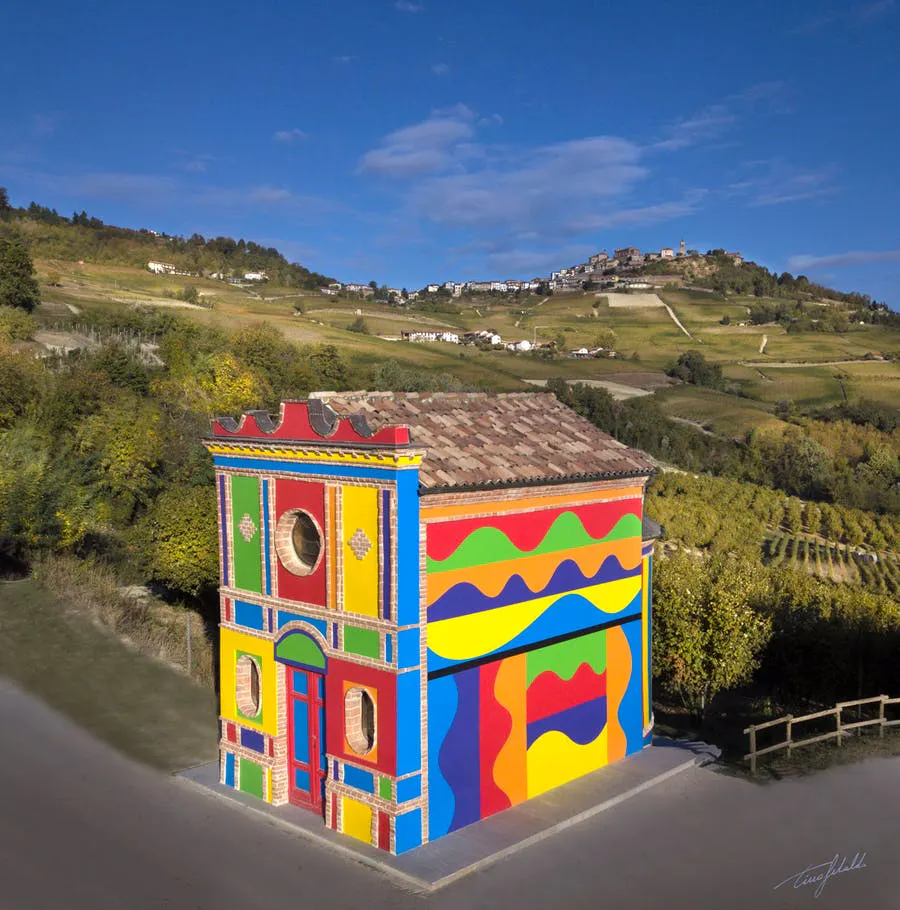
The Barolo Chapel is actually a deconsecrated church, or rather a church that has never been consecrated. The building was originally built in 1914 by farmers working in the surrounding vineyards and used as a temporary shelter in case of bad weather. Initially called Cappella delle SS. Madonnas of Grace, it never became a place of worship officially.
Related: Charles Saatchi: The World is Not Enough
In the 1970s, the Ceretto family purchased over 14 acres of the prestigious Brunate vineyard, and along with the land, also acquired the chapel, which had been reduced to ruins after years of neglect. In 1997, Anglo-Swiss installation artist David Tremlett was setting up an exhibition in the Castle of Barolo and the Ceretto family hosted him at the Castiglione Falletti estate. Thus a friendship was born, and the Cerettos - always lovers and connoisseurs of contemporary art - gladly accepted Tremlett's proposal to transform the old church into a work of art.
Related: Abstract Art: From Genre to Movement
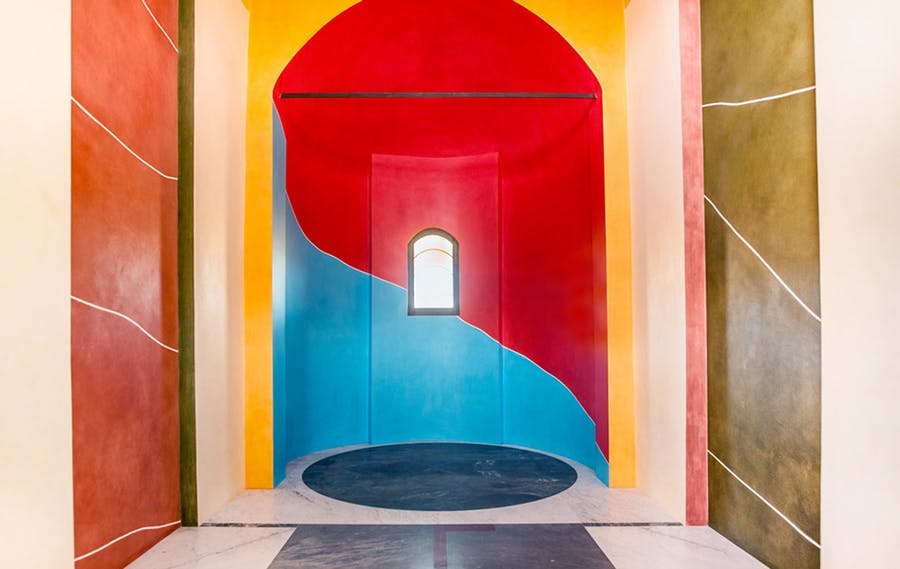
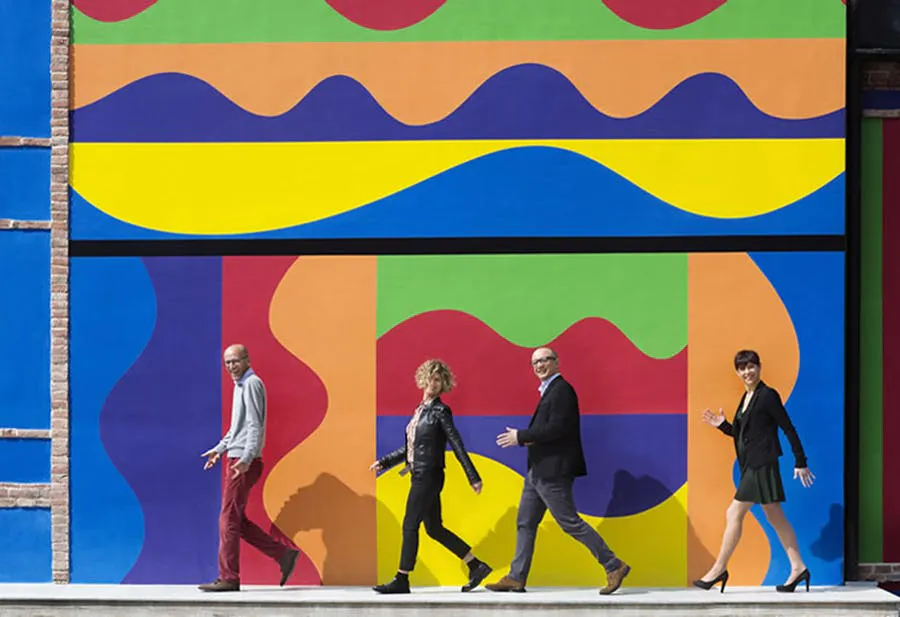
In 1998 the renovations started, and the following year Tremlett partnered with Sol LeWitt, the father of American conceptual art, on the project. LeWitt covered the exterior walls with a geometric design of bright colors: orange, green, purple, yellow and red, creating wavy patterns recalling the surrounding hills. The interior, on the other hand, was designed by Tremlett who used brightened earth-colored tones and materials such as marble and Murano glass. Now, over 20 years later, the church has become a beloved work of contemporary art and tourist site, whose kaleidoscopic façade can't be missed amidst the midst of the rolling hills of northern Italy.