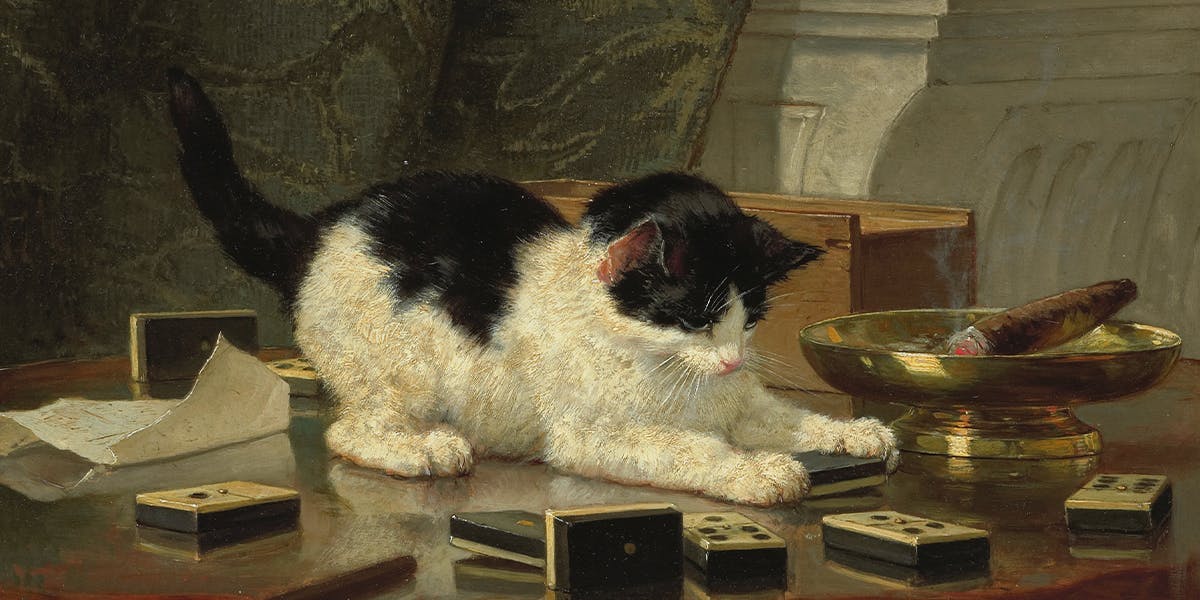
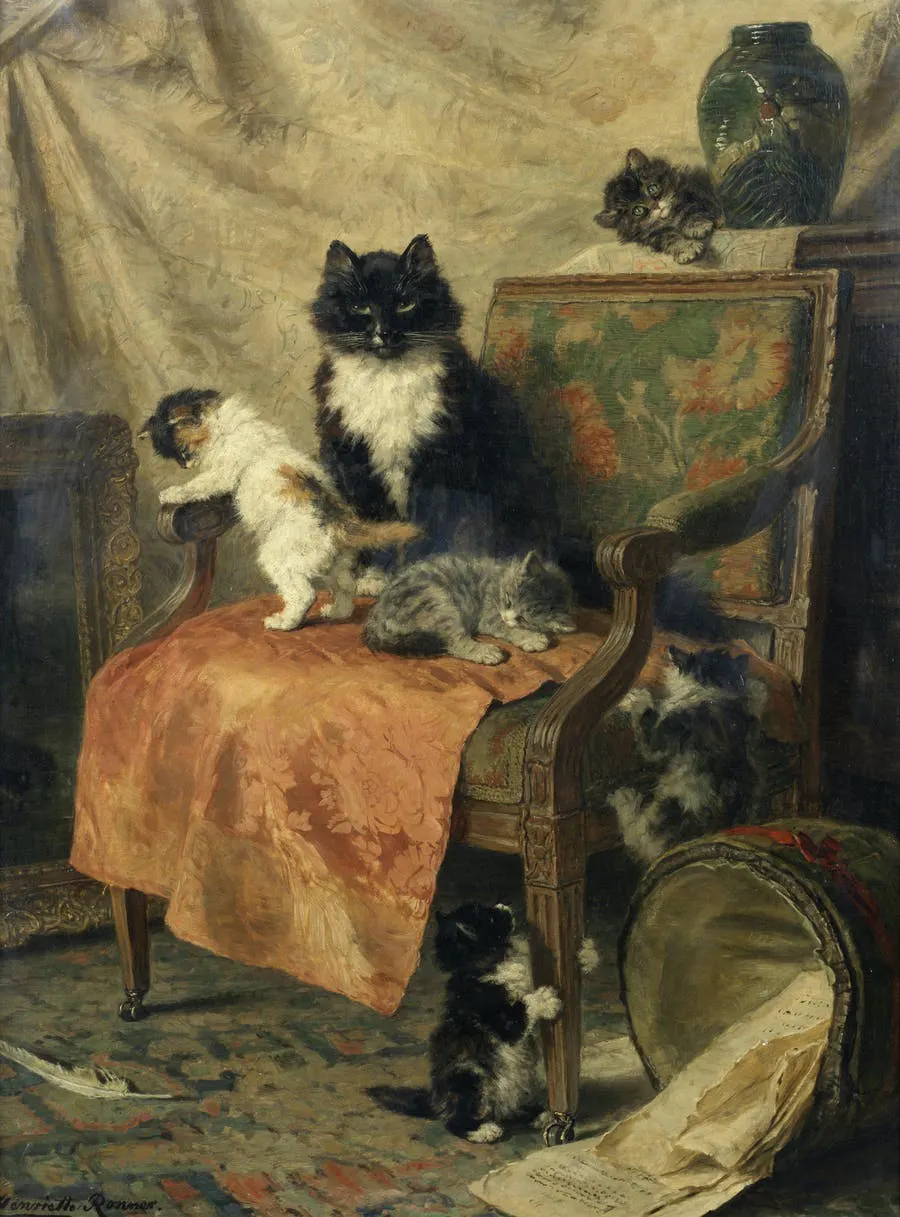
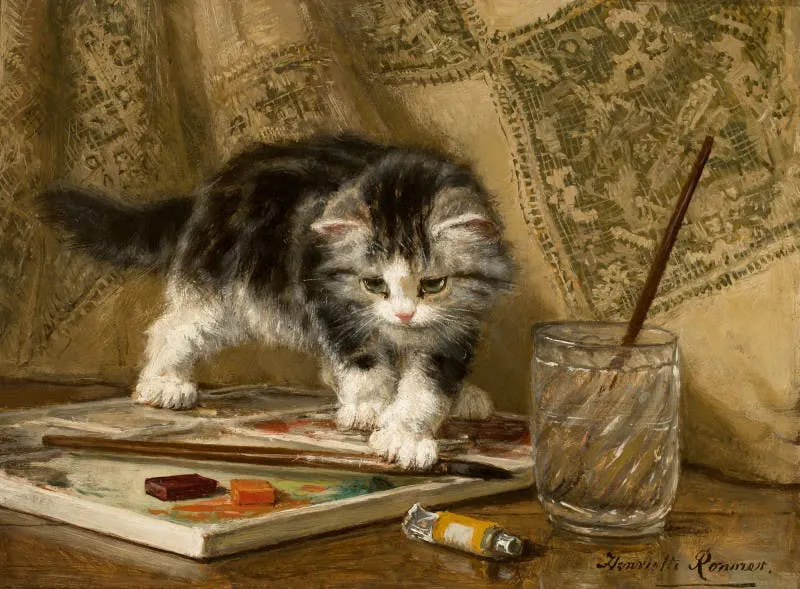
There are many artists who have immortalized cats in their paintings. Among these, the Dutch artist Henriëtte Ronner-Knip, though not known all around the globe, certainly deserves a mention, by virtue of the sincere, devoted and complete love that she has always shown in her works, which are almost exclusively dedicated to these extraordinary felines.
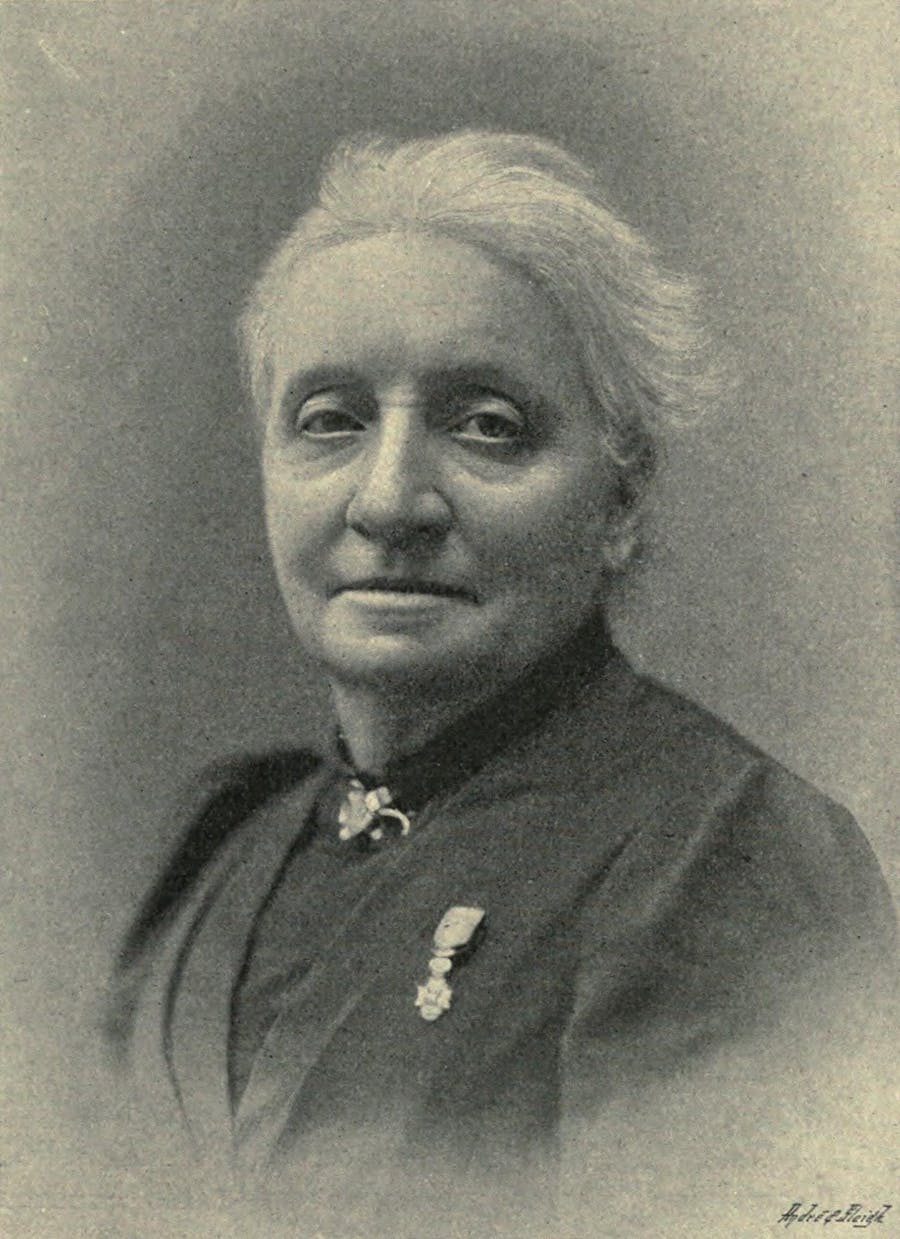
Henriëtte Ronner-Knip was born in Amsterdam in 1821 into a family of artists – she even studied art with her father, the well-known neoclassical painter Joseph Augustus Knip (1777-1847). Her grandfather, Nicolaas (1741-1808), was also an artist. Some sources indicate that her mother was Pauline Refer de Courcelles, a bird painter. However, at the time of Ronner-Knip’s birth, it appears that her parents were separated and that her father lived with his lover, Cornelia van Leeuwen.
The Knip family moved frequently, as Joseph Augustus found commissions and gave art lessons. In 1823, he lost sight in one eye and things began to go wrong. However, the family continued to move, even after 1832, when he became completely blind. Despite her young age, Henriëtte soon became responsible for the finances and financial and legal obligations of the family, and began to paint seriously in 1835 (aged 14).
She sold her first painting at the age of only fifteen. At a still young age, she participated in the Exhibition of Living Masters in 1838 and from then on produced a series of exceptional works, which are now exhibited in many European museums, including the Gemeentemuseum in The Hague, the Rijksmuseum in Amsterdam and the Dordrecht Museum.
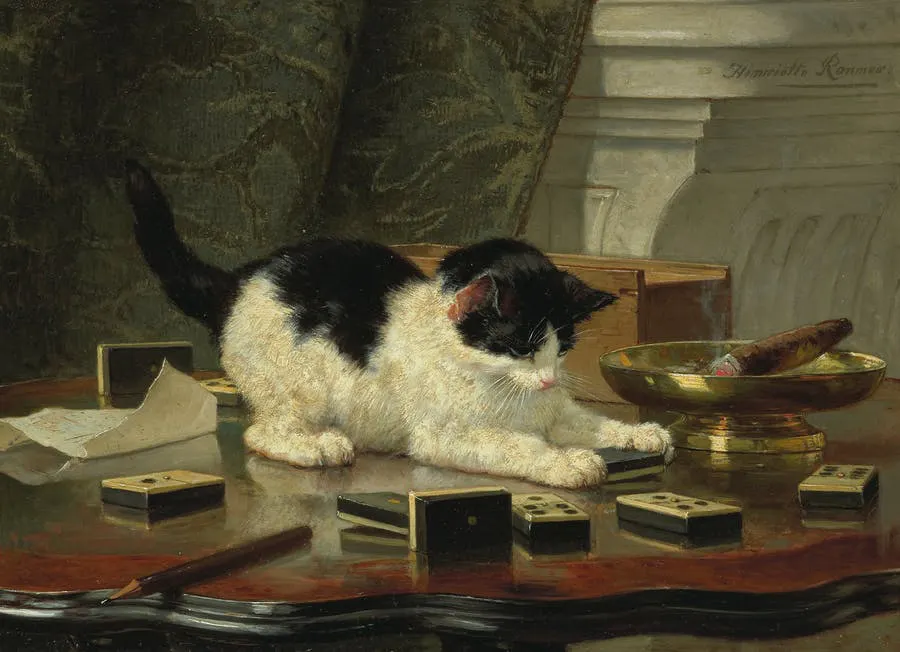
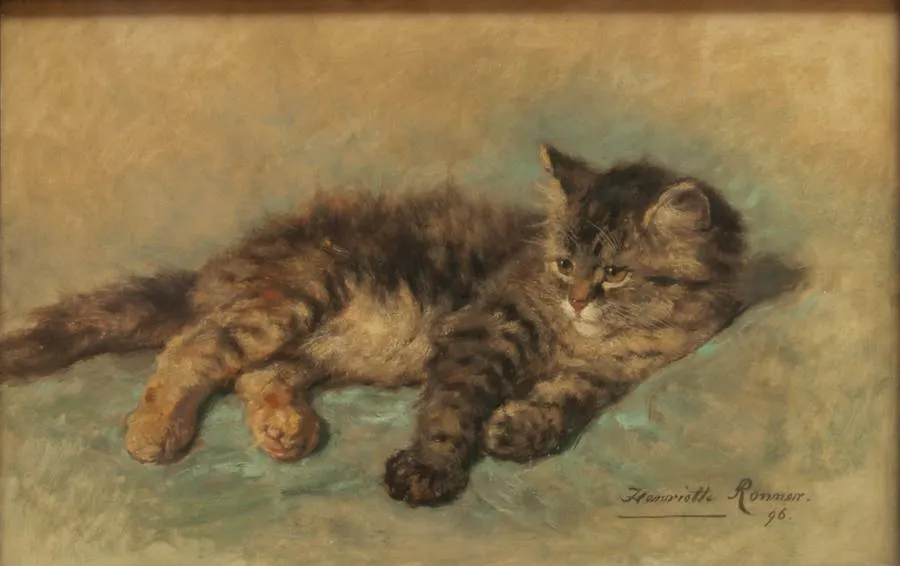
Her early and formative years of painting included genre scenes, landscapes and still lifes. Later, the artist established herself mainly as a painter of dogs and cats – the latter, in particular, occupied a particular space in her heart. One only needs to take a look at the images shown in this article to appreciate the extreme delicacy that transpires in each brushstroke. Mostly, her paintings are sentimental representations, which rarely offer metaphorical meanings and only focus on the cats themselves. In her works, we can read all the amused and, at the same time, softened enchantment towards the beloved domestic felines.
Related: Cats in Art: 10 Decidedly Feline Works
In 1848 the artist moved to Amsterdam, where she painted farms, animals and forests, first in watercolor and then in oil. In the same year, she became the first woman admitted as an ‘active member’ of the Dutch artists society Arti et Amicitiae.
Related: Louis Wain’s Psychedelic Cats
In 1850, she married Feico Ronner (1819-1883) and went to live with him in Brussels. Since her husband was often ill and could not work regularly, once again, Ronner-Knip found herself the main financial supporter of the family.
After 1870, the artist painted her most famous works, with long-haired and playful cats, portrayed in bourgeois settings. Pet paintings were popular with the wealthy bourgeois in the Victorian Era, and many of her works that depicted cats having fun in domestic scenes became a favorite of the time.
In addition to cats, Ronner-Knip also produced paintings depicting dogs, in particular the little dogs belonging to Marie Henriette of Austria and Princess Marie of Hohenzollern-Sigmaringen. In 1876, the Queen of Belgium commissioned Ronner-Knip to portray two of her favorite dogs. The success of this work led to further prestigious commissions from important figures, including Emperor William I of Germany and Baron Tindal of Amsterdam. Her name and her fame began to spread more and more, giving her much deserved success.
Related: The Story of the Staffordshire Dog Figurines
In 1887, Ronner-Knip was awarded the prestigious Order of Leopoldo, a rare achievement in those days, especially for a female artist. Later, the painter became a member of the Orange-Nassau Order.
In the last years of her life, Ronner-Knip lived in a house with a large garden, where he kept cats, dogs and a parrot, which she used as models. She had a studio built with a glass front, so that she could observe the animals as they roamed freely, played or slept. She studied their behaviors and then made paper sculptures in the desired poses, putting them together with some props, such as furniture and fabrics. Her paintings are still very popular today for this reason – for the loving fidelity with which the artist understood and portrayed nature.
In addition to painting full time, Ronner-Knip was the mother of six children, some of whom became artists themselves. Her son Alfred became a famous painter, graphic artist and illustrator, her daughter Alice specialized in still lifes of fruit and flowers, while Emma followed in her mother's footsteps, often painting cats.
The extraordinary woman and artist Ronner-Knip, who was ahead of the times with her role as an established painter, an attentive mother and a leading member of the family, particularly from a financial point of view, died in 1909 at the age of 88, after an intense life lived with a extraordinary balance between work, the personal and, of course, cats.
![Louis Wain (1860-1939), ‘The Bachelor Party’, oil on canvas, 29.5 x 60 cm [detail]. Photo public domain](https://images.prismic.io/barnebys/9947049b-ff8b-4d8f-9106-76a024f9f313_Cover.jpeg?auto=compress,format)